Results by title
53 books match the query 'In art' and 4 start with a

A Visitable Past
Views of Venice by American Artists, 1860-1915Margaretta M. Lovell
University of Chicago Press, 1988
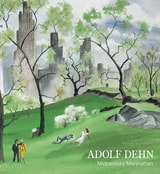
Adolf Dehn
Midcentury ManhattanAdolf Dehn
The Artist Book Foundation, 2017
Adolf Dehn (1895–1968), American painter in multimedia and acclaimed master lithographer, left his Minnesota hometown after formal training at the Minneapolis Art Institute to study at the Art Students League in New York. He toured Europe in the early 1920s, quickly acclimating to the continental lifestyle and adeptly depicting its nuances and idiosyncrasies with prolific lithographs and sketches. His critical and satirical renderings of the political movements, social conventions, and governmental policies in post-World War I Europe during "Le Crazy Years" gave the Midwestern artist ample material for his growing body of work.
Sailing back to the United States in 1929, Dehn survived the Great Depression with commercial artwork and contributions to popular magazines such as The New Yorker, Vogue, and Vanity Fair. His clever drawings that reflected the Jazz Age's culture and fashionable society made him a favorite of Frank Crowninshield, Vanity Fair's renowned editor.
During this time, while Dehn captured the heyday of Manhattan's burlesque theaters, lively Harlem nightclubs, impressive skyline, and busy harbor, he was continuously drawn to Central Park—his predilection for the city's magnificent green space was a sustaining source of inspiration and subject matter. Adolf Dehn: Midcentury Manhattan candidly examines the life and work of this exceptional, adventurous, and intrepid artist as he moved skillfully and capably between lithography, ink-wash drawings, gouache, casein painting, and watercolors. Combining numerous vintage photographs with newly discovered, Manhattan-inspired prints and drawings from the collections of, among others, the Whitney Museum of American Art, MoMA, and The Metropolitan Mesuem of Art, Adolf Dehn: Midcentury Manhattan traces how Dehn's art reflected the spirit, pulse, and uniquely American tonalities of The City of Dreams.
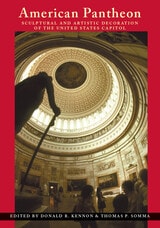
American Pantheon
Sculptural and Artistic Decoration of the United States CapitolDonald R. Kennon
Ohio University Press, 2002
Like the ancient Roman Pantheon, the U.S. Capitol was designed by its political and aesthetic arbiters to memorialize the virtues, events, and persons most representative of the nation's ideals—an attempt to raise a particular version of the nation's founding to the level of myth.
American Pantheon examines the influences upon not only those virtues and persons selected for inclusion in the American pantheon, but also those excluded. Two chapters address the exclusion of slavery and African Americans from the art in the Capitol, a silence made all the more deafening by the major contributions of slaves and free black workers to the construction of the building. Two other authors consider the subject of women emerging as artists, subjects, patrons, and proponents of art in the Capitol, a development that began to emerge only in the second half of the nineteenth century.
The Rotunda, the Capitol's principal ceremonial space, was designed in part as an art museum of American history—at least the authorized version of it. It is explored in several of the essays, including discussions of the influence of the early-nineteenth-century Italian sculptors who provided the first sculptural reliefs for the room and the contributions of the mid-nineteenth-century Italian American artist Constantino Brumidi, to the mix of allegory, mythology, and history that permeates the space and indeed the Capitol itself.
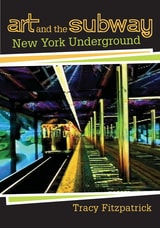
Art and the Subway
New York UndergroundFitzpatrick, Tracy
Rutgers University Press, 2009
Fitzpatrick captures the emotions of artists and riders alike, as she explores paintings, photographs, performance art, graffiti, and public art by artists such as Walker Evans, Bruce Davidson, DONDI, Keith Haring, Yayoi Kusama, Jacob Lawrence, Reginald Marsh, Elizabeth Murray, and many others. She also considers representations of the subway in film, on song sheet covers, and in illustration. By examining the cultural, technological, and social contexts for these creative interpretations, Fitzpatrick illuminates in fresh ways the contradictions and harmonies between public and private space.
Featuring 17 color plates and 80 black-and-white images, Art and the Subway takes readers on a fascinating ride through the visual history of one of the twentieth century's greatest urban planning endeavors as it grew, changed form, and reinvented itself with passion and vitality.