Results by title
328 books match the query 'Islam' and 19 start with a

A Call for Heresy
Why Dissent Is Vital to Islam and AmericaAnouar Majid
University of Minnesota Press, 2007
A Call for Heresy discovers unexpected common ground in one of the most inflammatory issues of the twenty-first century: the deepening conflict between the Islamic world and the United States. Moving beyond simplistic answers, Anouar Majid argues that the Islamic world and the United States are both in precipitous states of decline because, in each, religious, political, and economic orthodoxies have silenced the voices of their most creative thinkers—the visionary nonconformists, radicals, and revolutionaries who are often dismissed, or even punished, as heretics.
The United States and contemporary Islam share far more than partisans on either side admit, Majid provocatively argues, and this “clash of civilizations” is in reality a clash of competing fundamentalisms. Illustrating this point, he draws surprising parallels between the histories and cultures of Islam and the United States and their shortsighted suppression of heresy (zandaqa in Arabic), from Muslim poets and philosophers like Ibn Rushd (known in the West as Averroës) to the freethinker Thomas Paine, and from Abu Bakr Razi and Al-Farabi to Thomas Jefferson and Abraham Lincoln. He finds bitter irony in the fact that Islamic culture is now at war with a nation whose ideals are losing ground to the reactionary forces that have long condemned Islam to stagnation.
The solution, Majid concludes, is a long-overdue revival of dissent. Heresy is no longer a contrarian’s luxury, for only through encouraging an engaged and progressive intellectual tradition can the nations reverse their decline and finally work together for global justice and the common good of humanity.
Anouar Majid is founding chair and professor of English at the University of New England and the author of Freedom and Orthodoxy: Islam and Difference in the Post-Andalusian Age; Unveiling Traditions: Postcolonial Islam in a Polycentric World; and Si Yussef, a novel. He is also cofounder and editor of Tingis, a Moroccan-American magazine of ideas and culture.
A Memorandum for the President of the Royal Audiencia and Chancery Court of the City and Kingdom of Granada
Francisco Núñez Muley
University of Chicago Press, 2007
Now available in its first English translation, Núñez Muley’s account is an invaluable example of how Spain’s former Muslims made active use of the written word to challenge and openly resist the progressively intolerant policies of the Spanish Crown. Timely and resonant—given current debates concerning Islam, minorities, and cultural and linguistic assimilation—this edition provides scholars in a range of fields with a vivid and early example of resistance in the face of oppression.
A Muslim Primer
A Beginner's Guide to IslamIra G. Zepp
University of Arkansas Press, 2000
A Muslim Primer covers the basic beliefs of Islam and provides an informative source for both lay and professional readers. First published in 1992, it has proven to be a valuable handbook for all attempting to better understand the tenets of the religion of a major portion of the world’s population. The reader is introduced to the authority of the Quran, the prophethood of Muhammad, the Wisdom of the Law, the Five Pillars of Islam, and to other fundamental principles of the religion. Distinctions are made between Sunni and Shiite traditions and the Sufi mystical dimension of Islam.
Well organized, visually appealing, and accurate, A Muslim Primer is useful to pre-collegiate and collegiate students of Islam, church and community study groups, and travelers, both tourists and business people.
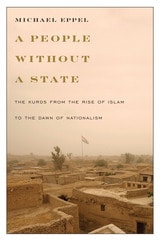
A People Without a State
The Kurds from the Rise of Islam to the Dawn of NationalismBy Michael Eppel
University of Texas Press, 2016
Numbering between 25 and 35 million worldwide, the Kurds are among the largest culturally and ethnically distinct people to remain stateless. A People Without a State offers an in-depth survey of an identity that has often been ignored in mainstream historiographies of the Middle East and brings to life the historical, social, and political developments in Kurdistani society over the past millennium.
Michael Eppel begins with the myths and realities of the origins of the Kurds, describes the effect upon them of medieval Muslim states under Arab, Persian, and Turkish dominance, and recounts the emergence of tribal-feudal dynasties. He explores in detail the subsequent rise of Kurdish emirates, as well as this people’s literary and linguistic developments, particularly the flourishing of poetry. The turning tides of the nineteenth century, including Ottoman reforms and fluctuating Russian influence after the Crimean War, set in motion an early Kurdish nationalism that further expressed a distinct cultural identity. Stateless, but rooted in the region, the Kurds never achieved independence because of geopolitical conditions, tribal rivalries, and obstacles on the way to modernization. A People Without a State captures the developments that nonetheless forged a vast sociopolitical system.
A Religion, Not a State
Ali 'Abd al-Raziq's Islamic justification of Political SecularismSouad T Ali
University of Utah Press, 2009
Utah Series in Middle East Studies
In this notable work, Souad T. Ali examines the seminal writings of Egyptian reformist scholar Ali'Abd al-Raziq, often regarded as the intellectual father of Islamic secularism, and his controversial argument that the caliphate should be considered a human innovation, rather than a religious imperative. 'Abd al Raziq contended that Islam is "a religion, not a state; a message, not a government," a major departure from the traditional view that religious and political spheres are intertwined and inseparable in Islam.
Opponents denounced 'Abd al-Raziq's ideas as a foreign corruption imported from the West. Ali's careful, objective, and scholarly examination of 'Abd al-Raziq's work, however, reveals that his arguments are not based in Western thought. Rather, they sit firmly within the dictates of Islam's sacred texts, particularly the Quran and Hadith, and also enjoy considerable support from the historical record.
This analysis critically challenges prevalent misinterpretations of Islam that have endured for centuries. Ali recognizes the varied models and discourses that have arisen throughout different epochs, especially so the role that Western intervention has played in placing the question of Islam's modernity at the forefront of intellectual debate. Throughout, the study emphasizes the atmosphere of openness and tolerance that is a requisite for free, intelligent debate.
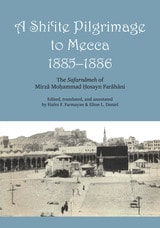
A Shi'ite Pilgrimage to Mecca, 1885-1886
The Safarnâmeh of Mirzâ Mo?ammad ?osayn FarâhâniBy Mirzâ Farâhâni
University of Texas Press, 1990
Western accounts of the Hajj, the ritual Muslim pilgrimage to Mecca, are rare, since access to Mecca is forbidden to non-Muslims. In the Muslim world, however, pilgrimage literature is a well-established genre, dating back to the earliest centuries of the Islamic era. A Shiʿite Pilgrimage to Mecca is taken from the original nineteenth-century Persian manuscript of the Safarnâmeh of Mirzâ Moḥammad Ḥosayn Farâhâni, a well-educated, keenly observant, Iranian Shiʿite gentleman.
This memoir holds a wealth of social and economic information about Czarist Russia, the Ottoman Empire, Egypt, Northern Iran, and Arabia. The author is a meticulous observer, recording details of distances, currencies, accommodations, modes of travel, and so on. He records the experiences encountered by pilgrims of his day: physical hardships, disease, generosity and compassion, banditry, hospitality, comradeship, and exaltation. And, without prejudice, he discusses the tensions between the Shiʿites and the Sunnites in the holy places—tensions that still exist and have erupted in bloody clashes during recent pilgrimages.
A Shiʿite Pilgrimage to Mecca will appeal to a wide audience of general readers, Middle Eastern scholars, anthropologists, and historians.
A Theory of ISIS
Political Violence and the Global OrderMohammad-Mahmoud Ould Mohamedou
Pluto Press, 2017
Against these established narratives, Mohammad-Mahmoud Ould Mohamedou now presents his new theory of ISIS. Tracing the genealogy of ISIS and documenting its evolution in Iraq and Syria, he argues that ISIS has actually transcended Osama Bin Laden’s original scheme of Al Qaeda, mutating into a unprecedented hybrid between postcolonial violence, postmodernity, and postglobalization. A Theory of ISIS offers an original take on the militant group. Mohamedou explains the proliferation of terrorist attacks on the West and deepens our understanding of the group's impact on the very nature of contemporary political violence.

African Entrepreneurship
Muslim Fula Merchants in Sierra LeoneAlusine Jalloh
Ohio University Press, 1999
Departing from the prevailing scholarship, Jalloh characterizes the Fula businesses as independent, rather than appendages of Western expatriate commerce. In addition to establishing successful businesses, Fula merchants established Islamic educational institutions for propogating the Muslim faith and promoting Islamic scholarship.
This study also examines the evolution of Fula chieftaincy from the colonial era to the postcolonial period and documents the importance of mercantile wealth and networks in the election of Fula chiefs in Freetown. African Entrepreneurship makes an important contribution to the understudied role of African business in Sierra Leone.

Al-Ghazali and the Ashárite School
Richard M. Frank
Duke University Press, 1994
This reexamination, Frank argues, is essential to an understanding of al-Ghazali’s work, a diverse series of texts made difficult by the various postures and guises assumed by their author. Statements by al-Ghazali regarding the kalam (the speculative theology of the schools) and its status as a religious science provide the focus for a detailed analysis that contrasts the traditional school theology with his own. From this, the question of al-Ghazali’s relationship to the Ash arite school becomes a key to the basic characteristics of his method and language and therefore to the overall sense that governs much of his work. Finally, as reflected in the chronological sequence of al-Ghazali’s writings, Frank’s analysis demonstrates al-Ghazali’s commitment to basic elements of Avicennian philosophy and his progressive alienation from the Ash arite establishment.
Al-Ghazali and the Ash arite School offers an important and provocative reassessment of a major medieval Islamic thinker. It will be of interest not only to specialists in the field, but also to a broad range of historians of the period and to those interested in all aspects of Islam.
Al-Ghazali's "Moderation in Belief"
Al-Ghazali
University of Chicago Press, 2013
The first complete English-language edition of Moderation in Belief, this new annotated translation by Aladdin M. Yaqub draws on the most esteemed critical editions of the Arabic texts and offers detailed commentary that analyzes and reconstructs the arguments found in the work’s four treatises. Explanations of the historical and intellectual background of the texts also enable readers with a limited knowledge of classical Arabic to fully explore al-Ghazali and this foundational text for the first time.
With the recent resurgence of interest in Islamic philosophy and the conflict between philosophy and religion, this new translation will be a welcome addition to the scholarship.
All Politics Are God’s Politics
Moroccan Islamism and the Sacralization of DemocracyAhmed Khanani
Rutgers University Press, 2021
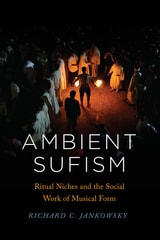
Ambient Sufism
Ritual Niches and the Social Work of Musical FormRichard C. Jankowsky
University of Chicago Press, 2021

Amen
Patrick J. Ryan SJ
Catholic University of America Press, 2018
American Examples, Vol 2
New Conversations about ReligionEdited by Samah Choudhury, Prea Persaud, and Michael J. Altman
University of Alabama Press, 2022
Fresh new perspectives on the study of religion, ranging from SoulCycle to Mark Twain
American Examples: New Conversations about Religion, Volume Two, is the second in a series of annual anthologies produced by the American Examples workshop hosted by the Department of Religious Studies at The University of Alabama. In the latest volume from this dynamic academic project, nine scholars with diverse topics and methodologies vividly reimagine the meaning of all three words in the phrase “American religious history.” The essays use case studies from America, broadly conceived, to ask trenchant theoretical questions that are of interest to scholars and students beyond the subfield of American religious history.
Cody Musselman uses a Weberian analysis to explore questions of identity, authority, and authenticity in the world of SoulCycle while Zachary T. Smith finds commonality between the rhetoric and practices of scholarship and mixed martial arts. Erik Kline provides a new perspective on the psychedelic mysticism of the 1960s, and Brook Wilensky-Lanford takes stock of the cultural power of parody in Mark Twain’s last work of fiction. Christopher Cannon Jones examines the reciprocal relationship between religious texts and cultural contexts by comparing early Mormon missions to Hawai‘i and Jamaica and Lindsey Jackson explores what debates over circumcision can tell us about gender stereotypes and motherhood. Dana Lloyd uses the 1988 Supreme Court decision in Lyng v. Northwest Indian Cemetery Protective Association as a case study in order to consider how Indigenous religion and sovereignty have been understood and adjudicated in the American legal system. Matt Sheedy studies the identity categories of “atheist” and “ex-Muslim” and Brad Stoddard uses ethnographic fieldwork to evaluate the role of religious pluralism in regulating and policing correctional institutions. Editors Samah Choudhury and Prea Persaud provide an introduction that reconsiders the trajectory of the American Examples project in light of the siege on the US Capitol in January 2021 and the continuing COVID pandemic.
Visit americanexamples.ua.edu for more information on upcoming workshop dates and future projects.
CONTRIBUTORS
Michael J. Altman / Samah Choudhury / Lindsey Jackson / Christopher Cannon Jones / / Erik Kline / Dana Lloyd / Cody Musselman / Prea Persaud / Matt Sheedy / Zachary T. Smith / Brad Stoddard / Brook Wilensky-Lanford
American Muslim Women, Religious Authority, and Activism
More Than a PrayerBy Juliane Hammer
University of Texas Press, 2012
Following the events of September 11, 2001, American Muslims found themselves under unprecedented scrutiny. Muslim communities in the United States suffered from negative representations of their religion, but they also experienced increased interest in aspects of their faith and cultures. They seized the opportunity to shape the intellectual contribution of American Muslims to contemporary Muslim thought as never before. Muslim women in particular—often assumed to be silenced, oppressed members of their own communities—challenged stereotypes through their writing, seeking to express what it means to be a Muslim woman in America and carrying out intra-Muslim debates about gender roles and women’s participation in society. Hammer looks at the work of significant female American Muslim writers, scholars, and activists, using their writings as a lens for a larger discussion of Muslim intellectual production in America and beyond.
Centered on the controversial women-led Friday prayer in March 2005, Hammer uses this event and its aftermath to address themes of faith, community, and public opinion. Tracing the writings of American Muslim women since 1990, the author covers an extensive list of authors, including Amina Wadud, Leila Ahmed, Asma Barlas, Riffat Hassan, Mohja Kahf, Azizah al-Hibri, Asra Normani, and Asma Gull Hasan. Hammer deftly examines each author’s writings, demonstrating that the debates that concern American Muslim women are at the heart of modern Muslim debates worldwide. While gender is the catalyst for Hammer’s study, her examination of these women’s intellectual output touches on themes central to contemporary Islam: authority, tradition, Islamic law, justice, and authenticity.
An Islamic Alliance
Ali Dinar and the Sanusiyya, 1906-1916Jay Spaulding and Lidwien Kapteijns
Northwestern University Press, 2011
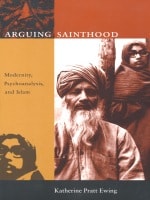
Arguing Sainthood
Modernity, Psychoanalysis, and IslamKatherine Pratt Ewing
Duke University Press, 1997
Ewing critiques Eurocentric cultural theorists and Orientalist discourse while also taking issue with expatriate postcolonial thinkers Homi Bhabha and Gayatri Spivak. She challenges the notion of a monolithic Islamic modernity in order to explore the lived realities of individuals, particularly those of Pakistani saints and their followers. By examining the continuities between current Sufi practices and earlier popular practices in the Muslim world, Ewing identifies in the Sufi tradition a reflexive, critical consciousness that has usually been associated with the modern subject. Drawing on her training in clinical and theoretical psychoanalysis as well as her anthropological fieldwork in Lahore, Pakistan, Ewing argues for the value of Lacan in anthropology as she provides the basis for retheorizing postcolonial studies.
As French as Everyone Else?
A Survey of French Citizens of Maghrebin, African, and Turkish OriginAuthored by Sylvain Brouard and Vincent Tiberj
Temple University Press, 2011
France is often depicted as the model of assimilationist or republican integration in the international literature on immigration. However, rarely have surveys drilled down to provide individual responses from a double representative sample. In As French as Everyone Else?, Sylvain Brouard and Vincent Tiberj provide a comprehensive assessment of the state of integration in France and challenge the usual crisis of integration by systematically comparing the "new French" immigrants, as well as their children and grandchildren born in France, with a sample of the French general population.
The authors' survey considers a wide range of topics, including religious affiliation and religiosity, political attitudes and political efficacy, value systems (including gender roles, work ethics, and anti-Semitism), patterns of integration, multiple identities and national belongings, and affirmative action. As the authors show, despite existing differences, immigrants of Maghrebin, African, and Turkish origin share a wide scope of commonality with other French citizens.
Aspects of Islamic Civilization
As Depicted in the Original TextsA. J. Arberry
University of Michigan Press, 1967
Islamic literature is rich, varied, and abundant, as befits the literature of a civilization which once controlled an empire as great as that of the Romans. In Aspects of Islamic Civilization, A. J. Arberry has chosen and translated passages from the most highly regarded works of Islamic literature in order to illustrate the development of Islamic civilization from its origins in the sixth century to the present.
This anthology is made up of selections from Arabic and Persian writers who have given world renown to Islamic literature—such as Hafiz, Sa'di, Jalal al-Din Rumi, Omar Khayyam, Ibn al-Farid, Avicenna, Ibn Hazm—and from such works as the Koran, the Masnavi, and the Moorish Anthology. It is an invaluable collection of sources for anyone interested in the Moslem world and a fascinating volume to browse in.