Results by title
56 books match the query 'Life Stages' and 6 start with a
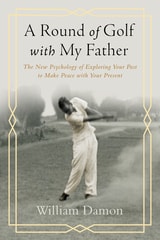
A Round of Golf with My Father
The New Psychology of Exploring Your Past to Make Peace with Your PresentDamon, William
Templeton Press, 2021
Viewing our past through the eyes of maturity can reveal insights that our younger selves could not see. Lessons that eluded us become apparent. Encounters that once felt like misfortunes now become understood as valued parts of who we are. We realize what we’ve learned and what we have to teach. And we’re encouraged to chart a future that is rich with purpose.
In A Round of Golf with My Father, William Damon introduces us to the “life review.” This is a process of looking with clarity and curiosity at the paths we’ve traveled, examining our pasts in a frank yet positive manner, and using what we’ve learned to write purposeful next chapters for our lives.
For Damon, that process began by uncovering the mysterious life of his father, whom he never met and never gave much thought to. What he discovered surprised him so greatly that he was moved to reassess the events of his own life, including the choices he made, the relationships he forged, and the career he pursued.
Early in his life, Damon was led to believe that his father had been killed in World War II. But the man survived and went on to live a second life abroad. He married a French ballerina, started a new family, and forged a significant Foreign Service career. He also was an excellent golfer, a bittersweet revelation for Damon, who wishes that his father had been around to teach him the game.
We follow Damon as he struggles to make sense of his father’s contradictions and how his father, even though living a world apart, influenced Damon’s own development in crucial ways. In his life review, Damon uses what he learned about his father to enhance his own newly emerging self-knowledge.
Readers of this book may come away inspired to conduct informal life reviews for themselves. By uncovering and assembling the often overlooked puzzle pieces of their pasts, readers can seek present-day contentment and look with growing optimism to the years ahead.
Adolescent Relations with Mothers, Fathers and Friends
James Youniss and Jacqueline Smollar
University of Chicago Press, 1987
"A must for anyone interested in adolescent behavior."—Edward Z. Dager, Contemporary Sociology
Aging and Loss
Mourning and Maturity in Contemporary JapanDanely, Jason
Rutgers University Press, 2015
Based on nearly a decade of research, Aging and Loss examines how the landscape of aging is felt, understood, and embodied by older adults themselves. In detailed portraits, anthropologist Jason Danely delves into the everyday lives of older Japanese adults as they construct narratives through acts of reminiscence, social engagement and ritual practice, and reveals the pervasive cultural aesthetic of loss and of being a burden.
Aging and Old Age
Richard A. Posner
University of Chicago Press, 1995
Aging and Old Age offers fresh insight into a wide range of social and political issues relating to the elderly, such as health care, crime, social security, and discrimination. From the dread of death to the inordinate law-abidingness of the old, from their loquacity to their penny-pinching, Posner paints a surprisingly rich, revealing, and unsentimental portrait of the millions of elderly people in the United States. He explores issues such as age discrimination in employment, creativity and leadership as functions of age, and the changing social status of the elderly. Why are old people, presumably with less to lose, more unwilling to take risks than young people? Why don't the elderly in the United States command the respect and affection they once did and still do in other countries? How does aging affect driving and criminal records? And how does aging relate to creativity across different careers?
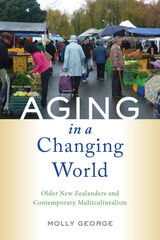
Aging in a Changing World
Older New Zealanders and Contemporary MulticulturalismMolly George
Rutgers University Press, 2022
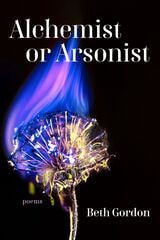
Alchemist or Arsonist
PoemsBeth Gordon
Acre Books, 2027
A feminist poetry collection re-examining the figure of the crone and upending the patriarchal expectations she embodies.
In Alchemist or Arsonist, her second full-length collection, Beth Gordon supercharges the term crone, demonstrating in image-rich poems the magical strength of older women. The Crone is frank about the realities of aging—including plucking chin hairs—yet she also surprises, warning the reader: “The tiger has always been there. . . . She is right in front of you.” Taking afternoon shots of mescal and waiting in line for Mexican street corn, she contemplates Captcha pictures, AI, and tattoos.
The book expands its concerns in several long poems and sequences, encompassing the full range of human experience. “The Secret Fate of All Life,” a series of golden shovels based on quotes from the HBO show True Detective, moves into the surreal to represent language’s failure to describe the death of an infant, and how time can be displaced by grief. Other works explore the transformation that can come from tragedy, the perils of marriage and other relationships, and the complicated conversation older and younger versions of the self would have with each other.
Gordon’s candid, wry, uncompromising voice is both refreshing and bracing, and the poems perform alchemy as they set fire to traditional expectations. With an undercurrent of violence and murder, the book reveals the ultimate consequences of patriarchy. “Alchemist or arsonist: the end is the same,” The Crone tells us. “Something becomes something else.”