Results by title
642 books match the query 'Linguistics' and 70 start with a
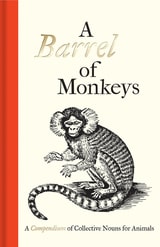
A Barrel of Monkeys
A Compendium of Collective Nouns for AnimalsCompiled by Samuel Fanous
Bodleian Library Publishing, 2015
A Barrel of Monkeys brings together more than one hundred collective nouns for animals, from a bloat of hippopotamuses to a caravan of camels, a tower of giraffes, and a leap of leopards. The rivalry between male rhinoceroses becomes especially apt when the rowdy ungulates are characterized as a crash of rhinos. An ambush of tigers is an apt characterization of the skillful hunters that silently stalk their prey. A blend of wordplay, puns, and alliteration, some of the terms collected here are now commonplace, like a pride of lions. Others aren’t heard much these days, but many—like a dazzle of zebras or a prickle of porcupines—richly deserve a comeback.
With charming illustrations by the eighteenth-century artist and naturalist Thomas Bewick, A Barrel of Monkeys is the perfect follow-up to A Conspiracy of Ravens, the Bodleian Library’s book of bird words. Not even a crash of rhinos can stop readers from smiling at this second collection.
A Brief History of the Spanish Language
David A. Pharies
University of Chicago Press, 2007
After introductory chapters on what it means to study the history of a language, the concept of linguistic change, and the nature of language families, Pharies traces the development of Spanish from its Latin roots, all with the minimum amount of technical language possible. In the core sections of the book, readers are treated to an engaging and remarkably succinct presentation of the genealogy and development of the language, including accounts of the structures and peculiarities of Latin, the historical and cultural events that deeply influenced the shaping of the language, the nature of Medieval Spanish, the language myths that have become attached to Spanish, and the development of the language beyond the Iberian Peninsula, especially in the Americas. Focusing on the most important facets of the language’s evolution, this compact work makes the history of Spanish accessible to anyone with a knowledge of Spanish and a readiness to grasp basic linguistic concepts.
Available in both English and Spanish editions, A Brief History of the Spanish Language provides a truly outstanding introduction to the exciting story of one of the world’s great languages.
A Computational Introduction to Linguistics
Describing Language in Plain PrologAlmerindo E. Ojeda
CSLI, 2013
A Concise Introduction to Syntactic Theory
The Government-Binding ApproachElizabeth A. Cowper
University of Chicago Press, 1992
"Cowper exhibits the analytical devices of current principles-and-parameters approaches, takes readers carefully through the central elements of grammatical theory (including very recent work), and ushers them selectively into the technical literature. . . . A serious introduction for those who want to know the nuts and bolts of syntactic theory and to see why linguists are so excited these days."—David Lightfoot, University of Maryland
"An excellent short introduction to the Government and Binding model of syntactic theory. . . . Cowper's work succeeds in teaching syntactic argumentation and in showing the conceptual reasons behind specific proposals in modern syntactic theory."—Jaklin Kornfilt, Syracuse University
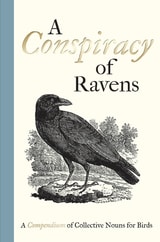
A Conspiracy of Ravens
A Compendium of Collective Nouns for BirdsCompiled by Samuel Fanous
Bodleian Library Publishing, 2014
A Conspiracy of Ravens presents readers with a compendium of collective bird nouns from the distant and not-so-distant past. Some of the nouns are portentous, like a tiding of magpies. Others, like a murmuration of starlings or a chattering of choughs, convey sound. Still more reflect with literary flourish the beauty of the bird: what could be more celebratory than a crown of kingfishers or an exaltation of larks? Featuring songbirds, aquatic birds, garden favorites, and birds of prey, this book collects more than one hundred of the best and most imaginative expressions and illustrates them with charming woodcuts by the eighteenth-century artist and naturalist Thomas Bewick.
A beautiful and entertaining read, A Conspiracy of Ravens will delight bird-lovers and word-lovers in equal measure.
A Constructional Approach to Resultatives
Hans C. Boas
CSLI, 2003
A Contested Caribbean Indigeneity
Language, Social Practice, and Identity within Puerto Rican Taíno ActivismSherina Feliciano-Santos
Rutgers University Press, 2021
A Descriptive Approach to Language-Theoretic Complexity
James Rogers
CSLI, 1998
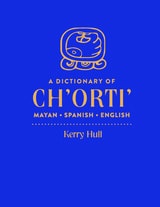
A Dictionary of Ch'orti' Mayan-Spanish-English
Kerry Hull
University of Utah Press, 2016
Each entry contains examples of Ch’orti’ sentences along with their translations. Each term is defined grammatically and linked to a grammatical index. Variations due to age and region are noted. Additionally, extensive cultural and linguistic annotations accompany many entries, providing detailed looks into Ch’orti’ daily life, mythology, flora and fauna, healing, ritual, and food. Hull worked closely with native speakers, including traditional ritual specialists, and presents that work here in a way that is easily accessible to scholars and laypersons alike.
A Dictionary of Language
David Crystal
University of Chicago Press, 2001
A Dictionary of Selected Synonyms in the Principal Indo-European Languages
Carl Darling Buck
University of Chicago Press, 1988
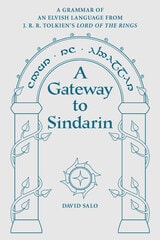
A Gateway to Sindarin
A Grammar of an Elvish Language from JRR Tolkien's Lord of the RingsDavid Salo
University of Utah Press, 2004
From the 1910s to the 1970s, author and linguist J. R. R. Tolkien worked at creating plausibly realistic languages to be used by the creatures and characters in his novels. Like his other languages, Sindarin was a new invention, not based on any existing or artificial language. By the time of his death, he had established fairly complete descriptions of two languages, the "elvish" tongues Quenya and Sindarin. He was able to compose poetic and prose texts in both, and he also constructed a lengthy sequence of changes for both from an ancestral "proto-language," comparable to the development of historical languages and capable of analysis with the techniques of historical linguistics.
In A Gateway to Sindarin, David Salo has created a volume that is a serious look at an entertaining topic. Salo covers the grammar, morphology, and history of the language. Supplemental material includes a vocabulary, Sindarin names, a glossary of terms, and an annotated list of works relevant to Sindarin. What emerges is an homage to Tolkien's scholarly philological efforts.
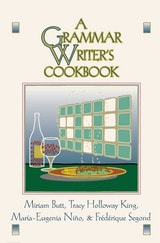
A Grammar Writer's Cookbook
Edited by Miriam Butt, Tracy Holloway King, María-Eugenia Niño, and Frédérique S
CSLI, 1999
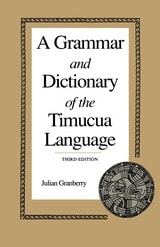
A Grammar and Dictionary of the Timucua Language
Julian Granberry
University of Alabama Press, 1993
Preserving the voice of a vanished people through language, history, and scholarship.
Taken from the surviving contemporary documentary sources, Julian Granberry's volume describes the grammar and lexicon for the extinct 17th-century Timucua language of Central and North Florida and traces the origins of the 17th-century Timucua speakers and their language. Originally privately published in 1987, with limited circulation, this is the only available publication on the Timucuan language. It provides full grammatical analysis and complete lexical data, and it synthesizes both linguistic and archaeological data in order to provide a coherent picture of the Timucua peoples. Granberry traces the probable historical origins of Timucua speakers to a central Amazonian homeland at approximately 2,500 B.C. and proposes that Timucua speakers were responsible for introducing ceramic wares into North America.
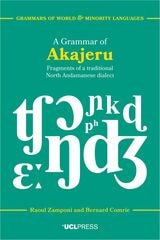
A Grammar of Akajeru
Fragments of a Traditional North Andamanese DialectRaoul Zamponi and Bernard Comrie
University College London, 2021
Originally spoken across the northern Andamanese Islands in the Bay of Bengal, the Akajeru language is spoken today by only three people. A Grammar of Akajeru describes this unique grammatical system as it was reported at the turn of the twentieth century. Based primarily on research conducted by Victorian anthropologists Alfred R. Radcliffe-Brown and Edward Horace Man, this book offers a linguistic analysis of all extant Akajeru material as well as the scant documentation of adjacent dialects Akabo and Akakhora. This volume includes a grammatical sketch of Akajeru, an English-Akajeru lexicon, and a comparison between Akajeru and present-day Andamanese.
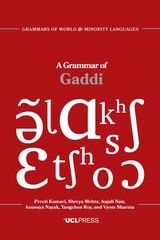
A Grammar of Gaddi
Preeti Kumari, Shreya Mehta, Anjali Nair, Anusuya Nayak, Yangchen Roy, and Vyom Sharma
University College London, 2026
The first comprehensive descriptive grammar of the understudied Indo-Aryan Pahari language, Gaddi.
A Grammar of Gaddi is the first long-form descriptive grammar of the Pahari Indo-Aryan language, Gaddi (also called Bharmauri), spoken by the Gaddi people, a traditionally pastoral community in India. The volume presents a meticulous linguistic analysis of Gaddi, showcasing its phonemic inventory, phonotactics, syllable structure, and its phonological and morpho-phonological processes.
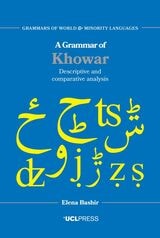
A Grammar of Khowar
Descriptive and Comparative AnalysisElena Bashir
University College London, 2025
Grammar of Khowar is the first comprehensive English-language study of Khowar, a unique Indo-Aryan language spoken in northern Pakistan. Drawing on over thirty years of field research, Elena Bashir provides a detailed snapshot of the language at a critical moment in its evolution, as increasing cultural and economic pressures accelerate linguistic change.
The book presents Khowar’s phonology, morphology, and syntax, alongside an in-depth analysis of how its grammatical structures shape the way speakers conceptualize the world. Rife with original example sentences—many sourced from oral texts recorded in multiple villages—this work preserves linguistic data that might otherwise be lost. A special appendix includes a thirty-page sample text in Khowar’s Perso-Arabic script, followed by a romanized transcription and English translation, offering an invaluable resource for scholars.
A critical contribution to South Asian linguistics, this book underscores the urgency of studying and preserving endangered mountain languages before they fade from use.
A Grammar of Mam, A Mayan Language
By Nora C. England
University of Texas Press, 1983
This is the first full-length reference grammar of Mam, a Mayan language spoken today by over 400,000 people in the western highlands of Guatemala and the state of Chiapas, Mexico. The result of over three years of extensive fieldwork in Guatemala, A Grammar of Mam, a Mayan Language is based on the dialect of Mam spoken by 12,000 people in San Ildefonso Ixtahuacan in the department of Huehuetenango, Guatemala.
England organizes A Grammar of Mam according to two complementary principles: to analyze Mam following basically traditional levels of grammatical description and to present material in such a way that the background information necessary for understanding each topic of discussion shall have been previously provided. Accordingly, England's analysis of the sound system and morphophonemic processes of Mam is followed by a description of the characteristics of root, inflectional, and derivational morphology. Chapters on phrase structure precede two chapters on sentence-level syntax.
A Grammar of Mam is of particular interest in analyzing a Mayan language that is both syntactically and morphologically ergative and that is innovative in the direction of strengthening the ergative system. Indeed at all levels of linguistic organization Mam is innovative, and for this reason it is uniquely interesting both historically and theoretically.
A Historical Grammar of the Maya Language of Yucatan
1557-2000Victoria R. Bricker
University of Utah Press, 2018
A History of Language
Steven Roger Fischer
Reaktion Books, 2018
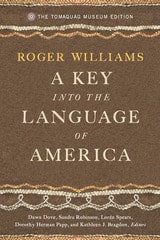
A Key into the Language of America
The Tomaquag Museum EditionRoger Williams
Westholme Publishing, 2019
Roger Williams’s Key into the Language of America, first published in 1643, is one of the most important artifacts of early Indigenous American culture. In it, Williams recorded the day-to-day experience of the Narragansett people of Rhode Island in their own words, the first documentation of an American Indian language in English. Williams’s Key can be read at many levels because of its historical, literary, political, and religious significance. Its greatest value, though, is its intimate portrait of the Narragansett and their linguistic neighbors in the early years of European colonial settlement, before disease, dislocation, warfare—in particular, King Philip’s War—and colonial interference had diminished their population and power in the region. An extraordinary achievement, Williams’s Key gives us a contemporary account of Narragansett family life, of their sociability and skill in business, their dress, foodways, and the farming, fishing, and hunting that formed the basis of their sustenance practices.
This new Tomaquag Museum edition includes for the first time cultural commentary provided by the Narragansett Tribe as well as modern linguistic information provided by a leading authority in the study of American Indian languages.
The Tomaquag Museum, located in Exeter, Rhode Island, is an Indigenous nonprofit organization dedicated to sharing the culture, arts, and history of the Narragansett and other tribal communities of southern New England.
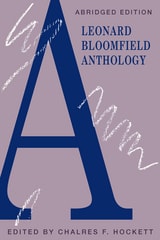
A Leonard Bloomfield Anthology
Leonard Bloomfield
University of Chicago Press, 1987
"Hockett has achieved his purpose—to reveal Bloomfield's way of working, the general principles that guided his work, and last, but by no means least, to indicate how Bloomfield's interests and attitudes changed with the passing years."—Harry Hoijer, Language
A Lexical Approach to Italian Cliticization
Paola Monachesi
CSLI, 1999
A Natural History of Negation
Laurence R. Horn
CSLI, 1989
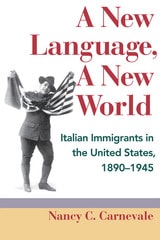
A New Language, A New World
Italian Immigrants in the United States, 1890-1945Nancy C. Carnevale
University of Illinois Press, 2012
A Paradigm for Program Semantics
Chris Brink and Ingrid Rewitsky
CSLI, 2001
A Sourcebook for Ancient Greek
Grammar, Poetry, and ProseJohn Tomarchio
Catholic University of America Press, 2022
A Sourcebook for Classical Logic
John Tomarchio
Catholic University of America Press, 2023
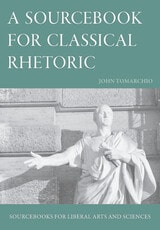
A Sourcebook for Classical Rhetoric
John Tomarchio
Catholic University of America Press, 2023
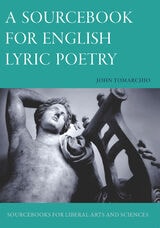
A Sourcebook for English Lyric Poetry
John Tomarchio
Catholic University of America Press, 2023
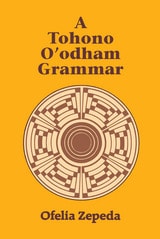
A Tohono O'odham Grammar
Ofelia Zepeda
University of Arizona Press, 1983
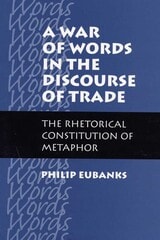
A War of Words in the Discourse of Trade
The Rhetorical Constitution of MetaphorPhilip Eubanks
Southern Illinois University Press, 2000
This study by Phillip Eubanks challenges traditional accounts of metaphor and significantly expands theories of "conceptual" metaphor by examining Trade Is War metaphor as it occurs in concrete discourse.
Although scholarly interest in metaphor as an aesthetic, linguistic, and cognitive phenomenon has long endured, Eubanks is among the first to consider metaphor in its sociohistorical role. Questioning major accounts of metaphor from Aristotle to the present, Eubanks argues that metaphor is not just influenced by but actually is constituted by its concrete operation.
Far-reaching in its implications for our understanding of metaphor, Eubanks’s premise enables us to see metaphor as a sweeping rhetorical entity even as it accounts for the more localized operations of metaphor of interest to linguists, philosophers of language, and cognitive scientists. Providing a new model of metaphoric functioning, Eubanks reconsiders the most promising account of metaphor to date, the notion of "conceptual metaphor.”
Eubanks focuses on the conceptual metaphor Trade Is War—a metaphor found wherever people discuss business and commerce—to develop his rhetorical model of metaphor. He analyzes Trade Is War as it occurs in the print news media, on television discussion shows, in academic works, in popular nonfiction and novels, in historic economic commentary, and in focus group talk. While these examples do reveal a rich variety in the make-up of Trade Is War, much more than mere variety is at stake.
Trade Is War is implicated in an extended and rhetorically complex conversation with other metaphors and literal concepts: trade is peace, Trade Is a Game, Trade Is Friendship, Trade is a Journey, and Markets Are Containers. The recognition and analysis of this constituting conversation furthers a reevaluation theory. What also emerges, however, is a valuable portrait of the discourse of trade itself, a discourse that depends importantly upon a responsive interchange of metaphors.

Aazheyaadizi
Worldview, Language, and the Logics of DecolonizationMark D. Freeland
Michigan State University Press, 2020

African American English Speakers and Their Participation in Local Sound Changes
A Comparative Study, Volume 84Erik R. Thomas
Duke University Press, 0
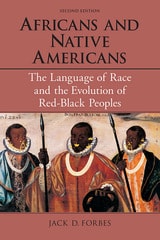
Africans and Native Americans
The Language of Race and the Evolution of Red-Black PeoplesJack D. Forbes
University of Illinois Press, 1993
After Rhetoric
The Study of Discourse Beyond Language and CultureStephen R. Yarbrough
Southern Illinois University Press, 1999
Aware that categorical thinking imposes restrictions on the ways we communicate, Stephen R. Yarbrough proposes discourse studies as an alternative to rhetoric and philosophy, both of which are structuralistic systems of inquiry.
Discourse studies, Yarbrough argues, does not support the idea that languages, cultures, or conceptual schemes in general adequately describe linguistic competence. He asserts that a belief in languages and cultures "feeds a false dichotomy: either we share the same codes and conventions, achieving community but risking exclusivism, or we proliferate differences, achieving choice and freedom but risking fragmentation and incoherence." Discourse studies, he demonstrates, works around this dichotomy.
Drawing on philosopher Donald Davidson, Yarbrough establishes the idea that community can be a consequence of communication but is not a prerequisite for it. By disassociating our thinking from conceptual schemes, we can avoid the problems that come with believing in an abstract structure that predates any utterance.
Yarbrough also draws on Mikhail Bakhtin's dialogism to define how utterances operate in life and to show how utterances are involved with power and how power relates to understanding. His discussion of Michel Meyer's problematology treats the questions implied by a statement as the meaning of the statement.
Yarbrough introduces readers to a credible theoretical framework for focusing on discourse rather than on conceptual schemes that surround it and to the potential advantages of our using this approach in daily life.
Algebraic Semantics in Language and Philosophy
Godehard Link
CSLI, 1997
Algebras, Diagrams and Decisions in Language, Logic and Computation
Edited by Kees Vermeulen and Ann Copestake
CSLI, 2002
Amazonian Linguistics
Studies in Lowland South American LanguagesEdited by Doris L. Payne
University of Texas Press, 1990
Lowland South American languages have been among the least studied ln the world. Consequently, their previous contribution to linguistic theory and language universals has been small. However, as this volume demonstrates, tremendous diversity and significance are found in the languages of this region.
These nineteen essays, originally presented at a conference on Amazonian languages held at the University of Oregon, offer new information on the Tupian, Cariban, Jivaroan, Nambiquaran, Arawakan, Tucanoan, and Makuan languages and new analyses of previously recalcitrant Tupí-Guaraní verb agreement systems.
The studies are descriptive, but typological and theoretical implications are consistently considered. Authors invariably indicate where previous claims must be adjusted based on the new information presented. This is true in the areas of nonlinear phonological theory, verb agreement systems and ergativity, grammatical relations and incorporation, and the uniqueness of Amazonian noun classification systems. The studies also contribute to the now extensive interest in grammatical change.
Ambiguity in Language Learning
Computational and Cognitive ModelsHinrich Schütze
CSLI, 1997