Results by title
1210 books match the query 'Mexico' and 76 start with a
A Big History of North America
From Montezuma to MonroeKevin Jon Fernlund
University of Missouri Press, 2023
Nevertheless, the three-century journey to get to this point had been anything but predictable. The United States’ rise as a regional power was very much conditioned by constantly shifting transcontinental, transpacific, and above all transatlantic factors, all of which influenced North America’s three interactive cultural spheres: the Indigenous, the Hispano, and the Anglo. And while the United States profoundly shaped the history of Canada and Mexico, so, too, did these two transcontinental countries likewise shape the course of U.S. history.
In this ground-breaking work, Kevin Fernlund shows us that any society’s social development is directly related to its own social power and, just as crucially, to the protective extension or destructive intrusion of the social power of other societies.
A Black Corps d'Elite
An Egyptian Sudanese Conscript Battalion with the French Army in Mexico, 1863-1867, and its Survivors in Subsequent African HistoryRichard Hill
Michigan State University Press, 1995
For several years, the armies of Napoleon III deployed some 450 Muslim Sudanese slave soldiers in Veracruz, the port of Mexico City. As in the other case of Western hemisphere military slavery (the West India Regiments, a British unit in existence 1795-1815), the Sudanese were imported from Africa in the hopes that they would better survive the tropical diseases that so terribly afflicted European soldiers. In both cases, the Africans did indeed fulfill these expectations. The mixture of cultures embodied by this event has piqued the interest of several historians, so it is by no means unknown. Hill and Hogg provide a particularly thorough account of this exotic interlude, explaining its background, looking in detail at the battle record in Mexico, and figuring out who exactly made up the battalion. Much in their account is odd and interesting, for example, the Sudanese superiority to Austrian troops and their festive nine-day spree in Paris on the emperor's tab. The authors also assess the episode's longer-term impact on the Sudan, showing that the veterans of Mexico, having learnt much from their extended exposure to French military practices, rose quickly in the ranks, then taught these methods to others.
A City on a Lake
Urban Political Ecology and the Growth of Mexico CityMatthew Vitz
Duke University Press, 2018

A Favored Place
San Juan River Wetlands, Central Veracruz, A.D. 500 to the PresentBy Alfred H. Siemens
University of Texas Press, 1998
The wetlands of the San Juan Basin in Central Veracruz, Mexico, have been a favored place since the fifth century A.D., when Prehispanic people built an extensive network of canals and raised fields that allowed for almost year-round agriculture. Alfred Siemens' discovery of the remains of this network in the 1970s led him to uncover fifteen centuries of land-use history in the region. This book contains a full record of his findings.
Siemens organizes his history of the San Juan Basin around the question: What relationships exist between Prehispanic agriculture and the production systems of the tropical lowlands in our own time? This focus allows him to chart the changes in human perceptions and uses of the landscape, from the Prehispanic wetland agricultural system to the drained pastures of today's cattle ranches.
Amplified with air oblique photography, maps, and tables, and enriched with data from archaeology and colonial archives, this is an authoritative historical geography of a wetland landscape. Or, in the author's more modest words, "It seems to me that what I have here is a biography of a swamp."
A Flock Divided
Race, Religion, and Politics in Mexico, 1749–1857Matthew D. O Hara
Duke University Press, 2010
O’Hara focuses on interactions between church authorities and parishioners from the late-colonial era into the early-national period, first in Mexico City and later in the surrounding countryside. Paying particular attention to disputes regarding caste status, the category of “Indian,” and the ownership of property, he demonstrates that religious collectivities from neighborhood parishes to informal devotions served as complex but effective means of political organization for plebeians and peasants. At the same time, longstanding religious practices and ideas made colonial social identities linger into the decades following independence, well after republican leaders formally abolished the caste system that classified individuals according to racial and ethnic criteria. These institutional and cultural legacies would be profound, since they raised fundamental questions about political inclusion and exclusion precisely when Mexico was trying to envision and realize new forms of political community. The modes of belonging and organizing created by colonialism provided openings for popular mobilization, but they were always stalked by their origins as tools of hierarchy and marginalization.
A Fuego y Sangre
Early Zapotec Imperialism in the Cuicatlán Cañada, OaxacaElsa M. Redmond
University of Michigan Press, 1983
A Good Map of All Things
A Picaresque NovelAlberto Álvaro Ríos
University of Arizona Press, 2020
In Alberto Álvaro Ríos’s new picaresque novel, momentous adventure and quiet connection brings twenty people to life in a small town in northern Mexico. A Good Map of All Things is home to characters whose lives are interwoven but whose stories are their own, adding warmth and humor to this continually surprising communal narrative. The stories take place in the mid-twentieth century, in the high desert near the border—a stretch of land generally referred to as the Pimería Alta—an ancient passage through the desert that connected the territory of Tucson in the north and Guaymas and Hermosillo in the south. The United States is off in the distance, a little difficult to see, and, in the middle of the century, not the only thing to think about. Mexico City is somewhere to the south, but nobody can say where and nobody has ever seen it.
Ríos has created a whimsical yet familiar town, where brightly unique characters love fiercely and nurture those around them. The people in A Good Map of All Things have secrets and fears, successes and happiness, winters and summers. They are people who do not make the news, but who are living their lives for the long haul, without lotteries or easy answers or particular luck. Theirs is the everyday, with its small but meaningful joy. Whether your heart belongs to a small town in Mexico or a bustling metropolis, Alberto Álvaro Ríos has crafted a book that is overflowing with comfort, warmth, and the familiar embrace of a tightly woven community.

A Grammar Of Misantla Totonac
Carolyn Mackay
University of Utah Press, 1999
A Land Between Waters
Environmental Histories of Modern MexicoEdited by Christopher R. Boyer
University of Arizona Press, 2012
A Land Between Waters explores the relationship between the people and the environment in Mexico. It heralds the arrival of environmental history as a major area of study within the field of Mexican history. This volume brings together a dozen original works of environmental history by some of the foremost experts in Mexican environmental history from both the United States and Mexico.
The contributions collected in this seminal volume explore a wide array of topics, from the era of independence to the present day. Together they examine how humans have used, abused, and attended to nature in Mexico over more than two hundred years. Written in clear, accessible prose, A Land Between Waters showcases the breadth of Mexican environmental history in a way that defines the key topics in the field and suggests avenues for subsequent work. Most importantly, it assesses the impacts of environmental changes that Mexico has faced in the past with an eye to informing national debates about the challenges that the nation will face in the future.
A Map of Mexico City Blues
Jack Kerouac as PoetJames T. Jones
Southern Illinois University Press, 1992
In this pioneering critical study of Jack Kerouac’s book-length poem, Mexico City Blues—apoetic parallel to the writer’s fictional saga, the Duluoz Legend—James T. Jones uses a rich and flexible neoformalist approach to argue his case for the importance of Kerouac’s rarely studied poem.
After a brief summary of Kerouac’s poetic career, Jones embarks on a thorough reading of Mexico City Blues from several different perspectives: he first focuses on Kerouac’s use of autobiography in the poem and then discusses how Kerouac’s various trips to Mexico, his conversion to Buddhism, his theory of spontaneous poetics, and his attraction to blues and jazz influenced the theme, structure, and sound of Mexico City Blues.
A Mexican Family Empire
The Latifundio of the Sánchez Navarro Family, 1765-1867By Charles H. Harris III
University of Texas Press, 1975
Perhaps no other institution has had a more significant impact on Latin American history than the large landed estate—the hacienda. In Mexico, the latifundio, an estate usually composed of two or more haciendas, dominated the social and economic structure of the country for four hundred years. A Mexican Family Empire is a careful examination of the largest latifundio ever to have existed, not only in Mexico but also in all of Latin America—the latifundio of the Sánchez Navarros.
Located in the northern state of Coahuila, the Sánchez Navarro family's latifundio was composed of seventeen haciendas and covered more than 16.5 million acres—the size of West Virginia. Charles H. Harris places the history of the latifundio in perspective by showing the interaction between the various activities of the Sánchez Navarros and the evolution of landholding itself. In his discussion of the acquisition of land, the technology of ranching, labor problems, and production on the Sánchez Navarro estate, and of the family's involvement in commerce and politics, Harris finds that the development of the latifundio was only one aspect in the Sánchez Navarros' rise to power. Although the Sánchez Navarros conformed in some respects to the stereotypes advanced about hacendados, in terms of landownership and the use of debt peonage, in many important areas a different picture emerges. For example, the family's salient characteristic was a business mentality; they built the latifundio to make money, with status only a secondary consideration. Moreover, the family's extensive commercial activities belie the generalization that the objective of every hacendado was to make the estates self-sufficient. Harris emphasizes the great importance of the Sánchez Navarros' widespread network of family connections in their commercial and political activities.
A Mexican Family Empire is based on the Sánchez Navarro papers—75,000 pages of personal letters, business correspondence, hacienda reports and inventories, wills, land titles, and court records spanning the period from 1658 to 1895. Harris's thorough research of these documents has resulted in the first complete social, economic, and political history of a great estate. The geographical and chronological boundaries of his study permit analysis of both continuity and change in Mexico's evolving socioeconomic structure during one of the most decisive periods in its history—the era of transition from colony to nation.
A Nation of Villages
Riot and Rebellion in the Mexican Huasteca, 1750-1850Michael T. Ducey
University of Arizona Press, 2004
He asks not just why villagers revolted but how their discontent fit into the political drama of early national Mexico. Ducey shows how the war offered opportunities for villagers to settle scores with members of the local elite as peasants discovered new ways of imagining the state. They were far from being the isolated traditionalists who occasionally rebelled against political or economic change described in older scholarship. At least until the 1848-1850 Caste War, political disputes were more important than land.
This region’s peasants were both remarkably diverse and politically astute. Villagers adapted colonial political culture and later republican ideas to fashion local institutions that fit their own needs. Over the course of a hundred years, peasant tactics and political discourse evolved in a constant dialogue with the changing political climate, shifting from rhetorical statements of loyalty to the king to proclamations of federalism and their rights as citizens. A Nation of Villages ably demonstrates that rural villagers were more aware of elite ideologies than urban rulers were of the villagers’ political ideas. This long-term analysis of one region illuminates how rural people helped shape the republican state.
A Place of Recourse
A History of the U.S. District Court for the Southern District of Ohio, 1803–2003Roberta Sue Alexander
Ohio University Press, 2005
The first history of a federal district court in a midwestern state, A Place of Recourse explains a district court’s function and how its mission has evolved. The court has grown from an obscure institution adjudicating minor debt and land disputes to one that plays a central role in the political, economic, and social lives of southern Ohioans.
In tracing the court’s development, Alexander explores the central issues confronting the district court judges during each historical era. She describes how this court in a non-slave state responded to fugitive slave laws and how a court whose jurisdiction included a major coal-mining region responded to striking workers and the unionization movement. The book also documents judicial responses to Prohibition, New Deal legislation, crime, mass tort litigation, and racial desegregation.
The history of a court is also the history of its judges. Accordingly, Alexander provides historical insight on current and past judges. She details behind-the-scenes maneuvers in judicial appointments and also the creativity some judges displayed on the bench—such as Judge Leavitt, who adopted admiralty law to deal with the problems of river traffic.
A Place of Recourse demonstrates that, at least in the Southern District of Ohio, the federal district court has played the role its creators hoped it would—upholding federal law even when the citizens of the region actively opposed such enforcement.
A Rain of Darts
The Mexica AztecsBy Burr Cartwright Brundage
University of Texas Press, 1972
This book was the first serious scholarly attempt in nearly a century to put in narrative form the exciting and important history of the Mexican Indians who founded Tenochtitlan and who created from it what is known as the Aztec empire. Although many native sources, often in translations with scholarly annotations. became available in the twentieth century, the corpus of this material was scattered and uncoordinated. Burr Cartwright Brundage has utilized these sources to produce a consecutive narrative that portrays direction and purpose in the evolution of the Aztec empire.
A Rain of Darts is the first one-volume history of the Mexica, historically the most important of the Aztec peoples. The focus of the narrative is on the political state produced by the Mexica during their stormy history. The eleven Mexica reigns that preceded the Spanish Conquest are investigated, their triumphs and errors explained, and the lives of their great leaders illuminated where the sources allow.
The narrative opens with the first appearance of the Mexica out of the arid north; it details their aimless wandering, the founding of the city of Mexico in the waters of Lake Tezcoco, their desperate struggle for independence (successfully achieved in 1428), and the flourishing of the new state and its curiously structured empire. This history concludes with an analysis of the character of Moteuczoma II, and investigates the final sickness of the Mexican state. Cortez and his small army of Spaniards are seen here for the first time in historical literature through the eyes of the people they conquered. The Mexica Aztecs remain at the center of the narrative.
The Mexica were unable to build a tightly knit empire because of the elitist, international warrior class and its peculiar cult of war and sacrifice. To the Mexica, warfare and bloodshed were sacraments; the teuctli or knightly warrior was the priest of this cult. to which he was as loyal as to the state. In this lay the uniqueness of the Mexican state and the seeds of its tragic end in 1521.

A Return to Servitude
Maya Migration and the Tourist Trade in CancúnM. Bianet Castellanos
University of Minnesota Press, 2010
A Return to Servitude is an ethnography of Maya migration within Mexico that analyzes the foundational role indigenous peoples play in the development of the modern nation-state. Focusing on tourism in the Yucatán Peninsula, M. Bianet Castellanos examines how Cancún came to be equated with modernity, how this city has shaped the political economy of the peninsula, and how indigenous communities engage with this vision of contemporary life. More broadly, she demonstrates how indigenous communities experience, resist, and accommodate themselves to transnational capitalism.
Tourism and the social stratification that results from migration have created conflict among the Maya. At the same time, this work asserts, it is through engagement with modernity and its resources that they are able to maintain their sense of indigeneity and community.
A Sense of Brutality
Philosophy after Narco-CultureCarlos Alberto Sánchez
Amherst College Press, 2020
"The study is original, bringing a wide range of voices into dialogue to present a problem that is pressing and deserving of careful analysis. The study will contribute to the field of Latin American philosophy in important ways... This is the only book by a philosopher on the topic of narco-culture, and I think it’s an important contribution to a topic that should be addressed by philosophers." —Elizabeth Millán, DePaul University
A Sentimental Education for the Working Man
The Mexico City Penny Press, 1900-1910Robert M. Buffington
Duke University Press, 2015
A Survey of Indian Assimilation in Eastern Sonora
Thomas B. Hinton
University of Arizona Press, 1959
A Systematic Study of The Lizards of The Deppei Group (Genus Cnemidophorus) in Mexico and Guatemala
By William E. Duellman and John Wellman
University of Michigan Press, 1960
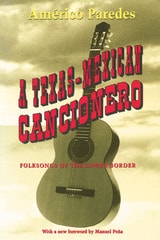
A Texas-Mexican Cancionero
Folksongs of the Lower BorderBy Américo Paredes
University of Texas Press, 1995
The folksongs of Texas's Mexican population pulsate with the lives of folk heroes, gringos, smugglers, generals, jailbirds, and beautiful women. In his cancionero, or songbook, Américo Paredes presents sixty-six of these songs in bilingual text—along with their music, notes on tempo and performance, and discography. Manuel Peña's new foreword situates these songs within the main currents of Mexican American music.

A War that Can’t Be Won
Binational Perspectives on the War on DrugsEdited by Tony Payan, Kathleen Staudt, and Z. Anthony Kruszewski
University of Arizona Press, 2013
A War that Can’t Be Won is the first book to include contributions from scholars on both sides of the US–Mexico border. It provides a unique breadth of perspective on the many dimensions of the societal crisis that affects residents of both nations—particularly those who live and work in the borderlands. It also proposes practical steps toward solving a crisis that shows no signs of abating under current policies. Each chapter is based on well-documented data, including previously unavailable evidence that was obtained through freedom-of-information inquiries in Mexico. By bringing together views from both sides of the border, as well as from various academic disciplines, this volume offers a much wider view of a complex problem—and possible solutions.
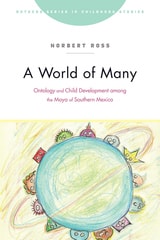
A World of Many
Ontology and Child Development among the Maya of Southern MexicoNorbert Ross
Rutgers University Press, 2023
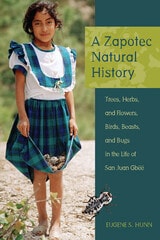
A Zapotec Natural History
Trees, Herbs, and Flowers, Birds, Beasts, and Bugs in the Life of San Juan GbëëEugene S. Hunn
University of Arizona Press, 2008
The contents of Part 2 are available online.
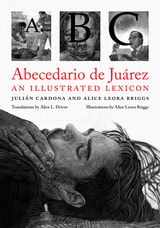
Abecedario de Juárez
An Illustrated LexiconJulián Cardona and Alice Leora Briggs, with translations by Alice L. Driver; illustrations by Alice Leora Briggs
University of Texas Press, 2022
Uses key words and striking images to explore violence and everyday life in Juárez, Mexico.
Juárez, Mexico, is known for violence. The femicides of the 1990s, and the cartel mayhem that followed, made it one of the world's most dangerous cities. Along with the violence came a new lexicon that traveled from person to person, across rivers and borders—wherever it was needed to explain the horrors taking place. From personal interviews, media accounts, and conversations on the street, Julián Cardona and Alice Leora Briggs have collected the words and slang that make up the brutal language of Juárez, creating a glossary that serves as a linguistic portrait of the city and its violence. Organized alphabetically, the entries consist of Spanish and Spanglish, accompanied by short English definitions. Some also feature a longer narrative drawn from interviews—stories that put the terms in context and provide a personal counterpoint to media reports of the same events. Letters, and many of the entries, are supplemented with Briggs’s evocative illustrations, which are reminiscent of Hans Holbein’s famous Alphabet of Death. Together, the words, drawings, and descriptions in ABCedario de Juárez both document and interpret the everyday violence of this vital border city.
Accessible Citizenships
Disability, Nation, and the Cultural Politics of Greater MexicoJulie Avril Minich
Temple University Press, 2013
A volume in the American Literatures Initiative
Adoring the Saints
Fiestas in Central MexicoBy Yolanda Lastra, Dina Sherzer, and Joel Sherzer
University of Texas Press, 2009
Mexico is famous for spectacular fiestas that embody its heart and soul. An expression of the cult of the saint, patron saint fiestas are the centerpiece of Mexican popular religion and of great importance to the lives and cultures of people and communities. These fiestas have their own language, objects, belief systems, and practices. They link Mexico's past and present, its indigenous and European populations, and its local and global relations.
This work provides a comprehensive study of two intimately linked patron saint fiestas in the state of Guanajuato, near San Miguel de Allende—the fiesta of the village of Cruz del Palmar and that of the town of San Luis de la Paz. These two fiestas are related to one another in very special ways involving both religious practices and their respective pre-Hispanic origins.
A mixture of secular and sacred, patron saint fiestas are multi-day affairs that include many events, ritual specialists, and performers, with the participation of the entire community. Fiestas take place in order to honor the saints, and they are the occasion for religious ceremonies, processions, musical performances, dances, and dance dramas. They feature spectacular costumes, enormous puppets, masked and cross-dressed individuals, dazzling fireworks, rodeos, food stands, competitions, and public dances. By encompassing all of these events and performances, this work displays the essence of Mexico, a lens through which this country's complex history, religion, ethnic mix, traditions, and magic can be viewed.
Afro-Mexico
Dancing between Myth and RealityBy Anita González
University of Texas Press, 2010
While Africans and their descendants have lived in Mexico for centuries, many Afro-Mexicans do not consider themselves to be either black or African. For almost a century, Mexico has promoted an ideal of its citizens as having a combination of indigenous and European ancestry. This obscures the presence of African, Asian, and other populations that have contributed to the growth of the nation. However, performance studies—of dance, music, and theatrical events—reveal the influence of African people and their cultural productions on Mexican society.
In this work, Anita González articulates African ethnicity and artistry within the broader panorama of Mexican culture by featuring dance events that are performed either by Afro-Mexicans or by other ethnic Mexican groups about Afro-Mexicans. She illustrates how dance reflects upon social histories and relationships and documents how residents of some sectors of Mexico construct their histories through performance. Festival dances and, sometimes, professional staged dances point to a continuing negotiation among Native American, Spanish, African, and other ethnic identities within the evolving nation of Mexico. These performances embody the mobile histories of ethnic encounters because each dance includes a spectrum of characters based upon local situations and historical memories.
After Monte Albán
Transformation and Negotiation in Oaxaca, MexicoJeffrey P. Blomster
University Press of Colorado, 2016
Contributors synthesize these regional transformations and continuities in the lower Rio Verde Valley, the Valley of Oaxaca, and the Mixteca Alta. They provide data from material culture, architecture, codices, ethnohistoric documents, and ceramics, including a revised ceramic chronology from the Late Classic to the end of the Postclassic that will be crucial to future investigations. After Monte Albán establishes Postclassic Oaxaca's central place in the study of Mesoamerican antiquity.
Contributors include Jeffrey P. Blomster, Bruce E. Byland, Gerardo Gutierrez, Byron Ellsworth Hamann, Arthur A. Joyce, Stacie M. King, Michael D. Lind, Robert Markens, Cira Martínez López, Michel R. Oudijk, and Marcus Winter.
After San Jacinto
The Texas-Mexican Frontier, 1836-1841By Joseph Milton Nance
University of Texas Press, 1963
The stage was set for conflict: The First Congress of the Republic of Texas had arbitrarily designated the Rio Grande as the boundary of the new nation. Yet the historic boundaries of Texas, under Spain and Mexico, had never extended beyond the Nueces River. Mexico, unwilling to acknowledge Texas independence, was even more unwilling to allow this further encroachment upon her territory.
But neither country was in a strong position to substantiate claims; so the conflict developed as a war of futile threats, border raids, and counterraids. Nevertheless, men died—often heroically—and this is the first full story of their bitter struggle. Based on original sources, it is an unbiased account of Texas-Mexican relations in a crucial period.
Agrarian Revolt in a Mexican Village
Paul Friedrich
University of Chicago Press, 1977
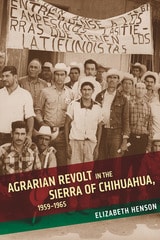
Agrarian Revolt in the Sierra of Chihuahua, 1959–1965
Elizabeth Henson
University of Arizona Press, 2019
Thousands of students joined the campesino protests in long-distance marches, land invasions, and direct actions that transcended political parties and marked the participants’ emergence as political subjects. The Popular Guerrilla Group (GPG) took shape from sporadic armed conflicts in the sierra. Early victories in the field encouraged the GPG to pursue more ambitious targets, and on September 23, 1965, armed farmers, agricultural workers, students, and teachers attacked an army base in Madera, Chihuahua. This bold move had deadly consequences.
With a sympathetic yet critical eye, historian Elizabeth Henson argues that the assault undermined and divided the movement that had been in its cradle, sacrificing the most militant, audacious, and serious of a generation at a time when such sacrifices were more frequently observed. Henson shows how local history merged with national tensions over one-party rule, the unrealized promises of the Mexican Revolution, and international ideologies.
Agricultural Intensification and Prehistoric Health in the Valley of Oaxaca, Mexico
Denise C. Hodges
University of Michigan Press, 1989
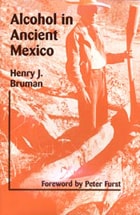
Alcohol in Ancient Mexico
Henry Bruman
University of Utah Press, 2000
Alcohol in Ancient Mexico reconstructs the variety and extent of distillation traditions in the ancient cultures of Mexico, describing in detail the various plants and processes used to make such beverages, their prevalence, and their significance for local culture.
The art of distillation arrived in Mexico with the Spaniards in the sixteenth century. However, well before that time, native skills and available resources had contributed to a well-developed tradition of intoxicating beverages, many of which are still produced and consumed.
In the 1930’s Henry Bruman visited various Mexican and Central American Indian tribes to reconstruct the variety and extent of these ancient traditions. He discerned five distinct areas defined by the culturally most significant beverages, all superimposed over the great mescal wine region. Within these five areas he noted wine made from cactus, cactus fruit, cornstalks, and mesquite pods; beer from sprouted maize; and fermented sap from pulque agaves.
Outside the mescal region he observed widespread consumption in the Yucatan of a wine made from fermented honey and balché bark, plus lesser-known beverages in other regions. He also observed the frequent inclusion in the fermentation process of alkaloid-bearing ingredients such as peyote and tobacco, plants whose roots or bark contain saponins—which act as cardiac poisons—and even poisons from certain toads.
Alcohol in Ancient Mexico also considers the relative absence of alcoholic drink in the southwestern United States, the introduction of sills following the Spanish conquest, and possible sources for the introduction of coconut wine.
Previously unpublished, the research presented here retains its relevance today, and the photographs offer a fascinating glimpse at a traditional world that has now almost vanished.

Alejandro González Iñárritu
Celestino Deleyto and Maria del Mar Azcona
University of Illinois Press, 2010
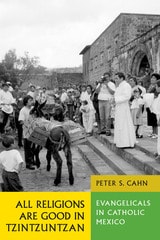
All Religions Are Good in Tzintzuntzan
Evangelicals in Catholic MexicoBy Peter S. Cahn
University of Texas Press, 2003
Since the 1960s, evangelical Christian denominations have made converts throughout much of Roman Catholic Latin America, causing clashes of faith that sometimes escalate to violence. Yet in one Mexican town, Tzintzuntzan, the appearance of new churches has provoked only harmony. Catholics and evangelicals alike profess that "all religions are good," a sentiment not far removed from "here we are all equal," which was commonly spoken in the community before evangelicals arrived.
In this paradigm-challenging study, Peter Cahn investigates why the coming of evangelical churches to Tzintzuntzan has produced neither the interfaith clashes nor the economic prosperity that evangelical conversion has brought to other communities in Mexico and Latin America. Drawing on extensive ethnographic fieldwork, he demonstrates that the evangelicals' energetic brand of faith has not erupted into violence because converts continue to participate in communal life, while Catholics, in turn, participate in evangelical practices. He also underscores how Tzintzuntzan's integration into global economic networks strongly motivates the preservation of community identity and encourages this mutual borrowing. At the same time, however, Cahn concludes that the suppression of religious difference undermines the revolutionary potential of religion.
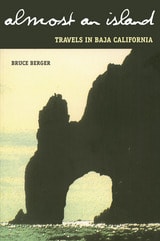
Almost an Island
Travels in Baja CaliforniaBruce Berger
University of Arizona Press, 1998
Eight hundred miles long, Baja California is the remotest region of the Sonoran desert, a land of volcanic cliffs, glistening beaches, fantastical boojum trees, and some of the greatest primitive murals in the Western Hemisphere. In Almost an Island, Berger recounts tales from his three decades in this extraordinary place, enriching his account with the peninsula's history, its politics, and its probable future—rendering a striking panorama of this land so close to the United States, so famous, and so little known.
Readers will meet a cast of characters as eccentric as the place itself: Brandy, who ranges the desert in a sand buggy while breathing from an oxygen tank; Katie, the chanteuse; nuns illegally raising pigs. They will encounter the tourist madness of a total eclipse, the story of the heir to an oasis, a musical Mata Hari, rare pronghorn antelope, and a pet tarantula. In prose as glittering as this desert engulfed by the sea, Almost an Island is a fascinating journey into the human heart of a spectacular land.
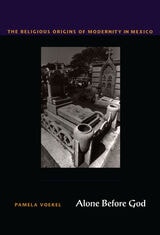
Alone Before God
The Religious Origins of Modernity in MexicoPamela Voekel
Duke University Press, 2002
Drawing on the archival research of wills, public documents, and other texts from late-colonial and early-republican Mexico, Voekel describes the marked scaling-down of the pomp and display that had characterized baroque Catholic burials and the various devices through which citizens sought to safeguard their souls in the afterlife. In lieu of these baroque practices, the new enlightened Catholics, claims Voekel, expressed a spiritually and hygienically motivated preference for extremely simple burial ceremonies, for burial outside the confines of the church building, and for leaving their earthly goods to charity. Claiming that these changes mirrored a larger shift from an external, corporate Catholicism to a more interior piety, she demonstrates how this new form of Catholicism helped to initiate a cultural and epistemic shift that placed the individual at the center of knowledge.
Breaking with the traditional historiography to argue that Mexican liberalism had deeply religious roots, Alone Before God will be of interest to specialists in Latin American history, modernity, and religion.
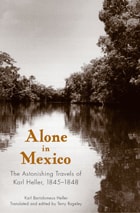
Alone in Mexico
The Astonishing Travels of Karl Heller, 1845–1848Karl Bartolomeus Heller, and translated and edited by Terry Rugeley
University of Alabama Press, 2007
This volume is the first-ever English translation of the memoirs of Karl Heller, a twenty-year-old aspiring Austrian botanist who traveled to Mexico in 1845 to collect specimens. He passed through the Caribbean, lived for a time in the mountains of Veracruz, and journeyed to Mexico City through the cities of Puebla and Cholula. After a brief residence in the capital, Heller moved westward to examine the volcanoes and silver mines near Toluca. When the United States invaded Mexico in 1846–47 conditions became chaotic, and the enterprising botanist was forced to flee to Yucatán. Heller lived in the port city of Campeche, but visited Mèrida, the ruins of Uxmal, and the remote southern area of the Champotòn River. From there Heller, traveling by canoe, journeyed through southern Tabasco and northern Chiapas and finally returned to Vienna through Cuba and the United States bringing back thousands of samples of Mexican plants and animals.
Heller's account is one of the few documents we have from travelers who visited Mexico in this period, and it is particularly useful in describing conditions outside the capital of Mexico City. In 1853 Heller published his German-language account as Reisen in Mexiko, but the work has remained virtually unknown to English or Spanish readers. This edition now provides a complete, annotated, and highly readable translation.
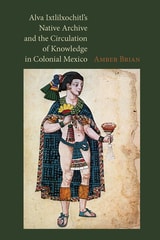
Alva Ixtlilxochitl's Native Archive and the Circulation of Knowledge in Colonial Mexico
Amber Brian
Vanderbilt University Press, 2016
Born between 1568 and 1580, Alva Ixtlilxochitl was a direct descendant of Ixtlilxochitl I and Ixtlilxochitl II, who had been rulers of Texcoco, one of the major city-states in pre-Conquest Mesoamerica. After a distinguished education and introduction into the life of the empire of New Spain in Mexico, Ixtlilxochitl was employed by the viceroy to write histories of the indigenous peoples in Mexico. Engaging with this history and delving deep into the resultant archives of this life's work, Amber Brian addresses the question of how knowledge and history came to be crafted in this era.
Brian takes the reader through not only the history of the archives itself, but explores how its inheritors played as crucial a role in shaping this indigenous history as the author. The archive helped inspire an emerging nationalism at a crucial juncture in Latin American history, as Creoles and indigenous peoples appropriated the history to give rise to a belief in Mexican exceptionalism. This belief, ultimately, shaped the modern state and impacted the course of history in the Americas. Without the work of Ixtlilxochitl, that history would look very different today.
American and British Writers in Mexico, 1556-1973
By Drewey Wayne Gunn
University of Texas Press, 1974
American and British Writers in Mexico is the study that laid the foundation upon which subsequent examinations of Mexico’s impact upon American and British letters have built. Chosen by the Mexican government to be placed, in translation, in its public libraries, the book was also referenced by Nobel Laureate Octavio Paz in an article in the New Yorker, “Reflections—Mexico and the United States.” Drewey Wayne Gunn demonstrates how Mexican experiences had a singular impact upon the development of English writers, beginning with early British explorers who recorded their impressions for Hakluyt’s Voyages, through the American Beats, who sought to escape the strictures of American culture.
Among the 140 or so writers considered are Stephen Crane, Ambrose Bierce, Langston Hughes, D. H. Lawrence, Somerset Maugham, Katherine Anne Porter, Hart Crane, Malcolm Lowry, John Steinbeck, Graham Greene, Tennessee Williams, Saul Bellow, William Carlos Williams, Robert Lowell, Ray Bradbury, Allen Ginsberg, William Burroughs, and Jack Kerouac.
Gunn finds that, while certain elements reflecting the Mexican experience—colors, landscape, manners, political atmosphere, a sense of the alien—are common in their writings, the authors reveal less about Mexico than they do about themselves. A Mexican sojourn often marked the beginning, the end, or the turning point in a literary career. The insights that this pioneering study provide into our complex cultural relationship with Mexico, so different from American and British authors’ encounters with Continental cultures, remain vital. The book is essential for anyone interested in understanding the full range of the impact of the expatriate experience on writers.
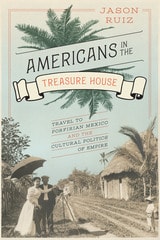
Americans in the Treasure House
Travel to Porfirian Mexico and the Cultural Politics of EmpireBy Jason Ruiz
University of Texas Press, 2014
When railroads connected the United States and Mexico in 1884 and overland travel between the two countries became easier and cheaper, Americans developed an intense curiosity about Mexico, its people, and its opportunities for business and pleasure. Indeed, so many Americans visited Mexico during the Porfiriato (the long dictatorship of Porfirio Díaz, 1876–1911) that observers on both sides of the border called the hordes of tourists and business speculators a “foreign invasion,” an apt phrase for a historical moment when the United States was expanding its territory and influence.
Americans in the Treasure House examines travel to Mexico during the Porfiriato, concentrating on the role of travelers in shaping ideas of Mexico as a logical place for Americans to extend their economic and cultural influence in the hemisphere. Analyzing a wealth of evidence ranging from travelogues and literary representations to picture postcards and snapshots, Jason Ruiz demonstrates that American travelers constructed Mexico as a nation at the cusp of modernity, but one requiring foreign intervention to reach its full potential. He shows how they rationalized this supposed need for intervention in a variety of ways, including by representing Mexico as a nation that deviated too dramatically from American ideals of progress, whiteness, and sexual self-control to become a modern “sister republic” on its own. Most importantly, Ruiz relates the rapid rise in travel and travel discourse to complex questions about national identity, state power, and economic relations across the U.S.–Mexico border.
Amplifications of Black Sound from Colonial Mexico
Vocality and BeyondSarah Finley
Vanderbilt University Press, 2024
Amplifications of Black Sound from Colonial Mexico is the first extensive study of Afro-descendant sonorities in New Spain or elsewhere in colonial Latin America. In this context, it attends to Black sounds through a framework that remixes Jacques Derrida’s reading of the ear’s anatomy with theories like Gilroy’s lower frequencies or Fred Moten’s phonic materiality. Sarah Finley’s aim is to unsettle the divide between self and other so the auditory archive might emerge as a polyphonic record that exceeds dichotomies of sounding object / listening subject. Through sampling the Afro-descendant sounds of this archive, this book recovers and rearticulates Black voices and auditory practices in New Spain.
Améfrica in Letters
Literary Interventions from Mexico to the Southern ConeJennifer Carolina Gómez Menjívar
Vanderbilt University Press, 2022
An Impossible Living in a Transborder World
Culture, Confianza, and Economy of Mexican-Origin PopulationsCarlos G. Vélez-Ibáñez
University of Arizona Press, 2010
Central to the ROSCA is the cultural concept of mutual trust, or confianza. This is the cultural glue that holds the reciprocal relationship together. As Vélez-Ibáñez explains, confianza “shapes the expectations for relationships within broad networks of interpersonal links, in which intimacies, favors, goods, services, emotion, power, or information are exchanged.” In a border region where migration, class movement, economic changes, and institutional inaccessibility produce a great deal of uncertainty, Mexican-origin populations rely on confianza and ROSCAs to maintain a sense of security in daily life. How do transborder people adapt these common practices to meet the demands of a global economy? That is precisely what Vélez-Ibáñez investigates.
Anarchism & The Mexican Working Class, 1860-1931
By John M. Hart
University of Texas Press, 1978
The anarchist movement had a crucial impact upon the Mexican working class between 1860 and 1931. John M. Hart destroys some old myths and brings new information to light as he explores anarchism's effect on the development of the Mexican urban working-class and agrarian movements.
Hart shows how the ideas of European anarchist thinkers took root in Mexico, how they influenced revolutionary tendencies there, and why anarchism was ultimately unsuccessful in producing real social change in Mexico. He explains the role of the working classes during the Mexican Revolution, the conflict between urban revolutionary groups and peasants, and the ensuing confrontation between the new revolutionary elite and the urban working class.
The anarchist tradition traced in this study is extremely complex. It involves various social classes, including intellectuals, artisans, and ordinary workers; changing social conditions; and political and revolutionary events which reshaped ideologies. During the nineteenth century the anarchists could be distinguished from their various working- class socialist and trade unionist counterparts by their singular opposition to government. In the twentieth century the lines became even clearer because of hardening anarchosyndicalist, anarchistcommunist, trade unionist, and Marxist doctrines. In charting the rise and fall of anarchism, Hart gives full credit to the roles of other forms of socialism and Marxism in Mexican working-class history.
Mexican anarchists whose contributions are examined here include nineteenth-century leaders Plotino Rhodakanaty, Santiago Villanueva, Francisco Zalacosta, and José María Gonzales; the twentieth-century revolutionary precursor Ricardo Flores Magón; the Casa del Obrero founders Amadeo Ferrés, Juan Francisco Moncaleano, and Rafael Quintero; and the majority of the Centro Sindicalista Ubertario, leaders of the General Confederation of Workers.
This work is based largely on primary sources, and the bibliography contains a definitive listing of anarchist and radical working-class newspapers for the period.
Anay's Will to Learn
A Woman's Education in the Shadow of the MaquiladorasBy Elaine Hampton with Anay Palomeque de Carrillo
University of Texas Press, 2013
The opening of free trade agreements in the 1980s caused major economic changes in Mexico and the United States. These economic activities spawned dramatic social changes in Mexican society. One young Mexican woman, Anay Palomeque de Carrillo, rode the tumultuous wave of these economic activities from her rural home in tropical southern Mexico to the factories in the harsh desert lands of Ciudad Juárez during the early years of the city’s notorious violence.
During her years as an education professor at the University of Texas at El Paso, author Elaine Hampton researched Mexican education in border factory (maquiladora) communities. On one trip across the border into Ciudad Juárez, she met Anay, who became her guide in uncovering the complexities of a factory laborer’s experiences in these turbulent times.
Hampton here provides an exploration of education in an era of dramatic social and economic upheaval in rural and urban Mexico. This critical ethnographic case study presents Anay’s experiences in a series of narrative essays addressing the economic, social, and political context of her world. This young Mexican woman leads us through Ciudad Juárez in its most violent years, into women’s experiences in the factories, around family and religious commitments as well as personal illness, and on to her achievement of an education through perseverance and creativity.
Ancient Maya Commerce
Multidisciplinary Research at ChunchucmilScott R. Hutson
University Press of Colorado, 2017
Ancient Maya Commerce presents nearly two decades of multidisciplinary research at Chunchucmil, Yucatan, Mexico—a thriving Classic period Maya center organized around commercial exchange rather than agriculture. An urban center without a king and unable to sustain agrarian independence, Chunchucmil is a rare example of a Maya city in which economics, not political rituals, served as the engine of growth. Trade was the raison d’être of the city itself.
Using a variety of evidence—archaeological, botanical, geomorphological, and soil-based—contributors show how the city was a major center for both short- and long-distance trade, integrating the Guatemalan highlands, the Gulf of Mexico, and the interior of the northern Maya lowlands. By placing Chunchucmil into the broader context of emerging research at other Maya cities, the book reorients the understanding of ancient Maya economies. The book is accompanied by a highly detailed digital map that reveals the dense population of the city and the hundreds of streets its inhabitants constructed to make the city navigable, shifting the knowledge of urbanism among the ancient Maya.
Ancient Maya Commerce is a pioneering, thoroughly documented case study of a premodern market center and makes a strong case for the importance of early market economies in the Maya region. It will be a valuable addition to the literature for Mayanists, Mesoamericanists, economic anthropologists, and environmental archaeologists.
Contributors: Anthony P. Andrews, Traci Ardren, Sheryl Luzzadder-Beach, Timothy Beach, Chelsea Blackmore, Tara Bond-Freeman, Bruce H. Dahlin, Patrice Farrell, David Hixson, Socorro Jimenez, Justin Lowry, Aline Magnoni, Eugenia Mansell, Daniel E. Mazeau, Travis Stanton, Ryan V. Sweetwood, Richard E. Terry
Ancient Mesoamerican Population History
Urbanism, Social Complexity, and ChangeAdrian S. Z. Chase, Arlen F. Chase, and Diane Z. Chase
University of Arizona Press, 2024
Establishing ancient population numbers and determining how they were distributed across a landscape over time constitute two of the most pressing problems in archaeology. Accurate population data is crucial for modeling, interpreting, and understanding the past. Now, advances in both archaeology and technology have changed the way that such approximations can be achieved.
Including research from both highland central Mexico and the tropical lowlands of the Maya and Olmec areas, this book reexamines the demography in ancient Mesoamerica. Contributors present methods for determining population estimates, field methods for settlement pattern studies to obtain demographic data, and new technologies such as LiDAR (light detecting and ranging) that have expanded views of the ground in forested areas. Contributions to this book provide a view of ancient landscape use and modification that was not possible in the twentieth century. This important new work provides new understandings of Mesoamerican urbanism, development, and changes over time.
Contributors
Traci Ardren
M. Charlotte Arnauld
Bárbara Arroyo
Luke Auld-Thomas
Marcello A. Canuto
Adrian S. Z. Chase
Arlen F. Chase
Diane Z. Chase
Elyse D. Z. Chase
Javier Estrada
Gary M. Feinman
L. J. Gorenflo
Julien Hiquet
Scott R. Hutson
Gerardo Jiménez Delgado
Eva Lemonnier
Rodrigo Liendo Stuardo
José Lobo
Javier López Mejía
Michael L. Loughlin
Deborah L. Nichols
Christopher A. Pool
Ian G. Robertson
Jeremy A. Sabloff
Travis W. Stanton
Ancient Origins of the Mexican Plaza
From Primordial Sea to Public SpaceBy Logan Wagner, Hal Box, and Susan Kline Morehead
University of Texas Press, 2013
The plaza has been a defining feature of Mexican urban architecture and culture for at least 4,000 years. Ancient Mesoamericans conducted most of their communal life in outdoor public spaces, and today the plaza is still the public living room in every Mexican neighborhood, town, and city—the place where friends meet, news is shared, and personal and communal rituals and celebrations happen. The site of a community’s most important architecture—church, government buildings, and marketplace—the plaza is both sacred and secular space and thus the very heart of the community.
This extensively illustrated book traces the evolution of the Mexican plaza from Mesoamerican sacred space to modern public gathering place. The authors led teams of volunteers who measured and documented nearly one hundred traditional Mexican town centers. The resulting plans reveal the layers of Mesoamerican and European history that underlie the contemporary plaza. The authors describe how Mesoamericans designed their ceremonial centers as embodiments of creation myths—the plaza as the primordial sea from which the earth emerged. They discuss how Europeans, even though they sought to eradicate native culture, actually preserved it as they overlaid the Mesoamerican sacred plaza with the Renaissance urban concept of an orthogonal grid with a central open space. The authors also show how the plaza’s historic, architectural, social, and economic qualities can contribute to mainstream urban design and architecture today.
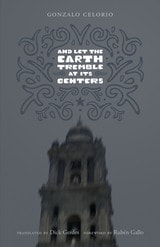
And Let the Earth Tremble at Its Centers
By Gonzalo Celorio
University of Texas Press, 2009
Professor Juan Manuel Barrientos prefers footsteps to footnotes. Fighting a hangover, he manages to keep his appointment to lead a group of students on a walking lecture among the historic buildings of downtown Mexico City. When the students fail to show up, however, he undertakes a solo tour that includes more cantinas than cathedrals. Unable to resist either alcohol itself or the introspection it inspires, Professor Barrientos muddles his personal past with his historic surroundings, setting up an inevitable conclusion in the very center of Mexico City.
First published in Mexico in the late 1990s, And Let the Earth Tremble at Its Centers was immediately lauded as a contemporary masterpiece in the long tradition of literary portraits of Mexico City. It is a book worthy of its dramatic title, which is drawn from a line in the Mexican national anthem.
Gonzalo Celorio first earned a place among the leading figures of Mexican letters for his scholarship and criticism, and careful readers will recognize a scholar's attention to accuracy within the novel's dyspeptic descriptions of Mexico City. The places described are indeed real (this edition includes a map that marks those visited in the story), though a few have since closed or been put to new uses. Dick Gerdes's elegant translation now preserves them all for a new audience.