Results by title
98 books match the query 'Migrations' and 11 start with a

A Little More Freedom
African Americans Enter the Urban Midwest, 1860–1930Jack S. Blocker
The Ohio State University Press, 2008
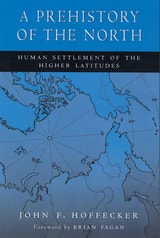
A Prehistory of the North
Human Settlement of the Higher LatitudesHoffecker, John F
Rutgers University Press, 2004
Early humans did not simply drift northward from their African origins as their abilities to cope with cooler climates evolved. The initial settlement of places like Europe and northern Asia, as well as the later movement into the Arctic and the Americas, actually occurred in relatively rapid bursts of expansion. A Prehistory of the North is the first full-length study to tell the complex story, spanning almost two million years, of how humans inhabited some of the coldest places on earth.
In an account rich with illustrations, John Hoffecker traces the history of anatomical adaptations, diet modifications, and technological developments, such as clothing and shelter, which allowed humans the continued ability to push the boundaries of their habitation. The book concludes by showing how in the last few thousand years, peoples living in the circumpolar zone—with the exception of western and central Siberia—developed a thriving maritime economy.
Written in nontechnical language, A Prehistory of the North provides compelling new insights and valuable information for professionals and students.

A Return to Servitude
Maya Migration and the Tourist Trade in CancúnM. Bianet Castellanos
University of Minnesota Press, 2010
A Return to Servitude is an ethnography of Maya migration within Mexico that analyzes the foundational role indigenous peoples play in the development of the modern nation-state. Focusing on tourism in the Yucatán Peninsula, M. Bianet Castellanos examines how Cancún came to be equated with modernity, how this city has shaped the political economy of the peninsula, and how indigenous communities engage with this vision of contemporary life. More broadly, she demonstrates how indigenous communities experience, resist, and accommodate themselves to transnational capitalism.
Tourism and the social stratification that results from migration have created conflict among the Maya. At the same time, this work asserts, it is through engagement with modernity and its resources that they are able to maintain their sense of indigeneity and community.

A Second Exodus
The American Movement to Free Soviet JewsEdited by Murray Friedman and Albert D. Chernin
Brandeis University Press, 1999
Alliance and Landscape on Perry Mesa in the Fourteenth Century
David R. Abbott
University of Utah Press, 2014
Contributors to this volume examine the migration process under two explanatory frameworks: alliance and landscape. These frameworks are used to explore competing hypotheses, positing either a rapid colonization associated with an alliance organized for warfare at a regional scale, or a more protracted migration as this landscape became comparatively more attractive for migrating farmers in the late thirteenth century.
As the first major publication on the archaeology of Perry Mesa, this volume contributes to theoretical perspectives on migration and ethnogenesis, the study of warfare in the prehistoric Southwest, the study of intensive agricultural practices in a marginal environment, and the cultural history of a little studied and largely unknown portion of the ancient Southwest. It not only documents the migration but also the ensuing birth of a new ethnic identity that arose from the coalescence of diverse groups atop Perry Mesa.
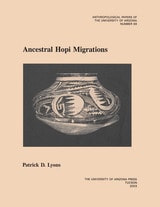
Ancestral Hopi Migrations
Patrick D. Lyons
University of Arizona Press, 2003
Ancient Human Migrations
A Multidisciplinary ApproachPeter Peregrine
University of Utah Press, 2009
This collection of papers, worldwide in scope, originated from a working conference at the Santa Fe Institute. Admixture is a common outcome of migration, and human populations are all amalgams of ancestors, neighbors, and others. As a result, the volume argues, no “pure” races, cultures, or languages can exist. The very original analyses and discussions presented here return the concept of migration to its rightful place among the known processes of human evolutionary change and variation.
Anonimo Mexicano
Richley Crapo and Bonnie Glass-Coffin
Utah State University Press, 2005

Arab-American Faces and Voices
The Origins of an Immigrant CommunityBy Elizabeth Boosahda
University of Texas Press, 2003
As Arab Americans seek to claim their communal identity and rightful place in American society at a time of heightened tension between the United States and the Middle East, an understanding look back at more than one hundred years of the Arab-American community is especially timely. In this book, Elizabeth Boosahda, a third-generation Arab American, draws on over two hundred personal interviews, as well as photographs and historical documents that are contemporaneous with the first generation of Arab Americans (Syrians, Lebanese, Palestinians), both Christians and Muslims, who immigrated to the Americas between 1880 and 1915, and their descendants.
Boosahda focuses on the Arab-American community in Worcester, Massachusetts, a major northeastern center for Arab immigration, and Worcester's links to and similarities with Arab-American communities throughout North and South America. Using the voices of Arab immigrants and their families, she explores their entire experience, from emigration at the turn of the twentieth century to the present-day lives of their descendants. This rich documentation sheds light on many aspects of Arab-American life, including the Arab entrepreneurial motivation and success, family life, education, religious and community organizations, and the role of women in initiating immigration and the economic success they achieved.
Archaeology without Borders
Contact, Commerce, and Change in the U.S. Southwest and Northwestern MexicoMaxine E. McBrinn
University Press of Colorado, 2008
Contributors examining early agriculture offer models for understanding the transition to agriculture, explore relationships between the spread of agriculture and Uto-Aztecan migrations, and present data from Arizona, New Mexico, and Chihuahua. Contributors focusing on social identity discuss migration, enculturation, social boundaries, and ethnic identities. They draw on case studies that include diverse artifact classes - rock art, lithics, architecture, murals, ceramics, cordage, sandals, baskets, faunal remains, and oral histories. Mexican scholars present data from Chihuahua, Durango, Zacatecas, Michoacan, Coahuila, and Nuevo Leon. They address topics including Spanish-indigenous conflicts, archaeological history, cultural landscapes, and interactions among Mesoamerica, northern Mexico, and the U.S. Southwest.
Laurie D. Webster is a visiting scholar in the Department of Anthropology at the University of Arizona. Maxine E. McBrinn is a postdoctoral research scientist at the Field Museum in Chicago. Proceedings of the 2004 Southwest Symposium. Contributors include Karen R. Adams, M. Nicolás Caretta, Patricia Carot, John Carpenter, Jeffery Clark, Linda S. Cordell, William E. Doolittle, Suzanne L. Eckert, Gayle J. Fritz, Eduardo Gamboa Carrera, Leticia González Arratia, Arturo Guevara Sánchez, Robert J. Hard, Kelly Hays-Gilpin, Marie-Areti Hers, Amber L. Johnson, Steven A. LeBlanc, Patrick Lyons, Jonathan B. Mabry, A. C. MacWilliams, Federico Mancera, Maxine E. McBrinn, Francisco Mendiola Galván, William L. Merrill, Martha Monzón Flores, Scott G. Ortman, John R. Roney, Guadalupe Sanchez de Carpenter, Moisés Valadez Moreno, Bradley J. Vierra, Laurie D. Webster, and Phil C. Weigand.
Athapaskan Migrations
The Archaeology of Eagle Lake, British ColumbiaR. G. Matson and Martin P. R. Magne
University of Arizona Press, 2007
In Athapaskan Migrations, authors R. G. Matson and Martin P. R. Magne use a variety of methods to identify and describe the arrival of the Athapaskan-speaking Chilcotin Indians in west central British Columbia. By contrasting two similar geographic areas—using the parallel direct historical approach—the authors define this aspect of Athapaskan culture. They present a sophisticated model of Northern Athapaskan migrations based on extensive archaeological, ethnographic, and dendrochronological research.
A synthesis of 25 years of work, Athapaskan Migrations includes detailed accounts of field research in which the authors emphasize ethnic group identification, settlement patterns, lithic analysis, dendrochronology, and radiocarbon dating. Their theoretical approach will provide a blueprint for others wishing to establish the ethnic identity of archaeological materials. Chapter topics include basic methodology and project history; settlement patterns and investigation of both the Plateau Pithouse and British Columbia Athapaskan Traditions; regional surveys and settlement patterns; excavated Plateau Pithouse Tradition and Athapaskan sites and their dating; ethnic identification of recovered material; the Chilcotin migration in the context of the greater Pacific Athapaskan, Navajo, and Apache migrations; and summaries and results of the excavations. The text is abundantly illustrated with more than 70 figures and includes access to convenient online appendixes. This substantial work will be of special importance to archaeologists, anthropologists, linguists, and scholars in Athapaskan studies and Canadian First Nation studies.