121 books match the query 'Motion picture industry' and 10 start with a

cover of A Divided World: Hollywood Cinema and Emigré Directors in the Era of Roosevelt and Hitler, 1933-1948

A Divided World

Hollywood Cinema and Emigré Directors in the Era of Roosevelt and Hitler, 1933-1948

Nick Smedley

Intellect Books, 2011

The New Deal introduced sweeping social, political, and cultural change across the United States, which Hollywood embraced enthusiastically. Then, when the heady idealism of the 1930s was replaced by the paranoia of the postwar years, Hollywood became an easy target for the anticommunists. A Divided World examines some of the important programs of the New Deal and the subsequent response of the film community—especially in relation to social welfare, women’s rights, and international affairs. The book also provides an analysis of the major works of three European directors—Billy Wilder, Ernst Lubitsch, and Fritz Lang—compared and contrasted with the products of mainstream Hollywood. This is a new interpretation of an influential period in American film history and it is sure to generate further debate and scholarship.
[more]
cover of A Short History of Film

A Short History of Film

Dixon, Wheeler Winston

Rutgers University Press, 2013

A Short History of Film, Second Edition, provides a concise and accurate overview of the history of world cinema, detailing the major movements, directors, studios, and genres from 1896 through 2012. Accompanied by more than 250 rare color and black-and-white stills—including many from recent films—the new edition is unmatched in its panoramic view, conveying a sense of cinema's sweep in the twentieth and early twenty-first centuries as it is practiced in the United States and around the world.

Wheeler Winston Dixon and Gwendolyn Audrey Foster present new and amended coverage of the industry in addition to updating the birth and death dates and final works of notable directors. Their expanded focus on key films brings the book firmly into the digital era and chronicles the death of film as a production medium.

The book takes readers through the invention of the kinetoscope, the introduction of sound and color between the two world wars, and ultimately the computer-generated imagery of the present day. It details significant periods in world cinema, including the early major industries in Europe, the dominance of the Hollywood studio system in the 1930s and 1940s, and the French New Wave of the 1960s. Attention is given to small independent efforts in developing nations and the more personal independent film movement that briefly flourished in the United States, the significant filmmakers of all nations, and the effects of censorship and regulation on production everywhere. In addition, the authors incorporate the stories of women and other minority filmmakers who have often been overlooked in other texts.

Engaging and accessible, this is the best one-stop source for the history of world film available for students, teachers, and general audiences alike.

[more]
cover of A Short History of Film

A Short History of Film

Dixon, Wheeler Winston

Rutgers University Press, 2008

The history of international cinema is now available in a concise, conveniently sized, and affordable volume. Succinct yet comprehensive, A Short History of Film provides an accessible overview of the major movements, directors, studios, and genres from the 1880s to the present. More than 250 rare stills and illustrations accompany the text, bringing readers face to face with many of the key players and films that have marked the industry.

Beginning with precursors of what we call moving pictures, Wheeler Winston Dixon and Gwendolyn Audrey Foster lead a fast-paced tour through the invention of the kinetoscope, the introduction of sound and color between the two world wars, and ultimately the computer generated imagery of the present day. They detail significant periods in world cinema, including the early major industries in Europe, the dominance of the Hollywood studio system in the 1930s and 1940s, and the French New Wave of the 1960s. Special attention is also given to small independent efforts in developing nations and the corresponding more personal independent film movement that briefly flourished in the United States, the significant filmmakers of all nations, censorship and regulation and how they have affected production everywhere, and a wide range of studios and genres. Along the way, the authors take great care to incorporate the stories of women and other minority filmmakers who have often been overlooked in other texts.

Compact and easily readable, this is the best one-stop source for the history of world film available to students, teachers, and general audiences alike.

[more]
cover of A Short History of Film, Fourth Edition

A Short History of Film, Fourth Edition

Wheeler Winston Dixon

Rutgers University Press, 2026

A Choice Significant University Press Title for Undergraduates

This updated and expanded edition of A Short History of Film provides an accessible overview of the major movements, directors, studios, and genres from the 1880s to the present. Succinct yet comprehensive, with more than 250 rare stills and illustrations, this edition provides new information on contemporary horror, comic book, and franchise films; issues surrounding women and minority filmmakers; the effects of the COVID-19 pandemic on movies worldwide; the shift from film to digital production; the rising use of artificial intelligence in cinema; and the impact of streaming on the industry.

Beginning with the precursors of moving pictures, Wheeler Winston Dixon and Gwendolyn Audrey Foster lead a fast-paced tour through the invention of the kinetoscope, the introduction of sound and color between the two world wars, and ultimately the computer-generated imagery of the present day. They detail significant periods in world cinema, including the creation of early major industries in Europe, the dominance of the Hollywood studio system in the 1930s and 1940s, and the French New Wave of the 1960s. They also highlight independent efforts in developing nations and the corresponding more personal independent film movement that briefly flourished in the United States. 

Compact and easily readable, this is a vital history of international cinema is a one-stop resource for students, teachers, and general readers alike.
[more]
cover of A Short History of Film, Third Edition

A Short History of Film, Third Edition

Dixon, Wheeler Winston

Rutgers University Press, 2018
With more than 250 images, new information on international cinema—especially Polish, Chinese, Russian, Canadian, and Iranian filmmakers—an expanded section on African-American filmmakers, updated discussions of new works by major American directors, and a new section on the rise of comic book movies and computer generated special effects, this is the most up to date resource for film history courses in the twenty-first century.  
[more]
cover of African Filmmaking: Five Formations

African Filmmaking

Five Formations

Kenneth W. Harrow

Michigan State University Press, 2017
This volume attempts to join the disparate worlds of Egyptian, Maghrebian, South African, Francophone, and Anglophone African cinema—that is, five “formations” of African cinema. These five areas are of particular significance—each in its own way. The history of South Africa, heavily marked by apartheid and its struggles, differs considerably from that of Egypt, which early on developed its own “Hollywood on the Nile.” The history of French colonialism impacted the three countries of the Maghreb—Tunisia, Algeria, and Morocco—differently than those in sub-Saharan Africa, where Senegal and Sembène had their own great effect on the Sahelian region. Anglophone Africa, particularly the films of Ghana and Nigeria, has dramatically altered the ways people have perceived African cinema for decades. History, geography, production, distribution, and exhibition are considered alongside film studies concerns about ideology and genre. This volume provides essential information for all those interested in the vital worlds of cinema in Africa since the time of the Lumière brothers.
 
[more]
cover of American Blockbuster: Movies, Technology, and Wonder

American Blockbuster

Movies, Technology, and Wonder

Charles R. Acland

Duke University Press, 2020
Ben-Hur (1959), Jaws (1975), Avatar (2009), Wonder Woman (2017): the blockbuster movie has held a dominant position in American popular culture for decades. In American Blockbuster Charles R. Acland charts the origins, impact, and dynamics of this most visible, entertaining, and disparaged cultural form. Acland narrates how blockbusters emerged from Hollywood's turn to a hit-driven focus during the industry's business crisis in the 1950s. Movies became bigger, louder, and more spectacular. They also became prototypes for ideas and commodities associated with the future of technology and culture, accelerating the prominence of technological innovation in modern American life. Acland shows that blockbusters continue to be more than just movies; they are industrial strategies and complex cultural machines designed to normalize the ideologies of our technological age.
[more]
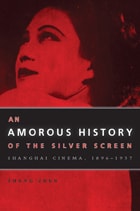
cover of An Amorous History of the Silver Screen: Shanghai Cinema, 1896-1937

An Amorous History of the Silver Screen

Shanghai Cinema, 1896-1937

Zhang Zhen

University of Chicago Press, 2005

Shanghai in the early twentieth century was alive with art and culture. With the proliferation of popular genres such as the martial arts film, the contest among various modernist filmmakers, and the advent of sound, Chinese cinema was transforming urban life. But with the Japanese invasion in 1937, all of this came to a screeching halt. Until recently, the political establishment has discouraged comprehensive studies of the cultural phenomenon of early Chinese film, and this momentous chapter in China's history has remained largely unexamined.

The first sustained historical study of the emergence of cinema in China, An Amorous History of the Silver Screen is a fascinating narrative that illustrates the immense cultural significance of film and its power as a vehicle for social change. Named after a major feature film on the making of Chinese cinema, only part of which survives, An Amorous History of the Silver Screen reveals the intricacies of this cultural movement and explores its connections to other art forms such as photography, architecture, drama, and literature. In light of original archival research, Zhang Zhen examines previously unstudied films and expands the important discussion of how they modeled modern social structures and gender roles in early twentieth-century China.

The first volume in the new and groundbreaking series Cinema and Modernity, An Amorous History of the Silver Screen is an innovative—and well illustrated—look at the cultural history of Chinese modernity through the lens of this seminal moment in Shanghai cinema.
[more]
cover of Anthropology, Film Industries, Modularity

Anthropology, Film Industries, Modularity

Ramyar D. Rossoukh and Steven C. Caton, editors

Duke University Press, 2021

From Bangladesh and Hong Kong to Iran and South Africa, film industries around the world are rapidly growing at a time when new digital technologies are fundamentally changing how films are made and viewed. Larger film industries like Bollywood and Nollywood aim to attain Hollywood's audience and profitability, while smaller, less commercial, and often state-funded enterprises support various cultural and political projects. The contributors to Anthropology, Film Industries, Modularity take an ethnographic and comparative approach to capturing the diversity and growth of global film industries. They outline how modularity—the specialized filmmaking tasks that collectively produce a film—operates as a key feature in every film industry, independent of local context. Whether they are examining the process of dubbing Hollywood films into Hindi, virtual reality filmmaking in South Africa, or on-location shooting in Yemen, the contributors' anthropological methodology brings into relief the universal practices and the local contingencies and deeper cultural realities of film production.

Contributors. Steven C. Caton, Jessica Dickson, Kevin Dwyer, Tejaswini Ganti, Lotte Hoek, Amrita Ibrahim, Sylvia J. Martin, Ramyar D. Rossoukh
[more]
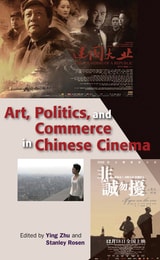
cover of Art, Politics, and Commerce in Chinese Cinema

Art, Politics, and Commerce in Chinese Cinema

Edited by Ying Zhu and Stanley Rosen

Hong Kong University Press, 2010

Art, politics, and commerce are intertwined everywhere, but in China the interplay is explicit, intimate, and elemental, and nowhere more so than in the film industry. Understanding this interplay in the era of market reform and globalization is essential to understanding mainland Chinese cinema. This interdisciplinary book provides a comprehensive reappraisal of Chinese cinema, surveying the evolution of film production and consumption in mainland China as a product of shifting relations between art, politics, and commerce. Within these arenas, each of the twelve chapters treats a particular history, development, genre, filmmaker or generation of filmmakers, adding up to a distinctively comprehensive rendering of Chinese cinema. The book illuminates China’s changing state-society relations, the trajectory of marketization and globalization, the effects of China’s stark historical shifts, Hollywood’s role, the role of nationalism, and related themes of interest to scholars of Asian studies, cinema and media studies, political science, sociology, comparative literature and Chinese language. Contributors include Ying Zhu, Stanley Rosen, Seio Nakajima, Zhiwei Xiao, Shujen Wang, Paul Clark, Stephen Teo, John Lent, Ying Xu, Yingjin Zhang, Bruce Robinson, Liyan Qin, and Shuqin Cui.
[more]