Results by title
92 books match the query 'Multiculturalism' and 8 start with a
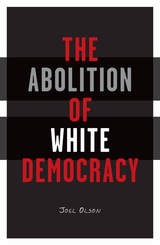
Abolition Of White Democracy
Joel Olson
University of Minnesota Press, 2004
Offers a new way of understanding the tortured relationship between race and democracy in the United States
Racial discrimination embodies inequality, exclusion, and injustice and as such has no place in a democratic society. And yet racial matters pervade nearly every aspect of American life, influencing where we live, what schools we attend, the friends we make, the votes we cast, the opportunities we enjoy, and even the television shows we watch.
Joel Olson contends that, given the history of slavery and segregation in the United States, American citizenship is a form of racial privilege in which whites are equal to each other but superior to everyone else. In Olson’s analysis we see how the tension in this equation produces a passive form of democracy that discourages extensive participation in politics because it treats citizenship as an identity to possess rather than as a source of empowerment. Olson traces this tension and its disenfranchising effects from the colonial era to our own, demonstrating how, after the civil rights movement, whiteness has become less a form of standing and more a norm that cements white advantages in the ordinary operations of modern society. To break this pattern, Olson suggests an “abolitionist-democratic” political theory that makes the fight against racial discrimination a prerequisite for expanding democratic participation.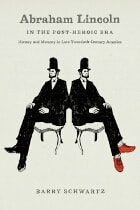
Abraham Lincoln in the Post-Heroic Era
History and Memory in Late Twentieth-Century AmericaBarry Schwartz
University of Chicago Press, 2008
Adoption and Multiculturalism
Europe, the Americas, and the PacificJenny Heijun Wills, Tobias Hübinette, and Indigo Willing, Editors
University of Michigan Press, 2020
The contributors represent a wide range of disciplines, cultures, and connections in relation to the adoption constellation, bringing perspectives from Europe (including Scandinavia), Canada, the United States, and Australia. The book brings together the various methodologies of literary criticism, history, anthropology, sociology, and cultural theory to demonstrate the multifarious and robust ways that adoption and multiculturalism might be studied and considered. Edited by three transnational and transracial adoptees, Adoption and Multiculturalism: Europe, the Americas, and the Pacific offers bold new scholarship that revises popular notions of transracial and transnational adoption as practice and phenomenon.
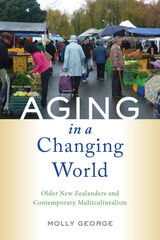
Aging in a Changing World
Older New Zealanders and Contemporary MulticulturalismMolly George
Rutgers University Press, 2022
American Conversations
Ellen Bigler
Temple University Press, 1999
The impassioned debate that erupted between long-time white ethnic residents and more recently arrived Puerto Rican citizens in the de-industrialized city the author calls "Arnhem" was initially sparked by one school board member's disparaging comments about Latinos. The conflict led to an investigation by the attempts to implement multicultural reforms in the city's schools. American Conversations follows the ensuing conflict, looks at the history of racial formation in the United States, and considers the specific economic and labor histories of the groups comprising the community in opposition. Including interviews with students, teachers, parents, and community leaders, as well as her own observations of exchanges among them inside and outside the classroom, Bigler's book explores the social positions, diverging constructions of history, and polarized understandings of contemporary racial/ethnic dynamics in Arnhem. Through her retelling of one community's crisis, Bigler illuminates the nature of racial politics in the United States and how both sides in the debate over multicultural education struggle to find a common language.
American Conversations will appeal to anyone invested in education and multiculturalism in the United States as well as those interested in anthropology, sociology, racial and ethnic studies, educational institutions, migration and settlement, the effects of industrial restructuring, and broad issues of community formation and conflict.
American Multiculturalism and the Anti-Discrimination Regime
The Challenge to Liberal PluralismThomas F. Powers
St. Augustine's Press, 2023

Art, Activism, and Oppositionality
Essays from AfterimageGrant Kester, ed.
Duke University Press, 1998
Forging a style of criticism where aesthetic, critical, theoretical, and activist concerns converge, Afterimage has shaped American debates around the politics of visual production and arts education while offering a voice to politically involved artists and scholars. Art, Activism, and Oppositionality insists not only on the continuing relevance of an activist stance to contemporary art practice and criticism, but also on the significance of an engaged art practice that is aligned with social or political activism. With essays that span fifteen years—roughly from Ronald Reagan’s 1980 presidential win to the 1994 Republican victories in Congress, a period marked by waning public support for the arts and growing antagonism toward activist art—Art, Activism, and Oppositionality confronts issues ranging from arts patronage, pedagogy, and the very definitions of art and activism to struggles involving AIDS, reproductive rights, sexuality, and racial identity.
Contributors. Maurice Berger, Richard Bolton, Ann Cvetkovich, Coco Fusco, Brian Goldfarb, Mable Haddock, Grant H. Kester, Ioannis Mookas, Chiquita Mullins Lee, Darrell Moore, Lorraine O’Grady, Michael Renov, Martha Rosler, Patricia Thomson, David Trend, Charles A. Wright Jr., Patricia R. Zimmerman
Asia/Pacific as Space of Cultural Production
Rob Wilson and Arif Dirlik, eds.
Duke University Press, 1995
From New Zealand to Japan, Taiwan to Hawaii, this innovative volume presents essays, poems, and memoirs by prominent Asia/Pacific writers that resist appropriation by transnational capitalism through the articulation of autonomous local identities and counter-histories of place and community. In addition, cultural critics spanning several locations and disciplines deconstruct representations—particularly those on film and in novels—that perpetuate Asia/Pacific as a realm of EuroAmerican fantasy.
This collection, a much expanded edition of boundary 2, offers a new perception of the Asia/Pacific region by presenting the Pacific not as a paradise or vast emptiness, but as a place where living, struggling peoples have constructed contemporary identities out of a long history of hegemony and resistance. Asia/Pacific as Space of Cultural Production will prove stimulating to readers with an interest in the Asia/Pacific region, and to scholars in the fields of Asian, American, Pacific, postcolonial, and cultural studies.
Contributors. Joseph P. Balaz, Chris Bongie, William A. Callahan, Thomas Carmichael, Leo Ching, Chiu Yen Liang (Fred), Chungmoo Choi, Christopher L. Connery, Arif Dirlik, John Fielder, Miriam Fuchs, Epeli Hau`ofa, Lawson Fusao Inada, M. Consuelo León W., Katharyne Mitchell, Masao Miyoshi, Steve Olive, Theophil Saret Reuney, Peter Schwenger, Subramani, Terese Svoboda, Jeffrey Tobin, Haunani-Kay Trask, John Whittier Treat, Tsushima Yuko, Albert Wendt, Rob Wilson