Results by title
20 books match the query 'Gifts'
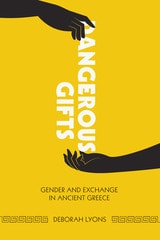
Dangerous Gifts
Gender and Exchange in Ancient GreeceBy Deborah Lyons
University of Texas Press, 2012
Deianeira sends her husband Herakles a poisoned robe. Eriphyle trades the life of her husband Amphiaraos for a golden necklace. Atreus’s wife Aerope gives away the token of his sovereignty, a lamb with a golden fleece, to his brother Thyestes, who has seduced her. Gifts and exchanges always involve a certain risk in any culture, but in the ancient Greek imagination, women and gifts appear to be a particularly deadly combination.
This book explores the role of gender in exchange as represented in ancient Greek culture, including Homeric epic and tragedy, non-literary texts, and iconographic and historical evidence of various kinds. Using extensive insights from anthropological work on marriage, kinship, and exchange, as well as ethnographic parallels from other traditional societies, Deborah Lyons probes the gendered division of labor among both gods and mortals, the role of marriage (and its failure) in transforming women from objects to agents of exchange, the equivocal nature of women as exchange-partners, and the importance of the sister-brother bond in understanding the economic and social place of women in ancient Greece. Her findings not only enlarge our understanding of social attitudes and practices in Greek antiquity but also demonstrate the applicability of ethnographic techniques and anthropological theory to the study of ancient societies.

From Peaks to Prairie
The Gifts of Walking in an Anxious LifeCara Chamberlain
Oregon State University Press, 2026
Along twenty-nine trails near Yellowstone National Park, Cara Chamberlain leads readers on a journey of perseverance, drawing lessons from human and natural history. She reflects on being diagnosed with generalized anxiety disorder (GAD) and obsessive-compulsive disorder (OCD) and explores how walking helps manage anxiety, opening rich pathways of perception.
In From Peaks to Prairie, Chamberlain examines her personal life, family history, and struggles as she encounters animals and plants of Montana and Wyoming. Each essay is an episode mingling the past with the present, combining sightings of bears, birds, and wildflowers with memories of her Utah childhood and family. She observes, “I walk. It’s the way I’ve found not to eliminate GAD and OCD, as I used to long to do, but to live with them.” Mountains and prairies offer strength and nurture those who need them. It is on their paths that Chamberlain finds clarity.
Gift Giving
A Research AnthologyCele Otnes
University of Wisconsin Press, 1996
Gift Giving brings together 21 scholars from a variety of disciplines—including consumer behavior, communications, and sociology—who are dedicated to the understanding of what motivates gift selection, presentation, and incorporation of a gift into a person's life.
Gifts and Commodities
C. A. Gregory
HAU, 2015
Christopher A. Gregory’s Gifts and Commodities is one of the undisputed classics of economic anthropology. On its publication in 1982, it spurred intense, ongoing debates about gifts and gifting, value, exchange, and the place of political economy in anthropology.
Gifts and Commodities is, at once, a critique of neoclassical economics and development theory, a critical history of colonial Papua New Guinea, and a comparative ethnography of exchange in Melanesian societies. This new edition includes a foreword by anthropologist Marilyn Strathern and a new preface by the author that discusses the ongoing response to the book and the debates it has engendered, debates that have become more salient in our evermore neoliberal and globalized era.

Gifts from Amin
Ugandan Asian Refugees in CanadaShezan Muhammedi
University of Manitoba Press, 2022
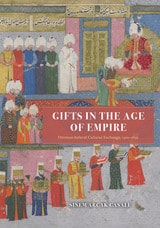
Gifts in the Age of Empire
Ottoman-Safavid Cultural Exchange, 1500–1639Sinem Arcak Casale
University of Chicago Press, 2023
When the Safavid dynasty, founded in 1501, built a state that championed Iranian identity and Twelver Shi'ism, it prompted the more established Ottoman Empire to align itself definitively with Sunni legalism. The political, religious, and military conflicts that arose have since been widely studied, but little attention has been paid to their diplomatic relationship. Sinem Arcak Casale here sets out to explore these two major Muslim empires through a surprising lens: gifts. Countless treasures—such as intricate carpets, gilded silver cups, and ivory-tusk knives—flowed from the Safavid to the Ottoman Empire throughout the sixteenth century. While only a handful now survive, records of these gifts exist in court chronicles, treasury records, poems, epistolary documents, ambassadorial reports, and travel narratives. Tracing this elaborate archive, Casale treats gifts as representative of the complicated Ottoman-Safavid coexistence, demonstrating how their rivalry was shaped as much by culture and aesthetics as it was by religious or military conflict. Gifts in the Age of Empire explores how gifts were no mere accessories to diplomacy but functioned as a mechanism of competitive interaction between these early modern Muslim courts.
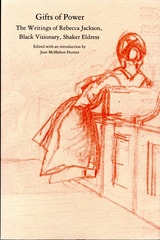
Gifts of Power
The Writings of Rebecca Jackson, Black Visionary, Shaker EldressJean M. Humez
University of Massachusetts Press, 1981
A free black woman in antebellum America, Rebecca Cox Jackson (1795–1871) was an independent itinerant preacher and religious visionary who founded a Shaker community in Philadelphia that survived her death by twenty-five years. Gifts of Power contains her complete extant writings, covering the period 1830 to 1864.
Given Time II
Jacques Derrida
University of Chicago Press, 2026
The long-awaited conclusion to Derrida’s seminar on the gift and time.
In 1991, Jacques Derrida published the first half of a seminar delivered from 1978 to 1979 on gifts and time, but the second installment (though expected) was not completed in his lifetime. Given Time II completes the seminar with eight sessions that showcase Derrida’s most advanced work on the problematic of the gift in Heidegger, with deep dives into some of the most difficult texts in the Heideggerian corpus, including “The Origin of the Work of Art,” “The Thing,” and “On Time and Being.”
Beyond Heidegger, Derrida engages Claude Lévi-Strauss, Marcel Mauss, Maurice Blanchot, Jacques Lacan, and others on the act of giving and receiving, the sacrificial gift, and more. Throughout, Derrida identifies a paradox of gift giving: for the gift to be received as a gift, it must not appear as such, since gifts often involve a cycle of debt and repayment. Given Time II is a uniquely Derridean treatment of an important subject in the work of Heidegger and beyond.
Given Time
I. Counterfeit MoneyJacques Derrida
University of Chicago Press, 1992
Derrida reads the relation of time to gift through a number of texts: Heidegger's Time and Being, Mauss's The Gift, as well as essays by Benveniste and Levi-Strauss that assume Mauss's legacy. It is, however, a short tale by Baudelaire, "Counterfeit Money," that guides Derrida's analyses throughout. At stake in his reading of the tale, to which the second half of this book is devoted, are the conditions of gift and forgiveness as essentially bound up with the movement of dissemination, a concept that Derrida has been working out for many years.
For both readers of Baudelaire and students of literary theory, this work will prove indispensable.
No Gifts from Chance
A Biography of Edith WhartonBy Shari Benstock
University of Texas Press, 2004
The first new biography of America's foremost woman of letters in twenty years, No Gifts from Chance presents an Edith Wharton for our times. Far from the emotionally withdrawn and neurasthenic victim of earlier portraits, she is revealed here as an ambitious, disciplined, and self-determined woman who fashioned life to her own desires. Drawing on government records, legal and medical documents, and recently opened collections of Wharton's letters, Shari Benstock's biography offers new information on what have been called the key mysteries of her life: the question of her paternity, her troubled relations with her mother and older brothers, her marriage to manic-depressive Teddy Wharton, and her extramarital affair with Morton Fullerton.
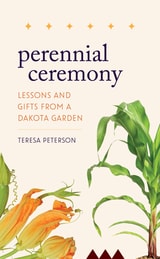
Perennial Ceremony
Lessons and Gifts from a Dakota GardenTeresa Peterson
University of Minnesota Press, 2024
Travel through a garden’s seasons toward healing, reclamation, and wholeness—for us, and for our beloved relative, the Earth
In this rich collection of prose, poetry, and recipes, Teresa Peterson shares how she found refuge from the struggle to reconcile her Christianity and Dakota spirituality, discovering solace and ceremony in communing with the earth. Observing and embracing the cycles of her garden, she awakens to the constant affirmation that healing and wellness can be attained through a deep relationship with land, plants, and waters. Dakota people call this way of seeing and being in the world mitakuye owasin: all my relations. Perennial Ceremony brings us into this relationship, as Peterson guides us through the Dakota seasons to impart lessons from her life as a gardener, gatherer, and lover of the land.
We see the awakening of Wetu (spring), a transitional time when nature comes alive and sweet sap flows from maples, and the imperfect splendor of Bdoketu (summer), when rain becomes a needed and nourishing gift. We share in the harvesting wisdom of Ptaŋyetu (fall), a time to savor daylight and reap the garden’s abundance, and the restorative solitude of Waniyetu (winter), when snow blankets the landscape and sharpens every sound. Through it all, Peterson walks with us along the path that both divides and joins Christian doctrine, everyday spiritual experience, and the healing powers of Indigenous wisdom and spirituality.
In this intimate seasonal cycle, we learn how the garden becomes a healing balm. Peterson teaches us how ceremony may be found there: how in the vegetables and flowers, the woods, the hillsides, the river valley—even in the feeding of friends and family—we can reclaim and honor our relationship with Mother Earth. She encourages us to bring perennial ceremony into our own lives, inviting us on a journey that brings us full circle to makoce kiŋ mitakuye: the land is my relative.
Receiving the Gifts of Every Member
A Practical Ecclesiological Case Study on Inclusion and the ChurchKoos Tamminga
Central European University Press, 2026
Spirit's Gift
The Metaphysical Insight of Claude BruaireAntonio López, F.S.C.B.
Catholic University of America Press, 2006
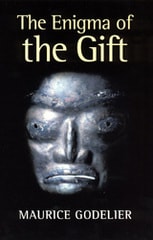
The Enigma of the Gift
Maurice Godelier
University of Chicago Press, 1998
Beginning with an analysis of the seminal work of Marcel Mauss and Claude Lévi-Strass, and drawing on his own fieldwork in Melanesia, Godelier argues that traditional theories are flawed because they consider only exchangeable gifts. By explaining gift-giving in terms of sacred objects and the authoritative conferral of power associated with them, Godelier challenges both recent and traditional theories of gift-giving, provocatively refreshing a traditional debate.
Elegantly translated by Nora Scott, The Enigma of the Gift is at once a major theoretical contribution and an essential guide to the history of the theory of the gift.
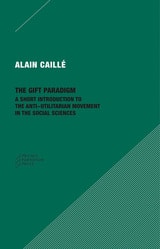
The Gift Paradigm
A Short Introduction to the Anti-Utilitarian Movement in the Social SciencesAlain Caillé
Prickly Paradigm Press, 2020
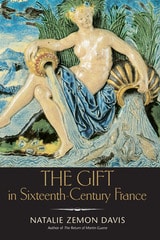
The Gift in Sixteenth-Century France
Natalie Zemon Davis
University of Wisconsin Press, 2000
Must a gift be given freely? How can we tell a gift from a bribe? Are gifts always a part of human relations—or do they lose their power and importance once the market takes hold and puts a price on every exchange? These questions are central to our sense of social relations past and present, and they are at the heart of this book by one of our most interesting and renowned historians.
In a wide-ranging look at gift giving in early modern France, Natalie Zemon Davis reveals the ways that gift exchange is crucial to understanding alliance and conflict in family life, economic relations, politics, and religion. Moving from the king’s bounty to the beggar’s alms, her book explores the modes and meanings of gift giving in every corner of sixteenth-century French society. In doing so, it arrives at a new way of considering gifts—what Davis calls "the gift register"—as a permanent feature of social relations over time. Gift giving, with its own justifications and forms in different periods, can create amity or lead to quarrels and trouble. It mixes the voluntary and the obligatory, with interested bribery at one extreme and inspired gratuitousness at the other.
Examining gifts both ethnographically (through archives, letters, and other texts) and culturally (through literary, ethical, and religious sources), Davis shows how coercive features in family life and politics, rather than competition from the market, disrupted the gift system. This intriguing book suggests that examining the significance of gifts can not only help us to understand social relations in the past, but teach us to deal graciously with each other in the present.
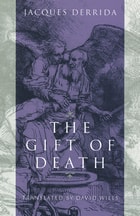
The Gift of Death
Jacques Derrida
University of Chicago Press, 1995
A major work, The Gift of Death resonates with much of Derrida's earlier writing and will be of interest to scholars in anthropology, philosophy, and literary criticism, along with scholars of ethics and religion.
"The Gift of Death is Derrida's long-awaited deconstruction of the foundations of the project of a philosophical ethics, and it will long be regarded as one of the most significant of his many writings."—Choice
"An important contribution to the critical study of ethics that commends itself to philosophers, social scientists, scholars of relgion . . . [and those] made curious by the controversy that so often attends Derrida."—Booklist
"Derrida stares death in the face in this dense but rewarding inquiry. . . . Provocative."—Publishers Weekly
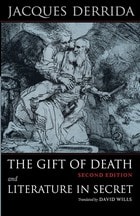
The Gift of Death, Second Edition & Literature in Secret
Jacques Derrida
University of Chicago Press, 2008
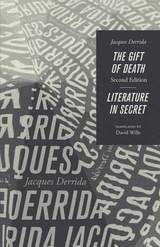
The Gift of Death, Second Edition & Literature in Secret
Jacques Derrida
University of Chicago Press, 2008
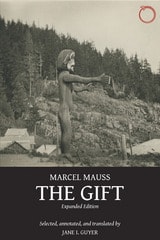
The Gift
Expanded EditionMarcel Mauss
HAU, 2016
Included alongside the “Essay on the Gift” are Mauss’ memorial accounts of the work of Émile Durkheim and his colleagues who were lost during World War I, as well as his scholarly reviews of influential contemporaries such as Franz Boas, J. G. Frazer, Bronislaw Malinowski, and others. Read in the context of these additional pieces, the “Essay on the Gift” is revealed as a complementary whole, a gesture of both personal and political generosity: Mauss’ honor for his fallen colleagues; his aspiration for modern society’s recuperation of the gift as a mode of repair; and his own careful, yet critical, reading of his intellectual milieu. The result sets the scene for a whole new generation of readers to study this essay alongside pieces that exhibit the erudition, political commitment, and generous collegial exchange that first nourished the essay into life.