Results by title
111 books match the query 'Museum Studies' and 12 start with a
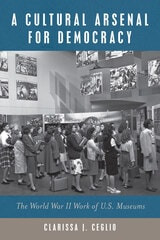
A Cultural Arsenal for Democracy
The World War II Work of US MuseumsClarissa J. Ceglio
University of Massachusetts Press, 2022
Unsurprisingly, exhibitions served as the primary vehicle through which museums, large and small, engaged their publics with wartime topics with fare ranging from displays on the cultures of Allied nations to "living maps" that charted troop movements and exhibits on war preparedness. Clarissa J. Ceglio chronicles debates, experiments, and collaborations from the 1930s to the immediate postwar years, investigating how museums re-envisioned the exhibition as a narrative medium and attempted to reconcile their mission with new modes of storytelling.
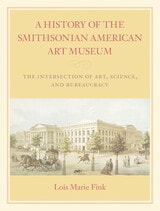
A History of the Smithsonian American Art Museum
The Intersection of Art, Science, and BureaucracyLois Marie Fink
University of Massachusetts Press, 2007
Dedicated to the art of the United States, the Smithsonian American Art Museum contains works by more than 7,000 artists and is widely regarded as an invaluable resource for the study and preservation of the nation's cultural heritage. But as Lois Marie Fink shows in this probing narrative, the history of the museum is hardly one of steady progress. Instead, it reads like a nineteenth-century melodrama, replete with villains and heroes, destruction by fire, dashed hopes, and periods of subsistence survival—all leading eventually to a happy ending.
Originating as the art gallery stipulated in the 1846 founding legislation of the Smithsonian, the museum developed within an institution that was essentially controlled by scientists. In its early years, the museum's holdings included a diverse selection of art and artifacts, mostly donated from private collections. Government support varied in response to shifting attitudes of officials and the public toward American art, ranging from avid admiration at the turn of the twentieth century to a tepid response and an almost total withdrawal of funding a generation later in favor of European masterworks. For decades the museum followed scientific organizational principles in exhibitions and collection strategies. Far into the twentieth century, accessions remained tied to nineteenth-century figurative art, reflecting the strength and influence of anthropology and biological sciences at the Smithsonian. A key breakthrough for modern art came in 1964 with the appointment of Smithsonian secretary Dillon Ripley, a scientist who strongly promoted the art side of the institution. With renewed support for expanding the collection and programs, the museum moved in 1968 to its present location in the Patent Office Building.
In recounting the history of the museum from 1846 to 1980, Fink unravels the various levels of institutional authority, power, governance, and bureaucracy and shows how people at each level influenced the fortunes of the collection. She also places changing concepts of art and museum practice in the context of national ideals and Washington realities.

A Received Grace
Slavery, Heirlooms, and the Feminine Labor of ForgettingMacushla Robinson
Duke University Press, 2027
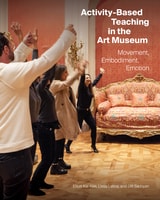
Activity-Based Teaching in the Art Museum
Movement, Embodiment, EmotionElliott Kai-Kee
J. Paul Getty Trust, The, 2020
An essential resource for museum professionals, teachers, and students, the award winning Teaching in the Art Museum (Getty Publications, 2011) set a new standard in the field of gallery education. This follow-up book blends theory and practice to help educators—from teachers and docents to curators and parents—create meaningful interpretive activities for children and adults.
Written by a team of veteran museum educators, Activity-Based Teaching in the Art Museum offers diverse perspectives on embodiment, emotions, empathy, and mindfulness to inspire imaginative, spontaneous interactions that are firmly grounded in history and theory. The authors begin by surveying the emergence of activity-based teaching in the 1960s and 1970s and move on to articulate a theory of play as the cornerstone of their innovative methodology. The volume is replete with sidebars describing activities facilitated with museum visitors of all ages.
Table of Contents
Introduction
Part I History
1 The Modern History of Presence and Meaning
A philosophical shift from a language-based understanding of the world to direct, physical interaction with it.
2 A New Age in Museum Education: The 1960s and 1970s
A brief history of some of the innovative museum education programs developed in the United States in the late 1960s and 1970s. The sudden and widespread adoption of nondiscursive gallery activities during this period, especially but not exclusively in programs designed for younger students and school groups, expressed the spirit of the times.
Part II Theory
3 Starts and Stops
Two attempts by American museum educators to articulate a theory for their new, nondiscursive programs: the first deriving from the early work of Project Zero, the Harvard Graduate School of Education program founded by the philosopher Nelson Goodman to study arts learning as a cognitive activity; the second stemming from the work of Viola Spolin, the acclaimed theater educator and coach whose teaching methods, embodied in a series of “theater games,” were detailed in her well-known book Improvisation for the Theater (1963).
4 A Theory of Play in the Museum
A theory of play that posits activities in the museum as forms of play that take place in spaces (or “playgrounds”) temporarily designated as such by educators and their adult visitors or students. Play is defined essentially as movement—both physical and imaginary (metaphorical)—toward and away from, around, and inside and outside the works of art that are foregrounded within those spaces. Gallery activities conceived in this way respond to the possibilities that the objects themselves offer for the visitor to explore and engage with them. The particular movements characterizing an activity are crucially conditioned by the object in question; they constitute a process of discovery and learning conceptually distinct from, but supportive of, traditional dialogue-based modes of museum education, which they supplement rather than supplant.
Part III Aspects of Play
5 Embodiment, Affordances
The idea of embodiment adopted here recognizes that both mind and body are joined in their interactions with things. Investigating works of art thus involves apprehending them physically as well as intellectually—in the sense of responding to the ways in which a particular work allows and even solicits the viewer’s physical grasp of it.
6 Skills
Ways in which objects present themselves to us, as viewers, and what we might do in response as they fit with the bodily skills we have developed over the course of our lives. Such skills might be as simple as getting dressed, washing, or eating; or as specialized as doing one’s hair, dancing, playing an instrument, or acting—all of which may allow us to “grasp” and even feel that we inhabit particular works of art.
7 Movement
Embodied looking is always looking from somewhere. We apprehend objects as we physically move around and in front of them; they reveal themselves differently as we approach them from different viewpoints. Viewers orient themselves spatially to both the surfaces of objects and to the things and spaces depicte4d in or suggested by representational works of art. Activity-based teaching gets visitors and students to move among the objects—away from them, close to them, and even into them.
8 The Senses
Both adult visitors and younger students come to the museum expecting to use their eyes, yet “visual” art appeals to several of the senses at once, though rarely to the same degree. Sculpture, for example, almost always appeals to touch (whether or not that is actually possible or allowed) as well as sight. A painting depicting a scene in which people appear to be talking may induce viewers to not only look but also “listen” to what the figures might be saying.
9 Drawing in the Museum
Looking at art with a pencil in hand amplifies viewers’ ability to imaginatively touch and feel their way across and around an artwork. Contour drawing by its nature requires participants to imagine that they are touching the contours of an object beneath the tips of their pencils. Other types of drawing allow viewers to feel their way around objects through observation and movement.
10 Emotion
Visitors’ emotional responses to art represent a complex process with many components, from physiological to cognitive, and a particular work of art may elicit a wide range of emotional reactions. This chapter describes specific ways in which museum educators can go well beyond merely asking visitors how a work of art makes them feel.
11 Empathy and Intersubjectivity
One aspect of viewers’ emotional responses to art that is often taken for granted, if not neglected altogether: the empathetic connections that human beings make to images of other people. This chapter advocates an approach that prompts viewers to physically engage with the representations of people they see.
12 Mindful Looking
Mindfulness involves awareness and attention, both as a conscious practice and as an attitude that gallery teachers can encourage in museum visitors. This is not solely a matter of cultivating the mind, however; it is also a matter of cultivating the body, since mindfulness is only possible when mind and body are in a state of harmonious, relaxed attentiveness. Mindfulness practice in the art museum actively directs the viewer’s focus on the object itself and insists on returning to it over and over; yet it also balances activity with conscious stillness.
Afterword
Acknowledgments
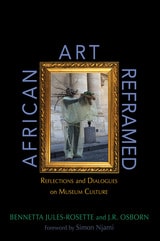
African Art Reframed
Reflections and Dialogues on Museum CultureBennetta Jules-Rosette and J. R. Osborn; Foreword by Simon Njami
University of Illinois Press, 2020
The authors take a three-pronged approach. Part One ranges from curiosity cabinets to virtual websites to offer a history of ethnographic and art museums and look at their organization and methods of reaching out to the public. In the second part, the authors examine museums as ecosystems and communities within communities, and they use semiotic methods to analyze images, signs, and symbols drawn from the experiences of curators and artists. The third part introduces innovative strategies for displaying, disseminating, and reclaiming African art. The authors also propose how to reinterpret the art inside and outside the museum and show ways of remixing the results.
Drawing on extensive conversations with curators, collectors, and artists, African Art Reframed is an essential guide to building new exchanges and connections in the dynamic worlds of African and global art.
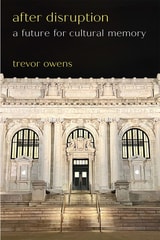
After Disruption
A Future for Cultural MemoryTrevor Owens
University of Michigan Press, 2024
After Disruption posits that we are no longer planning for a digital future, but instead living in a digital present. In this context, Owens asks how we plan for and develop a more just, sustainable, and healthy future for cultural memory. The first half of the book draws on critical scholarship on the history of technology and business to document and expose the sources of tech startup ideologies and their pernicious results, revealing that we need powerful and compelling counter frameworks and values to replace these ideologies. The second half of the book makes the case for the centrality of maintenance, care, and repair as interrelated frameworks to build a better future in which libraries, archives, and museums can thrive as sites of belonging and connection through collections.
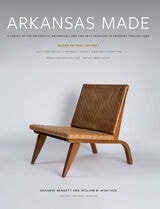
Arkansas Made, Volume 1
A Survey of the Decorative, Mechanical, and Fine Arts Produced in Arkansas through 1950Swannee Bennett
University of Arkansas Press, 2020
Arkansas Made is the culmination of Historic Arkansas Museum’s exhaustive investigations into the history of the state’s material culture. Decades of meticulous research have resulted in this exciting two-volume survey of cabinetmakers, silversmiths, potters, fine artists, quilters, and other artisans working in communities all over the state.
The work of the artisans documented here has been the driving force of Historic Arkansas Museum’s mission to collect and preserve Arkansas’s creative legacy and rich artistic traditions. Artisans from across Arkansas’s rich cultural landscape come to life among the colorful quilts, playful temperance jugs, and inventive effigies included in Volume I. Readers will delight not only in the striking full-color images but also in the stories that weave them together across time and region to create a lively picture of art and artisanship in a state too little celebrated for its creative output.
Quilts and Textiles • Ceramics • Silver •Weaponry • Furniture • Vernacular Architecture • Native American Art
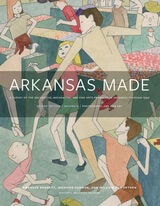
Arkansas Made, Volume 2
A Survey of the Decorative, Mechanical, and Fine Arts Produced in Arkansas through 1950Swannee Bennett
University of Arkansas Press, 2020
Arkansas Made is the culmination of Historic Arkansas Museum’s exhaustive investigations into the history of the state’s material culture. Decades of meticulous research have resulted in this exciting two-volume survey of cabinetmakers, silversmiths, potters, fine artists, quilters, and other artisans working in communities all over the state.
The work of the artisans documented here has been the driving force of Historic Arkansas Museum’s mission to collect and preserve Arkansas’s creative legacy and rich artistic traditions. The photographs and fine artworks that enliven the pages of Volume II represent not only a delightfully broad scope of talent in genres ranging from landscapes to cubist portraits to political cartoons, but also a longstanding tradition of advocacy and support for the arts in Arkansas.
Volume 2Photography • Fine Art
Art and Curiosity Cabinets of the Late Renaissance
A Contribution to the History of CollectingJulius von Schlosser
J. Paul Getty Trust, The, 2021
For the first time, the pioneering book that launched the study of art and curiosity cabinets is available in English.
Julius von Schlosser’s Die Kunst- und Wunderkammern der Spätrenaissance (Art and Curiosity Cabinets of the Late Renaissance) is a seminal work in the history of art and collecting. Originally published in German in 1908, it was the first study to interpret sixteenth- and seventeenth-century cabinets of wonder as precursors to the modern museum, situating them within a history of collecting going back to Greco-Roman antiquity. In its comparative approach and broad geographical scope, Schlosser’s book introduced an interdisciplinary and global perspective to the study of art and material culture, laying the foundation for museum studies and the history of collections. Schlosser was an Austrian professor, curator, museum director, and leading figure of the Vienna School of art history whose work has not achieved the prominence of his contemporaries until now.
This eloquent and informed translation is preceded by Thomas DaCosta Kaufmann’s substantial introduction. Tracing Schlosser’s biography and intellectual formation in Vienna at the turn of the twentieth century, it contextualizes his work among that of his contemporaries, offering a wealth of insights along the way.
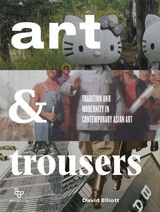
Art and Trousers
Tradition and Modernity in Contemporary Asian ArtDavid Elliott
National University of Singapore Press, 2021
An illustrated collection of more than thirty essays and 640 color images, Art and Trousers moves deftly between regional analysis, portraits of individual artists, and a metaphorical history of trousers. This book presents a panoramic view of modern and contemporary Asian art, varying its focus on the impacts of invention, tradition, exchange, colonization, politics, social development, and gender. David Elliott spotlights the practice of many leading global artists of the early twenty-first century, including Hiroshi Sugimoto, Cai Guo-Qiang, Ai Weiwei, Xu Bing, Rashid Rana, Bharti Kher, Makoto Aida, Chatchai Puipia, and Yeesookyung, among many others. Art and Trousers offers insight into the development of a key curatorial practice for our times, and it will be an essential resource for anyone seeking to understand contemporary art and the way it operates across borders.
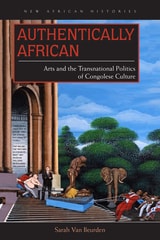
Authentically African
Arts and the Transnational Politics of Congolese CultureSarah Van Beurden
Ohio University Press, 2015
Together, the Royal Museum for Central Africa in Tervuren, Belgium, and the Institut des Musées Nationaux du Zaire (IMNZ) in the Congo have defined and marketed Congolese art and culture. In Authentically African, Sarah Van Beurden traces the relationship between the possession, definition, and display of art and the construction of cultural authenticity and political legitimacy from the late colonial until the postcolonial era. Her study of the interconnected histories of these two institutions is the first history of an art museum in Africa, and the only work of its kind in English.
Drawing on Flemish-language sources other scholars have been unable to access, Van Beurden illuminates the politics of museum collections, showing how the IMNZ became a showpiece in Mobutu’s effort to revive “authentic” African culture. She reconstructs debates between Belgian and Congolese museum professionals, revealing how the dynamics of decolonization played out in the fields of the museum and international heritage conservation. Finally, she casts light on the art market, showing how the traveling displays put on by the IMNZ helped intensify collectors’ interest and generate an international market for Congolese art.
The book contributes to the fields of history, art history, museum studies, and anthropology and challenges existing narratives of Congo’s decolonization. It tells a new history of decolonization as a struggle over cultural categories, the possession of cultural heritage, and the right to define and represent cultural identities.
Avant-Garde Museology
e-flux classicsArseny Zhilyaev
University of Minnesota Press, 2015
The museum of contemporary art might be the most advanced recording device ever invented. It is a place for the storage of historical grievances and the memory of forgotten artistic experiments, social projects, or errant futures. But in late nineteenth and early twentieth-century Russia, this recording device was undertaken by artists and thinkers as a site for experimentation.
Arseny Zhilyaev’s Avant-Garde Museology presents essays documenting the wildly encompassing progressivism of this period by figures such as Nikolai Fedorov, Aleksandr Rodchenko, Kazimir Malevich, Alexander Bogdanov, and others—many which are translated from the Russian for the first time. Here the urgent question is: How might the contents of the museum be reanimated so as to transcend even the social and physical limits imposed on humankind?
Contributors: David Arkin; Vladimir Bekhterev; Alexander Bogdanov; Osip Brik; Vasiliy Chekrygin; Leonid Chetyrkin; Nikolai Druzhinin; Nikolai Fedorov; Pavel Florensky; R. N. Frumkina; M. S. Ilkovskiy; V. I. Karmilov; V. Karpov; Valentin Kholtsov; P. N. Khrapov; Yuriy Kogan; Natalya Kovalenskaya; Nadezhda Krupskaya; S. P. Lebedyansky; A. F. Levitsky; Vera Leykina (Leykina-Svirskaya); Ivan Luppol; Kazimir Malevich; Andrey Platonov; Nikolay Punin; Aleksandr Rodchenko; Yuriy Samarin; I. F. Sheremet; Andrey Shestakov; Natan Shneerson; Ivan Skulenko; M. Vorobiev; N. Vorontsovsky; Boris Zavadovsky; I. M. Zykov.