Results by title
59 books match the query 'National characteristics, American, in literature' and 12 start with a
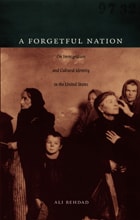
A Forgetful Nation
On Immigration and Cultural Identity in the United StatesAli Behdad
Duke University Press, 2005
Behdad shows how political, cultural, and legal texts have articulated American anxiety about immigration from the Federalist period to the present day. He reads texts both well-known—J. Hector St. John de Crèvecoeur’s Letters from an American Farmer, Alexis de Tocqueville’s Democracy in America, and Walt Whitman’s Leaves of Grass—and lesser-known—such as the writings of nineteenth-century nativists and of public health officials at Ellis Island. In the process, he highlights what is obscured by narratives and texts celebrating the United States as an open-armed haven for everyone: the country’s violent beginnings, including its conquest of Native Americans, brutal exploitation of enslaved Africans, and colonialist annexation of French and Mexican territories; a recurring and fierce strand of nativism; the need for a docile labor force; and the harsh discipline meted out to immigrant “aliens” today, particularly along the Mexican border.
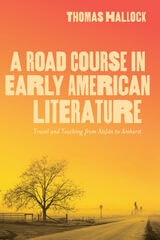
A Road Course in Early American Literature
Travel and Teaching from Atzlán to AmherstThomas Hallock
University of Alabama Press, 2021
Essays that fuse literary scholarship and personal travelogue to explore American identity
A Road Course in Early American Literature: Travel and Teaching from Atzlán to Amherst explores a two-part question: what does travel teach us about literature, and how can reading guide us to a deeper understanding of place and identity? Thomas Hallock charts a teacher’s journey to answering these questions, framing personal experiences around the continued need for a survey course covering early American literature up to the mid-nineteenth century.
Hallock approaches literary study from the overlapping perspectives of pedagogue, scholar, unrepentant tourist, husband, father, friend, and son. Building on Ralph Waldo Emerson’s premise that there is “creative reading as well as creative writing,” Hallock turns to the vibrant and accessible tradition of American travel writing, employing the form of biblio-memoir to bridge the impasse between public and academic discourse and reintroduce the dynamic field of early American literature to wider audiences.
Hallock’s own road course begins and ends at the Low country of Georgia and South Carolina, following a circular structure of reflection. He weaves his journey through a wide swath of American literatures and authors: from Native American and African American oral traditions, to Wheatley and Equiano, through Emerson, Poe, and Dickinson, among others. A series of longer, place-oriented narratives explore familiar and lesser-known literary works from the sixteenth-century invasion of Florida through the Mexican War of 1846–1848 and the American Civil War. Shorter chapters bridge the book’s central themes—the mapping of cognitive and physical space, our personal stake in reading, the tensions that follow earlier acts of erasure, and the impossibility of ever fully shutting out the past.
Exploring complex cultural histories and contemporary landscapes filled with ghosts and new voices, this volume draws inspiration from a tradition of travel, place-oriented, and literature-based works ranging from William Carlos Williams’s In the American Grain and Jack Kerouac’s On the Road to Alice Walker’s In Search of Our Mother’s Gardens, Wendy Lesser’s Why I Read: The Serious Pleasure of Books, and Rebecca Mead’s My Life in Middlemarch.
An accompanying bibliographic essay is periodically updated and available at Hallock’s website: www.roadcourse.us.
America's Gothic Fiction
The Legacy of Magnalia Christi AmericanaDorothy Z. Baker
The Ohio State University Press, 2007

American Audacity
Literary Essays North and SouthChristopher Benfey
University of Michigan Press, 2010
---William H. Pritchard
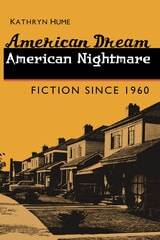
American Dream, American Nightmare
Fiction since 1960Kathryn Hume
University of Illinois Press, 2000
In breaking down the divisions among standard categories of race, religion, ethnicity, and gender, Hume identifies shared core concerns, values, and techniques among seemingly disparate and unconnected writers including T. Coraghessan Boyle, Ralph Ellison, Russell Banks, Gloria Naylor, Tim O'Brien, Maxine Hong Kingston, Walker Percy, N. Scott Momaday, John Updike, Toni Morrison, William Kennedy, Julia Alvarez, Thomas Pynchon, Leslie Marmon Silko, and Don DeLillo.
Hume explores fictional treatments of the slippage in the immigrant experience between America's promise and its reality. She exposes the political link between contemporary stories of lost innocence and liberalism's inadequacies. She also invites us to look at the literary challenge to scientific materialism in various searches for a spiritual dimension in life.
The expansive future promised by the American Dream has been replaced, Hume finds, by a sense of tarnished morality and a melancholy loss of faith in America's exceptionalism. American Dream, American Nightmare examines the differing critiques of America embedded in nearly a hundred novels and points to the source for recovery that appeals to many of the authors.
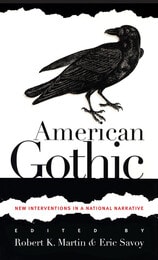
American Gothic
New Interventions in a National NarrativeRobert K. Martin
University of Iowa Press, 1998
In America as in Britain, the rise of the Gothic represented the other—the fearful shadows cast upon Enlightenment philosophies of common sense, democratic positivism, and optimistic futurity. Many critics have recognized the centrality of these shadows to American culture and self-identification. American Gothic, however, remaps the field by offering a series of revisionist essays associated with a common theme: the range and variety of Gothic manifestations in high and popular art from the roots of American culture to the present.
The thirteen essayists approach the persistence of the Gothic in American culture by providing a composite of interventions that focus on specific issues—the histories of gender and race, the cultures of cities and scandals and sensations—in order to advance distinct theoretical paradigms. Each essay sustains a connection between a particular theoretical field and a central problem in the Gothic tradition.
Drawing widely on contemporary theory—particularly revisionist views of Freud such as those offered by Lacan and Kristeva—this volume ranges from the well-known Gothic horrors of Edgar Allan Poe and Nathaniel Hawthorne to the popular fantasies of Stephen King and the postmodern visions of Kathy Acker. Special attention is paid to the issues of slavery and race in both black and white texts, including those by Ralph Ellison and William Faulkner. In the view of the editors and contributors, the Gothic is not so much a historical category as a mode of thought haunted by history, a part of suburban life and the lifeblood of films such as The Exorcist and Fatal Attraction.

American Nightmares
The Haunted House Formula in American Popular FictionDale Bailey
University of Wisconsin Press, 1999
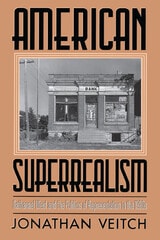
American Superrealism
Nathanael West and the Politics of Representation in the 1930sJonathan Veitch
University of Wisconsin Press, 1997
Nathanael West has been hailed as “an apocalyptic writer,” “a writer on the left,” and “a precursor to postmodernism.” But until now no critic has succeeded in fully engaging West’s distinctive method of negation. In American Superrealism, Jonathan Veitch examines West’s letters, short stories, screenplays and novels—some of which are discussed here for the first time—as well as West’s collaboration with William Carlos Williams during their tenure as the editors of Contact. Locating West in a lively, American avant-garde tradition that stretches from Marcel Duchamp to Andy Warhol, Veitch explores the possibilities and limitations of dada and surrealism—the use of readymades, scatalogical humor, human machines, “exquisite corpses”—as modes of social criticism. American Superrealism offers what is surely the definitive study of West, as well as a provocative analysis that reveals the issue of representation as the central concern of Depression-era America.
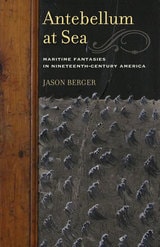
Antebellum at Sea
Maritime Fantasies in Nineteenth-Century AmericaJason Berger
University of Minnesota Press, 2012
In the antebellum years, the Western world’s symbolic realities were expanded and challenged as merchant, military, and scientific activity moved into Pacific and Arctic waters. In Antebellum at Sea, Jason Berger explores the roles that early nineteenth-century maritime narratives played in conceptualizing economic and social transitions in the developing global market system and what these chronicles disclose about an era marked by immense change.
Focusing on the work of James Fenimore Cooper and Herman Melville, Berger enhances our understanding of how the nineteenth century negotiated its own tenuous progress by portraying how a wide range of maritime stories lays bare disturbing experiences of the new. Berger draws on Slavoj Žižek’s Lacanian notion of fantasy in order to reconsider the complex way maritime accounts operated in the political landscape of antebellum America, examining topics such as the function of maritime labor know-how within a transformation of scientific knowledge, anxiety produced by conflict between gender-specific and culture-specific forms of enjoyment, and how legal practices illuminate troubling juridical paradoxes at the heart of Polk-era political life.
Addressing the ideas of the antebellum age from unexpected and revealing perspectives, Berger calls on the conception of fantasy to consider how antebellum maritime literature disputes conventional views of American history, literature, and national identity.
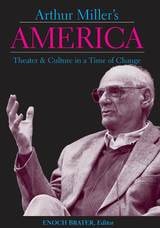
Arthur Miller's America
Theater and Culture in a Time of ChangeEnoch Brater, Editor
University of Michigan Press, 2005
Arthur Miller's America collects new writing by leading international critics and scholars that considers the dramatic world of icon, activist, and playwright Arthur Miller's theater as it reflects the changing moral equations of his time. Written on the occasion of Miller's 85th year, the original essays and interviews in Arthur Miller's America treat the breadth of Miller's work, including his early political writings for the campus newspaper at the University of Michigan, his famous work with John Huston, Clark Gable and Marilyn Monroe on The Misfits, and his signature plays like Death of a Salesman and All My Sons.

Artificial Paradise
Science Fiction and American RealitySharona Ben-Tov
University of Michigan Press, 1995
Assimilating Asians
Gendered Strategies of Authorship in Asian AmericaPatricia P. Chu
Duke University Press, 2000
Chu further demonstrates that Asian American male and female writers engage different strategies in the struggle to adapt, reflecting their particular, gender-based relationships to immigration, work, and cultural representation. While offering fresh perspectives on the well-known writings—both fiction and memoir—of Maxine Hong Kingston, Amy Tan, Bharati Mukherjee, Frank Chin, and David Mura, Assimilating Asians also provides new insight into the work of less recognized but nevertheless important writers like Carlos Bulosan, Edith Eaton, Younghill Kang, Milton Murayama, and John Okada. As she explores this expansive range of texts—published over the course of the last century by authors of Chinese, Japanese, Korean, Filipino, and Indian origin or descent—Chu is able to illuminate her argument by linking it to key historical and cultural events.
Assimilating Asians makes an important contribution to the fields of Asian American, American, and women’s studies. Scholars of Asian American literature and culture, as well as of ethnicity and assimilation, will find particular interest and value in this book.