Results by title
78 books match the query 'North' and 7 start with a

A History of the Vandals
Torsten Cumberland Jacobsen
Westholme Publishing, 2012
The First General History in English of the Germanic People Who Sacked Rome in the Fifth Century AD and Established a Kingdom in North Africa
The fifth century AD was a time of great changes in the Mediterranean world. In the early 400s, the Roman Empire ranged from the lowlands of Scotland to the Upper Nile and from Portugal to the Caucasus. It was almost at its widest extent, and although ruled by two emperors—one in the West and one in the East—it was still a single empire. One hundred years later, Roman control of Western Europe and Western North Africa had been lost. In its place, a number of Germanic kingdoms had been established in these regions, with hundreds of thousands of Germanic and other peoples settling permanently inside the former borders of the Western Roman Empire.
One of the most fascinating of these tribes of late antiquity were the Vandals, who over a period of six hundred years had migrated from the woodland regions of Scandinavia across Europe and ended in the deserts of North Africa. In A History of the Vandals, the first general account in English covering the entire story of the Vandals from their emergence to the end of their kingdom, historian Torsten Cumberland Jacobsen pieces together what we know about the Vandals, sifting fact from fiction. In the middle of the fifth century the Vandals, who professed Arianism, a form of Christianity considered heretical by the Roman emperor, created the first permanent Germanic successor state in the West and were one of the deciding factors in the downfall of the Western Roman Empire. Later Christian historians described their sack of Rome in 455 and their vehement persecution of Catholics in their kingdom, accounts that were sensationalized and gave birth to the term “vandalism.”
In the mid-sixth century, the Vandals and their North African kingdom were the first target of Byzantine Emperor Justinian’s ambitious plan to reconquer the lost territories of the fallen Western Empire. In less than four months, what had been considered one of the strongest Germanic kingdoms had been defeated by a small Roman army led by the general Belisarius. Despite later rebellions, this was the end of the Germanic presence in North Africa, and in many ways the end of the Arian heresy of Christianity. For the Romans it was the incredibly successful start of the reconquest of the lost lands of the Western Empire.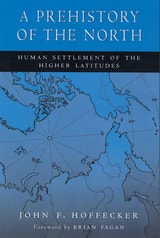
A Prehistory of the North
Human Settlement of the Higher LatitudesHoffecker, John F
Rutgers University Press, 2004
Early humans did not simply drift northward from their African origins as their abilities to cope with cooler climates evolved. The initial settlement of places like Europe and northern Asia, as well as the later movement into the Arctic and the Americas, actually occurred in relatively rapid bursts of expansion. A Prehistory of the North is the first full-length study to tell the complex story, spanning almost two million years, of how humans inhabited some of the coldest places on earth.
In an account rich with illustrations, John Hoffecker traces the history of anatomical adaptations, diet modifications, and technological developments, such as clothing and shelter, which allowed humans the continued ability to push the boundaries of their habitation. The book concludes by showing how in the last few thousand years, peoples living in the circumpolar zone—with the exception of western and central Siberia—developed a thriving maritime economy.
Written in nontechnical language, A Prehistory of the North provides compelling new insights and valuable information for professionals and students.

A Selection of Modernized Recipes from Food in the Civil War
The NorthJennifer Billock
Michigan State University Press, 2015
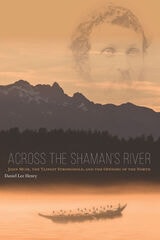
Across the Shaman's River
John Muir, the Tlingit Stronghold, and the Opening of the NorthDaniel Lee Henry
University of Alaska Press, 2017
Tucked in the corner of Southeast Alaska, the Tlingits had successfully warded off the Anglo influences that had swept into other corners of the territory. This tribe was viewed by European and American outsiders as the last wild tribe and a frustrating impediment to access. Missionaries and prospectors alike had widely failed to bring the Tlingit into their power. Yet, when John Muir arrived in 1879, accompanied by a fiery preacher, it only took a speech about “brotherhood”—and some encouragement from the revered local shaman Skandoo’o—to finally transform these “hostile heathens.”
Using Muir’s original journal entries, as well as historic writings of explorers juxtaposed with insights from contemporary tribal descendants, Across the Shaman’s River reveals how Muir’s famous canoe journey changed the course of history and had profound consequences on the region’s Native Americans.

Algerian Diary
Frank Kearns and the "Impossible Assignment" for CBS NewsGerald Davis
West Virginia University Press, 2016
Frank Kearns was the go-to guy at CBS News for danger- ous stories in Africa and the Middle East in the 1950s, ‘60s, and early ‘70s. By his own account, he was nearly killed 114 times. He took stories that nobody else wanted to cover and was challenged to get them on the air when nobody cared about this part of the world. But his stories were warning shots for conflicts that play out in the headlines today.
In 1957, Senator John Kennedy described America’s view of the Algerian war for independence as the Eisenhower Administration’s “head in the sand policy.” So CBS News decided to find out what was really happening there and to determine where Algeria’s war for independence fit into the game plan for the Cold War. They sent Frank Kearns to find out.
Kearns took with him cameraman Yousef (“Joe”) Masraff and 400 pounds of gear, some of which they shed, and they hiked with FLN escorts from Tunisia, across a wide “no-man’s land,” and into the Aures Mountains of eastern Algeria, where the war was bloodiest. They carried no passports or visas. They dressed as Algerians. They refused to bear weapons. And they knew that if captured, they would be executed and left in unmarked graves. But their job as journalists was to seek the truth whatever it might turn out to be.
This is Frank Kearns’s diary.
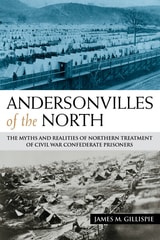
Andersonvilles of the North
The Myths and Realities of Northern Treatment of Civil War Confederate PrisonersJames M. Gillispie
University of North Texas Press, 2008
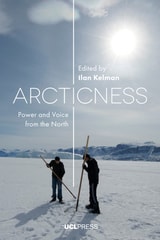
Arcticness
Power and Voice from the NorthIlan Kelman
University College London, 2017