Results by title
74 books match the query 'Origin' and 4 start with a

A Legend for the Legendary
The Origin of the Baseball Hall of FameJames A. Vlasich
University of Wisconsin Press, 1990
The origins of baseball are controversial. James A. Vlasich discusses the debates between two men intimately involved in nineteenth-century baseball, Henry Chadwick and Albert G. Spalding. Abner Graves of the Mills Commission claimed that Abner Doubleday had invented the game and he had done it in Cooperstown, New York. This claim was scrutinized at the time but the myth became etched into baseball history.
Through the years, however, some critics have questioned the Mills Commission report. The problem is that the Baseball Hall of Fame is built on this shaky foundation. The lack of diligence on the part of Spalding’s self-appointed committee has led to a credibility gap for the baseball shrine that continues a half century after its dedication. Indeed, the story of the building of the Baseball Hall of Fame is filled with intrigue worthy of a political thriller.
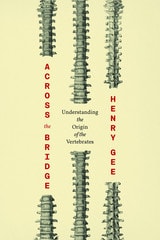
Across the Bridge
Understanding the Origin of the VertebratesHenry Gee
University of Chicago Press, 2018
As Gee shows, even as scientific advances have falsified a variety of theories linking these groups, the extant relatives of vertebrates are too few for effective genetic analysis. Moreover, the more we learn about the species that do remain—from sea-squirts to starfish—the clearer it becomes that they are too far evolved along their own courses to be of much use in reconstructing what the latest invertebrate ancestors of vertebrates looked like. Fossils present yet further problems of interpretation. Tracing both the fast-changing science that has helped illuminate the intricacies of vertebrate evolution as well as the limits of that science, Across the Bridge helps us to see how far the field has come in crossing the invertebrate-to-vertebrate divide—and how far we still have to go.
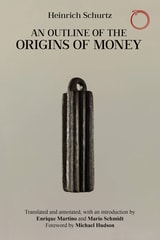
An Outline of the Origins of Money
Heinrich Schurtz
HAU, 2024
“On this subject, I only knew the excellent little book by the late Schurtz”—Marcel Mauss, 1914, Les origines de la notion de monnaie.
Heinrich Schurtz’s 1898 book has been a touchstone for economic historians, anthropologists, and philosophers interested in the nature and origins of money in various societies, including Georg Simmel, Max Weber, Marcel Mauss, and Karl Polanyi. In his brief book, Schurtz experimented with concepts about money, going beyond traditional economic paradigms. Drawing on an extensive range of archaeological and ethnographic sources, he reframed a theory of money to include its materiality, symbolic nature, relationship to forms of property, and its dual origin in “outside money” and “inside money.” While it is not well known today, it was important to the theorization of money in the first half of the 20th century and its innovative synthesis offers galvanizing questions and insights into how value relations are formed and how currency systems are interrelated.
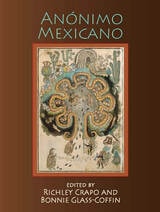
Anonimo Mexicano
Richley Crapo and Bonnie Glass-Coffin
Utah State University Press, 2005