Results by title
199 books match the query 'Peace' and 18 start with a

A Chorus for Peace
A Global Anthology of Poetry by WomenMarilyn Arnold
University of Iowa Press, 2002
Women poets from around the world are gathered here to raise their voices together, to speak out against violence and its calamitous effect upon the human soul. Yet there is also a thread of resilience here, an undercurrent of hope that points to the human ability to move on, to build a new life out of a shattered past.
Each poem addresses difficult issues concerning conflict and the lives of women. Some are spirited statements that demonstrate courage even in brutal circumstances; others rage at the perpetrators of war or simply mourn their losses. Together, these works reveal a deep consciousness of both the effects of violence and the human ability to move forward.
The women whose poems appear in this collection stand for peace. Many of them have seen war and strife on fronts both national and domestic; and they write graphically and poignantly, and sometimes ironically, about conflicts external and internal that tear up their lives and the lives of their families and neighbors. They write about the victims of war and oppression: bewildered and brutalized children, bereft wives and mothers, raped and mutilated women, tormented prisoners and soldiers. And they write about victims of a seemingly failed society and victims of struggling or failed human relationships.
At the same time, these writers are also crying for peace, searching for peace, and occasionally finding peace. In their search, they point the way for the rest of us.
A Dictatorship of Relativism ?
Symposium in Response to Cardinal Ratzinger’s Last Homily, Volume 13Jeffrey M. Perl, ed.
Duke University Press, 0
One essay relates the arguments of Ratzinger to those of two other German scholars—the conservative political theorist Ernst Wolfgang Böckenförde and the liberal philosopher and sociologist Jürgen Habermas—since all three men assume that social order depends on the existence of doctrinal authority (divine or otherwise). The contributors here argue for an intellectual and social life free of the desire for an “infantilizing” authority. One proposes that the Christian god is a relativist who prefers limitation and ambiguity; another, initially in agreement with Ratzinger about the danger relativism poses to faith and morals, then argues that this danger is what makes relativism valuable. The issue closes with the first English translation of an extract from a book on Catholic-Jewish relations by Cardinal Carlo Maria Martini, one of the Catholic Church’s most progressive figures.
Contributors. David Bloor, Daniel Boyarin, Mary Baine Campbell, Lorraine Daston, Arnold I. Davidson, John Forrester, Kenneth J. Gergen, Simon Goldhill, Jeffrey F. Hamburger, Julia Kristeva, Carlo Maria Cardinal Martini, Christopher Norris, Joseph Cardinal Ratzinger, Richard Shusterman, Barbara Herrnstein Smith, Jeffrey Stout, Gianni Vattimo
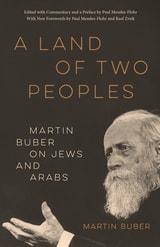
A Land of Two Peoples
Martin Buber on Jews and ArabsMartin Buber
University of Chicago Press, 2025
The theologian and philosopher Martin Buber (1878–1965) was committed to radical socioeconomic reconstruction in pursuit of international peace. His voluminous writings on Arab-Jewish relations in Palestine interweave his religious and philosophical teachings with his politics, each essential to Buber’s vision of democratic and religious life.
A Land of Two Peoples collects the letters, talks, and essays in which Buber advocated for a binationalism that reconciled Arabs and Jews as a solution to the conflict in the Middle East. As relevant today as when it was first published nearly fifty years ago, this edition of A Land of Two Peoples includes two forewords from the preeminent Jewish and Palestinian scholars Paul Mendes-Flohr and Raef Zreik.

A Million Miles
My Peace Corps JourneyJody Olsen
University of Utah Press, 2024
Olsen’s captivating memoir, A Million Miles, reveals the personal and professional challenges she faced throughout her career, which spanned the Reagan era, 9/11, and the Trump administration. She writes candidly about her struggles as a woman in leadership, as well as personal hardships such as the
sudden death of her brother and her emotionally difficult divorce after her husband’s coming out. This memoir is a sharp, vulnerable portrait, a testament to the transformative power of leadership and self-discovery.

A Natural History of Peace
Thomas A. Gregor
Vanderbilt University Press, 1996
We know a great deal about aggression, conflict, and war, but relatively little about peace, partially because it has been such a scarce phenomenon throughout history and in our own times. Peace is more than the absence of war. Peace requires special relationships, structures, and attitudes to promote and protect it.
A Natural History of Peace provides the first broadly interdisciplinary examination of peace as viewed from the perspectives of social anthropology, primatology, archaeology, psychology, political science, and economics. Among other notable features, this volume offers:
- a major theory concerning the evolution of peace and violence through human history;
- an in-depth comparative study of peaceful cultures with the goal of discovering what it is that makes them peaceful;
- one of the earliest reports of a new theory of the organization and collapse of ancient Maya civilization;
- a comparative examination of peace from the perspective of change, including the transition of one of the world's most violent societies to a relatively
- peaceful culture, and the decision-making process of terrorists who abandon violence;
- and a theory of political change that sees the conclusion of wars as uniquely creative periods in the evolution of peace among modern nations.

A New Generation Draws the Line
'Humanitarian' Intervention and the Standards of the WestNoam Chomsky
Pluto Press, 2012
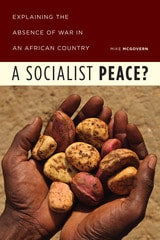
A Socialist Peace?
Explaining the Absence of War in an African CountryMike McGovern
University of Chicago Press, 2017
Guinea is rich in resources, but its people are some of the poorest in the world. Its political situation is polarized by fiercely competitive ethnic groups. Weapons flow freely through its lands and across its borders. And, finally, it is still recovering from the oppressive regime of Sékou Touré. McGovern argues that while Touré’s reign was hardly peaceful, it was successful—often through highly coercive and violent measures—at establishing a set of durable national dispositions, which have kept the nation at peace. Exploring the ambivalences of contemporary Guineans toward the afterlife of Touré’s reign as well as their abiding sense of socialist solidarity, McGovern sketches the paradoxes that undergird political stability.

Abbie Hoffman
American RebelJezer, Marty
Rutgers University Press, 1993
"... Abbie, more than any other radical, showed potheads how to demonstrate and radicals how to dance." -- Chicago Tribune
"... deeply sympathetic and scrupulously detached-a triumph of judicious empathy." -- MARTIN DUBERMAN, Distinguished Professor of History, Lehman/The Graduate School, C.U.N.Y.
"... details Hoffman's humor, manic energy, depressive spells, political skills, and above all, his Incurable and still contagious optimism." -- Entertainment Weekly
"Here's the Abbie I knew and loved! Marty Jezer has captured him in all his complexity, dedication, humor, and heart." -- ANITA HOFFMAN
Abiding by Sri Lanka
On Peace, Place, and PostcolonialityQadri Ismail
University of Minnesota Press, 2005
Abiding by Sri Lanka examines how the disciplines of anthropology, history, and literature treat the Sri Lankan ethnic conflict. Anthropology, Ismail contends, approaches Sri Lanka as an object from an “outside” and western point of view. History, addressing the conflict from the “inside,” abides by the place and so promotes change that is nationalist and exclusive. Neither of these fields imagines an inclusive community. Literature, Ismail argues, can.
With close readings of texts that “abide” by Sri Lanka, texts that have a commitment to it, Ismail demonstrates that the problems in Sri Lanka raise fundamental concerns for us all regarding the relationship between democracies and minorities. Recognizing the structural as well as political tendencies of representative democracies to suppress minorities, Ismail rethinks democracy by redefining the concept of the minority perspective, not as a subject-position of numerical insignificance, but as a conceptual space that opens up the possibility for distinction without domination and, ultimately, peace.
Qadri Ismail is associate professor of English at the University of Minnesota. He has also been a journalist in Sri Lanka.
Africae Munus
Ten Years LaterAgbaw-ebai
St. Augustine's Press, 2022
Building on the vitality and enthusiasm of the Church in Africa, it is important to lift their faith through scholarly research and academic reflections. We cannot fully appreciate the dedication, commitment and perseverance of the Catholic community throughout the African continent if we do not know the truth of their sufferings and persecution and understand their resilience in the light of faith. This collection, drawn from the halls of academia, provides an important contribution to the understanding and advancement of Catholic Africa, following the insights and enlightenment of Pope Emeritus Benedict. It is my hope that these essays will enrich your understanding and experience of the Catholic faith.
— From the Preface by Seán Patrick Cardinal O’Malley

Aleksandur Stamboliiski
BulgariaRichard Crampton
Haus Publishing, 2009

Always at War
British Public Narratives of WarThomas Colley
University of Michigan Press, 2019
Compelling narratives are integral to successful foreign policy, military strategy, and international relations. Yet often narrative is conceived so broadly it can be hard to identify. The formation of strategic narratives is informed by the stories governments think their people tell, rather than those they actually tell. This book examines the stories told by a broad cross-section of British society about their country’s past, present, and future role in war, using in-depth interviews with 67 diverse citizens. It brings to the fore the voices of ordinary people in ways typically absent in public opinion research.
Always at War complements a significant body of quantitative research into British attitudes to war, and presents an alternative case in a field dominated by US public opinion research. Rather than perceiving distinct periods between war and peace, British citizens see their nation as so frequently involved in conflict that they consider the country to be continuously at war. At present, public opinion appears to be a stronger constraint on Western defense policy than ever.

American Dove
US Foreign Policy and the Failure of ForceZachary C. Shirkey
University of Michigan Press, 2020
Anatomy of a Civil War
Sociopolitical Impacts of the Kurdish Conflict in TurkeyMehmet Gurses
University of Michigan Press, 2018

Anthropologists in the Public Sphere
Speaking Out on War, Peace, and American PowerEdited by Roberto J. González
University of Texas Press, 2004
Anthropologists have a long tradition of prescient diagnoses of world events. Possessing a knowledge of culture, society, and history not always shared by the media's talking heads, anthropologists have played a crucial role in educating the general reader on the public debates from World War I to the second Gulf War.
This anthology collects over fifty commentaries by noted anthropologists such as Margaret Mead, Franz Boas, and Marshall Sahlins who seek to understand and explain the profound repercussions of U.S. involvement in the Middle East, Asia, Africa, and Latin America. Frequently drawing on their own fieldwork, the anthropologists go beyond the headlines to draw connections between indigenous cultures, corporate globalization, and contemporary political and economic crises. Venues range from the op-ed pages of internationally renowned newspapers such as the New York Times and the Washington Post to magazine articles and television interviews. Special sections entitled "Prelude to September 11" and "Anthropological Interpretations of September 11" include articles that provided many Americans with their first substantial introduction to the history of Islam, Central Asia, and the Middle East. Each article includes a brief introduction contextualizing the commentary.
Apocalypse Never
Forging the Path to a Nuclear Weapon-Free WorldDaley, Tad
Rutgers University Press, 2012
Apocalypse Never maintains that the abolition of nuclear weapons is both essential and achievable, and reveals in fine detail what we need to do--both governments and movements--to make it a reality. Daley insists that while global climate change poses the single greatest long-term peril to the human race, the nuclear challenge in its many incarnation--nuclear terror, nuclear accident, a nuclear crisis spinning out of control--poses the single most immediate peril. Daley launches a wholesale assault on the nuclear double standard--the notion that the United States permits itself thousands of these weapons but forbids others from aspiring to even one--insisting that it is militarily unnecessary, morally indefensible, and politically unsustainable. He conclusively repudiates the most frequent objection to nuclear disarmament, "the breakout scenario"--the possibility that after abolition someone might whip back the curtain, reveal a dozen nuclear warheads, and proceed to "rule the world."
On the wings of a brand new era in American history, Apocalypse Never makes the case that a comprehensive nuclear policy agenda from President Obama, one that fully integrates nonproliferation with disarmament, can both eliminate immediate nuclear dangers and set us irreversibly on the road to abolition. In jargon-free language, Daley explores the possible verification measures, enforcement mechanisms, and governance structures of a nuclear weapon-free world. Most importantly, he decisively argues that universal nuclear disarmament is something we can transform from a utopian fantasy into a concrete political goal.
At War
The Military and American Culture in the Twentieth Century and BeyondKieran, David
Rutgers University Press, 2018
At War offers short, accessible essays addressing the central issues in the new military history—ranging from diplomacy and the history of imperialism to the environmental issues that war raises and the ways that war shapes and is shaped by discourses of identity, to questions of who serves in the U.S. military and why and how U.S. wars have been represented in the media and in popular culture.
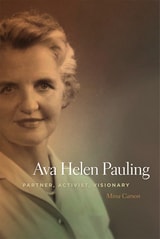
Ava Helen Pauling
Partner, Activist, VisionaryMina Carson
Oregon State University Press, 2013
Though she began her public career in the shadow of her spouse, Ava Helen soon found herself tugged between her ardor to support Linus in his career and her desire that he embrace the social and political causes she felt passionate about. She believed it was her destiny to accept duties as a mother and homemaker, but neither of those roles was fully satisfying. Her more complete identity emerged over decades, as she evolved as an influential activist.
Ava Helen Pauling’s story is significant because so many aspects of it were shared with countless American women of her generation and the generations surrounding her. They had new educational opportunities but were expected to conform to the same limited social roles dictated by the gender ideology of the nineteenth century. When second wave feminism erupted in the 1960s, its force did not come solely from the young women rebelling against their elders’ rules and limitations, but also from the frustrated dreams of those elders themselves.
Ava Helen did not experience overt oppression by her husband or community; she even asserted some very non-feminist positions as a young woman. This, combined with a structural lack of opportunity, contributed to the strength and persistence of role expectations in her life. At the same time, she was feisty and willful. Her personality both created her marital loyalty and eventually took her down an openly feminist path.
Ava Helen Pauling: Partner, Activist, Visionary is an important complement to writings about Linus Pauling and a welcome addition to the literature on women’s and family history. It will also appeal to students and scholars of peace and reform movements and the social history of science.