Results by title
3258 books match the query 'Performing Arts' and 266 start with a

A 'Toxic Genre'
The Iraq War FilmsMartin Barker
Pluto Press, 2011
Over the last five years, a cycle of films has emerged addressing the ongoing Iraq conflict. Some became well-known and one of them, The Hurt Locker, won a string of Oscars. But many others disappeared into obscurity. What is it about these films that led Variety to dub them a 'toxic genre'?
Martin Barker analyses the production and reception of these recent Iraq war films. Among the issues he examines are the borrowing of soldiers’ YouTube styles of self-representation to generate an ‘authentic’ Iraq experience, and how they take refuge in ‘apolitical’ post-traumatic stress disorder. Barker also looks afresh at some classic issues in film theory: the problems of accounting for film ‘failures’, the shaping role of production systems, the significance of genre-naming and the impact of that 'toxic' label.
A 'Toxic Genre' is fascinating reading for film studies students and anyone interested in cinema's portrayal of modern warfare.
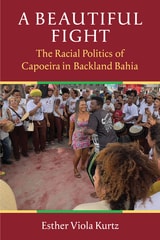
A Beautiful Fight
The Racial Politics of Capoeira in Backland BahiaEsther Viola Kurtz
University of Michigan Press, 2025
2026 Dance Studies Association de la Torre Bueno First Book Award Shortlist Finalist
A Beautiful Fight examines the potentials and limits of capoeira Angola to cohere a multiracial community committed to antiracist struggle. Capoeira, a musical fight-game that originated among enslaved Africans in Brazil, holds special significance for Black Brazilian activists as a spiritual and political practice that affirms the value of Black lives, thus countering anti-Black violence sanctioned by the Brazilian state. However, many capoeira groups count more white practitioners than Black, especially groups of the politicized, Afrocentric style capoeira Angola, raising debates about appropriation of Black culture that resonate across the Americas. A Beautiful Fight addresses these tensions. Drawing on ethnographic research with a multiracial capoeira Angola group in Brazil’s Bahian sertão or backlands, Esther Viola Kurtz explores diverse group members’ understandings of capoeira’s spiritual and political meanings and considers how white participation impacts capoeira’s antiracist politics. A Beautiful Fight argues that white practitioners occupying space in capoeira divert attention from Black members’ concerns and reproduce racist and colonialist ideologies, albeit unintentionally. In this way, the book complicates claims that shared music and dance bridge differences and facilitate cross-racial unity, yet Kurtz proposes that capoeira still transmits knowledge and tools that, when used with intention, commitment, and care, can be wielded to collaboratively contest racism and imagine a more just world.
A Beckett Canon
Ruby Cohn
University of Michigan Press, 2005

A Biographical Dictionary of Actors, Volume 1, Abaco to Belfille
Actresses, Musicians, Dancers, Managers, and Other Stage Personnel in London, 1660-1800Philip H. Highfill, Jr., Kalman A. Burnim, and Edward A. Langhans
Southern Illinois University Press, 1973
Tobe completed in 12volumes, this monumental work here begins publication with the first two volumes—Abaco to Bertie and Bertin to Byzard. When completed, it is expected that the biographical dictionary will include information on more than 8,500 individuals.
Hundreds of printed sources have been searched for this project, and dozens of repositories combed, and the names of personnel listed have been filtered through parish registers whenever possible. From published and unpublished sources, from wills, archives of professional societies and guilds, from records of colleges, universities, and clubs, and from the contributions of selfless scholars, the authors have here assembled material which illuminates theatrical and musical activity in London in the 1660–1800 period.
The information here amassed will doubtless be augmented by other specialists in Restoration and eighteenth-century theatre and drama, but it is not likely that the number of persons now known surely or conjectured finally to have been connected with theatrical enterprise in this period will ever be increased considerably. Certainly, the contributions made here add immeasurably to existing knowledge, and in a number of instances correct standard histories or reference works.
The accompanying illustrations, estimated to be some 1,400 likenesses—at least one picture of each subject for whom a portrait exists—may prove to be a useful feature of the Work. The authors have gone beyond embellishment of the text, and have attempted to list all original portraits any knowledge of which is now recoverable, and have tried to ascertain the present location of portraits in every medium.
A Biographical Dictionary of Actors, Volume 10, M'Intosh to Nash
Actresses, Musicians, Dancers, Managers, and Other Stage Personnel in London, 1660-1800Philip H. Highfill, Jr.
Southern Illinois University Press, 1984
Those featured in Volume 10 include Margaret Martyr, a singer, actress, and dancer whose “conjugal virtues were often impeached,” according to the July 1792Thespian Magazine. The Dictionary describes this least constant of lovers as “of middling height, with a figure well-proportioned for breeches parts. [Her] black-haired, black-eyed beauty and clear soprano made her an immediate popular success in merry maids and tuneful minxes, the piquant and the pert, for a quarter century.”
A Biographical Dictionary of Actors, Volume 12, Pinner to Rizzo
Actresses, Musicians, Dancers, Managers, and Other Stage Personnel in London, 1660-1800Philip H. Highfill, Jr., Kalman A. Burnim, and Edward A. Langhans
Southern Illinois University Press, 1987
A Biographical Dictionary of Actors, Volume 13, Roach to H. Siddons
Actresses, Musicians, Dancers, Managers, and Other Stage Personnel in London, 1660-1800Philip H. Highfill, Jr., Kalman A. Burnim, and Edward A. Langhans
Southern Illinois University Press, 1991
Like the works already published, these latest volumes of the Biographical Dictionary deal with theatre people of every ilk, ranging from dressers and one-performance actors to trumpeter John Shore (inventor of the tuning fork) and the incomparable Sarah Siddons.
Also prominent is Susanna Rowson, a novelist, actress, and early female playwright. Although born into a British military family, Rowson often wrote plays that dealt with patriotic American themes and spent much of her career on the American stage.
The theatrical jewel of these volumes is the "divine Sarah" Siddons: "She raised the tragedy to the skies," wrote William Hazlitt, and "embodied to our imagination the fables of mythology, of the heroic and dignified mortals of elder time." She endured much tragedy herself, including a crippling debilitating illness and the deaths of five of her seven children. Siddons played major roles in both comedy and tragedy, not the least of which was a performance as Hamlet.
A Biographical Dictionary of Actors, Volume 14, S. Siddons to Thynne
Actresses, Musicians, Dancers, Managers, and Other Stage Personnel in London, 1660-1800Philip H. Highfill, Jr., Kalman A. Burnim, and Edward A. Langhans
Southern Illinois University Press, 1991
Like the works already published, these latest volumes of the Biographical Dictionary deal with theatre people of every ilk, ranging from dressers and one-performance actors to trumpeter John Shore (inventor of the tuning fork) and the incomparable Sarah Siddons.
Also prominent is Susanna Rowson, a novelist, actress, and early female playwright. Although born into a British military family, Rowson often wrote plays that dealt with patriotic American themes and spent much of her career on the American stage.
The theatrical jewel of these volumes is the "divine Sarah" Siddons: "She raised the tragedy to the skies," wrote William Hazlitt, and "embodied to our imagination the fables of mythology, of the heroic and dignified mortals of elder time." She endured much tragedy herself, including a crippling debilitating illness and the deaths of five of her seven children. Siddons played major roles in both comedy and tragedy, not the least of which was a performance as Hamlet.
A Biographical Dictionary of Actors, Volume 15, Tibbett to M. West
Actresses, Musicians, Dancers, Managers, and Other Stage Personnel in London, 1660-1800Philip H. Highfill, Jr., Kalman A. Burnim, and Edward A. Langhans
Southern Illinois University Press, 1993
A major project begun in 1973 reaches its conclusion with the publication of volumes 15 and 16 of the Biographical Dictionary, a series considered "a reference work of the first order" by Theatre and Performing Arts Collections.
Among performers highlighted in these last volumes is Catherine Tofts, a gifted singer whose popular acclaim was captured in lines by Samuel Phillips: "How are we pleas’d when beauteous Tofts appears, / To steal our Souls through our attentive Ears?’ / Ravish’d we listen to th’ inchanting Song, / And catch the falling Accents from her Tongue." The first singer of English birth to master the form of Italian opera, Tofts frequently won leading roles over native Italian singers. Her salary—£400 to £500 a season—was one of the highest in the theatre. Her popularity declined, however, as her demands for payment increased—a situation captured in an epigram Alexander Pope may have penned: "So bright is thy beauty, so charming thy song, / As had drawn both the beasts and their Orpheus along; /But such is thy avarice, and such is thy pride, / That the beasts must have starved, and the poets have died."
John Vanbrugh, whose play The Relapse is ranked as one of the best comedies of the Restoration period, became a subordinate crown architect under Sir Christopher Wren in 1702. In 1703, Vanbrugh began plans for the Queen’s Theatre in the Haymarket, an enterprise endorsed by the Kit Cat Club (of which Vanbrugh was a member). Even though his lavish design was acoustically defective, restructuring helped correct the problem and the theatre eventually became the exclusive center for opera in London.
A Biographical Dictionary of Actors, Volume 16, W. West to Zwingman
Actresses, Musicians, Dancers, Managers, and Other Stage Personnel in London, 1660-1800Philip H. Highfill, Jr., Kalman A. Burnim, and Edward A. Langhans
Southern Illinois University Press, 1993
A major project begun in 1973 reaches its conclusion with the publication of volumes 15 and 16 of the Biographical Dictionary, a series considered "a reference work of the first order" by Theatre and Performing Arts Collections.
Among performers highlighted in these last volumes is Catherine Tofts, a gifted singer whose popular acclaim was captured in lines by Samuel Phillips: "How are we pleas’d when beauteous Tofts appears, / To steal our Souls through our attentive Ears?’ / Ravish’d we listen to th’ inchanting Song, / And catch the falling Accents from her Tongue." The first singer of English birth to master the form of Italian opera, Tofts frequently won leading roles over native Italian singers. Her salary—£400 to £500 a season—was one of the highest in the theatre. Her popularity declined, however, as her demands for payment increased—a situation captured in an epigram Alexander Pope may have penned: "So bright is thy beauty, so charming thy song, / As had drawn both the beasts and their Orpheus along; /But such is thy avarice, and such is thy pride, / That the beasts must have starved, and the poets have died."
John Vanbrugh, whose play The Relapse is ranked as one of the best comedies of the Restoration period, became a subordinate crown architect under Sir Christopher Wren in 1702. In 1703, Vanbrugh began plans for the Queen’s Theatre in the Haymarket, an enterprise endorsed by the Kit Cat Club (of which Vanbrugh was a member). Even though his lavish design was acoustically defective, restructuring helped correct the problem and the theatre eventually became the exclusive center for opera in London.
A Biographical Dictionary of Actors, Volume 2, Belfort to Byzand
Actresses, Musicians, Dancers, Managers, and Other Stage Personnel in London, 1660-1800Philip H. Highfill, Jr., Kalman A. Burnim, and Edward A. Langhans
Southern Illinois University Press, 1973
Tobe completed in 12volumes, this monumental work here begins publication with the first two volumes—Abaco to Bertie and Bertin to Byzard. When completed, it is expected that the biographical dictionary will include information on more than 8,500 individuals.
Hundreds of printed sources have been searched for this project, and dozens of repositories combed, and the names of personnel listed have been filtered through parish registers whenever possible. From published and unpublished sources, from wills, archives of professional societies and guilds, from records of colleges, universities, and clubs, and from the contributions of selfless scholars, the authors have here assembled material which illuminates theatrical and musical activity in London in the 1660–1800 period.
The information here amassed will doubtless be augmented by other specialists in Restoration and eighteenth-century theatre and drama, but it is not likely that the number of persons now known surely or conjectured finally to have been connected with theatrical enterprise in this period will ever be increased considerably. Certainly, the contributions made here add immeasurably to existing knowledge, and in a number of instances correct standard histories or reference works.
The accompanying illustrations, estimated to be some 1,400 likenesses—at least one picture of each subject for whom a portrait exists—may prove to be a useful feature of the Work. The authors have gone beyond embellishment of the text, and have attempted to list all original portraits any knowledge of which is now recoverable, and have tried to ascertain the present location of portraits in every medium.
A Biographical Dictionary of Actors, Volume 3, Cabanel to Cory
Actresses, Musicians, Dancers, Managers, and Other Stage Personnel in London, 1660-1800Philip H. Highfill, Jr., Kalman A. Burnim, and Edward A. Langhans
Southern Illinois University Press, 1975
Volumes three and four of this monumental work include full entries for all such illustrious names as those of the Cibbers—Colley, Theophilus, and Susanna Maria—Kitty Clive, and Charlotte Charke, George Colman, the Elder, and the Younger, William Davenant, and De Loutherboug. But here also are full entries for dozens of important secondary figures and of minor ones whose stories have never been told, as well as a census (and at least a few recoverable facts) for even the most inconsiderable performers and servants of the theatres.
As in the previous volumes in this distinguished series, the accompanying illustrations include at least one picture of each subject for whom a portrait exists.
A Biographical Dictionary of Actors, Volume 4, Corye to Dynion
Actresses, Musicians, Dancers, Managers, and Other Stage Personnel in London, 1660-1800Philip H. Highfill, Jr., Kalman A. Burnim, and Edward A. Langhans
Southern Illinois University Press, 1975
Volumes three and four of this monumental work include full entries for all such illustrious names as those of the Cibbers—Colley, Theophilus, and Susanna Maria—Kitty Clive, and Charlotte Charke, George Colman, the Elder, and the Younger, William Davenant, and De Loutherboug. But here also are full entries for dozens of important secondary figures and of minor ones whose stories have never been told, as well as a census (and at least a few recoverable facts) for even the most inconsiderable performers and servants of the theatres.
As in the previous volumes in this distinguished series, the accompanying illustrations include at least one picture of each subject for whom a portrait exists.
A Biographical Dictionary of Actors, Volume 5, Eagan to Garrett
Actresses, Musicians, Dancers, Managers, and Other Stage Personnel in London, 1660-1800Philip H. Highfill, Jr., Kalman A. Burnim, and Edward A. Langhans
Southern Illinois University Press, 1978
In contrast to each other, Volume 5 is a sociological portrait of mostly little people in their tragic and comic efforts to achieve fame on the London stage during the Restoration and eighteenth century, whereas Volume 6 is dominated by the glamour of David Garrick, Nell Gwyn, and Joseph Grimaldi, the celebrated clown. Some 250 portraits individualize the great and small of the theatres of London.
A Biographical Dictionary of Actors, Volume 6, Garrick to Gyngell
Actresses, Musicians, Dancers, Managers, and Other Stage Personnel in London 1660-1800Philip H. Highfill, Jr., Kalman A. Burnim, and Edward A. Langhans
Southern Illinois University Press, 1978
In contrast to each other, Volume 5 is a sociological portrait of mostly little people in their tragic and comic efforts to achieve fame on the London stage during the Restoration and eighteenth century, whereas Volume 6 is dominated by the glamour of David Garrick, Nell Gwyn, and Joseph Grimaldi, the celebrated clown. Some 250 portraits individualize the great and small of the theatres of London.
A Biographical Dictionary of Actors, Volume 7, Habgood to Houbert
Actresses, Musicians, Dancers, Managers, and Other Stage Personnel in London, 1660-1800Philip H. Highfill, Jr., Kalman A. Burnim, and Edward A. Langhans
Southern Illinois University Press, 1982
Volume 7 includes such notables as the composers Handel and Haydn and the alluring actress Elizabeth Hartley.
A Biographical Dictionary of Actors, Volume 8, Hough to Keyse
Actresses, Musicians, Dancers, Managers, and Other Stage Personnel in London, 1660-1800Philip H. Highfill, Jr., Kalman A. Burnim, and Edward A. Langhans
Southern Illinois University Press, 1982
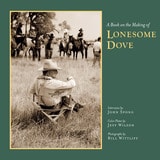
A Book on the Making of Lonesome Dove
By John Spong
University of Texas Press, 2012
Widely acclaimed as the greatest Western ever made, Lonesome Dove has become a true American epic. Larry McMurtry’s Pulitzer Prize–winning novel was a New York Times best seller, with more than 2.5 million copies currently in print. The Lonesome Dove miniseries has drawn millions of viewers and won numerous awards, including seven Emmys.
A Book on the Making of Lonesome Dove takes you on a fascinating behind-the-scenes journey into the creation of the book, the miniseries, and the world of Lonesome Dove. Writer John Spong talks to forty of the key people involved, including author Larry McMurtry; actors Robert Duvall, Tommy Lee Jones, Anjelica Huston, Diane Lane, Danny Glover, Ricky Schroder, D. B. Sweeney, Frederic Forrest, and Chris Cooper; executive producer and screenwriter Bill Wittliff; executive producer Suzanne de Passe; and director Simon Wincer. They and a host of others tell lively stories about McMurtry’s writing of the epic novel and the process of turning it into the miniseries Lonesome Dove. Accompanying their recollections are photographs of iconic props, costumes, set designs, and shooting scripts. Rounding out the book are continuity Polaroids used during filming and photographs taken on the set by Bill Wittliff, which place you behind the scenes in the middle of the action.
Designed as a companion for A Book of Photographs from Lonesome Dove, Wittliff’s magnificent fine art volume, A Book on the Making of Lonesome Dove is a must-have for every fan of this American epic.
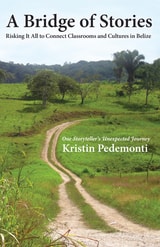
A Bridge of Stories
Risking it All to Connect Classrooms and CultureKristin Pedemonti
Parkhurst Brothers, Inc., 2017
“With openhearted generosity, Kristin shares not only the story of her amazing journey but complete lesson plans and valuable tips on inter-cultural work. She deepens our understanding of the culture and legends of Belize all the while imparting courage and a can-do philosophy that could truly change the world. Read and be inspired!”
—Diane Edgecomb, author of A Fire in My Heart: Kurdish Tales
A Century of Brazilian Documentary Film
From Nationalism to ProtestDarlene J. Sadlier
University of Texas Press, 2022
Since the late nineteenth century, Brazilians have turned to documentaries to explain their country to themselves and to the world. In a magisterial history covering one hundred years of cinema, Darlene J. Sadlier identifies Brazilians’ unique contributions to a diverse genre while exploring how that genre has, in turn, contributed to the making and remaking of Brazil.
A Century of Brazilian Documentary Film is a comprehensive tour of feature and short films that have charted the social and political story of modern Brazil. The Amazon appears repeatedly and vividly. Sometimes—as in a prize-winning 1922 feature—the rainforest is a galvanizing site of national pride; at other times, the Amazon has been a focus for land-reform and Indigenous-rights activists. Other key documentary themes include Brazil’s swings from democracy to dictatorship, tensions between cosmopolitanism and rurality, and shifting attitudes toward race and gender. Sadlier also provides critical perspectives on aesthetics and media technology, exploring how documentaries inspired dramatic depictions of poverty and migration in the country’s Northeast and examining Brazilians’ participation in streaming platforms that have suddenly democratized filmmaking.
A Century of Music Under the Stars
A History of the Mann Center for the Performing Arts and Robin Hood DellMcCarthy, Jack, and The Mann Center for the Performing Arts
Temple University Press, 2025
The Dell, which opened in 1930, and the Mann, which opened in 1976, were initially built as summer homes for The Philadelphia Orchestra. As McCarthy fondly recounts, the Mann Center evolved to host the world’s top artists across many musical genres. Contemporary audiences have gathered on the Great Lawn for concerts by performers including James Taylor, The Roots, Phish, Diana Ross, John Legend, and others.
The venues, however, are more than just the music; they are about the beautiful natural setting, communal atmosphere, and spectacular view of the Philadelphia skyline. A Century of Music Under the Stars is a revealing and celebratory look back at beloved Philadelphia cultural icons. This informative and illuminating history will provide happy memories for generations of music lovers.
A Cinema Without Walls
Movies and Culture after VietnamCorrigan, Timothy
Rutgers University Press, 1991
How have modern advertising techniques, the widespread use of VCRs, conglomerate takeovers of studios and film archives, cable TV, and media coverage of the Vietnam war changed the ways we watch movies? And how, in turn, have those different habits and patterns of viewing changed the ways in which films address their viewers? Drawing on a wide variety of American and European films and on many theoretical models, Timothy Corrigan investigates what he calls "a cinema without walls," taking a close look at particular films in order to see how we watch them differently in the post-Vietnam era. He examines cult audiences, narrative structure, genre films (road movies, in particular), and contemporary politics as they engage new models of film making and viewing. He thus provides a rare, serious attempt to deal with contemporary movies. Corrigan discusses filmmakers from a variety of backgrounds and cultures, including Martin Scorsese, Raoul Ruiz, Michael Cimino, Alexander Kluge, Francis Ford Coppola, Stephen Frears, and Wim Wenders. He offers detailed analyses of films such as Platoon; Full Metal Jacket; 9-1/2 Weeks; The Singing Detective; Choose Me; After Hours; Badlands; The King of Comedy; Paris, Texas; and My Beautiful Laundrette. Orchestrating this diversity, Corrigan provides a critical basis for making sense of contemporary film culture and its major achievements.
A Cinema of Obsession
The Life and Work of Mai ZetterlingMariah Larsson
University of Wisconsin Press, 2020
Critics have compared her work to that of Ingmar Bergman, Luis Buñuel, and Federico Fellini, but Zetterling had a distinct style—alternately radical and reactionary—that straddled the gendered divide between high art and mass culture. Tackling themes of sexuality, isolation, and creativity, her documentaries, short and feature films, and television works are visually striking. Her oeuvre provoked controversy and scandal through her sensational representations of reproduction and motherhood.
Mariah Larsson provides a lively and authoritative take on Zetterling's legacy and complicated position within film and women's history. A Cinema of Obsession provides necessary perspective on how the breadth of an artist's collected works keeps gatekeepers from recognizing their achievements, and questions why we still distinguish between national and global visual cultures and the big and small screens in the #MeToo era.
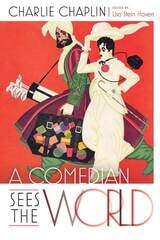
A Comedian Sees the World
Charlie Chaplin, Edited by Lisa Stein Haven
University of Missouri Press, 2014
Available only in the USA and Canada.
A Commentary on the Plays of Sophocles
James C. Hogan
Southern Illinois University Press, 1991
James C. Hogan introduces each play by highlighting specific and interpretive problems relevant to that play before turning to a line-by-line analysis. The line analysis is comprehensive, ranging from the meanings of words and phrases that pertain to a variety of Greek ideas and institutions to metaphor and imagery specific to each play as well as plots and borrowings from earlier poetry, styles, and characterizations.
Along with his examination of the seven extant plays of Sophocles in English translations, Hogan provides a general introduction to the theatre in Sophocles’ time, discussing staging, the conventions of the Greek theatre, the text of the plays, and mythology and religion.
A Concept of Dramatic Genre and the Comedy of a New Type
V. Ulea
Southern Illinois University Press, 2002
Applying systems theory to the comedies of Chekhov, Balzac, Kleist, Moliere, and Shakespeare, A Concept of Dramatic Genre and the Comedy of a New Type: Chess, Literature, and Film approaches dramatic genre from the point of view of the degree of richness and strength of a character’s potential. Its main focus is to establish a methodology for analyzing the potential from multidimensional perspectives, using systems thinking. The whole concept is an alternative to the Aristotelian plot-based approach and is applied to an analysis of western and eastern European authors as well as contemporary American film.
This innovative study consists of three parts: The first part is mostly theoretical, proposing a new definition of the dramatic as a category linked to general systems phenomena and offering a new classification of dramatic genre. In the second part, Ulea offers a textual analysis of some works based on this new classification. She analyzes comedies, tragedies, and dramas on the same or similar topics in order to reveal what makes them belong to opposite types of dramatic genre.
Additionally, she considers the question of fate and chance, with regard to tragedy and comedy, from the point of view of the predispositioning theory. In the third part, Ulea explores an analysis of the comedy of a new type—CNT. Her emphasis is on the integration of the part and the whole in approaching the protagonist’s potential. She introduces the term quasi-strong potential in order to reveal the illusory strength of protagonists of the CNT and to show the technique of CNT’s analysis and synthesis.
Ulea’s research begins with the notion of the comic, traditionally considered synonymous with the laughable, and attempts to approach it as independent from the laughable and laughter. The necessity to do so is dictated by the desire to penetrate the enigmatic nature of Chekhov’s comedy. The result is A Concept of Dramatic Genre and the Comedy of a New Type: Chess, Literature, and Film, a completely new approach to potential and systems thinking—which has never been a focus of dramatic theory before. Such potential is the touchstone of the comic and comedy, their permanent basic characteristic, the heart and axis around which the comedic world spins.
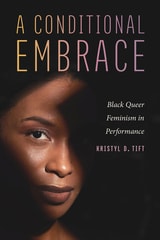
A Conditional Embrace
Black Queer Feminism in PerformanceKristyl D. Tift
The Ohio State University Press, 2026
In A Conditional Embrace, Kristyl D. Tift seeks to understand how Black queer women theater and film artists depict their own survival in heterosexist temporalities and spaces. Using the framework of lovin’ on—a theory inspired by Black feminist thought, performance theory, and queer theory—Tift closely reads the works of a selection of artists to investigate the “conditional embrace” of Black queer art in society. Her intersectional and intertextual methodology considers the text and body as part and parcel of performance work, allowing her to examine the multiple and complex intersections of identity at play in works meant to be read and performed. Tift puts the work of more visible artists such as Dee Rees, Sharon Bridgforth, and Staceyann Chin in direct conversation with lesser-known contributors to Black queer feminist performance such as Shirlene Holmes and Donnetta Lavinia Grays, analyzing not only their plays, installations, and poetry but also interviews, personal essays, performances, and more. Centering the works of artists situated, by birth or migration, in the Southern US and the Caribbean, A Conditional Embrace explores how artists at the margins of art and society represent Black queer women’s survival through processes of self-making, community-building, and homemaking.
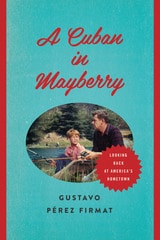
A Cuban in Mayberry
Looking Back at America's HometownBy Gustavo Perez Firmat
University of Texas Press, 2014
Half a century after viewers first watched a father and son walking to the local fishing hole, whistling a simple, yet unforgettable, tune, The Andy Griffith Show remains one of the most popular sitcoms in the history of American television. Tens of millions of viewers have seen the show either in its original run, its ongoing reruns, on DVD, or on the internet. Websites devoted to the show abound, hundreds of fan clubs bring enthusiasts together, and a plethora of books and Mayberry-themed merchandise have celebrated all things Mayberry. A small cottage industry has even developed around the teachings of the show’s episodes. But why does a sitcom from the 1960s set in the rural South still evoke such devotion in people today?
In A Cuban in Mayberry, acclaimed author Gustavo Pérez Firmat revisits America’s hometown to discover the source of its enduring appeal. He approaches the show from a unique perspective—that of an exile who has never experienced the rootedness that Andy and his fellow Mayberrians take for granted, as folks who have never strayed from home or lived among strangers. As Pérez Firmat weaves his personal recollections of exile from Cuba with an analysis of the show, he makes a convincing case that the intimacy between person and place depicted in TAGS is the secret of its lasting relevance, even as he reveals the surprising ways in which the series also reflects the racial, generational, and political turbulence of the 1960s.
A Culture of Light
Cinema and Technology in 1920s GermanyFrances Guerin
University of Minnesota Press, 2005
A Dance Through Time
Images of Western Social Dancing from the Middle Ages to Modern TimesJeremy Barlow
Bodleian Library Publishing, 2012
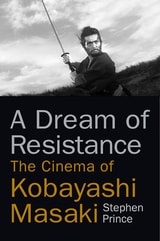
A Dream of Resistance
The Cinema of Kobayashi MasakiPrince, Stephen
Rutgers University Press, 2017
A Dream of Resistance is the first book in English to explore Kobayashi’s entire career, from the early films he made at Shochiku studio, to internationally-acclaimed masterpieces like The Human Condition, Harakiri, and Samurai Rebellion, and on to his final work for NHK Television. Closely examining how Kobayashi’s upbringing and intellectual history shaped the values of his work, Stephen Prince illuminates the political and religious dimensions of Kobayashi’s films, interpreting them as a prayer for peace in troubled times. Prince draws from a wealth of rare archives, including previously untranslated interviews, material that Kobayashi wrote about his films, and even the young director’s wartime diary. The result is an unprecedented portrait of this singular filmmaker.

A Dream to Conjure
Emergent Forms in Caribbean Art and CinemaYasmine Espert
Duke University Press, 2027
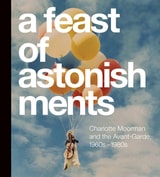
A Feast of Astonishments
Charlotte Moorman and the Avant-Garde, 1960s-1980sEdited by Lisa Graziose Corrin and Corrine Granof
Northwestern University Press, 2015
Charlotte Moorman was a bold, barrier-breaking musician and performance artist and a tireless champion of experimental art, whose avant-garde festivals in New York City brought new art forms to a broad public. To date, recognition of Moorman has been limited mostly to her collaborations with other artists, including composer John Cage and pioneering multimedia artist Nam June Paik, and to her 1967 performance of Paik’s "Opera Sextronique," for which she became known as the "topless cellist" after being arrested on indecency charges. A Feast of Astonishments looks deeper to portray Moorman as a leading international figure in her own right.
With more than 150 color images and essays by art historians, curators, and musicologists, this catalog will offer a fresh perspective and complement an exhibition that opens at Northwestern University’s Mary and Leigh Block Museum of Art in January 2016 before traveling to New York University’s Grey Art Gallery in Manhattan and the Museum der Moderne in Salzburg, Austria. The exhibition will feature original sculptures, photographs, video, props and costumes, annotated music scores, archival materials, film clips, and audio recordings, many drawn from the Charlotte Moorman Archive at the Charles Deering McCormick Library of Special Collections, Northwestern University Library. The exhibition is a partnership between the Block Museum and the Northwestern University Libraries.
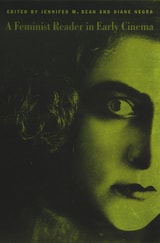
A Feminist Reader in Early Cinema
Jennifer M. Bean and Diane Negra, eds.
Duke University Press, 2002
While fostering new ways of thinking about film history, A Feminist Reader in Early Cinema illuminates the many questions that the concept of "early cinema" itself raises about the relation of gender to modernism, representation, and technologies of the body. The contributors bring a number of disciplinary frameworks to bear, including not only film studies but also postcolonial studies, dance scholarship, literary analysis, philosophies of the body, and theories regarding modernism and postmodernism.
Reflecting the stimulating diversity of early cinematic styles, technologies, and narrative forms, essays address a range of topics—from the dangerous sexuality of the urban flâneuse to the childlike femininity exemplified by Mary Pickford, from the Shanghai film industry to Italian diva films—looking along the way at birth-control sensation films, French crime serials, "war actualities," and the stylistic influence of art deco. Recurring throughout the volume is the protean figure of the New Woman, alternately garbed as childish tomboy, athletic star, enigmatic vamp, languid diva, working girl, kinetic flapper, and primitive exotic.
Contributors. Constance Balides, Jennifer M. Bean, Kristine Butler, Mary Ann Doane, Lucy Fischer, Jane Gaines, Amelie Hastie, Sumiko Higashi, Lori Landay, Anne Morey, Diane Negra, Catherine Russell, Siobhan B. Somerville, Shelley Stamp, Gaylyn Studlar, Angela Dalle Vacche, Radha Vatsal, Kristen Whissel, Patricia White, Zhang Zhen
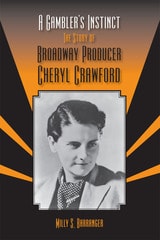
A Gambler’s Instinct
The Story of Broadway Producer Cheryl CrawfordMilly S. Barranger
Southern Illinois University Press, 2010
Broadway producer Cheryl Crawford (1902–1986) declared in her 1977 autobiography, “The theatre has been my life.” Crawford was notoriously circumspect about her private life, and only now, with Milly S. Barranger’s insightful biography, is her full story revealed.
A major Broadway producer in an era when women producers were exceedingly rare, Crawford found unprecedented success with the plays of Tennessee Williams, including The Rose Tattoo and Sweet Bird of Youth, but her enduring legend is as a musical producer, having brought Kurt Weill’s One Touch of Venus, Lerner and Loewe’s Brigadoon and Paint Your Wagon to the stage. Her commercial success, though, was balanced with the founding of studios that would enable actors to explore their art outside the strictures of commercial theater. She cofounded the Group Theatre with Harold Clurman and Lee Strasberg, the American Repertory Theatre with Margaret Webster and Eva Le Gallienne, and the Actors Studio with Elia Kazan and Robert Lewis, but her idealism was constantly frustrated by unfulfilled artistic promises from her male counterparts and by the chronic shortage of funding for the nonprofit enterprises.
As Barranger traces Crawford’s career as an independent producer, she tells the parallel story of American theater in the mid-twentieth century, making A Gambler’s Instinct both an enjoyable and informative biography of a remarkable woman and an important addition to the literature of the modern theater.

A Gift of Madrigals and Motets
Edited by H. Colin Slim
University of Chicago Press, 1972
At first encounter, these partbooks yield no clues concerning their provenance, their composers' names, or the reasons for their dispatch to England. In his search for this information, Professor Slim used the musicologists' customary tools, namely, biobibliography, concordances, and textual and musical analysis. But he also used bibliographers' tools not always employed by musicologists: watermarks, bindings, script, orthography, and illuminations.
As a result of his efforts, the author was able to identify nearly all the works' composers and the manuscripts' expert illuminator. He also presents a detailed description of the binding process and the probably background of the scribe, places the political and social references in the works, and determines the route the volumes may have taken after they left Henry's library.
By placing the date of the partbooks' arrival in England around 1528, Professor Slim suggests that the musical culture of the early Tudor court was less French than has hitherto been thought. Indeed, the presence of the partbooks in Henry's library makes them the earliest evidence of the Italian madrigal in England. The author also provides new and significant data on the artistic and historical position of Philippe Verdelot, the partbooks' most extensively represented composer.
Volume I of this set contains two parts. The first, dealing with the manuscript itself, contains the history of the partbooks, information on their origin, composers, texts, and their importance as a gift to Henry VIII. Part II, dealing with the music, discusses general musical traits, the motets, the madrigals, the results of collation, and the appearance of some of the Newberry motets and madrigals in other sources.
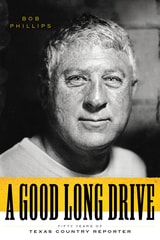
A Good Long Drive
Fifty Years of Texas Country ReporterBob Phillips
University of Texas Press, 2021
In 2021, Texas Country Reporter celebrates its fiftieth season on the air. Broadcast every week on stations across Texas, it focuses on “ordinary people doing extraordinary things.” And at the center of it is Bob Phillips, the show’s creator and host—an erstwhile poor kid from Dallas who ended up with a job that allowed him to rub elbows with sports figures, entertainers, and politicians but who preferred to spend his time on the back roads, listening to less-famous Texans tell their stories.
In this memoir, Phillips tells his own story, from his early days as a reporter and his initial pitch for the show while a student at SMU to his ongoing work at the longest-running independently produced TV show in American television history. As we travel with Phillips on his journey, we meet Willie Nelson and former Dallas Cowboys coach Tom Landry; reflect on memorable, unusual, and challenging show segments; experience the behind-the-scenes drama that goes on in local television; witness the launching of an annual festival; and discover the unbelievable allure of Texas, its culture, and, especially, its people. Spanning generations, A Good Long Drive is proof that life’s journey really is a destination unto itself.
A Grammar of Murder
Violent Scenes and Film FormKarla Oeler
University of Chicago Press, 2009
The dark shadows and offscreen space that force us to imagine violence we cannot see. The real slaughter of animals spliced with the fictional killing of men. The missing countershot from the murder victim’s point of view. Such images, or absent images, Karla Oeler contends, distill how the murder scene challenges and changes film.
Reexamining works by such filmmakers as Renoir, Hitchcock, Kubrick, Jarmusch, and Eisenstein, Oeler traces the murder scene’s intricate connections to the great breakthroughs in the theory and practice of montage and the formulation of the rules and syntax of Hollywood genre. She argues that murder plays such a central role in film because it mirrors, on multiple levels, the act of cinematic representation. Death and murder at once eradicate life and call attention to its former existence, just as cinema conveys both the reality and the absence of the objects it depicts. But murder shares with cinema not only this interplay between presence and absence, movement and stillness: unlike death, killing entails the deliberate reduction of a singular subject to a disposable object. Like cinema, it involves a crucial choice about what to cut and what to keep.
A Great Big Girl Like Me
The Films of Marie DresslerVictoria Sturtevant
University of Illinois Press, 2008
This premier analysis of her body of work explores how Dressler refocused the generic frame of her films beyond the shallow problems of the rich and beautiful, instead dignifying the marginalized, the elderly, women, and the poor. Sturtevant inteprets the meanings of Dressler's body through different genres, venues, and historical periods by looking at her vaudeville career, her transgressive representation of an "unruly" yet sexual body in Emma and Christopher Bean, ideas of the body politic in the films Politics and Prosperity, and Dressler as a mythic body in Min and Bill and Tugboat Annie.
A Guru’s Journey
Pandit Chitresh Das and Indian Classical Dance in DiasporaSarah Morelli
University of Illinois Press, 2019
A Guru's Journey provides an ethnographic study of the dance form in the San Francisco Bay Area community formed by Das. Sarah Morelli, a kathak dancer and one of Das's former students, investigates issues in teaching, learning, and performance that developed around Das during his time in the United States. In modifying kathak's form and teaching for Western students, Das negotiates questions of Indianness and non-Indianness, gender, identity, and race. Morelli lays out these issues for readers with the goal of deepening their knowledge of kathak aesthetics, technique, and theory. She also shares the intricacies of footwork, facial expression in storytelling, and other aspects of kathak while tying them to the cultural issues that inform the dance.
A History of Hispanic Theatre in the United States
Origins to 1940By Nicolás Kanellos
University of Texas Press, 1990
Hispanic theatre flourished in the United States from the mid-nineteenth century until the beginning of the Second World War—a fact that few theatre historians know. A History of Hispanic Theatre in the United States: Origins to 1940 is the very first study of this rich tradition, filled with details about plays, authors, artists, companies, houses, directors, and theatrical circuits.
Sixteen years of research in public and private archives in the United States, Mexico, Spain, and Puerto Rico inform this study. In addition, Kanellos located former performers and playwrights, forgotten scripts, and old photographs to bring the life and vitality of live theatre to his text. He organizes the book around the cities where Hispanic theatre was particularly active, including Los Angeles, San Antonio, New York, and Tampa, as well as cities on the touring circuit, such as Laredo, El Paso, Tucson, and San Francisco.
Kanellos charts the major achievements of Hispanic theatre in each city—playwriting in Los Angeles, vaudeville and tent theatre in San Antonio, Cuban/Spanish theatre in Tampa, and pan-Hispanism in New York—as well as the individual careers of several actors, writers, and directors. And he uncovers many gaps in the record—reminders that despite its popularity, Hispanic theatre was often undervalued and unrecorded.
A History of Horror
Wheeler Winston Dixon
Rutgers University Press, 2010
Arranged by decades, with outliers and franchise films overlapping some years, this one-stop sourcebook unearths the historical origins of characters such as Dracula, Frankenstein, and the Wolfman and their various incarnations in film from the silent era to comedic sequels. A History of Horror explores how the horror film fits into the Hollywood studio system and how its enormous success in American and European culture expanded globally over time.
Dixon examines key periods in the horror film-in which the basic precepts of the genre were established, then banished into conveniently reliable and malleable forms, and then, after collapsing into parody, rose again and again to create new levels of intensity and menace. A History of Horror, supported by rare stills from classic films, brings over fifty timeless horror films into frightfully clear focus, zooms in on today's top horror Web sites, and champions the stars, directors, and subgenres that make the horror film so exciting and popular with contemporary audiences.
A History of Horror, 2nd Edition
Wheeler Winston Dixon
Rutgers University Press, 2023
Ever since horror leapt from popular fiction to the silver screen in the late 1890s, viewers have experienced fear and pleasure in exquisite combination. Wheeler Winston Dixon's fully revised and updated A History of Horror is still the only book to offer a comprehensive survey of this ever-popular film genre.
Arranged by decades, with outliers and franchise films overlapping some years, this one-stop sourcebook unearths the historical origins of characters such as Dracula, Frankenstein, and the Wolfman and their various incarnations in film from the silent era to comedic sequels. In covering the last decade, this new edition includes coverage of the resurgence of the genre, covering the swath of new groundbreaking horror films directed by women, Black and queer horror films, and a new international wave in body horror films.
A History of Horror explores how the horror film fits into the Hollywood studio system, how the distribution and exhibition of horror films have changed in a post-COVID world, and how its enormous success in American and European culture expanded globally over time.
Dixon examines key periods in the horror film-in which the basic precepts of the genre were established, then banished into conveniently reliable and malleable forms, and then, after collapsing into parody, rose again and again to create new levels of intensity and menace. A History of Horror, supported by rare stills from classic films, brings over sixty timeless horror films into frightfully clear focus, zooms in on today's top horror Web sites, and champions the stars, directors, and subgenres that make the horror film so exciting and popular with contemporary audiences.
A History of the American Theatre from Its Origins to 1832
William Dunalp, Introduction by Tice L. Miller
University of Illinois Press, 2005
As America passed from a mere venue for English plays into a country with its own nationally regarded playwrights, William Dunlap lived the life of a pioneer on the frontier of the fledgling American theatre, full of adventures, mishaps, and close calls. He adapted and translated plays for the American audience and wrote plays of his own as well, learning how theatres and theatre companies operated from the inside out.
Dunlap's masterpiece, A History of American Theatre was the first of its kind, drawing on the author's own experiences. In it, he describes the development of theatre in New York, Philadelphia, and South Carolina as well as Congress's first attempts at theatrical censorship. Never before previously indexed, this edition also includes a new introduction by Tice L. Miller.
A History of the French New Wave Cinema
Richard Neupert
University of Wisconsin Press, 2007
The French New Wave cinema is arguably the most fascinating of all film movements, famous for its exuberance, daring, and avant-garde techniques. A History of the French New Wave Cinema offers a fresh look at the social, economic, and aesthetic mechanisms that shaped French film in the 1950s, as well as detailed studies of the most important New Wave movies of the late 1950s and early 1960s.
Richard Neupert first tracks the precursors to New Wave cinema, showing how they provided blueprints for those who would follow. He then demonstrates that it was a core group of critics-turned-directors from the magazine Cahiers du Cinéma—especially François Truffaut, Claude Chabrol, and Jean-Luc Godard—who really revealed that filmmaking was changing forever. Later, their cohorts Eric Rohmer, Jacques Rivette, Jacques Doniol-Valcroze, and Pierre Kast continued in their own unique ways to expand the range and depth of the New Wave.
In an exciting new chapter, Neupert explores the subgroup of French film practice known as the Left Bank Group, which included directors such as Alain Resnais and Agnès Varda. With the addition of this new material and an updated conclusion, Neupert presents a comprehensive review of the stunning variety of movies to come out of this important era in filmmaking.
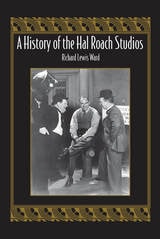
A History of the Hal Roach Studios
Richard Lewis Ward
Southern Illinois University Press, 2006
Once labeled the “lot that laugher built,” the Hal Roach Studios launched the comedic careers of such screen icons as Harold Lloyd, Our Gang, and Laurel and Hardy. With this stable of stars, the Roach enterprise operated for forty-six years on the fringes of the Hollywood studio system during a golden age of cinema and gained notoriety as a producer of short comedies, independent features, and weekly television series. Many of its productions are better remembered today than those by its larger contemporaries. In A History of the Hal Roach Studios, Richard Lewis Ward meticulously follows the timeline of the company’s existence from its humble inception in 1914 to its close in 1960 and, through both its obscure and famous productions, traces its resilience to larger trends in the entertainment business.
In the first few decades of the twentieth century, the motion picture industry was controlled by an elite handful of powerful firms that allowed very little room for new competition outside of their established cartel. The few independents that garnered some measure of success despite their outsider status usually did so by specializing in underserved or ignored niche markets. Here, Ward chronicles how the Roach Studios, at the mercy of exclusive distribution practices, managed to repeatedly redefine itself in order to survive for nearly a half-century in a cutthroat environment.
Hal Roach’s tactic was to nurture talent rather than exhaust it, and his star players spent the prime of their careers shooting productions on his lot. Even during periods of decline or misdirection, the Roach Studios turned out genuinely original material, such as the screwball classic Topper (1937), the brutally frank Of Mice and Men (1940), and the silent experiment One Million B.C. (1940). Ward’s exploration yields insight into the production and marketing strategies of an organization on the periphery of the theatrical film industry and calls attention to the interconnected nature of the studio system during the classic era. The volume also looks to the early days of television when the prolific Roach Studios embraced the new medium to become, for a time, the premier telefilm producer.
Aided by a comprehensive filmography and twenty-seven illustrations, A History of the Hal Roach Studios recounts an overlooked chapter in American cinema, not only detailing the business operations of Roach’s productions but also exposing the intricate workings of Hollywood’s rivalrous moviemaking establishment.
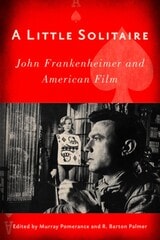
A Little Solitaire
John Frankenheimer and American FilmPomerance, Murray
Rutgers University Press, 2011
Think about some commercially successful film masterpieces--The Manchurian Candidate. Seven Days in May. Seconds. Then consider some lesser known, yet equally compelling cinematic achievements--The Fixer. The Gypsy Moths. Path to War. These triumphs are the work of the best known and most highly regarded Hollywood director to emerge from live TV drama in the 1950s--five-time Emmy-award-winner John Frankenheimer.
Although Frankenheimer was a pioneer in the genre of political thrillers who embraced the antimodernist critique of contemporary society, some of his later films did not receive the attention they deserved. Many claimed that at a midpoint in his career he had lost his touch. World-renowned film scholars put this myth to rest in A Little Solitaire, which offers the only multidisciplinary critical account of Frankenheimer's oeuvre. Especially emphasized is his deep and passionate engagement with national politics and the irrepressible need of human beings to assert their rights and individuality in the face of organizations that would reduce them to silence and anonymity.
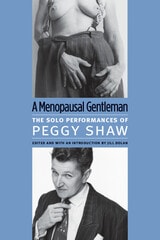
A Menopausal Gentleman
The Solo Performances of Peggy ShawPeggy Shaw
University of Michigan Press, 2011
"With classic butch finesse---that handsome combination of vulnerability and toughness---Peggy Shaw pieces together the challenges of growing up butch in the 1950s. Shaw is an engaging performer and inspired writer."
---Gay Community News
Obie-award-winning performer and writer Peggy Shaw has been playing her gender-bending performances on Off Broadway, regional, and international stages for three decades. Co-founder of the renowned troupe Split Britches, Shaw has gone on to create memorable solo performances that mix achingly honest introspection with campy humor, reflecting on everything from her Irish-American working-class roots to her aging butch body.
This collection of Shaw's solo performance scripts evokes a 54-year-old grandmother who looks like a 35-year-old man (in her classic Menopausal Gentleman); a mother's ambivalent ministrations to a daughter she treated like a son (in the raw You're Just Like My Father); Shaw's love for her biracial grandson, for whom she models masculinity (in the musically punctuated To My Chagrin); and a mapping of her body's long, bittersweet history (in the lyrical Must: The Inside Story, a collaboration with the UK's Clod Ensemble). The book also includes a selection of Shaw's other classic monologues and an extensive introduction by Jill Dolan, Professor of English and Theater and Dance at Princeton University and the blogger behind The Feminist Spectator website.
A volume in the series Triangulations: Lesbian/Gay/Queer Theater/Drama/Performance
Cover photos by Eva Weiss (top) and Robin Holland/robinholland.com (bottom).
A Not So Foreign Affair
Fascism, Sexuality, and the Cultural Rhetoric of American DemocracyAndrea Slane
Duke University Press, 2001
World War II marked a turning point in the cultural rhetoric of democracy, Slane claims, because it intensified a preoccupation with the political role of private life and pushed sexuality to the center of democratic discourse. Having created tremendous anxiety—and fascination—in American culture, Nazism became associated with promiscuity, sexual perversionand the destruction of the family. Slane reveals how this particular imprint of fascism is used in progressive as well as conservative imagery and language to further their domestic agendas and shows how our cultural engagement with Nazism reflects the inherent tension in democracy between the value of diversity, individual freedoms national identity, and notions of the common good. Finally, she applies her analysis of wartime narratives to contemporary texts, examining anti-abortion, anti-gay, and anti-federal rhetoric, as well as the psychic life of skinheads, censorship debates, and the contemporary fascination with incest.
An invaluable resource for understanding the language we use—both visual and narrative—to describe and debate democracy in the United States today, A Not So Foreign Affair will appeal to those interested in cultural studies, film and video studies, American studies, twentieth century history, German studies, rhetoric, and sexuality studies.
A Place for Us
“West Side Story” and New YorkJulia L. Foulkes
University of Chicago Press, 2016
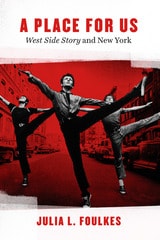
That vision of postwar New York is at the heart of Julia L. Foulkes’s A Place for Us. A lifelong fan of the show, Foulkes became interested in its history when she made an unexpected discovery: scenes for the iconic film version were shot on the demolition site destined to become part of the Lincoln Center redevelopment area—a crowning jewel of postwar urban renewal. Foulkes interweaves the story of the creation of the musical and film with the remaking of the Upper West Side and the larger tale of New York’s postwar aspirations. Making unprecedented use of director and choreographer Jerome Robbins’s revelatory papers, she shows the crucial role played by the political commitments of Robbins and his fellow gay, Jewish collaborators, Leonard Bernstein and Arthur Laurents. Their determination to evoke life in New York as it was actually lived helped give West Side Story its unshakable sense of place even as it put forward a vision of a new, vigorous, determinedly multicultural American city.
Beautifully written and full of surprises for even the most dedicated West Side Story fan, A Place for Us is a revelatory new exploration of an American classic.