Results by title
637 books match the query 'Political activity' and 37 start with a
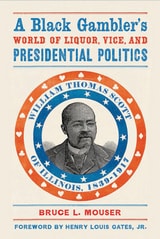
A Black Gambler’s World of Liquor, Vice, and Presidential Politics
William Thomas Scott of Illinois, 1839–1917Bruce L. Mouser
University of Wisconsin Press, 2014
Scott helped build the National Negro Liberty Party to forward economic, political, and legal rights for his race. But the hustling that had brought him business success proved his undoing as a national political figure. He was the NNLP's initial presidential nominee, only to be replaced by a better-educated and more socially acceptable candidate, George Edwin Taylor.
A Blueprint for Worker Solidarity
Class Politics and Community in WisconsinNaomi R Williams
University of Illinois Press, 2025
Naomi R Williams traces the journeys of two local activists to highlight how people can support democracy and economic freedom in the twenty-first century. In Racine, ideas of class and race shifted but remained strong. The broad-based class politics that emerged drew on racial analysis, vigilant organizing, and agile labor leadership that organized more people. Unionized workers in turn won political power while uniting to resist conservative and corporate attacks. Charting Racine’s transition, Williams breaks down how worker solidarity persevered and presents lessons that can provide valuable guidance for today’s generation of activists.
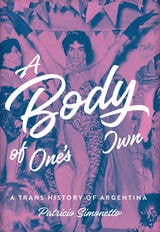
A Body of One's Own
A Trans History of ArgentinaPatricio Simonetto
University of Texas Press, 2024
2026 Silver Medal for the Best LGBTQ+ Themed Book, Conference on Latin American History (CLAH)
2026 Honorable Mention, Book Award, Social History Society
2025 Best Book in Social Sciences Award, Southern Cone Section, Latin American Studies Association
2024 Sylvia Rivera Award in Transgender Studies, The Center for LGBTQ Studies at the Graduate Center, CUNY
A history of Argentina that examines how trans bodies were understood, policed, and shaped in a country that banned medically assisted gender affirmation practices and punished trans lives.
As a trans history of Argentina, a country that banned medically assisted gender affirmation practices and punished trans lives, A Body of One’s Own places the histories of trans bodies at the core of modern Argentinian history. Patricio Simonetto documents the lives of people who crossed the boundaries of gender from the early twentieth century to the present. Based on extensive archival research in public and community-based archives, this book explores the mainstream medical and media portrayals of trans or travesti people, the state policing of gender embodiment, the experiences of those transgressing the boundaries of gender, and the development of homemade technologies from prosthetics to the self-injection of silicone. A Body of One's Own explores how trans activists' challenges to the exclusionary effects of Argentina’s legal, cultural, social, and political cisgender order led to the passage of the Gender Identity Law in 2012. Analyzing the decisive yet overlooked impact of gender transformation in the formation of the nation-state, gender-belonging, and citizenship, this book ultimately shows that supposedly abstract struggles to define the shifting notions of "sex," citizenship, and nationhood are embodied material experiences.
A Contested Caribbean Indigeneity
Language, Social Practice, and Identity within Puerto Rican Taíno ActivismSherina Feliciano-Santos
Rutgers University Press, 2021
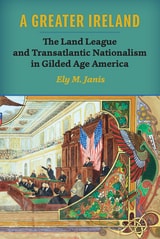
A Greater Ireland
The Land League and Transatlantic Nationalism in Gilded Age AmericaEly M. Janis
University of Wisconsin Press, 2014
As this "Greater Ireland" flourished, new opportunities arose for women and working-class men to contribute within Irish-American society. Exploring the complex interplay of ethnicity, class, and gender, Janis demonstrates the broad range of ideological, social, and political opinion held by Irish Americans in the 1880s. Participation in the Land League deeply influenced a generation that replaced their old county and class allegiances with a common cause, shaping the future of Irish-American nationalism.
A New Insurgency
The Port Huron Statement and Its TimesHoward Brick and Gregory Parker, eds.
Michigan Publishing Services, 2018
This volume features three never-before-published “manifesto drafts” written by Tom Hayden in early 1962 that generated the discussion leading to the Port Huron meeting. Other highlights include recollections from leading women in the Port Huron deliberations who, three years later, protested the subordination of women within the radical movements, thus setting the stage for the rise of women’s liberation. A New Insurgency is based on the University of Michigan’s conference commemorating the fiftieth anniversary of the Port Huron Statement in 2012.
“The fiftieth anniversary of the Port Huron Statement has drawn a great number of reflections and commemorations, but this carefully conceived volume offers an account of unrivaled ambition, exceptional breadth, and surprising insight. It both excavates the event itself—vividly, perceptively, exhaustively—and gives it the largest and most illuminating of contexts. A New Insurgency is as close to definitive as any volume of this kind can become.”
—Geoff Eley, Karl Pohrt Distinguished University Professor of Contemporary History, University of Michigan
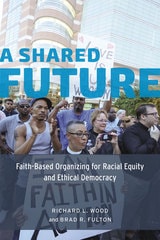
A Shared Future
Faith-Based Organizing for Racial Equity and Ethical DemocracyRichard L. Wood and Brad R. Fulton
University of Chicago Press, 2015
In A Shared Future, Richard L. Wood and Brad R. Fulton draw on a new national study of community organizing coalitions and in-depth interviews of key leaders in this field to show how faith-based organizing is creatively navigating the competing aspirations of America’s universalist and multiculturalist democratic ideals, even as it confronts three demons bedeviling American politics: economic inequality, federal policy paralysis, and racial inequity. With a broad view of the entire field and a distinct empirical focus on the PICO National Network, Wood and Fulton’s analysis illuminates the tensions, struggles, and deep rewards that come with pursuing racial equity within a social change organization and in society. Ultimately, A Shared Future offers a vision for how we might build a future that embodies the ethical democracy of the best American dreams.
An interview of the authors on the subject of faith leaders organizing for justice (Peace Talks Radio, copyright Good Radio Shows, Inc.) can be heard at this link: https://beta.prx.org/stories/190030

A Single Star and Bloody Knuckles
A History of Politics and Race in TexasBy Bill Minutaglio
University of Texas Press, 2021
For John Nance “Cactus Jack” Garner, there was one simple rule in politics: “You’ve got to bloody your knuckles.” It’s a maxim that applies in so many ways to the state of Texas, where the struggle for power has often unfolded through underhanded politicking, backroom dealings, and, quite literally, bloodshed. The contentious history of Texas politics has been shaped by dangerous and often violent events, and been formed not just in the halls of power but by marginalized voices omitted from the official narratives.
A Single Star and Bloody Knuckles traces the state’s conflicted and dramatic evolution over the past 150 years through its pivotal political players, including oft-neglected women and people of color. Beginning in 1870 with the birth of Texas’s modern political framework, Bill Minutaglio chronicles Texas political life against the backdrop of industry, the economy, and race relations, recasting the narrative of influential Texans. With journalistic verve and candor, Minutaglio delivers a contemporary history of the determined men and women who fought for their particular visions of Texas and helped define the state as a potent force in national affairs.
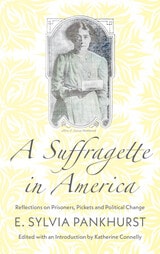
A Suffragette in America
Reflections on Prisoners, Pickets and Political ChangeSylvia Pankhurst
Pluto Press, 2019
This book gathers Pankhurst’s writings from the year-long visit, in which she reveals her shock at the darkness hidden in American life, and draws parallels to her experiences of imprisonment and misogyny in her own country. Never before published, these writings mark an important stage in the development of the suffragette's thought, which she brought back to Britain to inform the burgeoning suffrage campaign there.
A Thousand Steps to Parliament
Constructing Electable Women in MongoliaManduhai Buyandelger
University of Chicago Press, 2022
Mongolia has often been deemed an “island of democracy,” commended for its rapid adoption of free democratic elections in the wake of totalitarian socialism. The democratizing era, however, brought alongside it a phenomenon that Manduhai Buyandelger terms “electionization”—a restructuring of elections from time-grounded events into a continuous neoliberal force that governs everyday life beyond the electoral period. In this way, electoral campaigns have come to substitute for the functions of governing, from social welfare to the private sector, requiring an accumulation of wealth and power beyond the reach of most women candidates. In A Thousand Steps to Parliament, Buyandelger shows how successful women candidates instead use strategies of self-polishing to cultivate charisma and a reputation for being oyunlag, or intellectful. This carefully crafted identity can be called the “electable self”: treating their bodies and minds as pliable and renewable, women candidates draw from the same practices of neoliberalism that have unsustainably commercialized elections. By tracing the complicated, contradictory paths to representation that women in Mongolia must walk, A Thousand Steps to Parliament holds a mirror up to democracies the world over, revealing an urgent need to grapple with the encroaching effects of neoliberalism in our global political systems.
A Woman's Place Is in the House
Campaigning for Congress in the Feminist EraBarbara Burrell
University of Michigan Press, 1994

Abolitionist Intimacies
Queer and Trans Migrants against the Deportation StateEithne Luibheid
Duke University Press, 2025
Abolitionist Politics and the Coming of the Civil War
James Brewer Stewart
University of Massachusetts Press, 2008
Before the Civil War, slaveholders made themselves into the most powerful, most deeply rooted, and best organized private interest group within the United States. Not only did slavery represent the national economy's second largest capital investment, exceeded only by investment in real estate, but guarantees of its perpetuation were studded throughout the U.S. Constitution. The vast majority of white Americans, in North and South, accepted the institution, and pro-slavery presidents and congressmen consistently promoted its interests.
In Abolitionist Politics and the Coming of the Civil War, James Brewer Stewart explains how a small group of radical activists, the abolitionist movement, played a pivotal role in turning American politics against this formidable system. He examines what influence the movement had in creating the political crises that led to civil war and evaluates the extent to which a small number of zealous reformers made a truly significant political difference when demanding that their nation face up to its most excruciating moral problem. In making these assessments, Stewart addresses a series of more specific questions: What were the abolitionists actually up against when seeking the overthrow of slavery and white supremacy? What motivated and sustained them during their long and difficult struggles? What larger historical contexts (religious, social, economic, cultural, and political) influenced their choices and determined their behavior? What roles did extraordinary leaders play in shaping the movement, and what were the contributions of abolitionism's unheralded “foot soldiers”? What factors ultimately determined, for better or worse, the abolitionists' impact on American politics and the realization of their equalitarian goals?
Activist Archives
Youth Culture and the Political Past in IndonesiaDoreen Lee
Duke University Press, 2016
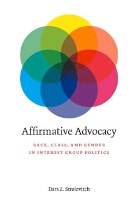
Affirmative Advocacy
Race, Class, and Gender in Interest Group PoliticsDara Z. Strolovitch
University of Chicago Press, 2007
The United States boasts scores of organizations that offer crucial representation for groups that are marginalized in national politics, from women to racial minorities to the poor. Here, in the first systematic study of these organizations, Dara Z. Strolovitch explores the challenges and opportunities they face in the new millennium, as waning legal discrimination coincides with increasing political and economic inequalities within the populations they represent.
Drawing on rich new data from a survey of 286 organizations and interviews with forty officials, Strolovitch finds that groups too often prioritize the interests of their most advantaged members: male rather than female racial minorities, for example, or affluent rather than poor women. But Strolovitch also finds that many organizations try to remedy this inequity, and she concludes by distilling their best practices into a set of principles that she calls affirmative advocacy—a form of representation that aims to overcome the entrenched but often subtle biases against people at the intersection of more than one marginalized group. Intelligently combining political theory with sophisticated empirical methods, Affirmative Advocacy will be required reading for students and scholars of American politics.
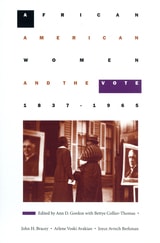
African American Women and the Vote, 1837–1965
Ann D. Gordon
University of Massachusetts Press, 1997
Written by leading scholars of African American and women's history, the essays in this volume seek to reconceptualize the political history of black women in the United States by placing them “at the center of our thinking.” The book explores how slavery, racial discrimination, and gender shaped the goals that African American women set for themselves, their families, and their race and looks at the political tools at their disposal. By identifying key turning points for black women, the essays create a new chronology and a new paradigm for historical analysis. The chronology begins in 1837 with the interracial meeting of antislavery women in New York City and concludes with the civil rights movement of the 1960s.
The contributors focus on specific examples of women pursuing a dual ambition: to gain full civil and political rights and to improve the social conditions of African Americans. Together, the essays challenge us to rethink common generalizations that govern much of our historical thinking about the experience of African American women.
Contributors include Bettina Aptheker, Elsa Barkley Brown, Willi Coleman, Gerald R. Gill, Ann D. Gordon, Evelyn Brooks Higginbotham, Cynthia Neverdon-Morton, Martha Prescod Norman, Janice Sumler-Edmond, Rosalyn Terborg-Penn, and Bettye Collier-Thomas.
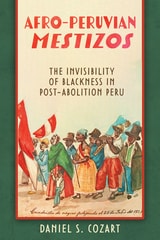
Afro-Peruvian Mestizos
The Invisibility of Blackness in Post-Abolition PeruDaniel S. Cozart
University of Alabama Press, 2025
A transformative study by Daniel S. Cozart, Afro-Peruvian Mestizos redefines the narrative of mestizaje in post-abolition Peru, uncovering the hidden histories and enduring strength of Afro-Peruvian communities.
Afro-Peruvian Mestizos: The Invisibility of Blackness in Post-Abolition Peru by Daniel S. Cozart investigates the ideologies of mestizaje, or racial mixing, that Latin American elites used to construct modern national identities during the nineteenth and twentieth centuries. Through close reading of archival records, legal documents, and literary works, Cozart uncovers the systematic exclusion of Afro-Peruvians from the nation's narrative of progress, revealing how their presence was deliberately omitted from official histories and censuses. The abolition of slavery in 1855 marked the beginning of a process where Afro-Peruvians were marginalized, their identities overshadowed by a national narrative that prioritized Indigenous heritage and whiteness.
Drawing on Michel-Rolph Trouillot's framework of historical production, the book traces the contradictions inherent in liberal and positivist ideologies that sought to forge a "raceless" society, all while silencing Afro-Peruvian voices and erasing their history. The conclusion reflects on the significance of erasure for Afro-Peruvians in the twentieth and twenty-first centuries, as they now demand to be seen. This book is a powerful examination of historical silences and the ongoing struggle for recognition in the face of systemic racism.
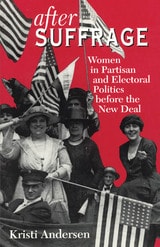
After Suffrage
Women in Partisan and Electoral Politics before the New DealKristi Andersen
University of Chicago Press, 1996
Andersen shows how women's participation was based on a conception of women's citizenship as indirect and disinterested. Gaining the right to vote, campaign, and run for office transformed women's citizenship; at the same time, women's independent partisan stance, their focus on social welfare concerns, and their use of new political techniques such as lobbying all helped to redefine politics.
This fresh, nuanced analysis of women voters, activists, candidates, and officeholders will interest scholars in political science and women's studies.
"In this rich and engaging book, Kristi Anderson presents a convincing argument that woman suffrage deserves greater scrutiny as a social, cultural, and political force in the development of American electoral and party politics."—Jane Junn, Political Science Quarterly
"Anderson's innovation in this book is to change the dominant question asked about American women's suffrage. . . . This book offers a much-needed corrective to the conventional conception that the enfranchisement of women had no significant effect on American society."—Inderjeet Parmar, Political Studies
"Anderson's book is an excellent treatment . . . and a sterling example of the value of using multiple research methods—also steeped within a deep understanding of context, culture, and historic trends—to explain something as complicated and nuanced as the impact of women's votes after suffrage."—Laura R. Woliver, Journal of Politics
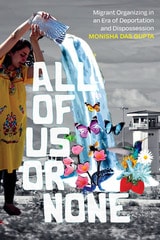
All of Us or None
Migrant Organizing in an Era of Deportation and DispossessionMonisha Das Gupta
Duke University Press, 2024
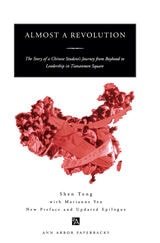
Almost a Revolution
The Story of a Chinese Student's Journey from Boyhood to Leadership in Tiananmen SquareShen Tong
University of Michigan Press, 1998
Now nearly ten years later as our fascination with post-Deng China continues to develop, Shen's story and the updated material he provides are weighted with increasing significance. Coupled with much of the recent analysis, Shen's firsthand account vividly contextualizes the Chinese government's opposition to democracy and offers meaningful insight into a country that promises to occupy an increasingly prominent position in the world.
"A cause for celebration . . . an important contribution to China's newly discovered historical memory." --New York Times Book Review
Shen Tong is a doctoral student in political sociology at Boston University and the founder of the Democracy for China Fund, which aims to support and publicize dissent networks in China. Marianne Yen is a former New York correspondent for the Washington Post.
Amakomiti
Grassroots Democracy in South African Shack SettlementsTrevor Ngwane
Pluto Press, 2021
Amazigh Politics in the Wake of the Arab Spring
Bruce Maddy-Weitzman
University of Texas Press, 2022
On television, the Arab Spring took place in Cairo, Tunis, and the city-states of the Persian Gulf. Yet the drama of 2010, and the decade of subsequent activism, extended beyond the cities—indeed, beyond Arabs. Bruce Maddy-Weitzman brings to light the sustained post–Arab Spring political movement of North Africa’s Amazigh people.
The Amazigh movement did not begin with the Arab Spring, but it has changed significantly since then. Amazigh Politics in the Wake of the Arab Spring details the increasingly material goals of Amazigh activism, as protest has shifted from the arena of ethnocultural recognition to that of legal and socioeconomic equality. Amazigh communities responded to the struggles for freedom around them by pressing territorial and constitutional claims while rejecting official discrimination and neglect. Arab activists, steeped in postcolonial nationalism and protective of their hegemonic position, largely refused their support, yet flailing regimes were forced to respond to sharpening Amazigh demands or else jeopardize their threadbare legitimacy. Today the Amazigh question looms larger than ever, as North African governments find they can no longer ignore the movement’s interests.

American Girls and Global Responsibility
A New Relation to the World during the Early Cold WarHelgren, Jennifer
Rutgers University Press, 2017
Jennifer Helgren argues that a new internationalist girl citizenship took root in the country in the years following World War II in youth organizations such as Camp Fire Girls, Girl Scouts, YWCA Y-Teens, schools, and even magazines like Seventeen. She shows the particular ways that girls’ identities and roles were configured, and reveals the links between internationalist youth culture, mainstream U.S. educational goals, and the U.S. government in creating and marketing that internationalist girl, thus shaping the girls’ sense of responsibilities as citizens.
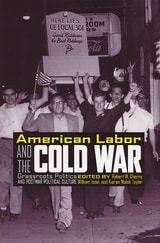
American Labor and the Cold War
Grassroots Politics and Postwar Political CultureCherny, Robert
Rutgers University Press, 2004
The American labor movement seemed poised on the threshold of unparalleled success at the beginning of the post-World War II era. Fourteen million strong in 1946, unions represented thirty five percent of non-agricultural workers. Why then did the gains made between the 1930s and the end of the war produce so few results by the 1960s?
This collection addresses the history of labor in the postwar years by exploring the impact of the global contest between the United States and the Soviet Union on American workers and labor unions. The essays focus on the actual behavior of Americans in their diverse workplaces and communities during the Cold War. Where previous scholarship on labor and the Cold War has overemphasized the importance of the Communist Party, the automobile industry, and Hollywood, this book focuses on politically moderate, conservative workers and union leaders, the medium-sized cities that housed the majority of the population, and the Roman Catholic Church. These are all original essays that draw upon extensive archival research and some upon oral history sources.
American Muslim Women, Religious Authority, and Activism
More Than a PrayerBy Juliane Hammer
University of Texas Press, 2012
Following the events of September 11, 2001, American Muslims found themselves under unprecedented scrutiny. Muslim communities in the United States suffered from negative representations of their religion, but they also experienced increased interest in aspects of their faith and cultures. They seized the opportunity to shape the intellectual contribution of American Muslims to contemporary Muslim thought as never before. Muslim women in particular—often assumed to be silenced, oppressed members of their own communities—challenged stereotypes through their writing, seeking to express what it means to be a Muslim woman in America and carrying out intra-Muslim debates about gender roles and women’s participation in society. Hammer looks at the work of significant female American Muslim writers, scholars, and activists, using their writings as a lens for a larger discussion of Muslim intellectual production in America and beyond.
Centered on the controversial women-led Friday prayer in March 2005, Hammer uses this event and its aftermath to address themes of faith, community, and public opinion. Tracing the writings of American Muslim women since 1990, the author covers an extensive list of authors, including Amina Wadud, Leila Ahmed, Asma Barlas, Riffat Hassan, Mohja Kahf, Azizah al-Hibri, Asra Normani, and Asma Gull Hasan. Hammer deftly examines each author’s writings, demonstrating that the debates that concern American Muslim women are at the heart of modern Muslim debates worldwide. While gender is the catalyst for Hammer’s study, her examination of these women’s intellectual output touches on themes central to contemporary Islam: authority, tradition, Islamic law, justice, and authenticity.

An Equal Share of Freedom
American Jews, Zionism, and World War IEdited by Mark Raider, Zohar Segev, and Gary Phillip Zola
University of Minnesota Press, 2024
An Equal Share of Freedom sheds new light on several important and interrelated dimensions of American, Jewish, and world history in the World War I era. Paying close attention to the Balfour Declaration as a hub around which to explore the period’s unfolding and turbulent social, cultural, and political developments, this collection of essays covers a diverse range of topics including Jewish doughboys, Zionist women authors, and political elites such as Golda Meir and Woodrow Wilson. The volume demonstrates the complex nature of Jewish ethnonational consciousness in the American setting and the impact of Zionism on US wartime and postwar activity.
The essays in this volume overturn timeworn assumptions that have long shaped the fields of American history and modern Jewish history. Taken as a whole, they demonstrate the war’s profound impact on American Jewish life and the transformation of American Jewry’s relationship with wider American society. These essays also illustrate the centrality of Zionism to the American Jewish experience and the extent to which American Jewry’s national consciousness and the future direction of the Zionist project were forged in the crucible of the Great War. An Equal Share of Freedom is the first volume in the Jacob Rader Marcus Series on the American Jewish Experience. In this series, Raider, Segev, and Zola highlight the myriad possibilities for expanding and deepening scholarly understanding of American Jews and the shared history of American society and the Jewish people in the twentieth century, starting with a look at World War I.
An Intimate Rebuke
Female Genital Power in Ritual and Politics in West AfricaLaura S. Grillo
Duke University Press, 2018
An Unseen Unheard Minority
Asian American Students at the University of IllinoisSharon S. Lee
Rutgers University Press, 2022

Anthropology At the Dawn of the Cold War
The Influence of Foundations, Mccarthyism and the CIAEdited by Dustin M. Wax
Pluto Press, 2008
This book breaks new ground in the history of anthropology, opening up an explicit examination of anthropology in the Cold War era. With historical distance, Cold War anthropology has begun to emerge as a distinct field within the discipline. This book brings a number of different approaches to bear on the questions raised by anthropology's Cold War history.
The contributors show how anthropologists became both tools and victims of the Cold War state during the rise of the United States in the post-War period. Examining the intersection between science and power, this book is a compelling read for anthropologists, historians, sociologists, and anyone interested in the way in which colonial and neo-colonial knowledge is produced and constructed.
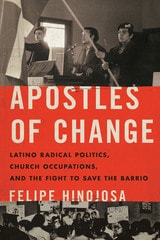
Apostles of Change
Latino Radical Politics, Church Occupations, and the Fight to Save the BarrioBy Felipe Hinojosa
University of Texas Press, 2021
2021 Finalist Raul Yzaguirre Best Political/Current Affairs Book, International Latino Book Awards
Winner of the Texas Association of Chicanos in Higher Education Inaugural Book Award
Unraveling the intertwined histories of Latino radicalism and religion in urban America, this book examines how Latino activists transformed churches into staging grounds for protest against urban renewal and displacement.
In the late 1960s, the American city found itself in steep decline. An urban crisis fueled by federal policy wreaked destruction and displacement on poor and working-class families. The urban drama included religious institutions, themselves undergoing fundamental change, that debated whether to stay in the city or move to the suburbs. Against the backdrop of the Black and Brown Power movements, which challenged economic inequality and white supremacy, young Latino radicals began occupying churches and disrupting services to compel church communities to join their protests against urban renewal, poverty, police brutality, and racism.
Apostles of Change tells the story of these occupations and establishes their context within the urban crisis; relates the tensions they created; and articulates the activists' bold, new vision for the church and the world. Through case studies from Chicago, Los Angeles, New York City, and Houston, Felipe Hinojosa reveals how Latino freedom movements frequently crossed boundaries between faith and politics and argues that understanding the history of these radical politics is essential to understanding the dynamic changes in Latino religious groups from the late 1960s to the early 1980s.
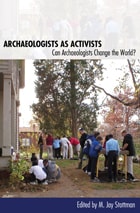
Archaeologists as Activists
Can Archaeologists Change the World?Edited by M. Jay Stottman
University of Alabama Press, 2011
Could archaeologists benefit contemporary cultures and be a factor in solving world problems? Can archaeologists help individuals? Can archaeologists change the world? These questions form the root of “archaeology activism” or “activist archaeology”: using archaeology to advocate for and affect change in contemporary communities.
Archaeologists currently change the world through the products of their archaeological research that contribute to our collective historical and cultural knowledge. Their work helps to shape and reshape our perceptions of the past and our understanding of written history. Archaeologists affect contemporary communities through the consequences of their work as they become embroiled in controversies over negotiating the past and the present with native peoples. Beyond the obvious economic contributions to local communities caused by heritage tourism established on the research of archaeologists at cultural sites, archaeologists have begun to use the process of their work as a means to benefit the public and even advocate for communities.
In this volume, Stottman and his colleagues examine the various ways in which archaeologists can and do use their research to forge a partnership with the past and guide the ongoing dialogue between the archaeological record and the various contemporary stakeholders. They draw inspiration and guidance from applied anthropology, social history, public history, heritage studies, museum studies, historic preservation, philosophy, and education to develop an activist approach to archaeology—theoretically, methodologically, and ethically.

Archive Activism
Memoir of a "Uniquely Nasty" JourneyCharles Francis
University of North Texas Press, 2023

Archive Matter
A Camera in the Laboratory of the ModernLiliana Gómez
Diaphanes, 2023
A journey through the United Fruit Company’s photo archive and its documentation of corporate expansion into the Caribbean.
The establishment of the United Fruit Company as a global political agent with its banana plantations was met with considerable resistance. Now the company’s photographic records are the focal point of Archive Matter as it examines photography’s historical and political impact through the argument that this overlooked, but important, archive made capitalist expansion into the Caribbean possible.
Author Liliana Gómez examines the images from within their “optical unconscious” and via the archive’s silences and omissions. The implication of these silences, Gómez argues, is the attempt to conceal the violence embedded within the realities of the plantations’ daily operations and corporate efforts to “modernize” the Caribbean.
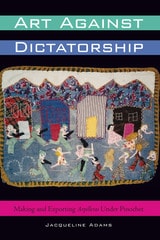
Art Against Dictatorship
Making and Exporting Arpilleras Under PinochetBy Jacqueline Adams
University of Texas Press, 2013
Art can be a powerful avenue of resistance to oppressive governments. During the dictatorship of Augusto Pinochet in Chile, some of the country’s least powerful citizens—impoverished women living in Santiago’s shantytowns—spotlighted the government’s failings and use of violence by creating and selling arpilleras, appliquéd pictures in cloth that portrayed the unemployment, poverty, and repression that they endured, their work to make ends meet, and their varied forms of protest. Smuggled out of Chile by human rights organizations, the arpilleras raised international awareness of the Pinochet regime’s abuses while providing income for the arpillera makers and creating a network of solidarity between the people of Chile and sympathizers throughout the world.
Using the Chilean arpilleras as a case study, this book explores how dissident art can be produced under dictatorship, when freedom of expression is absent and repression rife, and the consequences of its production for the resistance and for the artists. Taking a sociological approach based on interviews, participant observation, archival research, and analysis of a visual database, Jacqueline Adams examines the emergence of the arpilleras and then traces their journey from the workshops and homes in which they were made, to the human rights organizations that exported them, and on to sellers and buyers abroad, as well as in Chile. She then presents the perspectives of the arpillera makers and human rights organization staff, who discuss how the arpilleras strengthened the resistance and empowered the women who made them.

Art and Activism
Jazz Artists and Writers in the Civil Rights VanguardJack Marchbanks
Ohio University Press, 2026
Explore how jazz legends and literary icons united art and activism, shaping the civil rights movement and transforming American culture during the pivotal period between 1955 and 1965.
Art and Activism explores the powerful, symbiotic relationships among artists such as Nina Simone, Abbey Lincoln, and Lena Horne and their literary counterparts—Lorraine Hansberry, Maya Angelou, and Langston Hughes. These creative figures positioned themselves as cultural thought leaders within the evolving civil rights movement. While the Jim Crow South was the movement’s operational front, Jack Marchbanks argues that New York City’s intellectual, cultural, and fundraising communities functioned as its strategic command center.
Readers who admire jazz legends like Duke Ellington, Dave Brubeck, Miles Davis, and Charles Mingus—and those fascinated by prominent African American writers like James Baldwin and Ralph Ellison—will discover how these artists intertwined their work with the civil rights struggle. The book examines their involvement in pivotal confrontations and their connections with key leaders such as the Reverend Dr. Martin Luther King Jr., Daisy Bates, Ella Baker, and Malcolm X.
By illuminating the intersection of art and activism, this study offers a fresh perspective on the pivotal decade from 1955 to 1965. It is an essential resource for undergraduate courses and an engaging read for anyone seeking to understand the civil rights era through a cultural lens.
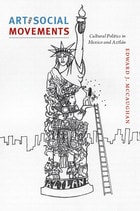
Art and Social Movements
Cultural Politics in Mexico and AztlánEdward J. McCaughan
Duke University Press, 2012
McCaughan argues that the social power of activist artists emanates from their ability to provoke people to see, think, and act in innovative ways. Artists, he claims, help to create visual languages and spaces through which activists can imagine and perform new collective identities and forms of meaningful citizenship. The artists' work that he discusses remains vital today—in movements demanding fuller democratic rights and social justice for working people, women, ethnic communities, immigrants, and sexual minorities throughout Mexico and the United States. Integrating insights from scholarship on the cultural politics of representation with structural analyses of specific historical contexts, McCaughan expands our understanding of social movements.
Asian American Connective Action in the Age of Social Media
Civic Engagement, Contested Issues, and Emerging IdentitiesJames S. Lai
Temple University Press, 2022
Social media provides ethno-racial immigrant groups—especially those who cannot vote due to factors such as lack of citizenship and limited English proficiency—the ability to mobilize and connect around collective issues. Online spaces and discussion forums have encouraged many Asian Americans to participate in public policy debates and take action on social justice issues. This form of digital group activism serves as an adaptive political empowerment strategy for the fastest-growing and largest foreign-born population in America. Asian American Connective Action in the Age of Social Media illuminates how associating online can facilitate and amplify traditional forms of political action.
James Lai provides diverse case studies on contentious topics ranging from affirmative action debates to textbook controversies to emphasize the complexities, limitations, and challenges of connective action that is relevant to all racial groups. Using a detailed multi-methods approach that includes national survey data and Twitter hashtag analysis, he shows how traditional immigrants, older participants, and younger generations create online consensus and mobilize offline to foment political change. In doing so, Lai provides a nuanced glimpse into the multiple ways connective action takes shape within the Asian American community.