93 books match the query 'Political violence' and 8 start with a
cover of A Century of Revolution: Insurgent and Counterinsurgent Violence during Latin America's Long Cold War

A Century of Revolution

Insurgent and Counterinsurgent Violence during Latin America's Long Cold War

Greg Grandin and Gilbert M. Joseph, eds.

Duke University Press, 2010

Latin America experienced an epochal cycle of revolutionary upheavals and insurgencies during the twentieth century, from the Mexican Revolution of 1910 through the mobilizations and terror in Central America, the Southern Cone, and the Andes during the 1970s and 1980s. In his introduction to A Century of Revolution, Greg Grandin argues that the dynamics of political violence and terror in Latin America are so recognizable in their enforcement of domination, their generation and maintenance of social exclusion, and their propulsion of historical change, that historians have tended to take them for granted, leaving unexamined important questions regarding their form and meaning. The essays in this groundbreaking collection take up these questions, providing a sociologically and historically nuanced view of the ideological hardening and accelerated polarization that marked Latin America’s twentieth century. Attentive to the interplay among overlapping local, regional, national, and international fields of power, the contributors focus on the dialectical relations between revolutionary and counterrevolutionary processes and their unfolding in the context of U.S. hemispheric and global hegemony. Through their fine-grained analyses of events in Chile, Colombia, Cuba, El Salvador, Guatemala, Mexico, Nicaragua, and Peru, they suggest a framework for interpreting the experiential nature of political violence while also analyzing its historical causes and consequences. In so doing, they set a new agenda for the study of revolutionary change and political violence in twentieth-century Latin America.

Contributors. Michelle Chase, Jeffrey L. Gould, Greg Grandin, Lillian Guerra, Forrest Hylton, Gilbert M. Joseph, Friedrich Katz, Thomas Miller Klubock, Neil Larsen, Arno J. Mayer, Carlota McAllister, Jocelyn Olcott, Gerardo Rénique, Corey Robin, Peter Winn
[more]
cover of A Theory of ISIS: Political Violence and the Global Order

A Theory of ISIS

Political Violence and the Global Order

Mohammad-Mahmoud Ould Mohamedou

Pluto Press, 2017

In the course of a few years, the Islamic State of Iraq and Syria—more commonly known as ISIS—has become classified as the most dangerous terrorist organization in the world. It is the subject of intense Western scrutiny, demonized by all, and shrouded in numerous myths and narratives.
 
Against these established narratives, Mohammad-Mahmoud Ould Mohamedou now presents his new theory of ISIS. Tracing the genealogy of ISIS and documenting its evolution in Iraq and Syria, he argues that ISIS has actually transcended Osama Bin Laden’s original scheme of Al Qaeda, mutating into a unprecedented hybrid between postcolonial violence, postmodernity, and postglobalization. A Theory of ISIS offers an original take on the militant group. Mohamedou explains the proliferation of terrorist attacks on the West and deepens our understanding of the group's impact on the very nature of contemporary political violence.
 
[more]
cover of A Woman in the Crossfire: Diaries of the Syrian Revolution

A Woman in the Crossfire

Diaries of the Syrian Revolution

Samar Yazbek

Haus Publishing, 2012

A well-known novelist and journalist from the coastal city of Jableh, Samar Yazbek witnessed the beginning four months of the uprising first-hand and actively participated in a variety of public actions and budding social movements. Throughout this period she kept a diary of personal reflections on, and observations of, this historic time. Because of the outspoken views she published in print and online, Yazbek quickly attracted the attention and fury of the regime, vicious rumours started to spread about her disloyalty to the homeland and the Alawite community to which she belongs. The lyrical narrative describes her struggle to protect herself and her young daughter, even as her activism propels her into a horrifying labyrinth of insecurity after she is forced into living on the run and detained multiple times, excluded from the Alawite community and renounced by her family, her hometown and even her childhood friends. With rare empathy and journalistic prowess Samar Yazbek compiled oral testimonies from ordinary Syrians all over the country. Filled with snapshots of exhilarating hope and horrifying atrocities, she offers us a wholly unique perspective on the Syrian uprising. Hers is a modest yet powerful testament to the strength and commitment of countless unnamed Syrians who have united to fight for their freedom. These diaries will inspire all those who read them, and challenge the world to look anew at the trials and tribulations of the Syrian uprising.
[more]
cover of Abiding by Sri Lanka: On Peace, Place, and Postcoloniality

Abiding by Sri Lanka

On Peace, Place, and Postcoloniality

Qadri Ismail

University of Minnesota Press, 2005

The lack of peace in Sri Lanka is commonly portrayed as a consequence of a violent, ethnonationalist conflict between the Sinhalese majority and the Tamil minority. Viewed in this light, resolution could be attained through conflict management. But, as Qadri Ismail reveals, this is too simplistic an understanding and cannot produce lasting peace. 

Abiding by Sri Lanka examines how the disciplines of anthropology, history, and literature treat the Sri Lankan ethnic conflict. Anthropology, Ismail contends, approaches Sri Lanka as an object from an “outside” and western point of view. History, addressing the conflict from the “inside,” abides by the place and so promotes change that is nationalist and exclusive. Neither of these fields imagines an inclusive community. Literature, Ismail argues, can. 

With close readings of texts that “abide” by Sri Lanka, texts that have a commitment to it, Ismail demonstrates that the problems in Sri Lanka raise fundamental concerns for us all regarding the relationship between democracies and minorities. Recognizing the structural as well as political tendencies of representative democracies to suppress minorities, Ismail rethinks democracy by redefining the concept of the minority perspective, not as a subject-position of numerical insignificance, but as a conceptual space that opens up the possibility for distinction without domination and, ultimately, peace. 

Qadri Ismail is associate professor of English at the University of Minnesota. He has also been a journalist in Sri Lanka.
[more]
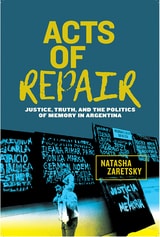
cover of Acts of Repair: Justice, Truth, and the Politics of Memory in Argentina

Acts of Repair

Justice, Truth, and the Politics of Memory in Argentina

Natasha Zaretsky

Rutgers University Press, 2021
Acts of Repair explores how ordinary people grapple with decades of political violence and genocide in Argentina—a history that includes the Holocaust, the political repression of the 1976–1983 dictatorship, and the 1994 AMIA bombing. Although the struggle against impunity seems inevitably incomplete, Argentines have created possibilities for repair through cultural memory, yielding spaces for transformation and agency critical to personal and political recovery.
 
[more]
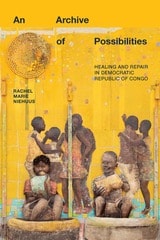
cover of An Archive of Possibilities: Healing and Repair in Democratic Republic of Congo

An Archive of Possibilities

Healing and Repair in Democratic Republic of Congo

Rachel Marie Niehuus

Duke University Press, 2024
In An Archive of Possibilities, anthropologist and surgeon Rachel Marie Niehuus explores possibilities of healing and repair in the eastern Democratic Republic of Congo against a backdrop of 250 years of Black displacement, enslavement, death, and chronic war. Niehuus argues that in a context in which violence characterizes everyday life, Congolese have developed innovative and imaginative ways to live amid and mend from repetitive harm. Drawing on ethnographic fieldwork and the Black critical theory of Achille Mbembe, Christina Sharpe, Alexis Pauline Gumbs and others, Niehuus explores the renegotiation of relationships with land as a form of public healing, the affective experience of living in insecurity, the hospital as a site for the socialization of pain, the possibility of necropolitical healing, and the uses of prophesy to create collective futures. By considering the radical nature of cohabitating with violence, Niehuus demonstrates that Congolese practices of healing imagine and articulate alternative ways of living in a global regime of antiblackness.
[more]
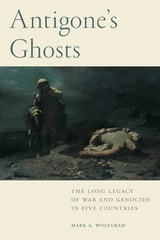
cover of Antigone's Ghosts: The Long Legacy of War and Genocide in Five Countries

Antigone's Ghosts

The Long Legacy of War and Genocide in Five Countries

Wolfgram, Mark A

Bucknell University Press, 2019

Sophocles' play Antigone is a starting point for understanding the perpetual problems of human societies, families, and individuals who are caught up in the terrible aftermath of mass violence. What is one to do after the killing has stopped? What can be done to prevent a round of new violence? The tragic and dramatic tension in the play is put in motion by setting an unyielding Antigone against King Creon. As we see through the investigation of how Germany, Japan, Spain, Yugoslavia and Turkey have dealt with their histories of mass violence and genocide in the 20th century, the forces represented by Antigone and Creon remain very much part of our world today.  Through a comparison of the five countries, their political institutions, and cultural traditions, we begin to appreciate the different pathways that societies have taken when confronting their violent histories.

Published by Bucknell University Press. Distributed worldwide by Rutgers University Press.

[more]
cover of Assassins against the Old Order: Italian Anarchist Violence in Fin de Siecle Europe

Assassins against the Old Order

Italian Anarchist Violence in Fin de Siecle Europe

Nunzio Pernicone, Fraser Ottanelli

University of Illinois Press, 2018

The image of the anarchist assassin haunted the corridors of power and the popular imagination in the late nineteenth century. Fear spawned a gross but persistent stereotype: a swarthy "Italian" armed with a bloody knife or revolver and bred to violence by a combination of radical politics, madness, innate criminality, and poor genes. That Italian anarchists targeted--and even killed--high-profile figures added to their exaggerated, demonic image.

Nunzio Pernicone and Fraser M. Ottanelli dig into the transnational experiences and the historical, social, cultural, and political conditions behind the phenomenon of anarchist violence in Italy. Looking at political assassinations in the 1890s, they illuminate the public effort to equate anarchy's goals with violent overthrow. Throughout, Pernicone and Ottanelli combine a cutting-edge synthesis of the intellectual origins, milieu, and nature of Italian anarchist violence with vivid portraits of its major players and their still-misunderstood movement.

A bold challenge to conventional thinking, Assassins against the Old Order demolishes a century of myths surrounding anarchist violence and its practitioners.

[more]