Results by title
57 books match the query 'Portugal' and 2 start with a
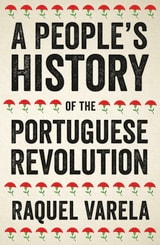
A People's History of the Portuguese Revolution
Raquel Cardeira Varela
Pluto Press, 2018
On the 25th April 1974, a coup destroyed the ranks of Portugal’s fascist Estado Novo government as the Portuguese people flooded the streets of Lisbon, placing red carnations in the barrels of guns and demanding a ‘land for those who work in it’.
This became the Carnation Revolution - an international coalition of working class and social movements, which also incited struggles for independence in Portugal’s African colonies, the rebellion of the young military captains in the national armed forces and the uprising of Portugal’s long-oppressed working classes. It was through the organising power of these diverse movements that a popular-front government was instituted and Portugal withdrew from its overseas colonies.
Cutting against the grain of mainstream accounts, Raquel Cardeira Varela explores the role of trade unions, artists and women in the revolution, providing a rich account of the challenges faced and the victories gained through revolutionary means.
[more]
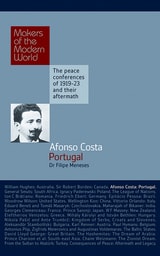
Afonso Costa
PortugalFilipe Ribeiro de Meneses
Haus Publishing, 2010
Portugal’s poor military performance in the First World War, notably in Africa, restricted Afonso Costa's (1871-1937) ability to secure his diplomatic aims which, in any case, were highly unrealistic. Nevertheless, his loyal press in Portugal described him as the ‘leader of the small nations’, and reported his every statement as a major triumph. Afonso Costa’s most important intervention took place in May 1919, when he denounced the Allies' unwillingness to make Germany pay for all the damage she had caused during the conflict; this speech led to a number of newspaper interviews in which Costa restated his position. The final draft of the Treaty was a complete shock to Portuguese public opinion: It effectively spelt the end of Costa’s political career. This book considers the political implications of Portugal’s participation in the First World War and of the ‘defeat’ in Paris. Reconciliation between the rival parties – and between factions within parties – became impossible, as did, as a result, the formation of a stable cabinet.
[more]