Results by title
471 books match the query 'Power' and 22 start with a
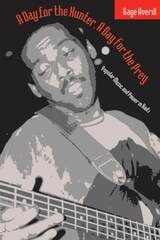
A Day for the Hunter, a Day for the Prey
Popular Music and Power in HaitiGage Averill
University of Chicago Press, 1997
Averill explores such diverse genres as Haitian jazz, troubadour traditions, Vodou-jazz, konpa, mini-djaz, new generation, and roots music. He examines the complex interaction of music with power in contexts such as honorific rituals, sponsored street celebrations, Carnival, and social movements that span the political spectrum.
With firsthand accounts by musicians, photos, song texts, and ethnographic descriptions, this book explores the profound manifestations of power and song in the day-to-day efforts of ordinary Haitians to rise above political repression.
A Power to Do Justice
Jurisdiction, English Literature, and the Rise of Common LawBradin Cormack
University of Chicago Press, 2008
A Power to Do Justice shows how Renaissance writers engaged the practical and conceptual dynamics of jurisdiction, both as a subject for critical investigation and as a frame for articulating literature’s sense of itself. Reassessing the relation between English literature and law from More to Shakespeare, Cormack argues that where literary texts attend to jurisdiction, they dramatize how boundaries and limits are the very precondition of law’s power, even as they clarify the forms of intensification that make literary space a reality.
Tracking cultural responses to Renaissance jurisdictional thinking and legal centralization, A Power to Do Justice makes theoretical, literary-historical, and methodological contributions that set a new standard for law and the humanities and for the cultural history of early modern law and literature.
A Power to Translate the World
New Essays on Emerson and International CultureEdited by David LaRocca and Ricardo Miguel-Alfonso
Dartmouth College Press, 2016
A Tale of Two Murders
Passion and Power in Seventeenth-Century FranceJames R. Farr
Duke University Press, 2005
James R. Farr reveals the Giroux affair not only as a riveting murder mystery but also as an illuminating point of entry into the dynamics of power, justice, and law in seventeenth-century France. Drawing on the voluminous trial records, Farr uses Giroux’s experience in the court system to trace the mechanisms of power—both the formal power vested by law in judicial officials and the informal power exerted by the nobility through patron-client relationships. He does not take a position on Giroux’s guilt or innocence. Instead, he allows readers to draw their own conclusions about who did what to whom on that ill-fated evening in 1638.
A Voice but No Power
Organizing for Social Justice in MinneapolisDavid Forrest
University of Minnesota Press, 2022
Examining the work of social justice groups in Minneapolis following the 2008 recession
Since the Great Recession, even as protest and rebellion have occurred with growing frequency, many social justice organizers continue to displace as much as empower popular struggles for egalitarian and emancipatory change. In A Voice but No Power, David Forrest explains why this is the case and explores how these organizers might better reach their potential as advocates for the abolition of exploitation, discrimination, and other unjust conditions.
Through an in-depth study of post-2008 Minneapolis—a center of progressive activism—Forrest argues that social justice organizers so often fall short of their potential largely because of challenges they face in building what he calls “contentious identities,” the public identities they use to represent their constituents and counteract stigmatizing images such as the “welfare queen” or “the underclass.” In the process of assembling, publicizing, and legitimating contentious identities, he shows, these organizers encounter a series of political hazards, each of which pushes them to make choices that weaken movements for equality and freedom. Forrest demonstrates that organizers can achieve better outcomes, however, by steadily working to remake their hazardous political terrain.
The book’s conclusion reflects on the 2020 uprising that followed the police killing of George Floyd, assessing what it means for the future of social justice activism. Ultimately, Forrest’s detailed analysis contributes to leading theories about organizing and social movements and charts possibilities for further emboldening grassroots struggles for a fairer society.
Abuse of Power
How Cold War Surveillance and Secrecy Policy Shaped the Response to 9/11Authored by Athan Theoharis
Temple University Press, 2011
Athan Theoharis, long a respected authority on surveillance and secrecy, established his reputation for meticulous scholarship with his work on the loyalty security program developed under Truman and McCarthy. In Abuse of Power, Theoharis continues his investigation of U.S. government surveillance and historicizes the 9/11 response.
Criticizing the U.S. government's secret activities and policies during periods of "unprecedented crisis," he recounts how presidents and FBI officials exploited concerns about foreign-based internal security threats.
Drawing on information sequestered until recently in FBI records, Theoharis shows how these secret activities in the World War II and Cold War eras expanded FBI surveillance powers and, in the process, eroded civil liberties without substantially advancing legitimate security interests.
Passionately argued, this timely book speaks to the costs and consequences of still-secret post-9/11 surveillance programs and counterintelligence failures. Ultimately, Abuse of Power makes the case that the abusive surveillance policies of the Cold War years were repeated in the government's responses to the September 11 attacks.
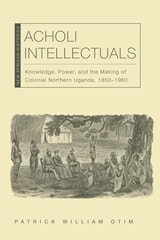
Acholi Intellectuals
Knowledge, Power, and the Making of Colonial Northern Uganda, 1850–1960Patrick William Otim
Ohio University Press, 2024
Adventures in Shondaland
Identity Politics and the Power of RepresentationGriffin, Rachel Alicia
Rutgers University Press, 2018
Shonda Rhimes is one of the most powerful players in contemporary American network television. Beginning with her break-out hit series Grey’s Anatomy, she has successfully debuted Private Practice, Scandal, How to Get Away with Murder, The Catch, For The People, and Station 19. Rhimes’s work is attentive to identity politics, “post-” identity politics, power, and representation, addressing innumerable societal issues. Rhimes intentionally addresses these issues with diverse characters and story lines that center, for example, on interracial friendships and relationships, LGBTIQ relationships and parenting, the impact of disability on familial and work dynamics, and complex representations of womanhood. This volume serves as a means to theorize Rhimes’s contributions and influence by inspiring provocative conversations about television as a deeply politicized institution and exploring how Rhimes fits into the implications of twenty-first century television.
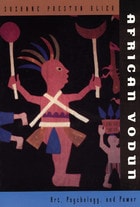
African Vodun
Art, Psychology, and PowerSuzanne Preston Blier
University of Chicago Press, 1994
In this first major study of its kind, Suzanne Preston Blier examines the artworks of the contemporary vodun cultures of southern Benin and Togo in West Africa as well as the related voudou traditions of Haiti, New Orleans, and historic Salem, Massachusetts. Blier employs a variety of theoretically sophisticated psychological, anthropological, and art historical approaches to explore the contrasts inherent in the vodun arts—commoners versus royalty, popular versus elite, "low" art versus "high." She examines the relation between art and the slave trade, the psychological dynamics of artistic expression, the significance of the body in sculptural expression, and indigenous perceptions of the psyche.
Throughout, Blier pushes African art history to a new height of cultural awareness that recognizes the complexity of traditional African societies as it acknowledges the role of social power in shaping aesthetics and meaning generally. This book will be of critical importance not only to those concerned with African, African American, and Caribbean art, but also to anthropologists, African diaspora scholars, students of comparative religion and comparative psychology, and anyone fascinated by the traditions of voudou and vodun.
"An extraordinary tour de force."—Choice
"Extraordinarily detailed....Blier's examination of the entire, often mysterious history of vodun is...in a word, definitive."—Booklist
"A serious study that concentrates on the hidden power of objects and the meaning behind that potency is long overdue. Welcome Susan Blier's African Vodun....Certainly a must for...those concerned with the psychology of art."—Janet L. Stanley, Art Documentation
"[Blier] is usually sensitive to the need to resist imposing Western artistic values and academic methodologies inappropriately upon such art. But she offers the reader a gift even more precious; she offers rare insights into how various art forms—sculpture and home architecture in particular—yield meanings for the African users of such art.—Norman Weinstein, Boston Book Review
After the Corinthian Women Prophets
Reimagining Rhetoric and PowerJoseph A. Marchal
SBL Press, 2021
Rhetoric, Power, and Possibilities
Thirty years after the publication of Antoinette Clark Wire’s groundbreaking The Corinthian Women Prophets, an interdisciplinary, international, and intergenerational group of scholars reflects upon Wire’s impact on New Testament scholarship. Essays pursue further historical and theoretical possibilities, often in search of marginalized people, including the women of Corinth, using feminist, rhetorical, materialist, decolonizing, queer, and posthumanist approaches to interpret Paul’s letters and the history of ancient Mediterranean assemblies. Contributions from Cavan Concannon, Arminta Fox, Joseph A. Marchal, Shelly Matthews, Anna Miller, Jorunn Økland, and Antoinette Clark Wire reconsider how both the methods and results of Wire’s work reveal the possibilities of other people beside Paul who are worth our attention and effort. The essays in this collection introduce students and scholars to the possibilities of interdisciplinary and intersectional approaches for engaging the broader Pauline corpus.
Anarchist Prophets
Disappointing Vision and the Power of Collective SightJames R. Martel
Duke University Press, 2022

Ancient Panama
Chiefs in Search of PowerBy Mary W. Helms
University of Texas Press, 1979
Ancient Panama adds depth to our understanding of the political and religious elite ruling in Panama at the time of the European conquest. Mary W. Helms's research greatly expands knowledge of the distribution, extent, and structural nature of these pre-Columbian chiefdoms.
In addition, Helms delves more deeply into select aspects of ancient Panamanian political systems, including the relationship between elite competition and chiefly status, the use of sumptuary goods in the expression of elite power, and the role of elites in regional and long-distance exchange networks. In a significant departure from traditional thinking, she proposes that the search for esoteric knowledge was more important than economic trade in developing long-distance contact among chiefdoms.
The primary data for the study are derived from sixteenth-century Spanish records by Oviedo y Valdés, Andagoya, Balboa, and others. The author also turns to ethnographic data from contemporary native people of Panama, Colombia, tropical America, and Polynesia for analogy and comparison. The result is a highly innovative study which illuminates not only pre-Columbian Panamanian elites but also the nature of chiefdoms as a distinctive cultural type.
Anthropology and Social Theory
Culture, Power, and the Acting SubjectSherry B. Ortner
Duke University Press, 2006
Some of the essays reflect explicitly on theoretical concerns: the relationship between agency and power, the problematic quality of ethnographic studies of resistance, and the possibility of producing an anthropology of subjectivity. Others are ethnographic studies that apply Ortner’s theoretical framework. In these, she investigates aspects of social class, looking at the relationship between race and middle-class identity in the United States, the often invisible nature of class as a cultural identity and as an analytical category in social inquiry, and the role that public culture and media play in the creation of the class anxieties of Generation X. Written with Ortner’s characteristic lucidity, these essays constitute a major statement about the future of social theory from one of the leading anthropologists of our time.
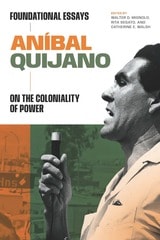
Aníbal Quijano
Foundational Essays on the Coloniality of PowerAnibal Quijano. Edited by Walter D. Mignolo, Rita Segato, and Catherine E. Walsh
Duke University Press, 2024
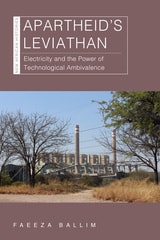
Apartheid’s Leviathan
Electricity and the Power of Technological AmbivalenceFaeeza Ballim
Ohio University Press, 2023
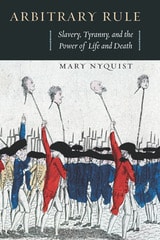
Arbitrary Rule
Slavery, Tyranny, and the Power of Life and DeathMary Nyquist
University of Chicago Press, 2013
Throughout, Nyquist demonstrates how principles relating to political slavery and tyranny are bound up with a Roman jurisprudential doctrine that sanctions the power of life and death held by the slaveholder over slaves and, by extension, the state, its representatives, or its laws over its citizenry.

Archaeology at El Perú-Waka'
Ancient Maya Performances of Ritual, Memory, and PowerEdited by Olivia C. Navarro-Farr and Michelle Rich
University of Arizona Press, 2014
El Perú-Waka’ is an ancient Maya city located in present-day northwestern Petén, Guatemala. Rediscovered by petroleum exploration workers in the mid-1960s, it is the largest known archaeological site in the Laguna del Tigre National Park in Guatemala’s Maya Biosphere Reserve. The El Perú-Waka’ Regional Archaeological Project initiated scientific investigations in 2003, and through excavation and survey, researchers established that Waka’ was a key political and economic center well integrated into Classic-period lowland Maya civilization, and reconstructed many aspects of Maya life and ritual activity in this ancient community. The research detailed in this volume provides a wealth of new, substantive, and scientifically excavated data, which contributors approach with fresh theoretical insights. In the process, they lay out sound strategies for understanding the ritual manipulation of monuments, landscapes, buildings, objects, and memories, as well as related topics encompassing the performance and negotiation of power throughout the city’s extensive sociopolitical history.

Arcticness
Power and Voice from the NorthIlan Kelman
University College London, 2017
Arise
Power, Strategy and Union ResurgenceJane Holgate
Pluto Press, 2021
'Jane Holgate is a brilliant thinker' - Jane McAlevey
In Arise, Jane Holgate argues that unions must revisit their understanding of power in order to regain influence and confront capital. Drawing on two decades of research and organizing experience, Holgate examines the structural inertia of today’s unions from a range of perspectives: from strategic choice, leadership and union democracy to politics, tactics and the agency afforded to rank-and-file members.
In the midst of a neoliberal era of economic crisis and political upheaval, the labor movement stands at a crossroads. Union membership is on the rise, but the ‘turn to organizing’ has largely failed to translate into meaningful gains for workers. There is considerable discussion about the lack of collectivism among workers due to casualization, gig work and precarity, yet these conditions were standard in the UK when workers built the foundations of the 19th-century trade union movement.
Drawing on history and case studies of unions developing and using power effectively, this book offers strategies for moving beyond the pessimism that prevails in much of today’s union movement. By placing power analysis back at the heart of workers’ struggle, Holgate shows us that transformational change is not only possible, but within reach.
Aristotle
The Power of PerceptionDeborah K. W. Modrak
University of Chicago Press, 1987

Arthur Schnitzler in Great Britain
An Examination of Power and TranslationNicole Robertson
University of London Press, 2022
The “amoral voice” of fin-de-siècle Vienna, Arthur Schnitzler (1862–1931) was one of the major figures of European modernist literature. Throughout his lifetime and after his death, his writing enjoyed substantial domestic and international success, yet the arrival of his dramatic works in Great Britain was plagued by false starts, short runs, and inconsistencies. Only with Tom Stoppard’s adaptations of Das weite Land and Liebelei, as Undiscovered Country and Dalliance respectively, were Schnitzler’s plays finally produced at the National Theatre.
This fascinating book studies the history of Schnitzler’s reception in Great Britain to unearth evidence of power in transcultural and translingual migrations. Surveying the field from the end of the nineteenth century to the present day, Nicole Robertson’s analysis of published translations, critical reviews, correspondence, and unpublished drafts provides expansive insight into the process of translating from page to stage. This book presents exhaustive and detailed scholarship on a fascinating, if far from smooth, journey, raising fundamental questions about the nature of authorship.