Results by title
597 books match the query 'Psychological aspects' and 34 start with a
A Deaf Adult Speaks Out
Leo Jacobs
Gallaudet University Press, 1989
This new edition includes an update of services by and for deaf people, and an expanded chapter on legislation and social issues that have had an impact on the Deaf community in the last ten years.

A Round of Golf with My Father
The New Psychology of Exploring Your Past to Make Peace with Your PresentDamon, William
Templeton Press, 2021
Viewing our past through the eyes of maturity can reveal insights that our younger selves could not see. Lessons that eluded us become apparent. Encounters that once felt like misfortunes now become understood as valued parts of who we are. We realize what we’ve learned and what we have to teach. And we’re encouraged to chart a future that is rich with purpose.
In A Round of Golf with My Father, William Damon introduces us to the “life review.” This is a process of looking with clarity and curiosity at the paths we’ve traveled, examining our pasts in a frank yet positive manner, and using what we’ve learned to write purposeful next chapters for our lives.
For Damon, that process began by uncovering the mysterious life of his father, whom he never met and never gave much thought to. What he discovered surprised him so greatly that he was moved to reassess the events of his own life, including the choices he made, the relationships he forged, and the career he pursued.
Early in his life, Damon was led to believe that his father had been killed in World War II. But the man survived and went on to live a second life abroad. He married a French ballerina, started a new family, and forged a significant Foreign Service career. He also was an excellent golfer, a bittersweet revelation for Damon, who wishes that his father had been around to teach him the game.
We follow Damon as he struggles to make sense of his father’s contradictions and how his father, even though living a world apart, influenced Damon’s own development in crucial ways. In his life review, Damon uses what he learned about his father to enhance his own newly emerging self-knowledge.
Readers of this book may come away inspired to conduct informal life reviews for themselves. By uncovering and assembling the often overlooked puzzle pieces of their pasts, readers can seek present-day contentment and look with growing optimism to the years ahead.
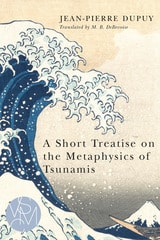
A Short Treatise on the Metaphysics of Tsunamis
Jean-Pierre Dupuy
Michigan State University Press, 2015
Jean-Pierre Dupuy asks whether, from Lisbon to Sumatra, mankind has really learned nothing about evil. When moral crimes are unbearably great, he argues, our ability to judge evil is gravely impaired, and the temptation to regard human atrocity as an attack on the natural order of the world becomes irresistible. This impulse also suggests a kind of metaphysical ruse that makes it possible to convert evil into fate, only a fate that human beings may choose to avoid. Postponing an apocalyptic future will depend on embracing this paradox and regarding the future itself in a radically new way.
The American edition of Dupuy’s classic essay, first published in 2005, also includes a postscript on the 2011 nuclear accident that occurred in Japan, again as the result of a tsunami.

A Small Door Set in Concrete
One Woman's Story of Challenging Borders in Israel/PalestineIlana Hammerman
University of Chicago Press, 2019
For years, renowned activist and scholar Ilana Hammerman has given the world remarkable translations of Kafka. With A Small Door Set in Concrete, she turns to the actual surreal existence that is life in the West Bank after decades of occupation.
After losing her husband and her sister, Hammerman set out to travel to the end of the world. She began her trip with the hope that it would reveal the right path to take in life. But she soon realized that finding answers was less important than experiencing the freedom to move from place to place without restriction. Hammerman returned to the West Bank with a renewed joie de vivre and a resolution: she would become a regular visitor to the men, women, and children who were on the other side of the wall, unable to move or act freely. She would listen to their dreams and fight to bring some justice into their lives.
A Small Door Set in Concrete is a moving picture of lives filled with destruction and frustration but also infusions of joy. Whether joining Palestinian laborers lining up behind checkpoints hours before the crack of dawn in the hope of crossing into Israel for a day’s work, accompanying a family to military court for their loved one’s hearing, or smuggling Palestinian children across borders for a day at the beach, Hammerman fearlessly ventures into territories where few Israelis dare set foot and challenges her readers not to avert their eyes in the face of injustice.
Hammerman neither preaches nor politicks. Instead, she engages in a much more personal, everyday kind of activism. Hammerman is adept at revealing the absurdities of a land where people are stripped of their humanity. And she is equally skilled at illuminating the humanity of those caught in this political web. To those who have become simply statistics or targets to those in Israel and around the world, she gives names, faces, dreams, desires.
This is not a book that allows us to sit passively. It is a slap in the face, a necessary splash of cold water that will reawaken the humanity inside all of us.
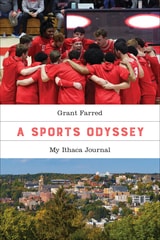
A Sports Odyssey
My Ithaca JournalGrant Farred
Temple University Press, 2025
As readers of his Long Distance Love know, Grant Farred has been a supporter of the English Premier League club, Liverpool Football Club, for decades. His fandom for that team launched an unexpected connection with a world beyond the limits of the apartheid state of his upbringing in South Africa. However, A Sports Odyssey shows that as Farred’s fervor for Liverpool ended, he developed a new set of sports attachments in Ithaca, New York: to his son’s youth basketball career, to the men’s basketball team at Cornell University and its coach, and even to professional teams like the New York Knicks. Farred’s bemusement at finding himself a sports parent, a New Yorker, and a company man, only underline the sincerity of his affections.
In A Sports Odyssey, Farred writes elegantly and eloquently about how sports and sports fandom create a sense of belonging, but also loss. This is a heartfelt examination of how we find “home” in who and what we love.
In the series Sporting
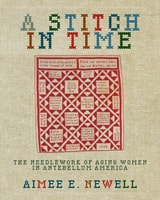
A Stitch in Time
The Needlework of Aging Women in Antebellum AmericaAimee E. Newell
Ohio University Press, 2014
Drawing from 167 examples of decorative needlework—primarily samplers and quilts from 114 collections across the United States—made by individual women aged forty years and over between 1820 and 1860, this exquisitely illustrated book explores how women experienced social and cultural change in antebellum America.
The book is filled with individual examples, stories, and over eighty fine color photographs that illuminate the role that samplers and needlework played in the culture of the time. For example, in October 1852, Amy Fiske (1785–1859) of Sturbridge, Massachusetts, stitched a sampler. But she was not a schoolgirl making a sampler to learn her letters. Instead, as she explained, “The above is what I have taken from my sampler that I wrought when I was nine years old. It was w[rough]t on fine cloth [and] it tattered to pieces. My age at this time is 66 years.”
Situated at the intersection of women’s history, material culture study, and the history of aging, this book brings together objects, diaries, letters, portraits, and prescriptive literature to consider how middle-class American women experienced the aging process. Chapters explore the physical and mental effects of “old age” on antebellum women and their needlework, technological developments related to needlework during the antebellum period and the tensions that arose from the increased mechanization of textile production, and how gift needlework functioned among friends and family members. Far from being solely decorative ornaments or functional household textiles, these samplers and quilts served their own ends. They offered aging women a means of coping, of sharing and of expressing themselves. These “threads of time” provide a valuable and revealing source for the lives of mature antebellum women.
Publication of this book was made possible in part through generous funding from the Coby Foundation, Ltd and from the Quilters Guild of Dallas, Helena Hibbs Endowment Fund.
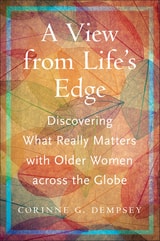
A View from Life's Edge
Discovering What Really Matters with Older Women Across the GlobeCorinne G. Dempsey
Rutgers University Press, 2026
Speaking with nearly one hundred women over the age of eighty in four locations—northern Iceland, south India, a retirement community in California, and a convent in upstate New York—Corinne G. Dempsey finds that, as we near life’s end, we gain clarity about what really matters in life. Women’s stories and reflections, in which sorrow and loss are central to a life well lived, help to expand our sense of what it means to be human.
Drawing on the paradoxical wisdom of world religions and mystical traditions to frame late-life tendencies across cultures, Dempsey portrays these accounts as a corrective to mainstream values that defeat and diminish us. Dempsey encourages us to turn away from ageist fears rather than denying life’s inevitable end. Learning from older women’s perspectives, we might move their edge-of-life views closer to the center.
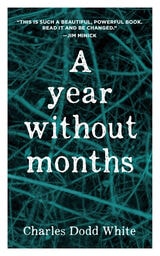
A Year without Months
Charles Dodd White
West Virginia University Press, 2022
This collection of fourteen essays by Charles Dodd White—praised by Silas House as “one of the best prose stylists of Appalachian literature”—explores the boundaries of family, loss, masculinity, and place. Contemplating the suicides of his father, uncle, and son, White meditates on what it means to go on when seemingly everything worth living for is lost. What he discovers is an intimate connection to the natural world, a renewed impulse to understand his troubled family history, and a devotion to following the clues that point to the possibility of a whole life.
Avoiding easy sentiment and cliché, White’s transformative language drives toward renewal. A Year without Months introduces lively and memorable characters, as the author draws on a wide range of emotions to analyze everything, including himself.
Aberrations of Mourning
Laurence A. Rickels
University of Minnesota Press, 2011
Rickels studies mourning and melancholia within and around psychoanalysis, analyzing the writings of such thinkers as Freud, Nietzsche, Lessing, Heinse, Artaud, Keller, Stifter, Kafka, and Kraus. Rickels maintains that we must shift the way we read literature, philosophy, and psychoanalysis to go beyond traditional Oedipal structures.
Aberrations of Mourning argues that the idea of the crypt has had a surprisingly potent influence on psychoanalysis, and Rickels shows how society’s disturbed relationship with death and dying, our inability to let go of loved ones, has resulted in technology to form more and more crypts for the dead by preserving them—both physically and psychologically—in new ways.
Accident Prone
A History of Technology, Psychology, and Misfits of the Machine AgeJohn C. Burnham
University of Chicago Press, 2009
Technology demands uniformity from human beings who encounter it. People encountering technology, however, differ from one another. Thinkers in the early twentieth century, observing the awful consequences of interactions between humans and machines—death by automobiles or dismemberment by factory machinery, for example—developed the idea of accident proneness: the tendency of a particular person to have more accidents than most people. In tracing this concept from its birth to its disappearance at the end of the twentieth century, Accident Prone offers a unique history of technology focused not on innovations but on their unintended consequences.
Here, John C. Burnham shows that as the machine era progressed, the physical and economic impact of accidents coevolved with the rise of the insurance industry and trends in twentieth-century psychology. After World War I, psychologists determined that some people are more accident prone than others. This designation signaled a shift in social strategy toward minimizing accidents by diverting particular people away from dangerous environments. By the 1960s and 1970s, however, the idea of accident proneness gradually declined, and engineers developed new technologies to protect all people, thereby introducing a hidden, but radical, egalitarianism.
Lying at the intersection of the history of technology, the history of medicine and psychology, and environmental history, Accident Prone is an ambitious intellectual analysis of the birth, growth, and decline of an idea that will interest anyone who wishes to understand how Western societies have grappled with the human costs of modern life.
Acting Like Men
Gender, Drama, and Nostalgia in Ancient GreeceKaren Bassi
University of Michigan Press, 1999
Acting Out In Groups
Laurence A. Rickels
University of Minnesota Press, 1999
Examines outrageous public behavior and what it can tell us about cultural and political change.
The International Psychoanalytic Congress gathered in 1967 to define the clinical concept of “acting out.” Thirty years later, our society, which once labeled those who exhibited excessive aggression as delinquent, celebrates outrageous public behavior. In Acting Out in Groups, writers, literary theorists, and cultural critics explore therapeutic descriptions of acting out in relation to the conduct condoned, even encouraged, on daytime TV talk shows, at political rallies, and in performance.
Through a deconstruction of “acting out,” this collection seeks a new, performative style of critical discourse that incorporates the exuberance and intensity of acting out for analytical ends. Topics include the Jenny Jones murder trial; the response of psychoanalysts to the acclaimed documentary Crumb; the place of the Berlin Wall and other national symbols in German life; and the roles of aggression and discipline in childhood development.Contributors: Kathy Acker; Peter Canning; Julie Carlson, U of California, Santa Barbara; Susan Derwin, U of California, Santa Barbara; Andrew Hewitt, SUNY Buffalo; Gary Indiana; Rhonda Lieberman; Catherine Liu, U of Minnesota; Fred Moten, NYU; John Mowitt, U of Minnesota; Klaus Theweleit; Elisabeth Weber, U of California, Santa Barbara.
Acts of War
Iraq and Afghanistan in Seven PlaysKaren Malpede
Northwestern University Press, 2011
Adequate
Rewriting the Logics of Success in Rhetoric and CompositionTimothy Oleksiak
Utah State University Press, 2025
Fourteen essays from established scholars, ranging from deeply personal, to darkly humorous, to impassioned and blunt, offer theoretical and pragmatic resources for responding to unjust labor extraction and the discipline’s demands that teachers do it all. Drawing on an array of intellectual traditions including labor studies, feminist rhetoric, disability studies, Jewish rhetoric, and theories of writing program administrations, authors assert the reasonable position of being enough and thriving outside of work in the face of growing demands for professional excellence and even perfection.
Adequate reimagines what the concept of adequacy holds for the future of academic work. An invaluable resource for scholars, graduate students, and advanced undergraduate students in the rhetoric and composition field, this volume covers the realities of teaching rhetoric and composition in the modern college environment, as well as potential paths forward for educators in need of a better work-life balance.
Advances in Behavioral Finance
Richard H. Thaler
Russell Sage Foundation, 1993
Affect, Animals, and Autists
Feeling Around the Edges of the Human in PerformanceMarla Carlson
University of Michigan Press, 2018
By analyzing specific structures of affect with the vocabulary of emotions, Marla Carlson builds upon the conception of affect articulated by psychologist Silvan Tomkins. The book treats a diverse selection of live performance and archival video and analyzes the ways in which they affect their audiences. The range of performances includes commercially successful productions such as The Curious Incident of the Dog in the Night-Time, War Horse, and The Lion King as well as to the more avant-garde and experimental theater created by Robert Wilson and Christopher Knowles, Back to Back Theatre, Elevator Repair Service, Pig Iron Theatre, and performance artist Deke Weaver.
Affective Ecologies
Empathy, Emotion, and Environmental NarrativeAlexa Weik von Mossner
The Ohio State University Press, 2017
How do we experience the virtual environments we encounter in literature and film on the sensory and emotional level? How do environmental narratives invite us to care for human and nonhuman others who are put at risk? And how do we feel about the speculative futures presented to us in ecotopian and ecodystopian texts? Weik von Mossner explores these central questions that are important to anyone with an interest in the emotional appeal and persuasive power of environmental narratives.
African Masks and Emotions
In Theory and in PracticeZ. S. Strother
J. Paul Getty Trust, The, 0
In this groundbreaking book, Z. S. Strother, inspired by dialogues with African masquerade patrons and performers, disputes assumptions that masks universally hide, reveal, or transform.
In Western European languages, the word mask exerts a powerful presence as a figure of speech. To masquerade is to pretend to be someone or something one is not. By extension, unmasking is a heroic metaphor for exposing a hidden truth. In this volume, art historian Z. S. Strother counters that narrative, using African case studies to offer an alternative vision of masquerading. She explores the aesthetic emotions aroused by masks, or more precisely, by “dances of masks”: joy, wonder, awe, fear, and the release of laughing out loud. She also investigates the uncanny—a sensation of “delicious shiveriness” triggered when familiar spaces and individuals become strange and changeable. Inspired by Strother’s studies in DR Congo, African Masks and Emotions takes a comparative perspective and moves emotion from the periphery to the center of analysis.
Reflecting Getty's commitment to open content, African Masks and Emotions is available for free download in ePub and PDF formats at: https://www.getty.edu/publications-reports/item/2F27A4. This paperback edition is available for sale for readers who wish to have a bound reference copy.
Agewise
Fighting the New Ageism in AmericaMargaret Morganroth Gullette
University of Chicago Press, 2011
Let’s face it: almost everyone fears growing older. We worry about losing our looks, our health, our jobs, our self-esteem—and being supplanted in work and love by younger people. It feels like the natural, inevitable consequence of the passing years, But what if it’s not? What if nearly everything that we think of as the “natural” process of aging is anything but?
In Agewise, renowned cultural critic Margaret Morganroth Gullette reveals that much of what we dread about aging is actually the result of ageism—which we can, and should, battle as strongly as we do racism, sexism, and other forms of bigotry. Drawing on provocative and under-reported evidence from biomedicine, literature, economics, and personal stories, Gullette probes the ageism thatdrives discontent with our bodies, our selves, and our accomplishments—and makes us easy prey for marketers who want to sell us an illusory vision of youthful perfection. Even worse, rampant ageism causes society to discount, and at times completely discard, the wisdom and experience acquired by people over the course of adulthood. The costs—both collective and personal—of this culture of decline are almost incalculable, diminishing our workforce, robbing younger people of hope for a decent later life, and eroding the satisfactions and sense of productivity that should animate our later years.
Once we open our eyes to the pervasiveness of ageism, however, we can begin to fight it—and Gullette lays out ambitious plans for the whole life course, from teaching children anti-ageism to fortifying the social safety nets, and thus finally making possible the real pleasures and opportunities promised by the new longevity. A bracing, controversial call to arms, Agewise will surprise, enlighten, and, perhaps most important, bring hope to readers of all ages.
Alien
Reflections on Being an ImmigrantSandro Galea
University of Chicago Press, 2026
A personal treatise from distinguished social scientist Sandro Galea on the indelible effects of being an immigrant—and what it means for the greater good.
“I am one of the lucky ones,” writes Sandro Galea. Galea left home in Malta at fourteen with his parents and sister as the island was rocked by political turmoil. The family made their way to Canada and Galea, in turn, eventually made his way to the United States. This is the story of Galea’s long, surreal journey of forging a life in a series of new and unfamiliar places.
With spare and deeply affecting prose, Alien is a poignant exploration of what it means to build a life across borders—and why it’s important for all of us. Galea’s intimate and personal story frames the experience of being an immigrant in terms of its indelible lessons on adaptation, identity, belonging, and shared generosity. Galea also captures at once the joys and the uncertainties that define the process of uprooting one life to begin another abroad. His is a reflection on empathy, on precarity, and on the effect of immigrating, in which one becomes keenly aware of how quickly life—and the world—can change.
Blending philosophical inquiry and personal story, Alien bridges the gap between storytelling and scholarship and, in doing so, gifts us an essential aperture on the world not everyone experiences—and the value of having those who do.
All the Leavings
Laurie Easter
Oregon State University Press, 2021
Whether recounting the home birth of her second child, encounters with cougars, the fraught dynamics of mother-daughter relationships, the destructive power of wildfires, or the community bonds challenged by a tragic suicide, Easter’s writing is firmly grounded in place. She takes readers deep into the heart of a still-wild Oregon, perilous yet rich with natural beauty.
Written from one woman’s perspective as a mother, wife, and friend, All the Leavings is ultimately a book about love—for the child who faces a health crisis, for the friend dying of AIDS, for the one entangled by addiction who then disappears. Long after the final page is turned, it will resonate with readers interested in essays, memoir, alternative lifestyles, and the literature of the West.
Am I Still A Woman
Hysterectomy And Gender IdentityJean Elson
Temple University Press, 2003

American Disgust
Racism, Microbial Medicine, and the Colony WithinMatthew J. Wolf-Meyer
University of Minnesota Press, 2024
Examining the racial underpinnings of food, microbial medicine, and disgust in America
American Disgust shows how perceptions of disgust and fears of contamination are rooted in the country’s history of colonialism and racism. Drawing on colonial, corporate, and medical archives, Matthew J. Wolf-Meyer argues that microbial medicine is closely entwined with changing cultural experiences of digestion, excrement, and disgust that are inextricably tied to the creation of whiteness.
Ranging from nineteenth-century colonial encounters with Native people to John Harvey Kellogg’s ideas around civilization and bowel movements to mid-twentieth-century diet and parenting advice books, Wolf-Meyer analyzes how embedded racist histories of digestion and disgust permeate contemporary debates around fecal microbial transplants and other bacteriotherapeutic treatments for gastrointestinal disease.
At its core, American Disgust wrestles with how changing cultural notions of digestion—what goes into the body and what comes out of it—create and impose racial categories motivated by feelings of disgust rooted in American settler-colonial racism. It shows how disgust is a changing, yet fundamental, aspect of American subjectivity and that engaging with it—personally, politically, and theoretically—opens up possibilities for conceptualizing health at the individual, societal, and planetary levels.
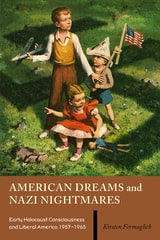
American Dreams and Nazi Nightmares
Early Holocaust Consciousness and Liberal America, 1957-1965Kirsten Fermaglich
University Press of New England, 2007
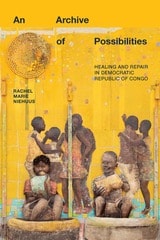
An Archive of Possibilities
Healing and Repair in Democratic Republic of CongoRachel Marie Niehuus
Duke University Press, 2024
An Ecology of Happiness
Eric Lambin
University of Chicago Press, 2012
In this clever and wide-ranging work, Lambin draws on new scientific evidence in the fields of geography, political ecology, environmental psychology, urban studies, and disease ecology, among others, to answer such questions as: To what extent do we need nature for our well-being? How does environmental degradation affect our happiness? What can be done to protect the environment and increase our well-being at the same time? Drawing on case studies from Asia, Africa, Europe, and North America, Lambin makes a persuasive case for the strong link between healthy ecosystems and happy humans.
Unique in its scope and evenhanded synthesis of research from many fields, An Ecology of Happiness offers a compelling human-centered argument that is impossible to overlook when we marvel at murmurations of starlings or seek out the most brilliant fall foliage: nature makes our steps a little lighter and our eyes a little brighter. What better reason to protect an ecosystem or save a species than for our own pleasure?
Anaphora and Conceptual Structure
Karen van Hoek
University of Chicago Press, 1997
Integrating the results of previous work, Van Hoek develops a model in which some nominals function as "conceptual reference points" that dominate over stretches defined by the semantic relations among elements. When a full noun is in the domain of a reference point, coreference is ruled out, since the speaker would be sending contradictory messages about the salience of the noun's referent.
With profound implications for the nature of syntax, this book will interest theoretical linguists of all persuasions.
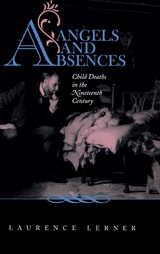
Angels and Absences
Child Deaths in the Nineteenth CenturyLaurence Lerner
Vanderbilt University Press, 1997
What is the difference between public and private feeling, and how far can we deduce past feelings from the words that have been left us? Why do child deaths figure so often and so prominently in the literature of the nineteenth century, and how was the theme of the death of a child used to elicit such poignant responses in the readers of that era? In this fascinating new book, Laurence Lerner vividly contrasts the contempt with which twentieth- century criticism so often dismisses such works as mere sentimentality with the enthusiasm and tears of nineteenth-century contemporaries.
Drawing examples from both real and literary deaths, Lerner delves into the writings of well-known authors such as Dickens, Coleridge, Shelley, Flaubert, Mann, Huxley, and Hesse, as well as lesser known writers like Felicia Hemans and Lydia Sigourney. In the process, he synthesizes fresh ideas about the thorny subjects of sentimentality, aesthetic judgment, and the function of religion in literature.
Lerner's forthright and evocative prose style is enjoyable reading, and he excels in teasing out the moral implications and the psychosocial entanglements of his chosen narrative and lyrical texts. This is a book that will illuminate an important aspect of the history of private life. It should have wide application for those interested in the history, sociology, and literature of the nineteenth century.
Anger
The Struggle for Emotional Control in America's HistoryCarol Zisowitz Stearns and Peter N. Stearns
University of Chicago Press, 1986

Anime's Knowledge Cultures
Geek, Otaku, ZhaiJinying Li
University of Minnesota Press, 2024
Unlocking the technosocial implications of global geek cultures
Why has anime, a “low-tech” medium from last century, suddenly become the cultural “new cool” in the information age? Through the lens of anime and its transnational fandom, Jinying Li explores the meanings and logics of “geekdom” as one of the most significant sociocultural groups of our time. In Anime’s Knowledge Cultures, Li shifts the center of global geography in knowledge culture from the computer boys in Silicon Valley to the anime fandom in East Asia.
Drawing from film studies, animation studies, media theories, fan studies, and area studies, she provides broad cultural and theoretical explanations of anime’s appeal to a new body of tech-savvy knowledge workers and consumers commonly known as geeks, otaku, or zhai. Examining the forms, techniques, and aesthetics of anime, as well as the organization, practices, and sensibilities of its fandom, Anime’s Knowledge Cultures is at once a theorization of anime as a media environment as well as a historical and cultural study of transnational geekdom as a knowledge culture. Li analyzes anime culture beyond the national and subcultural frameworks of Japan or Japanese otaku, instead theorizing anime’s transnational, transmedial network as the epitome of the postindustrial knowledge culture of global geekdom.
By interrogating the connection between the anime boom and global geekdom, Li reshapes how we understand the meanings and significance of anime culture in relation to changing social and technological environments.
Anorexia and Mimetic Desire
René Girard
Michigan State University Press, 2008
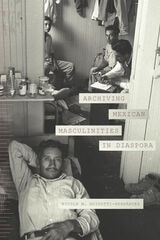
Archiving Mexican Masculinities in Diaspora
Nicole M. Guidotti-Hernández
Duke University Press, 2021
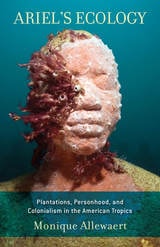
Ariel's Ecology
Plantations, Personhood, and Colonialism in the American TropicsMonique Allewaert
University of Minnesota Press, 2013
What happens if we abandon the assumption that a person is a discrete, world-making agent who acts on and creates place? This, Monique Allewaert contends, is precisely what occurred on eighteenth-century American plantations, where labor practices and ecological particularities threatened the literal and conceptual boundaries that separated persons from the natural world.
Integrating political philosophy and ecocriticism with literary analysis, Ariel’s Ecology explores the forms of personhood that developed out of New World plantations, from Georgia and Florida through Jamaica to Haiti and extending into colonial metropoles such as Philadelphia. Allewaert’s examination of the writings of naturalists, novelists, and poets; the oral stories of Africans in the diaspora; and Afro-American fetish artifacts shows that persons in American plantation spaces were pulled into a web of environmental stresses, ranging from humidity to the demand for sugar. This in turn gave rise to modes of personhood explicitly attuned to human beings’ interrelation with nonhuman forces in a process we might call ecological.
Certainly the possibility that colonial life revokes human agency haunts works from Shakespeare’s Tempest and Montesquieu’s Spirit of the Laws to Spivak’s theories of subalternity. In Allewaert’s interpretation, the transformation of colonial subjectivity into ecological personhood is not a nightmare; it is, rather, a mode of existence until now only glimmering in Che Guevara’s dictum that postcolonial resistance is synonymous with “perfect knowledge of the ground.”
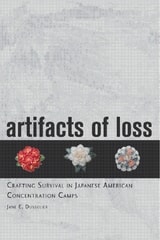
Artifacts of Loss
Crafting Survival in Japanese American Concentration CampsDusselier, Jane E
Rutgers University Press, 2008
In Artifacts of Loss, Jane E. Dusselier looks at the lives of these internees through the lens of their art. These camp-made creations included flowers made with tissue paper and shells, wood carvings of pets left behind, furniture made from discarded apple crates, gardens grown next to their housingùanything to help alleviate the visual deprivation and isolation caused by their circumstances. Their crafts were also central in sustaining, re-forming, and inspiring new relationships. Creating, exhibiting, consuming, living with, and thinking about art became embedded in the everyday patterns of camp life and helped provide internees with sustenance for mental, emotional, and psychic survival.
Dusselier urges her readers to consider these often overlooked folk crafts as meaningful political statements which are significant as material forms of protest and as representations of loss. She concludes briefly with a discussion of other displaced people around the globe today and the ways in which personal and group identity is reflected in similar creative ways.