Results by title
325 books match the query 'Race identity' and 28 start with a
A Change Is Gonna Come
Music, Race & the Soul of AmericaCraig Werner
University of Michigan Press, 2006
—Notes
"No one has written this way about music in a long, long time. Lucid, insightful, with real spiritual, political, intellectual, and emotional grasp of the whole picture. A book about why music matters, and how, and to whom."
—Dave Marsh, author of Louie, Louie and Born to Run: The Bruce Springsteen Story
"This book is urgently needed: a comprehensive look at the various forms of black popular music, both as music and as seen in a larger social context. No one can do this better than Craig Werner."
—Henry Louis Gates, Jr., W.E.B. Du Bois Professor of the Humanities, Harvard University
"[Werner has] mastered the extremely difficult art of writing about music as both an aesthetic and social force that conveys, implies, symbolizes, and represents ideas as well as emotion, but without reducing its complexities and ambiguities to merely didactic categories."
—African American Review
A Change Is Gonna Come is the story of more than four decades of enormously influential black music, from the hopeful, angry refrains of the Freedom movement, to the slick pop of Motown; from the disco inferno to the Million Man March; from Woodstock's "Summer of Love" to the war in Vietnam and the race riots that inspired Marvin Gaye to write "What's Going On."
Originally published in 1998, A Change Is Gonna Come drew the attention of scholars and general readers alike. This new edition, featuring four new and updated chapters, will reintroduce Werner's seminal study of black music to a new generation of readers.
Craig Werner is Professor of Afro-American Studies at the University of Wisconsin, and author of many books, including Playing the Changes: From Afro-Modernism to the Jazz Impulse and Up Around the Bend: An Oral History of Creedence Clearwater Revival. His most recent book is Higher Ground: Stevie Wonder, Aretha Franklin, Curtis Mayfield, and the Rise and Fall of American Soul.
A Quiet Victory for Latino Rights
FDR and the Controversy Over "Whiteness"Patrick D. Lukens
University of Arizona Press, 2012
In 1935 a federal court judge handed down a ruling that could have been disastrous for Mexicans, Mexican Americans, and all Latinos in the United States. However, in an unprecedented move, the Roosevelt administration wielded the power of "administrative law" to neutralize the decision and thereby dealt a severe blow to the nativist movement. A Quiet Victory for Latino Rights recounts this important but little-known story.
To the dismay of some nativist groups, the Immigration Act of 1924, which limited the number of immigrants who could be admitted annually, did not apply to immigrants from Latin America. In response to nativist legal maneuverings, the 1935 decision said that the act could be applied to Mexican immigrants. That decision, which ruled that the Mexican petitioners were not "free white person[s]," might have paved the road to segregation for all Latinos.
The League of United Latin American Citizens (LULAC), founded in 1929, had worked to sensitize the Roosevelt administration to the tenuous position of Latinos in the United States. Advised by LULAC, the Mexican government, and the US State Department, the administration used its authority under administrative law to have all Mexican immigrants—and Mexican Americans—classified as "white." It implemented the policy when the federal judiciary "acquiesced" to the New Deal, which in effect prevented further rulings.
In recounting this story, complete with colorful characters and unlikely bedfellows, Patrick D. Lukens adds a significant chapter to the racial history of the United States.
A Sense of Arrival
Kevin Adonis Browne
Duke University Press, 2024
Abolition Of White Democracy
Joel Olson
University of Minnesota Press, 2004
Offers a new way of understanding the tortured relationship between race and democracy in the United States
Racial discrimination embodies inequality, exclusion, and injustice and as such has no place in a democratic society. And yet racial matters pervade nearly every aspect of American life, influencing where we live, what schools we attend, the friends we make, the votes we cast, the opportunities we enjoy, and even the television shows we watch.
Joel Olson contends that, given the history of slavery and segregation in the United States, American citizenship is a form of racial privilege in which whites are equal to each other but superior to everyone else. In Olson’s analysis we see how the tension in this equation produces a passive form of democracy that discourages extensive participation in politics because it treats citizenship as an identity to possess rather than as a source of empowerment. Olson traces this tension and its disenfranchising effects from the colonial era to our own, demonstrating how, after the civil rights movement, whiteness has become less a form of standing and more a norm that cements white advantages in the ordinary operations of modern society. To break this pattern, Olson suggests an “abolitionist-democratic” political theory that makes the fight against racial discrimination a prerequisite for expanding democratic participation.
Accent On Privilege
English Identities & Anglophilia In The U.S.Katharine Jones
Temple University Press, 2001
The political and cultural ties between England and the US act as a backdrop for the identity negotiations of these English people, many of whom do not even consider themselves to be immigrants. This unique exploration of the workings of white privilege offers an important new understanding of the paradoxes of how class, gender, and race are formed in the US and, by implication, in the UK.
Act Like You Know
African-American Autobiography and White IdentityCrispin Sartwell
University of Chicago Press, 1998
There is, Sartwell contends, a fundamental elusiveness to that identity. Whiteness defines itself as normative, as a neutral form of the human condition, marking all other forms of identity as "racial" or "ethnic" deviations. Invisible to itself, white identity seeks to define its essence over and against those other identities, in effect defining itself through opposition and oppression. By maintaining fictions of black licentiousness, violence, and corruption, white identity is able to cast itself as humane, benevolent, and pure; the stereotype fabricates not only the oppressed but the oppressor as well. Sartwell argues that African-American autobiography perceives white identity from a particular and unique vantage point; one that is knowledgeable and intimate, yet fundamentally removed from the white world and thus unencumbered by its obfuscating claims to normativity.
Throughout this provocative work, Sartwell steadfastly recognizes the many ways in which he too is implicated in the formulation and perpetuation of racial attitudes and discourse. In Act Like You Know, he challenges both himself and others to take a long, hard look in the mirror of African-American autobiography, and to find there, in the light of those narratives, the visible features of white identity.
Advertising Diversity
Ad Agencies and the Creation of Asian American ConsumersShalini Shankar
Duke University Press, 2015
Affirmative Reaction
New Formations of White MasculinityHamilton Carroll
Duke University Press, 2011
Throughout Affirmative Reaction, Carroll examines the kinds of difference white masculinity claims for itself as it attempts to hold onto or maintain majority privilege. Whether these are traditional sites of minority difference—such as Irishness, white trash, or domestic melodrama—or reworked sites of masculinist investment—including laboring bodies, public-sphere politics, and vigilantism—the outcome is the same: the foregrounding of white masculinity over and against women, people of color, and the non-heteronormative. By revealing the strategies through which white masculinity is produced as a formal difference, Carroll sheds new light on the ways that privilege is accrued and maintained.
African or American?
Black Identity and Political Activism in New York City, 1784-1861Leslie M. ALexander
University of Illinois Press, 2012
During the early national and antebellum eras, black leaders in New York City confronted the tenuous nature of Northern emancipation. Despite the hope of freedom, black New Yorkers faced a series of sociopolitical issues including the persistence of Southern slavery, the threat of forced removal, racial violence, and the denial of American citizenship. Even efforts to create community space within the urban landscape, such as the African Burial Ground and Seneca Village, were eventually demolished to make way for the city's rapid development. In this illuminating history, Leslie M. Alexander chronicles the growth and development of black activism in New York from the formation of the first black organization, the African Society, in 1784 to the eve of the Civil War in 1861. In this critical period, black activists sought to formulate an effective response to their unequal freedom. Examining black newspapers, speeches, and organizational records, this study documents the creation of mutual relief, religious, and political associations, which black men and women infused with African cultural traditions and values.
As Alexander reveals, conflicts over early black political strategy foreshadowed critical ideological struggles that would bedevil the black leadership for generations to come. Initially, black leaders advocated racial uplift through a sense of communalism and connection to their African heritage. Yet by the antebellum era, black activists struggled to reconcile their African identity with a growing desire to gain American citizenship. Ultimately, this battle resulted in competing agendas; while some leaders argued that the black community should dedicate themselves to moral improvement and American citizenship, others began to consider emigrating to Africa or Haiti. In the end, the black leadership resolved to assert an American identity and to expand their mission for full equality and citizenship in the United States. This decision marked a crucial turning point in black political strategy, for it signaled a new phase in the quest for racial advancement and fostered the creation of a nascent Black Nationalism.
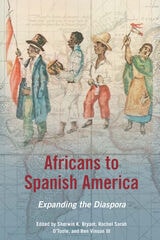
Africans to Spanish America
Expanding the DiasporaEdited by Sherwin K. Bryant, Rachel Sarah O’Toole, & Ben Vinson III
University of Illinois Press, 2014
Contributors are Joan C. Bristol, Nancy E. van Deusen, Leo J. Garofalo, Herbert S. Klein, Charles Beatty-Medina, Karen Y. Morrison, Rachel Sarah O'Toole, Frank "Trey" Proctor III, and Michele Reid-Vazquez.
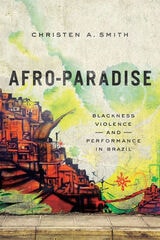
Afro-Paradise
Blackness, Violence, and Performance in BrazilChristen A. Smith
University of Illinois Press, 2016
Christen A. Smith argues that the dialectic of glorified representations of black bodies and subsequent state repression reinforces Brazil's racially hierarchal society. Interpreting the violence as both institutional and performative, Smith follows a grassroots movement and social protest theater troupe in their campaigns against racial violence. As Smith reveals, economies of black pain and suffering form the backdrop for the staged, scripted, and choreographed afro-paradise that dazzles visitors. The work of grassroots organizers exposes this relationship, exploding illusions and asking unwelcome questions about the impact of state violence performed against the still-marginalized mass of Afro-Brazilians.
Based on years of field work, Afro-Paradise is a passionate account of a long-overlooked struggle for life and dignity in contemporary Brazil.
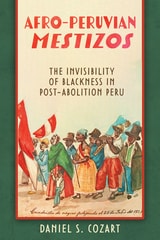
Afro-Peruvian Mestizos
The Invisibility of Blackness in Post-Abolition PeruDaniel S. Cozart
University of Alabama Press, 2025
A transformative study by Daniel S. Cozart, Afro-Peruvian Mestizos redefines the narrative of mestizaje in post-abolition Peru, uncovering the hidden histories and enduring strength of Afro-Peruvian communities.
Afro-Peruvian Mestizos: The Invisibility of Blackness in Post-Abolition Peru by Daniel S. Cozart investigates the ideologies of mestizaje, or racial mixing, that Latin American elites used to construct modern national identities during the nineteenth and twentieth centuries. Through close reading of archival records, legal documents, and literary works, Cozart uncovers the systematic exclusion of Afro-Peruvians from the nation's narrative of progress, revealing how their presence was deliberately omitted from official histories and censuses. The abolition of slavery in 1855 marked the beginning of a process where Afro-Peruvians were marginalized, their identities overshadowed by a national narrative that prioritized Indigenous heritage and whiteness.
Drawing on Michel-Rolph Trouillot's framework of historical production, the book traces the contradictions inherent in liberal and positivist ideologies that sought to forge a "raceless" society, all while silencing Afro-Peruvian voices and erasing their history. The conclusion reflects on the significance of erasure for Afro-Peruvians in the twentieth and twenty-first centuries, as they now demand to be seen. This book is a powerful examination of historical silences and the ongoing struggle for recognition in the face of systemic racism.
Afro-Sweden
Becoming Black in a Color-Blind CountryRyan Thomas Skinner
University of Minnesota Press, 2022
A compelling examination of Sweden’s African and Black diaspora
Contemporary Sweden is a country with a worldwide progressive reputation, despite an undeniable tradition of racism within its borders. In the face of this contradiction of culture and history, Afro-Swedes have emerged as a vibrant demographic presence, from generations of diasporic movement, migration, and homemaking. In Afro-Sweden, Ryan Thomas Skinner uses oral histories, archival research, ethnography, and textual analysis to explore the history and culture of this diverse and growing Afro-European community.
Skinner employs the conceptual themes of “remembering” and “renaissance” to illuminate the history and culture of the Afro-Swedish community, drawing on the rich theoretical traditions of the African and Black diaspora. Remembering fosters a sustained meditation on Afro-Swedish social history, while Renaissance indexes a thriving Afro-Swedish public culture. Together, these concepts illuminate significant existential modes of Afro-Swedish being and becoming, invested in and contributing to the work of global Black studies.
The first scholarly monograph in English to focus specifically on the African and Black diaspora in Sweden, Afro-Sweden emphasizes the voices, experiences, practices, knowledge, and ideas of these communities. Its rigorously interdisciplinary approach to understanding diasporic communities is essential to contemporary conversations around such issues as the status and identity of racialized populations in Europe and the international impact of Black Lives Matter.
AfroSwedish Places of Belonging
Nana Osei-Kofi
Northwestern University Press, 2024
Afrodescendants, Identity, and the Struggle for Development in the Americas
Bernd Reiter
Michigan State University Press, 2012
Indigenous people and African descendants in Latin America and the Caribbean have long been affected by a social hierarchy established by elites, through which some groups were racialized and others were normalized. Far from being “racial paradises” populated by an amalgamated “cosmic race” of mulattos and mestizos, Latin America and the Caribbean have long been sites of shifting exploitative strategies and ideologies, ranging from scientific racism and eugenics to the more sophisticated official denial of racism and ethnic difference. This book, among the first to focus on African descendants in the region, brings together diverse reflections from scholars, activists, and funding agency representatives working to end racism and promote human rights in the Americas. By focusing on the ways racism inhibits agency among African descendants and the ways African-descendant groups position themselves in order to overcome obstacles, this interdisciplinary book provides a multi-faceted analysis of one of the gravest contemporary problems in the Americas.
Afroindigenization
A Theory of Grassroots Cultural PracticeCatherine A. John
Duke University Press, 2026
Against the Closet
Black Political Longing and the Erotics of RaceAliyyah I. Abdur-Rahman
Duke University Press, 2012
Abdur-Rahman brings black feminist, psychoanalytic, critical race, and poststructuralist theories to bear on literary genres from slave narratives to science fiction. Analyzing works by African American writers, including Frederick Douglass, Pauline Hopkins, Harriet Jacobs, James Baldwin, and Octavia Butler, she shows how literary representations of transgressive sexuality expressed the longings of African Americans for individual and collective freedom. Abdur-Rahman contends that those representations were fundamental to the development of African American forms of literary expression and modes of political intervention and cultural self-fashioning.
Alien Capital
Asian Racialization and the Logic of Settler Colonial CapitalismIyko Day
Duke University Press, 2016
Alive in the Sound
Black Music as CounterhistoryRonald Radano
Duke University Press, 2025

American Allegory
Lindy Hop and the Racial ImaginationBlack Hawk Hancock
University of Chicago Press, 2013
In American Allegory, Black Hawk Hancock offers an embedded and embodied ethnography that situates dance within a larger Chicago landscape of segregated social practices. Delving into two Chicago dance worlds, the Lindy and Steppin’, Hancock uses a combination of participant-observation and interviews to bring to the surface the racial tension that surrounds white use of black cultural forms. Focusing on new forms of appropriation in an era of multiculturalism, Hancock underscores the institutionalization of racial disparities and offers wonderful insights into the intersection of race and culture in America.

American Disgust
Racism, Microbial Medicine, and the Colony WithinMatthew J. Wolf-Meyer
University of Minnesota Press, 2024
Examining the racial underpinnings of food, microbial medicine, and disgust in America
American Disgust shows how perceptions of disgust and fears of contamination are rooted in the country’s history of colonialism and racism. Drawing on colonial, corporate, and medical archives, Matthew J. Wolf-Meyer argues that microbial medicine is closely entwined with changing cultural experiences of digestion, excrement, and disgust that are inextricably tied to the creation of whiteness.
Ranging from nineteenth-century colonial encounters with Native people to John Harvey Kellogg’s ideas around civilization and bowel movements to mid-twentieth-century diet and parenting advice books, Wolf-Meyer analyzes how embedded racist histories of digestion and disgust permeate contemporary debates around fecal microbial transplants and other bacteriotherapeutic treatments for gastrointestinal disease.
At its core, American Disgust wrestles with how changing cultural notions of digestion—what goes into the body and what comes out of it—create and impose racial categories motivated by feelings of disgust rooted in American settler-colonial racism. It shows how disgust is a changing, yet fundamental, aspect of American subjectivity and that engaging with it—personally, politically, and theoretically—opens up possibilities for conceptualizing health at the individual, societal, and planetary levels.
American Tropics
Articulating Filipino AmericaAllan Punzalan Isaac
University of Minnesota Press, 2006

Antiblackness
Moon-Kie Jung and João H. Costa Vargas, editors
Duke University Press, 2021
Contributors. Mohan Ambikaipaker, Jodi A. Byrd, Iyko Day, Anthony Paul Farley, Crystal Marie Fleming, Sarah Haley, Tanya Katerí Hernández, Sarah Ihmoud, Joy James, Moon-Kie Jung, Jae Kyun Kim, Charles W. Mills, Dylan Rodríguez, Zach Sell, João H. Costa Vargas, Frank B. Wilderson III, Connie Wun
Appropriating Blackness
Performance and the Politics of AuthenticityE. Patrick Johnson
Duke University Press, 2003
Johnson looks at various sites of performed blackness, including Marlon Riggs’s influential documentary Black Is . . . Black Ain’t and comedic routines by Eddie Murphy, David Alan Grier, and Damon Wayans. He analyzes nationalist writings by Amiri Baraka and Eldridge Cleaver, the vernacular of black gay culture, an oral history of his grandmother’s experience as a domestic worker in the South, gospel music as performed by a white Australian choir, and pedagogy in a performance studies classroom. By exploring the divergent aims and effects of these performances—ranging from resisting racism, sexism, and homophobia to excluding sexual dissidents from the black community—Johnson deftly analyzes the multiple significations of blackness and their myriad political implications. His reflexive account considers his own complicity, as ethnographer and teacher, in authenticating narratives of blackness.

Asian American X
An Intersection of Twenty-First Century Asian American VoicesArar Han and John Y. Hsu, Editors
University of Michigan Press, 2004
-Eric Liu, author of The Accidental Asian
"There's fury, dignity, and self-awareness in these essays. I found the voices to be energetic and the ideas exciting."
-Diana Son, playwright (Stop Kiss) and co-producer (Law & Order: Criminal Intent)
This refreshing and timely collection of coming-of-age essays, edited and written by young Asian Americans, powerfully captures the joys and struggles of their evolving identities as one of the fastest-growing groups in the nation and poignantly depicts the many oft-conflicting ties they feel to both American and Asian cultures. The essays also highlight the vast cultural diversity within the category of Asian American, yet ultimately reveal how these young people are truly American in their ideals and dreams.
Asian American X is more than a book on identity; it is required reading both for young Asian Americans who seek to understand themselves and their social group, and for all who are interested in keeping abreast of the changing American social terrain.
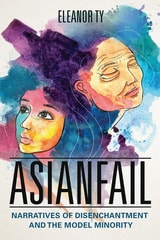
Asianfail
Narratives of Disenchantment and the Model MinorityEleanor Ty
University of Illinois Press, 2017
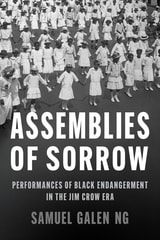
Assemblies of Sorrow
Performances of Black Endangerment in the Jim Crow EraSamuel Galen Ng
University of Illinois Press, 2026
Samuel Galen Ng illuminates this Black consciousness as it emanated from feelings of collective endangerment. The dissemination and intensification of such feelings became a pivotal way of solidifying a national Black consciousness on the eve of the Civil Rights Movement. Ng examines how performances of Black endangerment performed political work that provided Black people with important means of political organizing and insurgency. As Ng shows, the grief and mourning that took place at the performances provided public spaces for individuals and communities to observe specific losses capable of impacting Americans across the country.
Ambitious and interdisciplinary, Assemblies of Sorrow explores an overlooked facet of Black organizing and protest and traces how activists shaped fear and grief into political action.
Authentic Blackness
The Folk in the New Negro RenaissanceJ. Martin Favor
Duke University Press, 1999
Authentic Blackness looks at the place of the “folk”—those African Americans “furthest down,” in the words of Alain Locke—and how the representation of the folk and the black middle class both spurred the New Negro Movement and became one of its most serious points of contention. Drawing on vernacular theories of African American literature from such figures as Henry Louis Gates Jr. and Houston Baker as well as theorists Judith Butler and Stuart Hall, Favor looks closely at the work of four Harlem Renaissance fiction writers: James Weldon Johnson, Nella Larsen, George Schuyler, and Jean Toomer. Arguing that each of these writers had, at best, an ambiguous relationship to African American folk culture, Favor demonstrates how they each sought to redress the notion of a fixed black identity. Authentic Blackness illustrates how “race” has functioned as a type of performative discourse, a subjectivity that simultaneously builds and conceals its connections with such factors as class, gender, sexuality, and geography.