Results by title
164 books match the query 'Revolution' and 15 start with a
A Century of Revolution
Insurgent and Counterinsurgent Violence during Latin America's Long Cold WarGreg Grandin and Gilbert M. Joseph, eds.
Duke University Press, 2010
Contributors. Michelle Chase, Jeffrey L. Gould, Greg Grandin, Lillian Guerra, Forrest Hylton, Gilbert M. Joseph, Friedrich Katz, Thomas Miller Klubock, Neil Larsen, Arno J. Mayer, Carlota McAllister, Jocelyn Olcott, Gerardo Rénique, Corey Robin, Peter Winn

A Conspiratorial Life
Robert Welch, the John Birch Society, and the Revolution of American ConservatismEdward H. Miller
University of Chicago Press, 2021
Though you may not know his name, Robert Welch (1899-1985)—founder of the John Birch Society—is easily one of the most significant architects of our current political moment. In A Conspiratorial Life, the first full-scale biography of Welch, Edward H. Miller delves deep into the life of an overlooked figure whose ideas nevertheless reshaped the American right.
A child prodigy who entered college at age 12, Welch became an unlikely candy magnate, founding the company that created Sugar Daddies, Junior Mints, and other famed confections. In 1958, he funneled his wealth into establishing the organization that would define his legacy and change the face of American politics: the John Birch Society. Though the group’s paranoiac right-wing nativism was dismissed by conservative thinkers like William F. Buckley, its ideas gradually moved from the far-right fringe into the mainstream. By exploring the development of Welch’s political worldview, A Conspiratorial Life shows how the John Birch Society’s rabid libertarianism—and its highly effective grassroots networking—became a profound, yet often ignored or derided influence on the modern Republican Party. Miller convincingly connects the accusatory conservatism of the midcentury John Birch Society to the inflammatory rhetoric of the Tea Party, the Trump administration, Q, and more. As this book makes clear, whether or not you know his name or what he accomplished, it’s hard to deny that we’re living in Robert Welch’s America.

A Conspiratorial Life
Robert Welch, the John Birch Society, and the Revolution of American ConservatismEdward H. Miller
University of Chicago Press, 2021
This is an auto-narrated audiobook edition of this book.
The first full-scale biography of Robert Welch, who founded the John Birch Society and planted some of modern conservatism’s most insidious seeds.
Though you may not know his name, Robert Welch (1899-1985)—founder of the John Birch Society—is easily one of the most significant architects of our current political moment. In A Conspiratorial Life, the first full-scale biography of Welch, Edward H. Miller delves deep into the life of an overlooked figure whose ideas nevertheless reshaped the American right.
A child prodigy who entered college at age 12, Welch became an unlikely candy magnate, founding the company that created Sugar Daddies, Junior Mints, and other famed confections. In 1958, he funneled his wealth into establishing the organization that would define his legacy and change the face of American politics: the John Birch Society. Though the group’s paranoiac right-wing nativism was dismissed by conservative thinkers like William F. Buckley, its ideas gradually moved from the far-right fringe into the mainstream. By exploring the development of Welch’s political worldview, A Conspiratorial Life shows how the John Birch Society’s rabid libertarianism—and its highly effective grassroots networking—became a profound, yet often ignored or derided influence on the modern Republican Party. Miller convincingly connects the accusatory conservatism of the midcentury John Birch Society to the inflammatory rhetoric of the Tea Party, the Trump administration, Q, and more. As this book makes clear, whether or not you know his name or what he accomplished, it’s hard to deny that we’re living in Robert Welch’s America.
A Documentary History of Communism and the World
From Revolution to CollapseEdited by Robert V. Daniels
Brandeis University Press, 1994
A History of the Swedish People
Volume II: From Renaissance to RevolutionVilhelm Moberg
University of Minnesota Press, 2005
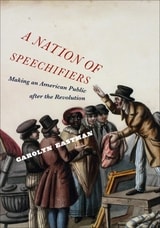
A Nation of Speechifiers
Making an American Public after the RevolutionCarolyn Eastman
University of Chicago Press, 2009
In the decades after the American Revolution, inhabitants of the United States began to shape a new national identity. Telling the story of this messy yet formative process, Carolyn Eastman argues that ordinary men and women gave meaning to American nationhood and national belonging by first learning to imagine themselves as members of a shared public.
She reveals that the creation of this American public—which only gradually developed nationalistic qualities—took place as men and women engaged with oratory and print media not only as readers and listeners but also as writers and speakers. Eastman paints vibrant portraits of the arenas where this engagement played out, from the schools that instructed children in elocution to the debating societies, newspapers, and presses through which different groups jostled to define themselves—sometimes against each other. Demonstrating the previously unrecognized extent to which nonelites participated in the formation of our ideas about politics, manners, and gender and race relations, A Nation of Speechifiers provides an unparalleled genealogy of early American identity.

A Revolution in Arms
A History of the First Repeating RiflesJoseph G. Bilby
Westholme Publishing, 2005
Historians often call the American Civil War the first modern war, pointing to the use of observation balloons, the telegraph, trains, mines, ironclad ships, and other innovations. Although recent scholarship has challenged some of these “firsts,” the war did witness the introduction of the first repeating rifles. No other innovation of the turbulent 1860s would have a greater effect on the future of warfare. In A Revolution in Arms: A History of the First Repeating Rifles, historian Joseph G. Bilby unfolds the fascinating story of how two New England inventors, Benjamin Henry and Christopher Spencer, each combined generations of cartridge and rifle technology to develop reliable repeating rifles. In a stroke, the Henry rifle and Spencer rifle and carbine changed warfare forever, accelerating the abandonment of the formal battle line tactics of previous generations and when properly applied, repeating arms could alter the course of a battle. Although slow to enter service, the repeating rifle soon became a sought after weapon by both Union and Confederate troops. Oliver Winchester purchased the rights to the Henry and transformed it into “the gun that won the West.” The Spencer, the most famous of all Civil War small arms, was the weapon of choice for Federal cavalrymen. The revolutionary technology represented by repeating arms used in the American Civil War, including self-contained metallic cartridges, large capacity magazines, and innovative cartridge feeding systems, was copied or adapted by arms manufacturers around the world, and these features remain with us today.
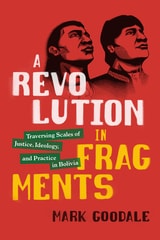
A Revolution in Fragments
Traversing Scales of Justice, Ideology, and Practice in BoliviaMark Goodale
Duke University Press, 2019
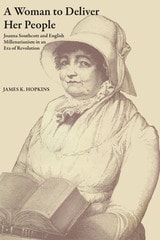
A Woman to Deliver Her People
Joanna Southcott and English Millenarianism in an Era of RevolutionBy James K. Hopkins
University of Texas Press, 1982
The Second Coming of Christ has been prophesied many times through the centuries but seldom by a figure so fascinating as Joanna Southcott (1750–1814), the domestic servant who at the age of forty-two declared that God had chosen her to announce His return. A Woman to Deliver Her People is the most comprehensive study of this remarkable woman and her movement yet written.
Dramatic social and political changes of the late eighteenth century—among them the revolutions in America and France—had a profound effect on the attitudes of English men and women at all levels of society. With events so far outside the range of ordinary experience, both the educated and the uneducated turned to the prophetic books of the Bible, seeking solace and explanation. A number of prophets and prophetesses appeared, claiming to have a special understanding of the biblical texts and offering startling new revelations which had been disclosed to them by God. The greatest and most influential of these was Joanna Southcott, who attracted tens of thousands of followers from the West Country, London, the Midlands, and the industrial North. Her "spiritual communications" filled some sixty-five books and pamphlets from 1801 until her death.
Most contemporary observers dismissed Southcott as a fanatic, and she was frequently the subject of caricature and ridicule. James Hopkins attempts to remedy this distortion by examining Southcott's life and the millenarian movement she led within the context of the social, political, and economic crises of the period. By tracing the psychological and popular roots of Southcott's piety, and casting her appeal against the backdrop of a revolutionary age, Hopkins not only vividly portrays the life of this fascinating woman but also offers a new perspective on the mentality of ordinary English men and women during the years of their transformation into a working class.
Aesthetics and Revolution
Nicaraguan Poetry 1979-1990Greg Dawes
University of Minnesota Press, 1993
In Aesthetics and Revolution, Dawes demonstrates that there is an objective grounding for cultural studies found in the aesthetic means of production. By analyzing the relations and forces of production in this realm we inevitably cross over into the economic means of production as well as the struggle for political representation. Ultimately, aesthetics is at the intersection of class and gender interests and their struggle for hegemony.
In Aesthetics and Revolution, Dawes has chosen a group of writers of different theoretical sympathies, class, gender, and social positions to reveal the conflictual interests of the social classes and genders as a whole. Through close readings of their work, Dawes examines the thematic nodes that are expressed in positions as diverse as Ernesto Cardenal’s liberation theology, Pablo Antonio Cuadra’s populism, the campesino’s oral tradition, and Gioconda Belli’s erotic verses in relation to the changes taking place in revolutionary Nicaragua.
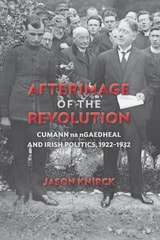
Afterimage of the Revolution
Cumann na nGaedheal and Irish Politics, 1922–1932Jason Knirck
University of Wisconsin Press, 2014

Alexis de Tocqueville on Democracy, Revolution, and Society
Alexis de Tocqueville
University of Chicago Press, 1980
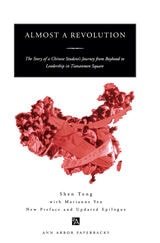
Almost a Revolution
The Story of a Chinese Student's Journey from Boyhood to Leadership in Tiananmen SquareShen Tong
University of Michigan Press, 1998
Now nearly ten years later as our fascination with post-Deng China continues to develop, Shen's story and the updated material he provides are weighted with increasing significance. Coupled with much of the recent analysis, Shen's firsthand account vividly contextualizes the Chinese government's opposition to democracy and offers meaningful insight into a country that promises to occupy an increasingly prominent position in the world.
"A cause for celebration . . . an important contribution to China's newly discovered historical memory." --New York Times Book Review
Shen Tong is a doctoral student in political sociology at Boston University and the founder of the Democracy for China Fund, which aims to support and publicize dissent networks in China. Marianne Yen is a former New York correspondent for the Washington Post.
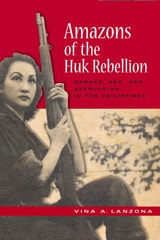
Amazons of the Huk Rebellion
Gender, Sex, and Revolution in the PhilippinesVina A. Lanzona
University of Wisconsin Press, 2009
Drawing on interviews with over one hundred veterans of the movement, Vina A. Lanzona explores the Huk rebellion from the intimate and collective experiences of its female participants, demonstrating how their presence, and the complex questions of gender, family, and sexuality they provoked, ultimately shaped the nature of the revolutionary struggle.
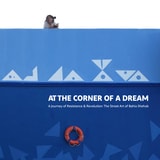
At the Corner of a Dream
A Journey of Resistance and Revolution: The Street Art of Bahia ShehabBahia Shehab
Gingko, 2019
At the Corner of a Dream offers extensive documentation of Shehab’s powerful street paintings. It also chronicles the stories of the people she meets along her journeys and includes her observations from the streets of each new city she visits. Shehab’s work is a manifesto, a cry for freedom and dignity, and a call to never stop dreaming.