Results by title
60 books match the query 'Sculpture & Installation' and 5 start with a
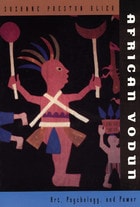
African Vodun
Art, Psychology, and PowerSuzanne Preston Blier
University of Chicago Press, 1994
Beads, bones, rags, straw, leather, pottery, fur, feathers and blood—these are the raw materials of vodun artworks. The power of these images lies not only in their aesthetic, and counter-aesthetic, appeal but also in their psychological and emotional effect. As objects of fury and force, these works are intended to protect and empower people and cultures that have long been oppressed.
In this first major study of its kind, Suzanne Preston Blier examines the artworks of the contemporary vodun cultures of southern Benin and Togo in West Africa as well as the related voudou traditions of Haiti, New Orleans, and historic Salem, Massachusetts. Blier employs a variety of theoretically sophisticated psychological, anthropological, and art historical approaches to explore the contrasts inherent in the vodun arts—commoners versus royalty, popular versus elite, "low" art versus "high." She examines the relation between art and the slave trade, the psychological dynamics of artistic expression, the significance of the body in sculptural expression, and indigenous perceptions of the psyche.
Throughout, Blier pushes African art history to a new height of cultural awareness that recognizes the complexity of traditional African societies as it acknowledges the role of social power in shaping aesthetics and meaning generally. This book will be of critical importance not only to those concerned with African, African American, and Caribbean art, but also to anthropologists, African diaspora scholars, students of comparative religion and comparative psychology, and anyone fascinated by the traditions of voudou and vodun.
"An extraordinary tour de force."—Choice
"Extraordinarily detailed....Blier's examination of the entire, often mysterious history of vodun is...in a word, definitive."—Booklist
"A serious study that concentrates on the hidden power of objects and the meaning behind that potency is long overdue. Welcome Susan Blier's African Vodun....Certainly a must for...those concerned with the psychology of art."—Janet L. Stanley, Art Documentation
"[Blier] is usually sensitive to the need to resist imposing Western artistic values and academic methodologies inappropriately upon such art. But she offers the reader a gift even more precious; she offers rare insights into how various art forms—sculpture and home architecture in particular—yield meanings for the African users of such art.—Norman Weinstein, Boston Book Review
[more]

Animals in Four Worlds
Sculptures from IndiaStella Snead
University of Chicago Press, 1989
Animals play a special role in Indian culture. In opposition to deities, they help to frame the human community. Indian philosophy assumes the basic unity of animals and humans and in everyday life animals symbolize various ideas and sentiments. In the realm of Indian art, animals appear everywhere.
In this splendid and unique collection of photographs, Stella Snead captures the extraordinary vitality, intelligence, and variety of animals in Indian sculpture found at sites from prehistory through the eighteenth century. Here are cats, peacocks, mongooses, anteaters, cows, hyenas, and tigers, as well as such fantastic creatures as double-bodied lions and elephants with fish tails. Collected from all areas of India, these photographs include images from famous Indian monuments, and museum collections, as well as images from remote sites, some of which have never before been published.
Wendy Doniger's essay explores and explains the four worlds or dimensions that animals occupy in Indian thought: nature, the human world, the divine world, and the world of fantasy. George Michell places Indian sculptures of animals in their architectural and art historical context. His chronological survey identifies the location and the subject of the animals photographed and describes the artistic activity of the regions and period from which the photographs are drawn.
This beautifully illustrated book will appeal to a wide audience: to those interested in Asian studies, art, architecture, and animals, and to those drawn to Snead's powerful photographs, which capture both the idiosyncratic genius of tiny details and the grand sweep of cosmic symbols.
[more]
Antony Gormley on Sculpture
Antony Gormley
University of Chicago Press, 2015
One of the most exciting sculptors of our time, Antony Gormley is the creator of breathtaking public installations. Even casual fans will recognize Event Horizon, a collection of thirty-one life-size casts of the artist’s body that have been installed atop buildings in places like London’s South Bank and New York’s Madison Square, and Field, formed by tens of thousands of standing clay figurines overflowing across a room’s floor. Projects like these demonstrate Gormley’s ongoing interest in exploring the human form and its relationships with the rest of the material world, and in Antony Gormley on Sculpture, he shares valuable insight into his work and the history of sculpture itself.
Combining commentary on his own works with discussions of other artists and the Eastern religious traditions that have inspired him, Gormley offers wisdom on topics such as the body in space, how to approach an environment when conceiving an installation, bringing mindfulness and internal balance to sculpture, and much more. Lavishly illustrated, this book will be of interest to not only art lovers, curators, and critics, but also artists and art students. Dynamic and thought-provoking, Antony Gormley on Sculpture is essential reading for anyone fascinated by sculpture and its long and complex history as a medium.
Combining commentary on his own works with discussions of other artists and the Eastern religious traditions that have inspired him, Gormley offers wisdom on topics such as the body in space, how to approach an environment when conceiving an installation, bringing mindfulness and internal balance to sculpture, and much more. Lavishly illustrated, this book will be of interest to not only art lovers, curators, and critics, but also artists and art students. Dynamic and thought-provoking, Antony Gormley on Sculpture is essential reading for anyone fascinated by sculpture and its long and complex history as a medium.
[more]
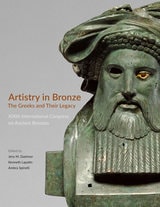
Artistry in Bronze
The Greeks and Their Legacy XIXth International Congress on Ancient BronzesJens M Daehner
J. Paul Getty Trust, The, 2017
The papers in this volume derive from the proceedings of the nineteenth International Bronze Congress, held at the Getty Center and Villa in October 2015 in connection with the exhibition Power and Pathos: Bronze Sculpture of the Hellenistic World. The study of large-scale ancient bronzes has long focused on aspects of technology and production. Analytical work of materials, processes, and techniques has significantly enriched our understanding of the medium. Most recently, the restoration history of bronzes has established itself as a distinct area of investigation. How does this scholarship bear on the understanding of bronzes within the wider history of ancient art? How do these technical data relate to our ideas of styles and development? How has the material itself affected ancient and modern perceptions of form, value, and status of works of art?
www.getty.edu/publications/artistryinbronze
www.getty.edu/publications/artistryinbronze
[more]
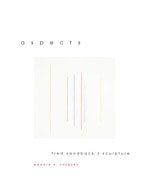
Aspects
Fred Sandback's SculptureEdward A. Vazquez
University of Chicago Press, 2017
Stretching lengths of yarn across interior spaces, American artist Fred Sandback (1943–2003) created expansive works that underscore the physical presence of the viewer. This book, the first major study of Sandback, explores the full range of his art, which not only disrupts traditional conceptions of material presence, but also stages an ethics of interaction between object and observer.
Drawing on Sandback’s substantial archive, Edward A. Vazquez demonstrates that the artist’s work—with all its physical slightness and attentiveness to place, as well as its relationship to minimal and conceptual art of the 1960s—creates a link between viewers and space that is best understood as sculptural even as it almost surpasses physical form. At the same time, the economy of Sandback’s site-determined practice draws viewers’ focus to their connection to space and others sharing it. As Vazquez shows, Sandback’s art aims for nothing less than a total recalibration of the senses, as the spectator is caught on neither one side nor the other of an object or space, but powerfully within it.
Drawing on Sandback’s substantial archive, Edward A. Vazquez demonstrates that the artist’s work—with all its physical slightness and attentiveness to place, as well as its relationship to minimal and conceptual art of the 1960s—creates a link between viewers and space that is best understood as sculptural even as it almost surpasses physical form. At the same time, the economy of Sandback’s site-determined practice draws viewers’ focus to their connection to space and others sharing it. As Vazquez shows, Sandback’s art aims for nothing less than a total recalibration of the senses, as the spectator is caught on neither one side nor the other of an object or space, but powerfully within it.
[more]