Results by title
143 books match the query 'Sexuality' and 9 start with a
A Not So Foreign Affair
Fascism, Sexuality, and the Cultural Rhetoric of American DemocracyAndrea Slane
Duke University Press, 2001
World War II marked a turning point in the cultural rhetoric of democracy, Slane claims, because it intensified a preoccupation with the political role of private life and pushed sexuality to the center of democratic discourse. Having created tremendous anxiety—and fascination—in American culture, Nazism became associated with promiscuity, sexual perversionand the destruction of the family. Slane reveals how this particular imprint of fascism is used in progressive as well as conservative imagery and language to further their domestic agendas and shows how our cultural engagement with Nazism reflects the inherent tension in democracy between the value of diversity, individual freedoms national identity, and notions of the common good. Finally, she applies her analysis of wartime narratives to contemporary texts, examining anti-abortion, anti-gay, and anti-federal rhetoric, as well as the psychic life of skinheads, censorship debates, and the contemporary fascination with incest.
An invaluable resource for understanding the language we use—both visual and narrative—to describe and debate democracy in the United States today, A Not So Foreign Affair will appeal to those interested in cultural studies, film and video studies, American studies, twentieth century history, German studies, rhetoric, and sexuality studies.
A Pill for Promiscuity
Gay Sex in an Age of PharmaceuticalsAndrew R. Spieldenner
Rutgers University Press, 2023
Finalist for Lambda Literary Award for Best LGBTQ+ Anthology
For a generation of gay men who came of age in the 1980s and 1990s, becoming sexually active meant confronting the dangers of catching and transmitting HIV. In the 21st century, however, the development of viral suppression treatments and preventative pills such as PrEP and nPEP has massively reduced the risk of acquiring HIV. Yet some of the stigma around gay male promiscuity and bareback sex has remained, inhibiting open dialogues about sexual desire, risk, and pleasure.
A Pill for Promiscuity brings together academics, artists, and activists—from different generations, countries, ethnic backgrounds, and HIV statuses—to reflect on how gay sex has changed in a post-PrEP era. Some offer personal perspectives on the value of promiscuity and the sexual communities it fosters, while others critique unequal access to PrEP and the increased role Big Pharma now plays in gay life. With a diverse group of contributors that includes novelist Andrew Holleran, trans scholar Lore/tta LeMaster, cartoonist Steve MacIsaac, and pornographic film director Mister Pam, this book asks provocative questions about how we might reimagine queer sex and sexuality in the 21st century.
A Politics of Virtue
Hinduism, Sexuality, and Countercolonial Discourse in FijiJohn D. Kelly
University of Chicago Press, 1991
changing conditions of political possibility by examining the
connection between politics and sexual morality in the British
colony of Fiji from 1929 to 1932.
A Primer for Teaching Women, Gender, and Sexuality in World History
Ten Design PrinciplesMerry E. Wiesner-Hanks and Urmi Engineer Willoughby
Duke University Press, 2018

A Problem Like Maria
Gender and Sexuality in the American MusicalStacy Wolf
University of Michigan Press, 2002
Chapter by chapter, the book analyzes the stars' best-known and best-loved roles, including Martin as Nellie in South Pacific, Merman as Momma Rose in GypsyAndrews as Eliza in My Fair Lady and Guinevere in Camelot, and Streisand as Fanny Brice in Funny Girl. The final chapter scrutinizes the Broadway and film versions of The Sound of Music, illuminating its place in the hearts of lesbian spectators and the "delicious queerness" of Andrews's troublesome nun. As the first feminist and lesbian study of the American Broadway musical, A Problem Like Maria is a groundbreaking contribution to feminist studies, queer studies, and American studies and a delight for fans of musical theater.
Stacy Wolf is Associate Professor of Theatre and Dance, University of Texas, Austin.
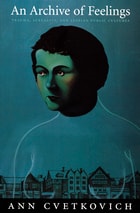
An Archive of Feelings
Trauma, Sexuality, and Lesbian Public CulturesAnn Cvetkovich
Duke University Press, 2003
An Archive of Feelings brings together oral histories from lesbian activists involved in act up/New York; readings of literature by Dorothy Allison, Leslie Feinberg, Cherríe Moraga, and Shani Mootoo; videos by Jean Carlomusto and Pratibha Parmar; and performances by Lisa Kron, Carmelita Tropicana, and the bands Le Tigre and Tribe 8. Cvetkovich reveals how activism, performance, and literature give rise to public cultures that work through trauma and transform the conditions producing it. By looking closely at connections between sexuality, trauma, and the creation of lesbian public cultures, Cvetkovich makes those experiences that have been pushed to the peripheries of trauma culture the defining principles of a new construction of sexual trauma—one in which trauma catalyzes the creation of cultural archives and political communities.

An Intimate History of Nazism
Love, Marriage, and Sexuality in the Third ReichElissa Mailänder
University of Wisconsin Press, 2027
Published to great acclaim in French and now available for the first time in English, this groundbreaking book explores how the Nazi regime used sexuality to promote political loyalty, conformity, and cohesion among “ordinary” Germans. Beginning before the collapse of the Weimar Republic and continuing through the postwar American occupation of Germany, Elissa Mailänder’s study highlights the complex and conflicted ways that sexual “liberation,” repression, and violence were used and experienced in the everyday lives of citizens of the Reich. Her analysis draws on a vast array of sources, from legal dossiers to private photographs and letters, as well as public archives, magazines, and movies. Mailänder’s findings are often uncomfortable; she demonstrates, for example, that a significant number of women who were not persecuted by the regime saw shifts in gender and sexual norms as positive developments—ones that some felt were lost under the American occupation, with its own routines of military sexual exploitation. What emerges is a portrait of a regime that was less interested in repressing sexuality than in reinventing it according to a racist, elitist, and homophobic agenda.
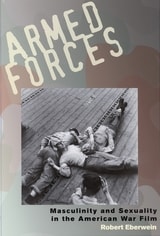
Armed Forces
Masculinity and Sexuality in the American War FilmEberwein, Robert
Rutgers University Press, 2007
In war films, the portrayal of deep friendships between men is commonplace. Given the sexually anxious nature of the American imagination, such bonds are often interpreted as carrying a homoerotic subtext. In Armed Forces , Robert Eberwein argues that an expanded conception of masculinity and sexuality is necessary in order to understand more fully the intricacy of these intense and emotional human relationships. Drawing on a range of examples from silent films such as What Price Glory and Wings to sound era works like The Deer Hunter, Platoon, Three Kings, and Pearl Harbor , he shows how close readings of war films, particularly in relation to their cultural contexts, demonstrate that depictions of heterosexual love, including those in romantic triangles, actually help to define and clarify the nonsexual nature of male love. The book also explores the problematic aspects of masculinity and sexuality when threatened by wounds, as in The Best Years of Our Lives, and considers the complex and persistent analogy between weapons and the male body, as in Full Metal Jacket and Saving Private Ryan .

Asexual Erotics
Intimate Readings of Compulsory SexualityEla Przybylo
The Ohio State University Press, 2019
Through a wide-ranging analysis of pivotal queer, feminist, and anti-racist movements; television and film; art and photography; and fiction, nonfiction, and theoretical texts, each chapter explores asexual erotics and demonstrates how asexuality has been vital to the formulation of intimate ways of knowing and being. Asexual Erotics assembles a compendium of asexual possibilities that speaks against the centralization of sex and sexuality, asking that we consider the ways in which compulsory sexuality is detrimental not only to asexual and nonsexual people but to all.