Results by title
370 books match the query 'Spain' and 25 start with a
A Dream of Arcadia
Anti-Industrialism in Spanish LIterature, 1895–1905By Lily Litvak
University of Texas Press, 1975
The dream of “progress” that animated many nineteenth-century artistic and political movements gave way at the turn of the century to a dissatisfaction with the Industrial Civilization and a recurrent pessimism about a future dominated by mechanization. Art Nouveau, which was both a style and a movement, embodied this dissatisfaction, marking the turn-of-the-century period with an aesthetic that consciously set out to revolutionize literature, the arts, and society within the framework of a brutalizing, wildly burgeoning Industrial Civilization. Generally associated with northern European culture, Art Nouveau also had a great impact in the south, particularly in Spain.
A Dream of Arcadia is the first work to explore Spain’s fertile and imaginative Art Nouveau. Through the eyes of four major Spanish writers, Lily Litvak views several different aspects of the turn-of-the-century struggle against the advances of industrialism in Spain. Her interpretation of the early works of Ramón del Valle Inclán, Miguel de Unamuno, José Martínez Ruiz (Azorín), and Pío Baroja exposes a longing for a preindustrial arcadia based on a return to nature, the revival of handicrafts and medieval art, an attraction to rural primitive societies, and a revulsion against the modern city. Set against the European literary and artistic background of the period, her observations place the Spanish manifestations of Art Nouveau within the context of the better-known northern phenomena. Of particular interest is her discussion of the influences of John Ruskin, William Morris, and the Pre-Raphaelites, which demonstrates how the general European mood was articulated in Spain.
Litvak concludes that Valle Inclán, Unamuno, Azorín, and Baroja must be considered as more than simply fin de siècle writers, for they became part of a general movement, generated by Art Nouveau, that spans an entire century. A Dream of Arcadia demonstrates that Art Nouveau was more than a flash on Europe's artistic horizon; it is a philosophy with ramifications that have led to communes, handcrafted articles, and nomadic adolescents in search of truth.
A Great Fear
Luís de Onís and the Shadow War against Napoleon in Spanish America, 1808–1812Timothy Hawkins
University of Alabama Press, 2019
A Great Fear: Luís de Onís and the Shadow War against Napoleon in Spanish America, 1808–1812 explores why Spanish Americans did not take the opportunity to seize independence in this critical period when Spain was overrun by French armies and, arguably, in its weakest state. In the first years after his appointment as Spanish ambassador to the United States, Luís de Onís claimed the heavy responsibility of defending Spanish America from the wave of French spies, subversives, and soldiers whom he believed Napoleon was sending across the Atlantic to undermine the empire.
As a leading representative of Spain’s loyalist government in the Americas, Onís played a central role in identifying, framing, and developing what soon became a coordinated response from the colonial bureaucracy to this perceived threat. This crusade had important short-term consequences for the empire. Since it paralleled the emergence of embryonic independence movements against Spanish rule, colonial officials immediately conflated these dangers and attributed anti-Spanish sentiment to foreign conspiracies.
Little direct evidence of Napoleon’s efforts at subversion in Spanish America exists. However, on the basis of prodigious research, Hawkins asserts that the fear of French intervention mattered far more than the reality. Reinforced by detailed warnings from Ambassador Onís, who found the United States to be the staging ground for many of the French emissaries, colonial officials and their subjects became convinced that Napoleon posed a real threat. The official reaction to the threat of French intervention increasingly led Spanish authorities to view their subjects with suspicion, as potential enemies rather than allies in the struggle to preserve the empire. In the long term, this climate of fear eroded the legitimacy of the Spanish Crown among Spanish Americans, a process that contributed to the unraveling of the empire by the 1820s.
This study draws on documents and official records from both sides of the Hispanic Atlantic, with extensive research conducted in Spain, Guatemala, Argentina, and the United States. Overall, it is a provocative interpretation of the repercussions of Napoleonic intrigue and espionage in the New World and a stellar examination of late Spanish colonialism in the Americas.

A Laboratory of Her Own
Women and Science in Spanish CultureVictoria L. Ketz
Vanderbilt University Press, 2021
While women's historic exclusion from STEM fields has been receiving increased scrutiny worldwide, women within the Spanish context have been perhaps even more peripheral given the complex sociocultural structures emanating from gender norms and political ideologies dominant in nineteenth- and twentieth-century Spain. Nonetheless, Spanish female cultural producers have long been engaged with science and technology, as expressed in literature, art, film, and other genres. Spanish arts and letters offer diverse representations of the relationships between women, gender, sexuality, race, and STEM fields.
A Laboratory of Her Own studies representations of a diverse range of Spanish women and scientific cultural products from the late nineteenth through the twenty-first centuries. STEM topics include the environment, biodiversity, temporal and spatial theories, medicine and reproductive rights, neuroscience, robotics, artificial intelligence, and quantum physics. These scientific themes and other issues are analyzed in narratives, paintings, poetry, photographs, science fiction, medical literature, translation, newswriting, film, and other forms.
A Memorandum for the President of the Royal Audiencia and Chancery Court of the City and Kingdom of Granada
Francisco Núñez Muley
University of Chicago Press, 2007
Now available in its first English translation, Núñez Muley’s account is an invaluable example of how Spain’s former Muslims made active use of the written word to challenge and openly resist the progressively intolerant policies of the Spanish Crown. Timely and resonant—given current debates concerning Islam, minorities, and cultural and linguistic assimilation—this edition provides scholars in a range of fields with a vivid and early example of resistance in the face of oppression.
A Network of Converso Families in Early Modern Toledo
Assimilating a MinorityLinda Martz
University of Michigan Press, 2003
Linda M. Martz focuses on families that were immersed in the worlds of business and finance. They formed the backbone of the trade industry and, during the economic expansion of the sixteenth century, enjoyed a high degree of affluence. The seventeenth century, however, brought harder times. How these families rose to positions of commercial eminence and then adapted to this economic downturn is one of the questions addressed in this insightful book.
A Network of Converso Families in Early Modern Toledo relies heavily on archival evidence--notarial, parish, and city records--that offers new insights into the families' histories. Business endeavors, marriage alliances, involvement in local politics, and the pursuit of improved social status are all subjected to Martz's keen analysis.
These families appear to have been well integrated into their contemporary society; aside from their business and financial activities, many were members of the city's governing council. But how well did they integrate with the lower classes? Assimilating minorities in the majority culture is a task that confronts most modern societies, so the experience of Spain and this particular minority may serve as an example of how earlier societies viewed and confronted this challenge.
This book will appeal to historians of medieval and Renaissance Spain and those interested in the Inquisition's effect on Renaissance Spain. It will also prove to be indispensable for those interested in the history of the Jewish race, as well as for those pursuing the question of marginalization.
Linda M. Martz is an independent historian as well as a freelance editor and writer.
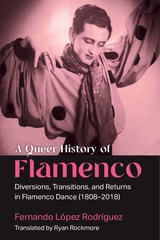
A Queer History of Flamenco
Diversions, Transitions, and Returns in Flamenco Dance (1808–2018)Fernando López Rodríguez, translation by Ryan Rockmore
University of Michigan Press, 2024
Tracing flamenco’s development from its birth up to the contemporary era, the book places flamenco within significant historical periods such as the Spanish Civil War, Franco’s dictatorship, the transition to democracy, and the economic crisis of 2008, up to contemporary performances of the late 2010s. In taking a queer approach to History, the author abandons antiquated debates about purities and impurities; anecdotes about the lives of artists that are completely detached from their processes of creation; and myths about geniuses who seem to make art alone and completely detached from their collaborators and the historical, social, economic and artistic moment in which they lived. A Queer History of Flamenco is not only about the present and the queerness of people living, performing, or creating in it, but also about flamenco’s past in which so many queer artists and practices and their lives have remained unearthed and unaddressed.
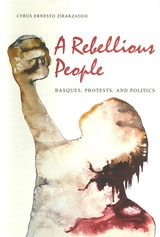
A Rebellious People
Basques, Protests, And PoliticsCyrus Ernesto Zirakzadeh
University of Nevada Press, 1991
In this scholarly work, Zirakzadeh argues that there is a calculated reasoning behind ETA's political violence that is often overlooked by researchers. His book is a comprehensive account of the Basque region's grassroots politics.
Abiayalan Pluriverses
Bridging Indigenous Studies and Hispanic StudiesGloria E. Chacon
Amherst College Press, 2024
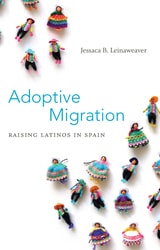
Adoptive Migration
Raising Latinos in SpainJessaca B. Leinaweaver
Duke University Press, 2013
Afonso Costa
PortugalFilipe Ribeiro de Meneses
Haus Publishing, 2010
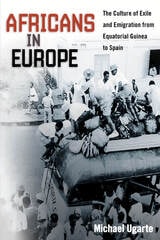
Africans in Europe
The Culture of Exile and Emigration from Equatorial Guinea to SpainMichael Ugarte
University of Illinois Press, 2013
Based on personal stories of people forced to leave and those who left of their own accord, Africans in Europe captures the nuanced realities and widespread impact of mobile populations. By focusing on the geographical, emotional, and intellectual dynamics of Equatorial Guinea's human movements, readers gain an inroad to "the consciousness of an age" and an understanding of the global realities that will define the cultural, economic, and political currents of the twenty-first century.
After Spanish Rule
Postcolonial Predicaments of the AmericasMark Thurner and Andrés Guerrero, eds.
Duke University Press, 2003
Challenging the universalizing tendencies of postcolonial theory as it has developed in the Anglophone academy, the contributors are attentive to the crucial ways in which the histories of Latin American countries—with their creole elites, hybrid middle classes, subordinated ethnic groups, and complicated historical relationships with Spain and the United States—differ from those of other former colonies in the southern hemisphere. Yet, while acknowledging such differences, the volume suggests a host of provocative, critical connections to colonial and postcolonial histories around the world.
Contributors
Thomas Abercrombie
Shahid Amin
Jorge Cañizares-Esguerra
Peter Guardino
Andrés Guerrero
Marixa Lasso
Javier Morillo-Alicea
Joanne Rappaport
Mauricio Tenorio-Trillo
Mark Thurner
Alfonso Reyes and Spain
His Dialogue with Unamuno, Valle-Inclán, Ortega y Gasset, Jiménez, and Gómez de la SernaBy Barbara Bockus Aponte
University of Texas Press, 1972
Alfonso Reyes, the great humanist and man of letters of contemporary Spanish America, began his literary career just before the outbreak of the Mexican Revolution of 1910. He spearheaded the radical shift in Mexico's cultural and philosophical orientation as a leading member of the famous "Athenaeum Generation."
The crucial years of his literary formation, however, were those he spent in Spain (1914-1924). He arrived in Madrid unknown and unsure of his future. When he left, he had achieved both professional maturity and wide acclaim as a writer. This book has, as its basis, the remarkable correspondence between Reyes and some of the leading spirits of the Spanish intellectual world, covering not only his years in Spain but also later exchanges of letters.
Although Reyes always made it clear that he was a Mexican and a Spanish American, he became a full-fledged member of the closed aristocracy of Spanish literature. It was the most brilliant period in Spain's cultural history since the Golden Age, and it is richly represented here by Reyes' association with five of its most important figures: Miguel de Unamuno and Ramón del Valle-Inclán were of the great "Generation of 98"; among the younger writers were José Ortega y Gasset, essayist and philosopher; the Nobel poet Juan Ramón Jiménez; and Ramón Gómez de la Serna, a precursor of surrealism.
Alfonso Reyes maintained lifelong friendships with these men, and their exchanges of letters are of a dual significance. They reveal how the years in Spain allowed Reyes to pursue his vocation independently, thereby prompting him to seek universal values. Coincidentally, they provide a unique glimpse into the inner world of those friends—and their dreams of a new Spain.
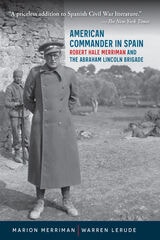
American Commander in Spain
Robert Hale Merriman and the Abraham Lincoln BrigadeMarion Merriman
University of Nevada Press, 1986
Among the Americans was Robert Hale Merriman, a scholar who had been studying international economics in Europe. He and his wife, Marion, joined volunteers from fifty-four countries in International Brigades. Merriman became the first commander of the Americans; Abraham Lincoln Battalion and a leader among the International Brigades. Now available in a new paperback edition, American Commander in Spain is based on Merriman and Marion's diaries and personal correspondence, Marion's own service at his side in Spain, as well as Warren Lerude's extensive research and interviews with people who knew Merriman and Marion, government records, and contemporary news reports. This critically acclaimed work is both the biography of a remarkable man who combined his idealism with life-risking action to fight fascism threatening Europe and Marion's vivid first-hand account of life in Spain during the civil war that became a prologue to the Second World War.
American Relief Aid and the Spanish Civil War
Eric R. Smith
University of Missouri Press, 2013
The Spanish Civil War created a conflict for Americans who preferred that the United States remain uninvolved in foreign affairs. Despite the country's isolationist tendencies, opposition to the rise of fascism across Europe convinced many Americans that they had to act in support of the Spanish Republic. While much has been written about the war itself and its international volunteers, little attention has been paid to those who coordinated these relief efforts at home.
American Relief Aid and the Spanish Civil War tells the story of the political campaigns to raise aid for the Spanish Republic as activists pushed the limits of isolationist thinking. Those concerned with Spain’s fate held a range of political convictions (including anarchists, socialists, liberals, and communists) with very different understandings of what fascism was. Yet they all agreed that fascism’s advance must be halted. With labor strikes, fund-raising parties, and ambulance tours, defenders of Spain in the United States sought to shift the political discussion away from isolation of Spain’s elected government and toward active assistance for the faltering Republic.
Examining the American political organizations affiliated with this relief effort and the political repression that resulted as many of Spain’s supporters faced the early incarnations of McCarthyism’s trials, Smith provides new understanding of American politics during the crucial years leading up to World War II. By also focusing on the impact the Spanish Civil War had on those of Spanish ethnicity in the United States, Smith shows how close to home the seemingly distant war really hit.
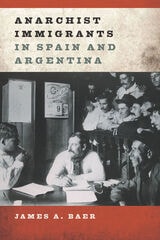
Anarchist Immigrants in Spain and Argentina
James A. Baer
University of Illinois Press, 2015
James A. Baer follows the lives, careers, and travels of Diego Abad de Santillán, Manuel Villar, and other migrating anarchists to highlight the ideological and interpersonal relationships that defined a vital era in anarchist history. Drawing on extensive interviews with Abad de Santillán, José Grunfeld, and Jacobo Maguid, along withunusual access to anarchist records and networks, Baer uncovers the ways anarchist migrants in pursuit of jobs and political goals formed a critical nucleus of militants, binding the two countries in an ideological relationship that profoundly affected the history of both. He also considers the impact of reverse migration and discusses political decisions that had a hitherto unknown influence on the course of the Spanish Civil War.
Personal in perspective and transnational in scope, Anarchist Immigrants in Spain and Argentina offers an enlightening history of a movement and an era.
Another Face of Empire
Bartolomé de Las Casas, Indigenous Rights, and Ecclesiastical ImperialismDaniel Castro
Duke University Press, 2007
Separating historical reality from myth, Daniel Castro provides a nuanced, revisionist assessment of the friar’s career, writings, and political activities. Castro argues that Las Casas was very much an imperialist. Intent on converting the Indians to Christianity, the religion of the colonizers, Las Casas simply offered the natives another face of empire: a paternalistic, ecclesiastical imperialism. Castro contends that while the friar was a skilled political manipulator, influential at what was arguably the world’s most powerful sixteenth-century imperial court, his advocacy on behalf of the natives had little impact on their lives. Analyzing Las Casas’s extensive writings, Castro points out that in his many years in the Americas, Las Casas spent very little time among the indigenous people he professed to love, and he made virtually no effort to learn their languages. He saw himself as an emissary from a superior culture with a divine mandate to impose a set of ideas and beliefs on the colonized. He differed from his compatriots primarily in his antipathy to violence as the means for achieving conversion.

Another Hill
AN AUTOBIOGRAPHICAL NOVELMilton Wolff
University of Illinois Press, 1994
Anthropology without Informants
Collected Works in Paleoanthropology by L.G. FreemanL. G. Freeman
University Press of Colorado, 2009
A socio-cultural anthropologist who became a behavioral paleoanthropologist late in his career, Freeman took a unique approach, employing statistical or mathematical techniques in his analysis of archaeological data. All the papers in this collection blend theoretical statements with the archeological facts they are intended to help the reader understand.
Although he taught at the University of Chicago for the span of his 40-year career, Freeman is not well-known among Anglophone scholars, because his primary fieldwork and publishing occurred in Cantabrian, Spain. However, he has been a major player in Paleolithic prehistory, and this volume will introduce his work to more American Archaeologists.
This collection brings the work of an expert scholar, to a broad audience, and will be of interest to archaeologists, their students, and lay readers interested in the Paleolithic era.

Apology to Apostrophe
Autobiography and the Rhetoric of Self-Representation in SpainJames D. Fernandez
Duke University Press, 1992
As Fernández demonstrates, recent developments in critical theory provide new and fruitful approaches to autobiographical works that have long been neglected, misunderstood, or, in some cases, virtually unknown. Focusing primarily but not exclusively on nineteenth-century Spain, Fernández exposes a rhetorical tension that often occurs in autobiographical discourse, between self-justification, or "apology," and the transcendence of this worldly impulse, or "apostrophe." This tension, he argues, is of particular interest in the case of Spain, but not peculiar to that nation, and his attention to the theoretical nature of autobiography leads to insightfl considerations of many canonical European autobiographies, including those of Saint Augustine, Rousseau, Saint Teresa, and Cardinal Newman.
Considering Spanish autobiography in the context of first-person narrative in Europe and in the terms of current debates on the relationship between writing and selfhood, Apology to Apostrophe marks a significant advance in our historical understanding and critical discussion of the genre. The book will be of great value not only to Hispanists but also to those interested in autobiography and cultural history.
Authoring the Past
History, Autobiography, and Politics in Medieval CataloniaJaume Aurell
University of Chicago Press, 2012
Authoring the Past surveys medieval Catalan historiography, shedding light on the emergence and evolution of historical writing and autobiography in the Middle Ages, on questions of authority and authorship, and on the links between history and politics during the period. Jaume Aurell examines texts from the late twelfth to the late fourteenth century—including the Latin Gesta comitum Barcinonensium and four texts in medieval Catalan: James I’s Llibre dels fets, the Crònica of Bernat Desclot, the Crònica of Ramon Muntaner, and the Crònica of Peter the Ceremonious—and outlines the different motivations for the writing of each.
For Aurell, these chronicles are not mere archaeological artifacts but rather documents that speak to their writers’ specific contemporary social and political purposes. He argues that these Catalonian counts and Aragonese kings were attempting to use their role as authors to legitimize their monarchical status, their growing political and economic power, and their aggressive expansionist policies in the Mediterranean. By analyzing these texts alongside one another, Aurell demonstrates the shifting contexts in which chronicles were conceived, written, and read throughout the Middle Ages.
The first study of its kind to make medieval Catalonian writings available to English-speaking audiences, Authoring the Past will be of interest to scholars of history and comparative literature, students of Hispanic and Romance medieval studies, and medievalists who study the chronicle tradition in other languages.
Autobiography and Letters of a Spanish Nun
María Vela y Cueto
Iter Press, 2016
When María Vela y Cueto (1561–1617) declared that God had personally ordered her to take only the Eucharist as food and to restore primitive dress and public penance in her aristocratic convent, the entire religious community, according to her confessor, “rose up in wrath.” Yet, when Vela died, her peers joined with the populace to declare her a saint. In her autobiography and personal letters, Vela speaks candidly of the obstacles, perils, and rewards of re-negotiating piety in a convent where devotion to God was no longer expressed through rigorous asceticism. Vela’s experience, told in her own words, reveals her shrewd understanding of the persuasive power of a woman’s body.

Autobiography and Other Writings
Ana de San Bartolomé
University of Chicago Press, 2008
Her autobiography, clearly inseparable from her religious vocation, expresses the tensions and conflicts that often accompanied the lives of women whose relationship to the divine endowed them with an authority at odds with the temporary powers of church and state. Last translated into English in 1916, Ana’s writings give modern readers fascinating insights into the nature of monastic life during the highly charged religious and political climate of late-sixteenth- and early-seventeenth-century Spain.

Autobiography in Early Modern Spain
Nicholas Spadaccini and Jenaro Talens, EditorsIntroduction by Nicholas Spadaccini and Jenaro Talens
University of Minnesota Press, 1991
Autobiography in Early Modern Spain was first published in 1991. Minnesota Archive Editions uses digital technology to make long-unavailable books once again accessible, and are published unaltered from the original University of Minnesota Press editions.
Autobiography in Early Modern Spain Nicholas Spadaccini and Jenaro Talens, Editors
Introduction. The Construction of the Self: Notes on Autobiography in Early Modern Spain
Nicholas Spadaccini and Jenaro TalensChapter 1. Narration and Argumentation in Autobiographical Discourse Antonio Gomez-Moriana
Chapter 2. A Clown at Court: Francesillo de Zuniga's Cronica burlesca George Mariscal
Chapter 3. A Methodological Prolegomenon to a Post-Modernist Reading of Santa Teresa's Autobiography
Patrick DustChapter 4. Golden Age Autobiography: The Soldiers Margarita Levisi
Chapter 5. The Picaresque as Autobiography: Story and History Edward Friedman
Chapter 6. The Historical Function of Picaresque Autobiographies: Toward a History of Social Offenders
Anthony N. ZahareasChapter 7. Fortune's Monster and the Monarchy in Las relaciones de Antonio Perez Helen H. Reed
Chapter 8. The Woman at the Border: Some Thoughts on Cervantes and Autobiography Ruth El Saffar
Chapter 9. Poetry as Autobiography: Theory and Poetic Practice in Cervantes Jenaro Talens
Appendix Curriculum vitae
Miguel de Cervantes Saavedra
Aztecs, Moors, and Christians
Festivals of Reconquest in Mexico and SpainBy Max Harris
University of Texas Press, 2000
In villages and towns across Spain and its former New World colonies, local performers stage mock battles between Spanish Christians and Moors or Aztecs that range from brief sword dances to massive street theatre lasting several days. The festival tradition officially celebrates the triumph of Spanish Catholicism over its enemies, yet this does not explain its persistence for more than five hundred years nor its widespread diffusion.
In this insightful book, Max Harris seeks to understand Mexicans' "puzzling and enduring passion" for festivals of moros y cristianos. He begins by tracing the performances' roots in medieval Spain and showing how they came to be superimposed on the mock battles that had been a part of pre-contact Aztec calendar rituals. Then using James Scott's distinction between "public" and "hidden transcripts," he reveals how, in the hands of folk and indigenous performers, these spectacles of conquest became prophecies of the eventual reconquest of Mexico by the defeated Aztec peoples. Even today, as lively descriptions of current festivals make plain, they remain a remarkably sophisticated vehicle for the communal expression of dissent.