Results by title
828 books match the query 'Study and teaching' and 72 start with a
A Casebook for Second Language Teacher Education
Reflecting on the Language ClassroomAmy B. Gooden and Maria N. Zlateva
University of Michigan Press, 2018
The cases represent a range of classroom contexts: K–12 ESL/sheltered English immersion, modern foreign language, and post-secondary EAP; private, charter, and public schools; and urban and suburban settings. The book is ideally suited to College/School of Education and MA TESOL courses but will also be useful in professional development workshops for all types of language teachers.

A Century of Church History
The Legacy of Philip SchaffEdited by Henry Warner Bowden. Foreword by Jaroslav Pelikan
Southern Illinois University Press, 1988
In commemoration of the hundredth anniversary of the American Society of Church History, this monumental compilation of historiographical scholarship calls on 10 eminent specialists to review significant achievements that over the past century have shaped current understanding of the multifaceted church.
The book inevitably honors the memory of Philip Schaff, the great 19th century church historian who laid the foundations of the discipline in America and in 1888 founded the ASCH. In examining the major subfields of church history, many of which Schaff pioneered himself in the U.S., the essayists explore such topics as early Christianity, the medieval church, the Reformation, American religious liberty, creeds and liturgies, and ecumenism.
The anthology includes David W. Lotz, "Philip Schaff and the Idea of Church History"; Robert M. Kingdon, "Reformation Studies"; John F. Wilson, "Civil Authority and Religious Freedom in America: Philip Schaff on the United States as a Christian Nation"; and Aidan Kavanagh, "Liturgical and Credal Studies"; Henry W. Bowden, "The First Century: Institutional Development and Ideas about the Profession"; Glenn F. Chesnut, "A Century of Patristic Studies, 1888–1988"; Bernard McGinn, "The Gold of Catholicity": Reflections on a Century of American Study of Medieval Church History"; Jay P. Dolan, "Immigration and American Christianity: A History of Their Histories"; Gerald H. Anderson, "To the Ends of the Earth: American Protestants in Pursuit of Mission"; and John T. Ford, "Ecumenical Studies."
The topics addressed in this book are the major concerns of church history today. The essays provide a critical survey of major developments in the different fields over the past century, discussing the scholars and publications that brought new information to light or changed the general understanding of church history by contributing fresh interpretations. In bringing readers up to date in church history by surveying benchmark contributions in each of the special areas surveyed, the contributors seek to orient historians and stimulate colleagues toward further investigation of a common past.
A common thread running through all of these essays, Bowden notes, "is the recognition that we are heirs to a major change in historical self-understanding. Over the course of a century we have moved from views where history taught lessons of exclusivist rectitude to an appreciation of shared heritage and mutual development." Two appendixes provide extensive historical data about the society itself.
A Communion of Friendship
Literacy, Spiritual Practice, and Women in RecoveryBeth Daniell
Southern Illinois University Press, 2003
Drawing on interviews and an array of scholarly work, Beth Daniell maps out the relations of literacy and spirituality in A Communion of Friendship: Literacy, Spiritual Practice, and Women in Recovery. Daniell tells the story of a group of women in “Mountain City” who use reading and writing in their search for spiritual growth. Diverse in socioeconomic status, the Mountain City women are, or have been, married to alcoholics. In Al-Anon, they use literacy to practice the Twelve Steps of Alcoholics Anonymous in order to find spiritual solutions to their problems.
In addition, Daniell demonstrates that in the lives of these women, reading, writing, and speaking are intertwined, embedded in one another in rich and complex ways. For the women, private literate practice is of the utmost importance because it aids the development and empowerment of the self. These women engage in literate practices in order to grow spiritually and emotionally, to live more self-aware lives, to attain personal power, to find or make meaning for themselves, and to create community. By looking at the changes in the women’s reading, Daniell shows that Al-Anon doctrine, particularly its oral instruction, serves as an interpretive tool. This discussion points out the subtle but profound transformations in these women’s lives in order to call for an inclusive notion of politics.
Foregrounding the women’s voices, A Communion of Friendship addresses a number of issues important in composition studies and reading instruction. This study examines the meaning of literacy within one specific community, with implications both for pedagogy and for empirical research in composition inside and outside the academy.
A Critical History of the New American Studies, 1970–1990
Günter H. Lenz
Dartmouth College Press, 2016
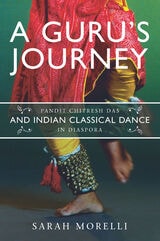
A Guru’s Journey
Pandit Chitresh Das and Indian Classical Dance in DiasporaSarah Morelli
University of Illinois Press, 2019
A Guru's Journey provides an ethnographic study of the dance form in the San Francisco Bay Area community formed by Das. Sarah Morelli, a kathak dancer and one of Das's former students, investigates issues in teaching, learning, and performance that developed around Das during his time in the United States. In modifying kathak's form and teaching for Western students, Das negotiates questions of Indianness and non-Indianness, gender, identity, and race. Morelli lays out these issues for readers with the goal of deepening their knowledge of kathak aesthetics, technique, and theory. She also shares the intricacies of footwork, facial expression in storytelling, and other aspects of kathak while tying them to the cultural issues that inform the dance.
A More Conservative Place
Intellectual Culture in the Bush EraPaul A. Bové
Dartmouth College Press, 2013
A New Orient
From German Scholarship to Middle Eastern Studies in IsraelAmit Levy
Brandeis University Press, 2024
This study examines the history of Zionist academic Orientalism—referred to throughout as Oriental studies, the term contemporary English speakers would have used—in light of its German-Jewish background, as a history of knowledge transfer stretching along an axis from Germany to Palestine. The transfer, which took place primarily during the 1920s and 1930s, involved questions about the re-establishment, far from Germany, of a field of knowledge with deep German roots. Like other German-Jewish scholars arriving in Palestine at the time, some of the Orientalist agents of transfer did so out of Zionist conviction as olim (immigrants making aliyah, or literally “ascending” to the homeland), while others joined them later as refugees from Nazi Germany; both groups were integrated into the institutional apparatus of the Hebrew University. Unlike other fields of knowledge or professions, however, the transfer of Orientalist knowledge was unique in that the axis involved an essential change in the nature of its encounter with the Orient: from a textual-scientific encounter at German universities, largely disconnected from contemporary issues to a living, substantive, and unmediated encounter with an essentially Arab region—and the escalating Jewish-Arab conflict in the background. Within the new context, German-Jewish Orientalist expertise was charged with political and cultural significance it had not previously faced, fundamentally influencing the course of the discipline’s development in Palestine and Israel.
A New and Untried Course
Women's Medical College and Medical College of Pennysylvania, 1850-1998Peitzman, Steve J
Rutgers University Press, 2000
A Pedagogy of Possibility
Bakhtinian Perspectives on Composition StudiesKay Halasek
Southern Illinois University Press, 1999
In a book that itself exemplifies the dialogic scholarship it proposes, Kay Halasek reconceives composition studies from a Bakhtinian perspective, focusing on both the discipline's theoretical assumptions and its pedagogies.
Framing her discussions at every level of the discipline—theoretical, historical, pedagogical—Halasek provides an overview of portions of the Bakhtinian canon relevant to composition studies, explores the implications of Mikhail Bakhtin's work in the teaching of writing and for current debates about the role of theory in composition studies, and provides a model of scholarship that strives to maintain dialogic balance between practice and theory, between composition studies and Bakhtinian thought.
Halasek's study ranges broadly across the field of composition, painting in wide strokes a new picture of the discipline, focusing on the finer details of the rhetorical situation, and teasing out the implications of Bakhtinian thought for classroom practice by examining the nature of critical reading and writing, the efficacy and ethics of academic discourse, student resistance, and critical and conflict pedagogy. The book ends by setting out a pedagogy of possibility, what Halasek terms elsewhere a "post-critical pedagogy" that redefines and redirects current discussions of home versus academic literacies and discourses.
A Place That Matters Yet
John Gubbins's MuseumAfrica in the Postcolonial WorldSara Byala
University of Chicago Press, 2013
A Practical Guide to Assessing English Language Learners
Christine Coombe, Keith Folse, and Nancy Hubley
University of Michigan Press, 2007
Tips to improve students’ test-taking strategies are offered, and each chapter ends with a helpful list of Ten Things to Remember, as well as informative case studies featuring two teachers and their assessment decisions. Incorporating its own principles, A Practical Guide to Assessing English Language Learners opens with a short quiz for the reader called Are You Testwise? that quickly determines how each teacher will benefit from this indispensable guide.

A Preface to Theology
W. Clark Gilpin
University of Chicago Press, 1996
Gilpin approaches this goal indirectly, by investigating the historic social roles of Protestant theologians and the educational institutions in which they have pursued their scholarship and teaching. Ranging from analyses of the New England Puritan Cotton Mather to contemporary theologians as "public intellectuals," Gilpin proposes that we find out what theology is by asking what theologians do.
By showing how particular cultural problems have always shaped the work of theologians, Gilpin's work profoundly illuminates the foundations of American academic theology, providing insights that will help guide its future.
A Primer for Teaching African History
Ten Design PrinciplesTrevor R. Getz
Duke University Press, 2018
A Primer for Teaching Digital History
Ten Design PrinciplesJennifer Guiliano
Duke University Press, 2022
A Primer for Teaching Environmental History
Ten Design PrinciplesEmily Wakild and Michelle K. Berry
Duke University Press, 2018
A Primer for Teaching Indian Ocean World History
Ten Design PrinciplesEdward A. Alpers and Thomas F. McDow
Duke University Press, 2024
A Primer for Teaching World History
Ten Design PrinciplesAntoinette Burton
Duke University Press, 2012

A Promising Problem
The New Chicana/o HistoryEdited by Carlos Kevin Blanton
University of Texas Press, 2016
Chicana/o history has reached an intriguing juncture. While academic and intellectual studies are embracing new, highly nuanced perspectives on race, class, gender, education, identity, and community, the field itself continues to be viewed as a battleground, subject to attacks from outside academia by those who claim that the discipline promotes racial hatred and anti-Americanism. Against a backdrop of deportations and voter suppression targeting Latinos, A Promising Problem presents the optimistic voices of scholars who call for sophisticated solutions while embracing transnationalism and the reality of multiple, overlapping identities.
Showcasing a variety of new directions, this anthology spans topics such as growth and reassessment in Chicana/o history manifested in a disruption of nationalism and geographic essentialism, the impact of legal history, interracial relations and the experiences of Latino subpopulations in the US South, race and the politics of religious history, transborder feminism in the early twentieth century, and aspirations for a field that increasingly demonstrates the relational dynamics of cultural production. As they reflect on the state of their field, the contributors offer significant insights into sociology, psychology, anthropology, political science, education, and literature, while tracing the history of activism throughout the last century and debating the very concepts of “Chicano” and “Chicano history.” Although the political landscape is fraught with closed-off rhetoric, A Promising Problem encourages diversity of thought and opens the possibilities of historical imagination.
A Rhetoric of Doing
Essays on Written Discourse in Honor of James L. KinneavyEdited by Stephen P. Witte, Neil Nakadate, and Roger D. Cherry
Southern Illinois University Press, 1992
Concerned with both the nature and the practice of discourse, the eighteen essays collected here treat rhetoric as a dynamic enterprise of inquiry, exploration, and application, and in doing so reflect James L. Kinneavy’s firm belief in the vital relationship between theory and practice, his commitment to a spirit of accommodation and assimilation that promotes the development of ever more powerful theories and ever more useful practices.
A thorough introduction provides the reader with clear summaries of the essays by leading-edge theorists, researchers, and teachers of writing and rhetoric. A "field context" for the ideas presented in this book is provided through the division of the various chapters into four major sections that focus on classical rhetoric and rhetorical theory in historical contexts; on dimensions of discourse theory, aspects of discourse communities, and the sorts of knowledge people access and use in producing written texts; on writing in school-related contexts; and on several dimensions of nonacademic writing. A fifth section contains a bibliographic survey and an appreciation of James Kinneavy’s work. The exceptional range of these essays makes A Rhetoric of Doing an ecumenical examination of the current state of mind in rhetoric and written communication, a survey and description of what discourse and those in the field of discourse are, in fact, doing.
A Second Chicago School?
The Development of a Postwar American SociologyEdited by Gary Alan Fine
University of Chicago Press, 1995
Like its predecessor earlier in the century, the postwar department was again the center for qualitative social research—on everything from mapping the nuances of human behavior in small groups to seeking solutions to problems of race, crime, and poverty. Howard Becker, Joseph Gusfield, Herbert Blumer, David Riesman, Erving Goffman, and others created a large, enduring body of work.
In this book, leading sociologists critically confront this legacy. The eight original chapters survey the issues that defined the department's agenda: the focus on deviance, race and ethnic relations, urban life, and collective behavior; the renewal of participant observation as a method and the refinement of symbolic interaction as a guiding theory; and the professional and institutional factors that shaped this generation, including the leadership of Louis Wirth and Everett C. Hughes; the role of women; and the competition for national influence Chicago sociology faced from survey research at Columbia and grand theory at Harvard. The contributors also discuss the internal conflicts that call into question the very idea of a unified "school."
A Shared History
Writing in the High School, College, and University, 1856-1886Amy J. Lueck
Southern Illinois University Press, 2020
Lueck explores Civil War- and Reconstruction-era challenges to the University of Louisville and nearby local high schools, their curricular transformations, and their fate in regard to national education reform efforts. These institutions reflect many of the educational trends and developments of the day: college and university building, the emergence of English education as the dominant curriculum for higher learning, student-centered pedagogies and educational theories, the development and transformation of normal schools, the introduction of manual education and its mutation into vocational education, and the extension of advanced education to women, African American, and working-class students.
Lueck demonstrates a complex genealogy of interconnections among high schools, colleges, and universities that demands we rethink our categories and standards of assessment and our field’s history. A shift in our historical narrative would promote a move away from an emphasis on the preparation, transition, and movement of student writers from high school to college or university and instead allow a greater focus on the fostering of rich rhetorical practices and pedagogies at all educational levels. As the definition of college-level writing becomes increasingly contested once again, Lueck invites a reassessment of the discipline’s understanding of contemporary programs based in high schools like dual-credit and concurrent enrollment.
A Sourcebook for Classical Rhetoric
John Tomarchio
Catholic University of America Press, 2023
A Sourcebook for English Lyric Poetry
John Tomarchio
Catholic University of America Press, 2023
A Student's Guide to Law School
What Counts, What Helps, and What MattersAndrew B. Ayers
University of Chicago Press, 2013
As a recent graduate and an appellate lawyer, Andrew Ayers knows how high the stakes are—he’s been there, and not only did he survive the experience, he graduated first in his class. In A Student’s Guide to Law School he shares invaluable insight on what it takes to make a successful law school journey. Originating in notes Ayers jotted down while commuting to his first clerkship with then-Judge Sonia Sotomayor, and refined throughout his first years as a lawyer, A Student’s Guide to Law School offers a unique balance of insider’s knowledge and professional advice.
Organized in four parts, the first part looks at tests and grades, explaining what’s expected and exploring the seven choices students must make on exam day. The second part discusses the skills needed to be a successful law student, giving the reader easy-to-use tools to analyze legal materials and construct clear arguments.
The third part contains advice on how to use studying, class work, and note-taking to find your best path. Finally, Ayers closes with a look beyond the classroom, showing students how the choices they make in law school will affect their career—and even determine the kind of lawyer they become.
The first law school guide written by a recent top-ranked graduate, A Student’s Guide to Law School is relentlessly practical and thoroughly relevant to the law school experience of today’s students. With the tools and advice Ayers shares here, students can make the most of their investment in law school, and turn their valuable learning experiences into a meaningful career.
A Teaching Subject
Composition Since 1966, New EditionJoseph Harris
Utah State University Press, 2012
In this classic text, Joseph Harris traces the evolution of college writing instruction since the Dartmouth Seminar of 1966. A Teaching Subject offers a brilliant interpretive history of the first decades during which writing studies came to be imagined as a discipline separable from its partners in English studies. Postscripts to each chapter in this new edition bring the history of composition up to the present.
Reviewing the development of the field through five key ideas, Harris unfolds a set of issues and tensions that continue to shape the teaching of writing today. Ultimately, he builds a case, now deeply influential in its own right, that composition defines itself through its interest and investment in the literacy work that students and teachers do together. Unique among English studies fields, composition is, Harris contends, a teaching subject.
AESTHETICS & EDUCATION
Michael J. Parsons and H. Gene Blocker
University of Illinois Press, 1993
What is the appropriate content of aesthetics for students of art at different age levels? How can it best be taught? How should it be combined with studio work and other art disciplines?
Michael J. Parsons and H. gene Blocker answer these and other questions in a volume designed to help art educators, potential educators, and curriculum developers integrate aesthetics into the study of art in the school curriculum. The two introduce some of the philosophical problems and questions in art, encouraging teachers and others to form a personal outlook on these issues.
AESTHETICS AND ARTS EDUCATION
Edited by Ralph A. Smith and Alan Simpson
University of Illinois Press, 1991
Abducting Writing Studies
Edited by Sidney I. Dobrin and Kyle Jensen
Southern Illinois University Press, 2017
Each of the twelve essays that comprise this collection sparks new insights about the phenomenon of writing. A must-read for rhetoric and composition scholars and students, Abducting Writing Studies is sure to foster vibrant discussions about what is possible in writing research and instruction.
Abiayalan Pluriverses
Bridging Indigenous Studies and Hispanic StudiesGloria E. Chacon
Amherst College Press, 2024

Academic Listening Strategies
A Guide to Understanding LecturesJulia Salehzadeh
University of Michigan Press, 2005
Unit 1 begins with a diagnostic exercise to help students identify areas of lecture comprehension that may be most difficult for them. In Unit 2, students are introduced to some key bottom-up features (sound or word-level patterns) in everyday speech and given helpful strategies to begin unscrambling the stream of language that they will encounter in lectures. Unit 3 gives students a detailed look at common patterns in lectures and presents additional strategies that will help them to understand definitions, opinions, and jokes.
By the end of the book, students will gain the skills necessary to:
" Prepare for lectures
" Listen more effectively during lectures
" Recognize what information may have been missed
" Compensate for missed information with methods other than reading and rereading the assigned texts.
The book is also sold packaged with the DVDs. The DVDs are NOT sold separately.
Across Property Lines
Textual Ownership in Writing GroupsCandace Spigelman
Southern Illinois University Press, 2000
Candace Spigelman investigates the dynamics of ownership in small group writing workshops, basing her findings on case studies involving two groups: a five-member creative writing group meeting monthly at a local Philadelphia coffee bar and a four-member college-level writing group meeting in their composition classroom. She explores the relationship between particular notions of intellectual property within each group as well as the effectiveness of writing groups that embrace these notions. Addressing the negotiations between the public and private domains of writing within these groups, she discovers that for both the committed writers and the novices, “values associated with textual ownership play a crucial role in writing group performance.”
Spigelman discusses textual ownership, intellectual property, and writing group processes and then reviews theories relating to authorship and knowledge making. After introducing the participants in each group, discussing their texts, and describing their workshop sessions, she examines the writers’ avowed and implied beliefs about exchanging ideas and protecting individual property rights.
Spigelman stresses the necessary tension between individual and social aspects of writing practices: She argues for the need to foster more collaborative activity among student writers by replicating the processes of writers working in nonacademic settings but also contends that all writers must be allowed to imagine their individual agency and authority as they compose.
Activist Rhetorics and American Higher Education, 1885-1937
Susan Kates
Southern Illinois University Press, 2000
In this study of the history of rhetoric education, Susan Kates focuses on the writing and speaking instruction developed at three academic institutions founded to serve three groups of students most often excluded from traditional institutions of higher education in late-nineteenth-and early-twentieth-century America: white middle-class women, African Americans, and members of the working class.
Kates provides a detailed look at the work of those students and teachers ostracized from rhetorical study at traditional colleges and universities. She explores the pedagogies of educators Mary Augusta Jordan of Smith College in Northhampton, Massachusetts; Hallie Quinn Brown of Wilberforce University in Wilberforce, Ohio; and Josephine Colby, Helen Norton, and Louise Budenz of Brookwood Labor College in Katonah, New York.
These teachers sought to enact forms of writing and speaking instruction incorporating social and political concerns in the very essence of their pedagogies. They designed rhetoric courses characterized by three important pedagogical features: a profound respect for and awareness of the relationship between language and identity and a desire to integrate this awareness into the curriculum; politicized writing and speaking assignments designed to help students interrogate their marginalized standing within the larger culture in terms of their gender, race, or social class; and an emphasis on service and social responsibility.
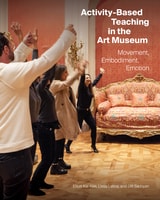
Activity-Based Teaching in the Art Museum
Movement, Embodiment, EmotionElliott Kai-Kee
J. Paul Getty Trust, The, 2020
An essential resource for museum professionals, teachers, and students, the award winning Teaching in the Art Museum (Getty Publications, 2011) set a new standard in the field of gallery education. This follow-up book blends theory and practice to help educators—from teachers and docents to curators and parents—create meaningful interpretive activities for children and adults.
Written by a team of veteran museum educators, Activity-Based Teaching in the Art Museum offers diverse perspectives on embodiment, emotions, empathy, and mindfulness to inspire imaginative, spontaneous interactions that are firmly grounded in history and theory. The authors begin by surveying the emergence of activity-based teaching in the 1960s and 1970s and move on to articulate a theory of play as the cornerstone of their innovative methodology. The volume is replete with sidebars describing activities facilitated with museum visitors of all ages.
Table of Contents
Introduction
Part I History
1 The Modern History of Presence and Meaning
A philosophical shift from a language-based understanding of the world to direct, physical interaction with it.
2 A New Age in Museum Education: The 1960s and 1970s
A brief history of some of the innovative museum education programs developed in the United States in the late 1960s and 1970s. The sudden and widespread adoption of nondiscursive gallery activities during this period, especially but not exclusively in programs designed for younger students and school groups, expressed the spirit of the times.
Part II Theory
3 Starts and Stops
Two attempts by American museum educators to articulate a theory for their new, nondiscursive programs: the first deriving from the early work of Project Zero, the Harvard Graduate School of Education program founded by the philosopher Nelson Goodman to study arts learning as a cognitive activity; the second stemming from the work of Viola Spolin, the acclaimed theater educator and coach whose teaching methods, embodied in a series of “theater games,” were detailed in her well-known book Improvisation for the Theater (1963).
4 A Theory of Play in the Museum
A theory of play that posits activities in the museum as forms of play that take place in spaces (or “playgrounds”) temporarily designated as such by educators and their adult visitors or students. Play is defined essentially as movement—both physical and imaginary (metaphorical)—toward and away from, around, and inside and outside the works of art that are foregrounded within those spaces. Gallery activities conceived in this way respond to the possibilities that the objects themselves offer for the visitor to explore and engage with them. The particular movements characterizing an activity are crucially conditioned by the object in question; they constitute a process of discovery and learning conceptually distinct from, but supportive of, traditional dialogue-based modes of museum education, which they supplement rather than supplant.
Part III Aspects of Play
5 Embodiment, Affordances
The idea of embodiment adopted here recognizes that both mind and body are joined in their interactions with things. Investigating works of art thus involves apprehending them physically as well as intellectually—in the sense of responding to the ways in which a particular work allows and even solicits the viewer’s physical grasp of it.
6 Skills
Ways in which objects present themselves to us, as viewers, and what we might do in response as they fit with the bodily skills we have developed over the course of our lives. Such skills might be as simple as getting dressed, washing, or eating; or as specialized as doing one’s hair, dancing, playing an instrument, or acting—all of which may allow us to “grasp” and even feel that we inhabit particular works of art.
7 Movement
Embodied looking is always looking from somewhere. We apprehend objects as we physically move around and in front of them; they reveal themselves differently as we approach them from different viewpoints. Viewers orient themselves spatially to both the surfaces of objects and to the things and spaces depicte4d in or suggested by representational works of art. Activity-based teaching gets visitors and students to move among the objects—away from them, close to them, and even into them.
8 The Senses
Both adult visitors and younger students come to the museum expecting to use their eyes, yet “visual” art appeals to several of the senses at once, though rarely to the same degree. Sculpture, for example, almost always appeals to touch (whether or not that is actually possible or allowed) as well as sight. A painting depicting a scene in which people appear to be talking may induce viewers to not only look but also “listen” to what the figures might be saying.
9 Drawing in the Museum
Looking at art with a pencil in hand amplifies viewers’ ability to imaginatively touch and feel their way across and around an artwork. Contour drawing by its nature requires participants to imagine that they are touching the contours of an object beneath the tips of their pencils. Other types of drawing allow viewers to feel their way around objects through observation and movement.
10 Emotion
Visitors’ emotional responses to art represent a complex process with many components, from physiological to cognitive, and a particular work of art may elicit a wide range of emotional reactions. This chapter describes specific ways in which museum educators can go well beyond merely asking visitors how a work of art makes them feel.
11 Empathy and Intersubjectivity
One aspect of viewers’ emotional responses to art that is often taken for granted, if not neglected altogether: the empathetic connections that human beings make to images of other people. This chapter advocates an approach that prompts viewers to physically engage with the representations of people they see.
12 Mindful Looking
Mindfulness involves awareness and attention, both as a conscious practice and as an attitude that gallery teachers can encourage in museum visitors. This is not solely a matter of cultivating the mind, however; it is also a matter of cultivating the body, since mindfulness is only possible when mind and body are in a state of harmonious, relaxed attentiveness. Mindfulness practice in the art museum actively directs the viewer’s focus on the object itself and insists on returning to it over and over; yet it also balances activity with conscious stillness.
Afterword
Acknowledgments
Adam Smith
The Rhetoric of ProprietyStephen J. McKenna
Southern Illinois University Press, 2006
Adapting VALUEs
Tracing the Life of a Rubric through Institutional EthnographyJennifer Grouling
University Press of Colorado, 2023
Advances in Teaching Sign Language Interpreters
Cynthia B. Roy
Gallaudet University Press, 2005
Picking up where Innovative Practices in Teaching Sign Language Interpreters left off, this new collection presents the best new interpreter teaching techniques proven in action by the eminent contributors assembled here. In the first chapter, Dennis Cokely discusses revising curricula in the new century based upon experiences at Northeastern University. Jeffrey E. Davis delineates how to teach observation techniques to interpreters, while Elizabeth Winston and Christine Monikowski suggest how discourse mapping can be considered the Global Positioning System of translation.
In other chapters, Laurie Swabey proposes ways to handle the challenge of referring expressions for interpreting students, and Melanie Metzger describes how to learn and recognize what interpreters do in interaction. Jemina Napier contributes information on training interpreting students to identify omission potential. Robert G. Lee explains how to make the interpreting process come alive in the classroom. Mieke Van Herreweghe discusses turn-taking and turn-yielding in meetings with Deaf and hearing participants in her contribution. Anna-Lena Nilsson defines “false friends,” or how contextually incorrect use of facial expressions with certain signs in Swedish Sign Language can be detrimental influences on interpreters. The final chapter by Kyra Pollitt and Claire Haddon recommends retraining interpreters in the art of telephone interpreting, completing Advances in Teaching Sign Language Interpreters as the new authoritative volume in this vital communication profession.
African American Literacies Unleashed
Vernacular English and the Composition ClassroomArnetha F. Ball and Ted Lardner
Southern Illinois University Press, 2005
This pioneering study of African American students in the composition classroom lays the groundwork for reversing the cycle of underachievement that plagues linguistically diverse students. African American Literacies Unleashed: Vernacular English and the Composition Classroom approaches the issue of African American Vernacular English (AAVE) in terms of teacher knowledge and prevailing attitudes, and it attempts to change current pedagogical approaches with a highly readable combination of traditional academic discourse and personal narratives.
Realizing that composition is a particular form of social practice that validates some students and excludes others, Arnetha Ball and Ted Lardner acknowledge that many African American students come to writing and composition classrooms with talents that are not appreciated. To empower and inform practitioners, administrators, teacher educators, and researchers, Ball and Lardner provide knowledge and strategies that will help unleash the potential of African American students and help them imagine new possibilities for their successes as writers.
African American Literacies Unleashed asserts that necessary changes in theory and practice can be addressed by refocusing attention from teachers’ knowledge deficits to the processes through which teachers engage information relevant to culturally informed pedagogy. Providing strategies for unlearning racism in the classroom and changing the status quo, this volume stresses the development and maintenance of a real sense of teaching efficacy—teachers’ beliefs in their abilities to connect with and work effectively with all students—and reflective optimism—teachers’ informed expectations that all students have the potential to succeed.
After the Program Era
The Past, Present, and Future of Creative Writing in the UniversityLoren Glass
University of Iowa Press, 2016
After the Program Era explores the consequences and implications, as well as the lacunae and liabilities, of McGurl’s foundational intervention. Glass focuses only on American fiction and the traditional MFA program, and this collection aims to expand and examine its insights in terms of other genres and sites. Postwar poetry, in particular, has until now been neglected as a product of the Program Era, even though it is, arguably, a “purer” example, since poets now depend almost entirely on the patronage of the university. Similarly, this collection looks beyond the traditional MFA writing program to explore the pre-history of writing programs in American universities, as well as alternatives to the traditionally structured program that have emerged along the way.
Taken together, the essays in After the Program Era seek to answer and explore many of these questions and continue the conversations McGurl only began.
CONTRIBUTORS
Seth Abramson, Greg Barnhisel, Eric Bennett, Matthew Blackwell, Kelly Budruweit, Mike Chasar, Simon During, Donal Harris, Michael Hill, Benjamin Kirbach, Sean McCann, Mark McGurl, Marija Rieff, Juliana Spahr, Stephen Voyce, Stephanie Young
After the Public Turn
Composition, Counterpublics, and the Citizen BricoleurFrank Farmer
Utah State University Press, 2013
Farmer examines two very different kinds of publics, cultural and disciplinary, and discusses two counterpublics within those broad categories: zine discourses and certain academic discourses. By juxtaposing these two significantly different kinds of publics, Farmer suggests that each discursive world can be seen, in its own distinct way, as a counterpublic, an oppositional social formation that has a stake in widening or altering public life as we know it.
Drawing on major figures in rhetoric and cultural theory, Farmer builds his argument about composition teaching and its relation to the public sphere, leading to a more sophisticated understanding of public life and a deeper sense of what democratic citizenship means for our time.
Against the Law
Paul F. Campos, Pierre Schlag, and Steven D. Smith
Duke University Press, 1996
Linked by a persistent inquiry into the nature and identity of “the law,” these essays are informed by the conviction that the conventional representations of law, both in law schools and the courts, cannot be taken at face value—that the law, as commonly conceived, makes no sense. The authors argue that the relentlessly normative prescriptions of American legal thinkers are frequently futile and, indeed, often pernicious. They also argue that the failure to recognize the role that authorship must play in the production of legal thought plagues both the teaching and the practice of American law. Ranging from the institutional to the psychological and metaphysical deficiencies of the American legal system, the depth of criticism offered by Against the Law is unprecedented.
In a departure from the nearly universal legitimating and reformist tendencies of American legal thought, this book will be of interest not only to the legal academics under attack in the book, but also to sociologists, historians, and social theorists. More particularly, it will engage all the American lawyers who suspect that there is something very wrong with the nature and direction of their profession, law students who anticipate becoming part of that profession, and those readers concerned with the status of the American legal system.
Aged by Culture
Margaret Morganroth Gullette
University of Chicago Press, 2003
In this illuminating book, Margaret Morganroth Gullette reveals that aging doesn't start in our chromosomes, but in midlife downsizing, the erosion of workplace seniority, threats to Social Security, or media portrayals of "aging Xers" and "greedy" Baby Boomers. To combat the forces aging us prematurely, Gullette invites us to change our attitudes, our life storytelling, and our society. Part intimate autobiography, part startling cultural expose, this book does for age what gender and race studies have done for their categories. Aged by Culture is an impassioned manifesto against the pernicious ideologies that steal hope from every stage of our lives.
Agents of Integration
Understanding Transfer as a Rhetorical ActRebecca S. Nowacek
Southern Illinois University Press, 2011
While many studies of transfer are longitudinal, with data collected over several years, Nowacek’s is synchronous, a rich cross-section of the writing and classroom discussions produced by a team-taught learning community—three professors and eighteen students enrolled in a one-semester general education interdisciplinary humanities seminar that consisted of three linked courses in history, literature, and religious studies. With extensive field notes, carefully selected student and teacher self-reports in the form of interviews and focus groups, and thorough examinations of recorded classroom discussions, student papers with professor comments, and student notebooks, Nowacek presents a nuanced and engaging analysis that outlines how transfer is not simply a cognitive act but a rhetorical one that involves both seeing connections and presenting them to the instructors who are institutionally positioned to recognize and value them.
Considering the challenges facing instructors teaching for transfer and the transfer of writing-related knowledge, Nowacek develops and outlines a new theoretical framework and methodological model of transfer and illustrates the practical implications through case studies and other classroom examples. She proposes transfer is best understood as an act of recontextualization, and she builds on this premise throughout the book by drawing from previous work in cognitive psychology, activity theory, and rhetorical genre theory, as well as her own analyses of student work.
This focused examination complements existing longitudinal studies and will help readers better understand not only the opportunities and challenges confronting students as they work to become agents of integration but also the challenges facing instructors as they seek to support that student work.
Alien Encounters
Popular Culture in Asian AmericaMimi Thi Nguyen and Thuy Linh Nguyen Tu, eds.
Duke University Press, 2007
This interdisciplinary collection brings together contributors working in Asian American studies, English, anthropology, sociology, and art history. They consider issues of cultural authenticity raised by Asian American participation in hip hop and jazz, the emergence of an orientalist “Indo-chic” in U.S. youth culture, and the circulation of Vietnamese music variety shows. They examine the relationship between Chinese restaurants and American culture, issues of sexuality and race brought to the fore in the video performance art of a Bruce Lee–channeling drag king, and immigrant television viewers’ dismayed reactions to a Chinese American chef who is “not Chinese enough.” The essays in Alien Encounters demonstrate the importance of scholarly engagement with popular culture. Taking popular culture seriously reveals how people imagine and express their affective relationships to history, identity, and belonging.
Contributors. Wendy Hui Kyong Chun, Kevin Fellezs, Vernadette Vicuña Gonzalez, Joan Kee, Nhi T. Lieu, Sunaina Maira, Martin F. Manalansan IV, Mimi Thi Nguyen, Robyn Magalit Rodriguez, Sukhdev Sandhu, Christopher A. Shinn, Indigo Som, Thuy Linh Nguyen Tu, Oliver Wang
America on the World Stage
A Global Approach to U.S. HistoryOrganization of American Historians. Edited by Gary Reichard and Ted Dickson
University of Illinois Press, 2007
Recognizing the urgent need for students to understand the emergence of the United States' power and prestige in relation to world events, Gary W. Reichard and Ted Dickson reframe the teaching of American history in a global context. Each essay covers a specific chronological period and approaches fundamental topics and events in United States history from an international perspective, emphasizing how the development of the United States has always depended on its transactions with other nations for commodities, cultural values, and populations. For each historical period, the authors also provide practical guidance on bringing this international approach to the classroom, with suggested lesson plans and activities. Ranging from the colonial period to the civil rights era and everywhere in between, this collection will help prepare Americans for success in an era of global competition and collaboration.
Contributors are David Armitage, Stephen Aron, Edward L. Ayers, Thomas Bender, Stuart M. Blumin, J. D. Bowers, Orville Vernon Burton, Lawrence Charap, Jonathan Chu, Kathleen Dalton, Betty A. Dessants, Ted Dickson, Kevin Gaines, Fred Jordan, Melvyn P. Leffler, Louisa Bond Moffitt, Philip D. Morgan, Mark A. Noll, Gary W. Reichard, Daniel T. Rodgers, Leila J. Rupp, Brenda Santos, Gloria Sesso, Carole Shammas, Suzanne M. Sinke, Omar Valerio-Jimenez, Penny M. Von Eschen, Patrick Wolfe, and Pingchao Zhu.
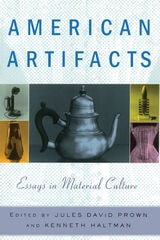
American Artifacts
Essays in Material CultureJules David Prown
Michigan State University Press, 2000
When defining culture, one must indeed take into account even the minutest of details. What of a lighter, for example, or a telephone? The essays in this new collection examine just that. The contributors pose not only a historical, pragmatic use for the items, but also delve into more imaginative aspects of what defines us as Americans. Both the lighter and the telephone are investigated, as well as how the lava lamp represents sixties counterculture and containment. The late nineteenth-century corset is discussed as an embodiment of womanhood, and an Amish quilt is used as an illustration of cultural continuity. These are just a few of the artifacts discussed. Scholars will be intrigued by the historical interpretations that contributors proposed concerning a teapot, card table, and locket; students will not only find merit in the expositions, but also by learning from the models how such interpretation can be carried out. This collection helps us understand that very thing that makes us who we are. Viewing these objects from both our past and our present, we can begin to define what it is to be American.
American Public Administration
Past, Present, FutureFrederick C. Mosher
University of Alabama Press, 1975
The essays raise such issues as the education of civil servants, the changes necessitated by crises, the growth of social sciences in governmental concerns, and primarily, the role of public administrators in America. Each author is a distinguished expert in his own right, and each essay can stand alone as a remarkable insight into the changing world of public administration within American society. Frederick Mosher’s expertise and supervision shapes this work into a remarkable and holistic perspective on public administration over time.
American Studies as Transnational Practice
Turning toward the TranspacificEdited by Yuan Shu and Donald E. Pease
Dartmouth College Press, 2016
American Studies in a Moment of Danger
George Lipsitz
University of Minnesota Press, 2001
A forthright look at the future of the discipline in the wake of immense social changes.
What becomes of "national knowledge" in our age of globalization? If dramatic changes in technology, commerce, and social relations are undermining familiar connections between culture and place, what happens to legacies of learning that put the nation at the center of the study of history, culture, language, politics, and geography? In short, what remains of American Studies? At a critical moment, this book offers a richly textured historical perspective on where our notions of national knowledge-and our sense of American Studies-have come from and where they may lead in a future of new ideas about culture and community.
The America that seems to be disappearing before our very eyes is, George Lipsitz argues, actually the cumulative creation of yesterday’s struggles over identity, culture, and power. With examples from statistics and history, poster designs and music lyrics, Lipsitz shows how American Studies has been shaped by the social movements of the 1930s, 1960s, and 1980s. His analysis reveals the sedimented history of social movement contestation contained in contemporary popular music, visual art, and cinema.Finally, Lipsitz identifies the ways in which the globalization of commerce and culture are producing radically new understandings of politics, performance, consumption, knowledge, and nostalgia; the changing realities present not so much a danger as a clear challenge to a still-evolving American Studies-a challenge that this book helps us to confront wisely, flexibly, and effectively. Critical American Studies SeriesAnnouncing a new seriesCritical American Studies George Lipsitz, series editorThis series examines recent trends in American Studies that address fundamental questions about history, culture, social structure, race, gender, sexuality, and citizenship. It examines the forces-including mass migration, global economy, the seeming weaknesses of the nation-state, and ongoing ethnic antagonisms-that compel the field to reexamine the role of culture in producing individual and collective identities.
American Tropics
Articulating Filipino AmericaAllan Punzalan Isaac
University of Minnesota Press, 2006

An Alternative Path
The Making and Remaking of Hahnemann Medical College and HospitalNaomi Rogers
Rutgers University Press, 1998