Results by title
234 books match the query 'Technological innovations' and 23 start with a

A Century of Brazilian Documentary Film
From Nationalism to ProtestDarlene J. Sadlier
University of Texas Press, 2022
Since the late nineteenth century, Brazilians have turned to documentaries to explain their country to themselves and to the world. In a magisterial history covering one hundred years of cinema, Darlene J. Sadlier identifies Brazilians’ unique contributions to a diverse genre while exploring how that genre has, in turn, contributed to the making and remaking of Brazil.
A Century of Brazilian Documentary Film is a comprehensive tour of feature and short films that have charted the social and political story of modern Brazil. The Amazon appears repeatedly and vividly. Sometimes—as in a prize-winning 1922 feature—the rainforest is a galvanizing site of national pride; at other times, the Amazon has been a focus for land-reform and Indigenous-rights activists. Other key documentary themes include Brazil’s swings from democracy to dictatorship, tensions between cosmopolitanism and rurality, and shifting attitudes toward race and gender. Sadlier also provides critical perspectives on aesthetics and media technology, exploring how documentaries inspired dramatic depictions of poverty and migration in the country’s Northeast and examining Brazilians’ participation in streaming platforms that have suddenly democratized filmmaking.
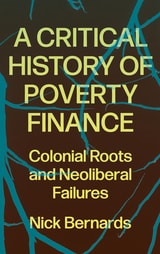
A Critical History of Poverty Finance
Colonial Roots and Neoliberal FailuresNick
Pluto Press, 2022
A comprehensive historical tracing of how the contemporary finance-poverty-development nexus emerged.
'The definitive account of the history of poverty finance' - Susanne Soederberg
Finance, mobile, and digital technologies - or 'fintech' - are being heralded in the world of development by the likes of the IMF and World Bank as a silver bullet in the fight against poverty. But should we believe the hype?
A Critical History of Poverty Finance demonstrates how newfangled 'digital financial inclusion' efforts suffer from the same essential flaws as earlier iterations of neoliberal 'financial inclusion.' Relying on artificially created markets that simply aren't there among the world's most disadvantaged economic actors, they also reinforce existing patterns of inequality and uneven development, many of which date back to the colonial era.
Bernards offers an astute analysis of the current fintech fad, contextualized through a detailed colonial history of development finance, that ultimately reveals the neoliberal vision of poverty alleviation for the pipe dream it is.
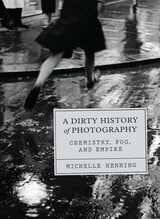
A Dirty History of Photography
Chemistry, Fog, and EmpireMichelle Henning
University of Chicago Press, 2025
Dependent on the extractive practices of fossil-fueled industrial capitalism, chemical photography’s emulsions and films were highly sensitive to polluted atmospheres, and photographic companies had to work hard to control this sensitivity. Drawing on histories of empire, coal, and chemistry and from the archives of British photographic manufacturer Ilford Limited, Michelle Henning exposes the ways photography shaped how we see and understand the atmosphere while leaving its toxic residues in the air, soil, and water.
Structured as thirty-six short chapters and with over seventy illustrations, this innovative book begins in interwar London, follows the supply of Ilford products to photographers on the West African coast, and considers photography as a military technology linked to the development of chemical warfare. Combining close readings of photographs with discussions of low-light, tropical, and aerial photography, Henning examines the extraction and development of photographic materials, their role in the current environmental crisis, and how they have shaped experiences of time and the environment.

A Few Good Books
Stephanie L. Maatta
American Library Association, 2010
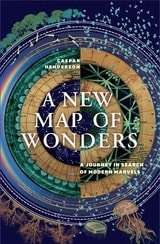
A New Map of Wonders
A Journey in Search of Modern MarvelsCaspar Henderson
University of Chicago Press, 2017
Henderson’s brilliant exploration borrows from the form of one of the oldest and most widely known sources of wonder: maps. Large, detailed mappae mundi invited people in medieval Europe to vividly imagine places and possibilities they had never seen before: manticores with the head of a man, the body of a lion, and the stinging tail of a scorpion; tribes of one-eyed men who fought griffins for diamonds; and fearsome Scythian warriors who drank the blood of their enemies from their skulls. As outlandish as these maps and the stories that went with them sound to us today, Henderson argues that our views of the world today are sometimes no less incomplete or misleading. Scientists are only beginning to map the human brain, for example, revealing it as vastly more complex than any computer we can conceive. Our current understanding of physical reality is woefully incomplete. A New Map of Wonders explores these and other realms of the wonderful, in different times and cultures and in the present day, taking readers from Aboriginal Australian landscapes to sacred sites in Great Britain, all the while keeping sight questions such as the cognitive basis of wonder and the relationship between wonder and science.
Beautifully illustrated and written with wit and moral complexity, this sequel to The Book of Barely Imagined Beings is a fascinating account of the power of wonder and an unforgettable meditation on its importance to our future.

A Small World
Smart Houses and the Dream of the Perfect DayDavin Heckman
Duke University Press, 2007
Heckman’s narrative stretches from the early-twentieth-century introduction into the home of electric appliances and industrial time-management techniques, through the postwar advent of television and the space-age “house of tomorrow,” to the contemporary automated, networked “smart home.” He considers all these developments in relation to lifestyle and consumer narratives. Building on the tension between agency and control within the walls of homes designed to anticipate and fulfill desires, Heckman engages debates about lifestyle, posthumanism, and rights under the destabilizing influences of consumer technologies, and he considers the utopian and dystopian potential of new media forms. Heckman argues that the achievement of an environment completely attuned to its inhabitants’ specific wants and needs—what he calls the “Perfect Day”—institutionalizes everyday life as the ultimate consumer practice.
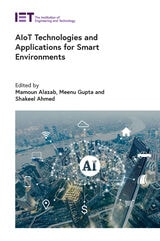
AIoT Technologies and Applications for Smart Environments
Mamoun Alazab
The Institution of Engineering and Technology, 2022
Accelerating Energy Innovation
Insights from Multiple SectorsEdited by Rebecca M. Henderson and Richard G. Newell
University of Chicago Press, 2011
Accelerating energy innovation could be an important part of an effective response to the threat of climate change. Written by a stellar group of experts in the field, this book complements existing research on the subject with an exploration of the role that public and private policy have played in enabling—and sustaining—swift innovation in a variety of industries, from agriculture and the life sciences to information technology. Chapters highlight the factors that have determined the impact of past policies, and suggest that effectively managed federal funding, strategies to increase customer demand, and the enabling of aggressive competition from new firms are important ingredients for policies that affect innovative activity.
Acquisitions
Core Concepts and PracticesJesse Holden
American Library Association, 2016

Adapting Performance Between Stage and Screen
Victoria Lowe
Intellect Books, 2020
Provides a new foundation for discussions about theater, film, and translations between the two mediums.
Adapting Performance Between Stage and Screen provides an introduction to adaptations between theater and film, establishing a framework for considering these as distinct from literary adaptation. The book places emphasis on performance and event, opening new avenues of exploration to include non-literary issues such as the treatment of space and place, mis en scène, acting styles, and star personas. The recent growth of digital theater is examined to foreground the “events” of theater and cinema—largely ignored in adaptation studies—with phenomena such as National Theatre Live analyzed for the different ways that “liveness” is adapted.
Drawing from case studies that explore distinct periods in British film and theater history, the volume looks at issues surrounding theatrical naturalism and cinematic realism and illustrates the principle that adaptations can't be divorced from the historical and cultural moment in which they are produced. Adapting Performance Between Stage and Screen explores how cultural values can be articulated in the act of translating between media, providing a new framework for the discussion of theater and film as dramatic works.
All Edge
Inside the New Workplace NetworksClay Spinuzzi
University of Chicago Press, 2015
Spinuzzi offers for the first time a comprehensive framework for understanding how these new groups function and thrive. His rigorous analysis tackles both the pros and cons of this evolving workflow and is based in case studies of real all-edge adhocracies at work. His provocative results will challenge our long-held assumptions about how we should be doing work.
Alternative Realities
Carl Plantinga
Rutgers University Press, 2021
Alternative Realities explores how these distinctions between cinematic fantasy and filmic realism are more porous than we might think. Through a close analysis of CGI-heavy blockbusters like Wonder Woman and Guardians of the Galaxy, it considers how even popular fantasies are grounded in emotional and social realities. Conversely, it examines how mockumentaries like This is Spinal Tap satirically call attention to the highly stylized techniques documentarians use to depict reality.
Alternative Realities takes us on a journey through many different genres of film, from the dream-like and subjective realities depicted in movies like Eternal Sunshine of the Spotless Mind and Memento, to the astonishing twists of movies like Shutter Island and The Matrix, which leave viewers in a state of epistemic uncertainty. Ultimately, it shows us how the power of cinema comes from the unique way it fuses together the objective and the subjective, the fantastical and the everyday.
Analog Hunger in a Digital World
Confronting Today's Identity CrisisPaul Vitz
St. Augustine's Press, 2024
Vitz argues that the "special digital way in which technology is destroying our well-being will require some new vocabulary… [while] making the case that analog experience is the only reliable source of meaning in our lives and that its loss has led to the growth of meaninglessness and especially to the loss of [personal identity." This book is written for those who are enthralled by the digital realm and tech advancements, but also for those who are affected by contemporary crises in culture and identity. Vitz's approach is far-reaching and concise. "After describing the nature of analog and digital codes in chapters 1 and 2, I then note the great importance of the right and left brain hemispheres to analog and digital differences in chapters 3 and 4. Chapter 5 introduces the cultural crisis of today as analog hunger in a digital world. Chapters 6 and 7 identify the problem as extreme uncontrolled digitalism, with a focus on transhumanism. Chapter 8 presents ways to recover analog life and chapter 9 makes clear we need both codes. Chapter 10 provides a solution involving the integration of the two codes in the service of the analog from a distinctly religious perspective."
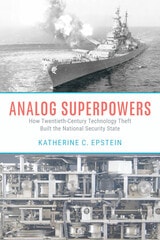
Analog Superpowers
How Twentieth-Century Technology Theft Built the National Security StateKatherine C. Epstein
University of Chicago Press, 2024
At the beginning of the twentieth century, two British inventors, Arthur Pollen and Harold Isherwood, became fascinated by a major military question: how to aim the big guns of battleships. These warships—of enormous geopolitical import before the advent of intercontinental missiles or drones—had to shoot in poor light and choppy seas at distant moving targets, conditions that impeded accurate gunfire. Seeing the need to account for a plethora of variables, Pollen and Isherwood built an integrated system for gathering data, calculating predictions, and transmitting the results to the gunners. At the heart of their invention was the most advanced analog computer of the day, a technological breakthrough that anticipated the famous Norden bombsight of World War II, the inertial guidance systems of nuclear missiles, and the networked “smart” systems that dominate combat today. Recognizing the value of Pollen and Isherwood’s invention, the British Royal Navy and the United States Navy pirated it, one after the other. When the inventors sued, both the British and US governments invoked secrecy, citing national security concerns.
Drawing on a wealth of archival evidence, Analog Superpowers analyzes these and related legal battles over naval technology, exploring how national defense tested the two countries’ commitment to individual rights and the free market. Katherine C. Epstein deftly sets out Pollen’s and Isherwood’s pioneering achievements, the patent questions raised, the geopolitical rivalry between Britain and the United States, and the legal precedents each country developed to control military tools built by private contractors.
Epstein’s account reveals that long before the US national security state sought to restrict information about atomic energy, it was already embroiled in another contest between innovation and secrecy. The America portrayed in this sweeping and accessible history isn’t yet a global hegemon but a rising superpower ready to acquire foreign technology by fair means or foul—much as it accuses China of doing today.

Applying Library Values To Emerging Technology
Pub #72Peter D. Fernandez
Assoc of College & Research Libraries, 2018
Architecture, Means and Ends
Vittorio Gregotti
University of Chicago Press, 2010
Vittorio Gregotti—the architect of Barcelona’s Olympic Stadium, Milan’s Arcimboldi Opera Theater, and Lisbon’s Centro Cultural de Belém, among many other noted constructions—is not only a designer of international repute but an acclaimed theorist and critic. Architecture, Means and Ends is his practical and imaginative reflection on the role of the technical aspects of architectural design, both as part of the larger process of innovation and in relation to the mythic opposition between vision and construction.
Interweaving the seemingly irreconcilable concerns of aesthetics, meaning, and construction, Architecture, Means and Ends reflects Gregotti’s overarching claim that buildings always have a symbolic, cultural content. In this book, he argues that by making symbolic expression a primary objective in the design of a project, the designer will produce a practical aesthetic as well as an ethical solution. Architecture, Means and Ends embraces that philosophy and will appeal to those, like Gregotti, working at the intersections of the history of design, art criticism, and architectural theory.
Arms and Innovation
Entrepreneurship and Alliances in the Twenty-First Century Defense IndustryJames Hasik
University of Chicago Press, 2008
For all their advantages, small firms also face significant challenges in access to capital and customers. To overcome such problems, they can form alliances either with each other or with larger companies. Hasik traces the trade-offs of such alliances and provides crucial insight into their promises and pitfalls.
This ground-breaking study is a significant contribution to understanding both entrepreneurship and alliances, two crucial factors in business generally. It will be of interest to readers in the defense sector as well as the wider business community.
Artificial Intelligence for Biometrics and Cybersecurity
Technology and applicationsAhmed A. Abd El-Latif
The Institution of Engineering and Technology, 2023
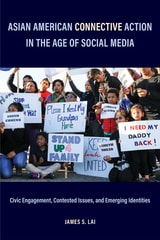
Asian American Connective Action in the Age of Social Media
Civic Engagement, Contested Issues, and Emerging IdentitiesJames S. Lai
Temple University Press, 2022
Social media provides ethno-racial immigrant groups—especially those who cannot vote due to factors such as lack of citizenship and limited English proficiency—the ability to mobilize and connect around collective issues. Online spaces and discussion forums have encouraged many Asian Americans to participate in public policy debates and take action on social justice issues. This form of digital group activism serves as an adaptive political empowerment strategy for the fastest-growing and largest foreign-born population in America. Asian American Connective Action in the Age of Social Media illuminates how associating online can facilitate and amplify traditional forms of political action.
James Lai provides diverse case studies on contentious topics ranging from affirmative action debates to textbook controversies to emphasize the complexities, limitations, and challenges of connective action that is relevant to all racial groups. Using a detailed multi-methods approach that includes national survey data and Twitter hashtag analysis, he shows how traditional immigrants, older participants, and younger generations create online consensus and mobilize offline to foment political change. In doing so, Lai provides a nuanced glimpse into the multiple ways connective action takes shape within the Asian American community.
Assembly Codes
The Logistics of MediaMatthew Hockenberry, Nicole Starosielski, and Susan Zieger, editors
Duke University Press, 2021
Contributors
Ebony Coletu, Kay Dickinson, Stefano Harney, Matthew Hockenberry, Tung-Hui Hu, Shannon Mattern, Fred Moten, Michael Palm, Ned Rossiter, Nicole Starosielski, Liam Cole Young, Susan Zieger
Assessing Liaison Librarians
Documenting Impact ForDaniel Mack
American Library Association, 2014
Assessing Liaison Librarians
Documenting Impact for Positive ChangeDaniel C. Mack
Assoc of College & Research Libraries, 2014
Atmospheric Things
On the Allure of Elemental EnvelopmentDerek P. McCormack
Duke University Press, 2018