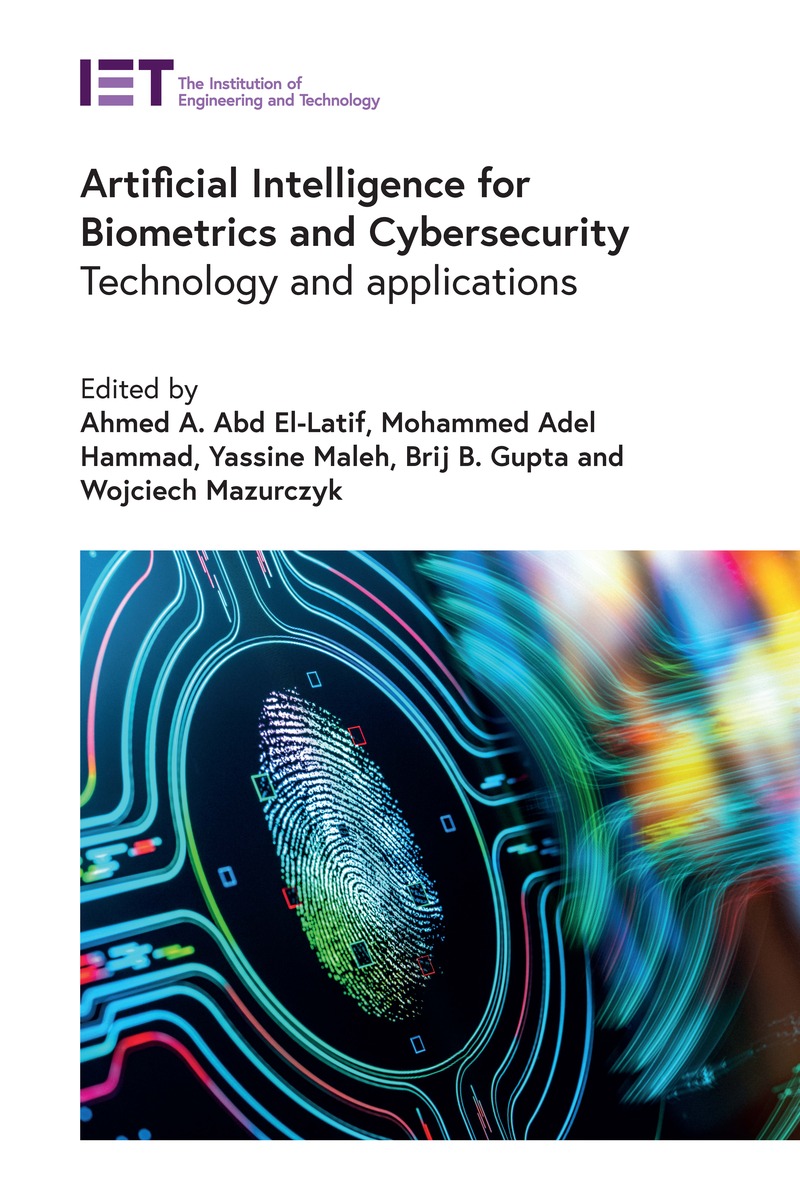
Artificial Intelligence for Biometrics and Cybersecurity: Technology and applications
The Institution of Engineering and Technology, 2023
eISBN: 978-1-83953-548-2 | Cloth: 978-1-83953-547-5
See other books on: Artificial Intelligence | Cybersecurity | Maleh, Yassine | Network Security | Security
See other titles from The Institution of Engineering and Technology
eISBN: 978-1-83953-548-2 | Cloth: 978-1-83953-547-5
ABOUT THIS BOOK | TOC
ABOUT THIS BOOK
The integration of new technologies is resulting in an increased demand for security and authentication in all types of data communications. Cybersecurity is the protection of networks and systems from theft. Biometric technologies use unique traits of particular parts of the body such facial recognition, iris, fingerprints and voice to identify individuals' physical and behavioural characteristics. Although there are many challenges associated with extracting, storing and processing such data, biometric and cybersecurity technologies along with artificial intelligence (AI) are offering new approaches to verification procedures and mitigating security risks.
See other books on: Artificial Intelligence | Cybersecurity | Maleh, Yassine | Network Security | Security
See other titles from The Institution of Engineering and Technology