Results by title
54 books match the query 'Things' and 2 start with a
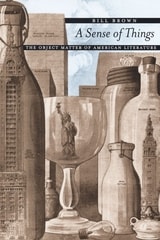
A Sense of Things
The Object Matter of American LiteratureBill Brown
University of Chicago Press, 2003
Brown's captivating new study explores the roots of modern America's fascination with things and the problem that objects posed for American literature at the turn of the century. This was an era when the invention, production, distribution, and consumption of things suddenly came to define a national culture. Brown shows how crucial novels of the time made things not a solution to problems, but problems in their own right. Writers such as Mark Twain, Frank Norris, Sarah Orne Jewett, and Henry James ask why and how we use objects to make meaning, to make or remake ourselves, to organize our anxieties and affections, to sublimate our fears, and to shape our wildest dreams. Offering a remarkably new way to think about materialism, A Sense of Things will be essential reading for anyone interested in American literature and culture.
Artificial Intelligence and the Internet of Things
UK Policy Opportunities and ChallengesMercedes Bunz and Laima Janciute
University of Westminster Press, 2018
Through algorithms and artificial intelligence (AI), objects and digital services now demonstrate new skills they did not have before, right up to replacing human activity through pre-programming or by making their own decisions. As part of the internet of things, AI applications are already widely used today, for example in language processing, image recognition and the tracking and processing of data.
This policy brief illustrates the potential negative and positive impacts of AI and reviews related policy strategies adopted by the UK, US, EU, as well as Canada and China. Based on an ethical approach that considers the role of AI from a democratic perspective and considering the public interest, the authors make policy recommendations that help to strengthen the positive impact of AI and to mitigate its negative consequences.