94 books match the query 'Transnationalism' and 9 start with a
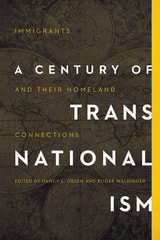
cover of A Century of Transnationalism: Immigrants and Their Homeland Connections

A Century of Transnationalism

Immigrants and Their Homeland Connections

Edited by Nancy L. Green and Roger Waldinger

University of Illinois Press, 2016
This collection of articles by sociologically minded historians and historically minded sociologists highlights both the long-term persistence and the continuing instability of home country connections. Encompassing societies of origin and destination from around the world, A Century of Transnationalism shows that while population movements across states recurrently produce homeland ties, those connections have varied across contexts and from one historical period to another, changing in unpredictable ways. Any number of factors shape the linkages between home and destination, including conditions in the society of immigration, policies of the state of emigration, and geopolitics worldwide. Contributors: Houda Asal, Marie-Claude Blanc-Chaléard, Caroline Douki, David FitzGerald, Nancy L. Green, Madeline Y. Hsu, Thomas Lacroix, Tony Michels, Victor Pereira, Mônica Raisa Schpun, and Roger Waldinger
[more]
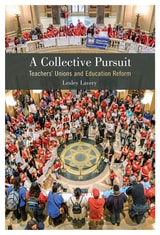
cover of A Collective Pursuit: Teachers' Unions and Education Reform

A Collective Pursuit

Teachers' Unions and Education Reform

Lesley Lavery

Temple University Press, 2020

Teachers’ unions are the organizations responsible for safeguarding the conditions of teachers’ employment. Union supporters claim strong synergies between teachers’ interests and students’ interests, but critics of unions insist that the stance of teachers in collective bargaining may disadvantage students as unions reduce the power of administrators to manage, remove, reward or retain excellent teachers.

In A Collective Pursuit, Lesley Laveryunpacks how teachers’ unions today are fighting for contracts that allow them to earn a decent living and build “schools all students deserve.” She explains the form and function of the nation’s largest teachers’ unions. Lavery then explores unionization campaigns in the Twin Cities charter schools. A Collective Pursuit also examines teacher strikes and contract negotiations, school finance and finance reform, and district and union attempts to address racial achievement gaps, to provide a context for understanding the economic, political, and demographic forces that inspire teachers to improve conditions for students.

A Collective Pursuit emphasizes that while teachers’ unions serve a traditional, economic role, they also provide a vast array of valuable services to students, educators, parents, and community members.
[more]
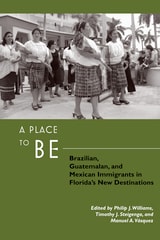
cover of A Place to Be: Brazilian, Guatemalan, and Mexican Immigrants in Florida's New Destinations

A Place to Be

Brazilian, Guatemalan, and Mexican Immigrants in Florida's New Destinations

Edited by Philip J. Williams, Timothy J. Steigenga, and Manuel A. Vásquez

Rutgers University Press, 2009

A Place to Be is the first book to explore migration dynamics and community settlement among Brazilian, Guatemalan, and Mexican immigrants in America's new South. The book adopts a fresh perspective to explore patterns of settlement in Florida, including the outlying areas of Miami and beyond. The stellar contributors from Latin America and the United States address the challenges faced by Latino immigrants, their cultural and religious practices, as well as the strategies used, as they move into areas experiencing recent large-scale immigration.

Contributors to this volume include Patricia Fortuny Loret de Mola, Carol Girón Solórzano, Silvia Irene Palma, Lúcia Ribeiro, Mirian Solfs Lizama, José Claúdio Souza Alves, Timothy J. Steigenga, Manuel A. Vásquez, and Philip J. Williams.
[more]
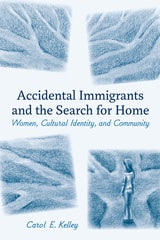
cover of Accidental Immigrants and the Search for Home: Women, Cultural Identity, and Community

Accidental Immigrants and the Search for Home

Women, Cultural Identity, and Community

Carol E. Kelley

Temple University Press, 2013

The effect of immigration on individual lives is not short lived. Those who stay in an adopted country permanently go through a continual process of adjustment and learning both about their new country-and about themselves. The four women profiled in Carol Kelley's poignant Accidental Immigrants and the Search for Home challenge immigrant stereotypes as their lives are transformed by moving to new countries for reasons of marriage, education, or career--not economics or politics.

The intimate stories of these "accidental" immigrants broaden conventional notions of home. From a Maori woman who moves to Norway to the daughter of an Iranian diplomat now living in France, Kelley weaves together these stories of the personal and emotional effects of immigration with interdisciplinary discussions drawn from anthropology and psychology. Ultimately, she reveals how the lifelong process of immigration affects each woman's sense of identity and belonging and contributes to better understanding today's globalized society.
 
[more]
cover of Afterlives of Modernism: Liberalism, Transnationalism, and Political Critique

Afterlives of Modernism

Liberalism, Transnationalism, and Political Critique

John Carlos Rowe

Dartmouth College Press, 2015
In times of liberal despair it helps to have someone like John Carlos Rowe put things into perspective, in this case, with a collection of essays that asks the question, “Must we throw out liberalism’s successes with the neoliberal bathwater?” Rowe first lays out a genealogy of early twentieth-century modernists, such as Gertrude Stein, John Dos Passos, William Faulkner, and Ralph Ellison, with an eye toward stressing their transnationally engaged liberalism and their efforts to introduce into the literary avant-garde the concerns of politically marginalized groups, whether defined by race, class, or gender. The second part of the volume includes essays on the works of Harper Lee, Thomas Berger, Louise Erdrich, and Philip Roth, emphasizing the continuity of efforts to represent domestic political and social concerns. While critical of the increasingly conservative tone of the neoliberalism of the past quarter-century, Rowe rescues the value of liberalism’s sympathetic and socially engaged intent, even as he criticizes modern liberalism’s inability to work transnationally.
[more]
cover of American Studies as Transnational Practice: Turning toward the Transpacific

American Studies as Transnational Practice

Turning toward the Transpacific

Edited by Yuan Shu and Donald E. Pease

Dartmouth College Press, 2016
This wide-ranging collection brings together an eclectic group of scholars to reflect upon the transnational configurations of the field of American studies and how these have affected its localizations, epistemological perspectives, ecological imaginaries, and politics of translation. The volume elaborates on the causes of the transnational paradigm shift in American studies and describes the material changes that this new paradigm has effected during the past two decades. The contributors hail from a variety of postcolonial, transoceanic, hemispheric, and post-national positions and sensibilities, enabling them to theorize a “crossroads of cultures” explanation of transnational American studies that moves beyond the multicultural studies model. Offering a rich and rewarding mix of essays and case studies, this collection will satisfy a broad range of students and scholars.
[more]
cover of An Aesthetics of Narrative Performance: Transnational Theater, Literature, and Film in Contemporary Germany

An Aesthetics of Narrative Performance

Transnational Theater, Literature, and Film in Contemporary Germany

Claudia Breger

The Ohio State University Press, 2012

The contemporary moment has been described in terms of both a “narrative” and a “performative turn,” but the overlap between these two has largely escaped attention. This curious gap is explained by the ways in which scholars across the humanities have defined narrative and performance as opposite forces, emphasizing their respective affiliations with time vs. space and identity constitution vs. its undoing. Although the opposition has been acknowledged as false by many in this simple form, its shifting instantiations continue to shape the ways we make sense of the arts as well as society. Instead, An Aesthetics of Narrative Performance: Transnational Theater, Literature, and Film in Contemporary Germany by Claudia Breger maps the complexities of imaginative worldmaking in contemporary culture through an aesthetics of narrative performance: an ensemble of techniques exploring the interplay of rupture and recontextualization in the process of configuration. Interlacing diverging definitions of both narrative and performance, the study outlines two clusters of such techniques—scenic narration and narrative “presencing” in performance vs. forms of narrative theatricalization—and analyzes the cultural work they do in individual works in three different media: literature, film, and theater. These readings focus on the rich configurations of contemporary worldmaking “at location Germany.” In the discussed representations of German unification, contemporary cultures of migration, and the transnational War on Terror, the aesthetics of narrative performance finds its identity as a multifaceted imaginative response to the post/modern crisis of narrative authority.
[more]
cover of Answer the Call: Virtual Migration in Indian Call Centers

Answer the Call

Virtual Migration in Indian Call Centers

Aimee Carrillo Rowe

University of Minnesota Press, 2013

What happens over time to Indians who spend their working hours answering phone calls from Americans—and acting like Americans themselves? To find out, the authors of Answer the Call conducted long-term interviews with forty-five agents, trainers, managers, and CEOs at call centers in Bangalore and Mumbai from 2003 to 2012. For nine or ten hours every day, workers in call centers are not quite in India or America but rather in a state of “virtual migration.” Encouraged to steep themselves in American culture from afar, over time the agents come to internalize and indeed perform Americanness for Americans—and for each other.

Call center agents “migrate” through time and through the virtual spaces generated by voice and information sharing. Drawing from their rich interviews, the authors show that the virtual migration agents undergo has no geographically distant point of arrival, yet their perception of moving is not merely abstract. Over the duration of the job, agents’ sense of place and time changes: agents migrate but still remain, leaving them somewhere in between—between India and America, experience and imagination, class mobility and consumption, tradition and modernity, here and there, then and now, past and future.

However tangible and elastic their virtual mobility might seem in these relatively lucrative jobs, it is also suspended within the confines of the very boundaries they migrate across. Having engaged with these vivid and often poignant interviews, readers will never again be indifferent to an Indian agent’s greeting at the other end of a toll-free call: “Hello, my name is Roxanne. How may I help you?”
[more]
cover of Autochthonomies: Transnationalism, Testimony, and Transmission in the African Diaspora

Autochthonomies

Transnationalism, Testimony, and Transmission in the African Diaspora

Myriam J. A. Chancy

University of Illinois Press, 2020

In Autochthonomies, Myriam J. A. Chancy engages readers in an interpretive journey. She lays out a radical new process that invites readers to see creations by artists of African descent as legible within the context of African diasporic historical and cultural debates. By invoking a transnational African/diasporic lens and negotiating it through a lakou or ”yard space,” we can see such identities transfigured, recognized, and exchanged. Chancy demonstrates how the process can examine the salient features of texts and art that underscore African/diasporic sensibilities and render them legible. What emerges is a potential for richer readings of African diasporic works that also ruptures the Manichean binary dynamics that have dominated previous interpretations of the material. The result: an enriching interpretive mode focused on the transnational connections between subjects of African descent as the central pole for reader investigation.

A bold challenge to established scholarship, Autochthonomies ranges from Africa to Europe and the Americas to provide powerful new tools for charting the transnational interactions between African cultural producers and sites.

[more]