Results by title
191 books match the query 'Volume 1' and 18 start with a

A History of Religious Ideas, Volume 1
From the Stone Age to the Eleusinian MysteriesMircea Eliade
University of Chicago Press, 1978
A History of the Federal Reserve, Volume 1
1913-1951Allan H. Meltzer
University of Chicago Press, 2002
To understand why the Federal Reserve acted as it did at key points in its history, Meltzer draws on meeting minutes, correspondence, and other internal documents (many made public only during the 1970s) to trace the reasoning behind its policy decisions. He explains, for instance, why the Federal Reserve remained passive throughout most of the economic decline that led to the Great Depression, and how the Board's actions helped to produce the deep recession of 1937 and 1938. He also highlights the impact on the institution of individuals such as Benjamin Strong, governor of the Federal Reserve Bank of New York in the 1920s, who played a key role in the adoption of a more active monetary policy by the Federal Reserve. Meltzer also examines the influence the Federal Reserve has had on international affairs, from attempts to build a new international financial system in the 1920s to the Bretton Woods Agreement of 1944 that established the International Monetary Fund and the World Bank, and the failure of the London Economic Conference of 1933.
Written by one of the world's leading economists, this magisterial biography of the Federal Reserve and the people who helped shape it will interest economists, central bankers, historians, political scientists, policymakers, and anyone seeking a deep understanding of the institution that controls America's purse strings.
"It was 'an unprecedented orgy of extravagance, a mania for speculation, overextended business in nearly all lines and in every section of the country.' An Alan Greenspan rumination about the irrational exuberance of the late 1990s? Try the 1920 annual report of the board of governors of the Federal Reserve. . . . To understand why the Fed acted as it did—at these critical moments and many others—would require years of study, poring over letters, the minutes of meetings and internal Fed documents. Such a task would naturally deter most scholars of economic history but not, thank goodness, Allan Meltzer."—Wall Street Journal
"A seminal work that anyone interested in the inner workings of the U. S. central bank should read. A work that scholars will mine for years to come."—John M. Berry, Washington Post
"An exceptionally clear story about why, as the ideas that actually informed policy evolved, things sometimes went well and sometimes went badly. . . . One can only hope that we do not have to wait too long for the second installment."—David Laidler, Journal of Economic Literature
"A thorough narrative history of a high order. Meltzer's analysis is persuasive and acute. His work will stand for a generation as the benchmark history of the world's most powerful economic institution. It is an impressive, even awe-inspiring achievement."—Sir Howard Davies, Times Higher Education Supplement

A History of the Ozarks, Volume 1
The Old OzarksBrooks Blevins
University of Illinois Press, 2020
Winner of the Arkansiana Award, from the Arkansas Library Association
Geologic forces raised the Ozarks. Myth enshrouds these hills. Human beings shaped them and were shaped by them. The Ozarks reflect the epic tableau of the American people—the native Osage and would-be colonial conquerors, the determined settlers and on-the-make speculators, the endless labors of hardscrabble farmers and capitalism of visionary entrepreneurs. The Old Ozarks is the first volume of a monumental three-part history of the region and its inhabitants. Brooks Blevins begins in deep prehistory, charting how these highlands of granite, dolomite, and limestone came to exist. From there he turns to the political and economic motivations behind the eagerness of many peoples to possess the Ozarks. Blevins places these early proto-Ozarkers within the context of larger American history and the economic, social, and political forces that drove it forward. But he also tells the varied and colorful human stories that fill the region's storied past—and contribute to the powerful myths and misunderstandings that even today distort our views of the Ozarks' places and people. A sweeping history in the grand tradition, A History of the Ozarks, Volume 1: The Old Ozarks is essential reading for anyone who cares about the highland heart of America.

A Nation Empowered, Volume 1
Evidence Trumps the Excuses Holding Back America's Brightest StudentsSusan G. Assouline, Nicholas Colangelo, Joyce VanTassel-Baska, Mary Sharp
University of Iowa Press, 2015
Volume 1 and 2 of A Nation Empowered: Evidence Trumps the Excuses Holding Back America's Brightest Students equips students, families, and educators with facts to refute biased excuses. A Nation Empowered shifts the impetus from conversation to action. Empowerement galvanizes determination with evidence. Volume 1 portrays the determination of students, educators, and parents to strive for excellence. Volume 2 reveals the evidence that trumps the excuses that hold bright students back.

A Social History of Iranian Cinema, Volume 1
The Artisanal Era, 1897-1941Hamid Naficy
Duke University Press, 2011
Volume 1 depicts and analyzes the early years of Iranian cinema. Film was introduced in Iran in 1900, three years after the country’s first commercial film exhibitor saw the new medium in Great Britain. An artisanal cinema industry sponsored by the ruling shahs and other elites soon emerged. The presence of women, both on the screen and in movie houses, proved controversial until 1925, when Reza Shah Pahlavi dissolved the Qajar dynasty. Ruling until 1941, Reza Shah implemented a Westernization program intended to unite, modernize, and secularize his multicultural, multilingual, and multiethnic country. Cinematic representations of a fast-modernizing Iran were encouraged, the veil was outlawed, and dandies flourished. At the same time, photography, movie production, and movie houses were tightly controlled. Film production ultimately proved marginal to state formation. Only four silent feature films were produced in Iran; of the five Persian-language sound features shown in the country before 1941, four were made by an Iranian expatriate in India.
A Social History of Iranian Cinema
Volume 1: The Artisanal Era, 1897–1941
Volume 2: The Industrializing Years, 1941–1978
Volume 3: The Islamicate Period, 1978–1984
Volume 4: The Globalizing Era, 1984–2010

A Social History of Modern Art, Volume 1
Art in an Age of Revolution, 1750-1800Albert Boime
University of Chicago Press, 1990
This inaugural volume explores the artistic repercussions of the major political and economic events of the latter half of the eighteenth century: the Seven Years' War, the French Revolution, and the English industrial revolution. Boime examines the prerevolutionary popularity of the rococo style and the emergence of the cult of antiquity that followed the Seven Years' War. He shows how the continual experiments of Jacques-Louis David and others with neoclassical symbols and themes in the latter part of the century actively contributed to the transformation of French and English politics. Boime's analyses reveal the complex relationship of art with a wide range of contemporary attitudes and conditions—technological innovation, social and political tensions, commercial expansion, and the growth of capitalism.
"Provocative and endlessly revealing."—Christopher Knight, Los Angeles Herald Examiner

Advances in Modal Logic, Volume 1
Edited by Marcus Kracht, Maarten de Rijke, Heinrich Wansing, and Michael Zakhary
CSLI, 1998

Advances in Weather Radar
Precipitation sensing platforms, Volume 1V.N. Bringi
The Institution of Engineering and Technology, 2024

After the Berlin Wall
A History of the EBRD, Volume 1Andrew Kilpatrick
Central European University Press, 2020
After the Berlin Wall tells the inside story of an international financial institution, the European Bank for Reconstruction and Development (EBRD), created in the aftermath of communism to help the countries of central and eastern Europe transition towards open market-oriented democratic economies.
The first volume of a history in two parts, After the Berlin Wall charts the EBRD’s life from a fledgling high-risk start-up investing in former socialist countries from 1991 to become an established member of the international financial community, which (as of April 2020) operates in almost 40 countries across three continents.
This volume describes the multilateral negotiations that created this cosmopolitan institution with a ‘European character’ and the emergence of the EBRD’s unique business model: a focus on the private sector and a mission to deliver development impact with sustainable financial returns. The author recounts the challenges that ‘transition’ countries faced in moving from a defunct to a functioning economic system and maps the EBRD’s response to critical events, from the dissolution of the Soviet Union, to the safe confinement of the Chernobyl disaster site, the debt default in Russia and the onset of the global financial crisis in 2008.

American Congregations, Volume 1
Portraits of Twelve Religious CommunitiesEdited by James P. Wind and James W. Lewis
University of Chicago Press, 1994
"This study refreshingly illuminates [congregations'] strengths as places where the public and private lives of their members meet in dynamic creativity and as havens of religious meaning and comfort in the midst of a secular world."—Choice
"A major contribution to how debates about American religion will be framed in the years ahead. . . . In giving us these case histories and a set of excellent interpretive essays, Wind and Lewis have reminded us that American religion must be understood in its particular, local, gathered, human forms. They remind us that congregations matter."—Nancy T. Ammerman, First Things
"Well-presented and engaging essays, by some of the foremost religious scholars working today, examining the histories of twelve diverse religious institutions. . . . A fascinating and important social history of religion."—Kirkus Reviews
"Scholarship and the religious traditions have been enriched by the labors of the Congregational History Project. Theologically, its pioneering research invites us to examine ourselves."—Gabriel Fackre, Christian Century

Analog Circuit Design
Designing Amplifier Circuits, Volume 1D. Feucht
The Institution of Engineering and Technology, 2010
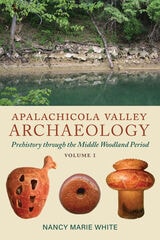
Apalachicola Valley Archaeology, Volume 1
Prehistory through the Middle Woodland PeriodNancy Marie White
University of Alabama Press, 2024
The definitive archaeological record and what is known or speculated about the ancient Apalachicola and lower Chattahoochee Valley region of northwest Florida, southeast Alabama, and southwest Georgia.
In this meticulously researched volume, Nancy Marie White provides a major holistic synthesis of the archaeological record and what is known or surmised about the peoples of the Apalachicola and lower Chattahoochee Valley region of northwest Florida, southeast Alabama, and southwest Georgia. White transforms a neglected research area into a lively saga that spans the time of the first human settlement, around 14,000 years ago, through the Middle Woodland period, ending about AD 700.
White reveals that Paleoindian habitation was more extensive than once surmised. Archaic sites were widespread, and those societies persisted when the Ice Age ended 10,000 years ago. Pottery appeared in the Late Archaic period (before 4000 BP), and Early Woodland–period burial mounds demonstrate a flowering of religious and ritual systems. Middle Woodland societies expanded this mortuary ceremony, and the complex pottery of the Swift Creek and the early Weeden Island ceramic series show an increased fascination with the ornate and unusual. Yet, basic Native American lifeways continued with gathering-fishing-hunting subsistence traditions similar to those of their ancestors.
This volume and its companion form the definitive work on the Apalachicola–lower Chattahoochee Valley region for both scholars and general readers interested in Native Americans of the Southeast.

Aquinas at 800
Commemorative Studies 1225-2025, Volume 1David Cory
Catholic University of America Press, 2025

Arkansas Made, Volume 1
A Survey of the Decorative, Mechanical, and Fine Arts Produced in Arkansas through 1950Swannee Bennett
University of Arkansas Press, 2020
Arkansas Made is the culmination of Historic Arkansas Museum’s exhaustive investigations into the history of the state’s material culture. Decades of meticulous research have resulted in this exciting two-volume survey of cabinetmakers, silversmiths, potters, fine artists, quilters, and other artisans working in communities all over the state.
The work of the artisans documented here has been the driving force of Historic Arkansas Museum’s mission to collect and preserve Arkansas’s creative legacy and rich artistic traditions. Artisans from across Arkansas’s rich cultural landscape come to life among the colorful quilts, playful temperance jugs, and inventive effigies included in Volume I. Readers will delight not only in the striking full-color images but also in the stories that weave them together across time and region to create a lively picture of art and artisanship in a state too little celebrated for its creative output.
Quilts and Textiles • Ceramics • Silver •Weaponry • Furniture • Vernacular Architecture • Native American Art

Arkansas, Arkansas Volume 1
Writers and Writings from the Delta to the Ozarks, 1541-1969John C. Guilds
University of Arkansas Press, 1999

Attic Greek Prose Syntax
Revised and Expanded in English, Volume 1K. W. Kruger
University of Michigan Press, 1998
The language of classical Greek literature has been extensively studied since the Renaissance, and the most generally admired approach to Greek grammar and syntax has long been K. W. Krüger's Griechische Sprachlehre. In this translation Guy L. Cooper III accepts Krüger's simple and transparent organization, but greatly expands the substance of the earlier work by increasing the total number of citations from the original texts. Research since 1875, especially the contributions of Basil Lanneau Gildersleeve, is incorporated so as to create a reference work, in English, which covers the full range of this complex subject.
Krüger's original paragraph numbering has been maintained so that references in previously published works can be followed directly in the new work. However, every paragraph and chapter has been revised and expanded, opening up new subheadings within Krüger's format. The English has moved away from Krüger's laconic style to a more flowing, readable presentation, without jargon and unexplained technical language. A complete index of passages cited and the impressive number of citations make the work a running syntactic commentary on the whole range of Attic prose literature. The net result is a new comprehensive reference work, an essential reference for libraries and personal collections alike.
Guy L. Cooper III is Professor Emeritus of Classics, University of North Carolina at Asheville.
Volume 2
cloth ISBN 0-472-10844-1
Set of Volumes 1 & 2
cloth ISBN 0-472-10844-1

Aurrera!
A Textbook for Studying Basque, Volume 1Linda White
University of Nevada Press, 2008

Autobiography, Volume 1
1907-1937, Journey East, Journey WestMircea Eliade
University of Chicago Press, 1990