Results by title
186 books match the query 'Volume 2' and 18 start with a
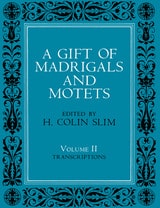
A Gift of Madrigals and Motets, Volume 2
TranscriptionEdited by H. Colin Slim
University of Chicago Press, 1972
At first encounter, these partbooks yield no clues concerning their provenance, their composers' names, or the reasons for their dispatch to England. In his search for this information, Professor Slim used the musicologists' customary tools, namely, biobibliography, concordances, and textual and musical analysis. But he also used bibliographers' tools not always employed by musicologists: watermarks, bindings, script, orthography, and illuminations.
As a result of his efforts, the author was able to identify nearly all the works' composers and the manuscripts' expert illuminator. He also presents a detailed description of the binding process and the probably background of the scribe, places the political and social references in the works, and determines the route the volumes may have taken after they left Henry's library.
By placing the date of the partbooks' arrival in England around 1528, Professor Slim suggests that the musical culture of the early Tudor court was less French than has hitherto been thought. Indeed, the presence of the partbooks in Henry's library makes them the earliest evidence of the Italian madrigal in England. The author also provides new and significant data on the artistic and historical position of Philippe Verdelot, the partbooks' most extensively represented composer.
In Volume II, Professor Slim has transcribed the music of the thirty motets and thirty madrigals for modern performance. The parts are cantus, tenor, bassus, and quintus et VI; the altus partbook is missing. Concordant sources provide the altus parts for all but four of the motets and six of the madrigals. These ten have been composed by Professor Slim. Notes at the end of each selection provide variant readings for both music and text. The Latin texts of the motets, the Italian of the madrigals, and an English translation of each appear at the end of the volume.
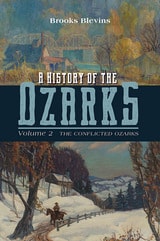
A History of the Ozarks, Volume 2
The Conflicted OzarksBrooks Blevins
University of Illinois Press, 2019
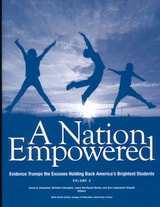
A Nation Empowered, Volume 2
Evidence Trumps the Excuses Holding Back America's Brightest StudentsSusan G. Assouline, Nicholas Colangelo, Joyce VanTassel-Baska, and Ann Lupkowski-Shoplik
University of Iowa Press, 2015
Volume 1 and 2 of A Nation Empowered: Evidence Trumps the Excuses Holding Back America's Brightest Students equips students, families, and educators with facts to refute biased excuses. A Nation Empowered shifts the impetus from conversation to action. Empowerement galvanizes determination with evidence. Volume 1 portrays the determination of students, educators, and parents to strive for excellence. Volume 2 reveals the evidence that trumps the excuses that hold bright students back.
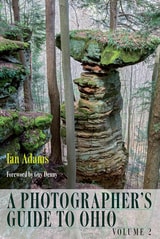
A Photographer’s Guide to Ohio, Volume 2
Volume 2Ian Adams
Ohio University Press, 2015
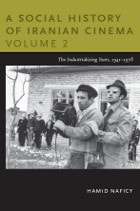
A Social History of Iranian Cinema, Volume 2
The Industrializing Years, 1941–1978Hamid Naficy
Duke University Press, 2011
Volume 2 spans the period of Mohammad Reza Shah’s rule, from 1941 until 1978. During this time Iranian cinema flourished and became industrialized, at its height producing more than ninety films each year. The state was instrumental in building the infrastructures of the cinema and television industries, and it instituted a vast apparatus of censorship and patronage. During the Second World War the Allied powers competed to control the movies shown in Iran. In the following decades, two distinct indigenous cinemas emerged. The more popular, traditional, and commercial filmfarsi movies included tough-guy films and the “stewpot” genre of melodrama, with plots reflecting the rapid changes in Iranian society. The new-wave cinema was a smaller but more influential cinema of dissent, made mostly by foreign-trained filmmakers and modernist writers opposed to the regime. Ironically, the state both funded and censored much of the new-wave cinema, which grew bolder in its criticism as state authoritarianism consolidated. A vital documentary cinema also developed in the prerevolutionary era.
A Social History of Iranian Cinema
Volume 1: The Artisanal Era, 1897–1941
Volume 2: The Industrializing Years, 1941–1978
Volume 3: The Islamicate Period, 1978–1984
Volume 4: The Globalizing Era, 1984–2010
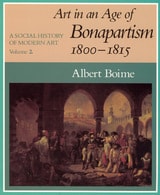
A Social History of Modern Art, Volume 2
Art in an Age of Bonapartism, 1800-1815Albert Boime
University of Chicago Press, 1990
Heavily illustrated, this volume is an invaluable social history of modern art during the Napoleonic era.
Stimulating and informative, this volume will become a valuable resource for faculty and undergraduates.—R. W. Liscombe, Choice
Academic Vocabulary Building in English, Intermediate
Volume 2Betsy Davis, Alan Juffs, Dawn E. McCormick, Greg Mizera, M. Christine O'Neill, Stacy Ranson, Missy Slaathaug, Dorolyn Smith
University of Michigan Press, 2015
Each unit contains sections that emphasize various components of word learning. First, each chapter opens with a chart of target words and their various morphological forms. The next step establishes form-meaning mappings: Each word is listed with a definition and two example sentences. The lists and definitions are followed by exercises that concentrate students’ attention on establishing form-meaning links. These exercises consist of practice opportunities that require multiple retrievals in order to promote label-to-concept links and begin awareness of derivational and inflectional variations. Follow-up exercises focus on collocations related to the unit’s theme. Each chapter closes with exercises that can be used as quizzes. By the time students have finished a unit, they should have had both receptive and productive practice with the form, meaning, morphosyntax, and collocational properties of each lexical item.

Advanced Theoretical and Numerical Electromagnetics
Field representations and the Method of Moments, Volume 2Vito Lancellotti
The Institution of Engineering and Technology, 2022
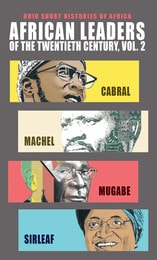
African Leaders of the Twentieth Century, Volume 2
Cabral, Machel, Mugabe, SirleafAllen F. Isaacman
Ohio University Press, 2022
This omnibus edition brings together concise and up-to-date biographies of Amílcar Cabral, Samora Machel, Robert Mugabe, and Ellen Johnson Sirleaf. African Leaders of the Twentieth Century, Volume 2 complements courses in history and political science and is an informative collection for general readers.
Amílcar Cabral: A Nationalist and Pan-Africanist Revolutionary, by Peter Karibe Mendy
Amílcar Cabral’s charismatic and visionary leadership, his pan-Africanist solidarity and internationalist commitment to “every just cause in the world,” remain relevant to contemporary struggles for emancipation and self-determination. This concise biography is an ideal introduction to his life and legacy.
Mozambique’s Samora Machel: A Life Cut Short, by Allen F. Isaacman and Barbara S. Isaacman
From his anti-colonial military leadership to the presidency of independent Mozambique, Samora Machel held a reputation as a revolutionary hero to the oppressed. Although killed in a 1987 plane crash, for many Mozambicans his memory lives on as a beacon of hope for the future.
Robert Mugabe, by Sue Onslow and Martin Plaut
For some, Zimbabwe’s Robert Mugabe was a liberation hero who confronted white rule and oversaw the radical redistribution of land. For others, he was a murderous dictator who drove his country to poverty. This concise biography reveals the complexity of the man who led Zimbabwe for its first decades of independence.
Ellen Johnson Sirleaf, by Pamela Scully
Nobel Peace Prize–winner and two-time Liberian president Ellen Johnson Sirleaf speaks to many of the key themes of the twenty-first century. Among these are the growing power of women in the arenas of international politics and human rights; the ravaging civil wars of the post–Cold War era in which sexual violence is used as a weapon; and the challenges of transitional justice in building postconflict societies.

American Congregations, Volume 2
New Perspectives in the Study of CongregationsEdited by James P. Wind and James W. Lewis
University of Chicago Press, 1994
Published simultaneously, these two volumes combine engaging historical studies with incisive scholarsly analysis to focus attention on the central role of congregational studies in research and teaching of American religion.
"This two volume study of American congregations is of compelling importance to anyone interested in civil society, community, and belief in contemporary America. . . . Extraordinarily rich in detail."—Association for Research on Non-profit Organizations and Voluntary Action News
"[An] informative and stimulating study."—John A. Saliba, Journal of Contemporary Religion
"These congregational histories are important pieces of both social and religious history. They tell us much about the convictions and experience of a great variety of people, different styles of leadership and of how these distinctive local cultures both bear and shape the larger traditions they represent."—Gordon Harland, Studies in Religion
"Both volumes of American Congregations resulted from pioneering efforts, and they are timely and useful. They should force American religious historians to ask new questions. . . . Any American religious historian who fails to take this two-volume work seriously in the future will find his or her own scholarship terribly deficient."—Lewis V. Baldwin, Journal of American History
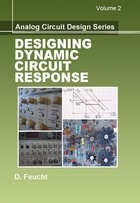
Analog Circuit Design
Designing Dynamic Circuit Response, Volume 2D. Feucht
The Institution of Engineering and Technology, 2010
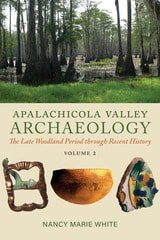
Apalachicola Valley Archaeology, Volume 2
The Late Woodland Period through Recent HistoryNancy Marie White
University of Alabama Press, 0
A comprehensive synthesis tracing 1,300 years of cultural transformation in the Apalachicola–lower Chattahoochee Valley, from Late Woodland societies to the modern era.
Apalachicola Valley Archaeology: The Late Woodland Period through Recent History, Volume 2, synthesizes the archaeology and history of the Native Americans, African Americans, and Euro-Americans of the Apalachicola–lower Chattahoochee Valley region of northwest Florida, southeast Alabama, and southwest Georgia from about 1300 years ago until the present. The region extends from Columbia, Alabama, to the Gulf of Mexico. It is culturally and environmentally distinct but little known archaeologically because it crosses historic political boundaries at the frontier.
Early chapters overview the environment and archaeology. Coverage then surveys time periods, from the Late Woodland to present. Topics include settlement, archaeological findings and material culture, subsistence and seasonality, history, sociopolitical systems, and peoples.
White’s prodigious work reveals that the prehistoric Late Woodland cultures who developed maize agriculture developed into Fort Walton chiefdoms. Post-invasion and Spanish and British colonization, these peoples were replaced by consolidated groups of Native American survivors and maroons moving around the region. These multiethnic societies with blended material cultures developed new identities, living at the edges of colonial territories. Creek societies, many becoming Seminoles, fought on all sides of European and American conflicts until most Indians were forcibly removed in the 1830s. Then the region became important for cotton, cattle, and timber, which were often produced by enslaved labor and transported by steamboat. Later expansion of agriculture and silviculture, as well as turpentine, tupelo honey, and other industries, left material evidence. The usefulness of the information to modern society is noted. Copious illustrations enhance the scientific analyses and the telling of the human stories.

Aquinas at 800
Commemorative Studies 1225-2025, Volume 2David Cory
Catholic University of America Press, 2025
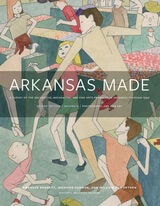
Arkansas Made, Volume 2
A Survey of the Decorative, Mechanical, and Fine Arts Produced in Arkansas through 1950Swannee Bennett
University of Arkansas Press, 2020
Arkansas Made is the culmination of Historic Arkansas Museum’s exhaustive investigations into the history of the state’s material culture. Decades of meticulous research have resulted in this exciting two-volume survey of cabinetmakers, silversmiths, potters, fine artists, quilters, and other artisans working in communities all over the state.
The work of the artisans documented here has been the driving force of Historic Arkansas Museum’s mission to collect and preserve Arkansas’s creative legacy and rich artistic traditions. The photographs and fine artworks that enliven the pages of Volume II represent not only a delightfully broad scope of talent in genres ranging from landscapes to cubist portraits to political cartoons, but also a longstanding tradition of advocacy and support for the arts in Arkansas.
Volume 2Photography • Fine Art
Arkansas, Arkansas Volume 2
Writers and Writings from the Delta to the Ozarks,The Contemporary Scene, 1970–presentjohn Guilds
University of Arkansas Press, 1999
Attic Greek Prose Syntax
Revised and Expanded in English, Volume 2K. W. Kruger
University of Michigan Press, 1998
The language of classical Greek literature has been extensively studied since the Renaissance, and the most generally admired approach to Greek grammar and syntax has long been K. W. Krüger's Griechische Sprachlehre. In this translation Guy L. Cooper III accepts Krüger's simple and transparent organization, but greatly expands the substance of the earlier work by increasing the total number of citations from the original texts. Research since 1875, especially the contributions of Basil Lanneau Gildersleeve, is incorporated so as to create a reference work, in English, which covers the full range of this complex subject.
Krüger's original paragraph numbering has been maintained so that references in previously published works can be followed directly in the new work. However, every paragraph and chapter has been revised and expanded, opening up new subheadings within Krüger's format. The English has moved away from Krüger's laconic style to a more flowing, readable presentation, without jargon and unexplained technical language. A complete index of passages cited and the impressive number of citations make the work a running syntactic commentary on the whole range of Attic prose literature. The net result is a new comprehensive reference work, an essential reference for libraries and personal collections alike.
Guy L. Cooper III is Professor Emeritus of Classics, University of North Carolina at Asheville.
Aurrera!
A Textbook for Studying Basque, Volume 2Linda White
University of Nevada Press, 2010
Autobiography, Volume 2
1937-1960, Exile's OdysseyMircea Eliade
University of Chicago Press, 1988