Results by title
18284 books match the query 'United States' and 1653 start with a
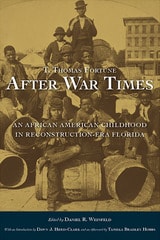
After War Times
An African American Childhood in Reconstruction-Era FloridaT. Thomas Fortune
University of Alabama Press, 2014
A firsthand account of African American childhood, freedom, and resilience in Reconstruction-era Florida.
T. Thomas Fortune was a leading African American publisher, editor, and journalist of the late nineteenth and early twentieth centuries, who was born a slave in antebellum Florida, lived through emancipation, and rose to become a literary lion of his generation. In T. Thomas Fortune's “After War Times,” Daniel R. Weinfeld brings together a series of twenty-three autobiographical articles Fortune wrote about his formative childhood during Reconstruction and subsequent move to Washington, DC.
By 1890, Fortune had founded a predecessor organization to the National Association for the Advancement of Colored People, known as the National Afro-American League, but his voice found its most powerful expression and influence in poetry, prose, and journalism. It was as a journalist that Fortune stirred national controversy by issuing a passionate appeal to African American southerners: “I propose to start a crusade,” he proclaimed in June 1900, “to have the negroes of the South leave that section and to come north or go elsewhere. It is useless to remain in the South and cry Peace! Peace! When there is no peace.” The movement he helped propel became known as “the Great Migration.”
By focusing on Thomas’s ruminations about his disillusion with post–Civil War Florida, Weinfeld highlights the sources of Fortune’s deep disenchantment with the South, which intensified when the Reconstruction order gave way to Jim Crow–era racial discrimination and violence. Decades after he left the South, Fortune’s vivid memories of incidents and personalities in his past informed his political opinions and writings. Scholars and readers interested in Southern history in the aftermath of the Civil War, especially the experiences of African Americans, will find much of interest in this vital collection of primary writings.
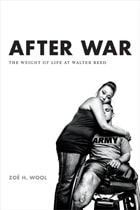
After War
The Weight of Life at Walter ReedZoë H. Wool
Duke University Press, 2015
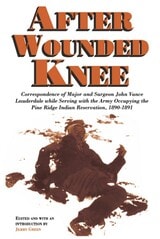
After Wounded Knee
Correspondence of Major and Surgeon John Vance Lauderdale while Serving with the Army Occupying the Pine Ridge Indian Reservation, 1890-1891Jerry Green
Michigan State University Press, 1996
The Wounded Knee Massacre of December 29, 1890, known to U.S. military historians as the last battle in "the Indian Wars," was in reality another tragic event in a larger pattern of conquest, destruction, killing, and broken promises that continue to this day.
On a cold winter's morning more than a century ago, the U.S. Seventh Cavalry attacked and killed more than 260 Lakota men, women, and children at Wounded Knee Creek in South Dakota. In the aftermath, the broken, twisted bodies of the Lakota people were soon covered by a blanket of snow, as a blizzard swept through the countryside. A few days later, veteran army surgeon John Vance Lauderdale arrived for duty at the nearby Pine Ridge Indian Reservation. Shocked by what he encountered, he wrote numerous letters to his closest family members detailing the events, aftermath, and daily life on the Reservation under military occupation. He also treated the wounded, both Cavalry soldiers and Lakota civilians. What distinguishes After Wounded Knee from the large body of literature already available on the massacre is Lauderdale's frank appraisals of military life and a personal observation of the tragedy, untainted by self-serving reminiscence or embellished newspaper and political reports. His sense of frustration and outrage toward the military command, especially concerning the tactics used against the Lakota, is vividly apparent in this intimate view of Lauderdale's life. His correspondence provides new insight into a familiar subject and was written at the height of the cultural struggle between the U.S. and Lakota people. Jerry Green's careful editing of this substantial collection, part of the John Vance Lauderdale Papers in the Western Americana Collection in Yale University's Beinecke Library, clarifies Lauderdale's experiences at the Pine Ridge Indian Reservation.
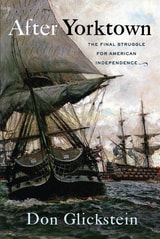
After Yorktown
The Final Struggle for American IndependenceDon Glickstein
Westholme Publishing, 2016
Although most people think the American Revolution ended with the British surrender at Yorktown, Virginia, on October 19, 1781, it did not. The war spread around the world, and exhausted men kept fighting—from the Arctic to Arkansas, from India and Ceylon to Schenectady and South America—while others labored to achieve a final diplomatic resolution.
After Cornwallis’s unexpected loss, George III vowed revenge, while Washington planned his next campaign. Spain, which France had lured into the war, insisted there would be no peace without seizing British-held Gibraltar. Yet the war had spun out of control long before Yorktown. Native Americans and Loyalists continued joint operations against land-hungry rebel settlers from New York to the Mississippi Valley. African American slaves sought freedom with the British. Soon, Britain seized the initiative again with a decisive naval victory in the Caribbean against the Comte de Grasse, the French hero of Yorktown.
In After Yorktown: The Final Struggle for American Independence, Don Glickstein tells the engrossing story of this uncertain and violent time, from the remarkable American and French success in Virginia to the conclusion of the fighting—in India—and then to the last British soldiers leaving America more than two years after Yorktown. Readers will learn about the people—their humor, frustration, fatigue, incredulity, worries; their shock at the savage terrorism each side inflicted; and their surprise at unexpected grace and generosity. Based on an extraordinary range of primary sources, the story encompasses a fascinating cast of characters: a French captain who destroyed a British trading post, but left supplies for Indians to help them through a harsh winter, an American Loyalist releasing a captured Spanish woman in hopes that his act of kindness will result in a prisoner exchange, a Native American leader caught “between two hells” of a fickle ally and a greedy enemy, and the only general to surrender to both George Washington and Napoleon Bonaparte. Finally, the author asks the question we face today: How do you end a war that doesn’t want to end?

After the Bloodbath
Is Healing Possible in the Wake of Rampage Shootings?James D. Diamond
Michigan State University Press, 2019

After the Death of Poetry
Poet and Audience in Contemporary AmericaVernon Shetley
Duke University Press, 1993
In exemplary case studies, Shetley identifies the very different ways in which three postwar poets—Elizabeth Bishop, James Merrill, and John Ashbery—try to restore some of the challenge and risk that characterized modernist poetry's relation to its first readers. Sure to be controversial, this cogent analysis offers poets and readers a clear sense of direction and purpose, and so, the hope of reaching each other again.
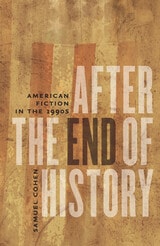
After the End of History
American Fiction in the 1990sCohe, Samuel
University of Iowa Press, 2009
In this bold book, Samuel Cohen asserts the literary and historical importance of the period between the fall of the Berlin wall and that of the Twin Towers in New York. With refreshing clarity, he examines six 1990s novels and two post-9/11 novels that explore the impact of the end of the Cold War: Pynchon's Mason & Dixon, Roth's American Pastoral, Morrison's Paradise, O'Brien's In the Lake of the Woods, Didion's The Last Thing He Wanted, Eugenides's Middlesex, Lethem's Fortress of Solitude, and DeLillo's Underworld. Cohen emphasizes how these works reconnect the past to a present that is ironically keen on denying that connection. Exploring the ways ideas about paradise and pastoral, difference and exclusion, innocence and righteousness, triumph and trauma deform the stories Americans tell themselves about their nation’s past, After the End of History challenges us to reconsider these works in a new light, offering fresh, insightful readings of what are destined to be classic works of literature.
At the same time, Cohen enters into the theoretical discussion about postmodern historical understanding. Throwing his hat in the ring with force and style, he confronts not only Francis Fukuyama’s triumphalist response to the fall of the Soviet Union but also the other literary and political “end of history” claims put forth by such theorists as Fredric Jameson and Walter Benn Michaels. In a straightforward, affecting style, After the End of History offers us a new vision for the capabilities and confines of contemporary fiction.
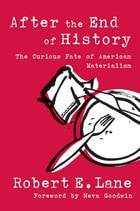
After the End of History
The Curious Fate of American MaterialismRobert E. Lane
University of Michigan Press, 2005
--David O. Sears, Professor of Psychology and Political Science, UCLA
"Lane's deep knowledge of the sources of human happiness enables him to develop a powerful critique of economic theory."
---Robert A. Dahl, Sterling Professor Emeritus of Political Science, Yale University
Robert E. Lane is the Eugene Meyer Professor Emeritus of Political Science at Yale University. His previous publications include The Loss of Happiness in Market Democracies (2000) and The Market Experience (1991).
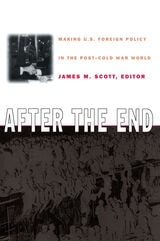
After the End
Making U.S. Foreign Policy in the Post-Cold War WorldJames M. Scott, ed.
Duke University Press, 1998
These essays examine the recent efforts of U.S. policymakers to recast the roles, interests, and purposes of the United States both at home and abroad in a political environment where policy making has become increasingly decentralized and democratized. The contributors suggest that foreign policy leadership has shifted from White House and executive branch dominance to an expanded group of actors that includes the president, Congress, the foreign policy bureaucracy, interest groups, the media, and the public. The volume includes case studies that focus on China, Russia, Bosnia, Somalia, democracy promotion, foreign aid, and NAFTA. Together, these chapters describe how policy making after 1991 compares to that of other periods and suggest how foreign policy will develop in the future.
This collection provides a broad, balanced evaluation of U.S. foreign policy making in the post–Cold War setting for scholars, teachers, and students of U.S. foreign policy, political science, history, and international studies.
Contributors. Ralph G. Carter, Richard Clark, A. Lane Crothers, I. M. Destler, Ole R. Holsti, Steven W. Hook, Christopher M. Jones, James M. McCormick, Jerel Rosati, Jeremy Rosner, John T. Rourke, Renee G. Scherlen, Peter J. Schraeder, James M. Scott, Jennifer Sterling-Folker, Rick Travis, Stephen Twing

After the New Criticism
Frank Lentricchia
University of Chicago Press, 1981
Lentricchia's critical intention is in evidence in his sustained attack on the more or less hidden formalist premises inherited from the New Critical fathers. Even in the name of historical consciousness, he contends, contemporary theorists have often cut literature off from social and temporal processes. By so doing he believes that they have deprived literature of its relevant values and turned the teaching of both literature and theory into a rarefied activity. All along the way, with the help of such diverse thinkers as Saussure, Barthes, Foucault, Derrida, and Bloom, Lentricchia indicates a strategy by which future critical theorists may resist the mandarin attitudes of their fathers.
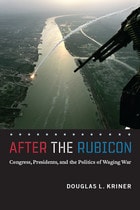
After the Rubicon
Congress, Presidents, and the Politics of Waging WarDouglas L. Kriner
University of Chicago Press, 2010
When the United States goes to war, the nation’s attention focuses on the president. As commander in chief, a president reaches the zenith of power, while Congress is supposedly shunted to the sidelines once troops have been deployed abroad. Because of Congress’s repeated failure to exercise its legislative powers to rein in presidents, many have proclaimed its irrelevance in military matters.
After the Rubicon challenges this conventional wisdom by illuminating the diverse ways in which legislators influence the conduct of military affairs. Douglas L. Kriner reveals that even in politically sensitive wartime environments, individual members of Congress frequently propose legislation, hold investigative hearings, and engage in national policy debates in the public sphere. These actions influence the president’s strategic decisions as he weighs the political costs of pursuing his preferred military course.
Marshalling a wealth of quantitative and historical evidence, Kriner expertly demonstrates the full extent to which Congress materially shapes the initiation, scope, and duration of major military actions and sheds new light on the timely issue of interbranch relations.
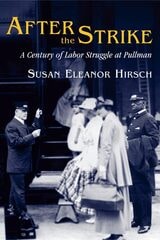
After the Strike
A Century of Labor Struggle at PullmanSusan Eleanor Hirsch
University of Illinois Press, 2003
The 1894 Pullman strike and the rise of the Brotherhood of Sleeping Car Porters played major roles in the century-long development of union organizing and labor-management relations in the Pullman Company. Susan Eleanor Hirsch connects the stories of Pullman car builders and porters to answer critical questions like: what created job segregation by race and gender? What role did such segregation play in shaping the labor movement?
Hirsch illuminates the relationship between labor organizing and the racial and sexual discrimination practiced by both employers and unions. Because the Pullman Company ran the sleeping-car service for American railroads and was a major manufacturer of railcars, its workers were involved in virtually every wave of union organizing from the 1890s to the 1940s.
In exploring the years of struggle by the men and women of the Pullman Company, After the Strike reveals the factors that determined the limited success and narrow vision of most American unions.
After the West Was Won
Homesteaders and Town-Builders in Western South Dakota, 1900-1917Paula M. Nelson
University of Iowa Press, 1989

After-School Clubs for Kids
Thematic Programming to Encourage ReadingLisa M. Shaia
American Library Association, 2014
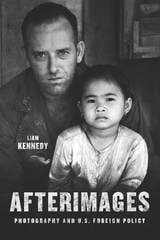
Afterimages
Photography and U.S. Foreign PolicyLiam Kennedy
University of Chicago Press, 2016
Liam Kennedy here maps the evolving relations between the American way of war and photographic coverage of it. Organized in its first section around key US military actions over the last fifty years, the book then moves on to examine how photographers engaged with these conflicts on wider ethical and political grounds, and finally on to the genre of photojournalism itself. Illustrated throughout with examples of the photographs being considered, Afterimages argues that photographs are important means for critical reflection on war, violence, and human rights. It goes on to analyze the high ethical, sociopolitical, and legalistic value we place on the still image’s ability to bear witness and stimulate action.
Afterlives of Modernism
Liberalism, Transnationalism, and Political CritiqueJohn Carlos Rowe
Dartmouth College Press, 2015
Against Citizenship
The Violence of the NormativeAmy L. Brandzel
University of Illinois Press, 2016
Brandzel's focus on three legal case studies--same-sex marriage law, hate crime legislation, and Native Hawaiian sovereignty and racialization--exposes how citizenship confounds and obscures the mutual processes of settler colonialism, racism, sexism, and heterosexism. In this way, Brandzel argues that citizenship requires anti-intersectionality, that is, strategies that deny the mutuality and contingency of race, class, gender, sexuality, and nation--and how, oftentimes, progressive left activists and scholars follow suit.
Against Citizenship is an impassioned plea for a queer, decolonial, anti-racist coalitional stance against the systemized human de/valuing and anti-intersectionalities of citizenship.
Against Exclusion
Disrupting Anti-Chinese Violence in the Nineteenth CenturyAudrey Wu Clark
The Ohio State University Press, 2024
In Against Exclusion, Audrey Wu Clark dramatically reframes Asian American resistance via the lives of five early Chinese American public figures. In contrast to later activists who sought to defy stereotypes, Ah Toy, Mary Tape, Wong Chin Foo, Yan Phou Lee, and Yung Wing deployed the model minority and yellow peril tropes to make themselves visible during a period of rampant anti-Chinese violence and legal exclusion. In making themselves visible, they sought to expose and dismantle the contradictory exceptionalism of nineteenth-century US liberalism that both required and “disavowed” the deaths of Chinese Americans. In examining these figures and the ways in which they fought their exclusion as Chinese Americans—via court cases, autobiographical writings, journalism, and other forms of activism—Clark contributes to prevailing scholarly conversations about stereotypes of Asian Americans but contextualizes them in the nineteenth century. She traces the twinned emergences of the model minority and the yellow peril, excavating the exceptionalism with which Chinese Americans were racialized and subject to death—whether by lynching, other forms of driving out, or loss of citizenship or rights—and mapping its reverberations into the present day.
Against Immediacy
Video Art and Media PopulismWilliam Kaizen
Dartmouth College Press, 2016
Against Labor
How U.S. Employers Organized to Defeat Union ActivismEdited by Rosemary Feurer and Chad Pearson
University of Illinois Press, 2017
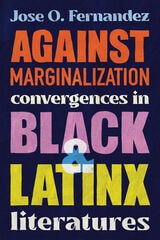
Against Marginalization
Convergences in Black and Latinx LiteraturesJose O. Fernandez
The Ohio State University Press, 2022

Against Prediction
Profiling, Policing, and Punishing in an Actuarial AgeBernard E. Harcourt
University of Chicago Press, 2006
From random security checks at airports to the use of risk assessment in sentencing, actuarial methods are being used more than ever to determine whom law enforcement officials target and punish. And with the exception of racial profiling on our highways and streets, most people favor these methods because they believe they’re a more cost-effective way to fight crime.
In Against Prediction, Bernard E. Harcourt challenges this growing reliance on actuarial methods. These prediction tools, he demonstrates, may in fact increase the overall amount of crime in society, depending on the relative responsiveness of the profiled populations to heightened security. They may also aggravate the difficulties that minorities already have obtaining work, education, and a better quality of life—thus perpetuating the pattern of criminal behavior. Ultimately, Harcourt shows how the perceived success of actuarial methods has begun to distort our very conception of just punishment and to obscure alternate visions of social order. In place of the actuarial, he proposes instead a turn to randomization in punishment and policing. The presumption, Harcourt concludes, should be against prediction.
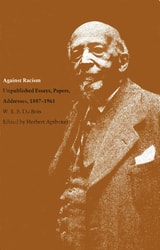
Against Racism
Unpublished Essays, Papers, Addresses, 1887–1961W.E.B. Du Bois
University of Massachusetts Press, 1985
A collection of essays, papers, and addresses which explains the author's views on racism.

Against the Closet
Black Political Longing and the Erotics of RaceAliyyah I. Abdur-Rahman
Duke University Press, 2012
Abdur-Rahman brings black feminist, psychoanalytic, critical race, and poststructuralist theories to bear on literary genres from slave narratives to science fiction. Analyzing works by African American writers, including Frederick Douglass, Pauline Hopkins, Harriet Jacobs, James Baldwin, and Octavia Butler, she shows how literary representations of transgressive sexuality expressed the longings of African Americans for individual and collective freedom. Abdur-Rahman contends that those representations were fundamental to the development of African American forms of literary expression and modes of political intervention and cultural self-fashioning.
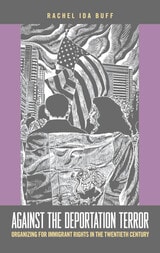
Against the Deportation Terror
Organizing for Immigrant Rights in the Twentieth CenturyRachel Ida Buff
Temple University Press, 2017
Despite being characterized as a “nation of immigrants,” the United States has seen a long history of immigrant rights struggles. In her timely book Against the Deportation Terror, Rachel Ida Buff uncovers this multiracial history. She traces the story of the American Committee for the Protection of the Foreign Born (ACPFB) from its origins in the 1930s through repression during the early Cold War, to engagement with “new” Latinx and Caribbean immigrants in the 1970s and early 1980s.
Functioning as a hub connecting diverse foreign-born communities and racial justice advocates, the ACPFB responded to various, ongoing crises of what they called “the deportation terror.” Advocates worked against repression, discrimination, detention, and expulsion in migrant communities across the nation at the same time as they supported reform of federal immigration policy. Prevailing in some cases and suffering defeats in others, the story of the ACPFB is characterized by persistence in multiracial organizing even during periods of protracted repression.
By tracing the work of the ACPFB and its allies over half a century, Against the Deportation Terror provides important historical precedent for contemporary immigrant rights organizing. Its lessons continue to resonate today.
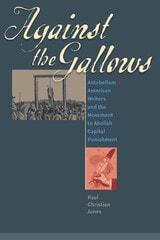
Against the Gallows
Antebellum American Writers and the Movement to Abolish Capital PunishmentPaul C. Jones
University of Iowa Press, 2011
In Against the Gallows, Paul Christian Jones explores the intriguing cooperation of America’s writers—including major figures such as Walt Whitman, John Greenleaf Whittier, E. D. E. N. Southworth, and Herman Melville—with reformers, politicians, clergymen, and periodical editors who attempted to end the practice of capital punishment in the United States during the 1840s and 1850s. In an age of passionate reform efforts, the antigallows movement enjoyed broad popularity, waging its campaign in legislatures, pulpits, newspapers, and literary journals.
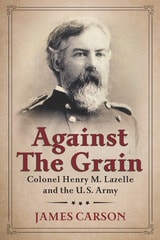
Against the Grain
Colonel Henry M. Lazelle and the U.S. ArmyJames Carson
University of North Texas Press, 2015
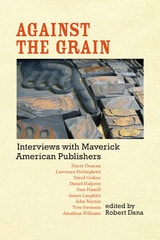
Against the Grain
Interviews with Maverick American PublishersRobert Dana
University of Iowa Press, 1986
Against the Grain is a collection of interviews with nine small press publishers, each one characterized by strength of resolve and a dedication to good books. Each press reflects, perhaps more directly than any large trade publisher could, the character of its founder; and each has earned its own place in the select group of important small presses in America.
This collection is the first of its kind to explore with the publishers themselves the historical, aesthetic, practical, and personal impulses behind literary publishing. The publishers included are Harry Duncan (the Cummington Press), Lawrence Ferlinghetti (City Lights), David Godine (David R. Godine), Daniel Halpern (the Ecco Press), Sam Hamill and Tree Swenson (Copper Canyon Press), James Laughlin (New Directions), John Martin (Black Sparrow), and Jonathan Williams (the Jargon Society). Their passion for books, their belief in their individual visions of what publishing is or could be, their inspired mulishness crackle on the page.
Against the Law
Paul F. Campos, Pierre Schlag, and Steven D. Smith
Duke University Press, 1996
Linked by a persistent inquiry into the nature and identity of “the law,” these essays are informed by the conviction that the conventional representations of law, both in law schools and the courts, cannot be taken at face value—that the law, as commonly conceived, makes no sense. The authors argue that the relentlessly normative prescriptions of American legal thinkers are frequently futile and, indeed, often pernicious. They also argue that the failure to recognize the role that authorship must play in the production of legal thought plagues both the teaching and the practice of American law. Ranging from the institutional to the psychological and metaphysical deficiencies of the American legal system, the depth of criticism offered by Against the Law is unprecedented.
In a departure from the nearly universal legitimating and reformist tendencies of American legal thought, this book will be of interest not only to the legal academics under attack in the book, but also to sociologists, historians, and social theorists. More particularly, it will engage all the American lawyers who suspect that there is something very wrong with the nature and direction of their profession, law students who anticipate becoming part of that profession, and those readers concerned with the status of the American legal system.
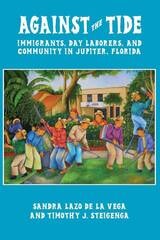
Against the Tide
Immigrants, Day Laborers, and Community in Jupiter, FloridaSandra Lazo de la Vega and Timothy J. Steigenga
University of Wisconsin Press, 2013
At the beginning of the twenty-first century, Jupiter was in the throes of immigration debates. A decade earlier, this small town had experienced an influx of migrants from Mexico and Guatemala. Immigrants seeking work gathered daily on one of the city’s main streets, creating an ad-hoc, open-air labor market that generated complaints and health and human safety concerns. What began as a local debate rapidly escalated as Jupiter’s situation was thrust into the media spotlight and attracted the attention of state and national anti-immigrant groups. But then something unexpected happened: immigrants, neighborhood residents, university faculty and students, and town representatives joined together to mediate community tensions and successfully moved the informal labor market to the new El Sol Neighborhood Resource Center.
Timothy J. Steigenga, who helped found the center, and Lazo de la Vega, who organized students in support of its mission, describe how El Sol engaged the residents of Jupiter in a two-way process of immigrant integration and helped build trust on both sides. By examining one city’s search for a positive public policy solution, Against the Tide offers valuable practical lessons for other communities confronting similar challenges.
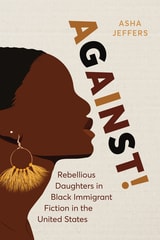
Against!
Rebellious Daughters in Black Immigrant Fiction in the United StatesAsha Jeffers
The Ohio State University Press, 2025
Against! is the first book-length study of Afro-Caribbean and African immigrant and second-generation writing in the United States. In it, Asha Jeffers evaluates the relationship between Blackness and immigranthood in the US as depicted through the recurring theme of rebellious Black immigrant daughters. Considering the work of Paule Marshall, Edwidge Danticat, Chimamanda Ngozi Adichie, and Taiye Selasi, Jeffers untangles how rebellion is informed by race, gender, ethnicity, and migration status.
Immigrant and second-generation writers mobilize often complicated familial relationships to comment on a variety of political, social, and psychic contexts. Jeffers argues that rather than categorizing Black migrants as either immediately fully integrated into an African American experience or seeing them as another category altogether that is unbound by race, Marshall, Danticat, Adichie, and Selasi identify the unstable position of Black migrants within the American racial landscape. By highlighting the diverse ways Black migrants and their children negotiate this position amid the dual demands of the respectability politics imposed on African Americans and the model-minority myth imposed on immigrants, Jeffers reveals the unsteady nature of US racial categories.
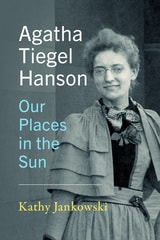
Agatha Tiegel Hanson
Our Places in the SunKathy Jankowski
Gallaudet University Press, 2023
Throughout her life, Agatha Tiegel Hanson worked to advance the rights of Deaf people and women, and she was a passionate advocate of sign language rights. Her contributions include creative written works as well as influential treatises. She served in leadership positions at several Deaf organizations and, along with her husband, noted Deaf architect Olof Hanson, she played a vital role in the Deaf cultural life of the time. In Agatha Tiegel Hanson: Our Places in the Sun, author Kathy Jankowski presents a portrait of this trailblazer, and celebrates her impact on the Deaf community and beyond. This biography will be of interest to those already familiar with Tiegel Hanson’s legacy as well as to readers who are discovering her extraordinary life for the first time.
Age Discrimination in the American Workplace
Old at a Young AgeGregory, Raymond F
Rutgers University Press, 2001
Nearly every middle-aged and older worker, at some time during his or her career, will suffer age discrimination in the workplace. Employers too often use early-retirement plans, restructurings, and downsizings to dismiss older workers. Many of these individuals are unwillingly ushered into earlier-than-planned retirements, are denied promotions, or are terminated. The baby-boomer generation now accounts for just under 50 percent of the entire workforce. A vast army of workers now stands ready to contest employer acts of age discrimination.
Attorney Raymond Gregory addresses himself to the millions of workers who think they might be facing age discrimination and traces the history of the federal measures enacted to assist workers in contesting unlawful employer conduct. He explains how the law works and presents actual court cases to demonstrate the ways that workers have challenged their employers. The cases help to illustrate legal principles in real-life experiences and many of the cases relate compelling stories of workers caught up in a web of employer discriminatory conduct. Gregory has eliminated all legal jargon, ensuring that all concepts are clear to his readers. Individuals will turn to this book again and again to obtain authoritative background on this important topic.
Agenda for Reform
Winthrop Rockefeller as Governor of Arkansas, 1967–71Cathy Kunzinger Urwin
University of Arkansas Press, 1991

Agendas and Instability in American Politics
Frank R. Baumgartner and Bryan D. Jones
University of Chicago Press, 1993
Short-term, single-issue analyses of public policy, the authors contend, give a narrow and distorted view of public policy as the result of a cozy arrangement between politicians, interest groups, and the media. Baumgartner and Jones upset these notions by focusing on several issues—including civilian nuclear power, urban affairs, smoking, and auto safety—over a much longer period of time to reveal patterns of stability alternating with bursts of rapid, unpredictable change.
A welcome corrective to conventional political wisdom, Agendas and Instability revises our understanding of the dynamics of agenda-setting and clarifies a subject at the very center of the study of American politics.
Agendas and Instability in American Politics, Second Edition
Frank R. Baumgartner and Bryan D. Jones
University of Chicago Press, 2009
When Agendas and Instability in American Politics appeared fifteen years ago, offering a profoundly original account of how policy issues rise and fall on the national agenda, the Journal of Politics predicted that it would “become a landmark study of public policy making and American politics.” That prediction proved true and, in this long-awaited second edition, Bryan Jones and Frank Baumgartner refine their influential argument and expand it to illuminate the workings of democracies beyond the United States.
The authors retain all the substance of their contention that short-term, single-issue analyses cast public policy too narrowly as the result of cozy and dependable arrangements among politicians, interest groups, and the media. Jones and Baumgartner provide a different interpretation by taking the long view of several issues—including nuclear energy, urban affairs, smoking, and auto safety—to demonstrate that bursts of rapid, unpredictable policy change punctuate the patterns of stability more frequently associated with government. Featuring a new introduction and two additional chapters, this updated edition ensures that their findings will remain a touchstone of policy studies for many years to come.
Agent Orange
History, Science, and the Politics of UncertaintyEdwin A. Martini
University of Massachusetts Press, 2012
Taking on what one former U.S. ambassador called “the last ghost of the Vietnam War,” this book examines the far-reaching impact of Agent Orange, the most infamous of the dioxin-contaminated herbicides used by American forces in Southeast Asia. Edwin A. Martini's aim is not simply to reconstruct the history of the “chemical war” but to investigate the ongoing controversy over the short- and long-term effects of weaponized defoliants on the environment of Vietnam, on the civilian population, and on the troops who fought on both sides.
Beginning in the early 1960s, when Agent Orange was first deployed in Vietnam, Martini follows the story across geographical and disciplinary boundaries, looking for answers to a host of still unresolved questions. What did chemical manufacturers and American policymakers know about the effects of dioxin on human beings, and when did they know it? How much do scientists and doctors know even today? Should the use of Agent Orange be considered a form of chemical warfare? What can, and should, be done for U.S. veterans, Vietnamese victims, and others around the world who believe they have medical problems caused by Agent Orange?
Martini draws on military records, government reports, scientific research, visits to contaminated sites, and interviews to disentangle conflicting claims and evaluate often ambiguous evidence. He shows that the impact of Agent Orange has been global in its reach affecting individuals and communities in New Zealand, Australia, Korea, and Canada as well as Vietnam and the United States. Yet for all the answers it provides, this book also reveals how much uncertainty—scientific, medical, legal, and political—continues to surround the legacy of Agent Orange.
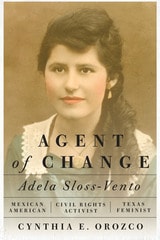
Agent of Change
Adela Sloss-Vento, Mexican American Civil Rights Activist and Texas FeministBy Cynthia E. Orozco
University of Texas Press, 2020
Liz Carpenter Award for Research in the History of Women, Texas State Historical Association
The essayist Adela Sloss-Vento (1901–1998) was a powerhouse of activism in South Texas’s Lower Rio Grande Valley throughout the Mexican American civil rights movement beginning in 1920 and the subsequent Chicano movement of the 1960s and 1970s. At last presenting the full story of Sloss-Vento’s achievements, Agent of Change revives a forgotten history of a major female Latina leader.
Bringing to light the economic and political transformations that swept through South Texas in the 1920s as ranching declined and agribusiness proliferated, Cynthia E. Orozco situates Sloss-Vento’s early years within the context of the Jim Crow/Juan Crow era. Recounting Sloss-Vento’s rise to prominence as a public intellectual, Orozco highlights a partnership with Alonso S. Perales, the principal founder of the League of United Latin American Citizens. Agent of Change explores such contradictions as Sloss-Vento’s tolerance of LULAC’s gender-segregated chapters, even though the activist was an outspoken critic of male privilege in the home and a decidedly progressive wife and mother. Inspiring and illuminating, this is a complete portrait of a savvy, brazen critic who demanded reform on both sides of the US-Mexico border.
Aggression and Sufferings
Settler Violence, Native Resistance, and the Coalescence of the Old SouthF. Evan Nooe
University of Alabama Press, 2024
WINNER OF THE FRANCIS B. SIMKINS AWARD, SOUTHERN HISTORICAL ASSOCIATION
WINNER OF THE 2024 BEST FIRST BOOK AWARD FROM PHI ALPHA THETA, THE NATIONAL HISTORY HONOR SOCIETY
A bold reconceptualization of how settler expansion and narratives of victimhood, honor, and revenge drove the conquest and erasure of the Native South and fed the emergence of a distinct white southern identity.
In 1823, Tennessee historian John Haywood encapsulated a foundational sentiment among the white citizenry of Tennessee when he wrote of a “long continued course of aggression and sufferings” between whites and Native Americans. According to F. Evan Nooe, “aggression” and “sufferings” are broad categories that can be used to represent the framework of factors contributing to the coalescence of the white South.
Traditionally, the concept of coalescence is an anthropological model used to examine the transformation of Indigenous communities in the Eastern Woodlands from chieftaincies to Native tribes, confederacies, and nations in response to colonialism. Applying this concept to white southerners, Nooe argues that through the experiences and selective memory of settlers in the antebellum South, white southerners incorporated their aggression against and suffering at the hands of the Indigenous peoples of the Southeast in the coalescence of a regional identity built upon the violent dispossession of the Native South. This, in turn, formed a precursor to Confederate identity and its later iterations in the long nineteenth century.
Geographically, Aggression and Sufferings prioritizes events in South Carolina, Florida, Tennessee, Georgia, and Alabama. Nooe considers how divergent systems of violence and justice between Native Americans and white settlers (such as blood revenge and concepts of honor) functioned in the region and examines the involved societies’ conflicting standards on how to equitably resolve interpersonal violence. Finally, Nooe explores how white southerners constructed, propagated, and perpetuated harrowing tales of colonizers as both victims and heroes in the violent expulsion of the region’s Native peoples from their homelands. This constructed sense of regional history and identity continued to flower into the antebellum period, during western expansion, and well through the twentieth century.
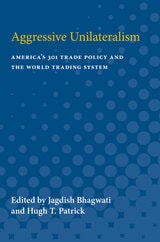
Aggressive Unilateralism
America's 301 Trade Policy and the World Trading SystemJagdish Bhagwati and Hugh T. Patrick, Editors
University of Michigan Press, 1990
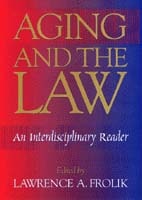
Aging And The Law
Lawrence Frolik
Temple University Press, 1999
After an introduction covering the nature of elder law, social attitudes toward the elderly, aging and ethnicity, and generational justice, the book includes sections on work, income, and wealth; housing; mental capacity; health care decision making; long-term care; health care finance; family and social issues; and abuse, neglect, victimization, and elderly criminals. It concludes with essays on legal representation and ethical issues. The essays have been edited to make them easily accessible to students and the general reader, and Professor Frolik has supplied introductions to the sections, as well as summaries of issues for which the essays could not be included.
Both comprehensive and engaging, Aging and the Law brings together essays by lawyers, social workers, health care professionals, and policy makers, as well as selected case law and congressional hearings.
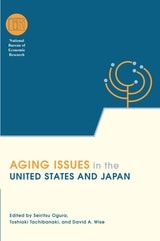
Aging Issues in the United States and Japan
Edited by Seiritsu Ogura, Toshiaki Tachibanaki, and David A. Wise
University of Chicago Press, 2001
Given the undeniable global importance of the Japanese and U.S. economies, these innovative essays shed welcome new light on the complex correlations between aging and economic behavior. This insightful work not only deepens our understanding of the Japanese and American economic landscapes but, through careful examination of the comparative social and economic data, clarifies the complex relation between aging societies, public policies, and economic outcomes.
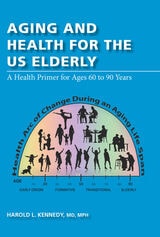
Aging and Health for the US Elderly
A Health Primer for Ages 60 to 90 YearsHarold L. Kennedy
University of Missouri Press, 2021
In this short, easy-to-read book designed as a concise but effective healthcare guide, Dr. Harold Kennedy, with more than 60 years of experience practicing medicine, guides readers through the healthcare maze faced by many seniors. While the information in this book is not intended to diagnose or treat ailments, it will give readers a valuable foundation of health literacy, crucial in making good decisions regarding their health and medical care services, and that of their loved ones.
Written expressly to help persons aged 60 years and older, Aging and Health for the US Elderly: A Health Primer for Ages 60 to 90 is essential reading for all older Americans. Chapter topics include health risk factors; social determinants of disease; best practices; and up-to-date prevention, surveillance, and wellness, with special chapters tailored specifically for women and for men. Coverage also includes an overview of the U.S. health care system, both its history and the current state of affairs. Scientific validity of the evidence is provided by more than 180 references.
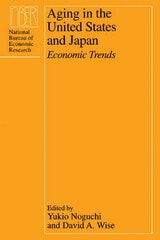
Aging in the United States and Japan
Economic TrendsEdited by Yukio Noguchi and David A. Wise
University of Chicago Press, 1994
With essays on labor force participation and retirement, housing equity and the economic status of the elderly, budget implications of an aging population, and financing social security and health care in the 1990s, this volume covers a broad spectrum of issues related to the economics of aging. Among the book's findings are that workers are retiring at an increasingly earlier age in both countries and that, as the populations age, baby boomers in the United States will face diminishing financial resources as the ratio of retirees to workers sharply increases.
The result of a joint venture between the National Bureau of Economic Research and the Japan Center for Economic Research, this book complements Housing Markets in the United States and Japan (1994) by integrating research on housing markets with economic issues of the aged in the United States and Japan.
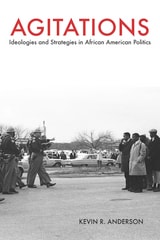
Agitations
Ideologies and Strategies in African American PoliticsKevin R. Anderson
University of Arkansas Press, 2010
Though the activities of the National Association for the Advancement of Colored People (NAACP), the Southern Christian Leadership Conference (SCLC), and the Student Nonviolent Coordinating Committee (SNCC) were unified in their common idea of resistance to oppression, these groups fought their battles on multiple fronts. The NAACP filed lawsuits and aggressively lobbied Congress and state legislatures, while Martin Luther King Jr. and SCLC challenged the racial status quo through nonviolent mass action, and the SNCC focused on community empowerment activities. In Agitations, Kevin Anderson studies these various activities in order to trace the ideological foundations of these groups and to understand how diversity among African Americans created multiple political strategies.
Agitations goes beyond the traditionally acknowledged divide between integrationist and accommodationist wings of African American politics to explore the diverse fundamental ideologies and strategic outcomes among African American activists that still define, influence, and complicate political life today.

Agricultural Biotechnology and the Environment
Science, Policy, and Social IssuesSheldon Krimsky and Roger Wrubel
University of Illinois Press, 1996
"Extraordinarily well documented . . . remarkably clear. This is
the most comprehensive coverage of these issues to date. It will be required
reading for some time." -- Lawrence Busch, Michigan State University
"Krimsky and Wrubel not only describe the components of agricultural
biotechnology, they address and analyze controversies involving the risks
and benefits of new technologies. Coverage of technical to social components
of agricultural biotechnology is unusually complete and thorough. Their
even-handed and comprehensive approach to these topics is rare and extremely
valuable." -- Richard Weinzierl, University of Illinois
Modern agriculture is being transformed by the genetic alteration of
seeds, animals, and microorganisms, a process that has produced such products
as flavor saver tomatoes and crops resistant to specific insects or herbicides.
Agricultural Biotechnology and the Environment is the first comprehensive
overview of the ongoing transformation of agriculture, exploring the impact
of genetic engineering from scientific, social, ethical, and ecological
perspectives.
Sheldon Krimsky and Roger Wrubel detail the impact the new generation
of products is expected to have on agricultural practice and the environment
and assess the degree to which current trends in biotechnology match earlier
expectations. They also analyze the social and political response to innovations
resulting from genetic technology.
Closely examined in each of three areas--transgenic plants, genetically
engineered microorganisms, and transgenic animals--are technical and scientific
problems, social controversies, and anticipated environmental impacts.
An objective, detailed look at a subject of interest to a broad spectrum
of readers, Agricultural Biotechnology and the Environment will
be of interest to researchers in the new biotechnology fields as well
as to educated general readers and policymakers.
A volume in the series The Environment and the Human Condition

Agricultural Productivity and Producer Behavior
Edited by Wolfram Schlenker
University of Chicago Press, 2019

Aguecheek's Beef, Belch's Hiccup, and Other Gastronomic Interjections
Literature, Culture, and Food Among the Early ModernsRobert Appelbaum
University of Chicago Press, 2006

Ahab's Rolling Sea
A Natural History of "Moby-Dick"Richard J. King
University of Chicago Press, 2019
A revelation for Moby-Dick devotees and neophytes alike, Ahab’s Rolling Sea is a chronological journey through the natural history of Melville’s novel. From white whales to whale intelligence, giant squids, barnacles, albatross, and sharks, Richard J. King examines what Melville knew from his own experiences and the sources available to a reader in the mid-1800s, exploring how and why Melville might have twisted what was known to serve his fiction. King then climbs to the crow’s nest, setting Melville in the context of the American perception of the ocean in 1851—at the very start of the Industrial Revolution and just before the publication of On the Origin of Species. King compares Ahab’s and Ishmael’s worldviews to how we see the ocean today: an expanse still immortal and sublime, but also in crisis. And although the concept of stewardship of the sea would have been entirely foreign, if not absurd, to Melville, King argues that Melville’s narrator Ishmael reveals his own tendencies toward what we would now call environmentalism.
Featuring a coffer of illustrations and an array of interviews with contemporary scientists, fishers, and whale watch operators, Ahab’s Rolling Sea offers new insight not only into a cherished masterwork and its author but also into our evolving relationship with the briny deep—from whale hunters to climate refugees.
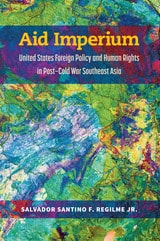
Aid Imperium
United States Foreign Policy and Human Rights in Post-Cold War Southeast AsiaSalvador Santino F. Regilme Jr.
University of Michigan Press, 2021
Does foreign aid promote human rights? As the world’s largest aid donor, the United States has provided foreign assistance to more than 200 countries. Deploying global numerical data on US foreign aid and comparative historical analysis of America’s post–Cold War foreign policies in Southeast Asia, Aid Imperium provides the most comprehensive explanation that links US strategic assistance to physical integrity rights outcomes in recipient countries, particularly in ways that previous quantitative studies have systematically ignored. The book innovatively highlights the active political agency of Global South states and actors as they negotiate and chart their political trajectories with the United States as the core state of the international system. Drawing from theoretical insights in the humanities and the social sciences as well as a wide range of empirical documents, Aid Imperium is the first multidisciplinary study to explain how US foreign policy affects state repression and physical integrity rights outcomes in Southeast Asia and the rest of the Global South.