Results by title
18284 books match the query 'United States' and 1653 start with a
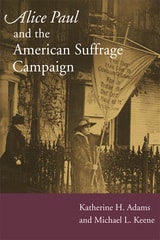
Alice Paul and the American Suffrage Campaign
Katharine H. Adams and Michael L. Keene
University of Illinois Press, 2007
Past biographies, histories, and government documents have ignored Alice Paul's contribution to the women's suffrage movement, but this groundbreaking study scrupulously fills the gap in the historical record. Masterfully framed by an analysis of Paul's nonviolent and visual rhetorical strategies, Alice Paul and the American Suffrage Campaign narrates the remarkable story of the first person to picket the White House, the first to attempt a national political boycott, the first to burn the president in effigy, and the first to lead a successful campaign of nonviolence.
Katherine H. Adams and Michael L. Keene also chronicle other dramatic techniques that Paul deftly used to gain publicity for the suffrage movement. Stunningly woven into the narrative are accounts of many instances in which women were in physical danger. Rather than avoid discussion of Paul's imprisonment, hunger strikes, and forced feeding, the authors divulge the strategies she employed in her campaign. Paul's controversial approach, the authors assert, was essential in changing American attitudes toward suffrage.

Alice and Eleanor
A Contrast in Style and PurposeSandra R. Curtis
University of Wisconsin Press, 0
Alien Encounters
Popular Culture in Asian AmericaMimi Thi Nguyen and Thuy Linh Nguyen Tu, eds.
Duke University Press, 2007
This interdisciplinary collection brings together contributors working in Asian American studies, English, anthropology, sociology, and art history. They consider issues of cultural authenticity raised by Asian American participation in hip hop and jazz, the emergence of an orientalist “Indo-chic” in U.S. youth culture, and the circulation of Vietnamese music variety shows. They examine the relationship between Chinese restaurants and American culture, issues of sexuality and race brought to the fore in the video performance art of a Bruce Lee–channeling drag king, and immigrant television viewers’ dismayed reactions to a Chinese American chef who is “not Chinese enough.” The essays in Alien Encounters demonstrate the importance of scholarly engagement with popular culture. Taking popular culture seriously reveals how people imagine and express their affective relationships to history, identity, and belonging.
Contributors. Wendy Hui Kyong Chun, Kevin Fellezs, Vernadette Vicuña Gonzalez, Joan Kee, Nhi T. Lieu, Sunaina Maira, Martin F. Manalansan IV, Mimi Thi Nguyen, Robyn Magalit Rodriguez, Sukhdev Sandhu, Christopher A. Shinn, Indigo Som, Thuy Linh Nguyen Tu, Oliver Wang
Alien Forms and Minor Genres
A Speculative Handbook of Academic LaborTina Chen
Duke University Press, 2026

Alien Neighbors, Foreign Friends
Asian Americans, Housing, and the Transformation of Urban CaliforniaCharlotte Brooks
University of Chicago Press, 2009
Between the early 1900s and the late 1950s, the attitudes of white Californians toward their Asian American neighbors evolved from outright hostility to relative acceptance. Charlotte Brooks examines this transformation through the lens of California’s urban housing markets, arguing that the perceived foreignness of Asian Americans, which initially stranded them in segregated areas, eventually facilitated their integration into neighborhoods that rejected other minorities.
Against the backdrop of cold war efforts to win Asian hearts and minds, whites who saw little difference between Asians and Asian Americans increasingly advocated the latter group’s access to middle-class life and the residential areas that went with it. But as they transformed Asian Americans into a “model minority,” whites purposefully ignored the long backstory of Chinese and Japanese Americans’ early and largely failed attempts to participate in public and private housing programs. As Brooks tells this multifaceted story, she draws on a broad range of sources in multiple languages, giving voice to an array of community leaders, journalists, activists, and homeowners—and insightfully conveying the complexity of racialized housing in a multiracial society.
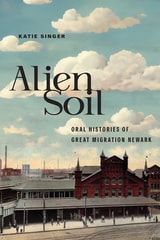
Alien Soil
Oral Histories of Great Migration NewarkKatie Singer
Rutgers University Press, 2024
The book begins with the Krueger-Scott Mansion’s deep history, followed by the sequence of events surrounding the proposed Cultural Center. Last owned by African-American millionaire and beauty-culture entrepreneur Louise Scott, the Victorian Krueger-Scott Mansion was built by beer baron Gottfried Krueger in 1888. Through the history of the Mansion, and the ultimately failed Cultural Center project, one learns about the Newark that African Americans migrated to, what they found when they got there, how living in the city changed them, and how they, individually and collectively, changed Newark.
After the Cultural Center project was officially halted in 2000, the cassette tapes of the oral history interviews were stored away at the Newark Public Library. Ten years later they were unearthed, and ultimately digitized. As of yet, no one has applied these sources directly to their research. Deeply committed to these rich, insightful stories, Singer calls for a more thoughtful consideration of all cities, reminding us that Newark is much more than its 1967 rebellion.
Alien
Reflections on Being an ImmigrantSandro Galea
University of Chicago Press, 2026
A personal treatise from distinguished social scientist Sandro Galea on the indelible effects of being an immigrant—and what it means for the greater good.
“I am one of the lucky ones,” writes Sandro Galea. Galea left home in Malta at fourteen with his parents and sister as the island was rocked by political turmoil. The family made their way to Canada and Galea, in turn, eventually made his way to the United States. This is the story of Galea’s long, surreal journey of forging a life in a series of new and unfamiliar places.
With spare and deeply affecting prose, Alien is a poignant exploration of what it means to build a life across borders—and why it’s important for all of us. Galea’s intimate and personal story frames the experience of being an immigrant in terms of its indelible lessons on adaptation, identity, belonging, and shared generosity. Galea also captures at once the joys and the uncertainties that define the process of uprooting one life to begin another abroad. His is a reflection on empathy, on precarity, and on the effect of immigrating, in which one becomes keenly aware of how quickly life—and the world—can change.
Blending philosophical inquiry and personal story, Alien bridges the gap between storytelling and scholarship and, in doing so, gifts us an essential aperture on the world not everyone experiences—and the value of having those who do.

Aliens and Dissenters
Federal Suppression of Radicals, 1903-1933William Preston, Jr.
University of Illinois Press, 1994

Alignment, Alliance, and American Grand Strategy
Zachary Selden
University of Michigan Press, 2016
Amid calls for retrenchment or restraint, Selden makes the case that a policy focused on maintaining American military preeminence and the demonstrated willingness to use force may be what sustains the cooperation of second-tier states, which in turn help to maintain US hegemony at a manageable cost.
Alive in the Sound
Black Music as CounterhistoryRonald Radano
Duke University Press, 2025
All Ages Welcome
Recruiting and Retaining Younger Generations for Library Boards, Friends Groups, and FoundationsLina Bertinelli
American Library Association, 2020
According to 2016 Pew Research Center survey data, Millennials are more likely to have visited a public library in the past year than any other adult demographic. But despite being core library users, millennials and other younger generations are often underrepresented on library boards and library advocacy groups, including Friends groups and Foundations. But you can change that, with the help of this planner’s hands-on worksheets, brainstorming activities, checklists, and expert advice. Using this toolkit from United for Libraries you will
- understand generational differences and commonalities through statistics and analysis of Baby Boomers, Generation X, Millennials and Generation Z/post-Millennials;
- learn how to navigate the challenges of fundraising with the “debt generations” by persuasively answering the question “what’s in it for me?”;
- master the ABCs of recruitment and retention, tailoring them to fit your library;
- craft several customized pitches, giving you confidence no matter the situation or audience;
- discover how to cement buy-in from two key groups, current organization members and your new recruits, thereby ensuring acceptance and enthusiasm all around;
- work towards defining and managing diversity for your advocacy group; and
- use tried and true methods for successful onboarding of volunteers, including a Board Member Orientation Checklist and guidance on mentoring.
Using this resource, libraries of all kinds will be empowered to grow and strengthen their recruitment, retention, and training of Trustees, Friends, and Foundation members.
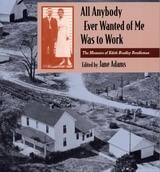
All Anybody Ever Wanted of Me Was to Work
The Memoirs of Edith Bradley RendlemanEdith Bradley Rendleman. Edited by Jane Adams
Southern Illinois University Press, 1996
From All Anybody Ever Wanted of Me Was to Work...
"Starting around 1950, people stopped raising chickens, milking cows, and raising hogs. They just buy it at the store, ready to eat. A lot buy a steer and have it processed in Dongola and put it in their freezer. What a difference! Girls have got it so easy now. They don't even know what it was like to start out. And I guess my mother's life, when she started out, was as hard again as mine, because they had to make everything by hand. I don't know if it could get any easier for these girls. But they don't know what it was like, and they never will. Everything is packaged. All you do is go to the store and buy you a package and cook it. Automatic washers and dryers. I'm glad they don't have to work like I did. Very glad."
Edith Bradley Rendleman's story of her life in southern Illinois is remarkable in many ways. Recalling the first half of the twentieth century in great detail, she vividly cites vignettes from her childhood as her family moved from farm to farm until settling in 1909 in the Mississippi bottoms of Wolf Lake. She recounts the lives and times of her family and neighbors during an era gone forever.
Remarkable for the vivid details that evoke the past, Rendleman's account is rare in another respect: memoirs of the time—usually written by people from elite or urban families—often reek of nostalgia. But Rendleman's memoir differs from the norm. Born poor in rural southern Illinois, she tells an unvarnished tale of what it was really like growing up on a tenant farm early this century.
All Creatures Safe and Sound
The Social Landscape of Pets in DisastersSarah E. DeYoung and Ashley K. Farmer
Temple University Press, 2021
Some of the most striking news stories from natural disasters are of animals tied to trees or cats swimming through murky flood waters. Although the issue of evacuating pets has gained more attention in recent disasters, there are still many failures throughout local and national systems of managing pets and accommodating animals in emergencies.
All Creatures Safe and Sound is a comprehensive study of what goes wrong in our disaster response that shows how people can better manage pets in emergencies—from the household level to the large-scale, national level. Authors Sarah DeYoung and Ashley Farmer offer practical disaster preparedness tips while they address the social complexities that affect disaster management and animal rescue. They track the developments in the management of pets since Hurricane Katrina, including an analysis of the 2006 PETS Act, which dictates that animals should be included in hazard and disaster planning. Other chapters focus on policies in place for sheltering and evacuation, coalitions for animal welfare and the prevention of animal cruelty, organizational coordination, decision-making, preparedness, the role of social media in animal rescue and response, and how privilege and power shape disaster experiences and outcomes.
Using data they collected from seven major recent American disasters, ranging from Hurricanes Harvey, Irma, and Florence to the Camp, Tubbs, and Carr Fires in California and the Hawaii Lava Flow, the authors provide insights about the successes and failures of animal care. All Creatures Safe and Sound also outlines what still needs to change to best prepare for the safety and welfare of pets, livestock, and other companion animals in times of crisis.

All God's Mistakes
Genetic Counseling in a Pediatric HospitalCharles L. Bosk
University of Chicago Press, 1992
All I Ever Wanted
A Rock 'n' Roll MemoirBy Kathy Valentine
University of Texas Press, 2021
Runner-up, Carr P. Collins Award for Best Book of Non-Fiction, 2021
Go-Go’s bassist Kathy Valentine’s story is a roller coaster of sex, drugs, and of course, music; it’s also a story of what it takes to find success and find yourself, even when it all comes crashing down.
At twenty-one, Kathy Valentine was at the Whisky in Los Angeles when she met a guitarist from a fledgling band called the Go-Go’s—and the band needed a bassist. The Go-Go’s became the first multi-platinum-selling, all-female band to play instruments themselves, write their own songs, and have a number one album. Their debut, Beauty and the Beat, spent six weeks at the top of the Billboard 200 and featured the hit songs “We Got the Beat” and “Our Lips Are Sealed.” The record's success brought the pressures of a relentless workload and schedule culminating in a wild, hazy, substance-fueled tour that took the band from the club circuit to arenas, where fans, promoters, and crew were more than ready to keep the party going.
For Valentine, the band's success was the fulfillment of a lifelong dream—but it’s only part of her story. All I Ever Wanted traces the path that took her from her childhood in Texas—where she all but raised herself—to the height of rock n’ roll stardom, devastation after the collapse of the band that had come to define her, and the quest to regain her sense of self after its end. Valentine also speaks candidly about the lasting effects of parental betrayal, abortion, rape, and her struggles with drugs and alcohol—and the music that saved her every step of the way. Populated with vivid portraits of Valentine’s interactions during the 1980s with musicians and actors from the Police and Rod Stewart to John Belushi and Rob Lowe, All I Ever Wanted is a deeply personal reflection on a life spent in music.
All In
Expanding Access through Nationally Competitive AwardsSuzanne McCray
University of Arkansas Press, 2013
All In
The Spread of Gambling in Twentieth-Century United StatesJonathan D Cohen
University of Nevada Press, 2018
A fresh take on the history of modern American gambling, All In provides a closer look at the shifting economic, cultural, religious, and political conditions that facilitated gambling’s expansion and prominence in American consumerism and popular culture. In its pages, a diverse range of essays covering commercial and Native American casinos, sports betting, lotteries, bingo, and more piece together a picture of how gambling became so widespread over the course of the twentieth century.
Drawing from a range of academic disciplines, this collection explores five aspects of American gambling history: crime, advertising, politics, religion, and identity.
In doing so, All In illuminates the on-the-ground debates over gambling’s expansion, the failed attempts to thwart legalized betting, and the consequences of its present ubiquity in the United States.
All Is Leaf
Essays and TransformationsJohn T Price
University of Iowa Press, 2022
He employs an array of forms and voices, whether penning a break-up letter to America or a literary rock-n-roll road song dedicated to prairie scientists, or giving pregame pep talks to his son’s losing football team. Here, too, are moving portrayals of his father’s last effort as a small-town lawyer to defend the rights of abused women, and his own efforts as a writing teacher to honor the personal stories of his students.
From his Iowa backyard to the edge of the Arctic Circle, from the forgotten recesses of the body to the far reaches of the solar system, this book demonstrates the ways imagination and informed compassion can, as Price describes it, expand thousandfold the boundaries of what we might “have naïvely considered an individual self.”
All My Friends Live in My Computer
Trauma, Tactical Media, and MeaningSamira Rajabi
Rutgers University Press, 2021
All My Mothers and Fathers
A MemoirMichael Blumenthal
West Virginia University Press, 2016
As fate would have it, his adoptive father, a German-Jewish refugee raised by a loveless and embittered stepmother after his own mother died in childbirth, has inflicted on his stepson a fate uncannily—and terrifyingly—similar to his own: Having first adopted Michael, in part, to help his dying wife, he then imposes on him the same sort of penurious and loveless stepmother whom he himself had had to survive. With these revelations, the "mysteries" that seem to have permeated Michael's childhood are laid bare, triggering a quest for belonging that will infiltrate the author's entire adult life.
All My Relatives
Community in Contemporary Ethnic American LiteraturesBonnie TuSmith
University of Michigan Press, 1994
All My Relatives provides a new way of reading popular works such as The Woman Warrior, The Joy Luck Club, The Color Purple and John Edgar Wideman's Sent for You Yesterday. TuSmith's study will appeal to general readers as well as students and scholars of American culture, ethnic studies, and American literature.
"An original contribution to the field. TuSmith's willingness to step over invisible boundaries and to draw parallels between the cultural contexts of several ethnic groups at once is refreshing and important." --Amy Ling, University of Wisconsin, Madison
"Ambitious and timely . . . a significant work that Americanists will want to read. TuSmith does an excellent job of clarifying the meaning and significance of the term "ethnicity" in relation to American literature."--Ramón Saldívar, Stanford University
". . . TuSmith establishes the importance of traditional (usually oral) modes of expression to ethnic texts that are both relational and accessible . . . . [S]hould become a standard point of reference in the emerging field of comparative American literature."--Choice
Bonnie TuSmith is Assistant Professor of English, Bowling Green State University.
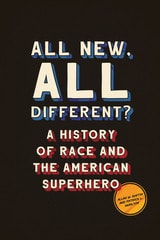
All New, All Different?
A History of Race and the American SuperheroBy Allan W. Austin and Patrick L. Hamilton
University of Texas Press, 2019
Winner, John G. Cawelti Award for the Best Textbook/Primer, Popular Culture Association/American Culture Association, 2019
MPCA/ACA Book Award, Midwest Popular Culture Association / Midwest American Culture Association, 2020
Taking a multifaceted approach to attitudes toward race through popular culture and the American superhero, All New, All Different? explores a topic that until now has only received more discrete examination. Considering Marvel, DC, and lesser-known texts and heroes, this illuminating work charts eighty years of evolution in the portrayal of race in comics as well as in film and on television.
Beginning with World War II, the authors trace the vexed depictions in early superhero stories, considering both Asian villains and nonwhite sidekicks. While the emergence of Black Panther, Black Lightning, Luke Cage, Storm, and other heroes in the 1960s and 1970s reflected a cultural revolution, the book reveals how nonwhite superheroes nonetheless remained grounded in outdated assumptions. Multiculturalism encouraged further diversity, with 1980s superteams, the minority-run company Milestone’s new characters in the 1990s, and the arrival of Ms. Marvel, a Pakistani-American heroine, and a new Latinx Spider-Man in the 2000s. Concluding with a discussion of contemporary efforts to make both a profit and a positive impact on society, All New, All Different? enriches our understanding of the complex issues of racial representation in American popular culture.

All Our Trials
Prisons, Policing, and the Feminist Fight to End ViolenceEmily L. Thuma
University of Illinois Press, 2019
All Our Trials explores the organizing, ideas, and influence of those who placed criminalized and marginalized women at the heart of their antiviolence mobilizations. This activism confronted a "tough on crime" political agenda and clashed with the mainstream women’s movement’s strategy of resorting to the criminal legal system as a solution to sexual and domestic violence. Drawing on extensive archival research and first-person narratives, Thuma weaves together the stories of mass defense campaigns, prisoner uprisings, broad-based local coalitions, national gatherings, and radical print cultures that cut through prison walls. In the process, she illuminates a crucial chapter in an unfinished struggle––one that continues in today’s movements against mass incarceration and in support of transformative justice.
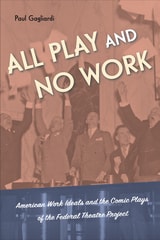
All Play and No Work
American Work Ideals and the Comic Plays of the Federal Theatre ProjectGagliardi, Paul
Temple University Press, 2024
All Play and No Work directly contradicts the promoted ideals of work found in American society, culture, and within the broader New Deal itself. Gagliardi shows how comedies of the Great Depression engaged questions of labor, labor history, and labor ethics. He considers the breadth of the FTP’s production history, staging plays including Ah, Wilderness!, Help Yourself, and Mississippi Rainbow.
Gagliardi examines backstage comedies, middle-class comedies, comedies of chance, and con-artist comedies that employed diverse casts and crew and contained radical economic and labor ideas. He contextualizes these plays within the ideologically complicated New Deal, showing how programs like the Social Security Act straddled progressive ideals and conservative, capitalist norms. Addressing topics including the politicization of theatrical labor and the real dangers of unchecked economic con artists, the comic plays of the FTP reveal acts of political resistance and inequality that reflected the concerns of their audiences.
All That Road Going
A NovelA. G. Mojtabai
Northwestern University Press, 2008
In the middle of the night, somewhere in Oklahoma—or is it Missouri?—a bus hurtles down an anonymous American highway. Its passengers, among them two children traveling on their own, a retired salesman, an unwed teenage mother, an unemployed chemist, and the driver who ferries and broods over all of them, are in the middle of their journeys. Soon, two of the passengers will be lost, and then the bus itself will lose its way.
The open road and, before that, the open frontier have long been part of the American romance, cherished features of the nation's traditional vision of itself. In her latest novel, A. G. Mojtabai stands this tradition on its head. Instead of the expansive thrust into unknown territory, the camaraderie of the open road, adventure, and the joys of vagabondage, we witness constriction, isolation, and fear. Instead of freedom, we find people fleeing from coast to coast in search of home and the ever-beckoning, ever-retreating promise of a better life. Richly drawn, evocative, and thought-provoking, All That Road Going is a challenging new departure from the road novel canon.
All They Will Call You
Tim Z. Hernandez
University of Arizona Press, 2017
All They Will Call You is the harrowing account of “the worst airplane disaster in California’s history,” which claimed the lives of thirty-two passengers, including twenty-eight Mexican citizens—farmworkers who were being deported by the U.S. government. Outraged that media reports omitted only the names of the Mexican passengers, American folk icon Woody Guthrie penned a poem that went on to become one of the most important protest songs of the twentieth century, “Plane Wreck at Los Gatos (Deportee).” It was an attempt to restore the dignity of the anonymous lives whose unidentified remains were buried in an unmarked mass grave in California’s Central Valley. For nearly seven decades, the song’s message would be carried on by the greatest artists of our time, including Pete Seeger, Dolly Parton, Bruce Springsteen, Bob Dylan, and Joan Baez, yet the question posed in Guthrie’s lyrics, “Who are these friends all scattered like dry leaves?” would remain unanswered—until now.
Combining years of painstaking investigative research and masterful storytelling, award-winning author Tim Z. Hernandez weaves a captivating narrative from testimony, historical records, and eyewitness accounts, reconstructing the incident and the lives behind the legendary song. This singularly original account pushes narrative boundaries, while challenging perceptions of what it means to be an immigrant in America, but more importantly, it renders intimate portraits of the individual souls who, despite social status, race, or nationality, shared a common fate one frigid morning in January 1948.
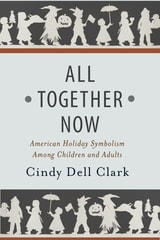
All Together Now
American Holiday Symbolism Among Children and AdultsCindy Dell Clark
Rutgers University Press, 2019
The decorations, songs, special ways of dressing, and rituals carry deep significance that is viscerally felt by even young tots. Ritual has the capacity to condense a plethora of meaning into a unified metaphor such as a Christmas tree, a menorah, or the American flag. These symbols allow children and adults to co-opt the meaning of symbols in flexible and age-relevant ways, all while the symbols are still treasured and shared in common.
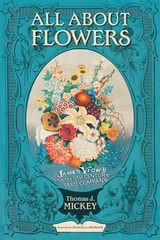
All about Flowers
James Vick's Nineteenth-Century Seed CompanyThomas J. Mickey
Ohio University Press, 2021
A nineteenth-century entrepreneur’s bold, innovative marketing helped transform flower gardens into one of America’s favorite hobbies.
“There is much that is hard and productive of sorrow in this sin-plagued world of ours; and, had we no flowers, I believe existence would be hard to be borne.” So states a customer’s 1881 letter—one of thousands James Vick regularly received. Vick’s business, selling flower seeds through the mail, wasn’t unique, but it was wildly successful because he understood better than his rivals how to engage customers’ emotions. He sold the love of flowers along with the flower seeds.
Vick was genuinely passionate about floriculture, but he also pioneered what we now describe as integrated marketing. He spent a mind-boggling $100,000 per year on advertising (mostly to women, his target demographic); he courted newspaper editors for free publicity; his educational guides presaged today’s content marketing; he recruited social influencers to popularize neighborhood gardening clubs; and he developed a visually rich communication and branding strategy to build customer loyalty and inflect their purchasing needs with purchasing desire.
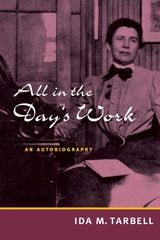
All in the Day's Work
AN AUTOBIOGRAPHYIda M. Tarbell
University of Illinois Press, 2003
Tarbell was the only woman in her class of forty students at Allegheny College, and upon graduation she began an internship at The Chautauquan, which was the start of a lifelong immersion in the world of journalism. She further honed her skills during a three-year stint in Paris, but the breakthrough came in 1894 when she was hired as a full-time writer for McClure's Magazine.
It was at McClure's--where, again, she was the only woman on staff--that Tarbell made her name as a determined journalist, one of the fearless brigade of truth-seekers famously chastised by Theodore Roosevelt, who coined the term ‘muckraker' in order to discredit those who attacked senators in print. Tarbell wrote serialized biographies of Napoleon and Abraham Lincoln, as well as a landmark series of articles on Standard Oil and John D. Rockefeller.
In All in the Day's Work, Tarbell turns her keen eye on herself, recalling the events of her fascinating life with the same honesty, verve, and scrupulous accuracy she brought to her journalistic work, offering insight along the way into the people, places, and issues of her time.
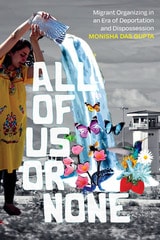
All of Us or None
Migrant Organizing in an Era of Deportation and DispossessionMonisha Das Gupta
Duke University Press, 2024
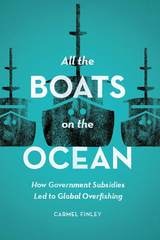
All the Boats on the Ocean
How Government Subsidies Led to Global OverfishingCarmel Finley
University of Chicago Press, 2017
In this transnational, interdisciplinary history, Carmel Finley answers these questions and more as she explores how government subsidies propelled the expansion of fishing from a coastal, in-shore activity into a global industry. While nation states struggling for ocean supremacy have long used fishing as an imperial strategy, the Cold War brought a new emphasis: fishing became a means for nations to make distinct territorial claims. A network of trade policies and tariffs allowed cod from Iceland and tuna canned in Japan into the American market, destabilizing fisheries in New England and Southern California. With the subsequent establishment of tuna canneries in American Samoa and Puerto Rico, Japanese and American tuna boats moved from the Pacific into the Atlantic and Indian Oceans after bluefin. At the same time, government subsidies in nations such as Spain and the Soviet Union fueled fishery expansion on an industrial scale, with the Soviet fleet utterly depleting the stock of rosefish (or Pacific ocean perch) and other groundfish from British Columbia to California. This massive global explosion in fishing power led nations to expand their territorial limits in the 1970s, forever changing the seas.
Looking across politics, economics, and biology, All the Boats on the Ocean casts a wide net to reveal how the subsidy-driven expansion of fisheries in the Pacific during the Cold War led to the growth of fisheries science and the creation of international fisheries management. Nevertheless, the seas are far from calm: in a world where this technologically advanced industry has enabled nations to colonize the oceans, fish literally have no place left to hide, and the future of the seas and their fish stocks is uncertain.
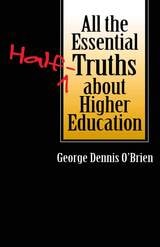
All the Essential Half-Truths about Higher Education
George Dennis O'Brien
University of Chicago Press, 1997
"O'Brien's historical overview of the transition from 19th-century denominational colleges to 20th-century research-driven and largely secular ones is provocative. Cleverly written and well-focused, the book addresses the financial pressures facing higher education and asks vital questions about cutbacks and curricula."—Publishers Weekly
"Lively, engaging, and richly suggestive." —Francis Oakley, Commonweal
"O'Brien employs calm, powerful reason, without sensationalism. His perspective is illuminating. . . . All the Essential Half-Truths About Higher Education is one of the wisest and most useful treatments of American higher education." —John Attarian, Detroit News
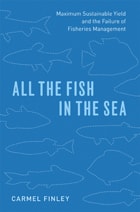
All the Fish in the Sea
Maximum Sustainable Yield and the Failure of Fisheries ManagementCarmel Finley
University of Chicago Press, 2011
Carmel Finley reveals that the fallibility of MSY lies at its very inception—as a tool of government rather than science. The foundational doctrine of MSY emerged at a time when the US government was using science to promote and transfer Western knowledge and technology, and to ensure that American ships and planes would have free passage through the world’s seas and skies. Finley charts the history of US fisheries science using MSY as her focus, and in particular its application to halibut, tuna, and salmon fisheries. Fish populations the world over are threatened, and All the Fish in the Sea helps to sound warnings of the effect of any management policies divested from science itself.
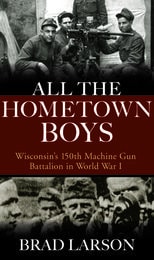
All the Hometown Boys
Wisconsin's 150th Machine Gun Battalion in World War IBrad Larson
University of Wisconsin Press, 2019
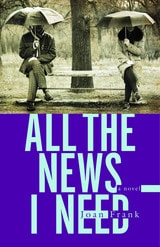
All the News I Need
a novelJoan Frank
University of Massachusetts Press, 2017
Because of course she feels what he feels. . . . People their age natter along not copping to it but the awareness is billboarded all over their faces—a wavering, a hesitation, even those who used to crow and jab the air. The tablecloth of certainty, with all its sparkly settings, has been yanked, and not artfully. It's why people drink.
All The News I Need probes the modern American response to inevitable, ancient riddles—of love and sex and mortality.
Frances Ferguson is a lonely, sharp-tongued widow who lives in the wine country. Oliver Gaffney is a painfully shy gay man who guards a secret and lives out equally lonely days in San Francisco. Friends by default, Fran and Ollie nurse the deep anomie of loss and the creeping, animal betrayal of aging. Each loves routine but is anxious that life might be passing by. To crack open this stalemate, Fran insists the two travel together to Paris. The aftermath of their funny, bittersweet journey suggests those small changes, within our reach, that may help us save ourselves—somewhere toward the end.
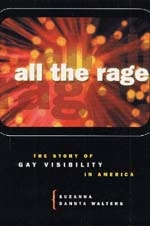
All the Rage
The Story of Gay Visibility in AmericaSuzanna Danuta Walters
University of Chicago Press, 2001
Many consider the new gay visibility a sign of social acceptance, while others charge that it is mere window dressing, obscuring the dogged persistence of discrimination. Walters moves beyond these positions and instead argues that these realities coexist: gays are simultaneously depicted as the sign of social decay and the chic flavor of the month. Taking on the common wisdom that visibility means progress, All the Rage maps the terrain on which gays are accepted as witty accessories in movies, gain access to political power, and yet still fall into constrictive stereotypes. Walters warns us with clarity and wit of the pitfalls of equating visibility with full integration into the fabric of American society. From the playful TV fantasies of lesbian weddings on Friends to the very real obstacles confronting gay marriage, from the award-winning comedy Will & Grace to Bible-thumping radio superhost Dr. Laura, All the Rage takes on naive celebrants and jaded naysayers alike. With a sophisticated mix of caution and optimism, it provides an illuminating guide through these exciting, controversial times.
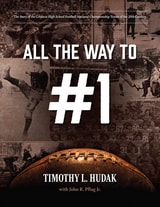
All the Way to #1
The Story of the Greatest High School Football National Championship Teams of the 20th CenturyTimothy L. Hudak
Ohio University Press, 2015
But which of these teams was the greatest?
All the Way to #1 is the first book to thoroughly document the nation’s top high school football teams from the 20th century. Identifying seventeen legendary programs, football historian Timothy Hudak tells the exciting and entertaining stories of how these teams came to prominence on the national stage. Fans will be particularly interested in Hudak’s conclusion about which of these teams was the best.
Filled with 330 black and white photos, statistics, and the most comprehensive listing of the 20th century’s high school football champions found anywhere, All the Way to #1 is a one-of-a-kind book that will be perfect for fans across the country.
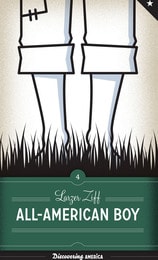
All-American Boy
By Larzer Ziff
University of Texas Press, 2012
From his celebrated appearance, hatchet in hand, in Parson Mason Locke Weems’s Life of Washington to Booth Tarkington’s Penrod, the all-American boy was an iconic figure in American literature for well over a century. Sometimes he was a “good boy,” whose dutiful behavior was intended as a model for real boys to emulate. Other times, he was a “bad boy,” whose mischievous escapades could be excused either as youthful exuberance that foreshadowed adult industriousness or as deserved attacks on undemocratic pomp and pretension. But whether good or bad, the all-American boy was a product of the historical moment in which he made his appearance in print, and to trace his evolution over time is to take a fresh view of America’s cultural history, which is precisely what Larzer Ziff accomplishes in All-American Boy.
Ziff looks at eight classic examples of the all-American boy—young Washington, Rollo, Tom Bailey, Tom Sawyer, Ragged Dick, Peck’s “bad boy,” Little Lord Fauntleroy, and Penrod—as well as two notable antitheses—Huckleberry Finn and Holden Caulfield. Setting each boy in a rich cultural context, Ziff reveals how the all-American boy represented a response to his times, ranging from the newly independent nation’s need for models of democratic citizenship, to the tales of rags-to-riches beloved during a century of accelerating economic competition, to the recognition of adolescence as a distinct phase of life, which created a stage on which the white, middle-class “solid citizen” boy and the alienated youth both played their parts.
All-American Massacre
The Tragic Role of American Culture and Society in Mass ShootingsEdited by Eric Madfis and Adam Lankford
Temple University Press, 2023
With a specific focus on exploring how American culture, institutions, and social structures influence the circumstances, frequency, and severity of mass shootings in the United States, All-American Massacre advances emerging theoretical perspectives and forges fresh approaches, new research questions, and innovative data and conclusions.
Bringing together pioneering scholars, this groundbreaking compilation of research and analysis identifies the social roots of this insidious threat and prompts new reflections on how we can stop the seemingly endless cycle of horror and death.All-American Massacre helps clarify the unique nature and salience of mass shootings in American life.
Contributors: Melanie Brazzell, Tristan Bridges, Ryan Broll, F. Chris Curran, Sarah E. Daly, Salvatore D’Angelo, James Densley, Tom Diaz, Scott Duxbury, Benjamin W. Fisher, Betsy Friauf, Emma E. Fridel, Celene Fuller, Daniel Gascón, Patrick J. Gauding, Brooke Miller Gialopsos, Simon Gottschalk, Donald P. Haider-Markel, Stephanie Howells, Cheryl Lero Jonson, Mark R. Joslyn, Jessie Klein, Aaron Kupchik, Alison J. Marganski, Melissa M. Moon, Kristen J. Neville, Jaimee Nix, Daniel Okamura, Patrick F. Parnaby, Jillian Peterson, Michael Phillips, Paul Reeping, Jason R. Silva, William A. Stadler, Lindsay Steenberg, Tara Leigh Tober, Jillian J. Turanovic, Abigail Vegter, Stanislav Vysotsky, Lacey N. Wallace and the editors
All-Out for Victory!
Magazine Advertising and the World War II Home FrontJohn Bush Jones
Brandeis University Press, 2009
Alley Life in Washington
Family, Community, Religion, and Folklife in the City, 1850-1970James Borchert
University of Illinois Press, 1980
Allies and Rivals
German-American Exchange and the Rise of the Modern Research UniversityEmily J. Levine
University of Chicago Press, 2021
During the nineteenth century, nearly ten thousand Americans traveled to Germany to study in universities renowned for their research and teaching. By the mid-twentieth century, American institutions led the world. How did America become the center of excellence in higher education? And what does that story reveal about who will lead in the twenty-first century?
Allies and Rivals is the first history of the ascent of American higher education seen through the lens of German-American exchange. In a series of compelling portraits of such leaders as Wilhelm von Humboldt, Martha Carey Thomas, and W. E. B. Du Bois, Emily J. Levine shows how academic innovators on both sides of the Atlantic competed and collaborated to shape the research university. Even as nations sought world dominance through scholarship, universities retained values apart from politics and economics. Open borders enabled Americans to unite the English college and German PhD to create the modern research university, a hybrid now replicated the world over.
In a captivating narrative spanning one hundred years, Levine upends notions of the university as a timeless ideal, restoring the contemporary university to its rightful place in history. In so doing she reveals that innovation in the twentieth century was rooted in international cooperation—a crucial lesson that bears remembering today.
Allowed to Grow Old
Portraits of Elderly Animals from Farm SanctuariesIsa Leshko
University of Chicago Press, 2019
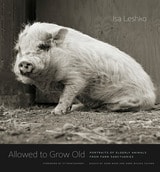
Isa Leshko shows us, brilliantly, with this collection of portraits. To create these portraits, she spent hours with her subjects, gaining their trust and putting them at ease. The resulting images reveal the unique personality of each animal. It’s impossible to look away from the animals in these images as they unforgettably meet our gaze, simultaneously calm and challenging. In these photographs we see the cumulative effects of the hardships of industrialized farm life, but also the healing that time can bring, and the dignity that can emerge when farm animals are allowed to age on their own terms.
Each portrait is accompanied by a brief biographical note about its subject, and the book is rounded out with essays that explore the history of animal photography, the place of beauty in activist art, and much more. Open this book to any page. Meet Teresa, a thirteen-year-old Yorkshire Pig, or Melvin, an eleven-year-old Angora Goat, or Tom, a seven-year-old Broad Breasted White Turkey. You’ll never forget them.
Alma Mater
Design and Experience in the Women's Colleges from Their Nineteenth-Century Beginnings to the 1930sHelen Lefkowitz Horowitz
University of Massachusetts Press, 1993
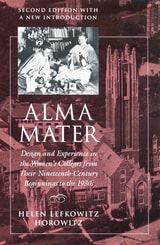
An examination of the founding and development of the Seven Sisters colleges—Mount Holyoke, Vassar, Wellesley, Smith, Radcliffe, Bryn Mawr, and Barnard—Alma Mater focuses on the ideas behind their establishment and the colleges' architectural, academic, and social histories, as well as those of their twentieth-century successors—Sarah Lawrence, Bennington, and Scripps.
Alma Richards
OlympianLarry R. Gerlach
University of Utah Press, 2016
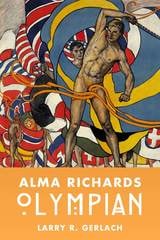
The book traces Richards from his boyhood in rural Parowan, Utah, to Cornell and through his service as an officer in World War I and his teaching career in Los Angeles. His story is that of a remarkable athlete, but also that of a man struggling for personal fulfillment while endeavoring to retain his Mormon heritage amid his changing religious circumstances and participation. More than a century has passed since Alma Richards won an Olympic gold medal, yet this story about man and sport—the drive to excel, victory as validation of hard work, the quest for public recognition and, ultimately, the achievement of self-identity and self-satisfaction—still resonates today.
Almost Gone
Brian Sousa
Tagus Press, 2013
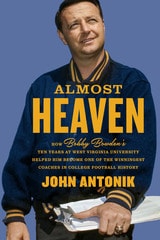
Almost Heaven
How Bobby Bowden's Ten Years at West Virginia University Helped Him Become One of the Winningest Coaches in College Football HistoryJohn Antonik
West Virginia University Press, 2025
Sports journalist John Antonik covers Bowden’s entire WVU tenure from 1966–75 and the circumstances, issues, difficulties, and obstacles that he had to overcome that were unique to this period in Mountaineer sports history. Additionally, Almost Heaven examines what transpired on WVU’s campus and in its athletic programs as well as nationally during the Vietnam War, campus protests, desegregation, and the complexities of the shifting NCAA landscape. Antonik paints a vivid picture of how Bowden’s time at WVU enriched him personally and professionally while putting athletics on a path toward the much greater successes that it enjoyed in the 1980s when Don Nehlen arrived. By the time he left Morgantown in the winter of 1976, following the Mountaineers’ 13–10 Peach Bowl victory over North Carolina State, which culminated in an outstanding 9–3 season, he was a far wiser and much better-prepared football coach. Those difficult lessons that Bowden learned at West Virginia led him down a path to greatness at Florida State.
Almost Heaven draws from an impressive array of primary sources, including newspaper articles; football team rosters; internal documents on recruiting; and interviews with former players, assistants, staffers, sports reporters, Bowden’s sons Tommy and Terry, and Bowden himself, prior to his passing in 2021. The year 2025 represents the 50th anniversary of his final season coaching the Mountaineers, and many of his players are now entering their golden years, making this the optimal time to tell this story.
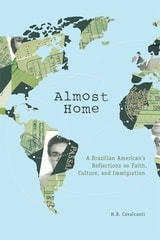
Almost Home
A Brazilian American's Reflections on Faith, Culture, and ImmigrationH. B. Cavalcanti
University of Wisconsin Press, 2012
Due to both his family background and the prevalence of U.S. media in Latin America, Cavalcanti already felt immersed in U.S. culture before arriving in Kentucky in 1981 to complete graduate studies. At that time, opportunities for advancement in the United States exceeded those in Brazil, and in an era of military dictatorships throughout much of Latin America, Cavalcanti sought in the United States a nation of laws. In this memoir, he reflects on the dynamics of acculturation, immigrant parenting, interactions with native-born U.S. citizens, and the costs involved in rejecting his country of birth for an adopted nation. He also touches on many of the factors that contribute to migration in both the “sending” and “receiving” countries and explores the contemporary phenomenon of accelerated immigration.
With its blend of personal anecdotes and scholarly information, Almost Home addresses both individual and policy-related issues to provide a moving portrait of the impact of migration on those who, like Cavalcanti, confront both the wonder and the disorientation inherent in the immigrant experience.
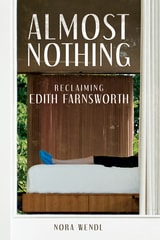
Almost Nothing
Reclaiming Edith FarnsworthNora Wendl
University of Illinois Press, 2025
Nora Wendl’s audacious work of creative nonfiction explodes the sex-and-real-estate myth surrounding the Edith Farnsworth House and its two central figures. An eminent physician and woman of letters, Farnsworth left a rich trove of correspondence, memoirs, and photographs that Wendl uses to reconstruct her voice. Farnsworth’s memories and experiences alternate with Wendl’s thoughts on topics like misogyny and professional ambition to fashion a lyrical examination of love, loneliness, beauty, and the search for the divine.
Eloquent and confessional, Almost Nothing restores Edith Farnsworth to her place in architectural history and the masterpiece that bears her name.
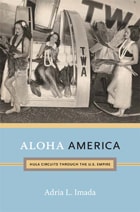
Aloha America
Hula Circuits through the U.S. EmpireAdria L. Imada
Duke University Press, 2012
At vaudeville theaters, international expositions, commercial nightclubs, and military bases, Hawaiian women acted as ambassadors of aloha, enabling Americans to imagine Hawai'i as feminine and benign, and the relation between colonizer and colonized as mutually desired. By the 1930s, Hawaiian culture, particularly its music and hula, had enormous promotional value. In the 1940s, thousands of U.S. soldiers and military personnel in Hawai'i were entertained by hula performances, many of which were filmed by military photographers. Yet, as Adria L. Imada shows, Hawaiians also used hula as a means of cultural survival and countercolonial political praxis. In Aloha America, Imada focuses on the years between the 1890s and the 1960s, examining little-known performances and films before turning to the present-day reappropriation of hula by the Hawaiian self-determination movement.