Results by title
1048 books match the query 'African American & Black' and 105 start with a
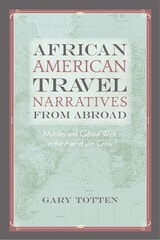
African American Travel Narratives from Abroad
Mobility and Cultural Work in the Age of Jim CrowGary Totten
University of Massachusetts Press, 2015
In this book, Gary Totten examines the global travel narratives of a diverse set of African American writers, including Ida B. Wells, Booker T. Washington, Matthew Henson, Jessie Redmon Fauset, and Zora Neale Hurston. While these writers deal with issues of identity in relation to a reimagined sense of self—in a way that we might expect to find in travel narratives—they also push against the constraints and conventions of the genre, reconsidering discourses of tourism, ethnography, and exploration. This book not only offers new insights about African American writers and mobility, it also charts the ideological distinctions and divergent agendas within this group of writers. Totten demonstrates how these travelers and their writings challenged dominant ideologies about African American experience, expression, and identity in a period of escalating racial violence. By setting these texts in their historical context and within the genre of travel writing, Totten presents a nuanced understanding of both popular and recovered work of the period.
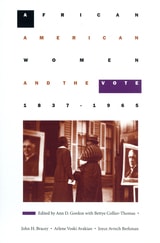
African American Women and the Vote, 1837–1965
Ann D. Gordon
University of Massachusetts Press, 1997
Written by leading scholars of African American and women's history, the essays in this volume seek to reconceptualize the political history of black women in the United States by placing them “at the center of our thinking.” The book explores how slavery, racial discrimination, and gender shaped the goals that African American women set for themselves, their families, and their race and looks at the political tools at their disposal. By identifying key turning points for black women, the essays create a new chronology and a new paradigm for historical analysis. The chronology begins in 1837 with the interracial meeting of antislavery women in New York City and concludes with the civil rights movement of the 1960s.
The contributors focus on specific examples of women pursuing a dual ambition: to gain full civil and political rights and to improve the social conditions of African Americans. Together, the essays challenge us to rethink common generalizations that govern much of our historical thinking about the experience of African American women.
Contributors include Bettina Aptheker, Elsa Barkley Brown, Willi Coleman, Gerald R. Gill, Ann D. Gordon, Evelyn Brooks Higginbotham, Cynthia Neverdon-Morton, Martha Prescod Norman, Janice Sumler-Edmond, Rosalyn Terborg-Penn, and Bettye Collier-Thomas.
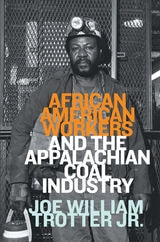
African American Workers and the Appalachian Coal Industry
Joe William Trotter
West Virginia University Press, 2024
This collection brings together nearly three decades of research on the African American experience, class, and race relations in the Appalachian coal industry. It shows how, with deep roots in the antebellum era of chattel slavery, West Virginia’s Black working class gradually picked up steam during the emancipation years following the Civil War and dramatically expanded during the late nineteenth and early twentieth centuries.
From there, African American Workers and the Appalachian Coal Industry highlights the decline of the region’s Black industrial proletariat under the impact of rapid technological, social, and political changes following World War II. It underscores how all miners suffered unemployment and outmigration from the region as global transformations took their toll on the coal industry, but emphasizes the disproportionately painful impact of declining bituminous coal production on African American workers, their families, and their communities. Joe Trotter not only reiterates the contributions of proletarianization to our knowledge of US labor and working-class history but also draws attention to the gender limits of studies of Black life that focus on class formation, while calling for new transnational perspectives on the subject. Equally important, this volume illuminates the intellectual journey of a noted labor historian with deep family roots in the southern Appalachian coalfields.
African American Writers and Classical Tradition
William W. Cook and James Tatum
University of Chicago Press, 2010
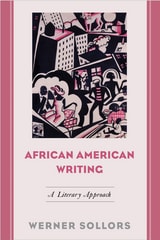
African American Writing
A Literary ApproachWerner Sollors
Temple University Press, 2016
Werner Sollors’ African American Writing takes a fresh look at what used to be called “Negro literature.” The essays collected here, ranging in topic from Gustavus Vassa/Olaudah Equiano to LeRoi Jones/Amiri Baraka, and in time from the Enlightenment to the Obama presidency, take a literary approach to black writing and present writers as readers and as intellectuals who were or are open to the world.
From W.E.B. Du Bois commenting on Richard Wagner and Elvis Presley, to Zora Neale Hurston attacking Brown v. Board of Ed. in a segregationist newspaper, to Charles Chesnutt’s effigy darkened for the black heritage postage stamp, Sollors alternates between close readings and broader cultural contextualizations to delineate the various aesthetic modes and intellectual exchanges that shaped a series of striking literary works.
Readers will make often-surprising discoveries in the authors’ writing and in their encounters and dialogues with others. The essays, accompanied by Winold Reiss’s pastels, Carl Van Vechten’s photographs, and other portraits, attempt to honor this important literature’s achievement, heterogeneity, and creativity.
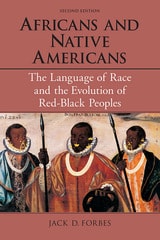
Africans and Native Americans
The Language of Race and the Evolution of Red-Black PeoplesJack D. Forbes
University of Illinois Press, 1993
Afro Orientalism
Bill V. Mullen
University of Minnesota Press, 2004
Reveals a century of political solidarity uniting Asians and African Americans
As early as 1914, in his pivotal essay “The World Problem of the Color Line,” W. E. B. Du Bois was charting a search for Afro-Asian solidarity and for an international anticolonialism. In Afro-Orientalism, Bill Mullen traces the tradition of revolutionary thought and writing developed by African American and Asian American artists and intellectuals in response to Du Bois’s challenge.
Afro-Orientalism unfolds here as a distinctive strand of cultural and political work that contests the longstanding, dominant discourse about race and nation first fully named in Edward Said’s Orientalism. Mullen tracks Afro-Asian engagement with U.S. imperialism—including writings by Richard Wright, Grace and James Boggs, Robert F. Williams, and Fred Ho—and companion struggles against racism and capitalism around the globe. To this end, he offers Afro-Orientalism as an antidote to essentialist, race-based, or narrow conceptions of ethnic studies and postcolonial studies, calling on scholars in these fields to re-imagine their critical enterprises as mutually constituting and politically interdependent.
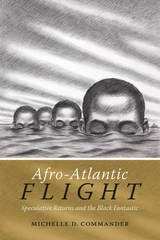
Afro-Atlantic Flight
Speculative Returns and the Black FantasticMichelle D. Commander
Duke University Press, 2017
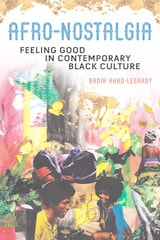
Afro-Nostalgia
Feeling Good in Contemporary Black CultureBadia Ahad-Legardy
University of Illinois Press, 2021
Badia Ahad-Legardy mines literature, visual culture, performance, and culinary arts to form an archive of black historical joy for use by the African-descended. Her analysis reveals how contemporary black artists find more than trauma and subjugation within the historical past. Drawing on contemporary African American culture and recent psychological studies, she reveals nostalgia’s capacity to produce positive emotions. Afro-nostalgia emerges as an expression of black romantic recollection that creates and inspires good feelings even within our darkest moments.
Original and provocative, Afro-Nostalgia offers black historical pleasure as a remedy to contend with the disillusionment of the present and the traumas of the past.
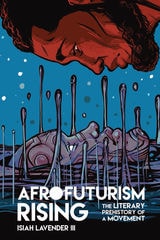
Afrofuturism Rising
The Literary Prehistory of a MovementIsiah Lavender III
The Ohio State University Press, 2019
By engaging with authors as diverse as Phillis Wheatley, David Walker, Frederick Douglass, Harriet Ann Jacobs, Samuel R. Delany Jr., Pauline Hopkins, Zora Neale Hurston, and Richard Wright, Afrofuturism Rising extends existing scholarly conversations about who creates and what is created via science fiction. Through a trans-historical rereading of texts by these authors as science fiction, Lavender highlights the ways black experience in America has always been an experience of spatial and temporal dislocation akin to science fiction. Compelling and ambitious in scope, Afrofuturism Rising redefines both science fiction and literature as a whole.
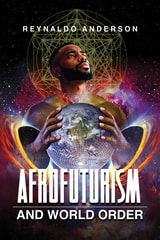
Afrofuturism and World Order
Reynaldo Anderson
The Ohio State University Press, 2025

Afromodernism
Six Turning PointsKobena Mercer
Duke University Press, 2027
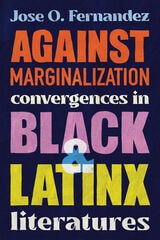
Against Marginalization
Convergences in Black and Latinx LiteraturesJose O. Fernandez
The Ohio State University Press, 2022
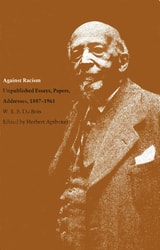
Against Racism
Unpublished Essays, Papers, Addresses, 1887–1961W.E.B. Du Bois
University of Massachusetts Press, 1985
A collection of essays, papers, and addresses which explains the author's views on racism.
Against a Sharp White Background
Infrastructures of African American PrintEdited by Brigitte Fielder and Jonathan Senchyne
University of Wisconsin Press, 2019
Against the Closet
Black Political Longing and the Erotics of RaceAliyyah I. Abdur-Rahman
Duke University Press, 2012
Abdur-Rahman brings black feminist, psychoanalytic, critical race, and poststructuralist theories to bear on literary genres from slave narratives to science fiction. Analyzing works by African American writers, including Frederick Douglass, Pauline Hopkins, Harriet Jacobs, James Baldwin, and Octavia Butler, she shows how literary representations of transgressive sexuality expressed the longings of African Americans for individual and collective freedom. Abdur-Rahman contends that those representations were fundamental to the development of African American forms of literary expression and modes of political intervention and cultural self-fashioning.
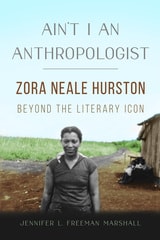
Ain't I an Anthropologist
Zora Neale Hurston Beyond the Literary IconJennifer L. Freeman Marshall
University of Illinois Press, 2023
Perceptive and original, Ain’t I an Anthropologist is an overdue reassessment of Zora Neale Hurston’s place in American cultural and intellectual life.
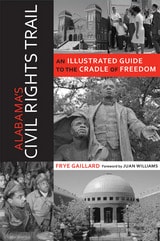
Alabama's Civil Rights Trail
An Illustrated Guide to the Cradle of FreedomFrye Gaillard
University of Alabama Press, 2009
Alabama’s great civil rights events in a compact and accessible narrative, paired with a practical guide to Alabama’s preserved civil rights sites and monuments
No other state has embraced and preserved its civil rights history more thoroughly than Alabama. Nor is there a place where that history is richer. Alabama’s Civil Rights Trail tells of Alabama’s great civil rights events, as well as its lesser-known moments, in a compact and accessible narrative, paired with a practical guide to Alabama’s preserved civil rights sites and monuments.
In this history of Alabama’s civil rights movement, Cradle of Freedom (University of Alabama Press, 2004), Frye Gaillard contends that Alabama played the lead role in a historic movement that made all citizens of the nation, black and white, more free. This book, geared toward the casual traveler and the serious student alike, showcases in a vividly illustrated and compelling manner, valuable and rich details. It provides a user-friendly, graphic tool for the growing number of travelers, students, and civil rights pilgrims who visit the state annually.
The story of the civil rights movement in Alabama is told city by city, region by region, and town by town, with entries on Montgomery, Birmingham, Selma, Tuscaloosa, Tuskegee, and Mobile, as well as chapters on the Black Belt and the Alabama hill country. Smaller but important locales such as Greensboro, Monroeville, and Scottsboro are included, as are more obscure sites like Hale County’s Safe House Black History Museum and the birthplace of the Black Panther Party in Lowndes County.
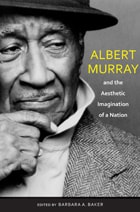
Albert Murray and the Aesthetic Imagination of a Nation
Edited by Barbara A. Baker
University of Alabama Press, 2010
Reimagining America Through the Blues, Jazz, and the Cultural Vision of Albert Murray.
This collection consists of essays written by prominent African American literature, jazz, and Albert Murray scholars, reminiscences from Murray protégés and associates, and interviews with Murray himself. It illustrates Murray’s place as a central figure in African American arts and letters and as an American cultural pioneer.
Born in Nokomis, Alabama, and raised in Mobile, Albert Murray graduated from Tuskegee University, where he later taught, but he has long resided in New York City. He is the author of many critically acclaimed novels, memoirs, and essay collections, among them The Omni-Americans, South to a Very Old Place, Train Whistle Guitar, The Spyglass Tree, and The Seven League Boots. He is also a critic and visual artist, as well as a lifelong friend of and collaborator with artistic luminaries such as Ralph Ellison, Duke Ellington, and Romare Bearden. As such, his life and work are testaments to the centrality of southern and African American aesthetics in American art. Murray is widely viewed as a figure who, through his art and criticism, transforms the “fakelore” of white culture into a new folklore that illustrates the centrality of the blues and jazz idioms and reveals the black vernacular as what is most distinct about American art.
All Blue So Late
PoemsLaura Swearingen-Steadwell
Northwestern University Press, 2018
The skeleton of this fine collection is a series of direct addresses to the author’s fourteen-year-old self, caught at the moment between girlhood and womanhood, when her perspective on everything suddenly changes. Swearingen-Steadwell’s poetic adventures through worlds within and without reveal the restlessness of the seeker. They offer unabashed tenderness to anyone who reckons with solitude, and chases joy.
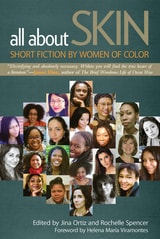
All about Skin
Short Fiction by Women of ColorEdited by Jina Ortiz and Rochelle Spencer, Foreword by Helena María Viramontes
University of Wisconsin Press, 2014
The stories are by American writers Aracelis González Asendorf, Jacqueline Bishop, Glendaliz Camacho, Learkana Chong, Jennine Capó Crucet, Ramola D., Patricia Engel, Amina Gautier, Manjula Menon, ZZ Packer, Princess Joy L. Perry, Toni Margarita Plummer, Emily Raboteau, Ivelisse Rodriguez, Metta Sáma, Joshunda Sanders, Renee Simms, Mecca Jamilah Sullivan, Hope Wabuke, and Ashley Young; Nigerian writers Unoma Azuah and Chinelo Okparanta; and Chinese writer Xu Xi.
Best Books for General Audiences, selected by the American Association of School Librarians
Best Books for General Audiences, selected by the Public Library Reviewers
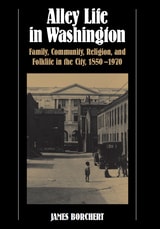
Alley Life in Washington
Family, Community, Religion, and Folklife in the City, 1850-1970James Borchert
University of Illinois Press, 1980
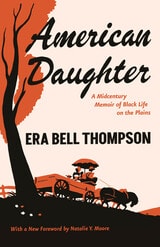
American Daughter
A Midcentury Memoir of Black Life on the PlainsEra Bell Thompson
University of Chicago Press, 2026
A portrait of Black life in the Great Plains, written by a key figure in the Chicago Renaissance and decades-long editor of Ebony.
Era Bell Thompson grew up on the plains of North Dakota, where she and her family were some of the only Black people amid an overwhelmingly white population. American Daughter, originally published in 1946, recounts her childhood in the rural West, her college years in Iowa, and the social and racial revelations she experienced upon arriving in Chicago, where she first encountered a large Black community.
Her memories defy contemporary assumptions. She was a popular high school student, even if she was forced to disarm ignorant questions from her peers. She describes her father’s work for the governor, her family’s interactions with diverse Midwestern immigrant communities, the natural beauty of the landscape, and the collaborative spirit necessary to survive the harsh weather conditions in North Dakota. As an adult in Chicago, she discovered lifestyles and attitudes that were entirely unfamiliar after her childhood in predominantly white spaces. While Thompson endured discrimination in rural and urban settings alike, she relied on her trademark humor to defuse tensions and bridge differences. Her memoir similarly radiates optimism, curiosity, and wit.
Long out of print, this new edition includes a foreword by the Chicago-based journalist Natalie Y. Moore, who not only contextualizes the memoir for contemporary readers but also explores Thompson’s life after American Daughter, including her trailblazing career as an editor for Ebony magazine.
American Poetry in Performance
From Walt Whitman to Hip HopTyler Hoffman
University of Michigan Press, 2013
"Tyler Hoffman brings a fresh perspective to the subject of performance poetry, and this comes at an excellent time, when there is such a vast interest across the country and around the world in the performance of poetry. He makes important connections, explaining things in a manner that remains provocative, interesting, and accessible."
---Jay Parini, Middlebury College
American Poetry in Performance: From Walt Whitman to Hip Hop is the first book to trace a comprehensive history of performance poetry in America, covering 150 years of literary history from Walt Whitman through the rap-meets-poetry scene. It reveals how the performance of poetry is bound up with the performance of identity and nationality in the modern period and carries its own shifting cultural politics. This book stands at the crossroads of the humanities and the social sciences; it is a book of literary and cultural criticism that deals squarely with issues of "performance," a concept that has attained great importance in the disciplines of anthropology and sociology and has generated its own distinct field of performance studies. American Poetry in Performance will be a meaningful contribution both to the field of American poetry studies and to the fields of cultural and performance studies, as it focuses on poetry that refuses the status of fixed aesthetic object and, in its variability, performs versions of race, class, gender, and sexuality both on and off the page.
Relating the performance of poetry to shifting political and cultural ideologies in the United States, Hoffman argues that the vocal aspect of public poetry possesses (or has been imagined to possess) the ability to help construct both national and subaltern communities. American Poetry in Performance explores public poets' confrontations with emergent sound recording and communications technologies as those confrontations shape their mythologies of the spoken word and their corresponding notions about America and Americanness.
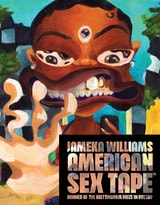
American Sex Tape
Jameka Williams
University of Wisconsin Press, 2022
Fiercely feminist, Black, American, and powerful, Williams speaks for a generation of obsessive social media influencers and consumers, revealing the complex ways in which we are all actors, witnesses, and victims in our public and private performances. Though we may be permanent residents of this soulless cultural landscape, this stunning collection refuses to let it define us.
off the conveyor belt, hugging the bolts & wires
spilling from her vivisection. I’m last year’s model
with a sleeker, softer system of cool disdain for
my Internet addictions.
—Excerpt from "I Intend to Outlast"
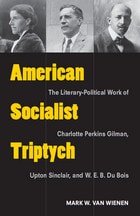
American Socialist Triptych
The Literary-Political Work of Charlotte Perkins Gilman, Upton Sinclair, and W. E. B. Du BoisMark W. Van Wienen
University of Michigan Press, 2014
"A meticulously researched, highly informed, carefully argued, and very accessible account of American socialism, socialists, and socialistic thinking, from the late nineteenth century through the 1960s . . . challenges the intellectual and political legacy of Werner Sombart's Why Is There No Socialism in the United States?, whose spirit still hovers over animated discussions about the 'failures' of socialism in the United States."
---James A. Miller, George Washington University
"A valuable rethinking and reframing of the traditions of leftist literary scholarship in the U.S."
---Sylvia Cook, University of Missouri, St. Louis
American Socialist Triptych: The Literary-Political Work of Charlotte Perkins Gilman, Upton Sinclair, and W. E. B. Du Bois explores the contributions of three writers to the development of American socialism over a fifty--year period and asserts the vitality of socialism in modern American literature and culture.
Drawing upon a wide range of texts including archival sources, Mark W. Van Wienen demonstrates the influence of reform-oriented, democratic socialism both in the careers of these writers and in U.S. politics between 1890 and 1940. While offering unprecedented in-depth analysis of modern American socialist literature, this book charts the path by which the supposedly impossible, dangerous ideals of a cooperative commonwealth were realized, in part, by the New Deal.
American Socialist Triptych provides in-depth, innovative readings of the featured writers and their engagement with socialist thought and action. Upton Sinclair represents the movement's most visible manifestation, the Socialist Party of America, founded in 1901; Charlotte Perkins Gilman reflects the socialist elements in both feminism and 1890s reform movements, and W. E. B. Du Bois illuminates social democratic aspirations within the NAACP. Van Wienen's book seeks to re-energize studies of Sinclair by treating him as a serious cultural figure whose career peaked not in the early success of The Jungle but in his nearly successful 1934 run for the California governorship. It also demonstrates as never before the centrality of socialism throughout Gilman's and Du Bois's literary and political careers.
More broadly, American Socialist Triptych challenges previous scholarship on American radical literature, which has focused almost exclusively on the 1930s and Communist writers. Van Wienen argues that radical democracy was not the phenomenon of a decade or of a single group but a sustained tradition dispersed within the culture, providing a useful genealogical explanation for how socialist ideas were actually implemented through the New Deal.
American Socialist Triptych also revises modern American literary history, arguing for the endurance of realist and utopian literary modes at the height of modernist literary experimentation and showing the importance of socialism not only to the three featured writers but also to their peers, including Edward Bellamy, Hamlin Garland, Jack London, Edna St. Vincent Millay, and Claude McKay. Further, by demonstrating the importance of social democratic thought to feminist and African American campaigns for equality, the book dialogues with recent theories of radical egalitarianism. Readers interested in American literature, U.S. history, political theory, and race, gender, and class studies will all find in American Socialist Triptych a valuable and provocative resource.
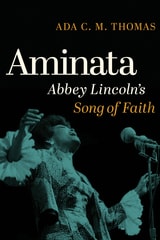
Aminata
Abbey Lincoln’s Song of FaithAda C.M. Thomas
Rutgers University Press, 2026
Abbey Lincoln (1930–2010), one of the greatest jazz vocalists of the twentieth century, was also an acclaimed composer, poet, playwright, actress, and activist and a towering figure within the African American intellectual tradition. Through constant reinvention, she resisted easy stereotyping and helped open a space for Black women artists to invoke their whole selves. Here, with meticulous research and insightful analysis, Ada C. M. Thomas contemplates Lincoln’s music alongside her poetry, plays, and reflections, revealing a multifaceted artist whose philosophical inquiries resonate deeply with the Black experience.
Thomas places Lincoln's albums in the context of both the female jazz and blues singers who influenced her and the male composers she collaborated with, including John Coltrane, Thelonious Monk, and Max Roach. Highlighting Lincoln’s central position within a vibrant global community of Black artists, activists, and writers, it also puts her work into conversation with that of contemporaries and close friends like Maya Angelou, Miriam Makeba, and Toni Morrison. Above all, it traces Lincoln’s extraordinary spiritual and intellectual journey, from her early life in Michigan to her rebirth in the 1970s as Aminata Moseka, meaning “faithful goddess of love,” and her ultimate resurgence in the 1990s as a critically acclaimed jazz artist and composer. With reverence and rigor, Thomas invites readers to rediscover Abbey Lincoln and embrace the transformative power of her words.
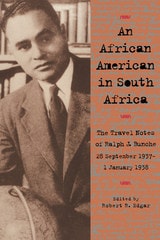
An African American in South Africa
The Travel Notes of Ralph J. Bunche 28 September 1937–1 January 1938Ralph Bunche
Ohio University Press, 2001
Ralph Bunche, who received the Nobel Peace Prize in 1950, traveled to South Africa for three months in 1937. His notes, which have been skillfully compiled and annotated by historian Robert R. Edgar, provide unique insights on a segregated society.
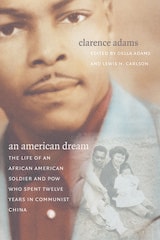
An American Dream
The Life of an African American Soldier and POW Who Spent Twelve Years in Communist ChinaClarence Adams
University of Massachusetts Press, 2007
Throughout his life, Clarence Adams exhibited self-reliance, ambition, ingenuity, courage, and a commitment to learning—character traits often equated with the successful pursuit of the American Dream. Unfortunately, for an African American coming of age in the 1930s and 1940s, such attributes counted for little, especially in the South.
Adams was a seventeen-year-old high school dropout in 1947 when he fled Memphis and the local police to join the U.S. Army. Three years later, after fighting in the Korean War in an all-black artillery unit that he believed to have been sacrificed to save white troops, he was captured by the Chinese. After spending almost three years as a POW, during which he continued to suffer racism at the hands of his fellow Americans, he refused repatriation in 1953, choosing instead the People's Republic of China, where he hoped to find educational and career opportunities not readily available in his own country.
While living in China, Adams earned a university degree, married a Chinese professor of Russian, and worked in Beijing as a translator for the Foreign Languages Press. During the Vietnam War he made a controversial anti-war broadcast over Radio Hanoi, urging black troops not to fight for someone else's political and economic freedoms until they enjoyed these same rights at home.
In 1966, having come under suspicion during the Chinese Cultural Revolution, he returned with his wife and two children to the United States, where he was subpoenaed to appear before the House Committee on Un-American Activities to face charges of “disrupting the morale of American fighting forces in Vietnam and inciting revolution in the United States.” After these charges were dropped, he and his family struggled to survive economically. Eventually, through sheer perseverance, they were able to fulfill at least part of the American Dream. By the time he died, the family owned and operated eight successful Chinese restaurants in his native Memphis.
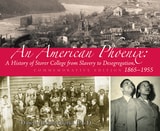
An American Phoenix
A History of Storer College from Slavery to Desegregation 1865-1955, Commemorative EditionDawne Raines Burke
West Virginia University Press, 2015
In the first book-length study of Storer College, Dawne Raines Burke tells the story of the historically black institution from its Reconstruction origins to its demise in 1955. Established by Northern Baptists in the abolitionist flashpoint of Harpers Ferry, Storer was the first college open to African Americans in West Virginia, and it played a central role in regional and national history. In addition to educating generations of students of all races, genders, and creeds, Storer served as the second meeting place (and the first on U.S. soil) for the Niagara Movement, a precursor to the NAACP.
An American Phoenix provides a comprehensive and extensively illustrated history of this historically black college, bringing to life not just the institution but many of the individuals who taught or were educated there. It fills a significant gap in our knowledge of African American history and the struggle for rights in West Virginia and the wider world.
An American in the Making
The Life Story of an ImmigrantKellman, Steven G
Rutgers University Press, 2009
Steven G. Kellman brings Ravage's story to life again in this new edition, providing a brief biography and introduction that place the memoir within historical and literary contexts. An American in the Making contributes to a broader understanding of the global notion of "America" and remains timely, especially in an era when massive immigration, now from Latin America and Asia, challenges ideas of national identity.
An Appeal in Favor of That Class of Americans Called Africans
Revised and Updated EditionLydia Maria Child, Edited with an introduction by Carolyn L. Karcher
University of Massachusetts Press, 2023
Published in Boston in 1833, Lydia Maria Child’s An Appeal in Favor of That Class of Americans Called Africans provided the abolitionist movement with its first full-scale analysis of race and enslavement. Controversial in its own time, the Appeal surveyed the institution of slavery from historical, political, economic, legal, racial, and moral perspectives and advocated for the immediate emancipation of the enslaved without compensation to their enslavers. By placing American slavery in historical context and demonstrating how slavery impacted—and implicated—Americans of all regions and races, the Appeal became a central text for the abolitionist movement that continues to resonate in the present day.
This revised and updated edition is enhanced by Carolyn L. Karcher’s illuminating introduction, a chronology of Child’s life, and a list of books for further reading.

An Unassuming Heroism
The Life of Robert Russa MotonBrian McGovern and Kevin McGovern
University of Alabama Press, 2026
The story of a Tuskegee Institute visionary who advised US presidents and led unprecedented advances in American Civil Rights
An Unassuming Heroism: The Life of Robert Russa Moton is a landmark biography that reveals the previously overlooked story of one of the most influential African American leaders of the twentieth century. Brian and Kevin McGovern trace Robert Moton’s life: from his birth as the son of freed people through his tenure as the leader of Tuskegee Institute directly after Booker T. Washington. Moton guided Tuskegee to new levels of excellence and international prominence, became an advisor to seven US presidents, and won their cooperation in the establishment of greater minority rights.
Rejecting conventional portrayals of Moton as a mere follower of Washington, the authors reveal an astute and increasingly independent leader who worked to bridge competing visions of Black advancement while championing broader African American rights, educational opportunities, and social justice. Through his investigations of issues such as racial discrimination in World War I, inequitable minority treatment during the Mississippi River flood of 1927, and Black people’s struggles to access healthcare and public accommodation, Moton helped shape national conversations on race and equality and advanced many arguments utilized by later Civil Rights leaders.
This biography offers a compelling reassessment of a courageous and visionary civic pioneer whose historical impact calls for renewed recognition. It is essential reading for scholars, students, and any reader interested in African American history, education, or progressive political leadership.

Anagnorisis
PoemsKyle Dargan
Northwestern University Press, 2018
Winner of the 2019 Academy of American Poets Lenore Marshall Poetry Prize
In Anagnorisis, award-winning poet Kyle Dargan ignites a reckoning. From the depths of his rapidly changing home of Washington, D.C., the poet is both enthralled and provoked, having witnessed-on a digital loop running in the background of Barack Obama's unlikely presidency—the rampant state-sanctioned murder of fellow African Americans. He is pushed toward the same recognition articulated by James Baldwin decades earlier: that an African American may never be considered an equal in citizenship or humanity.
This recognition—the moment at which a tragic hero realizes the true nature of his own character, condition, or relationship with an antagonistic entity—is what Aristotle called anagnorisis. Not concerned with placatory gratitude nor with coddling the sensibilities of the country's racial majority, Dargan challenges America: "You, friends- / you peckish for a peek / at my cloistered, incandescent / revelry-were you as earnest / about my frostbite, my burns, / I would have opened / these hands, sated you all."
At a time when U.S. politics are heavily invested in the purported vulnerability of working-class and rural white Americans, these poems allow readers to examine themselves and the nation through the eyes of those who have been burned for centuries.
And Bid Him Sing
A Biography of Countée CullenCharles Molesworth
University of Chicago Press, 2012
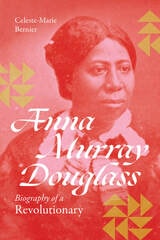
Anna Murray Douglass
Biography of a RevolutionaryCeleste-Marie Bernier
Duke University Press, 2026
Working with family descendants and based on thirty years of research digging through public and private archives, Celeste-Marie Bernier presents the first standalone biography of Anna Murray Douglass, wife and co-revolutionary of Frederick Douglass, honoring her history-making role as a campaigner, liberator, and freedom-fighter.
Anna Murray Douglass was born legally free in Maryland to Mary and Bambarra Murray. From working with her future husband, Frederick Douglass, to secure his self-liberation from enslavement to converting her family homes to command centers for the Underground Railroad, she dedicated her entire life to the fight for all freedoms and to supporting loved ones and strangers alike in their fight for equal, independent lives. Her deeds have long gone unsung until now.
In this first-ever standalone biography of the wife and co-revolutionary of Frederick Douglass, Celeste-Marie Bernier provides a detailed and illustrated history of Anna Murray Douglass’s leadership roles in fighting against the injustices of enslavement, racism, and white supremacy, as well as how she laid the foundation for her family to follow in her and her husband’s footsteps. After over three decades of archival research, Bernier presents a wide-ranging collection of stories, writings, letters, and photographs in a comprehensive and illuminating biography of Anna Murray Douglass’s life and work as an educator, activist, intellectual, orator, political thinker, artist, philosopher, and strategist. Ultimately, Bernier aims to combat the widespread misrepresentation that the liberation movement bearing the Douglass name was the work of one individual when it was, in reality, a family institution. Anna Murray Douglass is the first book in a ten-volume collection detailing the life and work of the entire Douglass family including their children, Rosetta, Lewis Henry, Frederick, Jr., Charles Remond and Annie Douglass, all freedom-fighters in their own right.
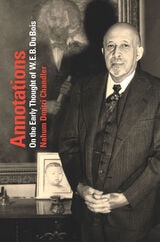
Annotations
On the Early Thought of W. E. B. Du BoisNahum Dimitri Chandler
Duke University Press, 2022
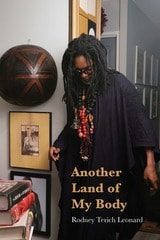
Another Land of My Body
Rodney Terich Leonard
Four Way Books, 2024
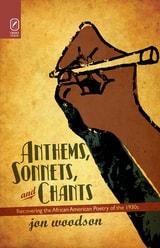
Anthems, Sonnets, and Chants
Recovering the African American Poetry of the 1930sJon Woodson
The Ohio State University Press, 2011
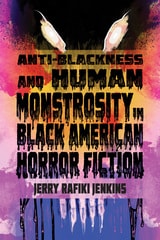
Anti-Blackness and Human Monstrosity in Black American Horror Fiction
Jerry Rafiki Jenkins
The Ohio State University Press, 2024
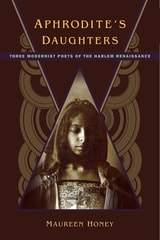
Aphrodite's Daughters
Three Modernist Poets of the Harlem RenaissanceHoney, Maureen
Rutgers University Press, 2016
Apocalypse South
Judgment, Cataclysm, and Resistance in the Regional ImaginaryAnthony Dyer Hoefer
The Ohio State University Press, 2012
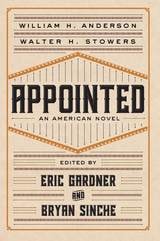
Appointed
An American NovelWilliam H. Anderson
West Virginia University Press, 2019
Appointed is a recently recovered novel written by William Anderson and Walter Stowers, two of the editors of the Detroit Plaindealer, a long-running and well-regarded African American newspaper of the late nineteenth century. Drawing heavily on nineteenth-century print culture, the authors tell the story of John Saunders, a college-educated black man living and working in Detroit. Through a bizarre set of circumstances, Saunders befriends his white employer’s son, Seth Stanley, and the two men form a lasting, cross-racial bond that leads them to travel together to the American South. On their journey, John shows Seth the harsh realities of American racism and instructs him in how he might take responsibility for alleviating the effects of racism in his own home and in the white world broadly.
As a coauthored novel of frustrated ambition, cross-racial friendship, and the tragedy of lynching, Appointed represents a unique contribution to African American literary history. This is the first scholarly edition of Appointed, and it includes a collection of writings from the Plaindealer, the authors’ short story “A Strange Freak of Fate,” and an introduction that locates Appointed and its authors within the journalistic and literary currents of the United States in the late nineteenth century.
Appointed
An American NovelEric Gardner
University of Delaware Press, 0
As a coauthored novel of frustrated ambition, cross-racial friendship, and the tragedy of lynching, Appointed represents a unique contribution to African American literary history. This is the first scholarly edition of Appointed, and it includes a collection of writings from the Plaindealer, the authors’ short story “A Strange Freak of Fate,” and an introduction that locates Appointed and its authors within the journalistic and literary currents of the United States in the late nineteenth century.
Archibald Motley Jr. and Racial Reinvention
The Old Negro in New Negro ArtPhoebe Wolfskill
University of Illinois Press, 2017
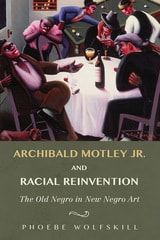
Phoebe Wolfskill demonstrates how Motley's art embodied the tenuous nature of the Black Renaissance and the wide range of ideas that structured it. Focusing on key works in Motley's oeuvre, Wolfskill reveals the artist's complexity and the variety of influences that informed his work. Motley’s paintings suggest that the racist, problematic image of the Old Negro was not a relic of the past but an influence that pervaded the Black Renaissance. Exploring Motley in relation to works by notable black and non-black contemporaries, Wolfskill reinterprets Motley's oeuvre as part of a broad effort to define American cultural identity through race, class, gender, religion, and regional affiliation.
Archive of Style
New and Selected PoemsCheryl Clarke
Northwestern University Press, 2024
Award-winning poet and essayist Cheryl Clarke’s illustrious career has spanned more than four decades and culminates in Archive of Style: New and Selected Poems, a long-awaited retrospective of the indelible work of a Black feminist, community and LGBTQ activist, and educator. This collection features carefully curated poems from Narratives: Poems in the Tradition of Black Women (1982), Living as a Lesbian (1986), The Days of Good Looks: Prose and Poetry 1980-2005 (2006), By My Precise Haircut (2016), and Targets (2019). Together these works show a brilliant thinker who has profoundly impacted generations of writers and activists.
Clarke’s poetry and essays, centered around the Black, lesbian, feminist experience, have attracted an audience around the world. Her essays, “Lesbianism: an Act of Resistance” and “The Failure to Transform: Homophobia in the Black Community” revolutionized the thinking about lesbians of color and the struggle against homophobia. Her poetry and non-fiction have been reprinted in numerous anthologies and assigned in women and sexuality courses globally. Having published since 1977, Clarke and her work have become a foundational part of LGBTQ literature and activism. Archive of Style is a celebration and homage to one of American literature’s Black Women literary warriors.
Archon / After
Ruth Ellen Kocher
Omnidawn, 2024
In Ruth Ellen Kocher’s Archon / After, the archive is revealed as both a form of violence and of memory, of site and of event. As keeper of the archive, Kocher’s archon determines what pieces of the past may be preserved, housed, documented, ordered, and reviewed. Through these poems, the archon dives deep into memories and into the mysteries of daily life, and, in governance over the future, determines what will be and should be forgotten. The act of forgetting becomes archival violence, with the archon not only serving as the guardian of what remains in the archive but also as an eradicator who decides what is purged.
The imagistic and surreal language of this collection invites us to explore a non-logical terrain as we follow the protagonist into her darkest memories and find a path for our own journey of self-discovery.
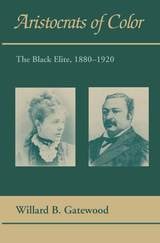
Aristocrats of Color
The Black Elite, 1880–1920Willard B. Gatewood
University of Arkansas Press, 2000
Every American city had a small, self-aware, and active black elite, who felt it was their duty to set the standard for the less fortunate members of their race and to lead their communities by example. Rank within this black upper class rested on such issues as the status of one’s forebears as either house servants or field hands, the darkness of one’s skin, and the level of one’s manners and education.
Professor Gatewood’s study examines this class of African Americans by looking at the genealogies and occupations of specific families and individuals throughout the United States and their roles in their various communities. The resulting narrative is a full and illuminating account of a most influential segment of the African-American population. It explores fully the distinctive background, prestige, attitudes, behavior, power, and culture of this class. The Black Community Studies series from the University of Arkansas Press, edited by Professor Gatewood, continues to examine many of the same themes first explored in this important study.
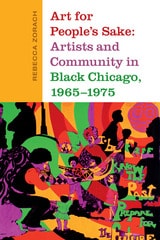
Art for People's Sake
Artists and Community in Black Chicago, 1965-1975Rebecca Zorach
Duke University Press, 2019
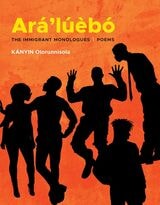
Ará’lúèbó
The Immigrant MonologuesKÁNYIN Olorunnisola
Acre Books, 2026
The Yoruba word Ará’lúèbó (/ah-rah-loo-ay-bow/), as the book tells us, means “an endearing term for a native who has gone abroad, and/or is returning” or “a person who becomes a foreigner everywhere they go.”
In his debut poetry collection, KÁNYIN Olorunnisola showcases the expansiveness of the immigrant experience through the form of the choreopoem, a non-Western style of poetry that incorporates elements of music and theater. The collection tells a multitude of stories through five people (Odunsi, beja, Levi, Sekina, and Ismaila), who, though fictional, represent the emotional truths of the lived experience of an African residing in the United States. As Ismaila says early on, “we r five fly kids hyphenated by time & / geography.”
Mixing Yoruba, Nigerian Pidgin, and English, Ará’lúèbó: The Immigrant Monologues is a blend of linguistic influences, with debts to visual art and rap music. At the center of its expression is formal experimentation; poems are structured like movie screenplays, diary entries, flowcharts, pie charts, and dictionary entries. The book encompasses a broad span of American, African, and other world history, even as it is strongly rooted in the contemporary, with references to Lauryn Hill, Kendrick Lamar, and other Black creatives. Ultimately, the book asks who is allowed to belong and paints a portrait of what it means to be American and from elsewhere.