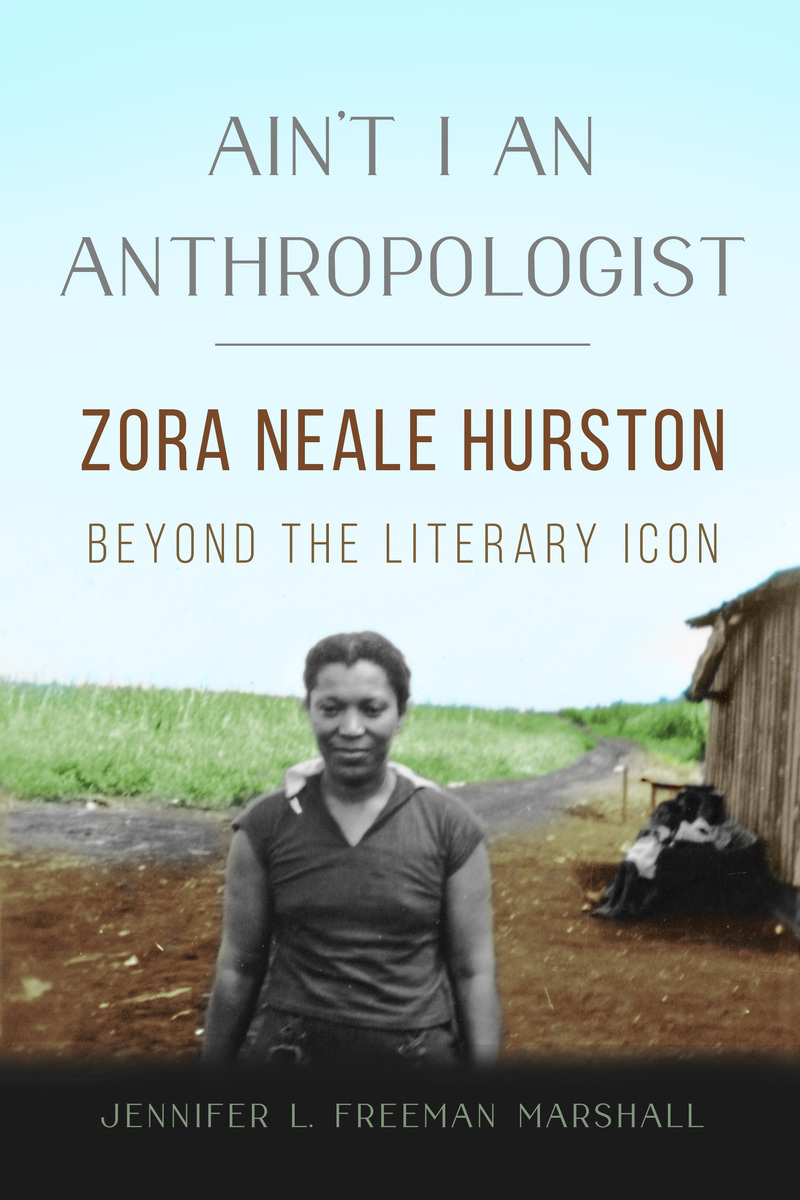
Ain't I an Anthropologist: Zora Neale Hurston Beyond the Literary Icon
University of Illinois Press, 2023
Cloth: 978-0-252-04496-0 | Paper: 978-0-252-08710-3 | eISBN: 978-0-252-05415-0 (standard)
Library of Congress Classification PS3515.U789Z6926 2023
Dewey Decimal Classification 813.52
Cloth: 978-0-252-04496-0 | Paper: 978-0-252-08710-3 | eISBN: 978-0-252-05415-0 (standard)
Library of Congress Classification PS3515.U789Z6926 2023
Dewey Decimal Classification 813.52
ABOUT THIS BOOK | AUTHOR BIOGRAPHY | REVIEWS | TOC
ABOUT THIS BOOK
Iconic as a novelist and popular cultural figure, Zora Neale Hurston remains underappreciated as an anthropologist. Is it inevitable that Hurston’s literary authority should eclipse her anthropological authority? If not, what socio-cultural and institutional values and processes shape the different ways we read her work? Jennifer L. Freeman Marshall considers the polar receptions to Hurston’s two areas of achievement by examining the critical response to her work across both fields. Drawing on a wide range of readings, Freeman Marshall explores Hurston’s popular appeal as iconography, her elevation into the literary canon, her concurrent marginalization in anthropology despite her significant contributions, and her place within constructions of Black feminist literary traditions.
Perceptive and original, Ain’t I an Anthropologist is an overdue reassessment of Zora Neale Hurston’s place in American cultural and intellectual life.
See other books on: African American & Black | Ain't | Anthropologist | Hurston, Zora Neale | Knowledge and learning
See other titles from University of Illinois Press