Results by title
1566 books match the query 'Christianity' and 132 start with a
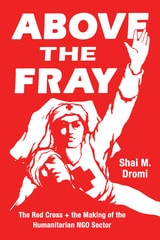
Above the Fray
The Red Cross and the Making of the Humanitarian NGO SectorShai M. Dromi
University of Chicago Press, 2020
Drawing on archival research, Dromi traces the genesis of the Red Cross to a Calvinist movement working in mid-nineteenth-century Geneva. He shows how global humanitarian policies emerged from the Red Cross founding members’ faith that an international volunteer program not beholden to the state was the only ethical way to provide relief to victims of armed conflict. By illustrating how Calvinism shaped the humanitarian field, Dromi argues for the key role belief systems play in establishing social fields and institutions. Ultimately, Dromi shows the immeasurable social good that NGOs have achieved, but also points to their limitations and suggests that alternative models of humanitarian relief need to be considered.

Accidental Pluralism
America and the Religious Politics of English Expansion, 1497-1662Evan Haefeli
University of Chicago Press, 2021
Acts of Faith and Imagination
Theological Patterns in Catholic FictionBrent Little
Catholic University of America Press, 2023
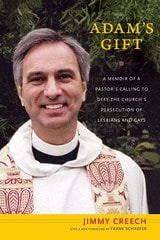
Adam's Gift
A Memoir of a Pastor's Calling to Defy the Church's Persecution of Lesbians and GaysJimmy Creech
Duke University Press, 2011
Adam’s visit prompted Creech to re-evaluate his belief that homosexuality was a sin, and to research the scriptural basis for the church’s position. He determined that the church was mistaken, that scriptural translations and interpretations had been botched and dangerously distorted. As a Christian, Creech came to believe that discriminating against lesbian, gay, bisexual, and transgender people was morally wrong. This understanding compelled him to perform same-gender commitment ceremonies, which conflicted with church directives. Creech was tried twice by The United Methodist Church, and, after the second trial, his ordination credentials were revoked. Adam’s Gift is a moving story and an important chapter in the unfinished struggle for lesbian, gay, bisexual, and transgender civil and human rights.
Adam's Sin, Our Humanity, and Christ's Redemption in Cyril of Alexandria
An Eastern Christian Theological AnthropologyAnthony Bibawy
Catholic University of America Press, 2026
Adopting the Stranger as Kindred in Deuteronomy
Mark R. Glanville
SBL Press, 2018
Investigate how Deuteronomy incorporates vulnerable, displaced people
Deuteronomy addresses social contexts of widespread displacement, an issue affecting 65 million people today. In this book Mark R. Glanville investigates how Deuteronomy fosters the integration of the stranger as kindred into the community of Yahweh. According to Deuteronomy, displaced people are to be enfolded within the household, within the clan, and within the nation. Glanville argues that Deuteronomy demonstrates the immense creativity that communities may invest in enfolding displaced and vulnerable people. Inclusivism is nourished through social law, the law of judicial procedure, communal feasting, and covenant renewal. Deuteronomy’s call to include the stranger as kindred presents contemporary nation-states with an opportunity and a responsibility to reimagine themselves and their disposition toward displaced strangers today.
Features:
- Exploration of the relationship of ancient Israel’s social history to biblical texts
- An integrative methodology that brings together literary-historical, legal, sociological, comparative, literary, and theological approaches
- A thorough study of Israelite identity and ethnicity
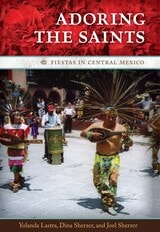
Adoring the Saints
Fiestas in Central MexicoBy Yolanda Lastra, Dina Sherzer, and Joel Sherzer
University of Texas Press, 2009
Mexico is famous for spectacular fiestas that embody its heart and soul. An expression of the cult of the saint, patron saint fiestas are the centerpiece of Mexican popular religion and of great importance to the lives and cultures of people and communities. These fiestas have their own language, objects, belief systems, and practices. They link Mexico's past and present, its indigenous and European populations, and its local and global relations.
This work provides a comprehensive study of two intimately linked patron saint fiestas in the state of Guanajuato, near San Miguel de Allende—the fiesta of the village of Cruz del Palmar and that of the town of San Luis de la Paz. These two fiestas are related to one another in very special ways involving both religious practices and their respective pre-Hispanic origins.
A mixture of secular and sacred, patron saint fiestas are multi-day affairs that include many events, ritual specialists, and performers, with the participation of the entire community. Fiestas take place in order to honor the saints, and they are the occasion for religious ceremonies, processions, musical performances, dances, and dance dramas. They feature spectacular costumes, enormous puppets, masked and cross-dressed individuals, dazzling fireworks, rodeos, food stands, competitions, and public dances. By encompassing all of these events and performances, this work displays the essence of Mexico, a lens through which this country's complex history, religion, ethnic mix, traditions, and magic can be viewed.
Aesthetic Theology and Its Enemies
Judaism in Christian Painting, Poetry, and PoliticsDavid Nirenberg
Brandeis University Press, 2015
Affective Trajectories
Religion and Emotion in African CityscapesHansjörg Dilger, Astrid Bochow, Marian Burchardt, and Matthew Wilhelm-Solomon, editors
Duke University Press, 2019
Contributors. Astrid Bochow, Marian Burchardt, Rafael Cazarin, Hansjörg Dilger, Alessandro Gusman, Murtala Ibrahim, Peter Lambertz, Isabelle L. Lange, Isabel Mukonyora, Benedikt Pontzen, Hanspeter Reihling, Matthew Wilhelm-Solomon
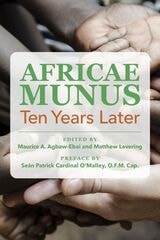
Africae Munus
Ten Years LaterAgbaw-ebai
St. Augustine's Press, 2022
Building on the vitality and enthusiasm of the Church in Africa, it is important to lift their faith through scholarly research and academic reflections. We cannot fully appreciate the dedication, commitment and perseverance of the Catholic community throughout the African continent if we do not know the truth of their sufferings and persecution and understand their resilience in the light of faith. This collection, drawn from the halls of academia, provides an important contribution to the understanding and advancement of Catholic Africa, following the insights and enlightenment of Pope Emeritus Benedict. It is my hope that these essays will enrich your understanding and experience of the Catholic faith.
— From the Preface by Seán Patrick Cardinal O’Malley
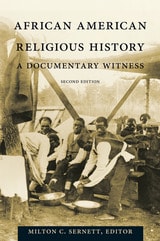
African American Religious History
A Documentary WitnessMilton C. Sernett, ed.
Duke University Press, 2000
Originally published in 1985, this expanded second edition includes new sources on women, African missions, and the Great Migration. Milton C. Sernett provides a general introduction as well as historical context and comment for each document.
African American Religious Studies
An Interdisciplinary AnthologyGayraud Wilmore, editor
Duke University Press, 1989
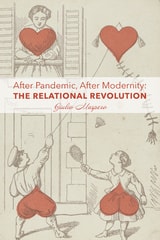
After Pandemic, After Modernity
The Relational RevolutionGiulio Maspero
St. Augustine's Press, 2022
Without Trinitarian framework ancient and new idols emerge, as the Covid-19 tragedies have shown. Yet post-pandemic must be a moment of clarity and realism, as we can see how necessary it is that humanity place itself in relation to something beyond. The post-modern journey, however, must be in the spirit of Christian humanism or else any so-called progress will no longer be unable to speak authentically of our humanity. That is to say, the relational dimension of human life will be erased right along with the other ills that plague our earth.
Against Eunomius
Catholic University of America Press, 2011
Against Marcellus and On Ecclesiastical History
Kelly Eusebius of Caesarea
Catholic University of America Press, 2018
On Ecclesiastical Theology, composed circa 338/339 just before Eusebius’s death, and perhaps in response to the amnesty for deposed bishops enacted by Constantius after the death of Constantine in 377 and the possibility of Marcellus’s return to his see, continues to lay out the criticisms initially put forward in Against Marcellus, again utilizing quotations from Marcellus’s book against Asterius. However, we see in this text a much more systematic explanation of Eusebius’s objections to the various elements of Marcellus’s theology and what he sees as the proper orthodox articulation of those elements.
Long overlooked for statements at odds with later orthodoxy, even written off as heretical because allegedly “semi-Arian,” recent scholarship has demonstrated the tremendous influence these texts had on the Greek theological tradition in the fourth century, especially on the orthodox understanding of the Trinity. In addition to their influence, they are some of the few complete texts that we have from Greek theologians in the immediate period following the Council of Nicea in 325, thus filling a gap in the materials available for research and teaching in this critical phase of theological development.
Against the Inveterate Obduracy of the Jews
Irven M. Peter the Venerable
Catholic University of America Press, 2013
Aging in the Church
How Social Relationships Affect HealthNeal M. Krause
Templeton Press, 2008
A growing number of studies indicate that older people in the church form social ties that have a significant positive impact on their physical and mental health. In Aging in the Church, Neal Krause comprehensively assesses the various relationships that stem from church involvement.
Among the many types of relationships Krause explores are close companion friendships, social-support structures (such as assistance provided by fellow church members during difficult times), and interactions that arise from Bible study and prayer groups. Through his thorough investigation of the underlying links between these relationships and the ways they relate to attributes like forgiveness, hope, gratitude, and altruism, the author hopes to explain why older adults who are involved in religious activities tend to enjoy better physical and mental health than those who are not engaged in religious communities. Going beyond merely reviewing the existing research on this subject, Aging in the Church provides a blueprint for taking research on church-based social relationships and health to the next level by identifying conceptual and methodological issues that investigators will confront as they delve more deeply into these connections.
Though these are complex issues, readers will find plain language and literature drawn from a wide array of disciplines, including sociology, psychology, public health, medicine, psychiatry, nursing, social work, gerontology, and theology. Literature, poetry, philosophy, and ethical ideas supplement the insights from these diverse fields. As a result, Aging in the Church takes on a genuinely interdisciplinary focus that will appeal to various scholars, researchers, and students.
All Abraham's Children
Changing Mormon Conceptions of Race and LineageArmand L. Mauss
University of Illinois Press, 2003
Mauss describes a complex process of the broadening of these self-defined lineages during the last part of the twentieth century as the modern Mormon church continued its world-wide expansion through massive missionary work.
Mauss contends that Mormon constructions of racial identity have not necessarily affected actual behavior negatively and that in some cases Mormons have shown greater tolerance than other groups in the American mainstream.
Employing a broad intellectual historical analysis to identify shifts in LDS behavior over time, All Abraham’s Children is an important commentary on current models of Mormon historiography.
All Things Human
Henry Codman Potter and the Social Gospel in the Episcopal ChurchMichael Bourgeois
University of Illinois Press, 2004
In addition to being the sixth bishop of the Diocese of New York, Henry Codman Potter (1835-1908) was a prominent voice in the Social Gospel movement of the late nineteenth and early twentieth centuries. This book, the first in-depth study of Potter's life and work, examines his career in the Episcopal church as well as the origins and legacy of his progressive social views.
As industrialization and urbanization spread in the nineteenth century, the Social Gospel movement sought to apply Christian teachings to effect improvements in the lives of the less fortunate. Potter was firmly in this tradition, concerning himself especially with issues of race, the place of women in society, questions of labor and capital, and what he called "political righteousness." Placing Potter against the wider backdrop of nineteenth-century American Protestantism, Bourgeois explores the experiences and influences that led him to espouse these socially conscious beliefs, to work for social reform, and to write such works as Sermons of the City (1881) and The Citizen in His Relation to the Industrial Situation (1902).
In telling Potter's remarkable story, All Things Human stands as a valuable contribution to intellectual and religious history as well as an exploration of the ways in which religion and society interact.
Alone Before God
The Religious Origins of Modernity in MexicoPamela Voekel
Duke University Press, 2002
Drawing on the archival research of wills, public documents, and other texts from late-colonial and early-republican Mexico, Voekel describes the marked scaling-down of the pomp and display that had characterized baroque Catholic burials and the various devices through which citizens sought to safeguard their souls in the afterlife. In lieu of these baroque practices, the new enlightened Catholics, claims Voekel, expressed a spiritually and hygienically motivated preference for extremely simple burial ceremonies, for burial outside the confines of the church building, and for leaving their earthly goods to charity. Claiming that these changes mirrored a larger shift from an external, corporate Catholicism to a more interior piety, she demonstrates how this new form of Catholicism helped to initiate a cultural and epistemic shift that placed the individual at the center of knowledge.
Breaking with the traditional historiography to argue that Mexican liberalism had deeply religious roots, Alone Before God will be of interest to specialists in Latin American history, modernity, and religion.
Amen
Patrick J. Ryan SJ
Catholic University of America Press, 2018
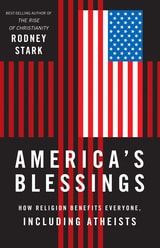
America's Blessings
How Religion Benefits Everyone, Including AtheistsRodney Stark
Templeton Press, 2013
A few years ago, a debate between atheists and religious believers spilled out from the halls of academia and the pews of America’s churches and into the public spotlight. A crop of atheist manifestos led the charge, surmounting and holding the tops of the nonfiction bestseller lists. This debate brought on an outpouring of religious rebuttals as both sides exchanged spirited volleys, accusations were leveled; myths, stereotypes, and strawmen arguments were perpetuated; and bitter hostility filled the air. Today many of these misconceptions and myths linger on, along with the generally acrimonious spirit of the debate.
In America’s Blessings, distinguished researcher Rodney Stark seeks to clear the air of this hostility and debunk many of the debate’s most widely perpetuated misconceptions by drawing from an expansive pool of sociological findings. Stark rises above the fray and focuses exclusively on facts by examining the measurable effects of religious faith and practice on American society. His results may surprise many atheists and believers alike.
Starting with a historical overview, Stark traces America’s religious roots from the country’s founding to the present day, showing that religiosity in America has never been consistent, static, or monolithic. Interestingly, he finds that religious practice is now more prevalent than ever in America, despite any claims to the contrary. From here, Stark devotes whole chapters to unpacking the latest research on how religion affects the different facets of modern American life, including crime, family life, sexuality, mental and physical health, sophistication, charity, and overall prosperity. The cumulative effect is that when translated into comparisons with western European nations, the United States comes out on top again and again. Thanks in no small part to America’s rich religious culture, the nation has far lower crime rates, much higher levels of charitable giving, better health, stronger marriages, and less suicide, to note only a few of the benefits.
In the final chapter, Stark assesses the financial impact of these religious realities. It turns out that belief benefits the American economy—and all 300 million citizens, believers, and nonbelievers alike—by a conservative estimate of $2.6 trillion a year. Despite the atheist outcry against religion, the remarkable conclusion is clear: all Americans, from the most religious among us to our secular neighbors, really ought to count our blessings.
America's Religious Crossroads
Faith and Community in the Emerging MidwestStephen T. Kissel
University of Illinois Press, 2021
Perceptive and broad in scope, America’s Religious Crossroads illuminates the integral relationship between communal and spiritual growth in early Midwestern history.
America's Spiritual Capital
Nicholas N. Capaldi
St. Augustine's Press, 2012

America's Theologian
Father Richard McBride of Notre DameTodd Hartch
Catholic University of America Press, 2027
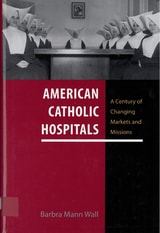
American Catholic Hospitals
A Century of Changing Markets and MissionsWall, Barbra Mann
Rutgers University Press, 2016
In American Catholic Hospitals, Barbra Mann Wall chronicles changes in Catholic hospitals during the twentieth century, many of which are emblematic of trends in the American healthcare system.
Wall explores the Church's struggle to safeguard its religious values. As hospital leaders reacted to increased political, economic, and societal secularization, they extended their religious principles in the areas of universal health care and adherence to the Ethical and Religious Values in Catholic Hospitals, leading to tensions between the Church, government, and society. The book also examines the power of women--as administrators, Catholic sisters wielded significant authority--as well as the gender disparity in these institutions which came to be run, for the most part, by men. Wall also situates these critical transformations within the context of the changing Church policy during the 1960s. She undertakes unprecedented analyses of the gendered politics of post-Second Vatican Council Catholic hospitals, as well as the effect of social movements on the practice of medicine.
American Catholicism
John Tracy Ellis
University of Chicago Press, 1969
The author gives an updated historical account of the part played by Catholics in both the American Revolution and the Civil War, and of the difficulties within the Church that came with the clash of national interests among Irish, French, and Germans in the nineteenth century. He regards immigration as the key to the increasingly important role of American Catholicism in the nation after 1820. For contemporary America, the author counts among the signs of the mature Church an increase in Church membership, the presence of nine Americans in the College of Cardinals in May, 1967, and the expansion of American effort in Catholic missions throughout the world.
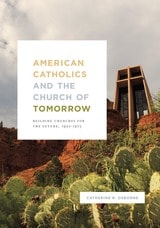
American Catholics and the Church of Tomorrow
Building Churches for the Future, 1925–1975Catherine R. Osborne
University of Chicago Press, 2018
Catherine R. Osborne’s innovative new book finds the answer: the alignment between postwar advancements in technology and design and evolutionary thought within the burgeoning American Catholic community. A new, visibly contemporary approach to design, church leaders thought, could lead to the rebirth of the church community of the future. As Osborne explains, the engineering breakthroughs that made modernist churches feasible themselves raised questions that were, for many Catholics, fundamentally theological. Couldn’t technological improvements engender worship spaces that better reflected God's presence in the contemporary world? Detailing the social, architectural, and theological movements that made modern churches possible, American Catholics and the Churches of Tomorrow breaks important new ground in the history of American Catholicism, and also presents new lines of thought for scholars attracted to modern architectural and urban history.
American Christianity
The Continuing RevolutionBy Stephen Cox
University of Texas Press, 2014
Christianity takes an astonishing variety of forms in America, from churches that cherish traditional modes of worship to evangelical churches and fellowships, Pentecostal churches, social-action churches, megachurches, and apocalyptic churches—congregations ministering to believers of diverse ethnicities, social classes, and sexual orientations. Nor is this diversity a recent phenomenon, despite many Americans’ nostalgia for an undeviating “faith of our fathers” in the days of yore. Rather, as Stephen Cox argues in this thought-provoking book, American Christianity is a revolution that is always happening, and always needs to happen. The old-time religion always has to be made new, and that is what Americans have been doing throughout their history.
American Christianity is an engaging book, wide ranging and well informed, in touch with the living reality of America’s diverse traditions and with the surprising ways in which they have developed. Radical and unpredictable change, Cox argues, is one of the few dependable features of Christianity in America. He explores how both the Catholic Church and the mainline Protestant churches have evolved in ways that would make them seem alien to their adherents in past centuries. He traces the rise of uniquely American movements, from the Mormons to the Seventh-day Adventists and Jehovah’s Witnesses, and brings to life the vivid personalities—Aimee Semple McPherson, Billy Sunday, and many others—who have taken the gospel to the masses. He sheds new light on such issues as American Christians’ intense but constantly changing political involvements, their controversial revisions in the style and substance of worship, and their chronic expectation that God is about to intervene conclusively in human life. Asserting that “a church that doesn’t promise new beginnings can never prosper in America,“ Cox demonstrates that American Christianity must be seen not as a sociological phenomenon but as the ever-changing story of individual people seeking their own connections with God, constantly reinventing their religion, making it more volatile, more colorful, and more fascinating.

American Congregations, Volume 1
Portraits of Twelve Religious CommunitiesEdited by James P. Wind and James W. Lewis
University of Chicago Press, 1994
"This study refreshingly illuminates [congregations'] strengths as places where the public and private lives of their members meet in dynamic creativity and as havens of religious meaning and comfort in the midst of a secular world."—Choice
"A major contribution to how debates about American religion will be framed in the years ahead. . . . In giving us these case histories and a set of excellent interpretive essays, Wind and Lewis have reminded us that American religion must be understood in its particular, local, gathered, human forms. They remind us that congregations matter."—Nancy T. Ammerman, First Things
"Well-presented and engaging essays, by some of the foremost religious scholars working today, examining the histories of twelve diverse religious institutions. . . . A fascinating and important social history of religion."—Kirkus Reviews
"Scholarship and the religious traditions have been enriched by the labors of the Congregational History Project. Theologically, its pioneering research invites us to examine ourselves."—Gabriel Fackre, Christian Century
American Congregations, Volume 2
New Perspectives in the Study of CongregationsEdited by James P. Wind and James W. Lewis
University of Chicago Press, 1994
Published simultaneously, these two volumes combine engaging historical studies with incisive scholarsly analysis to focus attention on the central role of congregational studies in research and teaching of American religion.
"This two volume study of American congregations is of compelling importance to anyone interested in civil society, community, and belief in contemporary America. . . . Extraordinarily rich in detail."—Association for Research on Non-profit Organizations and Voluntary Action News
"[An] informative and stimulating study."—John A. Saliba, Journal of Contemporary Religion
"These congregational histories are important pieces of both social and religious history. They tell us much about the convictions and experience of a great variety of people, different styles of leadership and of how these distinctive local cultures both bear and shape the larger traditions they represent."—Gordon Harland, Studies in Religion
"Both volumes of American Congregations resulted from pioneering efforts, and they are timely and useful. They should force American religious historians to ask new questions. . . . Any American religious historian who fails to take this two-volume work seriously in the future will find his or her own scholarship terribly deficient."—Lewis V. Baldwin, Journal of American History
American Denominational History
Perspectives on the Past, Prospects for the FutureEdited by Keith Harper
University of Alabama Press, 2008
Fruitful questions that are posed by the positions and experiences of the various groups are carefully examined. American Denominational History points the way for the next decade of scholarly effort.
American Evangelicalism
Embattled and ThrivingChristian Smith
University of Chicago Press, 1998
Based on a national telephone survey and more than three hundred personal interviews with evangelicals and other churchgoing Protestants, this study provides a detailed analysis of the commitments, beliefs, concerns, and practices of this thriving group. Examining how evangelicals interact with and attempt to influence secular society, this book argues that traditional, orthodox evangelicalism endures not despite, but precisely because of, the challenges and structures of our modern pluralistic environment. This work also looks beyond evangelicalism to explore more broadly the problems of traditional religious belief and practice in the modern world.
With its impressive empirical evidence, innovative theory, and substantive conclusions, American Evangelicalism will provoke lively debate over the state of religious practice in contemporary America.
American Evangelicals and the 1960s
Edited by Axel R. Schäfer
University of Wisconsin Press, 2013
American Examples, Vol 1
New Conversations about ReligionEdited by Michael J. Altman
University of Alabama Press, 2022
Rethinking Religion in America Through Contemporary Case and Conversation.
American Examples: New Conversations about Religion, Volume One is the first in a series of annual anthologies published in partnership with the Department of Religious Studies at The University of Alabama. The American Examples initiative gathers scholars from around the world for a series of workshops designed to generate big questions about the study of religion in America. Bypassing traditional white Protestant narratives in favor of new perspectives on belief, social formation, and identity, American Examples fellows offer dynamic perspectives on American faith that challenge our understandings of both America and religion as categories.
In the first volume of this exciting academic project, five topically and methodologically diverse scholars vividly reimagine the potential applications of religious history. The five chapters of this inaugural volume use case studies from America, broadly conceived, to ask larger theoretical questions that are of interest to scholars beyond the subfield of American religious history.
Prea Persaud’s chapter explores the place of Hinduism among the “creole religions” of the Caribbean, while Hannah Scheidt captures what atheist parents say to each other about value systems. Travis Warren Cooper explains how the modernist church architecture of Columbus, Indiana, became central to that city’s identity. Samah Choudhury dissects how Muslim American comedians navigate Western ideas of knowledge and self to make their jokes, and their own selves legible, and Emily D. Crews uses ethnographic fieldwork to read the female reproductive body among Nigerian Pentecostal congregations. Editor Michael J. Altman also provides a brief, rich introduction assessing the state of the discipline of religious history and how the American Examples project can lead the field forward.
Visit americanexamples.ua.edu for more information on the group and news about upcoming projects.
American Examples, Vol 2
New Conversations about ReligionEdited by Samah Choudhury, Prea Persaud, and Michael J. Altman
University of Alabama Press, 2022
Fresh new perspectives on the study of religion, ranging from SoulCycle to Mark Twain
American Examples: New Conversations about Religion, Volume Two, is the second in a series of annual anthologies produced by the American Examples workshop hosted by the Department of Religious Studies at The University of Alabama. In the latest volume from this dynamic academic project, nine scholars with diverse topics and methodologies vividly reimagine the meaning of all three words in the phrase “American religious history.” The essays use case studies from America, broadly conceived, to ask trenchant theoretical questions that are of interest to scholars and students beyond the subfield of American religious history.
Cody Musselman uses a Weberian analysis to explore questions of identity, authority, and authenticity in the world of SoulCycle while Zachary T. Smith finds commonality between the rhetoric and practices of scholarship and mixed martial arts. Erik Kline provides a new perspective on the psychedelic mysticism of the 1960s, and Brook Wilensky-Lanford takes stock of the cultural power of parody in Mark Twain’s last work of fiction. Christopher Cannon Jones examines the reciprocal relationship between religious texts and cultural contexts by comparing early Mormon missions to Hawai‘i and Jamaica and Lindsey Jackson explores what debates over circumcision can tell us about gender stereotypes and motherhood. Dana Lloyd uses the 1988 Supreme Court decision in Lyng v. Northwest Indian Cemetery Protective Association as a case study in order to consider how Indigenous religion and sovereignty have been understood and adjudicated in the American legal system. Matt Sheedy studies the identity categories of “atheist” and “ex-Muslim” and Brad Stoddard uses ethnographic fieldwork to evaluate the role of religious pluralism in regulating and policing correctional institutions. Editors Samah Choudhury and Prea Persaud provide an introduction that reconsiders the trajectory of the American Examples project in light of the siege on the US Capitol in January 2021 and the continuing COVID pandemic.
Visit americanexamples.ua.edu for more information on upcoming workshop dates and future projects.
CONTRIBUTORS
Michael J. Altman / Samah Choudhury / Lindsey Jackson / Christopher Cannon Jones / / Erik Kline / Dana Lloyd / Cody Musselman / Prea Persaud / Matt Sheedy / Zachary T. Smith / Brad Stoddard / Brook Wilensky-Lanford
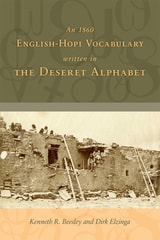
An 1860 English-Hopi Vocabulary Written in the Deseret Alphabet
Kenneth R. Beesley
University of Utah Press, 2014
The volume reproduces all 486 vocabulary entries of the original manuscript, presenting the Deseret and the modern English and Hopi translations. It explains the history of the Deseret Alphabet as well as that of the Mormon missions to the Hopi, while fleshing out the background of the two missionaries, Marion Jackson Shelton, who wrote the manuscript, and his companion, Thales Hastings Haskell. The book will be of interest to linguists, historians, ethnographers, and others who are curious about the unique combination of topics this work connects.
An African Perspective on the Thought of Benedict XVI
Agbaw-ebai
St. Augustine's Press, 2023
An Anthropology of Vocations
Man-and-Woman, The Image of GodMarc Ouellet
Catholic University of America Press, 2026
An Epidemic among My People
Religion, Politics, and COVID-19 in the United StatesEdited by Paul A. Djupe and Amanda Friesen
Temple University Press, 2023
The pandemic presented religion as a paradox: faith is often crucial for helping people weather life’s troubles and make difficult decisions, but how can religion continue to deliver these benefits and provide societal structure without social contact? The topical volume, An Epidemic among My People explains how the COVID-19 pandemic stress tested American religious communities and created a new politics of religion centered on public health.
The editors and contributorsconsider how the virus and government policy affected religion in America. Chapters examine the link between the prosperity gospel and conspiracy theories, the increased purchase of firearms by evangelicals, the politics of challenging public health orders as religious freedom claims, and the reactions of Christian nationalists, racial groups, and female clergy to the pandemic (and pandemic politics). As sharp lines were drawn between people and their governments during this uncertain time, An Epidemic among My People provides a comprehensive portrait of religion in American public life.
An Evangelical Adrift
The Making of John Henry Newman's TheologyGeertjan Zuijdwegt
Catholic University of America Press, 2022
An Exemplar of the True
The Tabernacle and the Architecture of Medieval TheologyAllison Zbicz Michael
Catholic University of America Press, 2026
An Image of God
The Catholic Struggle with EugenicsSharon M. Leon
University of Chicago Press, 2013
An Imperfect Book
What the Book of Mormon Tells Us about ItselfEarl M. Wunderli
Signature Books, 2013
Dale E. Luffman, Association for Mormon Letters
An Insider's View of Mormon Origins
Grant Palmer
Signature Books, 2002
He finds that much of what we take for granted as literal history has been tailored over the years—slightly modified, added to, one aspect emphasized over another—to the point that the original narratives have been nearly lost. What was experienced as a spiritual or metaphysical event, something from a different dimension, often has been refashioned as if it were a physical, objective occurrence. This is not how the first Saints interpreted these events. Historians who have looked closer at the foundational stories and source documents have restored elements, including a nineteenth-century world view, that have been misunderstood, if not forgotten.
An Introduction to Personalism
Juan Manuel Burgos
Catholic University of America Press, 2018
Juan Manuel Burgos shows the reader how personalist philosophy was born in response to the tragedies of two World Wars, the Great Depression, and the totalitarian regimes of the 1930s. Through a revitalization of the concept of the person, an array of thinkers developed a philosophy both rooted in the best of the intellectual tradition and capable of dialoguing with contemporary concerns.
Burgos then delves into the potent ideas of more than twenty thinkers who have contributed to the growth of personalism, including Romano Guardini, Gabriel Marcel, Xavier Zubiri, and Michael Polanyi. Burgos’s encyclopedic knowledge of the movement allows for a concise and well-rounded perspective on each of the personalists studied.
An Introduction to Personalism concludes with a synthesis of personalist thought, bringing together the brightest insights of each personalist philosopher into an organic whole. Burgos argues that personalism is not an eclectic hodge-podge, but a full-fledged school of philosophy, and gives a dynamic and rigorous exposition of the key features of the personalist position.
Our times are marked by numerous and often contradictory ideas about the human person. An Introduction to Personalism presents an engaging anthropological vision capable of taking the lead in the debate about the meaning of human existence and of winning hearts and minds for the cause of the dignity of every person in the 21st century and beyond.
An Introduction to Vatican II as an Ongoing Theological Event
Matthew Levering
Catholic University of America Press, 2017
This is an introduction to Vatican II with a detailed summary of each of its four central documents—the dogmatic constitutions—followed by explanations of how to interpret them. In contrast to other introductions, which pay little attention to the theological soil in which the documents of Vatican II germinated, Levering offers a reading of each conciliar Constitution in light of a key theological author from the era: René Latourelle, SJ for Dei Verbum (persons and propositions); Louis Bouyer, CO for Sacrosanctum Concilium (active participation); Yves Congar, OP for Lumen Gentium (true and false reform); and Henri de Lubac, SJ for Gaudium et Spes (nature and grace).
This theological event is “ongoing,” Levering demonstrates, by tracing in each chapter the theological debates that have stretched from the close of the council till the present, and the difficulties the Church continues to encounter in encouraging an ever deeper participation in Jesus Christ on the part of all believers. In this light, the book’s final chapter compares the historicist (Massimo Faggioli) and Christological (Robert Imbelli) interpretations of Vatican II, arguing that historicism can undermine the Council’s fundamental desire for a reform and renewal rooted in Christ. The conclusion addresses the concerns about secularization and loss of faith raised after the Council by Henri de Lubac, Joseph Ratzinger, and Yves Congar, arguing that contemporary Vatican II scholarship needs to take these concerns more seriously.
Ancestral Voices
Religion and Nationalism in IrelandConor Cruise O'Brien
University of Chicago Press, 1995
"O'Brien's bravura performance [is] seductive in its intellectual sweep and literary assurance."—Toby Barnard, Times Literary Supplement
"Has the magical insistence which Conor Cruise O'Brien can produce at his best. . . . Where he looks back to his own childhood the book shines. He writes of his mother and father with effortless grace and candor, with a marvelous, elegant mix of affection and detachment."—Observer
Ancient Egypt
Cradle of Early ChristianityTjeu van den Berk
Eburon Academic Publishers, 2021
The earliest Christian myths emerged in the melting pot of gnostic Alexandria—not in orthodox Jerusalem, classical Athens, or legalistic Rome. In this book, Tjeu van den Berk traces the sources of the Christian faith to the banks of the river Nile. Focusing on ancient archetypes, van den Berk underscores the striking similarities between the Egyptian and Christian religions. In this fascinating study, he explores the symbolism of the Trinity, the cross, and the myths of a god born of a virgin. He also traces the origins of the stories of Lazarus and Saint George, and he finds stunning parallels between Egyptian mythology and the Book of Revelation.
Angels and Demons
Serge-Thomas Bonino
Catholic University of America Press, 2016