Results by title
1038 books match the query 'Economic conditions' and 73 start with a
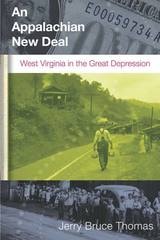
An Appalachian New Deal
West Virginia in the Great DepressionJerry Bruce Thomas
West Virginia University Press, 2011
In this paperback edition of An Appalachian New Deal: West Virginia in the Great Depression, Jerry Bruce Thomas examines the economic and social conditions of the state of West Virginia before, during, and after the Great Depression. Thomas’s exploration of personal papers by leading political and social figures, newspapers, and the published and unpublished records of federal, state, local, and private agencies, traces a region’s response to an economic depression and a presidential stimulus program. This dissection of federal and state policies implemented under Franklin D. Roosevelt’s New Deal program reveals the impact of poverty upon political, gender, race, and familial relations within the Mountain State—and the entire country. Through An Appalachian New Deal, Thomas documents the stories of ordinary citizens who survived a period of economic crisis and echoes a message from our nation’s past to a new generation enduring financial hardship and uncertainty.

An Appalachian Reawakening
West Virginia and the Perils of the New Machine Age, 1945-1972JERRY B. THOMAS
West Virginia University Press, 2010
As the long boom of post-World War II economic expansion spread across the globe, dreams of white picket fences, democratic ideals, and endless opportunities flourished within the United States. Middle America experienced a period of affluent stability built upon a modern age of industrialization. Yet for the people of Appalachia, this new era brought economic, social, and environmental devastation, preventing many from realizing the American Dream. Some families suffered in silence; some joined a mass exodus from the mountains; while others, trapped by unemployment, poverty, illness, and injury became dependent upon welfare. As the one state most completely Appalachian, West Virginia symbolized the region's dilemma, even as it provided much of the labor and natural resources that fueled the nation's prosperity.
An Appalachian Reawakening: West Virginia and the Perils of the New Machine Age, 1945-1972 recounts the difficulties the state of West Virginia faced during the post-World War II period. While documenting this turmoil, this valuable analysis also traces the efforts of the New Frontier and Great Society programs, which stimulated maximum feasible participation and lead to the ultimate rise of grass roots activities and organizations that improved life and labor in the region and undermined the notion of Appalachian fatalism.
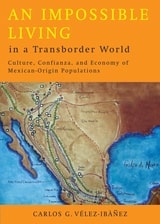
An Impossible Living in a Transborder World
Culture, Confianza, and Economy of Mexican-Origin PopulationsCarlos G. Vélez-Ibáñez
University of Arizona Press, 2010
Central to the ROSCA is the cultural concept of mutual trust, or confianza. This is the cultural glue that holds the reciprocal relationship together. As Vélez-Ibáñez explains, confianza “shapes the expectations for relationships within broad networks of interpersonal links, in which intimacies, favors, goods, services, emotion, power, or information are exchanged.” In a border region where migration, class movement, economic changes, and institutional inaccessibility produce a great deal of uncertainty, Mexican-origin populations rely on confianza and ROSCAs to maintain a sense of security in daily life. How do transborder people adapt these common practices to meet the demands of a global economy? That is precisely what Vélez-Ibáñez investigates.
Anaconda
Labor, Community, and Culture in Montana's Smelter CityLaurie Mercier
University of Illinois Press, 2001
Laurie Mercier's look at "community unionism" examines the distinctive culture of cooperation and activism fostered by residents in Anaconda, Montana, home to the world's largest copper smelter and the namesake of the Anaconda Copper Mining Company.
Mercier depicts the vibrant life of the smelter city at full steam, incorporating the candid commentary of the locals ("the company furnished three pair of leather gloves . . . and all the arsenic [dust] you could eat"). During five decades of devoted unionism, locals embraced an "alternative Americanism" that championed improved living standards for working people as the best defense against communism. Mercier also explores how gender limits on women's political, economic, and social roles shaped the nature and outcome of labor struggles, and traces how union rivalries, environmental concerns, and the 1980 closing of the Anaconda smelter transformed the town.
A fascinating portrait of how community molds working class consciousness, Anaconda offers important insights about the changing nature of working class culture and collective action.
Analyses in the Economics of Aging
Edited by David A. Wise
University of Chicago Press, 2005
The volume begins with a discussion of the risks and merits of 401(k) plans. Subsequent chapters present recent analysis of the growth of Medicare costs; the different aspects of disability; and the evolution of health, wealth, and living arrangements over the life course. Keeping with the global tradition of previous volumes, Analyses in the Economics of Aging also includes comparative studies on savings behavior in Italy, the Netherlands, and the United States; an examination of household savings among different age groups in Germany; and a chapter devoted to population aging and the plight of widows in India.
Carefully compiled and containing some of the most cutting-edge research and analysis available, this volume should be of interest to any specialist or policymaker concerned with ongoing changes in savings and retirement behaviors.
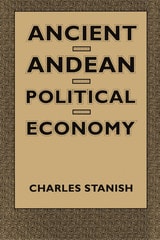
Ancient Andean Political Economy
By Charles Stanish
University of Texas Press, 1992
For more than two millennia prior to the Spanish conquest, the southern region of the central Andes was home to dozens of societies, ranging from modest chiefdoms to imperial states. Attempts to understand the political and economic dynamics of this complex region have included at least two major theories in Andean anthropology. In this pathfinding study, Charles Stanish shows that they are not exclusive and competing models, but rather can be understood as variations within a larger theoretical framework.
Stanish builds his arguments around a case study from the Moquequa region of Peru, augmented with data from Puno. He uses the "archaeological household" as his basic unit of analysis. This approach allows him to reconcile the now-classic model of zonal complementarity proposed by John Murra with the model of craft specialization and exchange offered by Maria Rostworowski de Diez Canseco. These models of political economy are analyzed with the concepts of economic anthropology in the tradition of Karl Polanyi.
For students of archaeology, Andean studies, anthropology, and economic history, Ancient Andean Political Economy will be important reading.
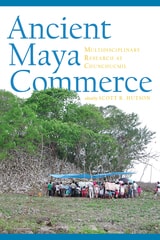
Ancient Maya Commerce
Multidisciplinary Research at ChunchucmilScott R. Hutson
University Press of Colorado, 2017
Ancient Maya Commerce presents nearly two decades of multidisciplinary research at Chunchucmil, Yucatan, Mexico—a thriving Classic period Maya center organized around commercial exchange rather than agriculture. An urban center without a king and unable to sustain agrarian independence, Chunchucmil is a rare example of a Maya city in which economics, not political rituals, served as the engine of growth. Trade was the raison d’être of the city itself.
Using a variety of evidence—archaeological, botanical, geomorphological, and soil-based—contributors show how the city was a major center for both short- and long-distance trade, integrating the Guatemalan highlands, the Gulf of Mexico, and the interior of the northern Maya lowlands. By placing Chunchucmil into the broader context of emerging research at other Maya cities, the book reorients the understanding of ancient Maya economies. The book is accompanied by a highly detailed digital map that reveals the dense population of the city and the hundreds of streets its inhabitants constructed to make the city navigable, shifting the knowledge of urbanism among the ancient Maya.
Ancient Maya Commerce is a pioneering, thoroughly documented case study of a premodern market center and makes a strong case for the importance of early market economies in the Maya region. It will be a valuable addition to the literature for Mayanists, Mesoamericanists, economic anthropologists, and environmental archaeologists.
Contributors: Anthony P. Andrews, Traci Ardren, Sheryl Luzzadder-Beach, Timothy Beach, Chelsea Blackmore, Tara Bond-Freeman, Bruce H. Dahlin, Patrice Farrell, David Hixson, Socorro Jimenez, Justin Lowry, Aline Magnoni, Eugenia Mansell, Daniel E. Mazeau, Travis Stanton, Ryan V. Sweetwood, Richard E. Terry
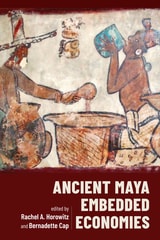
Ancient Maya Embedded Economies
Rachel A. Horowitz
University Press of Colorado, 2026
Ancient Maya Embedded Economies provides an in-depth discussion of the relationships between economic activities and other aspects of the daily lives of the ancient Maya. Through a series of casestudies spanning the Preclassic through the Late Classic periods, this volume addresses the entangled relationship of ancient Maya economies within social, political, and religious practices.
Contributors use cutting-edge data from a variety of sources to address the interrelatedness between economy and other aspects of Maya life and point to the complexity of interactions among ancient Maya peoples of all socioeconomic statuses—interactions guided by not only economies but also political-religious frameworks. Ancient Maya Embedded Economies provides a unique viewpoint into how economies functioned in the past and advances scholarly understandings of Maya economies and the ways in which archaeological data can examine such systems, as well as contribute to broader understandings of pre-modern economic organization on a global level.
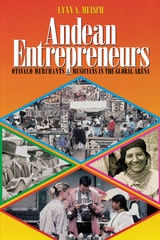
Andean Entrepreneurs
Otavalo Merchants and Musicians in the Global ArenaBy Lynn A. Meisch
University of Texas Press, 2002
Native to a high valley in the Andes of Ecuador, the Otavalos are an indigenous people whose handcrafted textiles and traditional music are now sold in countries around the globe. Known as weavers and merchants since pre-Inca times, Otavalos today live and work in over thirty countries on six continents, while hosting more than 145,000 tourists annually at their Saturday market.
In this ethnography of the globalization process, Lynn A. Meisch looks at how participation in the global economy has affected Otavalo identity and culture since the 1970s. Drawing on nearly thirty years of fieldwork, she covers many areas of Otavalo life, including the development of weaving and music as business enterprises, the increase in tourism to Otavalo, the diaspora of Otavalo merchants and musicians around the world, changing social relations at home, the growth of indigenous political power, and current debates within the Otavalo community over preserving cultural identity in the face of globalization and transnational migration. Refuting the belief that contact with the wider world inevitably destroys indigenous societies, Meisch demonstrates that Otavalos are preserving many features of their culture while adopting and adapting modern technologies and practices they find useful.

Anti-Politics Machine
Development, Depoliticization, and Bureaucratic Power in LesothoJames Ferguson
University of Minnesota Press, 1994
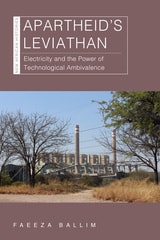
Apartheid’s Leviathan
Electricity and the Power of Technological AmbivalenceFaeeza Ballim
Ohio University Press, 2023
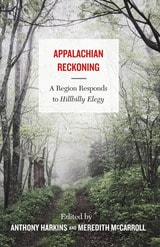
Appalachian Reckoning
A Region Responds to Hillbilly ElegyAnthony Harkins
West Virginia University Press, 2019
2020 American Book Award winner, Walter & Lillian Lowenfels Criticism Award
2019 Weatherford Award winner, nonfiction
With hundreds of thousands of copies sold, a Ron Howard movie in the works, and the rise of its author as a media personality, J. D. Vance’s Hillbilly Elegy: A Memoir of a Family and Culture in Crisis has defined Appalachia for much of the nation. What about Hillbilly Elegy accounts for this explosion of interest during this period of political turmoil? Why have its ideas raised so much controversy? And how can debates about the book catalyze new, more inclusive political agendas for the region’s future?
Appalachian Reckoning is a retort, at turns rigorous, critical, angry, and hopeful, to the long shadow Hillbilly Elegy has cast over the region and its imagining. But it also moves beyond Hillbilly Elegy to allow Appalachians from varied backgrounds to tell their own diverse and complex stories through an imaginative blend of scholarship, prose, poetry, and photography. The essays and creative work collected in Appalachian Reckoning provide a deeply personal portrait of a place that is at once culturally rich and economically distressed, unique and typically American. Complicating simplistic visions that associate the region almost exclusively with death and decay, Appalachian Reckoning makes clear Appalachia’s intellectual vitality, spiritual richness, and progressive possibilities.
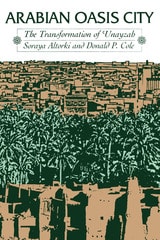
Arabian Oasis City
The Transformation of 'UnayzahBy Soraya Altorki and Donald P. Cole
University of Texas Press, 1989
Vast social change has occurred in the Middle East since the oil boom of the mid-1970s. As the first anthropological study of an urban community in Saudi Arabia since that oil boom, Arabian Oasis City is also the first to document those changes.
Based on extensive interviews and participant observation with both men and women, the authors record and analyze the transformation that has occurred in this ancient oasis city throughout the twentieth century: the creation of the present Saudi Arabian state and of a new national economy based on the export of oil and the economic boom brought about by the dramatic increases in the price of oil following the October 1973 Arab-Israeli War. In addition, the authors reveal the changes brought about by the fall in the price of oil beginning in 1982 and analyze the problems confronting ‘Unayzah in its aftermath.
By demonstrating that the area was not exclusively dominated by tribalism and Bedouin nomads, this empirical case study destroys stereotypical views about Saudi Arabia. Indeed, it proves the existence—prior to the coming of the modern Saudi Arabian state— of surplus agricultural and craft production and the full development of local, regional, and long-distance trade networks. It shows that women, although veiled, played active roles in work outside the household. The social impact of change over the years is, however, profound—especially the gradual replacement of the extended family by the nuclear family, changing patterns of husband-wife relationships, the impact of self-earned income on the status of women, and the emergence of a new middle class of employees and entrepreneurs. Because of the high degree of gender segregation in this area of research, Altorki and Cole give us a fortunate collaboration between a Saudi Arabian female scholar and an American male scholar experienced in research in the Middle East.
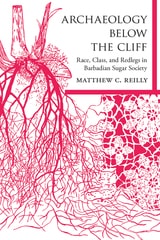
Archaeology below the Cliff
Race, Class, and Redlegs in Barbadian Sugar SocietyMatthew C. Reilly
University of Alabama Press, 2019
Archaeology below the Cliff: Race, Class, and Redlegs in Barbadian Sugar Society is the first archaeological study of the poor whites of Barbados, the descendants of seventeenth-century European indentured servants and small farmers. “Redlegs” is a pejorative to describe the marginalized group who remained after the island transitioned to a sugar monoculture economy dependent on the labor of enslaved Africans. A sizable portion of the “white” minority, the Redlegs largely existed on the peripheries of the plantation landscape in an area called “Below Cliff,” which was deemed unsuitable for profitable agricultural production. Just as the land on which they resided was cast as marginal, so too have the poor whites historically and contemporarily been derided as peripheral and isolated as well as idle, alcoholic, degenerate, inbred, and irrelevant to a functional island society and economy.
Using archaeological, historical, and oral sources, Matthew C. Reilly shows how the precarious existence of the Barbadian Redlegs challenged elite hypercapitalistic notions of economics, race, and class as they were developing in colonial society. Experiencing pronounced economic hardship, similar to that of the enslaved, albeit under very different circumstances, Barbadian Redlegs developed strategies to live in a harsh environment. Reilly’s investigations reveal that what developed in Below Cliff was a moral economy, based on community needs rather than free-market prices.
Reilly extensively excavated households from the tenantry area on the boundaries of the Clifton Hall Plantation, which was abandoned in the 1960s, to explore the daily lives of poor white tenants and investigate their relationships with island economic processes and networks. Despite misconceptions of strict racial isolation, evidence also highlights the importance of poor white encounters and relationships with Afro-Barbadians. Historical data are also incorporated to address how an underrepresented demographic experienced the plantation landscape. Ultimately, Reilly’s narrative situates the Redlegs within island history, privileging inclusion and embeddedness over exclusion and isolation.

Arctic Politics
Conflict and Cooperation in the Circumpolar NorthOran R. Young
Dartmouth College Press, 1992

Art beyond Borders
Artistic Exchange in Communist Europe (1945-1989)Jérôme Bazin
Central European University Press, 2016
Atlanta Life Insurance
Guardian of Black Economic DignityAlexa Benson Henderson
University of Alabama Press, 1990
Efforts to develop an economic base within the Black community began even before the Civil War. These efforts gained new meaning in the post-Reconstruction period as Blacks strove to adapt to radically changing economic circumstances and the emergence of the Jim Crow South. In Atlanta, shortly after the turn of the century, Alonzo Franklin Herndon, a former slave, joined a long line of Black entrepreneurs by creating Atlanta Life Insurance Company. More than three-quarters of a century later, it remains an important enterprise that is the nation’s largest Black-controlled shareholder insurance company. The firm is today a significant example of the efforts of Black Americans to achieve economic independence and dignity in America.
Atlanta Paradox
David L. Sjoquist
Russell Sage Foundation, 2000
Atlanta
Race, Class And Urban ExpansionLarry Keating
Temple University Press, 2001
Despite African American success in winning the mayor's office and control of the City Council, development plans have remained in the control of private business interests. Keating tells a number of troubling stories. The development of the Underground Atlanta, the construction of the rapid rail system (MARTA), the building of a new stadium for the Braves, the redevelopment of public housing, and the arrangements for the Olympic Games all share a lack of democratic process. Business and political elites ignored protests from neighborhood groups, the interests of the poor, and the advice of planners.

Atlas of the Pacific Northwest
Philip Jackson
Oregon State University Press, 1993
Atlas of the Pacific Northwest, 9th Ed
Philip Jackson
Oregon State University Press, 2003
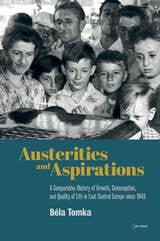
Austerities and Aspirations
A Comparative History of Growth, Consumption, and Quality of Life in East Central Europe since 1945Béla Tomka
Central European University Press, 2020
This monograph provides an analysis of the economic performance and living standard in Czechoslovakia and its successor states, Hungary, and Poland since 1945. The novelty of the book lies in its broad comparative perspective: it places East Central Europe in a wider European framework that underlines the themes of regional disparities and European commonalities. Going beyond the traditional growth paradigm, the author systematically studies the historical patterns of consumption, leisure, and quality of life—aspects that Tomka argues can best be considered in relation to one other. By adopting this “triple approach,” he undertakes a truly interdisciplinary research drawing from history, economics, sociology, and demography.
As a result of Tomka’s three-pillar comparative analysis, the book makes a major contribution to the debates on the dynamics of economic growth in communist and postcommunist East Central Europe, on the socialist consumer culture along with its transformation after 1990, and on how the accounts on East Central Europe can be integrated into the emerging field of historical quality of life research.

Austerity Ireland
The Failure of Irish CapitalismKieran Allen and Brian O'Boyle
Pluto Press, 2013
In Austerity Ireland, Kieran Allen challenges this official image and argues that the Irish state's response to the crash has primarily been designed to protect economic privilege. The resulting austerity has been a failure and is likely to produce a decade of hardship.
The book offers a deeply informed and penetrating diagnosis of Ireland's current socio-economic and political malaise, suggesting that a political earthquake is underway which may benefit the left. Austerity Ireland is essential reading for all students of Irish politics and economics, as well as those interested in the politics of austerity and the eurozone crisis.