Results by title
733 books match the query 'Environmental Conservation & Protection' and 58 start with a
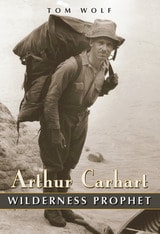
Arthur Carhart
Wilderness ProphetTom Wolf
University Press of Colorado, 2025
Arthur Carhart (1892-1978), America's first champion of wilderness, the first Forest Service landscape architect, and the most popular conservation writer of mid-century America, never won the titan status of his contemporary, Aldo Leopold. A political maverick, he refused to side with any major advocacy group and none has made him its saint. Carhart was a grassroots thinker in a top-down era.
Arthur Carhart, the first biography of this Republican environmentalist and major American thinker, writer, and activist, reveals the currency of his ideas. Tom Wolf elucidates Carhart 's vision of conservation as "a job for all of us," with citizens, municipal authorities, and national leaders all responsible for the environmental effects of their decisions. Carhart loved the local and decried interest groups—from stockmens' associations to wilderness lobbies—as cliques attempting blanket control. He pressured land management agencies to base decisions on local ecology and local partnerships. A lifelong wilderness advocate who proposed the first wilderness preserve at Trappers Lake, Colorado, in 1919, Carhart chose to oppose the Wilderness Act, heartsick at its compromises with lobbies.
Because he shifted his stance and changed his views in response to new information, Carhart is not an easy subject for a biography. Wolf traces Carhart's twists and turns to show a man whose voice was distinctive and contrary and who spoke from a passionate concern for the land and couldn't be counted on for anything else. Readers of American history and outdoor writing will enjoy this portrait of a historic era in conservation politics and the man who so often eschewed politics in favor of the land and people he loved.
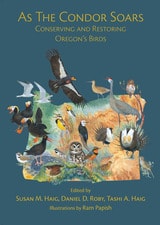
As the Condor Soars
Conserving and Restoring Oregon's BirdsSusan M. Haig
Oregon State University Press, 2022
The essays collected in As the Condor Soars focus on the role that ornithologists have played in research, management, and conservation debates across the state over the past century. Contributors to this volume discuss new developments in the study of birds, from sophisticated tracking devices to the evolving connections between ornithologists and artists. Readers also learn about the important role of citizen scientists in saving our treasured birds. These essays provide hope for species recovery, despite environmental threats, when scientists and the public work together. They also offer to other regions examples of adaptive management learned through these efforts.
This full-color book is beautifully illustrated by noted Oregon Coast artist Ram Papish and includes over eighty stunning photographs donated by some of the state’s finest nature photographers. Fifty capsule biographies of noted Oregon avian scientists round out the inspirational stories about the monumental efforts that have taken shape in recent decades. Accessibly written for scientists and laypeople alike, As the Condor Soars is a gift to everyone who cares about the conservation and restoration of Oregon’s birds.
As the Twig Is Bent
A MemoirWallace Byron Grange, Edited by Joseph L. Breitenstein and Richard P. Thiel
University of Wisconsin Press, 2020
Written when Grange was in his sixties, As the Twig Is Bent conveys how a leading conservationist was formed through his early relationship to nature. In beautifully composed vignettes, he details encounters both profound and minute, from the white-footed mice attracted by cookie crumbs in his boyhood clubhouse to the sounds of great horned owls echoing through the wintry woods. As he develops his own understanding of the natural world, he comes to an awareness of the dramatic and devastating role of humankind on ecosystems. Grange’s poignant observations still resonate today amid global conversations about the fate of our natural resources and climate change.

As Áreas Importantes de Plantas de Moçambique
Edited by Iain Darbyshire, Sophie Richards, and Jo Osborne
Royal Botanic Gardens, Kew, 2024
The Important Plant Areas of Mozambique is based on the Mozambique TIPAs project run in collaboration between Royal Botanic Gardens, Kew, Mozambique’s Agricultural Research Institute (Instituto de Investigação Agrária de Moçambique – IIAM), and the University Eduardo Mondlane. Drawing on information from the TIPAs database, The Important Plant Areas of Mozambique includes color maps and photographs, site descriptions, and tables to present information on the botanical significance, habitat, and geology of the region. The book will also address conservation issues and ecosystem services to promote Mozambique’s critical plant sites and inform conservation leaders in government, NGOs, universities, and local communities about Mozambique’s threatened habitats.
Asserting Native Resilience
Pacific Rim Indigenous Nations Face the Climate CrisisEdited by Zoltán Grossman and Alan Parker
Oregon State University Press, 2012
Native American tribes in the Pacific Northwest and Indigenous peoples around the Pacific Rim have already been deeply affected by droughts, flooding, reduced glaciers and snowmelts, seasonal shifts in winds and storms, and the northward movement of species on the land and in the ocean. Using tools of resilience, Native peoples are creating defenses to strengthen their communities, mitigate losses, and adapt where possible.
Asserting Native Resilience presents a rich variety of perspectives on Indigenous responses to the climate crisis, reflecting the voices of more than twenty contributors, including tribal leaders, scientists, scholars, and activists from the Pacific Northwest, British Columbia, Alaska, and Aotearoa / New Zealand, and beyond. Also included is a resource directory of Indigenous governments, NGOs, and communities and a community organizing booklet for use by Northwest tribes.
At Home in the Anthropocene
Amy D. Propen
The Ohio State University Press, 2022
By employing the tenets of posthumanism, compassionate conservation, and entangled empathy—and making them accessible through storytelling and narrative—Propen offers new perspectives about how to more compassionately and productively understand ideas about home, connectivity, and coexistence across a range of places and ecosystems. Uniquely conceptualized to include narrative related to the Anthropause, as well as travel and nature writing amidst COVID-19, At Home in the Anthropocene engages with questions about home and belonging in generative ways that attempt to open up possibilities for sustainable futures in which we may productively coexist with our more-than-human kin.

Atlas of Oregon Wildlife
Blair Csuti
Oregon State University Press, 1997
Atlas of Oregon Wildlife, 2nd Ed
Distribution, Habitat, and Natural HistoryBlair Csuti
Oregon State University Press, 2001