Results by title
1832 books match the query 'Essays' and 137 start with a
Acculturated
23 Savvy Writers Find Hidden Virtue in Reality TV, Chic Lit, Video Games, and Other Pillars of Pop CultureNaomi Schaefer Riley
Templeton Press, 2012
Contemporary popular culture, from books to film to television to music to the deepest corners of the internet, has provoked much criticism, some of it well deserved. Yet, popular culture is culture for many Americans—particularly younger Americans. It is the only kind of cultural experience they seek and the currency in which they trade.
In Acculturated, twenty-three thinkers examine the rituals, the myths, the tropes, the peculiar habits, the practices, and the neuroses of our modern era. Every culture finds a way for people to tell stories about themselves. We rely on these stories to teach us why we do the things we do, to test the limits of our experience, to reaffirm deeply felt truths about human nature, and to teach younger generations about vice and virtue, honor and shame, and a great deal more. A phenomenon like the current crop of reality television shows, for example, with their bevy of “real” housewives, super-size families, and toddler beauty-pageant candidates, seems an unlikely place to find truths about human nature or examples of virtue. And yet, on these shows, and in much else of what passes for popular culture these days, a surprising theme emerges: Move beyond the visual excess and hyperbole, and you will find the makings of classic morality tales.
As the title suggests, readers will find in these pages “A-Culture Rated.” This lively roundtable of “raters” includes renowned cultural critics like Caitlin Flannigan and Chuck Colson and celebrated culture creators like the producers of the hit ABC comedy Modern Family and the host of TLC’s What Not to Wear. Editors Christine Rosen and Naomi Schaefer Riley have tasked these contributors—both the critics and the insiders—with taking a step or two back from the unceasing din of popular culture so that they might better judge its value and its values and help readers think more deeply about the meaning of the narratives with which they are bombarded every waking minute. In doing so, the editors hope to foster a wide-reaching public conversation to help us think more clearly about our culture.
CONTRIBUTORS INCLUDE Judy Bachrach, Megan Basham, Mark Bauerlein, Pia Catton, Chuck Colson, Paul Corrigan, Caitlin Flanagan, Meghan Cox Gurdon, Margo Howard, Kay S. Hymowitz, Jonathan V. Last, Herb London, Stacy London, Rob Long, Megan McArdle, Wilfred M. McClay, Caitrin Nicol, Joe Queenan, Emily Esfahani Smith, Brad Walsh, and Tony Woodlief.
Act Like You're Having a Good Time
EssaysMichele Weldon
Northwestern University Press, 2020
Winner, 2021 Gilda Women's Book Award
In this honest and tender collection of essays, award-winning memoirist Michele Weldon asks what it means to be a mature woman seeking a life of purpose and meaning through work, family, and relationships. Facing ageism and invisibility within popular culture, Weldon examines the effects of raising children, striving for applause, failing expectations, forming new friendships, reconciling lost dreams, and restoring one’s faith. With sincerity and humor, she unwraps family traditions, painting classes, lap swimming, dress codes, and career disappointments. She addresses white privilege and her evolving understanding of racism. And she asks crucial questions about mortality, finding connection in writing and stories.
Frank, eloquent, and daring, Weldon dissects the intricacies of life, journeying toward self-discovery as a mother, daughter, sister, and friend. Readers of any age or gender will recognize the universal experience of learning to accept oneself and asking essential questions—even if there are no easy answers.
Adventures of a Deaf-Mute and Other Short Pieces
William B. Swett
Gallaudet University Press, 2017
Confident in his identity as a Deaf “mute,” he notes with wry humor the varied perceptions of deafness that he encounters. As a signing Deaf person from a prominent multigenerational Deaf family, he counters negative stereotypes with generosity and a smart wit. He takes pride in his physical abilities, which he showcases through various stunts and arduous treks in the wilderness. However, Swett’s writing also reveals a deep awareness of the fragility and precariousness of life. This is a portrait of a man testing his physical and emotional limits, written from the vantage point of someone who is no longer a young man but is still very much in the prime of his life.
This collection also includes “Mr. Swett and His Diorama,” an article from 1859 in which Swett describes his miniature recreation of the Battle of Lexington, as well as Manual Alphabets, a pamphlet published in 1875 on the history of manual alphabets that includes short biographies of Thomas Hopkins Gallaudet and Laurent Clerc, two pioneers of Deaf education in the United States. The work is accompanied by a new introduction that offers a reflection on Swett’s life and the time in which he lived.

Adventures with a Texas Naturalist
By Roy Bedichek
University of Texas Press, 1994
A classic since its first publication in 1947, Adventures with a Texas Naturalist distills a lifetime of patient observations of the natural world. This reprint contains a new introduction by noted nature writer Rick Bass.
Aesop's Anthropology
A Multispecies ApproachJohn Hartigan Jr.
University of Minnesota Press, 0
Forerunners: Ideas First is a thought-in-process series of breakthrough digital publications. Written between fresh ideas and finished books, Forerunners draws on scholarly work initiated in notable blogs, social media, conference plenaries, journal articles, and the synergy of academic exchange. This is gray literature publishing: where intense thinking, change, and speculation take place in scholarship.
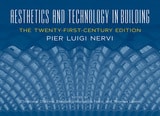
Aesthetics and Technology in Building
The Twenty-First-Century EditionPier Luigi Nervi; Edited by Cristiana Chiorino, Elisabetta Margiotta Nervi, and Thomas Leslie
University of Illinois Press, 2018
Aesthetics and Technology in Building: The Twenty-First-Century Edition introduces Nervi's ideas about architecture and engineering to a new generation of students and admirers. More than 200 photographs, details, drawings, and plans show how Nervi put his ideas into practice. Expanding on the seminal 1961 Norton Lectures at Harvard, Nervi analyzes various functional and construction problems. He also explains how precast and cast-in-place concrete can answer demands for economy, technical and functional soundness, and aesthetic perfection. Throughout, he uses his major projects to show how these now-iconic buildings emerged from structural truths and far-sighted construction processes.
This new edition features dozens of added images, a new introduction, and essays by Joseph Abram, Roberto Einaudi, Alberto Bologna, Gabriele Neri, and Hans-Christian Schink on Nervi's life, work, and legacy.
Aesthetics of the Natural Environment
Emily Brady
University of Alabama Press, 2003
Aesthetic experience is one of the fundamental ways that we develop a relationship to our natural surroundings. Emily Brady provides a comprehensive study of this type of experience and the central philosophical issues related to it, developing her own original theory of aesthetic appreciation of nature. She provides useful background to the current debate and an up-to-date critical appraisal of contemporary theories.
The context of the contemporary debate is laid out through a discussion of aesthetic experience and aesthetic qualities; early theories of aesthetic appreciation of nature, including the beautiful, the sublime, and the picturesque; and differences between artistic and environmental appreciation and interpretation. Brady situates her own approach in relation to a set of noncognitive accounts of appreciation. Her "integrated aesthetic" brings together various features of appreciation, including the senses, emotion, and imagination, with a reappraisal of the concept of disinterestedness. These ideas are further developed within the more practical domains of aesthetic judgment and education of the environment and through an examination of the role of aesthetic value in environmental conservation.
Arnold Berleant of Long Island University, a pioneer in this area of research, has declared Brady’s work, “admirably comprehensive coverage of the subject.” Julie C. Van Camp of California State University, Long Beach, has said, “The bibliography is priceless. . . . The discussions of such philosophers as Kant and Dewey seem plausible and understandable to an audience of students and the educated public.” This book will be valuable to readers interested in such wide-ranging subjects as philosophy, aesthetics, ethics, ecology, conservation, environmental policy-making, geography, and landscape architecture.
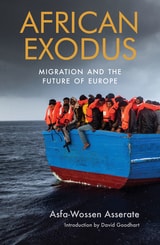
African Exodus
Migration and the Future of EuropeAsfa-Wossen Asserate
Haus Publishing, 2018
Asfa-Wossen Asserate argues here that building higher fences or finding more effective methods of integration will only, in the long term, perpetuate rather than solve the problems associated with these large numbers of displaced refugees. We need to realize that we are only treating the symptoms of an oncoming catastrophe and that, if we are to respond to mass migration, we will ultimately have to understand its causes. African Exodus places its emphasis firmly on the causes of the refugee crisis, which are to be found not least in Europe itself, and charts ways in which we might deal with it effectively in the long term.
In the course of this analysis, Asserate asks why our view of Africa—a troubled continent, but rich in so many ways—is so distorted. How can we combat the corrupt, authoritarian regimes that stymie progress and development? Why are millions fleeing to Europe? How is the EU complicit in the migration crisis? And finally, in practical terms: what can be done, and what prospects does the future hold?
African Futures
Essays on Crisis, Emergence, and PossibilityEdited by Brian Goldstone and Juan Obarrio
University of Chicago Press, 2017
The experts in this book address Africa’s future as it is embedded within various social and cultural forms emerging on the continent today: the reconfiguration of the urban, the efflorescence of signs and wonders and gospels of prosperity, the assorted techniques of legality and illegality, lotteries and Ponzi schemes, apocalyptic visions, a yearning for exile, and many other phenomena. Bringing together social, political, religious, and economic viewpoints, the book reveals not one but multiple prospects for the future of Africa. In doing so, it offers a pathbreaking model of pluralistic and open-ended thinking and a powerful tool for addressing the vexing uncertainties that underlie so many futures around the world.

After The Grapes Of Wrath
Essays On John Steinbeck In Honor of Tetsumaro HayashiDonald V. Coers
Ohio University Press, 1994
Traditionally, the critical reputation of Nobel Prize-winning American novelist John Steinbeck (1902-1968) has rested on his achievements of the 1930s, especially In Dubious Battle (1936), Of Mice and Men (19370, The Long Valley (1938), and, of course, The Grapes of Wrath (1939), one of the most powerful – and arguable on of the greatest – American novels of this century.
Book reviewers and academic critics often turned antagonistic toward Steinbeck when he no longer produced work with the sweeping reach and social consciousness of The Grapes of Wrath. He was accused of selling out, or co-opting his talent, when in fact the inordinate public success of Grapes and especially its attendant notoriety had caused a backlash for Steinbeck. As a result he became self-conscious about his own ability, and suspicious of that “clumsy vehicle,” the novel. The very act of researching and writing Grapes, which occupied him fully for several years and which he had already conceived as his final book on proletarian themes, changed him drastically.
No longer willing to be the chronicler of Depression-era subjects, Steinbeck went afield to find new roots, new sources, new forms. For example, in the six years following the publication of Grapes, Steinbeck completed a suit of love poems; a full-length novel (bastardized by Alfred Hitchcock in his 1943 film, Lifeboat); a nonfiction scientific book, Sea of Cortez: A Leisurely Journal of Travel and Research (with Edward F. Ricketts); a documentary film, The Forgotten Village; a documentary book to help the war effort, Bombs Away: The Story of a Bomber Team; a series of articles he wrote as a war correspondent for the New York Herald Tribune (later collected as Once There Was a War); and two novels, The Moon Is Down and Cannery Row.
Steinbeck came to define himself less as a novelist and more as a man of letters, a restless experimenter with form and subject matter, and a prophetic postmodernist whose key subject for the rest of his career was the dilemma of individual choice and ethical consciousness. Thus, Steinbeck’s later fiction, from The Moon Is Down (1942) through The Winter of Our Discontent (1962), and his later nonfiction, from Sea of Cortez (1941) through Travels with Charley (1962) and America and Americans (1966), often shows a different set of stylistic, thematic, and philosophical bearings from his earlier work and underscores his dramatic shift toward “individual thinking.” A full appreciation of Steinbeck’s mid-career metamorphosis and, consequently, of his later achievement requires a corresponding shift in critical approach – a departure from the traditional New Critical norms. Instead of marginalizing these works, all the contributors to this volume agree that Steinbeck’s later publications merit – indeed, demand – closer scrutiny.
Written especially for this collection in honor of Professor Tetsumaro Hayashi, the distinguished founder and editor-in-chief of the Steinbeck Quarterly, on his retirement from Ball State University and his move to Kwassui Women’s College in Nagasaki, Japan, these essays explore new ways of addressing Steinbeck’s later work and career, and include forays into subjects as diverse as ethnicity and music. They range from treatment of his post-structuralist use of language in Sea of Cortez and his involvement as a speech writer for Franklin Delano Roosevelt’s reelection bid in 1944 to the influence of Charles Darwin’s theories of sexual selection in The Wayward Bus, his revision of the myth of Cain in The Winter of Our Discontent, and his employment of Arthurian quest values in his last book, America and Americans.
For this group of critics – which includes respected veteran Steinbeck scholars Robert DeMott, John Ditsky, Mimi Gladstein, Cliff Lewis, Robert Morsberger, Susan Shillinglaw, and Roy Simmonds, as well as talented new voices Debra Barker, Kevin Hearle, Michael Meyer, Brian Railsback, Eiko Shiraga, and Geralyn Strecker – The Moon is Down and The Wayward Bus loom as significant works in the post 1930s re-evaluation (two essays each appear on these works). The book also includes Donald Coers’s interview with the writer’s widow, Elaine Steinbeck, the first of its kind ever published. After The Grapes of Wrath opens with eminent Americanist Warren French’s appreciation of Professor Hayashi’s distinguished career and his influence in Steinbeck studies; a bibliography of Hayashi’s major publication concludes this honorary gathering.
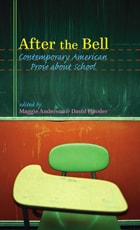
After the Bell
Contemporary American Prose about SchoolMaggie Anderson
University of Iowa Press, 2007
The essays are by emerging as well as established fiction writers, poets, social commentators, and educational theorists. Told from the point of view of students, teachers, parents, and administrators through the multiple perspectives or race, class, physical and intellectual abilities, and sexually, the stories reveal how memories of our school days haunt and sustain us.
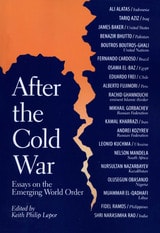
After the Cold War
Essays on the Emerging World OrderEdited by Keith Philip Lepor
University of Texas Press, 1997
The end of the Cold War between the United States and the former Soviet Union reassured people around the world who had lived in fear of a nuclear confrontation between the superpowers. Yet the early euphoria over "peace dividends" and a "new world order" was premature. Conflicts within and between nation-states are springing up around the globe, challenging world leaders and ordinary citizens to find peaceful means for national, group, and individual self-determination.
In this book of specially commissioned essays, twenty world leaders assess the possibilities and perils of the new strategic, political, and economic interrelationships that are emerging around the world. They tackle such fundamental questions as: What is the future of the international system as we approach the twenty-first century? What will be the fate of disintegrating nation-states, and how will the international community respond? Has the nation-state outlived its usefulness? Are we beginning to witness the complete breakdown of the international system?
The contributors are:
- Ali Alatas (Indonesia)
- Tariq Aziz (Iraq)
- James A. Baker III (United States)
- Benazir Bhutto (Pakistan)
- Boutros Boutros-Ghali (United Nations)
- Fernando Henrique Cardoso (Brazil)
- Osama El-Baz (Egypt)
- Eduardo Frei (Chile)
- Alberto Fujimori (Peru)
- Rachid Ghannouchi (eminent Islamic thinker)
- Mikhail Sergeyevich Gorbachev (Russian Federation)
- Kamal Kharrazi (Iran)
- Andrei Kozyrev (Russian Federation)
- Leonid Kuchma (Ukraine)
- Nelson Mandela (South Africa)
- Nursultan Nazarbayev (Kazakhstan)
- Olusegun Obasanjo (Nigeria)
- Muammar El-Qadhafi (Libya)
- Fidel Ramos (Philippines)
- Shri P. V. Narasimha Rao (India)
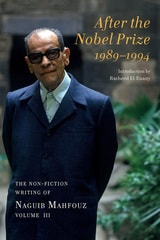
After the Nobel Prize 1989-1994
The Non-fiction Writing of Naguib Mahfouz, Volume IVNaguib Mahfouz
Gingko, 2015
In carefully crafted short texts, his social conscience is revealed as he highlights political shortcomings, economic injustice, and corruption in Egypt and the wider Arab world. His philosophical sensitivity comes to the fore as he contemplates the meaning of a historic events, contributions of an influential people, and what is required to lead a good life. The collapse of the Soviet Union, the Oslo peace accords, the spread of terrorism, the Cairo earthquake, the passing of Louis Awad, Yusuf Idris, Yahya Hakki, the third term of Hosni Mubarak, climate change, and more come under Naguib Mahfouz’s fine scrutiny. For any fan of Mahfouz’s fiction, this collection opens a window on a different side of his intellect, and it offers insights from one of the region’s greatest modern minds.
AfterWord
Conjuring the Literary DeadDale Salwak
University of Iowa Press, 2011
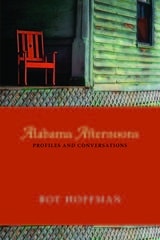
Alabama Afternoons
Profiles and ConversationsRoy Hoffman
University of Alabama Press, 2011
Alabama Afternoons is a collection of portraits of many notable Alabamians, famous and obscure, profiled by award-winning journalist and novelist Roy Hoffman. Written as Sunday feature stories for the Mobile Press-Register with additional pieces from the New York Times, Preservation, and Garden & Gun, these profiles preserve the individual stories—and the individual voices within the stories—that help to define one of the most distinctive states in the union.
Hoffman recounts his personal visits with writer Mary Ward Brown in her library in Hamburg, with photographer William Christenberry in a field in Newbern, and with storyteller Kathryn Tucker Windham and folk artist Charlie “Tin Man” Lucas at their neighboring houses in Selma. Also highlighted are the lives of numerous alumni of The University of Alabama—among them Mel Allen, the “Voice of the Yankees” from 1939 to 1964; Forrest Gump author Winston Groom; and Vivian Malone and James Hood, the two students who entered the schoolhouse door in 1963. Hoffman profiles distinguished Auburn University alumni as well, including Eugene Sledge, renowned World War II veteran and memoirist, and Neil Davis, the outspoken, nationally visible editor of the Lee County Bulletin.
Hoffman also profiles major and minor players in the civil rights movement, from Johnnie Carr, raised in segregated Montgomery and later president of the Montgomery Improvement Association; and George Wallace Jr., son of the four-time governor; to Theresa Burroughs, a Greensboro beautician trampled in the march over the Edmund Pettus Bridge; and Diane McWhorter, whose award- winning book explores the trouble- filled Birmingham civil rights experience. Juxtaposed with these are accounts of lesser-known individuals, such as Sarah Hamm, who attempts to preserve the fading Jewish culture in Eufaula; Edward Carl, who was butler and chauffeur to Bellingrath Gardens founder Walter Bellingrath in Theodore; and cousins William Bolton and Herbert Henson, caretakers of the coon dog cemetery in Russellville.
Hoffman’s compilation of life stories creates an engaging and compelling look into what it means to be from, and shaped by, Alabama. “Alabama Afternoons,” he writes in the introduction, “is a small part of the even bigger question of what it means to be an American.”
Read an article about domestic lives by Roy Hoffman in the New York Times here: http://www.nytimes.com/2010/11/25/garden/25Domestic.html
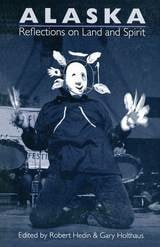
Alaska
Reflections on Land and SpiritEdited by Robert Hedin and Gary Holthaus
University of Arizona Press, 1989
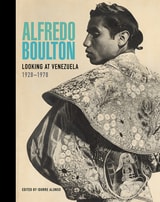
Alfredo Boulton
Looking at Venezuela, 1928–1978Idurre Alonso
J. Paul Getty Trust, The, 0
Alfredo Boulton (1908–1995) is considered one of the most important champions of modern art in Venezuela and a key intellectual of twentieth-century modernism. He was a pioneer of modern photography, an art critic, a researcher and historian of Venezuelan art, a friend to many of the great artists and architects of the twentieth century, and an expert on the imagery of the heroes of his country’s independence.
Yet, Boulton is shockingly underrecognized outside of his native land. The few exhibitions related to his work have focused exclusively on his photographic production; never has there been a project that looks at the full range of Boulton’s efforts, foregrounding his influence on the shaping of Venezuelan art. This volume addresses these lacunae by analyzing Boulton’s groundbreaking photographic practice, his central role in the construction of a modern national artistic canon, and his influence in formalizing and developing art history and criticism in Venezuela. Based on the extensive materials held in Boulton’s archive at the Getty Research Institute, Alfredo Boulton brings together essays by leading scholars in the field to offer a commanding, original perspective on his contributions to the formation of a distinctive modernity at home and beyond.
This volume is published to accompany an exhibition on view at the Getty Research Institute at the Getty Center from August 29, 2023, to January 21, 2024.
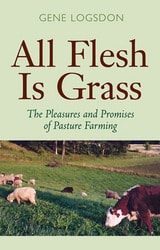
All Flesh Is Grass
The Pleasures and Promises of Pasture FarmingGene Logsdon
Ohio University Press, 2004
Amidst Mad Cow scares and consumer concerns about how farm animals are bred, fed, and raised, many farmers and homesteaders are rediscovering the traditional practice of pastoral farming. Grasses, clovers, and forbs are the natural diet of cattle, horses, and sheep, and are vital supplements for hogs, chickens, and turkeys. Consumers increasingly seek the health benefits of meat from animals raised in green paddocks instead of in muddy feedlots.
In All Flesh Is Grass: The Pleasures and Promises of Pasture Farming, Gene Logsdon explains that well-managed pastures are nutritious and palatable—virtual salads for livestock. Leafy pastures also hold the soil, foster biodiversity, and create lovely landscapes. Grass farming might be the solution for a stressed agricultural system based on an industrial model and propped up by federal subsidies.
In his clear and conversational style, Logsdon explains historically effective practices and new techniques. His warm, informative profiles of successful grass farmers offer inspiration and ideas. His narrative is enriched by his own experience as a “contrary farmer” on his artisan-scale farm near Upper Sandusky, Ohio.
All Flesh Is Grass will have broad appeal to the sustainable commercial farmer, the home-food producer, and all consumers who care about their food.
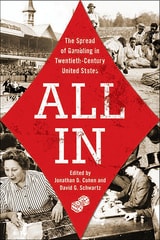
All In
The Spread of Gambling in Twentieth-Century United StatesJonathan D Cohen
University of Nevada Press, 2018
A fresh take on the history of modern American gambling, All In provides a closer look at the shifting economic, cultural, religious, and political conditions that facilitated gambling’s expansion and prominence in American consumerism and popular culture. In its pages, a diverse range of essays covering commercial and Native American casinos, sports betting, lotteries, bingo, and more piece together a picture of how gambling became so widespread over the course of the twentieth century.
Drawing from a range of academic disciplines, this collection explores five aspects of American gambling history: crime, advertising, politics, religion, and identity.
In doing so, All In illuminates the on-the-ground debates over gambling’s expansion, the failed attempts to thwart legalized betting, and the consequences of its present ubiquity in the United States.
All Is Leaf
Essays and TransformationsJohn T Price
University of Iowa Press, 2022
He employs an array of forms and voices, whether penning a break-up letter to America or a literary rock-n-roll road song dedicated to prairie scientists, or giving pregame pep talks to his son’s losing football team. Here, too, are moving portrayals of his father’s last effort as a small-town lawyer to defend the rights of abused women, and his own efforts as a writing teacher to honor the personal stories of his students.
From his Iowa backyard to the edge of the Arctic Circle, from the forgotten recesses of the body to the far reaches of the solar system, this book demonstrates the ways imagination and informed compassion can, as Price describes it, expand thousandfold the boundaries of what we might “have naïvely considered an individual self.”

All My Days Are Saturdays
Sam Pickering
University of Missouri Press, 2014
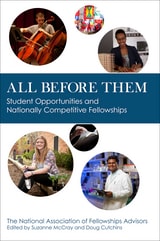
All before Them
Student Opportunities and Nationally Competitive FellowshipsSuzanne McCray
University of Arkansas Press, 2015
This collection of essays helps advisors by providing information about major changes in the fellowship and scholarship landscape. Included is guidance on the new Schwarzman scholarship for study in China, the recently added video interview for the Mitchell scholarship, and the new rules for the Rhodes personal statement (an advisor’s take). Additionally, seasoned advisors share practical advice, ranging from workshops that engage students and faculty to helpful technological tools to personal statements and office assessments. Keeping the focus on the scholar in the scholarship process is a central theme. All before Them is an important addition to any faculty mentor’s or scholarship advisor’s toolkit.
All the King’s Horses
Essays on the Impact of Looting and the Illicit Antiquities Trade on Our Knowledge of the PastPaula K. Lazrus
University Press of Colorado, 2012
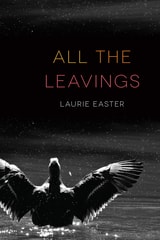
All the Leavings
Laurie Easter
Oregon State University Press, 2021
Whether recounting the home birth of her second child, encounters with cougars, the fraught dynamics of mother-daughter relationships, the destructive power of wildfires, or the community bonds challenged by a tragic suicide, Easter’s writing is firmly grounded in place. She takes readers deep into the heart of a still-wild Oregon, perilous yet rich with natural beauty.
Written from one woman’s perspective as a mother, wife, and friend, All the Leavings is ultimately a book about love—for the child who faces a health crisis, for the friend dying of AIDS, for the one entangled by addiction who then disappears. Long after the final page is turned, it will resonate with readers interested in essays, memoir, alternative lifestyles, and the literature of the West.
All through the Town
The School Bus as Educational TechnologyAntero Garcia
University of Minnesota Press, 2023
The role of the humble school bus in transforming education in America
Everyone knows the yellow school bus. It’s been invisible and also omnipresent for a century. Antero Garcia shows how the U.S. school bus, its form unaltered for decades, is the most substantial piece of educational technology to ever shape how schools operate. As it noisily moves young people across the country every day, the bus offers the opportunity for a necessary reexamination of what “counts” as educational technology. Particularly in light of these buses being idled in pandemic times, All through the Town questions what we take for granted and what we overlook in public schooling in America, pushing for liberatory approaches to education that extend beyond notions of school equity.
Forerunners: Ideas First is a thought-in-process series of breakthrough digital publications. Written between fresh ideas and finished books, Forerunners draws on scholarly work initiated in notable blogs, social media, conference plenaries, journal articles, and the synergy of academic exchange. This is gray literature publishing: where intense thinking, change, and speculation take place in scholarship.

Almost an Island
Travels in Baja CaliforniaBruce Berger
University of Arizona Press, 1998
Eight hundred miles long, Baja California is the remotest region of the Sonoran desert, a land of volcanic cliffs, glistening beaches, fantastical boojum trees, and some of the greatest primitive murals in the Western Hemisphere. In Almost an Island, Berger recounts tales from his three decades in this extraordinary place, enriching his account with the peninsula's history, its politics, and its probable future—rendering a striking panorama of this land so close to the United States, so famous, and so little known.
Readers will meet a cast of characters as eccentric as the place itself: Brandy, who ranges the desert in a sand buggy while breathing from an oxygen tank; Katie, the chanteuse; nuns illegally raising pigs. They will encounter the tourist madness of a total eclipse, the story of the heir to an oasis, a musical Mata Hari, rare pronghorn antelope, and a pet tarantula. In prose as glittering as this desert engulfed by the sea, Almost an Island is a fascinating journey into the human heart of a spectacular land.

Alms for Oblivion
Edward DahlbergForeword by Sir Herbert Read
University of Minnesota Press, 1967
Alms for Oblivion was first published in 1967. Minnesota Archive Editions uses digital technology to make long-unavailable books once again accessible, and are published unaltered from the original University of Minnesota Press editions.
This volume makes available in book form a collection of seventeen essays by Edward Dahlberg, who has been called one of the great unrecognized writers of our time. Some of the selections have never been published before; others have appeared previously only in magazines of limited circulation. There is a foreword by Sir Herbert Read.
The individual essays are on a wide range of subjects: literary, historical, philosophical, personal. The longest is a discussion of Herman Melville's work entitled "Moby-Dick - A Hamitic Dream." The fate of authors at the hands of reviewers is the subject of the essay called "For Sale." In "No Love and No Thanks" the author draws a characterization of our time. He presents a critique of the poet William Carlos Williams in "Word-Sick and Place- Crazy," and a discussion of F. Scott Fitzgerald in "Peopleless Fiction." In "My Friends Stieglitz, Anderson, and Dreiser" he discusses not only Alfred Stieglitz, Sherwood Anderson, and Theodore Dreiser but other personalities as well. He also writes of Sherwood Anderson in "Midwestern Fable." In "Cutpurse Philosopher" the subject is William James. "Florentine Codex" is about the conquistadores. Other essays in the collection are the following: "Randolph Bourne," "Our Vanishing Cooperative Colonies," "Chivers and Poe," "Domestic Manners of Americans," "Robert McAlmon: A Memoir," "The Expatriates: A Memoir," and an essay on Allen Tate.
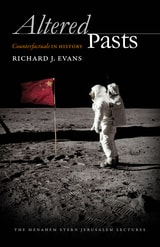
Altered Pasts
Counterfactuals in HistoryRichard J. Evans
Brandeis University Press, 2014
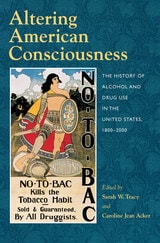
Altering American Consciousness
The History of Alcohol and Drug Use in the United States, 1800-2000Sarah W. Tracy
University of Massachusetts Press, 2004
Virtually every American alive has at some point consumed at least one, and very likely more, consciousness altering drug. Even those who actively eschew alcohol, tobacco, and coffee cannot easily avoid the full range of psychoactive substances pervading the culture. With many children now taking Ritalin for Attention Deficit Hyperactivity Disorder, professional athletes relying on androstenidione to bulk up, and the chronically depressed resorting to selective serotonin reuptake inhibitors such as Prozac, the early twenty-first century appears no less rife with drugs than previous periods.
Yet, if the use of drugs is a constant in American history, the way they have been perceived has varied extensively. Just as the corrupting cigarettes of the early twentieth century ("coffin nails" to contemporaries) became the glamorous accessory of Hollywood stars and American GIs in the 1940s, only to fall into public disfavor later as an unhealthy and irresponsible habit, the social significance of every drug changes over time.
The essays in this volume explore these changes, showing how the identity of any psychoactive substance—from alcohol and nicotine to cocaine and heroin—owes as much to its users, their patterns of use, and the cultural context in which the drug is taken, as it owes to the drug's documented physiological effects. Rather than seeing licit drugs and illicit drugs, recreational drugs and medicinal drugs, “hard” drugs and “soft” drugs as mutually exclusive categories, the book challenges readers to consider the ways in which drugs have shifted historically from one category to another.
In addition to the editors, contributors include Jim Baumohl, Allan M. Brandt, Katherine Chavigny, Timothy Hickman, Peter Mancall, Michelle McClellan, Steven J. Novak, Ron Roizen, Lori Rotskoff, Susan L. Speaker, Nicholas Weiss, and William White.
Alternative Pathways to Complexity
A Collection of Essays on Architecture, Economics, Power, and Cross-Cultural AnalysisLane F. Fargher
University Press of Colorado, 2016
A group of highly distinguished scholars takes up important issues, theories, and methods stemming from the nascent body of research on comparative archaeology to showcase and apply important theories of households, power, and how the development of complex societies can be extended and refined. Drawing on the archaeological, ethnohistorical, and ethnographic records, the chapters in this volume contain critical investigations on the role of collective action, economics, and corporate cognitive codes in structuring complex societies.
Alternative Pathways to Complexity is an important addition to theoretical development and empirical research on Mesoamerica, the Old World, and cross-cultural studies. The theoretical implications addressed in the chapters will have broad appeal for scholars grappling with alternative pathways to complexity in other regions as well as those addressing diverse cross-cultural research.
Contributors: Sarah B. Barber, Cynthia L. Bedell, Christopher S. Beekman, Frances F. Berdan, Tim Earle, Carol R. Ember, Gary M. Feinman, Arthur A. Joyce, Stephen A. Kowalewski, Lisa J. LeCount, Linda M. Nicholas, Peter N. Peregrine, Peter Robertshaw, Barbara L. Stark, T. L. Thurston, Deborah Winslow, Rita Wright
Amateur Sugar Maker
Noel Perrin
Brandeis University Press, 1992
America's Most Alarming Writer
Essays on the Life and Work of Charles BowdenEdited by Bill Broyles and Bruce J. Dinges
University of Texas Press, 2019
The author of more than twenty books and a revered contributor to numerous national publications, Charles Bowden (1945–2014) used his keen storyteller’s eye to reveal both the dark underbelly and the glorious determination of humanity, particularly in the borderlands between the United States and Mexico. In America’s Most Alarming Writer, key figures in his life—including his editors, collaborators, and other writers—deliver a literary wake for the man who inspired them throughout his forty-year career.
Part revelation, part critical assessment, the fifty essays in this collection span the decades from Bowden’s rise as an investigative journalist through his years as a singular voice of unflinching honesty about natural history, climate change, globalization, drugs, and violence. As the Chicago Tribune noted, “Bowden wrote with the intensity of Joan Didion, the voracious hunger of Henry Miller, the feral intelligence and irony of Hunter Thompson, and the wit and outrage of Edward Abbey.” An evocative complement to The Charles Bowden Reader, the essays and photographs in this homage brilliantly capture the spirit of a great writer with a quintessentially American vision. Bowden is the best writer you’ve (n)ever read.
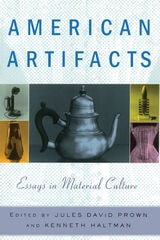
American Artifacts
Essays in Material CultureJules David Prown
Michigan State University Press, 2000
When defining culture, one must indeed take into account even the minutest of details. What of a lighter, for example, or a telephone? The essays in this new collection examine just that. The contributors pose not only a historical, pragmatic use for the items, but also delve into more imaginative aspects of what defines us as Americans. Both the lighter and the telephone are investigated, as well as how the lava lamp represents sixties counterculture and containment. The late nineteenth-century corset is discussed as an embodiment of womanhood, and an Amish quilt is used as an illustration of cultural continuity. These are just a few of the artifacts discussed. Scholars will be intrigued by the historical interpretations that contributors proposed concerning a teapot, card table, and locket; students will not only find merit in the expositions, but also by learning from the models how such interpretation can be carried out. This collection helps us understand that very thing that makes us who we are. Viewing these objects from both our past and our present, we can begin to define what it is to be American.

American Commonplace
Essays on the Popular Culture of the United StatesUniversity of Wisconsin Press, 1982
American Examples, Vol 1
New Conversations about ReligionEdited by Michael J. Altman
University of Alabama Press, 2022
Rethinking Religion in America Through Contemporary Case and Conversation.
American Examples: New Conversations about Religion, Volume One is the first in a series of annual anthologies published in partnership with the Department of Religious Studies at The University of Alabama. The American Examples initiative gathers scholars from around the world for a series of workshops designed to generate big questions about the study of religion in America. Bypassing traditional white Protestant narratives in favor of new perspectives on belief, social formation, and identity, American Examples fellows offer dynamic perspectives on American faith that challenge our understandings of both America and religion as categories.
In the first volume of this exciting academic project, five topically and methodologically diverse scholars vividly reimagine the potential applications of religious history. The five chapters of this inaugural volume use case studies from America, broadly conceived, to ask larger theoretical questions that are of interest to scholars beyond the subfield of American religious history.
Prea Persaud’s chapter explores the place of Hinduism among the “creole religions” of the Caribbean, while Hannah Scheidt captures what atheist parents say to each other about value systems. Travis Warren Cooper explains how the modernist church architecture of Columbus, Indiana, became central to that city’s identity. Samah Choudhury dissects how Muslim American comedians navigate Western ideas of knowledge and self to make their jokes, and their own selves legible, and Emily D. Crews uses ethnographic fieldwork to read the female reproductive body among Nigerian Pentecostal congregations. Editor Michael J. Altman also provides a brief, rich introduction assessing the state of the discipline of religious history and how the American Examples project can lead the field forward.
Visit americanexamples.ua.edu for more information on the group and news about upcoming projects.
American Examples, Vol 2
New Conversations about ReligionEdited by Samah Choudhury, Prea Persaud, and Michael J. Altman
University of Alabama Press, 2022
Fresh new perspectives on the study of religion, ranging from SoulCycle to Mark Twain
American Examples: New Conversations about Religion, Volume Two, is the second in a series of annual anthologies produced by the American Examples workshop hosted by the Department of Religious Studies at The University of Alabama. In the latest volume from this dynamic academic project, nine scholars with diverse topics and methodologies vividly reimagine the meaning of all three words in the phrase “American religious history.” The essays use case studies from America, broadly conceived, to ask trenchant theoretical questions that are of interest to scholars and students beyond the subfield of American religious history.
Cody Musselman uses a Weberian analysis to explore questions of identity, authority, and authenticity in the world of SoulCycle while Zachary T. Smith finds commonality between the rhetoric and practices of scholarship and mixed martial arts. Erik Kline provides a new perspective on the psychedelic mysticism of the 1960s, and Brook Wilensky-Lanford takes stock of the cultural power of parody in Mark Twain’s last work of fiction. Christopher Cannon Jones examines the reciprocal relationship between religious texts and cultural contexts by comparing early Mormon missions to Hawai‘i and Jamaica and Lindsey Jackson explores what debates over circumcision can tell us about gender stereotypes and motherhood. Dana Lloyd uses the 1988 Supreme Court decision in Lyng v. Northwest Indian Cemetery Protective Association as a case study in order to consider how Indigenous religion and sovereignty have been understood and adjudicated in the American legal system. Matt Sheedy studies the identity categories of “atheist” and “ex-Muslim” and Brad Stoddard uses ethnographic fieldwork to evaluate the role of religious pluralism in regulating and policing correctional institutions. Editors Samah Choudhury and Prea Persaud provide an introduction that reconsiders the trajectory of the American Examples project in light of the siege on the US Capitol in January 2021 and the continuing COVID pandemic.
Visit americanexamples.ua.edu for more information on upcoming workshop dates and future projects.
CONTRIBUTORS
Michael J. Altman / Samah Choudhury / Lindsey Jackson / Christopher Cannon Jones / / Erik Kline / Dana Lloyd / Cody Musselman / Prea Persaud / Matt Sheedy / Zachary T. Smith / Brad Stoddard / Brook Wilensky-Lanford
American Examples, Vol 3
New Conversations about ReligionEdited by Cody Musselman, Erik Kline, Dana Lloyd, and Michael J. Altman
University of Alabama Press, 2024
American Examples: New Conversations about Religion, Volume Three, is the third in a series of annual anthologies produced by the American Examples workshop hosted by the Department of Religious Studies at the University of Alabama. In the latest volume from this innovative academic project, ten topically and methodologically diverse scholars vividly reimagine the meaning and applications of American religious history. These ten chapters use case studies from America, broadly conceived, to ask trenchant theoretical questions that are of interest to scholars and students within and beyond the subfield of American religious history.
Visit americanexamples.ua.edu for more information on upcoming workshop dates and future projects.
American Examples, Vol 4
New Conversations about ReligionEdited by Candace Lukasik, Joshua Urich, and Michael J. Altman
University of Alabama Press, 2025
Case studies that vividly reimagine the meaning and applications of American religious history
American Examples: New Conversations about Religion, Volume Four, continues the annual anthology series produced by the American Examples workshop at the University of Alabama’s Department of Religious Studies. The goal of American Examples is to examine examples of “something someone called religious, somewhere someone called America” by asking theoretical questions that exceed the boundaries of American religion or American religious history. This volume features seven essays exploring examples ranging from American Muslim headwear to online pickup artists to the connections between Dutch immigrants and Japanese students. This collection offers valuable insights for scholars and students within and beyond the field of American religious history.
Visit americanexamples.ua.edu for more information on upcoming workshop dates and future projects
American Examples, Vol 5
New Conversations about ReligionEdited by Rachel E. C. Beckley, Jacob Lassin, Andrew Klumpp, and Michael J. Altman
University of Alabama Press, 2026
Redefines American religion through bold case studies and fresh theoretical approaches
American Examples: New Conversations about Religion, Volume 5 continues the groundbreaking series from the Department of Religious Studies at the University of Alabama. Edited by Rachel E. C. Beckley, Jacob Lassin, Andrew Klumpp, and Michael J. Altman, this volume features seven innovative essays that challenge conventional understandings of religion in America.
From the sacred choreography of HBCU majorette dance to the spiritual significance of Korean American supermarket chain H Mart, and from evangelical summer camps to metaphysical theories of energy and oil, these essays explore “something someone called religion, somewhere someone called America.” Drawing on interdisciplinary methods—Black studies, queer theory, performance studies, and more—this collection reimagines how religion is practiced, embodied, and theorized across diverse American contexts. Volume 5 not only expands the boundaries of American religious history but also highlights the work of emerging scholars pushing the field forward. Accessible and thought provoking, this anthology is essential reading for students and scholars of religion, race, gender, and American culture.

American Examples, Vol 6
New Conversations about ReligionEdited by Judith Ellen Brunton, Mihee Kim-Kort, Sarah Riccardi-Swartz, and Michael J. Altman
University of Alabama Press, 2027
Redefines American religion through bold case studies and fresh theoretical approaches
American Examples: New Conversations about Religion, Volume 6, is the sixth and final annual anthology produced by the American Examples workshop hosted by the Department of Religious Studies at the University of Alabama. This volume features eight innovative essays that challenge traditional understandings of religion in America. From the conception and construction of America’s road systems to the ways in which religious pluralism developed at the turn of the twentieth century, and from pan-Indianism to megachurch discourse, these essays explore “something someone called religion, somewhere someone called America.”
Drawing on interdisciplinary methods such as Indigenous studies, acculturation studies, and political theory, this collection explores how religion is practiced, embodied, and theorized across diverse American contexts. This anthology offers valuable insights for scholars and students within and beyond the field of American religious history, including studies in race, gender, and American culture.
American Fish and Wildlife Policy
The Human DimensionEdited by William R. Mangun
Southern Illinois University Press, 1992
These eleven original essays by leading wildlife management and public policy scholars deal with policy issues, management perspectives, and the public attitudes about wildlife that shape the world of the wildlife manager.
Part 1 contains William R. Mangun’s introductory essay "Fish and Wildlife Policy Issues" and Daniel J. Decker et al.’s "Toward a Comprehensive Paradigm of Wildlife."
Ann H. Harvey’s "Interagency Conflict and Coordination in Wildlife Management," Philip S. Cook and Ted T. Cable’s "Developing Policy for Public Access to Private Land," and Debra A. Rose’s "Implementing Endangered Species Policy" make up part 2.
Part 3 consists of Cliff Hamilton’s "Pursuing a New Paradigm in Funding State Fish and Wildlife Programs" and Trellis G. Green’s "Use of Economics in Federal and State Fishery Allocation Decisions."
The fourth part includes James J. Kennedy and Jack Ward Thomas’s "Exit, Voice, and Loyalty of Wildlife Biologists in Public Natural Resource/Environmental Agencies"; Jean C. Mangun et al.’s "Nonconsumptive Wildlife-Associated Recreation in the United States"; and Barbara A. Knuth’s "Natural Resource Hazards: Managing to Protect People from the Resource."
In part 5, Joseph F. Coates looks to the future in "Public Policy Actors and Futures."
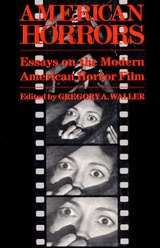
American Horrors
Essays on the Modern American Horror FilmEdited by Gregory A. Waller
University of Illinois Press, 1988
In this collection of twelve essays, Gregory Waller balances detailed studies of both popular films (Night of the Living Dead, The Exorcist, and Halloween) and particularly problematic films (Don't Look Now and Eyes of Laura Mars) with discussions of such central thematic preoccupations as the genre's representation of violence and female victims, its reflexivity and playfulness, and its ongoing redefinition of the monstrous and the normal.
In addition, American Horrors includes a filmography of movies and telefilms and an annotated bibliography of books and articles about horror since 1968.
American Occupation
Dispatches from Minnesota's Resistance to ICEJonny Diamond
University of Minnesota Press, 2027
A collection of intimate writings first published by Literary Hub in the Letters From Minnesota series that recounts the lived community experience of facing—and resisting—ICE violence during Operation Metro Surge
The history of America is a history of occupations. But what happens when an imperial nation, defined by endless expansion, runs out of frontier? It turns inward. It occupies itself.
American Occupation is an urgent compilation of reflections and accounts that emerged during the shocking, months-long ICE operation in Minnesota. In December 2025, the Department of Homeland Security launched Operation Metro Surge, and thousands of ICE and border patrol agents in paramilitary costumes descended on the Twin Cities. Their brutal, unconstitutional campaign resulted in the terrorization and disappearance of countless US citizens and immigrants, the murders of legal observers Renee Good and Alex Pretti, and the mobilization of vast, intricate mutual aid networks, massive protests, and staggering acts of courage during one of the coldest Minnesota winters in a decade.
Two days after Alex Pretti was killed on January 24, 2026, Literary Hub published the first of forty-four Letters From Minnesota, an online rapid response series that invited novelists, journalists, poets, and memoirists to document their experiences under occupation. An immigrant mother makes a plan with her young children in case she’s detained by ICE. A Powderhorn Park resident witnesses the traumatic abduction of two neighbors at a bus stop. A professor chronicles the relentless federal violence throughout her family’s journey from Mexico to California to Minnesota, among other harrowing stories and accounts.
With twelve new contributions, American Occupation offers a mosaic of deeply personal and defiant testimonies detailing the creative solidarity and resolve of Minnesotans confronting fascist cruelty. Contextualized in the history of the US government’s abuse of power against its own civilians, American Occupation reveals the grim reality of yet another American administration in thrall to its own mythologies—and the long arc of resistance and compassion of ordinary people.
Contributors: Angela Ajayi, Anonymous, Charles Baxter, Victoria Blanco, Jennifer Eli Bowen, Katherine Packert Burke, Zeke Caligiuri, David Aiona Chang, Dana Chiueh, Heid E. Erdrich, Nick Estes, Nimo Farah, V. V. Ganeshananthan, Shannon Gibney, Dobby Gibson, Sarah Green, Molly Beth Griffin, Dara Moskowitz Grumdahl, Marian Hassan, Hedgiee, Laurie Hertzel, Carolyn Holbrook, Siri Hustvedt, Đenise Hạnh Huỳnh, Andrea Jenkins, Michael Kleber-Diggs, Ed Bok Lee, Josina Manu Maltzman, Will McGrath, Jim Moore, David Mura, Nia Navarro, Sahra Noor, Kara Olson, Peter Pearson, Angela Pelster, Bao Phi, Kaia Preus, Susan Raffo, Marcie Rendon, Kate Romero and Gustavo Romero, Sean Sherman, Sun Yung Shin, Gabriela Spears-Rico, Michael Torres, Kawai Strong Washburn, Sana Wazwaz, chaun webster, Diane Wilson, A. E. Wynter, Kao Kalia Yang, Ahmed Ismail Yusuf, Michelle Zamanian.
Retail e-book files for this title are screen-reader friendly.
American Values, Religious Voices, Volume 2
Letters of Hope from People of FaithEdited by Andrea Weiss and Lisa Weinberger
University of Minnesota Press, 2022
In the aftermath of the 2016 presidential election, biblical scholar Andrea L. Weiss and graphic designer Lisa M. Weinberger teamed up to create Values & Voices, a national nonpartisan campaign that used letters and social media to highlight core American values connected to our diverse religious traditions. The result was American Values, Religious Voices: 100 Days, 100 Letters, a collection of one hundred letters written by some of America's most accomplished and thoughtful scholars of religion interspersed with original artwork during the first one hundred days of the Trump presidency.
In 2021, Weiss and Weinberger invited religious scholars and leaders to address President Biden, Vice President Harris, and members of the 117th Congress in their national letter writing and social media campaign. During the first 100 days of the Biden administration, religious leaders from across the country and from a range of religious denominations once again sent one letter a day to elected leaders in Washington. These letters bring an array of religious texts and teachings to bear on our most pressing contemporary issues. Arranged chronologically, the 2021 edition features 59 returning letter writers and 42 new scholars, new artwork, original essays, and and a new section focused on putting the letters into practice by using them for teaching, preaching, meditative practice, civic activism, and more. An alternate table of contents arranged by core values that emerged in the letters over the 100 days allows for thematic reading.
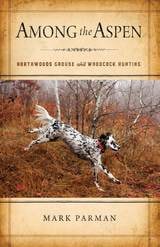
Among the Aspen
Northwoods Grouse and Woodcock HuntingMark Parman
University of Wisconsin Press, 2018
Among the Aspen interweaves tales of companionable dogs, lucky hunts, and favorite coverts where quarry lurks with ruminations on the demise of hunting traditions, the sale of public lands and the privatization of places to hunt, the growing indifference to science, and the loss of wilderness on a planet increasingly transformed by the sprawl of humanity.
An Anchor in the Sea of Time
EssaysStephen Harrigan
University of Texas Press, 2025
A new collection of essays grappling with identity and memory, from a master of the form.
The author of the New York Times bestselling novel The Gates of the Alamo, the sweeping Texas history Big Wonderful Thing, and decades of incisive journalism, Stephen Harrigan is an adept writer skilled in crafting memorable characters. From this singular voice now comes a collection of essays tackling the most personal, and yet most expansive, themes of all: identity, memory, and time itself.
An Anchor in the Sea of Time unfolds individual stories but also a larger narrative about the development and distortions of history. In one essay, a painting on his grandparents’ wall is seared in Harrigan’s young mind. In another, a group trip to Vietnam stirs up a sobering confrontation with class privilege among Americans who fought there and others, like Harrigan, who did their best not to. The award-winning essay “Off Course” reflects on the father Harrigan never met. And Harrigan’s reporting about the Karankawas, an Indigenous group from the Texas coast once thought to be extinct, takes readers deep into the recesses of collective forgetting and offers glimpses of the possibility of recovery. A vivid encounter with lost selves, vanished worlds, and futures yet unrealized, An Anchor in the Sea of Time is perhaps the most personal book yet from this beloved writer.
An Extraordinary Scandal
The Westminster Expenses Crisis and Why It Still MattersEmma Crewe and Andrew Walker
Haus Publishing, 2019
Featuring interviews with the members of parliament, journalists, and officials close to the center of the turmoil, An Extraordinary Scandal tells the story of what really happened. Andrew Walker, the tax expert who oversaw the parliamentary expenses system, and Emma Crewe, a social scientist specializing in the institutions of parliament, bring fascinating perspectives—from both inside and outside parliament—to this account. Far from attempting provide a defense of any the parties involved, An Extraordinary Scandal explains how the parliament fell out of step with the electorate and became a victim of its own remote institutional logic, growing to become at odds with an increasingly open, meritocratic society.
Charting the crisis from its 1990s origins—when Westminster began, too slowly, to respond to wider societal changes—to its aftermath in 2010, the authors examine how the scandal aggravated the developing crisis of trust between the British electorate and Westminster politicians that continues to this day. Their in-depth research reveals new insight into how the expenses scandal acted as a glimpse of what was to come, and they reveal where the scandal’s legacy can be traced in the new age of mistrust and outrage, in which politicians are often unfairly vulnerable to being charged in the court of public opinion by those they represent.
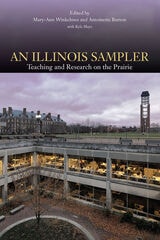
An Illinois Sampler
Teaching and Research on the PrairieEdited by Mary-Ann Winkelmes and Antoinette Burton with Kyle Mays
University of Illinois Press, 2014
Aimed at alumni and prospective students interested in the university's ongoing mission, as well as current faculty and students wishing to stay up to date on the work being done around them, An Illinois Sampler showcases the best, the most ambitious, and the most effective teaching practices developed and nurtured at one of the world's premier research universities.
Contributors are Nancy Abelmann, Flavia C. D. Andrade, Jayadev Athreya, Betty Jo Barrett, Thomas J. Bassett, Hugh Bishop, Antoinette Burton, Lauren A. Denofrio-Corrales, Lizanne DeStefano, Karen Flynn, Bruce W. Fouke, Rebecca Ginsburg, Julie Jordan Gunn, Geoffrey Herman, Laurie Johnson, Kyle T. Mays, Rebecca Nettl-Fiol, Audrey Petty, Anke Pinkert, Raymond Price, Luisa-Maria Rosu, D. Fairchild Ruggles, Carol Spindel, Mark D. Steinberg, William Sullivan, Richard I. Tapping, Bradley Tober, Agniezska Tuszynska, Bryan Wilcox, Kate Williams, Mary-Ann Winkelmes, and Yi Lu.
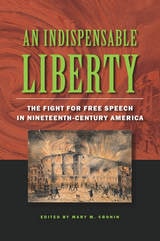
An Indispensable Liberty
The Fight for Free Speech in Nineteenth-Century AmericaEdited by Mary M. Cronin
Southern Illinois University Press, 2016
The eleven essays that make up this collection show how, despite judicial, political, and public proclamations of support for freedom of expression, factors like tradition, gender stereotypes, religion, and fear of social unrest often led to narrow judicial and political protection for freedom of expression by people whose views upset the status quo. These views, expressed by abolitionists, suffragists, and labor leaders, challenged rigid cultural mores of the day, and many political and cultural leaders feared that extending freedom of expression to agitators would undermine society. The Civil War intensified questions about the duties and privileges of citizenship. After the war, key conflicts over freedom of expression were triggered by Reconstruction, suffrage, the Comstock Act, and questions about libel.
The volume’s contributors blend social, cultural, and intellectual history to untangle the complicated strands of nineteenth-century legal thought. By chronicling the development of modern-day notions of free speech, this timely collection offers both a valuable exploration of the First Amendment in nineteenth-century America and a useful perspective on the challenges we face today.
An Interpretation of Desire
Essays in the Study of SexualityJohn Gagnon
University of Chicago Press, 2003
Gagnon may be best known as the coauthor of Sexual Conduct—a book that introduced the seminal concept of sexual scripting—and as one of the coauthors of The Social Organization of Sexuality, a foundational work that is widely considered to be the most important study of human sexual behavior since the Kinsey report. The essays collected here first trace the influence of scripting theory on Gagnon, outlining the radical departure he took from the dominant biological and psychiatric models of sex research. The volume then turns to more recent essays that consider such vexed issues as homosexuality, the theories of Sigmund Freud, HIV, hazardous sex, and the social aspects of sexually transmitted diseases.