Results by title
715 books match the query 'Ethnic relations' and 56 start with a
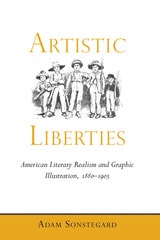
Artistic Liberties
American Literary Realism and Graphic Illustration, 1880-1905Adam Sonstegard
University of Alabama Press, 2013
Though today we commonly read major works of nineteenth-century American literature in unillustrated paperbacks or anthologies, many of them first appeared as magazine serials, accompanied by ample illustrations that sometimes made their way into the serials’ first printings as books. The graphic artists creating these illustrations often visually addressed questions that the authors had left for the reader to interpret, such as the complexions of racially ambiguous characters in Uncle Tom’s Cabin. The artists created illustrations that depicted what outsiders saw in Huck and Jim in Adventures of Huckleberry Finn, rather than what Huck and Jim learned to see in one another. These artists even worked against the texts on occasion—for instance, when the illustrators reinforced the same racial stereotypes that writers such as Paul Laurence Dunbar had intended to subvert in their works.
Authors of American realism commonly submitted their writing to editors who allowed them little control over the aesthetic appearance of their work. In his groundbreaking Artistic Liberties, Adam Sonstegard studies the illustrations from these works in detail and finds that the editors employed illustrators who were often unfamiliar with the authors’ intentions and who themselves selected the literary material they wished to illustrate, thereby taking artistic liberties through the tableaux they created.
Sonstegard examines the key role that the appointed artists played in visually shaping narratives—among them Mark Twain’s Pudd’nhead Wilson, Stephen Crane’s The Monster, and Edith Wharton’s The House of Mirth—as audiences tended to accept their illustrations as guidelines for understanding the texts. In viewing these works as originally published, received, and interpreted, Sonstegard offers a deeper knowledge not only of the works, but also of the realities surrounding publication during this formative period in American literature.
Asian America
Forming New Communities, Expanding BoundariesLing, Huping
Rutgers University Press, 2009
Asian America is the first comprehensive look at post-1960s Asian American communities in the United States and Canada. From Chinese Americans in Chicagoland to Vietnamese Americans in Orange County, this multi-disciplinary collection spans a wide comparative and panoramic scope. Contributors from an array of academic fields focus on global views of Asian American communities as well as on territorial and cultural boundaries.
Presenting groundbreaking perspectives, Asian America revises worn assumptions and examines current challenges Asian American communities face in the twenty-first century.
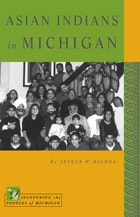
Asian Indians in Michigan
Arthur W. Helweg
Michigan State University Press, 2002
Since 1970, a growing number of Asian Indians have called Michigan home. Representative of the “new immigration,” Asian Indians come from a democratic country, are well-educated, and come from middle- and upper-class families. Unlike older immigrant groups, Asian Indians do not form urban ethnic enclaves or found their own communities to meet the challenges of living in a new society. As Arthur W. Helweg shows, Asian Indians contribute to the richness and diversity of Michigan’s culture through active participation in local institutions, while maintaining a strong ethnic identity rooted in India.

Asians in Britain
400 Years of HistoryRozina Visram
Pluto Press, 2002
Rozina Visram examines the nature and pattern of Asian migration; official attitudes to Asian settlement; the reactions and perceptions of the British people; the responses of the Asians themselves and their social, cultural and political lives in Britain.
This imaginative and detailed investigation asks what it would have been like for Asians to live in Britain, in the heart of an imperial metropolis, and documents the anti-colonial struggle by Asians and their allies in the UK. It is an invaluable contribution to our understanding of the origins of the many different communities that make up contemporary Britain.
Assembling Ethnicities in Neoliberal Times
Ethnographic Fictions and Sri Lanka’s WarNimanthi Perera-Rajasingham
Northwestern University Press, 2019
Assembling Ethnicities in Neoliberal Times: Ethnographic Fictions and Sri Lanka’s War argues that the bloody war fought between the Sri Lankan state and the separatist Tamil Tigers from 1983 to 2009 should be understood as structured and animated by the forces of global capitalism. Using Aihwa Ong’s theorization of neoliberalism as a mobile technology and assemblage, this book explores how contemporary globalization has exacerbated forces of nationalism and racism.
Nimanthi Perera-Rajasingham finds that ethnographic fictions have both internalized certain colonial Orientalist impulses and critically engaged with categories of objective gazing, empiricism, and temporal distancing. She demonstrates that such fictions take seriously the task of bearing witness and documenting the complex productions of ethnic identities and the devastations wrought by warfare. To this end, Assembling Ethnicities
explores colonial-era travel writing by Robert Knox (1681) and Leonard Woolf (1913); contemporary works by Michael Ondaatje, Romesh Gunesekera, Shobasakthi, Dharmasiri Bandaranayake, and Thamotharampillai Shanaathanan; and cultural festivals and theater, including vernacular performances of Euripides’s The Trojan Women and women workers’ theater.
The book interprets contemporary fictions to unpack neoliberalism’s entanglements with nationalism and racism, engaging current issues such as human rights, the pastoral, Tamil militancy, immigrant lives, feminism and nationalism, and postwar developmentalism.
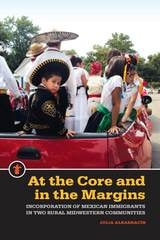
At the Core and in the Margins
Incorporation of Mexican Immigrants in Two Rural Midwestern CommunitiesJulia Albarracín
Michigan State University Press, 2016
Based on 260 surveys and 47 in-depth interviews, this study combines quantitative and qualitative research to explore the level and characteristics of immigrant incorporation in Beardstown and Monmouth. It assesses the advancement of immigrants in the immigration/ residency/citizenship process, the immigrants’ level of cultural integration (via language, their connectedness with other members of society, and their relationships with neighbors), the degree and characteristics of discrimination against immigrants in these two towns, and the extent to which immigrants participate in different social and political activities and trust government institutions.
Immigrants in new destinations are likely to be poorer, to be less educated, and to have weaker English-language skills than immigrants in traditional destinations. Studying how this population negotiates the obstacles to and opportunities for incorporation is crucial.