Results by title
11 books match the query 'Mask'
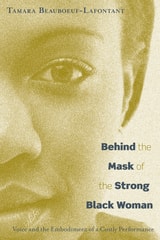
Behind the Mask of the Strong Black Woman
Voice and the Embodiment of a Costly PerformanceTamara Beauboeuf-Lafontant
Temple University Press, 2009
The author, a noted sociologist, interviews 58 Black women about being strong and proud, to illustrate their “performance” of invulnerability. Beauboeuf-Lafontant explains how such behavior leads to serious symptoms for these women, many of whom suffer from eating disorders and depression.
Drawing on Black feminist scholarship, cultural studies, and women’s history, Behind the Mask of the Strong Black Woman traces the historical and social influences of normative Black femininity, looking at how notions of self-image and strength create a distraction from broader forces of discrimination and power.

Behind the Mask
Gender Hybridity in a Zapotec CommunityAlfredo Mirandé
University of Arizona Press, 2017
After seeing a video of a muxe vela, or festival, sociologist Alfredo Mirandé was intrigued by the contradiction between Mexico’s patriarchal reputation and its warm acceptance of los muxes. Seeking to get past traditional Mexican masculinity, he presents us with Behind the Mask, which combines historical analysis, ethnographic field research, and interviews conducted with los muxes of Juchitán over a period of seven years. Mirandé observed community events, attended muxe velas, and interviewed both muxes and other Juchitán residents. Prefaced by an overview of the study methods and sample, the book challenges the ideology of a male-dominated Mexican society driven by the cult of machismo, featuring photos alongside four appendixes.
Delving into many aspects of their lives and culture, the author discusses how the muxes are perceived by others, how the muxes perceive themselves, and the acceptance of a third gender status among various North American indigenous groups. Mirandé compares traditional Mexicano/Latino conceptions of gender and sexuality to modern or Western object choice configurations. He concludes by proposing a new hybrid model for rethinking these seemingly contradictory and conflicting gender systems.
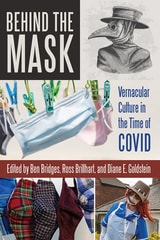
Behind the Mask
Vernacular Culture in the Time of COVIDBen Bridges
Utah State University Press, 2023
Despite vernacular’s potential nod to dominant or external culture, it is the strong connection to the local that grounds the vernacular within the experiential context that it occupies. Exploring the nature and shape of vernacular responses to the ongoing public health crisis, Behind the Mask documents processes that are otherwise likely to be forgotten. Including different ethnographic presents, contributors capture moments during the pandemic rather than upon reflection, making the work important to students and scholars of folklore and ethnology, as well as general readers interested in the COVID pandemic.

Beyond the Mask
Gordon Craig, Movement, and the ActorIrene Eynat-Confino
Southern Illinois University Press, 1987
Eynat-Confino goes beyond the usual consideration of Craig’s purported theories of the actor, scenery, and the scene painter to get at the heart of Craig’s idea of theater.
She draws not only on the research of contemporary Craig scholars but on material hitherto unavailable—his writings and daybooks and the writings of friends. She ties Craig’s encounter with Isadora Duncan to a decisive modification in his notion of movement. To have an instrument more controllable than the actor, he invented the über-marionette, a giant puppet. Craig also invented the “Scene,” a kinetic stage, the “screens” that brought him worldwide fame were simply an adaptation of this concept.
Eynat-Confino argues that a scenario Craig wrote in 1905, here published for the first time, reveals a theosophical system like that of Blake, a system that was the main force motivating Craig’s artistic quest. In her final chapter, she carefully examines the psychological, aesthetic, and circumstantial factors that kept Craig from completing his work to bring “friendliness—humor—love—ease—peace” to the world.
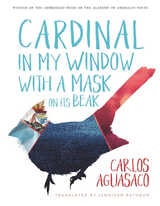
Cardinal in My Window with a Mask on Its Beak
Carlos Aguasaco, Translated by Jennifer Rathbun
University of Arizona Press, 2022
A first-generation immigrant to the United States, Aguasaco embraces his transborder/transnational/intercultural identity by building a bridge across time and distance to unite the great voices of the Renaissance with his lyrical poems. The collection offers bold and fascinating dialogue with Spanish authors such as Juan Boscán, Francisco de Quevedo, Garcilaso de la Vega, and Sor Juana Inés de la Cruz. The poems examine the fundamental liberties inherent to humanity through stunning verse. In a quest for freedom, the poems openly criticize the treatment of immigrants in the United States, drawing poignant parallels with human rights abuses throughout history.
Cardinal in My Window with a Mask on Its Beak brings potent voices of the past to life in poems that critically examine the present and future of the human experience.
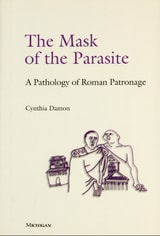
Mask of the Parasite
A Pathology of Roman PatronageCynthia Damon
University of Michigan Press, 1997
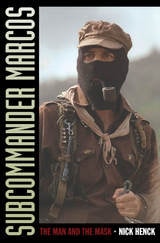
Subcommander Marcos
The Man and the MaskNick Henck
Duke University Press, 2007
In this, the first English-language biography of Subcommander Marcos, Nick Henck describes the thought, leadership, and personality of this charismatic rebel spokesperson. He traces Marcos’s development from his provincial middle-class upbringing, through his academic career and immersion in the clandestine world of armed guerrillas, to his emergence as the iconic Subcommander. Henck reflects on what motivated an urbane university professor to reject a life of comfort in Mexico City in favor of one of hardship as a guerrilla in the mountainous jungles of Chiapas, and he examines how Marcos became a conduit through which impoverished indigenous Mexicans could communicate with the world.
Henck fully explores both the rebel leader’s renowned media savvy and his equally important flexibility of mind. He shows how Marcos’s speeches and extensive writings demonstrate not only the Subcommander’s erudition but also his rejection of Marxist dogmatism. Finally, Henck contextualizes Marcos, locating him firmly within the Latin American guerrilla tradition.

The Man Behind the Mask
Journey of an Orthopaedic SurgeonThomas H. Mallory, MD
University of Missouri Press, 2007
The perils of aging are many, but the debilitating effects of serious illness loom large. In this stirring memoir, readers will discover a man who improved the lives of many arthritis sufferers before himself succumbing to a cruel debilitating disease. The Man behind the Mask tells the story of Thomas Mallory, who was inspired to become a doctor after undergoing surgery for a high school football injury. He went on to become a renowned surgeon and a pioneer in joint replacement. In 2002, his successful career came to an abrupt halt when he was diagnosed with Parkinson’s disease.
Mallory was one of the first surgeons in the United States to see the potential for joint replacement technology, and in this memoir he describes not only the nuances of introducing hip replacement surgery but also the systems that he established to make it a highly successful operation. He tells how he overcame initial resistance to the procedure and became a respected teacher of the technology, training many surgeons who went on to successful careers, lecturing about his procedure around the world, and also seeing VIP patients who journeyed to Ohio just to be operated on by him.
As a pioneer in this type of operation, Mallory first recognized the value of using prosthetic innovation and development. He became a proponent of modularity in joint replacement surgery, which allowed a surgeon to customize a prosthesis to a patient’s joint in the operating room. His innovations, along with those of Dr. William Head, resulted in the introduction in 1983 of the Mallory-Head Hip System—a technology still in use today and one that has offered relief to thousands of patients.
Tracing the joys and sorrows of his own career, Mallory dispels the myth that surgeons are emotionally invulnerable and cold. He offers his perspective on the pursuit of medicine as a profession, on the doctor-patient relationship, and on litigious challenges to physicians. He also commends the benefits of family and leisure and the blessing of life in general while offering insight into the management of an incurable disease.
In our skeptical era, Thomas Mallory is a shining example of a prominent scientist who has maintained his faith in God throughout the highs and lows of life. The Man behind the Mask is an inspiring account for fellow professionals and general readers, as well as for those who have benefited from the procedures he introduced.

The Mask of Fiction
Essays on W. D. HowellsJohn W. Crowley
University of Massachusetts Press, 0

Under the Mask
A Guide to Feeling Secure and Comfortable During Anesthesia and SurgeryCottrell, James M.D.
Rutgers University Press, 2001
Every year, about forty million Americans require surgery. Few truly understand what happens to them during the procedure-especially what the anesthesiologist does to ensure their survival and well being. An anesthesiologist disarms your entire nervous system with the most effective drugs for your body chemistry; keeps you alive while you're subjected to manipulations that would otherwise kill you; and ensures your safe return to consciousness. Yet despite their crucial role, anesthesiologists are often the unseen doctors. Under the Mask, written by a compassionate practitioner, demystifies the surgical process with detailed information that will make you a better-informed consumer.
Part One describes the development and current scope of anesthesiology, the medications and techniques used, and what the anesthesiologist does both in and outside the operating room. It explains your-the patient's- rights and advises you how to use the preoperative consultation with the anesthesiologist to your best advantage, specifying what information you need provide and what questions you should ask.
Part Two details the most common surgical and diagnostic procedures requiring anesthesia or conscious sedation. Using clear language, it explains each procedure, the possible risks, and the choices to make if there is more than one option. It also covers the anesthesiologist's crucial role in controlling pain caused by chronic conditions. The last chapter describes the newest anesthetic and pain control techniques available.
The author also helps you understand anesthesiology within the managed care system and explains what you can expect and what to do if you aren't getting what you need. This book enables you to make informed decisions regarding surgical anesthesia and subsequent pain control within the managed care system to protect your well-being and hasten your recovery.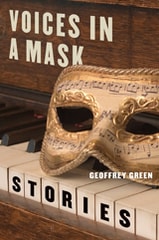
Voices in a Mask
StoriesGeoffrey Green
Northwestern University Press, 2008
Based on images of disguise in literature, theater, and opera, this short-story cycle explores themes of identity and subterfuge in a fictional fugue that ranges from comic to poignant. Into the librettos of Don Giovanni, Tosca, Rigoletto, and other operas, Green weaves the authentic biographies of their singers and composers, modern-day settings, and his own imaginative twists. Throughout Voices in a Mask, characters obscure and reveal themselves as art mimics life and life, art. Ultimately the very acts of masking and projecting reveal a truth about the power of art and its inherent deceptions.