Results by title
1917 books match the query 'Law' and 135 start with a
A Year at the Supreme Court
Neal Devins and Davison M. Douglas, eds.
Duke University Press, 2004
Some essays consider the role of “swing” Justices Sandra Day O’Connor and Anthony Kennedy within a Court that divides 5–4 more than any other group of Justices in the nation’s history. Others examine the political reaction to and legal context of the Court’s Lawrence v. Texas decision declaring a Texas law criminalizing homosexual sodomy unconstitutional. Contributors analyze the Court’s rulings on affirmative action and reassess its commitment to states’ rights. Considering the Court’s practices, one advocate explores the use and utility of amicus curiae, or “friend of the court” briefs, while another reflects on indications of an increased openness by the Court to public scrutiny. Two advocates who argued cases before the Court—one related to hate speech and the other to a “three strikes and you’re out” criminal statute—offer vivid accounts of their experiences. Intended for general readers, A Year at the Supreme Court is for all those who want to understand the Rehnquist Court and its momentous 2002–03 term.
Contributors
Erwin Chemerinsky
Neal Devins
Davison M. Douglas
David J. Garrow
Dahlia Lithwick
Tony Mauro
Carter Phillips
Ramesh Ponnuru
Jeffrey Rosen
David G. Savage
Rodney A. Smolla
Stuart Taylor Jr.
A Year in the Life of the Supreme Court
Rodney A. Smolla, ed.
Duke University Press, 1995
The cases heard by the Supreme Court are, first and foremost, disputes involving real people with actual stories. The accidents and twists of circumstance that have brought these people to the last resort of litigation can make for compelling drama. The contributors to this volume bring these dramatic stories to life, using them as a backdrop for the larger issues of law and social policy that constitute the Court’s business: abortion, separation of church and state, freedom of speech, the right of privacy, crime, violence, discrimination, and the death penalty. In the course of these narratives, the authors describe the personalities and jurisprudential leanings of the various Justices, explaining how the interplay of these characters and theories about the Constitution interact to influence the Court’s decisions.
Highly readable and richly informative, this book offers an unusually clear and comprehensive portrait of one of the most influential institutions in modern American life.
Abductive Reasoning
Douglas Walton
University of Alabama Press, 2005
Examines three areas in which abductive reasoning is especially important: medicine, science, and law. The reader is introduced to abduction and shown how it has evolved historically into the framework of conventional wisdom in logic. Discussions draw upon recent techniques used in artificial intelligence, particularly in the areas of multi-agent systems and plan recognition, to develop a dialogue model of explanation. Cases of causal explanations in law are analyzed using abductive reasoning, and all the components are finally brought together to build a new account of abductive reasoning.
By clarifying the notion of abduction as a common and significant type of reasoning in everyday argumentation, Abductive Reasoning will be useful to scholars and students in many fields, including argumentation, computing and artificial intelligence, psychology and cognitive science, law, philosophy, linguistics, and speech communication and rhetoric.
Abolition Time
Grammars of Law, Poetics of JusticeJess A. Goldberg
University of Minnesota Press, 2024
How Black Atlantic literature can challenge conventions and redefine literary scholarship
Abolition Time is an invitation to reenvision abolitionist justice through literary studies. Placing critical race theory, queer theory, critical prison studies, and antiprison activism in conversation with an archive of Black Atlantic literatures of slavery, Jess A. Goldberg reveals how literary studies can help undo carceral epistemologies embedded in language and poetics.
Goldberg examines poetry, drama, and novels from the nineteenth century through the twenty-first—such as William Wells Brown’s The Escape, Angelina Weld Grimké’s Rachel, Toni Morrison’s A Mercy, and Claudia Rankine’s Citizen—to consider literature and literary scholarship’s roles in shaping societal paradigms. Focusing on how Black Atlantic literature disrupts the grammar of law and order, they show how these texts propose nonlinear theories of time that imagine a queer relationality characterized by care rather than inheritance, property, or biology.
Abolition Time offers a framework for thinking critically about what is meant by the term justice in the broadest and deepest sense, using close reading to inform the question of abolishing prisons or the police and to think seriously about the most fundamental questions at the heart of the abolitionist movement.

Academic Freedom in a Plural World
Global Critical PerspectivesFrédéric Mégret
Central European University Press, 2024
The notion of academic freedom dates back to the creation of universities and has long been understood to be central to their vocation. This freedom has come under attack by different actors throughout its history. In the current context, rising threats to democracy and human liberties, the corporatization of research, concerns about diversity and increased societal polarization, are putting a considerable pressure on its exercise. However, academic freedom is also a concept that suffers from persistent ambiguities associated with the general notion of freedom as well as debates about the function of universities.
This edited collection addresses the question of academic freedom by situating it in its broader global context. More conceptual treatments contribute to an understanding of academic freedom as distinct and separate from, although related to, freedom of expression, or student rights. These conceptual treatments are combined with studies of actual struggles over the scope of academic freedom in specific universities. The contributions come from a broad variety of sites seek to deprovincialize the conversation beyond North America or the English-speaking world.
Access with Attitude
An Advocate’s Guide to Freedom of Information in OhioDavid Marburger
Ohio University Press, 2011
For those who find themselves in a battle for public records, Access with Attitude: An Advocate’s Guide to Freedom of Information in Ohio is an indispensable weapon. First Amendment lawyer David Marburger and investigative journalist Karl Idsvoog have written a simply worded, practical guide on how to take full advantage of Ohio’s so-called Sunshine Laws.
Journalists, law firms, labor unions, private investigators, genealogists, realty companies, banks, insurers—anyone who regularly needs access to publicly held information—will find this comprehensive and contentious guide to be invaluable. Marburger, who drafted many of the provisions that Ohio adopted in its open records law, and coauthor Idsvoog have been fighting for broader access to public records their entire careers. They offer field-tested tips on how to avoid “no,” and advise readers on legal strategies if their requests for information go unmet. Step by step, they show how to avoid delays and make the law work.
Whether you’re a citizen, a nonprofit organization, a journalist, or an attorney going after public records, Access with Attitude is an essential resource.
Accomplishing NAGPRA
Perspectives on the Intent, Impact, and Future of the Native American Graves Protection and Repatriation ActSangita Chari and Jaime M. N. Lavallee
Oregon State University Press, 2013
NAGPRA requires museums and federal agencies to return requested Native American cultural items to lineal descendants, culturally affiliated Indian tribes, and Native Hawai’ian organizations. Since the 1990 passage of the act, museums and federal agencies have made more than one million cultural items—and the remains of nearly forty thousand Native Americans—available for repatriation.
Drawing on case studies, personal reflections, historical documents, and statistics, the volume examines NAGPRA and its grassroots, practical application throughout the United States.? Accomplishing NAGPRA will appeal to professionals and academics with an interest in cultural resource management, Indian and human rights law, Indigenous studies, social justice movements, and public policy.

Accusatory Practices
Denunciation in Modern European History, 1789-1989Edited by Sheila Fitzpatrick and Robert Gellately
University of Chicago Press, 1997
"This is a fascinating and highly original exploration of a familiar, though poorly understood, phenomenon of modern societies in general and totalitarian systems in particular. From the French Revolution to the NKVD, Gestapo, and Stasi, denunciation is analyzed both as a function of political surveillance and as deeply rooted in the social practices of community and the workplace. The book represents a refreshing amalgam of deeply archival research and theoretical rigor."—Norman M. Naimark, Stanford University
Achieving Access to Justice in a Business and Human Rights Context
An Assessment of Litigation and Regulatory Responses in European Civil-Law CountriesVirginie Rouas
University of London Press, 2022
Multinational enterprises, or MNEs, can contribute to economic prosperity and social development in the countries where they operate. At the same time, their activities may directly or indirectly cause harm to humans and to the environment. Historically, MNEs have rarely been held accountable for their involvement in human rights abuses and environmental damage. In recent years, however, activists have sought to hold parent companies directly liable for the harm caused by their group’s activities. They have also strategically used litigation to trigger corporate accountability reforms at international, regional, and national levels.
Focusing on Europe, this book evaluates the extent to which litigation against MNEs has been effective in achieving access to justice and corporate accountability, particularly in civil-law countries. It also considers whether ongoing regulatory developments, such as the adoption of mandatory human rights due diligence norms and the negotiations for a business and human rights treaty, can contribute to the realization of access to justice and corporate accountability in the future.
Across Oceans of Law
The Komagata Maru and Jurisdiction in the Time of EmpireRenisa Mawani
Duke University Press, 2018
Acts of Hope
Creating Authority in Literature, Law, and PoliticsJames Boyd White
University of Chicago Press, 1994
In this book, James Boyd White shows how texts by some of our most important thinkers and writers—including Plato, Shakespeare, Dickinson, Mandela, and Lincoln—answer these questions, not in the abstract, but in the way they wrestle with the claims of the world and self in particular historical and cultural contexts. As they define afresh the institutions or practices for which they claim (or resist) authority, they create authorities of their own, in the very modes of thought and expression they employ. They imagine their world anew and transform the languages that give it meaning.
In so doing, White maintains, these works teach us about how to read and judge claims of authority made by others upon us; how to decide to which institutions and practices we should grant authority; and how to create authorities of our own through our thoughts and arguments. Elegant and accessible, this book will appeal to anyone wanting to better understand one of the primary processes of our social and political lives.
Administering Justice
Placing the Chief Justice in American State PoliticsRichard L. Vining Jr. and Teena Wilhelm
University of Michigan Press, 2023
Administering Justice examines the leadership role of chief justices in the American states, including how those duties require chief justices to be part of the broader state political environment. Vining and Wilhelm focus extensively on the power of chief justices as public spokespersons, legislative liaisons, and reform leaders. In contrast to much existing research on chief justices in the states, this study weighs their extrajudicial responsibilities rather than intracourt leadership. By assessing the content of State of the Judiciary remarks delivered over a period of sixty years, Vining and Wilhelm are able to analyze the reform agendas advanced by chief justices and determine what factors influence the likelihood of success. These analyses confirm that chief justices engage with state politics in meaningful ways and that reactions to their proposals are influenced by ideological congruence with other political elites and the scope of their requests. Administering Justice also examines the chief justice position as an institution, provides a collective profile of its occupants, and surveys growing diversity among court leaders.
Administrative Law in Central and Eastern Europe
Denis J. Galligan
Central European University Press, 1998
Affective Justice
The International Criminal Court and the Pan-Africanist PushbackKamari Maxine Clarke
Duke University Press, 2019
Affirmative Action and Minority Enrollments in Medical and Law Schools
Susan Welch and John Gruhl
University of Michigan Press, 1998
Affirmative Action and the Stalled Quest for Black Progress
W. Avon Drake and Robert D. Holsworth
University of Illinois Press, 1996
Insightful and path-breaking, Affirmative Action and the Stalled Quest for Black Progress examines the accomplishments and limitations of the set-aside programs once at the center of political debates about affirmative action in the United States.

Affording Justice
How the Legal Profession Is Failing America's Middle Class and What to Do About ItSheldon Krantz
Duke University Press, 2027
African Asylum at a Crossroads
Activism, Expert Testimony, and Refugee RightsIris Berger
Ohio University Press, 2015
African Asylum at a Crossroads: Activism, Expert Testimony, and Refugee Rights examines the emerging trend of requests for expert opinions in asylum hearings or refugee status determinations. This is the first book to explore the role of court-based expertise in relation to African asylum cases and the first to establish a rigorous analytical framework for interpreting the effects of this new reliance on expert testimony.
Over the past two decades, courts in Western countries and beyond have begun demanding expert reports tailored to the experience of the individual claimant. As courts increasingly draw upon such testimony in their deliberations, expertise in matters of asylum and refugee status is emerging as an academic area with its own standards, protocols, and guidelines. This deeply thoughtful book explores these developments and their effects on both asylum seekers and the experts whose influence may determine their fate.
Contributors: Iris Berger, Carol Bohmer, John Campbell, Katherine Luongo, E. Ann McDougall, Karen Musalo, Tricia Redeker Hepner, Amy Shuman, Joanna T. Tague, Meredith Terretta, and Charlotte Walker-Said.

Against Prediction
Profiling, Policing, and Punishing in an Actuarial AgeBernard E. Harcourt
University of Chicago Press, 2006
From random security checks at airports to the use of risk assessment in sentencing, actuarial methods are being used more than ever to determine whom law enforcement officials target and punish. And with the exception of racial profiling on our highways and streets, most people favor these methods because they believe they’re a more cost-effective way to fight crime.
In Against Prediction, Bernard E. Harcourt challenges this growing reliance on actuarial methods. These prediction tools, he demonstrates, may in fact increase the overall amount of crime in society, depending on the relative responsiveness of the profiled populations to heightened security. They may also aggravate the difficulties that minorities already have obtaining work, education, and a better quality of life—thus perpetuating the pattern of criminal behavior. Ultimately, Harcourt shows how the perceived success of actuarial methods has begun to distort our very conception of just punishment and to obscure alternate visions of social order. In place of the actuarial, he proposes instead a turn to randomization in punishment and policing. The presumption, Harcourt concludes, should be against prediction.
Against the Law
Paul F. Campos, Pierre Schlag, and Steven D. Smith
Duke University Press, 1996
Linked by a persistent inquiry into the nature and identity of “the law,” these essays are informed by the conviction that the conventional representations of law, both in law schools and the courts, cannot be taken at face value—that the law, as commonly conceived, makes no sense. The authors argue that the relentlessly normative prescriptions of American legal thinkers are frequently futile and, indeed, often pernicious. They also argue that the failure to recognize the role that authorship must play in the production of legal thought plagues both the teaching and the practice of American law. Ranging from the institutional to the psychological and metaphysical deficiencies of the American legal system, the depth of criticism offered by Against the Law is unprecedented.
In a departure from the nearly universal legitimating and reformist tendencies of American legal thought, this book will be of interest not only to the legal academics under attack in the book, but also to sociologists, historians, and social theorists. More particularly, it will engage all the American lawyers who suspect that there is something very wrong with the nature and direction of their profession, law students who anticipate becoming part of that profession, and those readers concerned with the status of the American legal system.
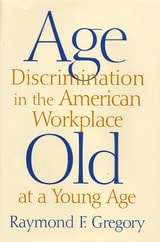
Age Discrimination in the American Workplace
Old at a Young AgeGregory, Raymond F
Rutgers University Press, 2001
Nearly every middle-aged and older worker, at some time during his or her career, will suffer age discrimination in the workplace. Employers too often use early-retirement plans, restructurings, and downsizings to dismiss older workers. Many of these individuals are unwillingly ushered into earlier-than-planned retirements, are denied promotions, or are terminated. The baby-boomer generation now accounts for just under 50 percent of the entire workforce. A vast army of workers now stands ready to contest employer acts of age discrimination.
Attorney Raymond Gregory addresses himself to the millions of workers who think they might be facing age discrimination and traces the history of the federal measures enacted to assist workers in contesting unlawful employer conduct. He explains how the law works and presents actual court cases to demonstrate the ways that workers have challenged their employers. The cases help to illustrate legal principles in real-life experiences and many of the cases relate compelling stories of workers caught up in a web of employer discriminatory conduct. Gregory has eliminated all legal jargon, ensuring that all concepts are clear to his readers. Individuals will turn to this book again and again to obtain authoritative background on this important topic.
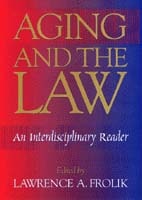
Aging And The Law
Lawrence Frolik
Temple University Press, 1999
After an introduction covering the nature of elder law, social attitudes toward the elderly, aging and ethnicity, and generational justice, the book includes sections on work, income, and wealth; housing; mental capacity; health care decision making; long-term care; health care finance; family and social issues; and abuse, neglect, victimization, and elderly criminals. It concludes with essays on legal representation and ethical issues. The essays have been edited to make them easily accessible to students and the general reader, and Professor Frolik has supplied introductions to the sections, as well as summaries of issues for which the essays could not be included.
Both comprehensive and engaging, Aging and the Law brings together essays by lawyers, social workers, health care professionals, and policy makers, as well as selected case law and congressional hearings.
Aging and Society
Aging and the ProfessionsMatilda White Riley
Russell Sage Foundation, 1969
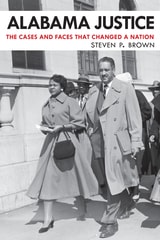
Alabama Justice
The Cases and Faces That Changed a NationSteven P. Brown
University of Alabama Press, 2020
WINNER OF THE ANNE B. & JAMES B. MCMILLAN PRIZE IN SOUTHERN HISTORY
Examines the legacies of eight momentous US Supreme Court decisions that have their origins in Alabama legal disputes.
Unknown to many, Alabama has played a remarkable role in a number of Supreme Court rulings that continue to touch the lives of every American. In Alabama Justice: The Cases and Faces That Changed a Nation, Steven P. Brown has identified eight landmark cases that deal with religion, voting rights, libel, gender discrimination, and other issues, all originating from legal disputes in Alabama.
Written in a concise and accessible manner, each case law chapter begins with the circumstances that created the dispute. Brown then provides historical and constitutional background for the issue followed by a review of the path of litigation. Excerpts from the Court’s ruling in the case are also presented, along with a brief account of the aftermath and significance of the decision. The First Amendment (New York Times v. Sullivan), racial redistricting (Gomillion v. Lightfoot), the Equal Protection Clause of the Fourteenth Amendment (Frontiero v. Richardson), and prayer in public schools (Wallace v. Jaffree) are among the pivotal issues stamped indelibly by disputes with their origins in Alabama legal, political, and cultural landscapes. By examining such landmark twentieth-century milestones and eras such as the Scottsboro Boys trial, the Civil Rights movement, and the fight for women’s rights through a legal lens, Brown sheds new and unexpected light on the ways that events in Alabama have shaped the nation.
In addition to his analysis of cases, Brown discusses the three associate Supreme Court justices from Alabama to the Supreme Court: John McKinley, John Archibald Campbell, and Hugo Black. Their cumulative influence on constitutional interpretation, the institution of the Court, and the day-to-day rights and liberties enjoyed by every American is impossible to measure. A closing chapter examines the careers and contributions of these three Alabamians.
Alabama Water-Resources Law
A Critical TreatiseHeather Elliott
University of Alabama Press, 2026
A compelling exploration of how Alabama’s aging water laws endanger its resources and why urgent, forward thinking reform is essential for the state’s future.
Alabama Water-Resources Law is the first truly comprehensive study examining the structure and shortcomings of Alabama’s water law. This prodigious treatise provides a necessary tool to help the state and its people understand and prepare for the wise use of its water resources. Part I provides a clear and critical statement of Alabama’s current water law in eleven chapters. Part II expands on the criticisms of existing Alabama law, recounts the history of previous efforts at addressing those criticisms, and makes recommendations for change, taking lessons from other southeastern states.
Throughout, University of Alabama law professor Heather Elliott underscores the flaws in Alabama’s current body of law, arguing that Alabama’s abundant water resources have fostered complacency that the state and its residents can no longer afford. As Alabama’s water supply is strained by population growth, economic development, and global climate change, the deficiencies in the archaic legal framework will become crippling. Investments made on the assumption of plenty will fail as water becomes less available, Alabama’s world-class aquatic biodiversity will become even more endangered, and Alabama’s courts will suffer a glut of new litigation as parties fight over rights to a finite resource. Elliott demonstrates how Alabama can avoid the worst of these consequences through the adoption of a regulated riparian statute.
Ample illustrations provide an extensive inventory of the state’s surface and groundwater resources and a technical primer on instream flow. This is a must-read for all Alabama policymakers, attorneys, and concerned citizens to answer water-law questions and to make proactive laws to bring Alabama into twenty-first-century practices.
Alaska Constitution
Edited by University of Alaska Press
University of Alaska Press, 2020
Alaska Natives & American Laws
David Case
University of Alaska Press, 2002
Alaska Natives and American Laws
Third EditionDavid S. Case and David A. Voluck
University of Alaska Press, 2012
Now in its third edition, Alaska Natives and American Laws is still the only work of its kind, canvassing federal law and its history as applied to the indigenous peoples of Alaska. Covering 1867 through 2011, the authors offer lucid explanations of the often-tangled history of policy and law as applied to Alaska’s first peoples. Divided conceptually into four broad themes of indigenous rights to land, subsistence, services, and sovereignty, the book offers a thorough and balanced analysis of the evolution of these rights in the forty-ninth state.

Albert A. Peña Jr.
Dean of Chicano PoliticsJosé Angel Gutiérrez
Michigan State University Press, 2017
All Our Trials
Prisons, Policing, and the Feminist Fight to End ViolenceEmily L. Thuma
University of Illinois Press, 2019
All Our Trials explores the organizing, ideas, and influence of those who placed criminalized and marginalized women at the heart of their antiviolence mobilizations. This activism confronted a "tough on crime" political agenda and clashed with the mainstream women’s movement’s strategy of resorting to the criminal legal system as a solution to sexual and domestic violence. Drawing on extensive archival research and first-person narratives, Thuma weaves together the stories of mass defense campaigns, prisoner uprisings, broad-based local coalitions, national gatherings, and radical print cultures that cut through prison walls. In the process, she illuminates a crucial chapter in an unfinished struggle––one that continues in today’s movements against mass incarceration and in support of transformative justice.
Allies and Obstacles
Disability Activism and Parents of Children with DisabilitiesAllison C. Carey, Pamela Block, and Richard K. Scotch
Temple University Press, 2020
Parents of children with disabilities often situate their activism as a means of improving the world for their child. However, some disabled activists perceive parental activism as working against the independence and dignity of people with disabilities. This thorny relationship is at the heart of the groundbreaking Allies and Obstacles.
The authors chronicle parents’ path-breaking advocacy in arenas such as the right to education and to liberty via deinstitutionalization as well as how they engaged in legal and political advocacy. Allies and Obstacles provides a macro analysis of parent activism using a social movement perspective to reveal and analyze the complex—and often tense—relationship of parents to disability rights organizations and activism.
The authors look at organizational and individual narratives using four case studies that focus on intellectual disability, psychiatric diagnoses, autism, and a broad range of physical disabilities including cerebral palsy and muscular dystrophy. These cases explore the specific ways in which activism developed among parents and people with disabilities, as well as the points of alliance and the key points of contestation. Ultimately, Allies and Obstacles develops new insights into disability activism, policy, and the family.
Alternative Dispute Resolution in the Regulatory Process
Deirdre McCarthy Gallagher
Michigan State University Press, 2020

Alzheimer's and Dementia
A Practical and Legal Guide for Nevada Caregivers, Revised and UpdatedKim Boyer
University of Nevada Press, 2025
The book, specific to Nevada, covers state laws including Medicaid planning, asset protection, guardianship, probate, advance directives, and patient rights. It also addresses estate and financial planning, and provides a detailed list of resources available to assist caregivers. Written by an elder law attorney and a gerontologist, Alzheimer’s and Dementiaoffers insights from two professionals who provide practical solutions to common obstacles faced by caregivers, helping them support the needs and overcome the challenges facing those coping with these diseases.
Boyer and Shapiro coauthored The Essential Eldercare Handbook for Nevada also available from the University of Nevada Press.
Alzheimer’s and Dementia
A Practical and Legal Guide for Nevada CaregiversKim Boyer
University of Nevada Press, 2012
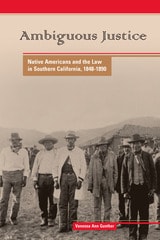
Ambiguous Justice
Native Americans and the Law in Southern California, 1848-1890Vanessa Ann Gunther
Michigan State University Press, 2006
In 1769, Spain took action to solidify control over its northern New World territories by establishing a series of missions and presidios in what is now modern California. To populate these remote establishments, the Spanish crown relied on Franciscan priests, whose role it was to convince the Native Californian population to abandon their traditional religious practices and adopt Catholicism. During their tutelage, the Indians of California would be indoctrinated into Spanish society, where they would learn obedience to the church and crown.
The legal system of Southern California has been used by Anglo populations as a social and demographic tool to control Native Americans. Following the Mexican-American War and the 1849 Gold Rush, as California property values increased and transportation corridors were established, Native Americans remained a sharply declining presence in many communities, and were likely to be charged with crimes. The sentences they received were lighter than those given to Anglo offenders, indicating that the legal system was used as a means of harassment. Additionally, courts chronicled the decline of the once flourishing native populations with each case of drunkenness, assault, or rape that appeared before the bench. Nineteenth-century American society had little sympathy for the plight of Indians or for the destruction of their culture. Many believed that the Indians of Southern California would fade from history because of their inability to adapt to a changing world. While many aspects of their traditional culture have been irreparably lost, the people of southern California are, nevertheless, attempting to recreate the cultures that were challenged by the influx of Europeans and later Americans to their lands.
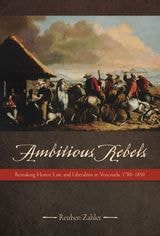
Ambitious Rebels
Remaking Honor, Law, and Liberalism in Venezuela, 1780-1850Reuben Zahler
University of Arizona Press, 2013
In a highly engaging style, Zahler examines gender and class against the backdrop of Venezuelan institutions and culture during the late colonial period through post-independence (known as the “middle period”). His fine-grained analysis shows that liberal ideals permeated the elite and popular classes to a substantial degree while Venezuelan institutions enjoyed impressive levels of success. Showing remarkable ambition, Venezuela’s leaders aspired to transform a colony that adhered to the king, the church, and tradition into a liberal republic with minimal state intervention, a capitalistic economy, freedom of expression and religion, and an elected, representative government.
Subtle but surprisingly profound changes of a liberal nature occurred, as evidenced by evolving standards of honor, appropriate gender roles, class and race relations, official conduct, courtroom evidence, press coverage, economic behavior, and church-state relations. This analysis of the philosophy of the elites and the daily lives of common men and women reveals in particular the unwritten, unofficial norms that lacked legal sanction but still greatly affected political structures.
Relying on extensive archival resources, Zahler focuses on Venezuela but provides a broader perspective on Latin American history. His examination provides a comprehensive look at intellectual exchange across the Atlantic, comparative conditions throughout the Americas, and the tension between traditional norms and new liberal standards in a postcolonial society.

Amending the Past
Europe's Holocaust Commissions and the Right to HistoryAlexander Karn
University of Wisconsin Press, 2017
Alexander Karn analyzes more than a dozen Holocaust commissions—in Germany, Switzerland, France, Poland, Austria, Latvia, Lithuania, and elsewhere—in a comparative framework, situating each in the context of past and present politics, to evaluate their potential for promoting justice and their capacity for bringing the perspectives of rival groups more closely together. Karn also evaluates the media coverage these commissions received and probes their public reception from multiple angles.
Arguing that historical commissions have been underused as a tool for conflict management, Karn develops a program for historical mediation and moral reparation that can deepen democratic commitment and strengthen human rights in both transitional regimes and existing liberal states.
America, Compromised
Lawrence Lessig
University of Chicago Press, 2018
So begins Lawrence Lessig's sweeping indictment of contemporary American institutions and the corruption that besets them. We can all see it—from the selling of Congress to special interests to the corporate capture of the academy. Something is wrong. It’s getting worse.
And it’s our fault. What Lessig shows, brilliantly and persuasively, is that we can’t blame the problems of contemporary American life on bad people, as our discourse all too often tends to do. Rather, he explains, “We have allowed core institutions of America’s economic, social, and political life to become corrupted. Not by evil souls, but by good souls. Not through crime, but through compromise.” Every one of us, every day, making the modest compromises that seem necessary to keep moving along, is contributing to the rot at the core of American civic life. Through case studies of Congress, finance, the academy, the media, and the law, Lessig shows how institutions are drawn away from higher purposes and toward money, power, quick rewards—the first steps to corruption.
Lessig knows that a charge so broad should not be levied lightly, and that our instinct will be to resist it. So he brings copious, damning detail gleaned from years of research, building a case that is all but incontrovertible: America is on the wrong path. If we don’t acknowledge our own part in that, and act now to change it, we will hand our children a less perfect union than we were given. It will be a long struggle. This book represents the first steps.
American Farm Policy, 1948-1973
Willard Cochrane
University of Minnesota Press, 1976

American Immunity
War Crimes and the Limits of International LawPatrick Hagopian
University of Massachusetts Press, 2013
In 1955 the Supreme Court ruled that veterans of the U.S. armed forces could not be court-martialed for overseas crimes that were not detected until after they had left military service. Territorial limitations placed such acts beyond the jurisdiction of civilian courts, and there was no other American court in which they could be adjudicated. As a result, a jurisdictional gap emerged that for decades exempted former troops from prosecution for war crimes. “This was not merely a theoretical possibility,” Patrick Hagopian writes. Over a dozen former soldiers who participated in the My Lai massacre did in fact “get away with murder.” Further court rulings expanded the gap to cover civilian employees and contractors that accompanied the armed forces.
In American Immunity, Hagopian places what he calls the “superpower exemption” in the context of a long-standing tension between international law and U.S. sovereignty. He shows that despite the U.S. role in promulgating universal standards of international law and forming institutions where those standards can be enforced, the United States has repeatedly refused to submit its own citizens and troops to the jurisdiction of international tribunals and failed to uphold international standards of justice in its own courts.
In 2000 Congress attempted to close the jurisdictional gap with passage of the Military Extraterritorial Jurisdiction Act. The effectiveness of that legislation is still in question, however, since it remains unclear how willing civilian American juries will be to convict veterans for conduct in foreign war zones.
American Indian Constitutional Reform and the Rebuilding of Native Nations
Edited by Eric D. Lemont
University of Texas Press, 2006
Since 1975, when the U.S. government adopted a policy of self-determination for American Indian nations, a large number of the 562 federally recognized nations have seized the opportunity to govern themselves and determine their own economic, political, and cultural futures. As a first and crucial step in this process, many nations are revising constitutions originally developed by the U.S. government to create governmental structures more attuned to native people's unique cultural and political values. These new constitutions and the governing institutions they create are fostering greater governmental stability and accountability, increasing citizen support of government, and providing a firmer foundation for economic and political development.
This book brings together for the first time the writings of tribal reform leaders, academics, and legal practitioners to offer a comprehensive overview of American Indian nations' constitutional reform processes and the rebuilding of native nations. The book is organized in three sections. The first part investigates the historical, cultural, economic, and political motivations behind American Indian nations' recent reform efforts. The second part examines the most significant areas of reform, including criteria for tribal membership/citizenship and the reform of governmental institutions. The book concludes with a discussion of how American Indian nations are navigating the process of reform, including overcoming the politics of reform, maximizing citizen participation, and developing short-term and long-term programs of civic education.
American Indian Law Deskbook, Fourth Edition
Conference of Western Attorneys General Conference of Western Attorneys General
University Press of Colorado, 2008
Included are:
-The evolution of federal statutory Indian law and the judicial foundations of federal Indian policy.
-An extensive compilation and analysis of federal and state court decisions.
- Reservation and Indian lands ownership and property interests.
-The parameters of criminal jurisdiction in Indian country.
-Concepts of tribal sovereignty and jurisdiction relating to a number of specific areas, including tribal courts, hunting and fishing, environmental regulation, water rights, gaming, and child welfare.
-Cooperative approaches used by the states and tribes for resolving jurisdictional disputes and promoting better relations.
Thorough, scholarly, and balanced, the American Indian Law Deskbook, Fourth Edition is an invaluable reference for a wide range of people working with Indian tribes, including attorneys, legal scholars, government officials, social workers, state and tribal jurists, and historians. This revised edition includes information from more recent court decisions, federal statutes, administrative regulations, and law reviews.

American Infanticide
Sexism, Science, and the Politics of SympathyClara S. Lewis
Rutgers University Press, 2025
Emboldened by fear, the sorority sisters investigated. In the driveway next to the kitchen door, they found Emile’s newborn baby girl dead inside a garbage bag. Emile’s crime seemed senseless and left her family and friends with an aching question: what happened?
American Infanticide situates Emile's tragic act in a long intellectual, social, and legal history, uncovering disturbing missing chapters in our national history that undercut myths that have shaped public reactions to so-called monster moms and dumpster babies since the colonial era. Ultimately, the book uncovers how bias and inconsistency dictate how women accused of infant homicide are perceived and punished and sheds new light on how and why our legal responses to infanticide are so deeply misguided.

American Legal English, 2nd Edition, Supplemental Audiofiles
Using Language in Legal ContextsDebra S. Lee, J.D., Charles Hall, Susan Barone
University of Michigan Press, 2012
This product contains the supplemental listening activities (21 tracks) to support the textbook American Legal English (978-0-472-03206-0), and are available via MP3 download. Running time: 000:36:43.
The American Legal English products were developed to help non-native speakers improve their ability to understand and communicate in English with their legal counterparts around the world. The text is an introduction to basic legal information and the U.S. legal system that addresses the major areas of law and provides actual cases and statutes so that students can become familiar with legal syntax and legal vocabulary.
American Legal English, 2nd Edition
Using Language in Legal ContextsDebra S. Lee, J.D., Charles Hall, and Susan M. Barone
University of Michigan Press, 2012
Law is a profession that requires the ability to read critically, write well, synthesize sources from research, and speak concisely and clearly. American Legal English was developed to help non-native speakers improve their ability to understand and communicate in English with their legal counterparts around the world. The text is an introduction to basic legal information and the U.S. legal system that addresses the major areas of law and provides actual cases and statutes so that students can become familiar with legal syntax and legal vocabulary.
Each chapter addresses a particular area of the law and has three parts:
- Discovering Connections is a warm-up activity that focuses on non-legal concepts that lead into a discussion of the law.
- Legal Listening and Legally Speaking offer the opportunity to practice new vocabulary terms before they are used in context later in the chapter.
- Legal Thumbnail provides a simplified summary of the law with actual statutory and case materials.
In the second edition, the language development activities have been moved to the back of the book and are organized in the categories of writing, reading, oral communication, grammar, and culture.
Supplemental listening activities (21 tracks) are available via an audio CD (978-0-472-00325-9) or MP3 download (978-0-472-00360-0) is available for use in conjunction with this textbook. Running time: 000:40:02.
American Memories
Atrocities and the LawJoachim J. Savelsberg
Russell Sage Foundation, 2012
American Surveillance
Intelligence, Privacy, and the Fourth AmendmentAnthony Gregory
University of Wisconsin Press, 2016
Anthony Gregory challenges such simplifications, offering a nuanced history and analysis of these difficult issues. He highlights the complexity of the relationship between the gathering of intelligence for national security and countervailing efforts to safeguard individual privacy. The Fourth Amendment prohibiting unreasonable searches and seizures offers no panacea, he finds, in combating assaults on privacy—whether by the NSA, the FBI, local police, or more mundane administrative agencies. Given the growth of technology, together with the ambiguities and practical problems of enforcing the Fourth Amendment, advocates for privacy protections need to work on multiple policy fronts.
“This fascinating review of the shifts and accretions of American law and culture is filled with historical surprises and twenty-first-century shocks, so beneficial in an era of gross American ahistoricality and cultural acquiescence to the technological state. Every flag-waving patriot, every dissenter, every judge and police officer, every small-town mayor and every president should read America Surveillance. We have work to do!”—Lt. Col. Karen U. Kwiatkowski, (Ret.), former Senior Operations Staff Officer, Office of the Director, National Security Agency

Among the Lowest of the Dead
The Culture of Capital PunishmentDavid Von Drehle
University of Michigan Press, 2010
"Has all the tension of the best true crime stories . . . This is journalism at its best."
--Library Journal
"A compelling argument against capital punishment. . . . Examining politicians, judges (including Supreme Court Justices), prosecutors, defense attorneys and the condemned themselves, the author makes an effective case that, despite new laws, execution is no less a lottery than it has always been."
--Publishers Weekly
"In a fine and important book, Von Drehle writes elegantly and powerfully. . . . Anyone certain of their opinion about the death penalty ought to read this book."
-- Booklist
"An extremely well-informed and richly insightful book of great value to students of the death penalty as well as intelligent general readers with a serious interest in the subject, Among the Lowest of the Dead is also exciting reading. The book is an ideal guide for new generations of readers who want to form knowledgeable judgments in the continuing--and recently accelerating--controversies about capital punishment."
--Anthony Amsterdam, New York University
"Among the Lowest of the Dead is a powerfully written and meticulously researched book that makes an invaluable contribution to the growing public dialogue about capital punishment in America. It's one of those rare books that bridges the gap between mass audiences and scholarly disciplines, the latter including sociology, political science, criminology and journalism. The book is required reading in my Investigative Journalism classes--and my students love it!"
--David Protess, Northwestern University
"Among The Lowest of the Dead deserves a permanent place in the literature as literature, and is most relevant to today's death penalty debate as we moderate advocates and abolitionists search for common ground."
--Robert Blecker, New York Law School
David Von Drehle is Senior Writer, The Washington Post and author of Triangle: The Fire that Changed America.
An American Travesty
Legal Responses to Adolescent Sexual OffendingFranklin E. Zimring
University of Chicago Press, 2004
An American Travesty is the first scholarly book in half a century to analyze the justice system’s response to sexual misconduct by children and adolescents in the United States. Writing with a refreshing dose of common sense, Franklin E. Zimring discusses our society's failure to consider the developmental status of adolescent sex offenders. Too often, he argues, the American legal system ignores age and developmental status when adjudicating young sexual offenders, in many cases responding as they would to an adult.
“An opinionated, articulate, and forceful critique of current politics and practices. . . . I would recommend this book for anyone interested in rethinking the fundamental questions of how our courts and systems should respond to these cases.”—Law and Politics Book Review
“One of the most important new books in the field of juvenile justice. . . . Zimring offers a thoughtful, research-based analysis of what went wrong with legal policy development.”—Barry Krisberg, President, National Council on Crime and Delinquency

An Ethics of Interrogation
Michael Skerker
University of Chicago Press, 2010