Results by title
1228 books match the query 'Library & Information Science' and 101 start with a

Advocacy, Outreach & the Nation’s Academic Libraries
A Call for ActionWilliam C. Welburn
Assoc of College & Research Libraries, 2011
Affordable Course Materials
Electronic Textbooks and Open Educational ResourcesChris Diaz
American Library Association, 2017
After Disruption
A Future for Cultural MemoryTrevor Owens
University of Michigan Press, 2024
After Disruption posits that we are no longer planning for a digital future, but instead living in a digital present. In this context, Owens asks how we plan for and develop a more just, sustainable, and healthy future for cultural memory. The first half of the book draws on critical scholarship on the history of technology and business to document and expose the sources of tech startup ideologies and their pernicious results, revealing that we need powerful and compelling counter frameworks and values to replace these ideologies. The second half of the book makes the case for the centrality of maintenance, care, and repair as interrelated frameworks to build a better future in which libraries, archives, and museums can thrive as sites of belonging and connection through collections.

After-School Clubs for Kids
Thematic Programming to Encourage ReadingLisa M. Shaia
American Library Association, 2014
All Ages Welcome
Recruiting and Retaining Younger Generations for Library Boards, Friends Groups, and FoundationsLina Bertinelli
American Library Association, 2020
According to 2016 Pew Research Center survey data, Millennials are more likely to have visited a public library in the past year than any other adult demographic. But despite being core library users, millennials and other younger generations are often underrepresented on library boards and library advocacy groups, including Friends groups and Foundations. But you can change that, with the help of this planner’s hands-on worksheets, brainstorming activities, checklists, and expert advice. Using this toolkit from United for Libraries you will
- understand generational differences and commonalities through statistics and analysis of Baby Boomers, Generation X, Millennials and Generation Z/post-Millennials;
- learn how to navigate the challenges of fundraising with the “debt generations” by persuasively answering the question “what’s in it for me?”;
- master the ABCs of recruitment and retention, tailoring them to fit your library;
- craft several customized pitches, giving you confidence no matter the situation or audience;
- discover how to cement buy-in from two key groups, current organization members and your new recruits, thereby ensuring acceptance and enthusiasm all around;
- work towards defining and managing diversity for your advocacy group; and
- use tried and true methods for successful onboarding of volunteers, including a Board Member Orientation Checklist and guidance on mentoring.
Using this resource, libraries of all kinds will be empowered to grow and strengthen their recruitment, retention, and training of Trustees, Friends, and Foundation members.
America's War
Talking about the Civil War and Emancipation on Their 150th AnniversariesAmerican Library Association, 2012
An Introduction to Collection Development for School Librarians
Mona Kerby
American Library Association, 2019
Analyzing the Next-Generation Catalog
Andrew American Library Association
American Library Association, 0
Animal Shenanigans
Rob Reid
American Library Association, 2015
Anniversaries and Holidays
Bernard Trawicky
American Library Association, 2000
Annotated Book Lists Teen Reader
The Best from the Experts at YALSA-BKAmerican Library Association, 2011
Anonymity
Alison Macrina
American Library Association, 2019
Answering Teens' Tough Questions
mk Eagle
American Library Association, 2012
Answers to the Health Questions People Ask in Libraries
A Medical Library Association GuideAmerican Library Association, 2008
Anywhere Library
A Primer for the Mobile WebCourtney Greene McDonald
Assoc of College & Research Libraries, 2011
Anywhere Library
A Primer for the Mobile WebCourtney Greene McDonald
Assoc of College & Research Libraries, 2011
Applying Library Values To Emerging Technology
Pub #72Peter D. Fernandez
Assoc of College & Research Libraries, 2018
Approaches to Liaison Librarianship
Robin Canuel
Assoc of College & Research Libraries, 2021
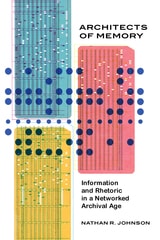
Architects of Memory
Information and Rhetoric in a Networked Archival AgeNathan R. Johnson
University of Alabama Press, 2020
Understanding the systems that shape what societies remember, archive, and forget.
We are now living in the richest age of public memory. From museums and memorials to the vast digital infrastructure of the internet, access to the past is only a click away. Even so, the methods and technologies created by scientists, espionage agencies, and information management coders and programmers have drastically delimited the ways that communities across the globe remember and forget our wealth of retrievable knowledge.
In Architects of Memory: Information and Rhetoric in a Networked Archival Age, Nathan R. Johnson charts turning points where concepts of memory became durable in new computational technologies and modern memory infrastructures took hold. He works through both familiar and esoteric memory technologies—from the card catalog to the book cart to Zatocoding and keyword indexing—as he delineates histories of librarianship and information science and provides a working vocabulary for understanding rhetoric’s role in contemporary memory practices.
This volume draws upon the twin concepts of memory infrastructure and mnemonic technê to illuminate the seemingly opaque wall of mundane algorithmic techniques that determine what is worth remembering and what should be forgotten. Each chapter highlights a conflict in the development of twentieth-century librarianship and its rapidly evolving competitor, the discipline of information science. As these two disciplines progressed, they contributed practical techniques and technologies for making sense of explosive scientific advancement in the wake of World War II. Taming postwar science became part and parcel of practices and information technologies that undergird uncountable modern communication systems, including search engines, algorithms, and databases for nearly every national clearinghouse of the twenty-first century.
Archival Entanglements
Edited by Puja Batra-Wells and Harmony Bench
The Ohio State University Press, 2026
Archival Entanglements arrives in the wake of the archival turn in the arts and humanities. What humanists call “the archive” has been challenged, deconstructed, and reinvented, but, as editors Puja Batra-Wells and Harmony Bench show, the conversation about the archive is far from over. In this interdisciplinary collection, contributors from digital humanities, performance studies, labor studies, race and ethnic studies, and more come together to shed new light on how objects, knowledges, environments, bodily practices, and identities are entangled with the archive. Showcasing a range of approaches from traditional essays to artistic engagements, the works in this collection complicate questions of archival memory; raise issues of accessibility, erasure, latency, and surveillance; and ask if we should forge new spaces of remembrance that reach beyond the limits of the archive. Archival Entanglements posits the archive as both a generative site of knowledge production and a constricted force of consolidation around dominant narratives—essentially, as a complex web of theories and practices with which the arts and humanities are fundamentally entangled.
Contributors:
Anurima Banerji, Franco Barchiesi, Puja Batra-Wells, Harmony Bench, Johannah Bird, Leigh Bonds, Iñaki Bonillas, Melissa Anne-Marie Curley, Eric Gonzaba, Brian Harnetty, Brian Eugenio Herrera, Kelly Kivland, Tanya Lukin Linklater, Mariah E. Marsden, Mimi ?n??ha, Martin Joseph Ponce, Rebecca Schneider, Amy Shuman, Michelle Wibbelsman, Nicole Wood
Archival Values
Essays in Honor of Mark A. GreeneChristine Weideman
American Library Association, 2019
Archival and Special Collections Facilities
Guidelines for Archivists, Librarians, Architects, and EngineersMichele F. Pacifico
American Library Association, 2010

Archive Stories
Facts, Fictions, and the Writing of HistoryAntoinette Burton, ed.
Duke University Press, 2005
Archive Stories brings together ethnographies of the archival world, most of which are written by historians. Some contributors recount their own experiences. One offers a moving reflection on how the relative wealth and prestige of Western researchers can gain them entry to collections such as Uzbekistan’s newly formed Central State Archive, which severely limits the access of Uzbek researchers. Others explore the genealogies of specific archives, from one of the most influential archival institutions in the modern West, the Archives nationales in Paris, to the significant archives of the Bakunin family in Russia, which were saved largely through the efforts of one family member. Still others explore the impact of current events on the analysis of particular archives. A contributor tells of researching the 1976 Soweto riots in the politically charged atmosphere of the early 1990s, just as apartheid in South Africa was coming to an end. A number of the essays question what counts as an archive—and what counts as history—as they consider oral histories, cyberspace, fiction, and plans for streets and buildings that were never built, for histories that never materialized.
Contributors. Tony Ballantyne, Marilyn Booth, Antoinette Burton, Ann Curthoys, Peter Fritzsche, Durba Ghosh, Laura Mayhall, Jennifer S. Milligan, Kathryn J. Oberdeck, Adele Perry, Helena Pohlandt-McCormick, John Randolph, Craig Robertson, Horacio N. Roque Ramírez, Jeff Sahadeo, Reneé Sentilles
Archives
Andrew Lison
University of Minnesota Press, 2019
How digital networks and services bring the issues of archives out of the realm of institutions and into the lives of everyday users
Archives have become a nexus in the wake of the digital turn. Electronic files, search engines, video sites, and media player libraries make the concepts of “archival” and “retrieval” practically synonymous with the experience of interconnected computing. Archives today are the center of much attention but few agendas. Can archives inform the redistribution of power and resources when the concept of the public library as an institution makes knowledge and culture accessible to all members of society regardless of social or economic status? This book sets out to show that archives need our active support and continuing engagement.
This volume offers three distinct perspectives on the present status of archives that are at once in disagreement and solidarity with each other, from contributors whose backgrounds cut across the theory–practice divide. Is the increasing digital storage of knowledge pushing us toward a turning point in its democratization? Can archives fulfill their paradoxical potential as utopian sites in which the analog and the digital, the past and future, and remembrance and forgetting commingle? Is there a downside to the present-day impulse toward total preservation?
Archives & Archivists in the Information Age
Richard J. Cox
American Library Association, 2005
Archives Alive
Expanding Engagement with Public Library Archives and Special CollectionsDiantha Dow Schull
American Library Association, 2015
Archives Power
Randall C. Jimerson
American Library Association, 2009
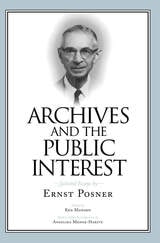
Archives and the Public Interest
Selected Essays by Ernest PosnerKen Munden
Society of American Archivists, 2006
Archives in Libraries
What Librarians and Archivists Need to Know to Work TogetherMegan Sniffin-Marinoff
American Library Association, 2017

Archiving Heaven and Earth
The Historian's Office and the Making of MormonismRobin Scott Jensen
University of Illinois Press, 2027
Robin Scott Jensen explores the Church Historian’s Office against the backdrop of how writing and archiving what was written shaped the growth, faith, and identity of the nineteenth-century Latter Day Saint movement. As Jensen shows, records simultaneously created and preserved history. Journal keeping and letter writing stood alongside official documents as an essential means for Saints to understand their mission and place in American society. Over time, the Church Historian’s Office evolved into a powerful institution that guided memory and authority by deciding what to collect, copy, or destroy. Jensen tells the stories of the forgotten archivists, many of them women, who built the Church Historian’s Office, while revealing the choices and conflicts that led to Native and other voices being marginalized or erased.
Detailed and candid, Archiving Heaven and Earth provides a rare look at a foundational organization.
Arranging and Describing Archives and Manuscripts
Dennis Meissner
American Library Association, 2019
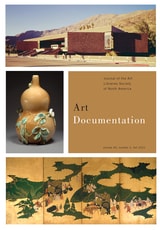
Art Documentation
Journal of the Art Libraries Society of North America, volume 40 number 2 (Fall 2021)The University of Chicago Press
University of Chicago Press Journals, 2021
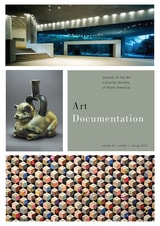
Art Documentation
Journal of the Art Libraries Society of North America, volume 41 number 1 (Spring 2022)The University of Chicago Press
University of Chicago Press Journals, 2022
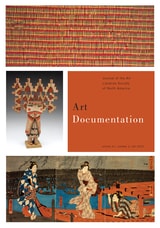
Art Documentation
Journal of the Art Libraries Society of North America, volume 41 number 2 (Fall 2022)The University of Chicago Press
University of Chicago Press Journals, 2022
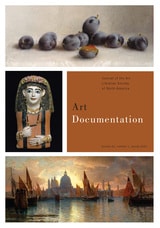
Art Documentation
Journal of the Art Libraries Society of North America, volume 42 number 1 (Spring 2023)The University of Chicago Press
University of Chicago Press Journals, 2023
Art Documentation
Journal of the Art Libraries Society of North America, volume 42 number 2 (Fall 2023)The University of Chicago Press
University of Chicago Press Journals, 2023
Art Documentation
Journal of the Art Libraries Society of North America, volume 43 number 1 (Spring 2024)The University of Chicago Press
University of Chicago Press Journals, 2024

Art Documentation
Journal of the Art Libraries Society of North America, volume 43 number 2 (Fall 2024)The University of Chicago Press
University of Chicago Press Journals, 2024
Art Documentation
Journal of the Art Libraries Society of North America, volume 44 number 1 (Spring 2025)The University of Chicago Press
University of Chicago Press Journals, 2025
Art Documentation
Journal of the Art Libraries Society of North America, volume 44 number 2 (Fall 2025)The University of Chicago Press
University of Chicago Press Journals, 2025
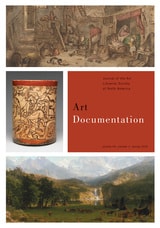
Art Documentation
Journal of the Art Libraries Society of North America, volume 45 number 1 (Spring 2026)The University of Chicago Press
University of Chicago Press Journals, 2026
Artsy Toddler Storytimes
A Year's Worth of Ready-To-Go ProgrammingCarol Garnett Hopkins
American Library Association, 2013
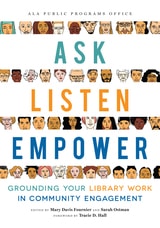
Ask, Listen, Empower
Grounding Your Library Work in Community EngagementSarah Ostman and Mary Davis Fournier
American Library Association, 2020
Foreword by Tracie D. Hall
Community engagement isn’t simply an important component of a successful library—it’s the foundation upon which every service, offering, and initiative rests. Working collaboratively with community members—be they library customers, residents, faculty, students or partner organizations— ensures that the library works, period. This important resource from ALA’s Public Programs Office (PPO) provides targeted guidance on how libraries can effectively engage with the public to address a range of issues for the betterment of their community, whether it is a city, neighborhood, campus, or something else. Featuring contributions by leaders active in library-led community engagement, it’s designed to be equally useful as a teaching text for LIS students and a go-to handbook for current programming, adult services, and outreach library staff. Balancing practical tools with case studies and stories from field, this collection explores such key topics as
- why libraries belong in the community engagement realm;
- getting the support of board and staff;
- how to understand your community;
- the ethics and challenges of engaging often unreached segments of the community;
- identifying and building engaged partnerships;
- collections and community engagement;
- engaged programming; and
- outcome measurement.
Assessing Liaison Librarians
Documenting Impact ForDaniel Mack
American Library Association, 2014
Assessing Liaison Librarians
Documenting Impact for Positive ChangeDaniel C. Mack
Assoc of College & Research Libraries, 2014
Assessing Service Quality
Satisfying the Expectations of Library CustomersPeter Hernon
American Library Association, 2015
Assessing Service Quality
Satisfying the Expectations of Library CustomersAmerican Library Association, 1998
Assessment Strategies in Technical Services
Kimberley A. Edwards
American Library Association, 2019
Assessment and Advocacy
Using Project Outcome for Academic LibrariesGena Parsons-Diamond
Assoc of College & Research Libraries, 2024
In celebration of Project Outcome’s fifth anniversary, Assessment and Advocacy: Using Project Outcome for Academic Libraries collects case studies demonstrating how a variety of libraries have used Project Outcome to make improvements in their practice and highlighting the value the toolkit has brought to institutions and the academic library profession. Chapters capture ways to use Project Outcome to make small changes, like the optimal arrangement of a library’s study room furniture, to using Project Outcome data in conversation with datasets from other sources to provide greater insights into the contributions of academic libraries to student learning and success, as well as evidence that can be used in advocating for institutional, state, and federal funding.
Academic librarians know that their work makes a difference. You set students on the road to success and researchers on the road to results, providing valuable skills and access to knowledge that help our colleges and universities thrive. The challenge for libraries can be capturing meaningful data to support that story. Since 2019, the Project Outcome for Academic Libraries toolkit has helped library workers measure learning outcomes to drive change, make data-informed decisions, and demonstrate the impact and value of academic libraries. Learn how to use this data in your library, institution, and the profession with Assessment and Advocacy, all proceeds of which go to keeping Project Outcome free.
Assistive Technologies in the Library
Barbara T. Mates
American Library Association, 2011