Results by title
998 books match the query 'Life' and 97 start with a
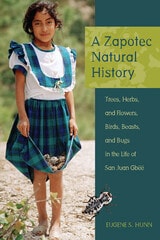
A Zapotec Natural History
Trees, Herbs, and Flowers, Birds, Beasts, and Bugs in the Life of San Juan GbëëEugene S. Hunn
University of Arizona Press, 2008
The contents of Part 2 are available online.

Aaron Copland
The Life and Work of an Uncommon ManHoward Pollack
University of Illinois Press, 1999
Howard Pollack's expansive biography examines Copland's long list of accomplishments while also telling the story of the composer's musical development, political sympathies, personal life, relationships as an openly gay man, and tireless encouragement of younger composers. A winner of the Pulitzer Prize and an Academy Award, Copland played a vital role in the Yaddo Festival and as a beloved teacher at Tanglewood, Harvard, and the New School for Social Research. He turned to conducting later in life and via tours promoted American classical music overseas while taking it to appreciative audiences across the United States.
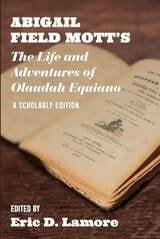
Abigail Field Mott's The Life and Adventures of Olaudah Equiano
A Scholarly EditionEric D. Lamore
West Virginia University Press, 2023
An adaptation of Olaudah Equiano’s Interesting Narrative published for Black children in 1829, now given new life in a major scholarly edition.
In 1829, Samuel Wood and Sons, a New York publisher of children’s literature, printed and sold the Quaker Abigail Field Mott’s Life and Adventures of Olaudah Equiano. Mott adapted Olaudah Equiano’s Interesting Narrative, a bestselling autobiography first published in London in 1789, for Black children studying at New York African Free Schools, one of the first educational systems to teach individuals of African descent in the United States.
By reissuing Mott’s neglected adaptation with contextualizing scholarly apparatus, Eric D. Lamore disrupts the editorial tradition of selecting a London edition of Equiano’s Interesting Narrative, and positions Equiano in the United States instead of Great Britain. Lamore’s volume contains Mott’s children’s book, which includes a series of illustrations, in a facsimile edition; instructive notes on Life and Adventures; a provocative essay on the adaptation; and selections from relevant texts on the New York African Free Schools and other related topics. With its focus on the intersections of early Black Atlantic and American studies, children’s literature, history of education, life writing, and book history, this edition offers a fresh take on Equiano and his autobiography for a variety of twenty-first-century audiences.
Abigail Field Mott’s The Life and Adventures of Olaudah Equiano
A Scholarly EditionEric D. Lamore
University of Delaware Press, 0
By reissuing Mott’s neglected adaptation with contextualizing scholarly apparatus, Eric D. Lamore disrupts the editorial tradition of selecting a London edition of Equiano’s Interesting Narrative, and positions Equiano in the United States instead of Great Britain. Lamore’s volume contains Mott’s children’s book, which includes a series of illustrations, in a facsimile edition; instructive notes on Life and Adventures; a provocative essay on the adaptation; and selections from relevant texts on the New York African Free Schools and other related topics. With its focus on the intersections of early Black Atlantic and American studies, children’s literature, history of education, life writing, and book history, this edition offers a fresh take on Equiano and his autobiography for a variety of twenty-first-century audiences.
Action versus Contemplation
Why an Ancient Debate Still MattersJennifer Summit and Blakey Vermeule
University of Chicago Press, 2018
It is truly an ancient debate: Is it better to be active or contemplative? To do or to think? To make an impact, or to understand the world more deeply? Aristotle argued for contemplation as the highest state of human flourishing. But it was through action that his student Alexander the Great conquered the known world. Which should we aim at? Centuries later, this argument underlies a surprising number of the questions we face in contemporary life. Should students study the humanities, or train for a job? Should adults work for money or for meaning? And in tumultuous times, should any of us sit on the sidelines, pondering great books, or throw ourselves into protests and petition drives?
With Action versus Contemplation, Jennifer Summit and Blakey Vermeule address the question in a refreshingly unexpected way: by refusing to take sides. Rather, they argue for a rethinking of the very opposition. The active and the contemplative can—and should—be vibrantly alive in each of us, fused rather than sundered. Writing in a personable, accessible style, Summit and Vermeule guide readers through the long history of this debate from Plato to Pixar, drawing compelling connections to the questions and problems of today. Rather than playing one against the other, they argue, we can discover how the two can nourish, invigorate, and give meaning to each other, as they have for the many writers, artists, and thinkers, past and present, whose examples give the book its rich, lively texture of interplay and reference.
This is not a self-help book. It won’t give you instructions on how to live your life. Instead, it will do something better: it will remind you of the richness of a life that embraces action and contemplation, company and solitude, living in the moment and planning for the future. Which is better? Readers of this book will discover the answer: both.
Adapting VALUEs
Tracing the Life of a Rubric through Institutional EthnographyJennifer Grouling
University Press of Colorado, 2023
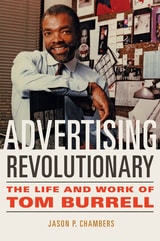
Advertising Revolutionary
The Life and Work of Tom BurrellJason P. Chambers
University of Illinois Press, 2024
Over a forty-year career, Chicagoan Tom Burrell changed the face of advertising and revolutionized the industry’s approach to African Americans as human beings and consumers. Jason P. Chambers offers a biography of the groundbreaking creator and entrepreneur that explores Burrell’s role in building brands like McDonald’s and Coca-Cola within a deeply felt vision of folding positive images of Black people into mainstream American life. While detailing Burrell’s successes, Chambers tells a parallel story of what Burrell tried to do that sheds light on the motivations of advertising creators who viewed their work as being about more than just selling. Chambers also highlights how Burrell used his entrepreneurial gifts to build an agency that opened the door for Black artists, copywriters, directors, and other professionals to earn livings, build careers, and become leaders within the industry.
Compelling and multidimensional, Advertising Revolutionary combines archival research and interviews with Burrell and his colleagues to provide a long overdue portrait of an advertising industry legend and his times.
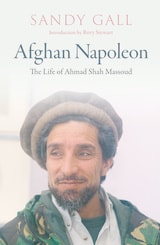
Afghan Napoleon
The Life of Ahmad Shah MassoudSandy Gall
Haus Publishing, 2022
When the Soviets invaded Afghanistan in 1979, the forces of resistance were disparate. Many groups were caught up in fighting each other and competing for Western arms. The exception were those commanded by Ahmad Shah Massoud, the military strategist and political operator who solidified the resistance and undermined the Russian occupation, leading resistance members to a series of defensive victories.
Sandy Gall followed Massoud during Soviet incursions and reported on the war in Afghanistan, and he draws on this first-hand experience in his biography of this charismatic guerrilla commander. Afghan Napoleon includes excerpts from the surviving volumes of Massoud’s prolific diaries—many translated into English for the first time—which detail crucial moments in his personal life and during his time in the resistance. Born into a liberalizing Afghanistan in the 1960s, Massoud ardently opposed communism, and he rose to prominence by coordinating the defense of the Panjsher Valley against Soviet offensives. Despite being under-equipped and outnumbered, he orchestrated a series of victories over the Russians. Massoud’s assassination in 2001, just two days before the attack on the Twin Towers, is believed to have been ordered by Osama bin Laden. Despite the ultimate frustration of Massoud’s attempts to build political consensus, he is recognized today as a national hero.
After Life
Eugene Thacker
University of Chicago Press, 2010
In After Life, Eugene Thacker clears the ground for a new philosophy of life by recovering the twists and turns in its philosophical history. Beginning with Aristotle’s originary formulation of a philosophy of life, Thacker examines the influence of Aristotle’s ideas in medieval and early modern thought, leading him to the work of Immanuel Kant, who notes the inherently contradictory nature of “life in itself.” Along the way, Thacker shows how early modern philosophy’s engagement with the problem of life affects thinkers such as Gilles Deleuze, Georges Bataille, and Alain Badiou, as well as contemporary developments in the “speculative turn” in philosophy.
At a time when life is categorized, measured, and exploited in a variety of ways, After Life invites us to delve deeper into the contours and contradictions of the age-old question, “what is life?”
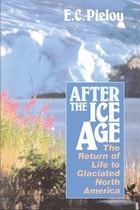
After the Ice Age
The Return of Life to Glaciated North AmericaE. C. Pielou
University of Chicago Press, 1991
Against Life
Edited by Alastair Hunt and Stephanie Youngblood, with an afterword by Lee Edelman
Northwestern University Press, 2015
The contributors to Against Life think critically about the turn to life in theory and culture and especially about its redemptive tendencies. Editors Alastair Hunt and Stephanie Youngblood shape their collection to provocatively challenge an assumption rife in the humanities, mainly that the idea of redeeming life might hinder important ethical conversations.
They and their contributors question whether it is intelligent—or even necessary— to orient our collective ethico-political projects from figures of life, and to posit forms of equality and freedom that might emerge if we did not organize being-together under the sign of life. Taken together the essays in Against Life mark an important turn in the ethico-political work of the humanities.
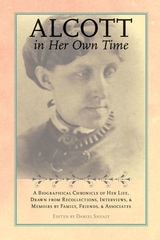
Alcott in Her Own Time
A Biographical Chronicle of Her LIfe, Drawn from Recollections, Interviews, and Memoirs by Family, Friends, and AssociatesShealy, Daniel
University of Iowa Press, 2005
Many of the printed recollections in this book appeared after Alcott became famous and showcase her as a literary lion, but others focus on her teen years, when she was living the life of Jo March; these intimate glimpses into the life of the Alcott family lead the reader to one conclusion: the family was happy, fun, and entertaining, very much like the fictional Marches. The recollections about an older and wealthier Alcott show a kind and generous, albeit outspoken, woman little changed by her money and status.
From Annie Sawyer Downs’s description of life in Concord to Anna Alcott Pratt’s recollections of the Alcott sisters’ acting days to Julian Hawthorne’s neighborly portrait of the Alcotts, the thirty-six recollections in this copiously illustrated volume tell the private and public story of a remarkable life.
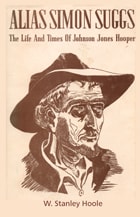
Alias Simon Suggs
The Life and Times of Johnson Jones HooperWilliam Stanley Hoole
University of Alabama Press, 2008
Alias Simon Suggs is a study in the life and writings of Johnson J. Hooper of Alabama, and is a masterful contribution to American biography and to American literature.
Extensively documented with illuminating footnotes and revealing references, its style is direct and captivating and will appeal to those who enjoy entertaining biography will relish the privilege of reading it.
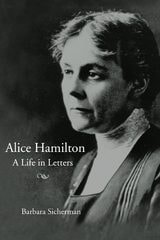
Alice Hamilton
A LIFE IN LETTERSBarbara Sicherman
University of Illinois Press, 2003
This legendary figure now comes to life in an integrated work of biography and letters that reveals the personal as well as the professional woman. In documenting Hamilton's evolution from a childhood of privilege to a life of social advocacy, the volume opens a window on women reformers and their role in Progressive Era politics and reform. Because Hamilton was a keen observer and vivid writer, her letters--more than 100 are included here--bring an unmatched freshness and immediacy to a range of subjects, such as medical education; personal relationships and daily life at Hull House; the women's peace movement; struggles for the protection of workers' health; academic life at Harvard; politics and civil liberties during the cold war; and the process of growing old. Her story takes the reader from the Gilded Age to the Vietnam War.

Alien Heart
The Life and Work of Margaret LaurenceLyall Powers
University of Manitoba Press, 2005
Lyall Powers is both a respected scholar of literature and a lifelong friend of Laurence's, having met her when they were students together at Winnipeg's United College in the 1940s. Alien Heart is the first full-length biography of Margaret that combines personal knowledge and insights about Laurence with a study of her work, which often paralleled the events and concerns in her own life.
Drawing on letters, personal correspondence, journals, and interviews, Lyall Powers discusses the struggles and triumphs Laurence experienced in her efforts to understand herself in the roles of writer, wife, mother, and public figure. He portrays a deeply compassionate and courageous woman, who yet felt troubled by conflicting demands. While Laurence's work is not directly autobiographical, Powers illustrates how her writing expressed many of the same dilemmas, and how the resolution her characters achieved in the novels and stories had an impact on Laurence's own life.
Powers provides an in-depth analysis of all Laurence's work, including the early African essays, fiction, and translations, and her books for children, as well as the beloved Manawaka fiction. The study clearly shows the progression and expression of Laurence as a writer of great humanity and conscience.
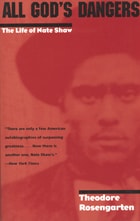
All God's Dangers
The Life of Nate ShawTheodore Rosengarten
University of Chicago Press, 2000

All Things Common
The Hutterian Way of LifeVictor Peters
University of Minnesota Press, 1966
All Things Common was first published in 1966. Minnesota Archive Editions uses digital technology to make long-unavailable books once again accessible, and are published unaltered from the original University of Minnesota Press editions.
In Dr. Peters' study of the Hutterian Brethren (commonly called Hutterites), a group of devoutly religious farmers who have established many communal colonies in the midlands of the United States and Canada, he first traces the historical development of the group and then describes in detail their way of life by focusing on the Manitoba colonies.
After their church was founded in Central Europe at the time of the Reformation, the Hutterians moved slowly east until they settled in Russia, where they lived for over one hundred years. Then, in the 1870's, they immigrated to America and settled in the Dakota Territory. During World War I they fled to Canada under pressure of wartime hysteria. Since they moved to Canada, the Hutterians have encountered more problems but have successfully spread their colonies across the prairie provinces and back into the United States.
At present, the Hutterians are the oldest and most successful community group in the history of western civilization. They believe that their practice of Christian communism is in true harmony with the spirit and teachings of early Christianity. Other aspects of their behavior such as the refusal to do military service and their disapproval of radio, television, dancing, movies, and cosmetics have made them a source of interest and concern to their neighbors.
The book is a thorough introduction to the Hutterians for the general reader and will be of special interest to historians, theologians, sociologists, and economists.
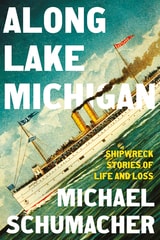
Along Lake Michigan
Shipwreck Stories of Life and LossMichael Schumacher
University of Minnesota Press, 2025
Notable shipwrecks of Lake Michigan throughout a century of enterprise, industry, heroism, and disaster on the Great Lakes
The Great Lakes are graveyards of a vast number of shipwrecks (30,000 by some estimates), and Lake Michigan has more than the other four lakes combined. The stories of those wrecks tell the history of that mighty lake in its endless, mercurial challenge to human endeavor.
Surveying the wreckage throughout the decades, from the fiery end of the twin propeller–driven Phoenix in 1847 to the failure of the Anna Minch to outrun the infamous 1940 Armistice Day storm, Michael Schumacher charts the course of shipping disasters great and small on Lake Michigan. He illuminates the details of maritime weather and shipcraft, the lives devoted to and lost on the water, and the mistakes and monumental failures that led to these ships’ watery ends.
Schumacher’s deft storytelling, drawing from deep research and comprehensive knowledge, brings forth the vivid details of the last minutes of these doomed ships, along with the circumstances surrounding their voyages. Here are tragic tales like that of the Eastland, the deadliest shipwreck in Great Lakes history, lost while docked in the Chicago River; the Rouse Simmons, a wooden schooner loaded with Christmas trees; the train ferry Milwaukee and the Wisconsin, a package freighter, gone within one week of each other in October 1929; and the passenger vessel the Lady Elgin, a devastating loss met with incredible heroism.
Liberally illustrated with historical photographs, the stories of these shipwrecks, spanning a full century of commercial traffic on Lake Michigan, document the myriad forms of bravery and misfortune that mark our encounters with the Great Lakes.
Amarisa's Cooking Pot
Tales of Life in All Its WondersDésirée Zamorano
University of Nevada Press, 2026
Each story is dedicated to capturing something ineffable, an emotional truth, a moment of beauty or realization, a moment of calm, or a spark of fury. What does it mean to be alive in a capricious world? Désirée Zamorano allows readers to explore this question beautifully, and memorably, long after the last page is turned.
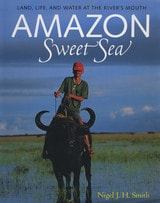
Amazon Sweet Sea
Land, Life, and Water at the River's MouthBy Nigel J. H. Smith
University of Texas Press, 2002
Far into the Atlantic Ocean, the outflow from the Amazon River creates a "sweet sea" of fresh water. At the river's mouth, a vast delta of river channels and marshes, floodplain and upland forests, open and scrub savannas, floating meadows, and mangrove swamps hosts an astonishingly diverse assemblage of plant and animal life. So rich is this biological treasure house that early European explorers deemed it inexhaustible.
In this highly readable book, Nigel Smith explores how human use of the Amazon estuary's natural resources has been affected by technological change, rapid urban growth, and accelerated market integration. Avoiding alarmist rhetoric, he shows how human intervention in the estuary has actually diversified agriculture and helped save floodplain forests from wanton destruction. His findings underscore the importance of understanding the history of land use and the ecological knowledge of local people when formulating development and conservation policies. The book will be of interest to everyone concerned with the fate of tropical forests, conserving biodiversity, and developing natural resources in a sustainable manner.
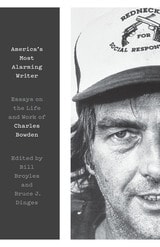
America's Most Alarming Writer
Essays on the Life and Work of Charles BowdenEdited by Bill Broyles and Bruce J. Dinges
University of Texas Press, 2019
The author of more than twenty books and a revered contributor to numerous national publications, Charles Bowden (1945–2014) used his keen storyteller’s eye to reveal both the dark underbelly and the glorious determination of humanity, particularly in the borderlands between the United States and Mexico. In America’s Most Alarming Writer, key figures in his life—including his editors, collaborators, and other writers—deliver a literary wake for the man who inspired them throughout his forty-year career.
Part revelation, part critical assessment, the fifty essays in this collection span the decades from Bowden’s rise as an investigative journalist through his years as a singular voice of unflinching honesty about natural history, climate change, globalization, drugs, and violence. As the Chicago Tribune noted, “Bowden wrote with the intensity of Joan Didion, the voracious hunger of Henry Miller, the feral intelligence and irony of Hunter Thompson, and the wit and outrage of Edward Abbey.” An evocative complement to The Charles Bowden Reader, the essays and photographs in this homage brilliantly capture the spirit of a great writer with a quintessentially American vision. Bowden is the best writer you’ve (n)ever read.
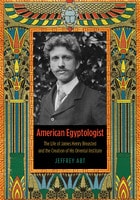
American Egyptologist
The Life of James Henry Breasted and the Creation of His Oriental InstituteJeffrey Abt
University of Chicago Press, 2011
James Henry Breasted (1865–1935) had a career that epitomizes our popular image of the archaeologist. Daring, handsome, and charismatic, he traveled on expeditions to remote and politically unstable corners of the Middle East, helped identify the tomb of King Tut, and was on the cover of Time magazine. But Breasted was more than an Indiana Jones—he was an accomplished scholar, academic entrepreneur, and talented author who brought ancient history to life not just for students but for such notables as Teddy Roosevelt and Sigmund Freud.
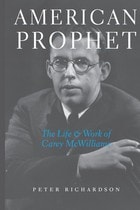
American Prophet
The Life and Work of Carey McWilliamsPeter Richardson
University of Michigan Press, 2005
Peter Richardson's absorbing and elegantly paced book reveals a figure thoroughly engaged with the issues of his time. Deftly interweaving correspondence, diary notes, published writings, and McWilliams's own and others' observations on a colorful and influential cast of characters from Hollywood, New York, Washington, DC, and the American West, Richardson maps the evolution of McWilliams's personal and professional life. Among those making an appearance are H. L. Mencken (McWilliams's mentor and role model), Louis Adamic, John Fante, Robert Towne, Richard Nixon, Studs Terkel, J. Edgar Hoover, Arthur Schlesinger, Jr., and Joseph McCarthy.
American Prophet illustrates the arc of McWilliams's life and career from his early literary journalism through his legal and political activism, his stint in state government, and his two decades as editor of the Nation. This book makes the case for McWilliams's place in the Olympian realm of our most influential and prescient political writers.
Peter Richardson is the editorial director at PoliPointPress in Sausalito, California. He is the author or editor of numerous works on language, literature, and California public policy. He holds a Ph.D. in English from the University of California Berkeley.
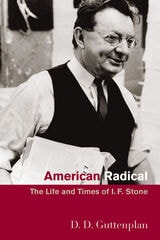
American Radical
The Life and Times of I. F. StoneD. D. Guttenplan
Northwestern University Press, 2012
In an era when the old radical questions—about war, the economy, health care, and the right to dissent—are suddenly new again, Guttenplan’s lively, provocative book makes clear why so many of Stone’s pronouncements have acquired the force of prophecy.
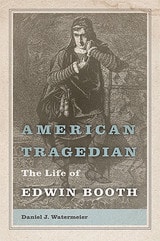
American Tragedian
The Life of Edwin BoothDaniel J. Watermeier
University of Missouri Press, 2015
Daniel J. Watermeier has, through decades of tireless research paired with his own sharp insight, put together the most complete Edwin Booth biography to date. Drawing on a wealth of archival materials and contemporary theatrical scholarship, American Tragedian: The Life of Edwin Booth gives more attention than previous biographies to Booth’s apprentice and journeyman years; his rise in antebellum America to stardom with a new, acclaimed style of acting; his work as an innovative theater builder and theatrical producer; his several foreign tours; and his nationwide tours in the late 1880s. It also addresses Booth’s critical reception in dozens of cities in America and abroad and situates his professional activities within the events and trends of the time.
As interesting as it is informative, Watermeier’s book offers an in-depth look at the triumphal career and tumultuous life of one of the American stage’s most celebrated figures.
Among Giants
A Life with WhalesCharles "Flip" Nicklin with K. M. Kostyal
University of Chicago Press, 2011
It all started in 1965 with a guy riding a whale. The guy was Flip Nicklin’s father, Chuck, and the whale was an unlucky Bryde’s Whale that had gotten caught up in some anchor line. Hoping to free the whale, Chuck and some friends took their boat as near as they could, and, just before they cut it loose, Chuck posed astride it for a photo.
That image, carried on wire services nationwide, became a sensation and ultimately changed the life of Chuck’s young son, Flip. In the decades since that day, Flip Nicklin has made himself into the world’s premier cetacean photographer. It’s no exaggeration to say that his photos, published in such venues as National Geographic and distributed worldwide, have virtually defined these graceful, powerful creatures in the mind of the general public—even as they helped open new ground in the field of marine mammalogy.
Among Giants tells the story of Nicklin’s life and career on the high seas, from his first ill-equipped shoots in the mid-1970s through his long association with the National Geographic Society to the present, when he is one of the founders of Whale Trust, a nonprofit conservation and research group. Nicklin is equal parts photographer, adventurer, self-trained scientist, and raconteur, and Among Giants reflects all those sides, matching breathtaking images to firsthand accounts of their making, and highlighting throughout the importance of conservation and new advances in our understanding of whale behavior. With Nicklin as our guide, we see not just whales but also our slowly growing understanding of their hidden lives, as well as the evolution of underwater photography—and the stunning clarity and drama that can be captured when a determined, daring diver is behind the lens.
Humpbacks, narwhals, sperm whales, orcas—these and countless other giants of the ocean parade through these pages, spouting, breaching, singing, and raising their young. Nicklin’s photographs bring us so completely into the underwater world of whales that we can’t help but feel awe, while winning, personal accounts of his adventures remind us of what it’s like to be a lone diver sharing their sea.
For anyone who has marveled at the majesty of whales in the wild, Among Giants is guaranteed to be inspiring, even moving—its unmatched images of these glorious beings an inescapable reminder of our responsibility as stewards of the ocean.
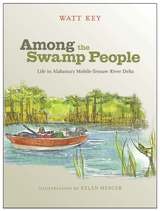
Among the Swamp People
Life in Alabama's Mobile-Tensaw River DeltaWatt Key
University of Alabama Press, 2015
Among the Swamp People is the story of author Watt Key’s discovery of the Mobile-Tensaw River Delta. “The swamp” consists of almost 260,000 acres of wetlands located just north of Mobile Bay. There he leases a habitable outcropping of land and constructs a primitive cabin from driftwood to serve as a private getaway. His story is one that chronicles the beauties of the delta’s unparalleled natural wonders, the difficulties of survival within it, and an extraordinary community of characters—by turns generous and violent, gracious and paranoid, hilarious and reckless—who live, thrive, and perish there.
There is no way into the delta except by small boat. To most it would appear a maze of rivers and creeks between stunted swamp trees and mud. Key observes that there are few places where one can step out of a boat without “sinking to the knees in muck the consistency of axle grease. It is the only place I know where gloom and beauty can coexist at such extremes. And it never occurred to me that a land seemingly so bleak could hide such beauty and adventure.”
It also chronicles Key’s maturation as a writer, from a twenty-five-year-old computer programmer with no formal training as a writer to a highly successful, award-winning writer of fiction for a young adult audience with three acclaimed novels published to date.
In learning to make a place for himself in the wild, as in learning to write, Key’s story is one of “hoping someone—even if just myself—would find value in my creations.”
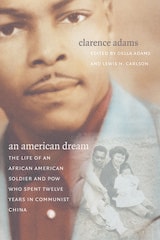
An American Dream
The Life of an African American Soldier and POW Who Spent Twelve Years in Communist ChinaClarence Adams
University of Massachusetts Press, 2007
Throughout his life, Clarence Adams exhibited self-reliance, ambition, ingenuity, courage, and a commitment to learning—character traits often equated with the successful pursuit of the American Dream. Unfortunately, for an African American coming of age in the 1930s and 1940s, such attributes counted for little, especially in the South.
Adams was a seventeen-year-old high school dropout in 1947 when he fled Memphis and the local police to join the U.S. Army. Three years later, after fighting in the Korean War in an all-black artillery unit that he believed to have been sacrificed to save white troops, he was captured by the Chinese. After spending almost three years as a POW, during which he continued to suffer racism at the hands of his fellow Americans, he refused repatriation in 1953, choosing instead the People's Republic of China, where he hoped to find educational and career opportunities not readily available in his own country.
While living in China, Adams earned a university degree, married a Chinese professor of Russian, and worked in Beijing as a translator for the Foreign Languages Press. During the Vietnam War he made a controversial anti-war broadcast over Radio Hanoi, urging black troops not to fight for someone else's political and economic freedoms until they enjoyed these same rights at home.
In 1966, having come under suspicion during the Chinese Cultural Revolution, he returned with his wife and two children to the United States, where he was subpoenaed to appear before the House Committee on Un-American Activities to face charges of “disrupting the morale of American fighting forces in Vietnam and inciting revolution in the United States.” After these charges were dropped, he and his family struggled to survive economically. Eventually, through sheer perseverance, they were able to fulfill at least part of the American Dream. By the time he died, the family owned and operated eight successful Chinese restaurants in his native Memphis.
An Emotional Gauntlet
From Life in Peacetime America to the War in European SkiesStuart J. Wright
University of Wisconsin Press, 2008
In recounting the harrowing conditions and horrors of bombing missions over Europe, An Emotional Gauntlet emphasizes the interpersonal relationships within the crew and the spirit these men shared. Corky's crew served under Operations Officer Major James Stewart (the Hollywood movie star.) They often returned from arduous bombing missions to sleep in half-empty huts—their friends in other planes had not been so lucky. Pilot Jack Nortridge regularly assured his crew, "If you fly with me, I'm going to bring you home." This book is a testament to their strength and determination.
An Imaginative Whig
Reassessing the Life and Thought of Edmund BurkeEdited & Intro by Ian Crowe
University of Missouri Press, 2005

An Unassuming Heroism
The Life of Robert Russa MotonBrian McGovern and Kevin McGovern
University of Alabama Press, 2026
The story of a Tuskegee Institute visionary who advised US presidents and led unprecedented advances in American Civil Rights
An Unassuming Heroism: The Life of Robert Russa Moton is a landmark biography that reveals the previously overlooked story of one of the most influential African American leaders of the twentieth century. Brian and Kevin McGovern trace Robert Moton’s life: from his birth as the son of freed people through his tenure as the leader of Tuskegee Institute directly after Booker T. Washington. Moton guided Tuskegee to new levels of excellence and international prominence, became an advisor to seven US presidents, and won their cooperation in the establishment of greater minority rights.
Rejecting conventional portrayals of Moton as a mere follower of Washington, the authors reveal an astute and increasingly independent leader who worked to bridge competing visions of Black advancement while championing broader African American rights, educational opportunities, and social justice. Through his investigations of issues such as racial discrimination in World War I, inequitable minority treatment during the Mississippi River flood of 1927, and Black people’s struggles to access healthcare and public accommodation, Moton helped shape national conversations on race and equality and advanced many arguments utilized by later Civil Rights leaders.
This biography offers a compelling reassessment of a courageous and visionary civic pioneer whose historical impact calls for renewed recognition. It is essential reading for scholars, students, and any reader interested in African American history, education, or progressive political leadership.
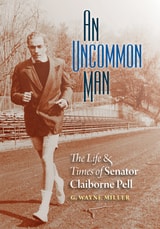
An Uncommon Man
The Life and Times of Senator Claiborne PellG. Wayne Miller
University Press of New England, 2011
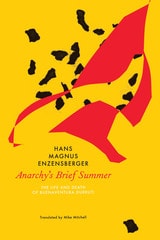
Anarchy’s Brief Summer
The Life and Death of Buenaventura DurrutiHans Magnus Enzensberger
Seagull Books, 2018
Northern Spain is the only part of Western Europe where anarchism played a significant role in the political life of the twentieth century. Enjoying wide-ranging support among both the urban and rural working class, its importance peaked during its “brief summer”—the civil war between the Republic and General Franco’s Falangists, during which anarchists even participated in the government of Catalonia.
Anarchy’s Brief Summer brings anarchism to life by focusing on the charismatic leader Buenaventura Durruti (1896–1936), who became a key figure in the Spanish Civil War after a militant and adventurous youth. The basis of the book is a compilation of texts: personal testimony, interviews with survivors, contemporary documents, memoirs, and academic assessments. They are all linked by Enzenberger’s own assessment in a series of glosses—a literary form that is somewhere between retelling and reconstruction—with the contradiction between fiction and fact reflecting the political contradictions of the Spanish Revolution.

And a Time to Die
How American Hospitals Shape the End of LifeSharon R. Kaufman
University of Chicago Press, 2006
“An act of courage and a public service.”—San Francisco Chronicle
“This beautifully synthesized and disquieting account of how hospital patients die melds disciplined description with acute analysis, incorporating the voices of doctors, nurses, social workers, and patients in a provocative analysis of the modern American quest for a ‘good death.’”—Publishers Weekly
“Kaufman exposes the bureaucratic and ethical quandaries that hover over the modern deathbed.”—Psychology Today
“Kaufman’s analysis illuminates the complexity of the care of critically ill and dying patients [and] the ambiguity of slogans such as ‘death with dignity,’ ‘quality of life,’ and ‘stopping life support.’ . . . Thought-provoking reading for everyone contemplating the fate of us all.”—New England Journal of Medicine
And the Monkey Learned Nothing
Dispatches from a Life in TransitTom Lutz
University of Iowa Press, 2016

André Gorz
A LifeWilly Gianinazzi
Seagull Books, 2022
Recognized as one of the most lucid and innovative critics of contemporary capitalism, André Gorz (1923–2007) was known for asking fundamental questions regarding the meaning of life and work. This first biography of a unique figure operating at the confluence of literature, philosophy, and journalism revisits half a century of intellectual and political life.
Born Gerhart Hirsch in Vienna, he studied in Switzerland before opting to live and work in France. A self-taught existentialist thinker, he was constantly revising his view of the world, unafraid to break new theoretical ground in doing so. Influenced by Marx, Husserl, Sartre, and Illich, he had very close affinities with the new thinking on the Left that was coming out of Italy in the 1960s and 70s. He was also one of the first thinkers to shape political ecology and to advocate de-growth. The intellectual on the editorial board of Sartre’s journal Les Temps Modernes, Gorz was also a mainstream journalist. He wrote in L’Express under the sobriquet Michel Bosquet before joining others in the creation of Le Nouvel Observateur.
Through Gorz’s life journey, we meet not only Sartre and de Beauvoir, but also Herbert Marcuse, Fidel Castro, Daniel Cohn-Bendit, Ivan Illich, Félix Guattari, Antonio Negri, and many others. Beyond his poignant autobiographical narratives, The Traitor and Letter to D, which attest to his deep humanity, Gorz remains a precious guide for all who believe that another world is still possible.
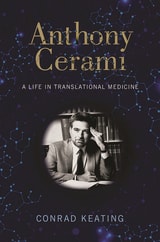
Anthony Cerami
A Life in Translational MedicineConrad Keating
Rutgers University Press, 2021

Anthropology's World
Life in a Twenty-First-Century DisciplineUlf Hannerz
Pluto Press, 2010
In this masterly, state of the art work, Ulf Hannerz maps the contemporary social world of anthropologists and its relation to the wider world in which they carry out their work.
Raising fundamental questions such as 'What is anthropology really about?', 'How does the public understand, or misunderstand, anthropology?' and 'What and where do anthropologists study now, and for whom do they write?' Hannerz invites anthropologists to think again about where their discipline is going.
Full of insights and practical advice from Hannerz's long experience at the top of the discipline, this book is essential for all anthropologists who want their craft to survive and develop in a volatile world, and contribute to new understandings of its ever-changing diversity and interconnections.
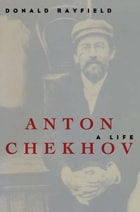
Anton Chekhov
A LifeDonald Rayfield
Northwestern University Press, 2000
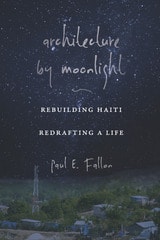
Architecture by Moonlight
Rebuilding Haiti, Redrafting a LifePaul E. Fallon
University of Missouri Press, 2015
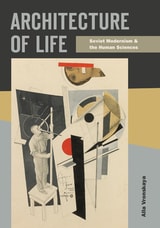
Architecture of Life
Soviet Modernism and the Human SciencesAlla Vronskaya
University of Minnesota Press, 2022
Explores how Soviet architects reimagined the built environment through the principles of the human sciences
During the 1920s and 1930s, proponents of Soviet architecture looked to various principles within the human sciences in their efforts to formulate a methodological and theoretical basis for their modernist project. Architecture of Life delves into the foundations of this transdisciplinary and transnational endeavor, analyzing many facets of their radical approach and situating it within the context of other modernist movements that were developing concurrently across the globe.
Examining the theories advanced by El Lissitzky, Moisei Ginzburg, and Nikolay Ladovsky, as well as those of their lesser-known colleagues, this illuminating study demonstrates how Soviet architects of the interwar period sought to mitigate Fordist production methods with other, ostensibly more human-oriented approaches that drew on the biological and psychological sciences. Envisioning the built environment as innately connected to social evolution, their methods incorporated aspects of psychoanalysis, personality theory, and studies in spatial perception, all of which were integrated into an ideology that grounded functional design firmly within the attributes of the individual.
A comprehensive overview of the ideals that permeated its expanded project, Architecture of Life explicates the underlying impulses that motivated Soviet modernism, highlighting the deep interconnections among the ways in which it viewed all aspects of life, both natural and manufactured.
.
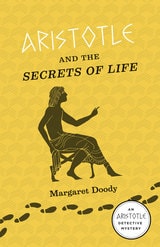
Aristotle and the Secrets of Life
An Aristotle Detective NovelMargaret Doody
University of Chicago Press, 2014
With Aristotle and the Secrets of Life, tensions between the Athenians and the Makedonians—followers of another of Aristotle’s former students, Alexander the Great—draw our heroes across the Aegean Sea. Even as Aristotle and Stephanos escape from pirates, uncover conspiracy, and face the horrors of war, Aristotle finds time to discuss his studies of the natural world in this gripping tale of their quest into darkness.
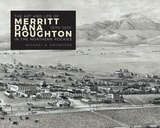
Art and Life of Merritt Dana Houghton in the Northern Rockies, 1878-1919
by Michael A. Amundson
University of Wyoming Press, 2022
This lavishly illustrated biography details Houghton’s life and work from his birth in Michigan in 1846 to his death in 1919 in Spokane through extensive genealogical records, newspaper accounts, and his illustrations—including historic ranches and bird’s-eye views of Fort Collins, Colorado; Dillon, Montana; and Spokane, Washington and the only known illustrations of long-lost places like Pearl, Colorado, and Rambler, Wyoming. Also included is reproduction of a four-foot-by-eight-foot view of Sheridan, Wyoming and a sixty-image sample portfolio of his best-preserved illustrations organized by type.
Houghton’s work depicts the infrastructure of the new settler society that was remaking the West in the late nineteenth century and early twentieth century, and Amundson demonstrates how Houghton’s vision of the American West remains active today.
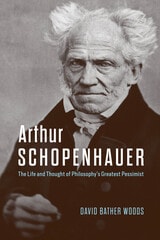
Arthur Schopenhauer
The Life and Thought of Philosophy’s Greatest PessimistDavid Bather Woods
University of Chicago Press, 2025
Arthur Schopenhauer (1788–1860) almost wasn’t one of the greatest philosophers of the nineteenth century. Born in the Free City of Danzig to a family of shipping merchants, he was destined for a life of imports and exports until his father died in a suspected suicide. After much deliberation, the young Schopenhauer invested his inheritance in himself and his philosophical vocation. But the long road to recognition was a difficult one, with Schopenhauer spending all but the last decade of his life in total obscurity. Yet his ideas and style went on to influence great thinkers, including Friedrich Nietzsche, Ludwig Wittgenstein, and Sigmund Freud, as well as artists such as the composer Richard Wagner and writers Marcel Proust, Thomas Mann, Samuel Beckett, and many more.
A singular and remarkably influential thinker, Schopenhauer is usually described as an extreme pessimist. He questioned the purpose of existence in a world where pain and suffering are inescapable and happiness is all too brief. In this engaging philosophical biography, David Bather Woods reevaluates Schopenhauer’s pessimism in the context of his life experiences, revealing the philosopher’s relentless fascination with the world and making a case for his contemporary relevance. Bather Woods weaves together Schopenhauer’s ideas with the story of how he came to be, including such topics as love, loneliness, morality, politics, gender, sexuality, death, suicide, fame, and madness. In doing so, this book answers some of life’s most challenging questions about how to deal with pain and loss, and how to live with ourselves and each other.
Despite his pessimistic outlook on human existence, Schopenhauer didn’t give up on life. Rather, he recognized that the question of how to live becomes even more pressing, and he worked to provide an answer. Bather Woods shows how Schopenhauer’s life informed his ideas and how they still resonate today.
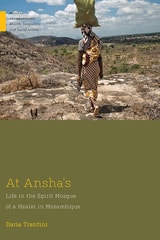
At Ansha's
Life in the Spirit Mosque of a Healer in MozambiqueDaria Trentini
Rutgers University Press, 2021
Atlanta Life Insurance
Guardian of Black Economic DignityAlexa Benson Henderson
University of Alabama Press, 1990
Efforts to develop an economic base within the Black community began even before the Civil War. These efforts gained new meaning in the post-Reconstruction period as Blacks strove to adapt to radically changing economic circumstances and the emergence of the Jim Crow South. In Atlanta, shortly after the turn of the century, Alonzo Franklin Herndon, a former slave, joined a long line of Black entrepreneurs by creating Atlanta Life Insurance Company. More than three-quarters of a century later, it remains an important enterprise that is the nation’s largest Black-controlled shareholder insurance company. The firm is today a significant example of the efforts of Black Americans to achieve economic independence and dignity in America.
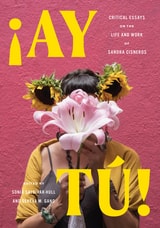
Ay Tú!
Critical Essays on the Life and Work of Sandra CisnerosSonia Saldívar-Hull and Geneva M. Gano
University of Texas Press, 2024
A comprehensive volume on the life and work of renowned Chicana author Sandra Cisneros.
Sandra Cisneros (b. 1954), author of the acclaimed novel The House on Mango Street and a recipient of the National Medal of the Arts, a MacArthur “Genius Grant” and the PEN/Nabokov Award for International Literature, was the first Chicana to be published by a major publishing house. ¡Ay Tú! is the first book to offer a comprehensive, critical examination of her life and work as a whole. Edited by scholars Sonia Saldívar-Hull and Geneva M. Gano, this volume addresses themes that pervade Cisneros’s oeuvre, like romantic and erotic love, female friendship, sexual abuse and harassment, the exoticization of the racial and ethnic “other,” and the role of visual arts in the lives of everyday people. Essays draw extensively on the newly opened Cisneros Papers, housed in the Wittliff Collections at Texas State University, and the volume concludes with a new long-form interview with Cisneros by the award-winning journalist Macarena Hernández.
As these essays reveal, Cisneros’s success in the literary field was integrally connected to the emergent Chicana feminist movement and the rapidly expanding Chicanx literary field of the late twentieth century. This collection shows that Cisneros didn’t achieve her groundbreaking successes in isolation and situates her as a vital Chicana feminist writer and artist.