Results by title
716 books match the query 'Literary Figures' and 63 start with a
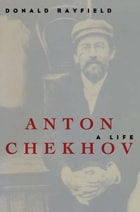
Anton Chekhov
A LifeDonald Rayfield
Northwestern University Press, 2000

Antonin Artaud
Man of VisionBettina L. Knapp
Ohio University Press, 1969
The extraordinary actor–director–writer who developed his talent for self-torture into art to become one of the most vital creative forces of the century.
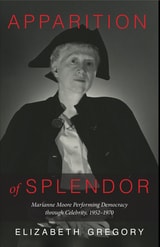
Apparition of Splendor
Marianne Moore Performing Democracy through Celebrity, 1952–1970Elizabeth Gregory
University of Delaware Press, 2021
While the later work of the great Modernist poet Marianne Moore was hugely popular during her final two decades, since her death critics have condemned it as trivial. This book challenges that assessment: with fresh readings of many of the late poems and of the iconic, cross-dressing public persona Moore developed to deliver them, Apparition of Splendor demonstrates that Moore used her late-life celebrity in daring and innovative ways to activate egalitarian principles that had long animated her poetry. Dressed as George Washington in cape and tricorn and writing about accessible topics like sports, TV shows, holidays, love, activism, mortality and celebrity itself, she reached a wide cross-section of Americans, encouraging them to consider what democracy means in their daily lives, particularly around issues of gender, sexuality, racial integration, class, age, and immigration. Moore actively sought out publication in popular venues (like Vogue, The New Yorker, and the Saturday Evening Post, etc.) and wrote on material chosen to directly appeal to the audiences there, influencing younger contemporaries, including poets like Ashbery, O’Hara, and Bishop, and artists like Warhol, Yoko Ono, and Ray Johnson.
Published by the University of Delaware Press. Distributed worldwide by Rutgers University Press.
Archibald MacLeish - American Writers 99
University of Minnesota Pamphlets on American WritersGrover Smith
University of Minnesota Press, 1971
Archibald MacLeish - American Writers 99 was first published in 1971. Minnesota Archive Editions uses digital technology to make long-unavailable books once again accessible, and are published unaltered from the original University of Minnesota Press editions.
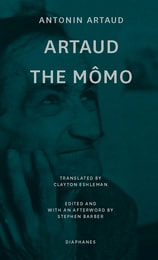
Artaud the Mômo
Antonin Artaud
Diaphanes, 2020
This edition is translated by Clayton Eshleman, the acclaimed foremost translator of Artaud’s work. This will be the first edition since the original 1947 publication to present the work in the spatial format Artaud intended. It also incorporates eight original drawings by Artaud—showing reconfigured bodies as weapons of resistance and assault—which he selected for that edition, after having initially attempted to persuade Pablo Picasso to collaborate with him. Additional critical material draws on Artaud’s previously unknown manuscript letters written between 1946 and 1948 to the book’s publisher, Pierre Bordas, which give unique insights into the work from its origins to its publication.

Arthur C. Clarke
Gary Westfahl
University of Illinois Press, 2018
Gary Westfahl closely examines Clarke's remarkable career, ranging from his forgotten juvenilia to the passages he completed for a final novel, The Last Theorem. As Westfahl explains, Clarke’s science fiction offered original perspectives on subjects like new inventions, space travel, humanity’s destiny, alien encounters, the undersea world, and religion. While not inclined to mysticism, Clarke necessarily employed mystical language to describe the fantastic achievements of advanced aliens and future humans. Westfahl also contradicts the common perception that Clarke’s characters were bland and underdeveloped, arguing that these reticent, solitary individuals, who avoid conventional relationships, represent his most significant prediction of the future, as they embody the increasingly common lifestyle of people in the twenty-first century.
Arthur Miller - American Writers 40
University of Minnesota Pamphlets on American WritersRobert Hogan
University of Minnesota Press, 1964
Arthur Miller - American Writers 40 was first published in 1964. Minnesota Archive Editions uses digital technology to make long-unavailable books once again accessible, and are published unaltered from the original University of Minnesota Press editions.
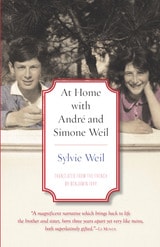
At Home with André and Simone Weil
Sylvie Weil, translated from the French by Benjamin Ivry
Northwestern University Press, 2010
“It is quite incorrect to believe that the dead are gone forever and never return to speak to the living. They return to speak to the living all the time; indeed, it is their main activity.” Thus writes Sylvie Weil in this illuminating memoir, in which contemporary readers can hear the voices of her famed philosopher aunt Simone and mathematician father André.
Born into a freethinking Jewish family in France in 1909, Simone Weil was one of the twentieth century’s most original philosophers, influencing Albert Camus, T. S. Eliot, Simone de Beauvoir, Pope John XXIII, Czesław Miłosz, and Susan Sontag. She fought for workers’ rights and, later, the Spanish Republican cause. Before her death at age thirty-four, Simone Weil turned increasingly to mysticism and religion, especially Roman Catholicism, exploring themes of sacrifice, asceticism, and the virtues of manual labor. She never converted, however, and Sylvie Weil writes from a Jewish perspective, emphasizing Simone’s Jewish heritage.
Using previously unpublished family correspondence and conversations, Sylvie Weil paints the most vivid, private portrait of her aunt in print. The book illuminates Simone’s relationship with others, especially with her brother, André. Loving and unsparing, affectionate and incisive, At Home with André and Simone Weil is an insightful memoir about a family of intellectual luminaries.

Atlantis, an Autoanthropology
Nathaniel Tarn
Duke University Press, 2022
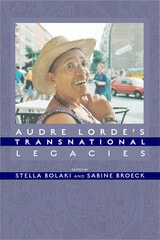
Audre Lorde’s Transnational Legacies
Stella Bolaki
University of Massachusetts Press, 2015
Audre Lorde's Transnational Legacies is the first book to systematically document and thoroughly investigate Lorde's influence beyond the United States. Arranged in three thematically interrelated sections—Archives, Connections, and Work—the volume brings together scholarly essays, interviews, Lorde's unpublished speech about Europe, and personal reflections and testimonials from key figures throughout the world. Using a range of interdisciplinary approaches, contributors assess the reception, translation, and circulation of Lorde's writing and activism within different communities, audiences, and circles. They also shed new light on the work Lorde inspired across disciplinary borders.
In addition the volume editors, contributors include Sarah Cefai, Cassandra Ellerbe-Dueck, Paul M. Farber, Tiffany N. Florvil, Katharina Gerund, Alexis Pauline Gumbs, Gloria Joseph, Jackie Kay, Marion Kraft, Christiana Lambrinidis, Zeedah Meierhofer-Mangeli, Rina Nissim, Chantal Oakes, Lester C. Olson, Pratibha Parmar, Peggy Piesche, Dagmar Schultz, Tamara Lea Spira, and Gloria Wekker.
Augusta Evans Wilson, 1835-1909
William Perry Fidler
University of Alabama Press, 1951
A comprehensive biography of Augusta Jane Evans Wilson, one of the nineteenth-century America’s best-selling authors
A fascinating biography about Augusta Jane Evans, a nearly forgotten writer who was nevertheless one of the most popular writers of her era. She wrote nine novels about southern women, including St. Elmo, which sold a staggering one million copies within four months of its release in 1866. William Fidler traces the life of Augusta Jane Evans from her birth in 1835 in Columbus, Georgia till her death in Alabama in 1909.
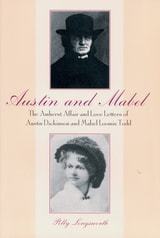
Austin and Mabel
The Amherst Affair and Love Letters of Austin Dickinson and Mabel Loomis ToddPolly Longsworth
University of Massachusetts Press, 1999
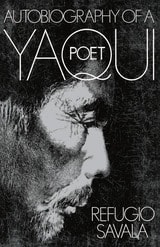
Autobiography of a Yaqui Poet
Refugio Savala; Edited by Kathleen M. Sands
University of Arizona Press, 1980