Results by title
1488 books match the query 'Media Studies' and 98 start with a
Air Wars
Fight To Reclaim Public BroadcastingJerold Starr
Temple University Press, 2001
These citizens believed strongly in public television's unique mission to serve the diverse social and cultural needs of local communities. When their own station neglected this mission in the search for national prestige and bigger revenues, they felt profoundly betrayed.
Jerold Starr exposes the political and commercial pressures that made strange bedfellows of the top officials of public broadcasting, the Democratic Party establishment, Pat Robertson and the Christian Coalition, home-shopping and "infomall" king Lowell "Bud" Paxson, and billionaire right-wing publisher/philanthropist Richard Mellon Scaife.
What began as a bitterly contested local struggle that disturbed the serenity of Mister Rogers' Neighborhood later became front-page national news with revelations of presidential candidate John McCain's influence-peddling scandal on behalf of media mogul Paxson. This was followed by congressional resolutions attacking the FCC's authority to regulate noncommercial educational broadcast licenses. The "Pittsburgh case" promises to be in the news for some time to come.
Far beyond Pittsburgh, Starr looks at how the reform movement has spread to major cities like Chicago, Phoenix, Jacksonville, and San Francisco, where citizen activists have successfully challenged public stations to be more community responsive.
Finally, he outlines an innovative plan for restructuring the public broadcasting service as an independently funded public trust. Joining this vision with a practical strategy, Starr describes the formation of Citizens for Independent Public Broadcasting, a national membership organization with a grassroots approach to putting the public back into public broadcasting.
All My Friends Live in My Computer
Trauma, Tactical Media, and MeaningSamira Rajabi
Rutgers University Press, 2021
All Talk
The Talkshow in Media CultureWayne Munson
Temple University Press, 1993
Wayne Munson examines the talkshow as a cultural form whose curious productivity has become vital to America's image economy. As the very name suggests, the talkshow is both interpersonal exchange and mediated spectacle. Its range of topics defies classification: from the sensational and bizarre, to the conventional and the advisory, to politics and world affairs. Munson grapples with the sense and nonsense of the talkshow, particularly its audience participation and its construction of knowledge.
This hybrid genre includes the news/talk "magazine," celebrity chat, sports talk, psychotalk, public affairs forum, talk/service program, and call-in interview show. All share characteristics of lucidity and contradiction—the hallmarks of postmodernity—and it is this postmodern identity that Munson examines and links to mass and popular culture, the public sphere, and contemporary political economy.
Munson takes a close look at the talkshow’s history, programs, production methods, and the "talk" about it that pervades media culture—the press, broadcasting, and Hollywood. He analyzes individual shows such as "Geraldo," "The Morton Downey Show," "The McLaughlin Group," and radio call-in "squawk" programs, as well as movies such as Talk Radio and The King of Comedy that investigate the talkshow’s peculiar status. Munson also examines such events as the political organizing of talkhosts and their role in the antitax and anti-incumbency groundswells of the 1990s. In so doing, Munson demonstrates how "infotainment" is rooted in a deliberate uncertainty. The ultimate parasitic media form, the talkshow promiscuously indulges in—and even celebrated—its dependencies and contradictions. It "works" by "playing" with boundaries and identities to personalize the political and politicize the personal. Arguing that the talkshow's form and host are productively ill-defined, Munson asks whether the genre is a degradation of public life or part of a new, revitalized public sphere in which audiences are finally and fully "heard" through interactive.
Alternative Realities
Carl Plantinga
Rutgers University Press, 2021
Alternative Realities explores how these distinctions between cinematic fantasy and filmic realism are more porous than we might think. Through a close analysis of CGI-heavy blockbusters like Wonder Woman and Guardians of the Galaxy, it considers how even popular fantasies are grounded in emotional and social realities. Conversely, it examines how mockumentaries like This is Spinal Tap satirically call attention to the highly stylized techniques documentarians use to depict reality.
Alternative Realities takes us on a journey through many different genres of film, from the dream-like and subjective realities depicted in movies like Eternal Sunshine of the Spotless Mind and Memento, to the astonishing twists of movies like Shutter Island and The Matrix, which leave viewers in a state of epistemic uncertainty. Ultimately, it shows us how the power of cinema comes from the unique way it fuses together the objective and the subjective, the fantastical and the everyday.

Amateur Images and Global News
Kari Andén-Papadopoulos and Mervi Pantti
Intellect Books, 2011
Modern technology has enabled anyone with a digital camera or cell phone to capture images of newsworthy events as they develop, and news organizations around the world increasingly depend on these amateur images for their coverage of unfolding events. However, with globalization facilitating wider circulation, critics have expressed strong concern over exactitude and objectivity. The first book on this topic, Amateur Images and Global News considers at length the ethical and professional issues that arise with the use of amateur images in the mainstream news media—as well as their role in producing knowledge and framing meanings of disasters in global and national contexts.

Ambient Media
Japanese Atmospheres of SelfPaul Roquet
University of Minnesota Press, 2016
Ambient Media examines music, video art, film, and literature as tools of atmospheric design in contemporary Japan, and what it means to use media as a resource for personal mood regulation. Paul Roquet traces the emergence of ambient styles from the environmental music and Erik Satie boom of the 1960s and 1970s to the more recent therapeutic emphasis on healing and relaxation.
Focusing on how an atmosphere works to reshape those dwelling within it, Roquet shows how ambient aesthetics can provide affordances for reflective drift, rhythmic attunement, embodied security, and urban coexistence. Musicians, video artists, filmmakers, and novelists in Japan have expanded on Brian Eno’s notion of the ambient as a style generating “calm, and a space to think,” exploring what it means to cultivate an ambivalent tranquility set against the uncertain horizons of an ever-shifting social landscape. Offering a new way of understanding the emphasis on “reading the air” in Japanese culture, Ambient Media documents both the adaptive and the alarming sides of the increasing deployment of mediated moods.
Arguing against critiques of mood regulation that see it primarily as a form of social pacification, Roquet makes a case for understanding ambient media as a neoliberal response to older modes of collective attunement—one that enables the indirect shaping of social behavior while also allowing individuals to feel like they are the ones ultimately in control.

Ambivalent Desires
Affect and Boys Love in ChinaLiang Ge
University of Michigan Press, 2027
Ambivalent Desires carefully investigates Chinese danmei creators’ and fans’ everyday affective experiences in the dynamic yet ambivalent boys love cultural ecology of China. Emerging in mainland China in the late 1990s and flourishing in the 2010s, danmei, also known as boys love fiction, is a genre that features male-male romances or erotica. This book offers a rich, empirically grounded account of danmei, examining the complex and embodied lived experiences of those producing and consuming male homoeroticism and framing ambivalence as an ongoing queer feminist project.
Proposing a novel theoretical framework of “the grammar of ambivalences,” Liang Ge seeks to understand how desires, affects, and queer feminist politics operate within and against the everyday heteropatriarchal and party-state conditions of postsocialist China. Ambivalent Desires attends simultaneously to the backward-looking normativities infused within danmei culture and the forward-facing transformative potential it generates, refusing the reductive binary of resistance versus escapism that has structured much existing scholarship.
American Cinema of the 2010s
Themes and VariationsDennis Bingham
Rutgers University Press, 2022
The newest installment in the Screen Decades series, American Cinema in the 2010s takes a close look at the memorable movies, visionary filmmakers, and behind-the-scenes drama that made this decade such an exciting time to be a moviegoer. Each chapter offers an in-depth examination of a specific year, covering a wide variety of films, from blockbuster superhero movies like Black Panther and animated films like Frozen to smaller-budget biopics like I, Tonya and horror films like Hereditary. This volume introduces readers to a decade in which established auteurs like Quentin Tarantino were joined by an exceptionally diverse set of new talents, taking American cinema in new directions.
American Intelligence
Small-Town News and Political Culture in Federalist New HampshireBen P. Lafferty
University of Massachusetts Press, 2020
Taking up the New Hampshire newspaper industry as its case study, American Intelligence unpacks the ways in which an unprecedented quantity of printed material was gathered, distributed, marketed, and consumed, as well as the strong influence that it had on the shaping of the American political imagination. Ben P. Lafferty also considers the lives of the printers themselves and asks why so many men chose to pursue such a fraught and turbulent profession. This snapshot resonates with the contemporary media-saturated and politically chaotic age.

American War Stories
Brenda M. Boyle
Rutgers University Press, 2021
America’s Romance with the English Garden
Thomas J. Mickey
Ohio University Press, 2013
Named one of “the year’s best gardening books” by The Spectator (UK, Nov. 2014)
The 1890s saw a revolution in advertising. Cheap paper, faster printing, rural mail delivery, railroad shipping, and chromolithography combined to pave the way for the first modern, mass-produced catalogs. The most prominent of these, reaching American households by the thousands, were seed and nursery catalogs with beautiful pictures of middle-class homes surrounded by sprawling lawns, exotic plants, and the latest garden accessories—in other words, the quintessential English-style garden.
America’s Romance with the English Garden is the story of tastemakers and homemakers, of savvy businessmen and a growing American middle class eager to buy their products. It’s also the story of the beginnings of the modern garden industry, which seduced the masses with its images and fixed the English garden in the mind of the American consumer. Seed and nursery catalogs delivered aspirational images to front doorsteps from California to Maine, and the English garden became the look of America.
An Anthropological Approach to mHealth
Edited by Charlotte Hawkins, Patrick Awondo, and Daniel Miller
University College London, 2024
An Anthropological Approach to mHealth underlines ten sixteen-month ethnographies, set across Asia, Africa, Europe, and Latin America, that revealed people’s use of communicative apps, including as LINE, WeChat, and WhatsApp’s alternative primary health apps, highlighting the irrelevance of dedicated health apps. Using a “smart-from-below” approach, this book studies these surprising practices and proposes a radically different anthropological method to the development and dissemination of mobile health (mHealth), a rapidly growing sector in healthcare.
An Indispensable Liberty
The Fight for Free Speech in Nineteenth-Century AmericaEdited by Mary M. Cronin
Southern Illinois University Press, 2016
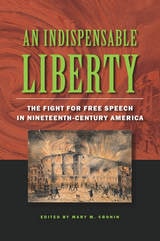
The eleven essays that make up this collection show how, despite judicial, political, and public proclamations of support for freedom of expression, factors like tradition, gender stereotypes, religion, and fear of social unrest often led to narrow judicial and political protection for freedom of expression by people whose views upset the status quo. These views, expressed by abolitionists, suffragists, and labor leaders, challenged rigid cultural mores of the day, and many political and cultural leaders feared that extending freedom of expression to agitators would undermine society. The Civil War intensified questions about the duties and privileges of citizenship. After the war, key conflicts over freedom of expression were triggered by Reconstruction, suffrage, the Comstock Act, and questions about libel.
The volume’s contributors blend social, cultural, and intellectual history to untangle the complicated strands of nineteenth-century legal thought. By chronicling the development of modern-day notions of free speech, this timely collection offers both a valuable exploration of the First Amendment in nineteenth-century America and a useful perspective on the challenges we face today.

An Intractable Wound
Palestinian Media and Resistance Practices Against FragmentationMeryem Kamil
Rutgers University Press, 2027
An Intractable Wound explores Palestinian resistance to colonial fragmentation that originated as territorial fracture, as proposed through the United Nations partition plan that split the land between the state of Israel and Arab territories. The resulting fragmentation of geography, sovereignty, and populations spurred multiple other schisms that manifest culturally, politically, and developmentally across the West Bank, Gaza, refugee camps, exiled and diasporic Palestinians, and Arab citizens of Israel.
An Intractable Wound considers the various tactics Palestinians deploy to combat these multiple, intersecting iterations of fracture. In particular, this text considers Palestinian media technologies and practices that manage, subvert, and overcome fragmentation. Each chapter centers projects that elaborate on these fractures and combat them, including virtual reality representations, online archives, digital mapping platforms, and video games that imagine and construct an intact Palestinian community. Together, these case studies provide a capacious reading of the Palestinian condition as structured by fragmentation, and Palestinian resistance as struggling in opposition to that geographic, sociopolitical, and cultural disillusion.
Anarchy and Culture
The Aesthetic Politics of ModernismDavid Weir
University of Massachusetts Press, 1997
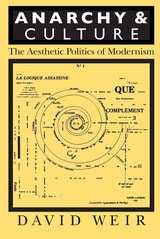
Anarchism is generally understood as a failed ideology, a political philosophy that once may have had many followers but today attracts only cranks and eccentrics. This book argues that the decline of political anarchism is only half the story; the other half is a tale of widespread cultural success.
David Weir develops this thesis in several ways. He begins by considering the place of culture in the political thought of the classical anarchist thinkers William Godwin, Pierre-Joseph Proudhon, Mikhail Bakunin, and Peter Kropotkin. He then shows how the perceived “anarchy” of nineteenth-century society induced writers such as Matthew Arnold, Henry James, and Fyodor Dostoyevsky to turn away from politics and seek unity in the idea of a common culture.
Yet as other late-nineteenth-century writers and artists began to sympathize with anarchism, the prospect of a common culture became increasingly remote. In Weir's view, the affinity for anarchism that developed among members of the artistic avant-garde lies behind much of fin de siècle culture. Indeed, the emergence of modernism itself can be understood as the aesthetic realization of anarchist politics. In support of this contention, Weir shows that anarchism is the key aesthetic principle informing the work of a broad range of modernist figures, from Henrik Ibsen and James Joyce to Dadaist Hugo Ball and surrealist Luis Buñuel.
Weir concludes by reevaluating the phenomenon of postmodernism as only the most recent case of the migration of politics into aesthetics, and by suggesting that anarchism is still very much with us as a cultural condition.

Andy Warhol'S Blow Job
Roy Grundmann
Temple University Press, 2003
Grundmann draws on discourses of art history, film theory, queer studies, and cultural studies to situate Warhol's work at the nexus of Pop art, portrait painting, avant-garde film, and mainstream cinema. His close textual analysis of the film probes into its ambiguities and the ways in which viewers respond to what is and what is not on screen. Presenting rarely reproduced Warhol art and previously unpublished Ed Wallowitch photographs along with now iconic publicity shots of James Dean, Grundmann establishes Blow Job as a consummate example of Warhol's highly insightful engagement with a broad range of representational codes of gender and sexuality.
Animation
Curtis, Scott
Rutgers University Press, 2019
Anime's Identity
Performativity and Form beyond JapanStevie Suan
University of Minnesota Press, 2021
A formal approach to anime rethinks globalization and transnationality under neoliberalism
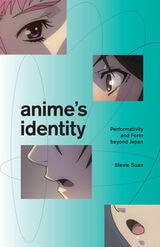
Anime has become synonymous with Japanese culture, but its global reach raises a perplexing question—what happens when anime is produced outside of Japan? Who actually makes anime, and how can this help us rethink notions of cultural production? In Anime’s Identity, Stevie Suan examines how anime’s recognizable media-form—no matter where it is produced—reflects the problematics of globalization. The result is an incisive look at not only anime but also the tensions of transnationality.
Far from valorizing the individualistic “originality” so often touted in national creative industries, anime reveals an alternate type of creativity based in repetition and variation. In exploring this alternative creativity and its accompanying aesthetics, Suan examines anime from fresh angles, including considerations of how anime operates like a brand of media, the intricacies of anime production occurring across national borders, inquiries into the selfhood involved in anime’s character acting, and analyses of various anime works that present differing modes of transnationality.
Anime’s Identity deftly merges theories from media studies and performance studies, introducing innovative formal concepts that connect anime to questions of dislocation on a global scale, creating a transformative new lens for analyzing popular media.
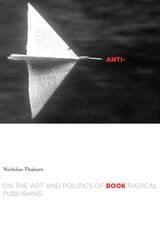
Anti-Book
On the Art and Politics of Radical PublishingNicholas Thoburn
University of Minnesota Press, 2016
No, Anti-Book is not a book about books. Not exactly. And yet it is a must for anyone interested in the future of the book. Presenting what he terms “a communism of textual matter,” Nicholas Thoburn explores the encounter between political thought and experimental writing and publishing, shifting the politics of text from an exclusive concern with content and meaning to the media forms and social relations by which text is produced and consumed. Taking a “post-digital” approach in considering a wide array of textual media forms, Thoburn invites us to challenge the commodity form of books—to stop imagining books as transcendent intellectual, moral, and aesthetic goods unsullied by commerce. His critique is, instead, one immersed in the many materialities of text.
Anti-Book engages with an array of writing and publishing projects, including Antonin Artaud’s paper gris-gris, Valerie Solanas’s SCUM Manifesto, Guy Debord’s sandpaper-bound Mémoires, the collective novelist Wu Ming, and the digital/print hybrid of Mute magazine. Empirically grounded, it is also a major achievement in expressing a political philosophy of writing and publishing, where the materiality of text is interlaced with conceptual production. Each chapter investigates a different form of textual media in concert with a particular concept: the small-press pamphlet as “communist object,” the magazine as “diagrammatic publishing,” political books in the modes of “root” and “rhizome,” the “multiple single” of anonymous authorship, and myth as “unidentified narrative object.”
An absorbingly written contribution to contemporary media theory in all its manifestations, Anti-Book will enrich current debates about radical publishing, artists’ books and other new genre and media forms in alternative media, art publishing, media studies, cultural studies, critical theory, and social and political theory.

Antiracist Futures for Games and Play
TreaAndrea M. Russworm and Soraya Murray, editors
Duke University Press, 2027

Antonin Artaud
Man of VisionBettina L. Knapp
Ohio University Press, 1969
The extraordinary actor–director–writer who developed his talent for self-torture into art to become one of the most vital creative forces of the century.
Apocalypse Man
The Death Drive and the Rhetoric of White Masculine VictimhoodCasey Ryan Kelly
The Ohio State University Press, 2020
Exemplified by President Donald J. Trump’s slogan “Make American Great Again,” white masculinity has become increasingly organized around melancholic attachments to an imagined past when white men were still atop the social hierarchy. How and why are white men increasingly identifying as victims of social, economic, and political change? Casey Ryan Kelly’s Apocalypse Man seeks to answer this question by examining textual and performative examples of white male rhetoric—as found among online misogynist and incel communities, survivalists and “doomsday preppers,” gender-motivated mass shooters, gun activists, and political demagogues. Using sources ranging from reality television and Reddit manifestos to gun culture and political rallies, Kelly ultimately argues that death, victimhood, and fatalism have come to underwrite the constitution of contemporary white masculinity.
Appearance, Discrimination and the Media
Portraying Facial Disfigurement Fairly in the NewsDiana Garrisi, Laima Janciute and Jacob Johanssen
University of Westminster Press, 2018
The portrayal of disfigurement in the UK media must change. This policy brief is based on recent research that found a general negative and sensationalised attitude towards disfigurement in the media.
Disfigurement is a condition that can affect anyone at any time in life regardless their social or demographic background due to accidents or health conditions or be congenital. In the UK, one in 111 people have facial disfigurements.
In order to improve the ways in which media portray disfigurement, this policy brief argues that media should move away from sensationalised coverage on disfigurement and focus instead on the lived experiences of individuals with this condition. It recommends strengthening diversity-oriented editorial practices and training as well as media literacy education. In addition, it addresses the lack of guidelines on the portrayal of disfigurement and urges regulatory bodies to be more efficient in handling complaints.
Appified
Culture in the Age of AppsJeremy Wade Morris and Sarah Murray, Editors
University of Michigan Press, 2018
Architectures of Illusion
From Motion Picutres to Navigable Interactuve EnvironmentsEdited by François Penz and Maureen Thomas
Intellect Books, 2003
This profile of the work of the Cambridge University Moving Image Studio (CUMIS), presents a strong argument that new developments in digital media are absolutely dependent on an understanding of traditional excellence. The book stands alone in placing equal emphasis on theoretical and practical aspects of its subject matter and avoids jargon so as to be easily understood by the general reader as well as the specialist.
Chapters discuss:
• animation • navigable architectural environments • moving image narrativity
• questions of truth and representation • virtuality/reality • synthetic imaging
• interactivity
This broad analysis of current research, teaching and media production contains essential information for all those working or studying in the areas of multimedia, architecture, film and television.
The book is designed as a core text for the Cambridge University 1 year MPhil Degree in Architecture and the Moving Image.
Architectures of Revolt
The Cinematic City circa 1968Mark Shiel
Temple University Press, 2018
Coinciding with the fiftieth anniversary of the worldwide mass protest movements of 1968—against war, imperialism, racism, poverty, misogyny, and homophobia—the exciting anthology Architectures of Revolt explores the degree to which the real events of political revolt in the urban landscape in 1968 drove change in the attitudes and practices of filmmakers and architects alike.
In and around 1968, as activists and filmmakers took to the streets, commandeering public space, buildings, and media attention, they sought to re-make the urban landscape as an expression of utopian longing or as a dystopian critique of the established order. In Architectures of Revolt, the editor and contributors chronicle city-specific case studies from Paris, Berlin, Milan, and Chicago to New York, Los Angeles, Mexico City, and Tokyo. The films discussed range from avant-garde and agitprop shorts to mainstream narrative feature films. All of them share a focus on the city and, often, particular streets and buildings as places of political contestation and sometimes violence, which the medium of cinema was uniquely equipped to capture.
Contributors include: Stephen Barber, Stanley Corkin, Jesse Lerner, Jon Lewis, Gaetana Marrone, Jennifer Stob, Andrew Webber, and the editor.
Archival Fictions
Materiality, Form, and Media History in Contemporary LiteraturePaul Benzon
University of Massachusetts Press, 2021
Taking up works from Andy Warhol, Kevin Young, Don DeLillo, and Hari Kunzru, Archival Fictions considers how these writers have constructed a speculative history of media technology through formal experimentation. Although media technologies have determined the extent of what can be written, recorded, and remembered in the immediate aftermath of print's hegemony, Paul Benzon argues that literary form provides a vital means for critical engagement with the larger contours of media history. Drawing on approaches from media poetics, film studies, and the digital humanities, this interdisciplinary study demonstrates how authors who engage technology through form continue to imagine new roles for print literature across the late twentieth and early twenty-first centuries.
Archive Matter
A Camera in the Laboratory of the ModernLiliana Gómez
Diaphanes, 2023
A journey through the United Fruit Company’s photo archive and its documentation of corporate expansion into the Caribbean.
The establishment of the United Fruit Company as a global political agent with its banana plantations was met with considerable resistance. Now the company’s photographic records are the focal point of Archive Matter as it examines photography’s historical and political impact through the argument that this overlooked, but important, archive made capitalist expansion into the Caribbean possible.
Author Liliana Gómez examines the images from within their “optical unconscious” and via the archive’s silences and omissions. The implication of these silences, Gómez argues, is the attempt to conceal the violence embedded within the realities of the plantations’ daily operations and corporate efforts to “modernize” the Caribbean.
Archives
Andrew Lison
University of Minnesota Press, 2019
How digital networks and services bring the issues of archives out of the realm of institutions and into the lives of everyday users
Archives have become a nexus in the wake of the digital turn. Electronic files, search engines, video sites, and media player libraries make the concepts of “archival” and “retrieval” practically synonymous with the experience of interconnected computing. Archives today are the center of much attention but few agendas. Can archives inform the redistribution of power and resources when the concept of the public library as an institution makes knowledge and culture accessible to all members of society regardless of social or economic status? This book sets out to show that archives need our active support and continuing engagement.
This volume offers three distinct perspectives on the present status of archives that are at once in disagreement and solidarity with each other, from contributors whose backgrounds cut across the theory–practice divide. Is the increasing digital storage of knowledge pushing us toward a turning point in its democratization? Can archives fulfill their paradoxical potential as utopian sites in which the analog and the digital, the past and future, and remembrance and forgetting commingle? Is there a downside to the present-day impulse toward total preservation?
Archives of the Anthropocene
Visual Grammars of Deep TimeYuriko Furuhata
Duke University Press, 2026
Are You Sure About That?
Discerning Fact from FictionKaren A. Cerulo
Rutgers University Press, 2027
Phone in hand, TV on, we wake up and fall asleep to endless information. There’s no escape—we are drowning in a sea of breaking news, notifications, and popular beliefs and claims. Every day, we encounter hundreds of posts and podcasts on politics, celebrities, or current events. People share links to “expert” recommendations on Instagram or Reddit. YouTube and TikTok bring us those who want to instruct us on the realities of the world or pass on longstanding conventional wisdom, all in the hopes of influencing our decisions and actions.
The information overload of the constant news and information cycle is exhausting and extremely frustrating. You may ask: Just what or whom should we believe? Are You Sure About That? Discerning Fact from Fiction helps readers navigate the perilous informational terrain of contemporary life. We provide a game plan of strategies and guidance for easily and reliably assessing the accuracy of any claim, helping readers to cut through the noise and adjust what they know.

Articulating Dissent
Protest and the Public SpherePollyanna Ruiz
Pluto Press, 2014
Articulating Dissent analyses the new communicative strategies of coalition protest movements and how these impact on a mainstream media unaccustomed to fractured articulations of dissent.
Pollyanna Ruiz shows how coalition protest movements against austerity, war and globalisation build upon the communicative strategies of older single issue campaigns such as the anti-criminal justice bill protests and the women’s peace movement. She argues that such protest groups are dismissed in the mainstream for not articulating a ‘unified position’ and explores the way in which contemporary protesters stemming from different traditions maintain solidarity.
Articulating Dissent investigates the ways in which this diversity, so inherent in coalition protest, affects the movement of ideas from the political margins to the mainstream. In doing so this book offers an insightful and original analysis of the protest coalition as a developing political form.
Artificial Humanities
A Fictional Perspective on Language in AINina Beguš
University of Michigan Press, 2025
Highlighting the impact of human-like AI design, from gendered virtual assistants to romanticized social robots, the book shows how these technologies intersect with longstanding humanistic questions about the concepts of creativity and language as well as the relations between humans and machines. Additionally, the book explores AI’s applications in medical fields, particularly psychiatry and neurotechnology, including how AI interacts with the human body and mind to address conditions like paralysis. By emphasizing the philosophical and cultural implications of these technologies, Beguš highlights the need for responsible innovation that prioritizes human well-being as well as machine potential outside of human imitation. Accessible and thought-provoking, Artificial Humanities offers tools for analyzing and assessing technologies while they are being developed and invites readers to see how the humanities can guide us toward a more thoughtful future for AI.
Artificial Intelligence and the Internet of Things
UK Policy Opportunities and ChallengesMercedes Bunz and Laima Janciute
University of Westminster Press, 2018
Through algorithms and artificial intelligence (AI), objects and digital services now demonstrate new skills they did not have before, right up to replacing human activity through pre-programming or by making their own decisions. As part of the internet of things, AI applications are already widely used today, for example in language processing, image recognition and the tracking and processing of data.
This policy brief illustrates the potential negative and positive impacts of AI and reviews related policy strategies adopted by the UK, US, EU, as well as Canada and China. Based on an ethical approach that considers the role of AI from a democratic perspective and considering the public interest, the authors make policy recommendations that help to strengthen the positive impact of AI and to mitigate its negative consequences.
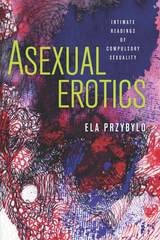
Asexual Erotics
Intimate Readings of Compulsory SexualityEla Przybylo
The Ohio State University Press, 2019
Through a wide-ranging analysis of pivotal queer, feminist, and anti-racist movements; television and film; art and photography; and fiction, nonfiction, and theoretical texts, each chapter explores asexual erotics and demonstrates how asexuality has been vital to the formulation of intimate ways of knowing and being. Asexual Erotics assembles a compendium of asexual possibilities that speaks against the centralization of sex and sexuality, asking that we consider the ways in which compulsory sexuality is detrimental not only to asexual and nonsexual people but to all.
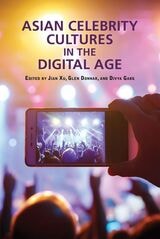
Asian Celebrity Cultures in the Digital Age
Edited by Jian Xu, Glen Donnar, and Divya Garg
Hong Kong University Press, 2025
Asian Celebrity Cultures in the Digital Age represents the first comprehensive study on the transformations of celebrity cultures in increasingly globalized and digitalized Asian societies. It discusses relations between Asian celebrities and digital media across emerging phenomena in celebrity practices, cultures, politics, fandom, and economies. Highlighting original case studies from prominent Asian societies, including India, China, Hong Kong, the Philippines, Singapore, Vietnam, Indonesia, Thailand, South Korea, and Japan, this book sheds much-needed light on the de-Westernization and internationalization of celebrity studies and is essential reading for scholars and students in celebrity, fandom, digital media and communication, and cultural studies.
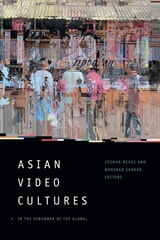
Asian Video Cultures
In the Penumbra of the GlobalJoshua Neves and Bhaskar Sarkar, editors
Duke University Press, 2017
Contributors. Conerly Casey, Jenny Chio, Michelle Cho, Kay Dickinson, Bishnupriya Ghosh, Feng-Mei Heberer, Tzu-hui Celina Hung, Rahul Mukherjee, Joshua Neves, Bhaskar Sarkar, Nishant Shah, Abhigyan Singh, SV Srinivas, Marc Steinberg, Chia-chi Wu, Patricia Zimmerman
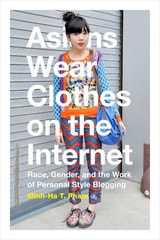
Asians Wear Clothes on the Internet
Race, Gender, and the Work of Personal Style BloggingMinh-ha T. Pham
Duke University Press, 2015
Assembly Codes
The Logistics of MediaMatthew Hockenberry, Nicole Starosielski, and Susan Zieger, editors
Duke University Press, 2021
Contributors
Ebony Coletu, Kay Dickinson, Stefano Harney, Matthew Hockenberry, Tung-Hui Hu, Shannon Mattern, Fred Moten, Michael Palm, Ned Rossiter, Nicole Starosielski, Liam Cole Young, Susan Zieger
At Translation's Edge
Edited by Nataša Durovicová, Patrice Petro, and Lorena Terando
Rutgers University Press, 2019
At the Chinese Multiplex
The Cultural Infrastructure of the World’s Largest Film Exhibition MarketJames Udden
Lever Press, 2027
For over a century, Hollywood controlled the largest unified film market in the developed world, making it the global leader in film production and distribution. Since 2017, however, China has surpassed the North American market in the number of screens and cutting-edge technology. At the Chinese Multiplex asserts that this change was not the result of market forces, but rather of government policies that helped engineer what is arguably the greatest cultural infrastructure project in history. In China, the state plays a central role in the development of the film exhibition market that follows the same patterns as other infrastructure projects initiated by the Chinese Communist Party. While state-directed, the growth of the Chinese film exhibition market—centered on new multiplexes housed in China’s growing number of urban shopping malls—is part of a larger project to engineer a consumer economy in China. China’s simultaneous embrace of the digital economy, particularly the QR code, has also played a crucial role in the shifting landscape of China’s media industry.
Focusing on the movie theatre as a contested site, author James Udden offers a timely study of China’s domestic film market. The picture that emerges is one complicated by conflicts between government regulation and private investment, by concerns about digitally managed pricing variables, and by questions about the future viability of a film market focused on regime-friendly blockbusters.

At the Vanguard of Vinyl
A Cultural History of the Long-Playing Record in JazzDarren Mueller
Duke University Press, 2024
Atenco Lives!
Filmmaking and Popular Struggle in MexicoLivia K. Stone
Vanderbilt University Press, 2019
Stone highlights the importance of how the circulation of the physical videos, and not just their content, promotes the social movement. More broadly she shows how videographers perform their activism, navigating the tensions between neoliberal personhood or ego and an ethos of compañerismo that privileges community. Grounded in the lived experiences of Atenco's activists and allied filmmakers, Atenco Lives! documents the making and circulating of films as an ethical and political practice purposefully used to transform human relationships.
Audionarratology
Lessons from Radio DramaEdited by Lars Bernaerts and Jarmila Mildorf
The Ohio State University Press, 2021
Austentatious
The Evolving World of Jane Austen FansHolly Luetkenhaus and Zoe Weinstein
University of Iowa Press, 2019
This book explores online fan spaces in search of “Janeites” all over the world to discover what fans are making, how fans are sharing their work, and why it matters that so many women and nonbinary individuals find a haven not only in Jane Austen, but also in Jane Austen fandom. In relatable chapters based on firsthand experience, the authors explore how Austen fandom has and continues to build communities around women, people of color, and the LGBTQ+ community. Whether Janeites are shrewdly picking up on the latent sexual tension between women in Emma or casting people of color in leading roles, Luetkenhaus and Weinstein argue that Austen fans are particularly adept at marrying fantasy and feminism.
Australian Film Theory and Criticism
Volume 3: DocumentsEdited by Deane Williams and Constantine Verevis
Intellect Books, 2017
Australian TV News
New Forms, Functions, and FuturesStephen Harrington
Intellect Books, 2013
Authorizing Superhero Comics
On the Evolution of a Popular Serial GenreDaniel Stein
The Ohio State University Press, 2021