Results by title
2817 books match the query 'Nature' and 238 start with a
A Natural State
Essays on TexasBy Stephen Harrigan
University of Texas Press, 1994
In this remarkable collection of essays, Stephen Harrigan explores, with an unfailing depth of feeling, the human longing to feel at home in the world of nature. In vivid and convincing prose, he evokes the landscape of his home territory, Texas, and his own reactions, sometimes droll, sometimes haunted, to the extraordinary power of place that Texas projects.
A Naturalist Along the Jersey Shore
Burger, Joanna
Rutgers University Press, 1996
Come for a journey along the Jersey shore with naturalist and ecologist Joanna Burger! In these deeply felt, closely observed personal essays, Burger invokes the intertwined lives of naturalist and wild creatures at the ever-changing edge of ocean and land. Discover with her the delicate mating dances of fiddler crabs, the dangers to piping plovers, the swarming of fish communities into the bays and estuaries, the trilling notes of Fowler's toads, and the subtle green-grays of salt marshes.
Joanna Burger knows the shore through all its seasons--the first moment of spring when the herring gulls arrive on ice-gouged salt marshes, the end of spring when the great flocks of shorebirds come to feed on horseshoe crab eggs at Cape May, the summer when the peregrine hunts its prey, the fall when the migrations of hawks and monarch butterflies attract watchers from around the world, and the depths of winter when a lone snowy owl sweeps across snow-covered dunes and frozen bay.
This is a book that anyone who loves the Jersey shore will cherish! And because so many of these wonderful creatures live all along the Atlantic coast, it will be of equal interest to beach-lovers, naturalists, bird-watchers, fishermen, and coastal and marine scientists from North Carolina to Maine.

A Naturalist amid Tropical Splendor
Alexander F. Skutch
University of Iowa Press, 1987
In this reflective account of life in the tropics, Alexander Skutch offers readers both his observations and his interpretations of what he has experienced. In the many chapters about birds and their behavior, he describes a dove that defends its nest with rare courage, castlebuilders who create elaborate nests of interlaced twigs, oropendolas that cluster long woven pouches in high treetops, and an exceptionally graceful hummingbird who fails to pay for its nectar by pollinating the flowers that yield it. Skutch also describes curious plants and their flowers, including a birthwort that holds its pollinating flies captive and fern fronds that twine high up trunks in the rain forest.
With penetrating clarity, Skutch considers the significance of all this restless activity: he examines the origins of beauty and our ability to appreciate it, the foundations of tropical splendor, the factors that help us feel close to nature or alienated from it, and the possibility of consciousness and emotion in animals. He also addresses the quandary of the biologist contemplating painful experiments on animals rather than learning by direct observation, and he asserts that our capacity to care for the world around us is the truest criterion of our evolutionary advancement.
Skutch brings a thoughtful, unequaled voice to the description of the world he has grown to know and understand, a world considered forbidding by most northerners and still largely unexplored.
A Naturalist in Alaska
Adolph Murie
University of Arizona Press, 1990
"A fascinating study of the life cycles of the animals of Alaska and their inter-relationships. One venturing to capture something of the true beauty of Alaska and its fauna will probably find it in this book."—Journal of the West
"This book should be considerable aid to those who wish to preserve some of the great natural treasures still remaining in Alaska in the face of the inevitable pressures of a growing population. The writing is absolutely first rate. Highly recommended."—Library Journal
A Naturalist's Guide to the Arctic
E. C. Pielou
University of Chicago Press, 1994
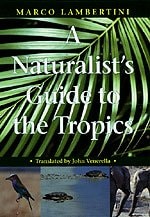
A Naturalist's Guide to the Tropics
Marco Lambertini
University of Chicago Press, 2000
Whether you're a first-time visitor or a veteran of many trips, this convenient guidebook can help you plan your vacation and serve as a knowledgeable companion to answer the many questions that may arise during the course of your journey. Why are tropical birds and fishes so colorful? What is an atoll, and how do they form? Why are tropical soils red and sterile, while rainforests are lush and green? Why does Madagascar have lemurs but not monkeys? Special features of the book include chapters on the conservation status of the Tropics and how to prepare with "caution without obsession" for tropical dangers such as infectious diseases and charging rhinoceroses.
The first comprehensive introduction to the natural history of the Tropics worldwide, A Naturalist's Guide to the Tropics has been completely revised and updated by the author and the translator to reflect the most current information available.
* first field guide in English to cover all the world's tropics, not just specific regions or countries
* more than 350 illustrations, many in color
* sturdy flexibound cover and compact size ideal for travelers
* boxes in text define scientific terms or explore side topics in more detail, such as "What Is Biodiversity?" and "Why Is Tropical Fauna So Colorful?"
* discusses tropical dangers and precautions to cope with them, such as vaccinations to obtain and foods to avoid

A New Green Order?
The World Bank and the Politics of the Global Environment FacilityZoe Young
Pluto Press, 2002
Investigating the workings of this little known aid fund, Zoe Young takes a critical look at the conflicts involved, focusing on how the GEF's agenda relates to questions of globalisation, knowledge and accountability in the United States and the World Bank.
As our landscapes, fertility, cultures and ecosystems are being destroyed every day, Zoe Young gives a disturbing account of the complex issues that must be addressed before the world's environment can be managed more democratically - and effectively.
A North Country Almanac
Reflections of an Old-School Conservationist in a Modern WorldThomas C Bailey
Michigan State University Press, 2018
A Place Called Grand Canyon
Contested GeographiesBarbara J. Morehouse
University of Arizona Press, 1996
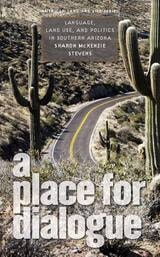
A Place for Dialogue
Language, Land Use, and Politics in Southern ArizonaSharon McKenzie Stevens
University of Iowa Press, 2007
In A Place for Dialogue, Sharon McKenzie Stevens views the contradictions and collaborations involved in the management of public land in southern Arizona—and by extension the entire arid West—through the lens of political rhetoric. Revealing the socioecological relationships among cattlemen and environmentalists as well as developers and recreationists, she analyzes the ways that language shapes landscape by shaping decisions about land use.
Stevens focuses on the collaborative Sonoran Desert Conservation Plan initiated by Pima County, Arizona, the ubiquitous use of scientific argument to defend contradictory practices, and the construction and negotiation of rancher/environmentalist identities to illuminate both literally and metaphorically the dynamics of land use politics. Drawing specifically upon extensive interviews with a diverse array of agents on all sides of the debate—ranchers, environmentalists, scientists, land managers, government officials—on historical narratives, and on her own conflicting experiences as someone who grew up with those who work the western lands, she demonstrates that it is possible to use differences to solve, rather than to aggravate, the entrenched problems that bridge land and language.
By integrating her richly textured case study of a fragile region with rhetorical approaches to narrative, science-based argument, and collective identities, Stevens makes a significant contribution to the fields of rhetoric, land management, and cultural studies.
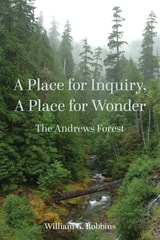
A Place for Inquiry, A Place for Wonder
The Andrews ForestWilliam Robbins
Oregon State University Press, 2020
In A Place for Inquiry, A Place for Wonder, historian William Robbins turns his attention to the long-overlooked Andrews Forest and argues for its importance to environmental science and policy. From its founding in 1948, the experimental forest has been the site of wide-ranging research. Beginning with postwar studies on the conversion of old-growth timber to fast-growing young stands, research at the Andrews shifted in the next few decades to long-term ecosystem investigations that focus on climate, streamflow, water quality, vegetation succession, biogeochemical cycling, and effects of forest management. The Andrews has thus been at the center of a dramatic shift in federal timber practices from industrial, intensive forest management policies to strategies emphasizing biodiversity and healthy ecosystems.
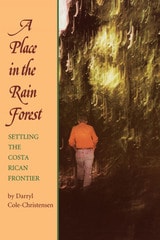
A Place in the Rain Forest
Settling the Costa Rican FrontierBy Darryl Cole-Christensen
University of Texas Press, 1997
In the 1950s, Darryl Cole-Christensen and his family were among the first settlers of the Coto Brus, an almost impenetrable, mountainous rain forest region of southeastern Costa Rica. In this evocative book, he captures the elemental struggles and rewards of settling a new frontier—an experience forever closed to most people in Western, urbanized society.
With the perspective of more than forty years' residence in the Coto Brus, Cole-Christensen ably describes both the settlers' dreams of bringing civilization and progress to the rain forest and the sweeping and irreversible changes they caused throughout the ecosystem as they cut the rain forest down. Writing neither to apologize for nor to defend their actions, he instead illuminates the personal and subjective factors that cause people to risk danger and hardship for the uncertain rewards of settling a frontier.
In his own words, Cole-Christensen says, "This is a book for the scientist who wants to recapture a sense of an incalculable world departed, for the student who asks: How is it that our forebears changed and restructured this land? For the adventurer who dreams of the expanse of frontiers, for every person who, having passed once through the darkening forest along a path in twilit stillness looks back to find that a blanket of murmurs remains."
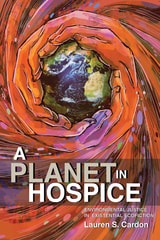
A Planet in Hospice
Environmental Justice in Existential EcofictionLauren S. Cardon
The Ohio State University Press, 2026
How do we continue to love and care for a planet it’s too late to save? In A Planet in Hospice, Lauren S. Cardon analyzes works of “existential ecofiction” that invite us to reflect on our mortality and the many ways that people are already affected by disaster, while also encouraging hope and connection. These texts from authors such as N. K. Jemisin, Paolo Bacigalupi, Darcie Little Badger, Rivers Solomon, Richard Powers, and Margaret Atwood are characterized by themes of ecological crisis, planetary demise, and human extinction, and they center environmental justice and human oppression. Cardon argues that, by invoking the end of the world, these writers directly engage with death anxiety and consequently intervene in current theories of existential psychology and intersectional ecocriticism. They highlight the inextricability of environmental care and social justice and offer visions of a path forward through the global climate crisis humans now face.
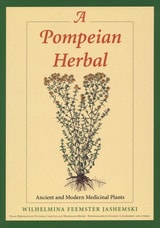
A Pompeian Herbal
Ancient and Modern Medicinal PlantsBy Wilhelmina Feemster Jashemski,
University of Texas Press, 1999
When workmen excavating the ruins of Pompeii eagerly gathered the native medicinal plants growing there, Wilhelmina Jashemski discovered that this was another example of the continuity of life in the shadow of Vesuvius. Many of the plants used for herbal medicine around Pompeii today are the same ones that ancient authorities such as Pliny the Elder and Dioscorides recommended for treating the same types of disorders.
In this book, Jashemski presents an herbal of thirty-six medicinal plants, most of them known to the ancients and still employed today. She describes each plant's contemporary medicinal uses and compares them to ancient practices as recorded in literary sources. Scientific, English, and Italian names and the plant's mythological associations complete the entries, while elegant, full-page portraits depict each plant visually.
A Practical Guide to Prairie Reconstruction
Carl Kurtz
University of Iowa Press, 2001
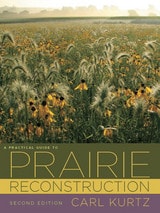
A Practical Guide to Prairie Reconstruction
Second EditionCarl Kurtz
University of Iowa Press, 2013
Kurtz has completely revised every chapter of the first edition, from site selection and harvest to soil preparation, seeding, postplanting mowing, burning, and growth and development. He has written new chapters on establishing prairie in old pastureland and on the judicious use of herbicides, including a table that shows particular problem species, the types of herbicides that are most effective at controlling them, and the timing and method of treatment. New photographs illustrate species and steps, and Kurtz has expanded the question-and-answer section and updated the references and the section on midwestern seed sources and services.
A Practical Guide to the Marine Animals of Northeastern North America
Leland W Pollock
Rutgers University Press, 1998
A Primer for Teaching Environmental History
Ten Design PrinciplesEmily Wakild and Michelle K. Berry
Duke University Press, 2018
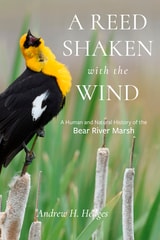
A Reed Shaken with the Wind
A Human and Natural History of the Bear River MarshAndrew H. Hedges
University of Utah Press, 2025
A Reed Shaken with the Wind tells the story of the Bear River Marsh, freshwater and sheltered grasslands on the northeast end of the Great Salt Lake with a complex past. Despite being one of Utah’s most renowned hunting and birdwatching locations, the marsh today holds only a shadow of its former ecological vitality.
Tracing the marsh from its creation during the last ice age to its current status as an imperiled national wildlife refuge, Andrew Hedges draws on geology, ecology, archaeology, wildlife biology, and water resource management to explore the natural and human forces that shaped the marsh and contributed to its decline. Covering Indigenous relationships with land, market economies’ impacts, and the intersection of ecology, science, and politics in establishing the Bear River Migratory Bird Refuge, this volume deepens discussions of humanity’s place in the environment and efforts to restore balance with our planet.
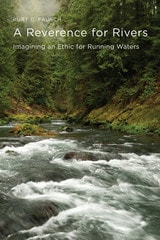
A Reverence for Rivers
Imagining an Ethic for Running WatersKurt D. Fausch
Oregon State University Press, 2025
In A Reverence for Rivers, Kurt Fausch draws on his experience as a stream ecologist, his interest in Indigenous cultures, and a thoughtful consideration of environmental ethics to explore human values surrounding freshwater ecosystems. Focusing on seven rivers across the globe—from the Salmon River in Oregon to the Sarufutsu River in Japan—he examines the growing ethical dilemmas threatening our rivers, including increasing demands for water, habitat fragmentation, overfishing, and deepening climate change.
How do we decide which rivers deserve legal protection? What is our right to water as humans? And how do we foster resilient rivers? Through a combination of scientific expertise and thoughtful observations of the natural world, Fausch translates the science of rivers into accessible language for readers and begins to address these questions. He weaves deep Indigenous histories throughout the book and includes personal visits to tribal lands to explore the traditional values held by several Indigenous groups. Fausch reminds us that our connection to rivers is personal and grounded in specific places, flowing from the stories we carry about our relationships with and responsibilities to these rivers.
In a final essay Fausch ponders Aldo Leopold’s statement that “nothing so important as an ethic is ever written,” but instead evolves in the minds of a thinking community. A Reverence for Rivers speaks to both the mind and the heart, offering perspectives so that we might begin to imagine and create an ethic for living with and caring for the running waters on which we rely for so much.
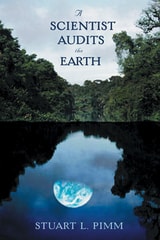
A Scientist Audits the Earth
Pimm, Stuart L
Rutgers University Press, 2004
Humans use 50 percent of the world’s freshwater supply and consume 42 percent of its plant growth. We are liquidating animals and plants one hundred times faster than the natural rate of extinction. Such numbers should make it clear that our impact on the planet has been, and continues to be, extreme and detrimental. Yet even after decades of awareness of our environmental peril, there remains passionate disagreement over what the problems are and how they should be remedied.
Much of the impasse stems from the fact that the problems are difficult to quantify. How do we assess the impact of habitat loss on various species, when we haven’t even counted them all? And just what factors go into that 42 percent of biomass we are hungrily consuming? It is only through an understanding of the numbers that we will be able to break that impasse and come to agreement on which environmental issues are most critical and how they might best be addressed.
Working on the front lines of conservation biology, Stuart Pimm is one of the pioneers whose work has put the “science” in environmental science. In this book, he appoints himself “investment banker of the global, biological accounts,” checking the environmental statistics gathered by tireless scientists in work that is always painstaking and often heartbreaking. With wit, passion, and candor, he reveals the importance of understanding where these numbers come from and what they mean. To do so, he takes the reader on a globe-circling tour of our beautiful, but weary, planet from the volcanic mountains and rainforests of Hawai’i to the boreal forests of Siberia.
At times, the view looks rather grim. Yet Pimm, ever the optimist, presents a world filled with mysterious beauty, the infinite variety of nature, and an urgent hope that through an understanding of our planet’s environmental past and present, we will be inspired to save it from future extinction.
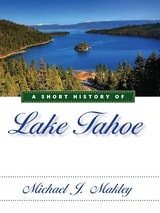
A Short History of Lake Tahoe
Michael J. Makley
University of Nevada Press, 2011
Lake Tahoe is one of the scenic wonders of the American West, a sapphire jewel that attracts millions of visitors each year. But the lake drew Native Americans to its summer shores for millennia, as well as more recent fortune hunters, scientists, and others.
A Short History of Lake Tahoe recounts the long, fascinating history of Lake Tahoe. Author Michael J. Makley examines the geology and natural history of the lake and introduces the people who shaped its history, including the Washoe Indians and such colorful characters as Mark Twain and legendary teamster Hank Monk, and later figures like entertainer Frank Sinatra and Olympic skier Julia Mancuso. He also covers the development of the lake's surrounding valley, including the impacts of mining, logging, and tourism, and the economic, political, and social controversies regarding the use and misuse of the lake's resources.
Generously illustrated with historic photographs, this book is an engaging introduction to one of the most magnificent sites in the world. It also illuminates the challenges of protecting natural beauty and a fragile environment while preserving public access and a viable economy in the surrounding communities.
A Social Ecology of Capital
Éric Pineault
Pluto Press, 2022
An original theory of contemporary capitalist growth and its socio-ecological contradictions
Capital is pushing into motion ever larger global material flows. In doing so it has come to depend on massive expenditures of energy, putting to work fossil fuels and the machines they animate to transform the world, accumulate power and grow the economy. The ecological relations and crises of today’s societies are driven by the processes of extraction of the elements that come together as a throughput of material and energy flows controlled by capital and shaped by its imperative of valorization.
In A Social Ecology of Capital, Éric Pineault proposes an original model of the fossil social metabolism that has sustained the growth of advanced capitalism in the last century.
Drawing on ecological economics and critical political economy, the book analyses how the social structures of accumulation, production, consumption and waste determine and regulate the material flow and the accumulation of material artifacts. Showing how social relations shape the ecology of capital, the book highlights the contradictions humanity now faces.
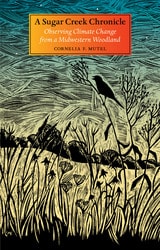
A Sugar Creek Chronicle
Observing Climate Change from a Midwestern WoodlandCornelia F. Mutel
University of Iowa Press, 2016
Moving between two timelines, Mutel pairs chapters about a single year in her Iowa woodland with chapters about her life as a fledgling and then professional student of nature. Stories of her childhood ramblings in Wisconsin and the solace she found in the Colorado mountains during early adulthood are merged with accounts of global environmental dilemmas that have redefined nature during her lifespan. Interwoven chapters bring us into her woodland home to watch nature’s cycles of life during a single year, 2012, when weather records were broken time and time again. Throughout, in a straightforward manner for a concerned general audience, Mutel integrates information about the science of climate change and its dramatic alteration of the planet in ways that clarify its broad reach, profound impact, and seemingly relentless pace.
It is not too late, she informs us: we can still prevent the most catastrophic changes. We can preserve a world full of biodiversity, one that supports human lives as well as those of our myriad companions on this planet. In the end, Mutel offers advice about steps we can all take to curb our own carbon emissions and strategies we can suggest to our policy-makers.
A Sustainable Future
12 Key Areas of Global ConcernEdited by Klaus Wiegandt
Haus Publishing, 2017
A Systematic Study of The Lizards of The Deppei Group (Genus Cnemidophorus) in Mexico and Guatemala
By William E. Duellman and John Wellman
University of Michigan Press, 1960
A Thirsty Land
The Fight for Water in TexasBy Seamus McGraw
University of Texas Press, 2018
As a changing climate threatens the whole country with deeper droughts and more furious floods that put ever more people and property at risk, Texas has become a bellwether state for water debates. Will there be enough water for everyone? Is there the will to take the steps necessary to defend ourselves against the sea? Is it in the nature of Americans to adapt to nature in flux?
The most comprehensive—and comprehensible—book on contemporary water issues, A Thirsty Land delves deep into the challenges faced not just by Texas but by the nation as a whole, as we struggle to find a way to balance the changing forces of nature with our own ever-expanding needs. Part history, part science, part adventure story, and part travelogue, this book puts a human face on the struggle to master that most precious and capricious of resources, water. Seamus McGraw goes to the taproots, talking to farmers, ranchers, businesspeople, and citizen activists, as well as to politicians and government employees. Their stories provide chilling evidence that Texas—and indeed the nation—is not ready for the next devastating drought, the next catastrophic flood. Ultimately, however, A Thirsty Land delivers hope. This deep dive into one of the most vexing challenges facing Texas and the nation offers glimpses of the way forward in the untapped opportunities that water also presents.
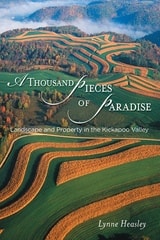
A Thousand Pieces of Paradise
Landscape and Property in the Kickapoo ValleyLynne Heasley
University of Wisconsin Press, 2012
A Thousand Pieces of Paradise is an ecological history of property and a cultural history of rural ecosystems set in one of the Midwest’s most historically significant regions, the Kickapoo River Valley. Whether examining the national war on soil erosion, Amish migration, a Corps of Engineers dam project, or Native American land claims, Lynne Heasley traces the history of modern American property debates. Her book holds powerful lessons for rural communities seeking to reconcile competing values about land and their place in it.
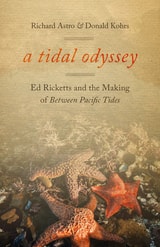
A Tidal Odyssey
Ed Ricketts and the Making of Between Pacific TidesRichard Astro
Oregon State University Press, 2021
In A Tidal Odyssey, literary scholar Richard Astro and archivist Donald Kohrs explore how Between Pacific Tides came to be, covering both the writing process and the long journey to publication. They tell three interwoven stories: the development of ecology as a valuable new approach to the study of marine life in the intertidal zone; a case study of how new and dynamic science is published and reaches a larger audience; and the intellectual development of Ed Ricketts.
Not only a scientist but also an expert in music, philosophy, history, and literature, Ricketts and his work impacted a broad range of writers and scholars. A number of these intellectual figures appear in A Tidal Odyssey, including Ricketts’s co-author, Jack Calvin, and illustrator, Ritch Lovejoy; mythologist Joseph Campbell; novelist Henry Miller; composer John Cage; and of course John Steinbeck. The authors have drawn extensively from Ricketts’s archive, including previously unpublished letters, memoranda, notebooks, and photographs.
A Tidal Odyssey is for anyone interested in the world of Ed Ricketts as well as marine biology, intertidal ecology, and how ecological studies underpin our understanding of the impact of environmental change on the well-being of our planet.

A Time to Gather Stones
Vladimir Soloukhin, Translated from the Russian and with an Introduction by Valerie Z. Nollan
Northwestern University Press, 1993
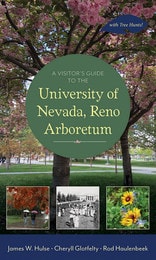
A Visitor's Guide to the University of Nevada, Reno Arboretum
James W. Hulse
University of Nevada Press, 2018
A Nevada State Arboretum, the University of Nevada, Reno campus is home to more than 3,000 trees representing more than 200 species and varieties. This attractive guidebook introduces readers to the university’s beautiful campus and its botanical treasures. Richly illustrated with both contemporary color and archival photos, this book captures the charm of the campus in all four seasons and shows how the grounds of the university have evolved over the years. Featuring 19 distinct tours around campus, a comprehensive map, and family-friendly interactive “tree hunts,” this guide showcases the campus' ecological diversity and interesting tree species and will appeal to first-time visitors as well as longtime residents.
A Watershed Moment
The American West in the Age of LimitsEdited by Robert Frodeman, Evelyn Brister, and Luther Propst
University of Utah Press, 2024
The volume presents practical approaches to land use, land management, and community planning that are motivated by philosophical views on justice, quality of life, and sustainability in the American West. The contributors are policymakers, government employees, land and water managers, urban planners, biologists, tribal members, writers, and academics from a variety of backgrounds and perspectives. The result is a compelling vision of place-based, policy-oriented sustainability across the West.
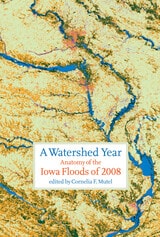
A Watershed Year
Anatomy of the Iowa Floods of 2008Cornelia F. Mutel
University of Iowa Press, 2010
In June 2008, the rivers of eastern Iowa rose above their banks to create floods of epic proportions; their amazing size—flowing in places at a rate nearly double that of the previous record flood—and the rapidity of their rise ruined farmlands and displaced thousands of residents and hundreds of businesses. In Cedar Rapids, the waters inundated more than nine square miles of the downtown area; in Iowa City, where the flood was also the most destructive in history, the University of Iowa’s arts campus was destroyed. By providing a solid base of scientific and technical information presented with unusual clarity and a wealth of supporting illustrations, the contributors to this far-reaching book, many of whom dealt firsthand with the 2008 floods, provide a detailed roadmap of the causes and effects of future devastating floods.
The twenty-five essays fall naturally into four sections. “Rising Rivers, Spreading Waters” begins by comparing the 2008 floods with the midwestern floods of 1993, moves on to trace community responses to the 2008 floods, and ends by illuminating techniques for forecasting floods and determining their size and frequency. “Why Here, Why Now?” searches for possible causes of the 2008 floods and of flooding in general: annual crops and urban landscapes, inflows into and releases from reservoirs, and climate change. “Flood Damages, Flood Costs, Flood Benefits” considers the complex mix of flood costs and effects, emphasizing damages to cities and farmlands as well as potential benefits to natural communities and archaeological sites. “Looking Back, Looking Forward” lays out approaches to managing the floods of the future that are sure to come.
While the book draws most of its examples from one particular region, it explains flooding throughout a much larger region—the midwestern Corn Belt—and thus its sobering yet energizing lessons apply well beyond eastern Iowa. By examining the relationships among rivers, floodplains, weather, and modern society; by stressing matters of science and fact rather than social or policy issues; and by addressing multiple environmental problems and benefits, A Watershed Year informs and educates all those who experienced the 2008 floods and all those concerned with the larger causes of flooding.
A Week in Yellowstone's Thorofare
A Journey Through the Remotest PlaceMichael J. Yochim
Oregon State University Press, 2016
Drawing upon the first-person accounts of rangers who have patrolled the area, archival documents, and Michael Yochim’s personal experiences over almost three decades, A Week in Yellowstone’s Thorofare distinguishes between the notions of wildness and wilderness. Through historic vignettes, descriptions of natural resources, and the author’s own experiences, it argues that wildness is the most precious, and easily lost, attribute of wilderness.
The Thorofare is remote not only from roads, but also largely unexplored in the vast body of wilderness literature. A Week in Yellowstone’s Thorofare aims to fill that void. Recognizing both the value and the fragility of wildness, the rangers who manage the area have struggled through many eras to preserve it. This book chronicles many of the struggles through which it has remained protected for visitors today.
Yochim offers poignant insight into the passions that motivate those who manage, defend, and journey through the Thorofare. His story demonstrates the importance of wild places for touching and understanding a fundamental part of the human experience. Part history, memoir, travelogue, natural history, and reflection, the book will appeal to readers interested in preservation, the wilderness movement, the history of National Parks, or the natural treasures of Yellowstone.
A Wetland Biography
Seasons on Louisiana’s Chenier PlainBy Gay M. Gomez
University of Texas Press, 1998
Louisiana's Chenier Plain is a 2,200-square-mile region of marshes and oak-covered ridges (cheniers) that stretches along the Gulf of Mexico from Sabine Lake to Vermilion Bay. Its inhabitants, some 6,000 people of Cajun and other ancestries, retain strong economic and cultural ties to the land and its teeming wildlife. They call it paradise...but it is a vulnerable paradise. In this multifaceted study, Gay Gomez explores the interaction of the land, people, and wildlife of the Chenier Plain, revealing both the uniqueness of the region and the challenges it faces.
After describing the geography and history of the Chenier Plain, Gomez turns to the lifeways of its people. Drawing on their words and stories, she tells how the chenier dwellers combine modern occupations with traditional pursuits such as alligator and waterfowl hunting, fur trapping, and fishing. She shows how these traditions of wildlife use provide both economic incentives for conservation and a source of personal and place identity. This portrait of a "working wetland" reveals how wildlife use and appreciation can give rise to a stewardship that balances biological, economic, and cultural concerns in species and habitat protection.
A Wild Path
Douglas Wood
University of Minnesota Press, 2024
A soul-satisfying journey through the wilderness that uncovers hope, healing, and the abiding grace of wild things
A Wild Path is author Douglas Wood’s highly anticipated followup to the critically acclaimed memoir Deep Woods, Wild Waters. He again leads readers along a meditative path through a wilderness of many dimensions—from the lakes and islands of his beloved Canoe Country to rugged ocean coasts to a mountain chasm, from camping on the Canadian Shield to listening to the soft strains of Beethoven in the pines, and from the pain of childhood wounds to appreciation for a life rich with nature. As on every good journey, there is plenty of laughter, warmth, and humor on the trail.
With the generosity and compassion of a good wilderness guide, Douglas Wood welcomes readers to accompany him as he navigates his life-path from struggling student and “worst reader in the class” to prolific writer and best-selling author. He offers courage and hope to those who feel different or left behind, and he shares how he found, through the counsel of rocks, trees, and waters, his own way toward joy and wonder and an unshakable sense of belonging.
Exploring the meanings of myriad outdoor experiences, Wood seeks to understand the importance and existence of beauty, the emotional poignancy of a wilderness sunset, and the realization of dreams, while also honoring his outdoor and literary mentors, including Sigurd Olson and Aldo Leopold. Traveling across continents, over oceans, and through the landscape of time, A Wild Path ranges from solitary shorelines of introspection to peaks of triumph, finding rest and tranquility in a simple cup of jasmine tea, sipped by a campfire under the stars.
A Woodland Counting Book
Claudia McGehee
University of Iowa Press, 2006
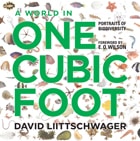
A World in One Cubic Foot
Portraits of BiodiversityDavid Liittschwager
University of Chicago Press, 2012
For A World in One Cubic Foot, esteemed nature photographer David Liittschwager took a bright green metal cube—measuring precisely one cubic foot—and set it in various ecosystems around the world, from Costa Rica to Central Park. Working with local scientists, he measured what moved through that small space in a period of twenty-four hours. He then photographed the cube’s setting and the plant, animal, and insect life inside it—anything visible to the naked eye. The result is a stunning portrait of the amazing diversity that can be found in ecosystems around the globe. Many organisms captured in Liittschwager’s photographs have rarely, if ever, been presented in their full splendor to the general reader, and the singular beauty of these images evocatively conveys the richness of life around us and the essential need for its conservation. The breathtaking images are accompanied by equally engaging essays that speak to both the landscapes and the worlds contained within them, from distinguished contributors such as Elizabeth Kolbert and Alan Huffman, in addition to an introduction by E. O. Wilson. After encountering this book, you will never look at the tiniest sliver of your own backyard or neighborhood park the same way; instead, you will be stunned by the unexpected variety of species found in an area so small.
A World in One Cubic Foot puts the world accessibly in our hands and allows us to behold the magic of an ecosystem in miniature. Liittschwager’s awe-inspiring photographs take us to places both familiar and exotic and instill new awareness of the life that abounds all around.
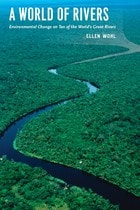
A World of Rivers
Environmental Change on Ten of the World's Great RiversEllen Wohl
University of Chicago Press, 2010
Far from being the serene, natural streams of yore, modern rivers have been diverted, dammed, dumped in, and dried up, all in efforts to harness their power for human needs. But these rivers have also undergone environmental change. The old adage says you can’t step in the same river twice, and Ellen Wohl would agree—natural and synthetic change are so rapid on the world’s great waterways that rivers are transforming and disappearing right before our eyes.
A World of Rivers explores the confluence of human and environmental change on ten of the great rivers of the world. Ranging from the Murray-Darling in Australia and the Yellow River in China to Central Europe’s Danube and the United States’ Mississippi, the book journeys down the most important rivers in all corners of the globe. Wohl shows us how pollution, such as in the Ganges and in the Ob of Siberia, has affected biodiversity in the water. But rivers are also resilient, and Wohl stresses the importance of conservation and restoration to help reverse the effects of human carelessness and hubris.
What all these diverse rivers share is a critical role in shaping surrounding landscapes and biological communities, and Wohl’s book ultimately makes a strong case for the need to steward positive change in the world’s great rivers.

A Year In Place
W Scott Olsen
University of Utah Press, 2001
W. Scott Olsen and Bret Lott invited a dozen friends to consider one particular calendar month in the place they call home. The result is A Year in Place, a captivating collection of new writing by twelve eminent American writers.
More than a montage of voices and experiences, A Year in Place illustrates, as Olsen and Lott explain in their introduction, the trends in American thinking about who we are and what we care about. Rick Bass takes us to the Yaak Valley of Montana in June, where fawns are arriving, "newly-emerged, knocked-legged and groggy, legs still unfolding from that long sleeping passage." Peggy Shumaker explores the special social and cultural time that is March in Fairbanks, Alaska, where a long winter has whetted the psychic despair of inhabitants who find in the "sky’s unbearable brightness . . . a waking pain beyond endurance." Michael Martone transports us through memory to Indiana in the 1950s where each May a blimp "yawed and floated up," wallowing above a suburban neighborhood on its way to the Indianapolis 500.
These and nine other contributions yield an unforgettable book about "the places we find ourselves blessed enough to be."
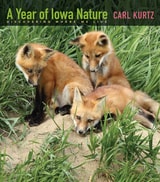
A Year of Iowa Nature
Discovering Where We LiveCarl Kurtz
University of Iowa Press, 2014
Concentrating on Iowa’s tallgrass prairie, Kurtz also points his viewfinder toward the great variety of natural habitats in the eastern United States. Arranged chronologically throughout the year, the fifty-five color photos and their accompanying narratives rotate through the seasons like a nature film. The winter months showcase a frost-covered white-tailed deer, cedar waxwings feeding on winter apples, a muskrat on the surface of an icy pond, and dune-like snowdrifts. Kurtz’s palette warms up in springtime with stunning photos of Virginia bluebells, fox cubs, juvenile chipmunks, and ruddy ducks. Summer brings a host of butterflies, frogs, and goldfinches as well as blooming prairie plants. The colors become more subdued in fall with the change in light, revealing the rich hues of Indian grass and big bluestem and the subtle plumage of migrating warblers.
Just as Kurtz’s Practical Guide to Prairie Reconstruction offers an indispensable manual for individuals and land managers working to create a diverse prairie community, so does A Year of Iowa Nature point the way toward a sincere, month-by-month appreciation of the natural world around us.
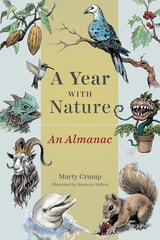
A Year with Nature
An AlmanacMarty Crump
University of Chicago Press, 2018
With Crump, we mark the publication of classics like Carson’s Silent Spring and White’s Charlotte’s Web, and even the musical premiere of Tchaikovsky’s Swan Lake. We note the discovery of the structure of DNA and the mountain gorilla, the rise of citizen science projects, and the work of people who’ve shaped how we view and protect nature—from Aristotle to E. O. Wilson. Some days feature US celebrations, like National Poinsettia Day and National Cat Day; others highlight country-specific celebrations, like Australia’s Wombat Day and Thailand’s Monkey Buffet Festival, during which thousands of macaques feast on an ornately arranged spread of fruits and vegetables. Crump also highlights celebrations that span borders, from World Wildlife Conservation Day to International Mountain Day and global festivities for snakes, sea turtles, and chocolate. Interweaving fascinating facts on everything from jellyfish bodies to monthly birth flowers with folkloric entries featuring the Loch Ness Monster, unicorns, and ancient Greek, Roman, and Egyptian mythology, the almanac is as exhaustive as it is enchanting.
A Year with Nature celebrates the wonder and beauty of our natural world as we have expressed it in visual arts, music, literature, science, natural history, and everyday experience. But more than this, the almanac’s vignettes encourage us to contemplate how we can help ensure that future generations will be able to enjoy the landscapes and rich biodiversity we so deeply cherish.
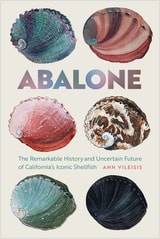
Abalone
The Remarkable History and Uncertain Future of California's Iconic ShellfishAnn Vileisis
Oregon State University Press, 2020
From rocky coves at Mendocino and Monterey to San Diego’s reefs, abalone have held a cherished place in California culture for millennia. Prized for iridescent shells and delectable meat, these unique shellfish inspired indigenous artisans, bohemian writers, California cuisine, and the popular sport of skin diving, but also became a highly coveted commercial commodity. Mistakenly regarded as an inexhaustible seafood, abalone ultimately became vulnerable to overfishing and early impacts of climate change.
As the first and only comprehensive history of these once abundant but now tragically imperiled shellfish, Abalone guides the reader through eras of discovery, exploitation, scientific inquiry, fierce disputes between sport and commercial divers, near-extinction, and determined recovery efforts. Combining rich cultural and culinary history with hard-minded marine science, grassroots activism, and gritty politics, Ann Vileisis chronicles the plight of California’s abalone species and the growing biological awareness that has become crucial to conserve these rare animals into the future.
Abalone reveals the challenges of reckoning with past misunderstandings, emerging science, and political intransigence, while underscoring the vulnerability of wild animals to human appetites and environmental change. An important contribution to the emerging field of marine environmental history, this is a must-read for scientists, conservationists, environmental historians, and all who remember abalone fondly.
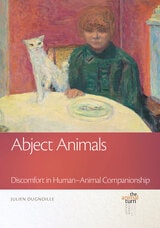
Abject Animals
Discomfort in Human–Animal CompanionshipJulien Dugnoille
Michigan State University Press, 2027
Abject Animals: Discomfort in Human–Animal Companionship explores the emotional contradictions and ethical tensions at the heart of human–animal relationships through a cross-cultural, multispecies ethnography of cats and dogs in the UK, France, and South Korea. Framing cats and dogs as “abject animals,” Julien Dugnoille examines how the treatment of animals can generate discomfort—emotional, moral, and bodily—through their commodification in cafés, markets, shelters, and homes. Drawing on Kristeva’s theory of abjection alongside the ideas of Bataille, Blanchot, and Weil, the book interrogates the commodified intimacy of contemporary human–animal companionship, revealing how labor, cuteness, and care mask underlying hierarchies and exploitation. Through richly detailed fieldwork and autoethnographic reflection, it critiques normative ideas of “healthy” companionship, arguing instead for forms of interspecies attunement that embrace discomfort and resist instrumentalization. Abject Animals is both a theoretical intervention and a call for more ethical, ego-disrupting relationships with the nonhuman.
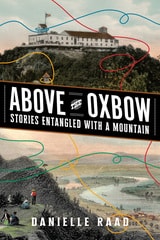
Above the Oxbow
Stories Entangled with a MountainDanielle R. Raad
West Virginia University Press, 2026
Above the Oxbow is a journey through the tangle of rich narratives surrounding Mount Holyoke, a locally cherished mountain in Western Massachusetts. It explores how visitors have forged connections with the mountain through various activities over the past two centuries. In an accessible blend of storytelling and scholarly analysis, Danielle Raad shows the significance of the landscape, historic sites, and material culture, revealing how cultural perspectives, community activism, collective memory, and personal experiences shape our understanding of a place. Situated at the intersection of public history and environmental history, this ethnography of place also discloses the curious stories of the Summit House, an erstwhile tramway, an airplane crash, and the local fight to conserve Mount Holyoke as a natural space and celebrates its myriad uses today.
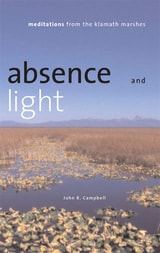
Absence And Light
Meditations From The Klamath MarshesJohn R. Campbell
University of Nevada Press, 2002
Abundant Earth
Toward an Ecological CivilizationEileen Crist
University of Chicago Press, 2019
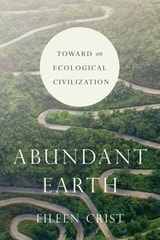
Crist argues that to do so would require a two-pronged approach. Scaling down calls upon us to lower the global human population while working within a human-rights framework, to deindustrialize food production, and to localize economies and contract global trade. Pulling back calls upon us to free, restore, reconnect, and rewild vast terrestrial and marine ecosystems. However, the pervasive worldview of human supremacy—the conviction that humans are superior to all other life-forms and entitled to use these life-forms and their habitats—normalizes and promotes humanity’s ongoing expansion, undermining our ability to enact these linked strategies and preempt the mounting suffering and dislocation of both humans and nonhumans.
Abundant Earth urges us to confront the reality that humanity will not advance by entrenching its domination over the biosphere. On the contrary, we will stagnate in the identity of nature-colonizer and decline into conflict as we vie for natural resources. Instead, we must chart another course, choosing to live in fellowship within the vibrant ecologies of our wild and domestic cohorts, and enfolding human inhabitation within the rich expanse of a biodiverse, living planet.
Acanthaceae to Myricaceae
Water Willows to Wax MyrtlesRobert H. Mohlenbrock
Southern Illinois University Press, 2008
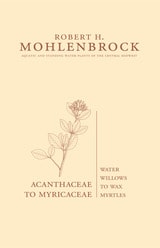
Veteran botanist, scientific author, and professor Robert H. Mohlenbrock brings the full depth of his expertise and scholarship to his latest book, Acanthaceae to Myricaceae: Water Willows to Wax Myrtles, the third of four volumes in the Aquatic and Standing Water Plants of the Central Midwest series. This easy-to-use illustrated reference guide covers aquatic and standing water plants for the states of Iowa, Illinois, Indiana, Ohio, Kansas, Missouri, Nebraska, and Kentucky (excluding the biologically distinct Cumberland Mountain region of eastern Kentucky), from spearmint to wintergreen, from aster to waterwort.
The volume identifies, describes, and organizes species in three groups, including truly aquatic plants, which spend their entire life with their vegetative parts either completely submerged or floating on the water’s surface; emergents, which are usually rooted under water with their vegetative parts standing above the water’s surface; and wetland plants, which live most or all of their lives out of water, but which can live at least three months in water.
Mohlenbrock lists the taxa alphabetically, and within each taxon, he describes the species with the scientific names he deems most appropriate (indicating if his opinion differs from that of the U.S. Fish and Wildlife Service), common names, identification criteria, line drawings, geographical distribution, habitat description, and official U.S. Fish and Wildlife Service wetlands designation as described by the National Wetland Inventory Section in 1988.
Acanthaceae to Myricaceae is an essential reference for state and federal employees who deal with environmental conservation and mitigation issues in aquatic and wetland plants. It is also a useful guide for students and instructors in college and university courses focusing on the identification of aquatic and wetland plants.
Accidental Gravity
Residents, Travelers, and the Landscape of MemoryBernard Quetchenbach
Oregon State University Press, 2017
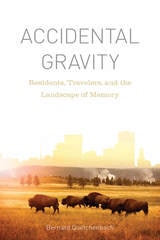
Accidental Gravity negotiates the difficult edge between a naive belief in an enduring, unassailable natural world and the equally naive belief that human life takes place in some unnatural, more mediated context. The title refers to the accidental but nonetheless meaningful nexus where the personal meets and combines with the universal—those serendipitous moments when the individual life connects to the larger rhythms of time and planet.
Acolytes of Nature
Defining Natural Science in Germany, 1770-1850Denise Phillips
University of Chicago Press, 2012
Although many of the practical and intellectual traditions that make up modern science date back centuries, the category of “science” itself is a relative novelty. In the early eighteenth century, the modern German word that would later mean “science,” naturwissenschaft, was not even included in dictionaries. By 1850, however, the term was in use everywhere. Acolytes of Nature follows the emergence of this important new category within German-speaking Europe, tracing its rise from an insignificant eighteenth-century neologism to a defining rallying cry of modern German culture.
Today’s notion of a unified natural science has been deemed an invention of the mid-nineteenth century. Yet what Denise Phillips reveals here is that the idea of naturwissenschaft acquired a prominent place in German public life several decades earlier. Phillips uncovers the evolving outlines of the category of natural science and examines why Germans of varied social station and intellectual commitments came to find this label useful. An expanding education system, an increasingly vibrant consumer culture and urban social life, the early stages of industrialization, and the emergence of a liberal political movement all fundamentally altered the world in which educated Germans lived, and also reshaped the way they classified knowledge.