Results by title
3027 books match the query 'Sociology' and 223 start with a
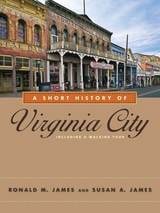
A Short History of Virginia City
Ronald M. James
University of Nevada Press, 2014
The city’s story did not end when the Comstock Lode played out. Beginning in the 1930s, bohemian artists, literati, and tourists were intrigued by this remnant of the Old West. The leader of Manhattan’s café society, Lucius Beebe, moved here and relaunched the Territorial Enterprise in 1950. Television’s most popular western from 1959 to 1973, Bonanza, located its fictional Ponderosa Ranch nearby. In the summer of 1965, a handful of Bay Area musicians, including Big Brother and the Holding Company, performed at the Red Dog Saloon and launched psychedelic rock, part of the inspiration for a defining decade of youth culture. Today it is both a National Historic Landmark District and a living community. Visitors come to enjoy its saloons and restaurants, admire its architecture, and learn from its museums and exhibits. A Short History of Virginia City will enhance their experience and will also be enjoyed by anyone interested in the history of Nevada, mining, and the Old West.
• Includes an illustrated walking tour describing more than thirty buildings and sites
A Silvan Tomkins Handbook
Foundations for Affect TheoryAdam J. Frank
University of Minnesota Press, 2020
An accessible guide to the work of American psychologist and affect theorist Silvan Tomkins
The brilliant and complex theories of psychologist Silvan Tomkins (1911–1991) have inspired the turn to affect in the humanities, social sciences, and elsewhere. Nevertheless, these theories are not well understood. A Silvan Tomkins Handbook makes his theories portable across a range of interdisciplinary contexts and accessible to a wide variety of contemporary scholars and students of affect.
A Silvan Tomkins Handbook provides readers with a clear outline of Tomkins’s affect theory as he developed it in his four-volume masterwork Affect Imagery Consciousness. It shows how his key terms and conceptual innovations can be used to build robust frameworks for theorizing affect and emotion. In addition to clarifying his affect theory, the Handbook emphasizes Tomkins’s other significant contributions, from his broad theories of imagery and consciousness to more focused concepts of scenes and scripts. With their extensive experience engaging and teaching Tomkins’s work, Adam J. Frank and Elizabeth A. Wilson provide a user-friendly guide for readers who want to know more about the foundations of affect studies.

A Small World
Smart Houses and the Dream of the Perfect DayDavin Heckman
Duke University Press, 2007
Heckman’s narrative stretches from the early-twentieth-century introduction into the home of electric appliances and industrial time-management techniques, through the postwar advent of television and the space-age “house of tomorrow,” to the contemporary automated, networked “smart home.” He considers all these developments in relation to lifestyle and consumer narratives. Building on the tension between agency and control within the walls of homes designed to anticipate and fulfill desires, Heckman engages debates about lifestyle, posthumanism, and rights under the destabilizing influences of consumer technologies, and he considers the utopian and dystopian potential of new media forms. Heckman argues that the achievement of an environment completely attuned to its inhabitants’ specific wants and needs—what he calls the “Perfect Day”—institutionalizes everyday life as the ultimate consumer practice.
A Society Transformed
Hungary in Time-Space PerspectiveRichard Rose
Central European University Press, 1999
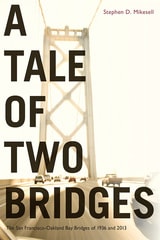
A Tale of Two Bridges
The San Francisco–Oakland Bay Bridges of 1936 and 2013Stephen Mikesell
University of Nevada Press, 2017
A Tale of Two Bridges is a history of two versions of the San Francisco—Oakland Bay Bridge: the original bridge built in 1936 and a replacement for the eastern half of the bridge finished in 2013. The 1936 bridge revolutionized transportation in the Bay Area and profoundly influenced settlement patterns in the region. It was also a remarkable feat of engineering. In the 1950s the American Society of Civil Engineers adopted a list of the “Seven Engineering Wonders” of the United States. The 1936 structure was the only bridge on the list, besting even the more famous Golden Gate Bridge. One of its greatest achievements was that it was built on time (in less than three years) and came in under budget. Mikesell explores in fascinating detail how the bridge was designed by a collection of the best-known engineers in the country as well as the heroic story of its construction by largely unskilled laborers from California, joined by highly skilled steel workers.
By contrast, the East Span replacement, which was planned between 1989 and 1998, and built between 1998 and 2013, fell victim to cost overruns in the billions of dollars, was a decade behind schedule, and suffered from structural problems that has made it a perpetual maintenance nightmare.
This is narrative history in its purest form. Mikesell excels at explaining highly technical engineering issues in language that can be understood and appreciated by general readers. Here is the story of two very important bridges, which provides a fair but uncompromising analysis of why one bridge succeeded and the other did not.
A Telescope on Society
Survey Research and Social Science at the University of Michigan and BeyondJames S. House, F. Thomas Juster, Robert L. Kahn, Howard Schuman, and Eleanor Singer, Editors
University of Michigan Press, 2004
The chapters of this volume illustrate the impact that developments in survey research have had and continue to have on a broad range of social science disciplines and interdisciplinary areas ranging from political behavior and electoral systems to macroeconomics and individual income dynamics, mental and physical health, human development and aging, and racial/ethnic diversity and relationships.
The volume will speak to a wide audience of social science and survey research professionals and students interested in learning more about the broad history of survey-based social science and its contributions to understanding ourselves as social beings. It also seeks to convey how crucial institutional and public support are to the development of social science and survey research, as they have been to development in the natural, biomedical, and life sciences.
The five editors of this book are longtime research professors and colleagues in the Survey Research Center of the Institute for Social Research at the University of Michigan. James S. House is also Professor in the Department of Sociology; F. Thomas Juster is Professor Emeritus in the Department of Economics; Robert L. Kahn is Professor Emeritus in the Department of Psychology and Department of Health Management and Policy; and Howard Schuman is Professor Emeritus in the Department of Sociology; Eleanor Singer is Research Professor in the Survey Research Center, all at the University of Michigan. Professors House (1991-2001), Kahn (1970-76), and Schuman (1982-90) have each served as Director of the Survey Research Center; Professor Juster served (1976-86) as Director of the Institute for Social Research; and Professor Singer served (1999-2002) as Associate Director of the Survey Research Center.

A Theory of ISIS
Political Violence and the Global OrderMohammad-Mahmoud Ould Mohamedou
Pluto Press, 2017
Against these established narratives, Mohammad-Mahmoud Ould Mohamedou now presents his new theory of ISIS. Tracing the genealogy of ISIS and documenting its evolution in Iraq and Syria, he argues that ISIS has actually transcended Osama Bin Laden’s original scheme of Al Qaeda, mutating into a unprecedented hybrid between postcolonial violence, postmodernity, and postglobalization. A Theory of ISIS offers an original take on the militant group. Mohamedou explains the proliferation of terrorist attacks on the West and deepens our understanding of the group's impact on the very nature of contemporary political violence.

A Thousand Screenplays
The French Imagination in a Time of CrisisSabine Chalvon-Demersay
University of Chicago Press, 1999
The time of crisis presented by the amateur writers was not one of war, famine, or disease—it was the millennial dilemma of representation. In a world plagued by alienation, individualization, and a lack of mobility, how can members of a society combat their declining senses of self?
Although the contestants wrote about life in France, their concerns and struggles have a distinctly universal ring. A lucid, witty writer, Chalvon-Demersay offers a clear, if still developing, photograph of the contemporary imagination.
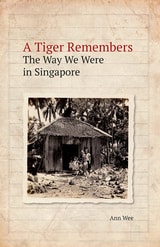
A Tiger Remembers
The Way We Were in SingaporeAnn Wee
National University of Singapore Press, 2017
Wee’s talent is for remembering and paying homage to the things history books often deem insignificant—things that can contain some of the most illuminating details about the day to day inner workings of families from many backgrounds, such as terms of endearment; the emotional nuance in social relations; questions of hygiene; the stories of convicts; tales of ghost wives and changeling babies; anecdotes from rural clan settlements and migrant dormitories; and the migration of families from squatter settlements into public housing. Affectionately observed and wittily narrated, with a deep appreciation of how far Singapore has come, this book brings to life generations of social change through a focus on the institution of the family.
A Unified Theory of Collective Action and Social Change
Luis Fernando Medina
University of Michigan Press, 2007
The notion that groups form and act in ways that respond to objective, external costs and benefits has long been the key to accounting for social change processes driven by collective action. Yet this same notion seems to fall apart when we try to explain how collectivities emerge out of the choices of individuals. This book overcomes that dilemma by offering an analysis of collective action that, while rooted in individual decision making, also brings out the way in which objective costs and benefits can impede or foster social coordination. The resulting approach enables us to address the causes and consequences of collective action with the help of the tools of modern economic theory. To illustrate this, the book applies the tools it develops to the study of specific collective action problems such as clientelism, focusing on its connections with economic development and political redistribution; and wage bargaining, showing its economic determinants and its relevance for the political economy of the welfare state.
"Medina's study is a great step forward in the analytics of collective action. He shows the inadequacies of currently standard models and shows that straightforward revisions reconcile rational-choice and structural viewpoints. It will influence all future work."
—Kenneth Arrow, Stanford University
"Olson, Schelling, and now Medina. A Unified Theory deepens our understanding of collective action and contributes to the foundations of our field. A major work."
—Robert H. Bates, Harvard University
"Medina thinks that the main problem of social action is not whether or not to cooperate but how to do it. To this end he has produced an imaginative approach to analyzing strategic coordination problems that produces plausible predictions in a range of circumstances."
—John Ferejohn, Stanford University
Luis Fernando Medina is Associate Professor in the Department of Politics at the University of Virginia.
A Voice but No Power
Organizing for Social Justice in MinneapolisDavid Forrest
University of Minnesota Press, 2022
Examining the work of social justice groups in Minneapolis following the 2008 recession
Since the Great Recession, even as protest and rebellion have occurred with growing frequency, many social justice organizers continue to displace as much as empower popular struggles for egalitarian and emancipatory change. In A Voice but No Power, David Forrest explains why this is the case and explores how these organizers might better reach their potential as advocates for the abolition of exploitation, discrimination, and other unjust conditions.
Through an in-depth study of post-2008 Minneapolis—a center of progressive activism—Forrest argues that social justice organizers so often fall short of their potential largely because of challenges they face in building what he calls “contentious identities,” the public identities they use to represent their constituents and counteract stigmatizing images such as the “welfare queen” or “the underclass.” In the process of assembling, publicizing, and legitimating contentious identities, he shows, these organizers encounter a series of political hazards, each of which pushes them to make choices that weaken movements for equality and freedom. Forrest demonstrates that organizers can achieve better outcomes, however, by steadily working to remake their hazardous political terrain.
The book’s conclusion reflects on the 2020 uprising that followed the police killing of George Floyd, assessing what it means for the future of social justice activism. Ultimately, Forrest’s detailed analysis contributes to leading theories about organizing and social movements and charts possibilities for further emboldening grassroots struggles for a fairer society.

A Wall Is Just a Wall
The Permeability of the Prison in the Twentieth-Century United StatesReiko Hillyer
Duke University Press, 2024

A White Side of Black Britain
Interracial Intimacy and Racial LiteracyFrance Winddance Twine
Duke University Press, 2010
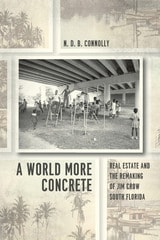
A World More Concrete
Real Estate and the Remaking of Jim Crow South FloridaN. D. B. Connolly
University of Chicago Press, 2014
A World More Concrete argues that black and white landlords, entrepreneurs, and even liberal community leaders used tenements and repeated land dispossession to take advantage of the poor and generate remarkable wealth. Through a political culture built on real estate, South Florida’s landlords and homeowners advanced property rights and white property rights, especially, at the expense of more inclusive visions of equality. For black people and many of their white allies, uses of eminent domain helped to harden class and color lines. Yet, for many reformers, confiscating certain kinds of real estate through eminent domain also promised to help improve housing conditions, to undermine the neighborhood influence of powerful slumlords, and to open new opportunities for suburban life for black Floridians.
Concerned more with winners and losers than with heroes and villains, A World More Concrete offers a sober assessment of money and power in Jim Crow America. It shows how negotiations between powerful real estate interests on both sides of the color line gave racial segregation a remarkable capacity to evolve, revealing property owners’ power to reshape American cities in ways that can still be seen and felt today.
A World of Becoming
William E. Connolly
Duke University Press, 2010
Attunement to a world of becoming, Connolly argues, may help us address dangerous resonances between global finance capital, cross-regional religious resentments, neoconservative ideology, and the 24-hour mass media. Coming to terms with subliminal changes in the contemporary experience of time that challenge traditional images can help us grasp how these movements have arisen and perhaps even inspire creative counter-movements. The book closes with the chapter “The Theorist and the Seer,” in which Connolly draws insights from early Greek ideas of the Seer and a Jerry Lewis film, The Nutty Professor, to inform the theory enterprise today.

A World of Gangs
Armed Young Men and Gangsta CultureJohn M. M. Hagedorn
University of Minnesota Press, 2008
“Street gangs mirror the inhuman ambitions and greed of society’s trendsetters and deities even as they fight to the death over scraps from the table of the international drug trade. But John Hagedorn, characteristically, also finds hope in the contradictory values of outlaw youth—selflessness, solidarity, and love amid cupidity and directionless rage—and he maintains the hope that a culture of resistance will ultimately prevail over the forces of self-destruction. Whether one shares his optimism or not, he makes a compelling case that the future of the world will be determined on the streets of our cities.” —Mike Davis, from the Foreword
“A World of Gangs is an illuminating journey around the cultures, lives, tragedies, and dreams of millions of rebellious youth around the planet. It is an indispensable work to understand the world we live in and essential reading for students of cities and communities.” —Manuel Castells
For the more than a billion people who now live in urban slums, gangs are ubiquitous features of daily life. Though still most closely associated with American cities, gangs are an entrenched, worldwide phenomenon that play a significant role in a wide range of activities, from drug dealing to extortion to religious and political violence. In A World of Gangs, John Hagedorn explores this international proliferation of the urban gang as a consequence of the ravages of globalization.
Looking closely at gang formation in three world cities-Chicago, Rio de Janeiro, and Capetown-he discovers that some gangs have institutionalized as a strategy to confront a hopeless cycle of poverty, racism, and oppression. In particular, Hagedorn reveals, the nihilistic appeal of gangsta rap and its street ethic of survival “by any means necessary” provides vital insights into the ideology and persistence of gangs around the world. This groundbreaking work concludes on a hopeful note. Proposing ways in which gangs might be encouraged to overcome their violent tendencies, Hagedorn appeals to community leaders to use the urgency, outrage, and resistance common to both gang life and hip-hop in order to bring gangs into broader movements for social justice.
John M. Hagedorn is associate professor of criminal justice at the University of Illinois, Chicago. He is editor of Gangs in the Global City and author of the highly influential People and Folks: Gangs, Crime, and the Underclass in a Rustbelt City.
MacArthur fellow Mike Davis is the author of many books, including Planet of Slums and, most recently, Buda’s Wagon: A Brief History of the Car Bomb.

AIDS TV
Identity, Community, and Alternative VideoAlexandra Juhasz
Duke University Press, 1995
An AIDS videomaker herself, Juhasz writes from the standpoint of an AIDS activist and blends feminist film critique with her own experience. She offers a detailed description of alternative AIDS video, including her own work on the Women’s AIDS Video Enterprise (WAVE). Along with WAVE, Juhasz discusses amateur video tapes of ACT UP demonstrations, safer sex videos produced by Gay Men’s Health Crisis, public access programming, and PBS documentaries, as well as network television productions.
From its close-up look at camcorder AIDS activism to its critical account of mainstream representations, AIDS TV offers a better understanding of the media, politics, identity, and community in the face of AIDS. It will challenge and encourage those who hope to change the course of this crisis both in the ‘real world’ and in the world of representation.
AIDS and the National Body
Thomas E. Yingling
Duke University Press, 1997
Contemplating the contradictions of individual identity from within a human body adapting to and living within a collective national culture, Yingling delves into such issues as canon formation, poetic theory, and the rhetoric of the body in American popular culture. In addition to Wiegman’s illuminating introduction, the conversation is joined by four other scholars—Michael Awkward, Robert L. Caserio, Stephen Melville, and David Román—whose critical and personal responses to Yingling’s writing weigh in throughout the volume. What emerges is a collection that embodies the particular difficulties of living with AIDS, of outliving someone who has died of AIDS, and of losing prematurely an important thinker.
AJS vol 122 num 5
The University of Chicago Press
University of Chicago Press Journals, 2017
AJS vol 123 num 2
The University of Chicago Press
University of Chicago Press Journals, 2017
AJS vol 125 num 3
The University of Chicago Press
University of Chicago Press Journals, 2019

ALA Guide to Sociology and Psychology Reference
Denise Beaubien Bennett
American Library Association, 2011

Abandoned Families
Social Isolation in the Twenty-First CenturyKristin S. Seefeldt
Russell Sage Foundation, 2016
Vasquez-Tokos finds that their experiences in childhood, adolescence, and young adulthood shape their perceptions of race, which in turn influence their romantic expectations. Most Latinos marry other Latinos, but those who intermarry tend to marry whites. She finds that some Latina women who had domineering fathers assumed that most Latino men shared this trait and gravitated toward white men who differed from their fathers. Other Latina respondents who married white men fused ideas of race and class and perceived whites as higher status and considered themselves to be “marrying up.” Latinos who married non-Latino minorities—African Americans, Asian Americans, and Native Americans—often sought out non-white partners because they shared similar experiences of racial marginalization. Latinos who married Latinos of a different national origin expressed a desire for shared cultural commonalities with their partners, but—like those who married whites—often associated their own national-origin groups with oppressive gender roles.
Vasquez-Tokos also investigates how racial and cultural identities are maintained or altered for the respondents’ children. Within Latino-white marriages, biculturalism—in contrast with Latinos adopting a white “American” identity—is likely to emerge. For instance, white women who married Latino men often embraced aspects of Latino culture and passed it along to their children. Yet, for these children, upholding Latino cultural ties depended on their proximity to other Latinos, particularly extended family members. Both location and family relationships shape how parents and children from interracial families understand themselves culturally.
As interracial marriages become more common, Marriage Vows and Racial Choices shows how race, gender, and class influence our marital choices and personal lives.

Abductive Analysis
Theorizing Qualitative ResearchIddo Tavory and Stefan Timmermans
University of Chicago Press, 2014
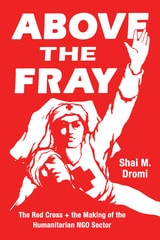
Above the Fray
The Red Cross and the Making of the Humanitarian NGO SectorShai M. Dromi
University of Chicago Press, 2020
Drawing on archival research, Dromi traces the genesis of the Red Cross to a Calvinist movement working in mid-nineteenth-century Geneva. He shows how global humanitarian policies emerged from the Red Cross founding members’ faith that an international volunteer program not beholden to the state was the only ethical way to provide relief to victims of armed conflict. By illustrating how Calvinism shaped the humanitarian field, Dromi argues for the key role belief systems play in establishing social fields and institutions. Ultimately, Dromi shows the immeasurable social good that NGOs have achieved, but also points to their limitations and suggests that alternative models of humanitarian relief need to be considered.

Abraham Lincoln in the Post-Heroic Era
History and Memory in Late Twentieth-Century AmericaBarry Schwartz
University of Chicago Press, 2008

Abstract Barrios
The Crises of Latinx Visibility in CitiesJohana Londoño
Duke University Press, 2020

Accent On Privilege
English Identities & Anglophilia In The U.S.Katharine Jones
Temple University Press, 2001
The political and cultural ties between England and the US act as a backdrop for the identity negotiations of these English people, many of whom do not even consider themselves to be immigrants. This unique exploration of the workings of white privilege offers an important new understanding of the paradoxes of how class, gender, and race are formed in the US and, by implication, in the UK.
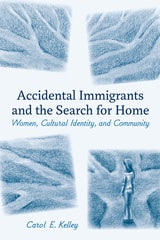
Accidental Immigrants and the Search for Home
Women, Cultural Identity, and CommunityCarol E. Kelley
Temple University Press, 2013
The intimate stories of these "accidental" immigrants broaden conventional notions of home. From a Maori woman who moves to Norway to the daughter of an Iranian diplomat now living in France, Kelley weaves together these stories of the personal and emotional effects of immigration with interdisciplinary discussions drawn from anthropology and psychology. Ultimately, she reveals how the lifelong process of immigration affects each woman's sense of identity and belonging and contributes to better understanding today's globalized society.

Achieving Anew
How New Immigrants Do in American Schools, Jobs, and NeighborhoodsMichael J. White
Russell Sage Foundation, 2009

Acquiring Fan Lifestyles
Elizabeth Affuso and Avi Santo (eds.)
University of Michigan Press, 2027
Through essays that critically engage with fan participation within consumer, material, and brand cultures, Acquiring Fan Lifestyles explores how fandom is increasingly imagined by brand owners and consumers as a lifestyle. The authors highlight a range of often overlooked fan practices and sites of engagement, including home decor, health and wellness, sustainable fashion, luxury goods, and other lifestyle categories, looking to brands such as Target and Ruggable as well as fandoms such as Twin Peaks and LEGO. They examine how individuals who claim the identity of “fan” engage in acquisition practices that are intended to demonstrate said fandom, as well as how individuals come to discover their fandoms through acquisition. In so doing, they seek to complicate the ways people participate in fandoms via acquisition; practices that are neither inauthentic nor co-opted, but rather blur the boundaries between fandom as subculture and fandom as lifestyle. Acquiring Fan Lifestyles takes seriously what acquisition and lifestyle affords fandoms and fan agency, decision making, and labor without dismissing the possibility of fan activity being constrained by and reshaped within market and class-based ideologies.

Across Oceans of Law
The Komagata Maru and Jurisdiction in the Time of EmpireRenisa Mawani
Duke University Press, 2018
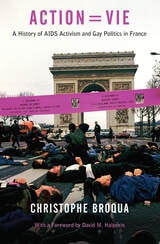
Action=Vie
A History of AIDS Activism and Gay Politics in FranceChristophe Broqua
Temple University Press, 2026
Act Up-Paris became one of the most notable protest groups in France in the mid-1990s. Founded in 1989, and following the New York model, it became a confrontational voice representing the interests of those affected by HIV through openly political activism. Action=Vie, the English-language translation of Christophe Broqua’s study of the grassroots activist branch, explains the reasons for the group’s success and sheds light on Act Up's defining features—such as its unique articulation between AIDS and gay activism.
Featuring numerous accounts by witnesses and participants, Broqua traces the history of Act Up-Paris and shows how thousands of gay men and women confronted the AIDS epidemic by mobilizing with public actions. Act Up-Paris helped shape the social definition not only of HIV-positive persons but also of sexual minorities. Broqua analyzes the changes brought about by the group, from the emergence of new treatments for HIV infection to normalizing homosexuality and a controversy involving HIV-positive writers’ remarks about unprotected sex. This rousing history ends in the mid-2000s before marriage equality and antiretroviral treatments caused Act Up-Paris to decline.
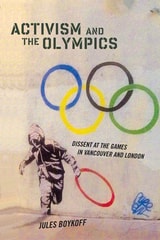
Activism and the Olympics
Dissent at the Games in Vancouver and LondonBoykoff, Jules
Rutgers University Press, 2014
In Activism and the Olympics, Boykoff provides a critical overview of the Olympic industry and its political opponents in the modern era. After presenting a brief history of Olympic activism, he turns his attention to on-the-ground activism through the lens of the Vancouver 2010 Winter Olympics and the 2012 Summer Olympics in London. Here we see how anti-Olympic activists deploy a range of approaches to challenge the Olympic machine, from direct action and the seizure of public space to humor-based and online tactics. Drawing on primary evidence from myriad personal interviews with activists, journalists, civil libertarians, and Olympics organizers, Boykoff angles in on the Games from numerous vantages and viewpoints.
Although modern Olympic authorities have strived—even through the Cold War era—to appear apolitical, Boykoff notes, the Games have always been the site of hotly contested political actions and competing interests. During the last thirty years, as the Olympics became an economic juggernaut, they also generated numerous reactions from groups that have sought to challenge the event’s triumphalism and pageantry. The 21st century has seen an increased level of activism across the world, from the Occupy Movement in the United States to the Arab Spring in the Middle East. What does this spike in dissent mean for Olympic activists as they prepare for future Games?
Activist Archives
Youth Culture and the Political Past in IndonesiaDoreen Lee
Duke University Press, 2016
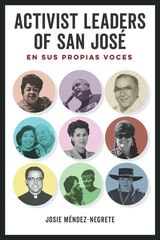
Activist Leaders of San José
En sus propias vocesJosie Méndez-Negrete
University of Arizona Press, 2020
Sociologist and activist Josie Méndez-Negrete has returned to her hometown to document and record the stories of those who made contributions to the cultural and civic life of San José. Through interview excerpts, biographical and historical information, and analysis, Méndez-Negrete shows the contributions of this singular community throughout the twentieth century and the diversity of motivations across the generations.
Activists share with Méndez-Negrete how they became conscious about their communities and how they became involved in grassroots organizing, protest, and social action. Spanning generations, we hear about the motivations of activists in the 1930s to the end of the twentieth century. We hear firsthand stories of victories and struggles, successes and failures from those who participated.
Activist Leaders of San José narrates how parents—both mothers and fathers—were inspired to work for the rights of their people. Workers’ and education rights were at the core, but they also took on the elimination of at-large elections to open city politics, labor rights, domestic abuse, and health care. This book is an important record of the contributions of San José in improving conditions for the Mexican American community.

Adiós Niño
The Gangs of Guatemala City and the Politics of DeathDeborah T. Levenson
Duke University Press, 2013

Adolescence in a Moroccan Town
Davis, Susan S
Rutgers University Press, 1999
Rashid was eighteen in 1982, when he helped us understand the feelings and activities of young people in his neighborhood, no longer a boy but not quite a man. He liked to talk about how his feelings and his understanding had grown from the time described, when he was just a kid. He recalled his dreams and plans in one of the hundreds of conversations we had about adolescence in this Moroccan town. His generation of youth in "Zawiya," on the western edge of North Africa, are the subject of this book.

Adoption Memoirs
Inside StoriesMarianne Novy
Temple University Press, 2024
Novy considers 45 memoirs, mostly from the twenty-first century, by birthmothers, adoptees, and adoptive parents, about same-race and transracial adoption. These adoptees, she recounts, wanted to learn about their ancestry and appreciated adoptive parents who helped. Birthmother Amy Seek shows why open adoption is not simple, and many other memoirs tell stories that continue past reunion.
Adoption Memoirs will enlighten readers who lack experience with adoption and help those looking for a shared experience to also understand adoption from a different standpoint.
Adoption in America
Historical PerspectivesE. Wayne Carp, Editor
University of Michigan Press, 2004
---Choice
"Sheds new light on the roots of this complex and fascinating institution."
---Library Journal
"Well-written and accessible . . . showcases the wide-ranging scholarship underway on the history of adoption."
---Adoptive Families
"[T]his volume is a significant contribution to the literature and can serve as a catalyst for further research."
---Social Service Review
Adoption affects an estimated 60 percent of Americans, but despite its pervasiveness, this social institution has been little examined and poorly understood. Adoption in America gathers essays on the history of adoptions and orphanages in the United States. Offering provocative interpretations of a variety of issues, including antebellum adoption and orphanages; changing conceptions of adoption in late-nineteenth-century novels; Progressive Era reform and adoptive mothers; the politics of "matching" adoptive parents with children; the radical effect of World War II on adoption practices; religion and the reform of adoption; and the construction of birth mother and adoptee identities, the essays in Adoption in America will be debated for many years to come.
Adoptive Families in a Diverse Society
Wegar, Katarina
Rutgers University Press, 2006
In recent years, different family types have begun demanding recognition to an unprecedented extent. Despite notable changes to our cultural and academic landscapes, however, adoptive families remain overlooked. According to census data, about two and a half percent of children in the United States are adopted. But mere numbers do not begin to indicate the profound impact that these families have on cultural definitions of kinship.
Adoptive Families in a Diverse Society brings together twenty-one prominent scholars to explore the experience, practice, and policy of adoption in North America. While much existing literature tends to stress the potential problems inherent in non-biological kinship, the essays in this volume consider adoptive family life in a broad and balanced context.
Essays explore our current fascination with genetics, showing how our intense belief that we are produced, shaped, and controlled by our genes has affected the authenticity and value that we credit to adoptive parent/child relations. Other essays look at identity development, community attitudes toward adoption, gay adoptive fathers’ experiences, the ways in which single mother adoptive families create kinship, and the ways in which cultural assumptions about race and class operate in the system.
Bringing new perspectives to the topics of kinship, identity, and belonging, this path-breaking book expands more than our understandings of adoptive family life; it urges us to rethink the limits and possibilities of diversity and assimilation in American society.
Adoptive Migration
Raising Latinos in SpainJessaca B. Leinaweaver
Duke University Press, 2013
Adult Supervision Required
Private Freedom and Public Constraints for Parents and ChildrenRutherford, Markella B
Rutgers University Press, 2011
Adult Supervision Required considers the contradictory ways in which contemporary American culture has imagined individual autonomy for parents and children. In many ways, today’s parents and children have more freedom than ever before. There is widespread respect for children’s autonomy as distinct individuals, and a broad range of parenting styles are flourishing. Yet it may also be fair to say that there is an unprecedented fear of children’s and parents’ freedom. Dread about Amber Alerts and “stranger danger” have put an end to the unsupervised outdoor play enjoyed by earlier generations of suburban kids. Similarly, fear of bad parenting has not only given rise to a cottage industry of advice books for anxious parents, but has also granted state agencies greater power to police the family.
Using popular parenting advice literature as a springboard for a broader sociological analysis of the American family, Markella B. Rutherford explores how our increasingly psychological conception of the family might be jeopardizing our appreciation for parents’ and children’s public lives and civil liberties.
Affirmative Action and Minority Enrollments in Medical and Law Schools
Susan Welch and John Gruhl
University of Michigan Press, 1998

Affirmative Advocacy
Race, Class, and Gender in Interest Group PoliticsDara Z. Strolovitch
University of Chicago Press, 2007
The United States boasts scores of organizations that offer crucial representation for groups that are marginalized in national politics, from women to racial minorities to the poor. Here, in the first systematic study of these organizations, Dara Z. Strolovitch explores the challenges and opportunities they face in the new millennium, as waning legal discrimination coincides with increasing political and economic inequalities within the populations they represent.
Drawing on rich new data from a survey of 286 organizations and interviews with forty officials, Strolovitch finds that groups too often prioritize the interests of their most advantaged members: male rather than female racial minorities, for example, or affluent rather than poor women. But Strolovitch also finds that many organizations try to remedy this inequity, and she concludes by distilling their best practices into a set of principles that she calls affirmative advocacy—a form of representation that aims to overcome the entrenched but often subtle biases against people at the intersection of more than one marginalized group. Intelligently combining political theory with sophisticated empirical methods, Affirmative Advocacy will be required reading for students and scholars of American politics.
African American Urban History since World War II
Edited by Kenneth L. Kusmer and Joe W. Trotter
University of Chicago Press, 2009
Historians have devoted surprisingly little attention to African American urban history ofthe postwar period, especially compared with earlier decades. Correcting this imbalance, African American Urban History since World War II features an exciting mix of seasoned scholars and fresh new voices whose combined efforts provide the first comprehensive assessment of this important subject.
The first of this volume’s five groundbreaking sections focuses on black migration and Latino immigration, examining tensions and alliances that emerged between African Americans and other groups. Exploring the challenges of residential segregation and deindustrialization, later sections tackle such topics as the real estate industry’s discriminatory practices, the movement of middle-class blacks to the suburbs, and the influence of black urban activists on national employment and social welfare policies. Another group of contributors examines these themes through the lens of gender, chronicling deindustrialization’s disproportionate impact on women and women’s leading roles in movements for social change. Concluding with a set of essays on black culture and consumption, this volume fully realizes its goal of linking local transformations with the national and global processes that affect urban class and race relations.

After Admission
From College Access to College SuccessJames E. Rosenbaum
Russell Sage Foundation, 2006
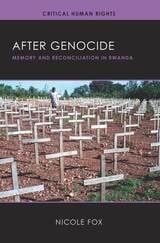
After Genocide
Memory and Reconciliation in RwandaNicole Fox
University of Wisconsin Press, 2023
In the wake of unthinkable atrocities, it is reasonable to ask how any population can move on from the experience of genocide. Simply remembering the past can, in the shadow of mass death, be retraumatizing. So how can such momentous events be memorialized in a way that is productive and even healing for survivors? Genocide memorials tell a story about the past, preserve evidence of the violence that occurred, and provide emotional support to survivors. But the goal of amplifying survivors’ voices can fade amid larger narratives entrenched in political motivations.
In After Genocide,Nicole Fox investigates the ways memorials can shape the experiences of survivors decades after mass violence has ended. She examines how memorializations can both heal and hurt, especially when they fail to represent all genders, ethnicities, and classes of those afflicted. Drawing on extensive interviews with Rwandans, Fox reveals their relationships to these spaces and uncovers those voices silenced by the dominant narrative—arguing that the erasure of such stories is an act of violence itself. The book probes the ongoing question of how to fit survivors in to the dominant narrative of healing and importantly demonstrates how memorials can shape possibilities for growth, national cohesion, reconciliation, and hope for the future.
After Parsons
A Theory of Social Action for the Twenty-First CenturyRenee C. Fox
Russell Sage Foundation, 2005

After Pomp and Circumstance
High School Reunion as an Autobiographical OccasionVered Vinitzky-Seroussi
University of Chicago Press, 1998
As autobiographical occasions, reunions prompt us to examine our own life narratives, the stories we tell ourselves about who we are and how we have come to be that person. But at the same time, they can threaten the integrity of those very stories, subjecting them to the scrutiny of others whose memories of the past and ourselves may be altogether different from our own. Reunions, then, engender a fragile community held together by the resources of a shared past, yet imperiled by the tensions of competing histories. Inevitably—for both those who attend and those who choose not to—the reunion forces a kind of biographical confrontation, an unavoidable and often pivotal engagement between a carefully constructed personal identity and the socially prevalent standards of success and accomplishment.
Though many see in today's culture the gradual demise of personal identity, Vinitzky-Seroussi's carefully researched study reveals something quite different— After Pomp and Circumstance explores a struggle we all experience: the desire to resolve the tension between public conceptions and internal understandings, to maintain a sense of continuity between past and present lives, and to lay claim to both an integrated self and a unified life history.