Results by title
1214 books match the query 'Subjects & Themes' and 90 start with a

American War Stories
Brenda M. Boyle
Rutgers University Press, 2021
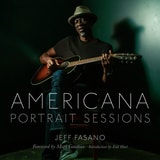
Americana Portrait Sessions
Jeff Fasano
Vanderbilt University Press, 2023
Fasano's unparalleled access to Americana artists like Sheryl Crow, Rhiannon Giddens, Vince Gill, Keb' Mo', Judy Collins, John Oates, The Avett Brothers, The McCrary Sisters, Lucinda Williams, Margo Price, Blind Boys of Alabama, and Kris Kristofferson gives Americana Portrait Sessions the kind of authority that comes from true reach into the breadth of the genre. But this collection is as important for the artists few fans know as for the ones with successful careers behind them. While the book champions the diversity of race, gender, sexuality, and age inherent in Americana music, it also spans career arcs to bring lesser-known acts into the spotlight.
Americana Portrait Sessions brings you backstage to the greenrooms and quiet corners where artists like The War and Treaty, Jewel, Jason Isbell, and The Wooten Brothers aren't just artists performing, but people hanging out.
Amherst Suite
Emily Dickinson, Spanish Translation & Poetic TranscreationBy Alberto Blanco, Translated and Edited by Jennifer Rathbun, with an Introduction by Ilan Stavans
Amherst College Press, 2026
Opening with a creative essay by renowned author Ilan Stavans, the volume also includes a conversation between Blanco and scholar Ronald J. Friis; Blanco’s own essay on Dickinson, translated into English by Jennifer Rathbun; as well as an introduction by Rathbun that helpfully situates this interlinguistic, intercultural, and inter-generational network. Amherst Suite is a fascinating and unique look into the work and worlds of poets and their translators and will be an invaluable text for students, scholars, and all readers of Emily Dickinson.
Amid This
Allan Peterson
Bridwell Press, 2026
The title of Allan Peterson’s seventh full-length book, Amid This, vividly describes the astonishments of being alive and surrounded by a world in which there is no ordinary. Nature intersects thought and language in surprising and revealing observations. The fact that life has term limits invests everything with poignancy. Using illuminating language, poems often arise from the physics of perception. Whether domestic, ecological, or galactic, the poems are like being spoken to privately in a thoughtful voice.
The poems follow multiple intuitive leads, combining evocative language with equally evocative observations, discovering ideas of order as easily as putting a glove on the wrong hand. “Wisteria close to hysteria in its gorgeous profusion” (from the poem Realization). For the reader, there is a full immersion in a poem’s clear delivery. As the poems speak among themselves the reader participates in the reflections of a curious mind. With influences from the Florida Gulf Coast to the mountains of Oregon, landscape and its creature inhabitants, each with its own expressive power, are always primary advisors, not just metaphors, but participants. These are the celebratory insights of a natural philosopher with a parallel life as a visual artist.
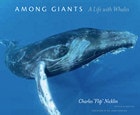
Among Giants
A Life with WhalesCharles "Flip" Nicklin with K. M. Kostyal
University of Chicago Press, 2011
It all started in 1965 with a guy riding a whale. The guy was Flip Nicklin’s father, Chuck, and the whale was an unlucky Bryde’s Whale that had gotten caught up in some anchor line. Hoping to free the whale, Chuck and some friends took their boat as near as they could, and, just before they cut it loose, Chuck posed astride it for a photo.
That image, carried on wire services nationwide, became a sensation and ultimately changed the life of Chuck’s young son, Flip. In the decades since that day, Flip Nicklin has made himself into the world’s premier cetacean photographer. It’s no exaggeration to say that his photos, published in such venues as National Geographic and distributed worldwide, have virtually defined these graceful, powerful creatures in the mind of the general public—even as they helped open new ground in the field of marine mammalogy.
Among Giants tells the story of Nicklin’s life and career on the high seas, from his first ill-equipped shoots in the mid-1970s through his long association with the National Geographic Society to the present, when he is one of the founders of Whale Trust, a nonprofit conservation and research group. Nicklin is equal parts photographer, adventurer, self-trained scientist, and raconteur, and Among Giants reflects all those sides, matching breathtaking images to firsthand accounts of their making, and highlighting throughout the importance of conservation and new advances in our understanding of whale behavior. With Nicklin as our guide, we see not just whales but also our slowly growing understanding of their hidden lives, as well as the evolution of underwater photography—and the stunning clarity and drama that can be captured when a determined, daring diver is behind the lens.
Humpbacks, narwhals, sperm whales, orcas—these and countless other giants of the ocean parade through these pages, spouting, breaching, singing, and raising their young. Nicklin’s photographs bring us so completely into the underwater world of whales that we can’t help but feel awe, while winning, personal accounts of his adventures remind us of what it’s like to be a lone diver sharing their sea.
For anyone who has marveled at the majesty of whales in the wild, Among Giants is guaranteed to be inspiring, even moving—its unmatched images of these glorious beings an inescapable reminder of our responsibility as stewards of the ocean.
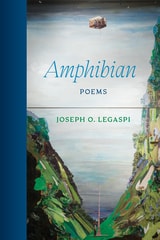
Amphibian
PoemsJoseph O. Legaspi
Northwestern University Press, 2026
Exploring queerness, belonging, and the meaning of home through the lens of a Filipino American
How does a queer brown body move through the American panorama? In Amphibian, Joseph O. Legaspi explores the metaphor of “amphibious living”—adapting, surviving, and flourishing in varying geographies—as it pertains to immigrants and to queerness. These poems draw on the natural world to illuminate personal experiences and, in turn, closely examine cultural, environmental, and societal constructs and concerns.
Legaspi searches in nature for evidence of the validity of his own existence, determined to declare his belonging. Dwelling in landscape as a guide into the interior, Amphibian journeys not only between earth, water, and air, but also into the past, cataloging an immigrant’s departures, arrivals, and returns to native soil. This moving collection is at every turn liberating, fraught, and altered.
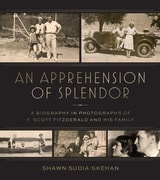
An Apprehension of Splendor
A Biography in Photographs of F. Scott Fitzgerald and His FamilyShawn Sudia-Skehan; Foreword by Jackson R. Bryer; Introduction by Eleanor Lanahan
University of Alabama Press, 2025
A unique collection of Fitzgerald family photographs, many never before published, hand selected by a curator of the Scott and Zelda Fitzgerald Museum.
Enter the Jazz Age glamour of F. Scott and Zelda Fitzgerald and their daughter, Scottie. An Apprehension of Splendor is a rich pictorial biography that illuminates the lives of this brilliant literary family in 344 rare photographs, 180 of which have never been published.
The Fitzgeralds are chiefly known from a small number of iconic, posed images, but the dashing couple and their daughter amassed hundreds of candid snapshots now housed in archives and university library collections throughout North America. These rare photos reveal the full, vivid lives behind the icons—a Buffalo boy cradling a velvety puppy, a jaunty southern gamine in the shade of a loblolly pine laughing at a secret, the stoic gloom of an enlistee in a scratchy woolen uniform, a plot taking shape in the mind of a fledgling writer with bed-tousled hair, an amorous young couple struggling to light a cigarette in the chiaroscuro of a Riviera beach, an unhappy baby tugged through the snow in a laundry basket lashed to a sled, and a myriad of other images that will rekindle fascination with the Fitzgeralds and their time.
With unparalleled access to the family’s personal papers and photographs, Shawn Sudia-Skehan, former director of acquisitions at the Scott and Zelda Fitzgerald Museum, handpicked and annotated this collection of images that brings readers closer to the Fitzgeralds than any other work. Readers of Tender Is the Night, The Beautiful and Damned, and many other works by F. Scott and Zelda will recognize some of the places and experiences that inspired their unforgettable fictions.
A captivating portrait of Jazz Age celebrity, young passion, and artistic ambition, An Apprehension of Splendor returns the perfume to the luminous flower of the Fitzgeralds.
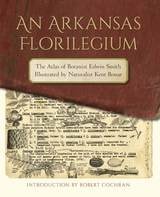
An Arkansas Florilegium
The Atlas of Botanist Edwin Smith Illustrated by Naturalist Kent BonarEdwin Smith
University of Arkansas Press, 2017
Thirty-five years later, with Smith retired and Bonar long gone from the park service but still drawing, Bonar’s weathered and battered copy of the atlas was seized by a diverse cadre of amateur admirers motivated by fears of its damage or loss. Their fears were certainly justified; after all, the pages were now jammed to the margins with some 3,500 drawings, and the volume had already survived one accidental dunking in an Ozark stream.
An Arkansas Florilegium brings Smith’s and Bonar’s knowledge and lifelong diligence to the world in this unique mix of art, science, and Arkansas saga.
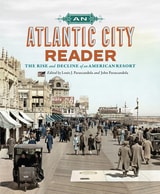
An Atlantic City Reader
The Rise and Decline of an American ResortLouis J. Parascandola
Rutgers University Press, 2026
As Atlantic City grew to become one of the largest tourist destinations on the East Coast, it loomed ever larger in the imaginations of American writers. Generation upon generation of novelists, journalists, musicians, and poets visited Atlantic City and left with vivid impressions of its kaleidoscopic delights and its seedy underbelly.
This new reader collects all of these diverse perspectives on the city in one place, including accounts of Atlantic City by such famous visitors as Walt Whitman, William Carlos Williams, Fanny Hurst, Arthur Conan Doyle, Damon Runyon, Langston Hughes, Elmore Leonard, and Bruce Springsteen. Arranged chronologically, the anthology traces the city’s history from its humble beginnings as a quiet health resort to its rapid ascent to the world’s playground, its gradual decline, and its hopeful if tenuous future. Together, the pieces in this collection take us inside the city’s glitz, glamor, and gambling palaces, but they also don’t shy away from its troubling histories of racial discrimination, political corruption, and urban decay. Compiling fiction, poetry, drama, memoirs, newspaper stories, and magazine reports, The Atlantic City Reader presents an engaging and multifaceted portrait of this iconic resort town.
An Exodus of Sparks
Allisa Cherry
Michigan State University Press, 2025
This collection is for anyone exploring how loss reshapes identity. The book is structured around a crown of sonnets in which the speaker assumes the story of Moses and resituates it in the American Southwest. The book itself is an elegy composed of several smaller elegies; a fallible history; and most of all, a love letter to the family, culture, and geography that shaped the poet and her work.
An Eye for the Tropics
Tourism, Photography, and Framing the Caribbean PicturesqueKrista A. Thompson
Duke University Press, 2006
Illustrated with more than one hundred images, including many in color, An Eye for the Tropics is a nuanced evaluation of the aesthetics of the “tropicalizing images” and their effects on Jamaica and the Bahamas. Thompson describes how representations created to project an image to the outside world altered everyday life on the islands. Hoteliers imported tropical plants to make the islands look more like the images. Many prominent tourist-oriented spaces, including hotels and famous beaches, became off-limits to the islands’ black populations, who were encouraged to act like the disciplined, loyal colonial subjects depicted in the pictures.
Analyzing the work of specific photographers and artists who created tropical representations of Jamaica and the Bahamas between the 1880s and the 1930s, Thompson shows how their images differ from the English picturesque landscape tradition. Turning to the present, she examines how tropicalizing images are deconstructed in works by contemporary artists—including Christopher Cozier, David Bailey, and Irénée Shaw—at the same time that they remain a staple of postcolonial governments’ vigorous efforts to attract tourists.
An Innocent Abroad
Lectures in ChinaJ. Hillis Miller
Northwestern University Press, 2015
Since 1988, J. Hillis Miller has traveled to China to lecture on literary theory, especially the role of globalization in literary theory. Over time, he has assisted in the development of distinctively Chinese forms of literary theory, Comparative Literature, and World Literature. The fifteen lectures gathered in An Innocent Abroad span both time and geographic location, reflecting his work at universities across China for more than twenty-five years. More important, they reflect the evolution of Miller’s thinking and of the lectures’ contexts in China as these have markedly changed over the years, especially on either side of Tiananmen Square and in light of China’s economic growth and technological change. A foreword by the leading theorist Fredric Jameson provides additional context.
An Ocean Garden
The Secret Life of SeaweedJosie Iselin
Oregon State University Press, 2023
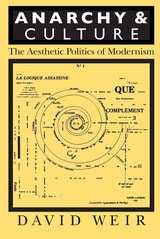
Anarchy and Culture
The Aesthetic Politics of ModernismDavid Weir
University of Massachusetts Press, 1997
Anarchism is generally understood as a failed ideology, a political philosophy that once may have had many followers but today attracts only cranks and eccentrics. This book argues that the decline of political anarchism is only half the story; the other half is a tale of widespread cultural success.
David Weir develops this thesis in several ways. He begins by considering the place of culture in the political thought of the classical anarchist thinkers William Godwin, Pierre-Joseph Proudhon, Mikhail Bakunin, and Peter Kropotkin. He then shows how the perceived “anarchy” of nineteenth-century society induced writers such as Matthew Arnold, Henry James, and Fyodor Dostoyevsky to turn away from politics and seek unity in the idea of a common culture.
Yet as other late-nineteenth-century writers and artists began to sympathize with anarchism, the prospect of a common culture became increasingly remote. In Weir's view, the affinity for anarchism that developed among members of the artistic avant-garde lies behind much of fin de siècle culture. Indeed, the emergence of modernism itself can be understood as the aesthetic realization of anarchist politics. In support of this contention, Weir shows that anarchism is the key aesthetic principle informing the work of a broad range of modernist figures, from Henrik Ibsen and James Joyce to Dadaist Hugo Ball and surrealist Luis Buñuel.
Weir concludes by reevaluating the phenomenon of postmodernism as only the most recent case of the migration of politics into aesthetics, and by suggesting that anarchism is still very much with us as a cultural condition.
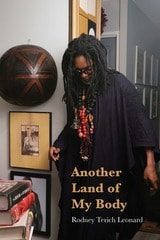
Another Land of My Body
Rodney Terich Leonard
Four Way Books, 2024
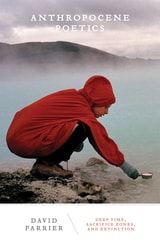
Anthropocene Poetics
Deep Time, Sacrifice Zones, and ExtinctionDavid Farrier
University of Minnesota Press, 2019
How poetry can help us think about and live in the Anthropocene by reframing our intimate relationship with geological time
The Anthropocene describes how humanity has radically intruded into deep time, the vast timescales that shape the Earth system and all life-forms that it supports. The challenge it poses—how to live in our present moment alongside deep pasts and futures—brings into sharp focus the importance of grasping the nature of our intimate relationship with geological time. In Anthropocene Poetics, David Farrier shows how contemporary poetry by Elizabeth Bishop, Seamus Heaney, Evelyn Reilly, and Christian Bök, among others, provides us with frameworks for thinking about this uncanny sense of time.
Looking at a diverse array of lyric and avant-garde poetry from three interrelated perspectives—the Anthropocene and the “material turn” in environmental philosophy; the Plantationocene and the role of global capitalism in environmental crisis; and the emergence of multispecies ethics and extinction studies—Farrier rethinks the environmental humanities from a literary critical perspective. Anthropocene Poetics puts a concern with deep time at the center, defining a new poetics for thinking through humanity’s role as geological agents, the devastation caused by resource extraction, and the looming extinction crisis.
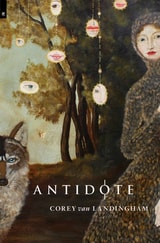
Antidote
Corey Van Landingham
The Ohio State University Press, 2013
In Antidote—the award-winning debut from Guggenheim Fellow and Levis Reading Prize winner Corey Van Landingham—love equates with disease, valediction becomes a contact sport, the moon turns lunatic, and someone is always watching. Here, the uncanny presses up against the intimate, so each poem undergoes a simultaneous making and unmaking, born and bound in exquisite strangeness.
Van Landingham reinvents elegy through a speaker both transgressive and tender, revealing how grief destabilizes the self and reorders perception. She tips the world upside down, shakes loose the debris, and says, I can make something with this.
Wild and surreal, driven by loss, Antidote embraces the beautiful and the brutal in equal measure, offering startling claims about love—its likeness to hibernation, a car crash, a parasite. Time, landscape, and geography dissolve, leaving behind the raw terrains of departure. Ultimately, the book insists there is no cure for heartbreak, that love can mirror violence, and that goodbye never becomes easier.
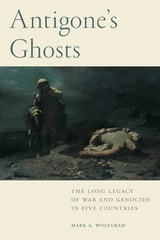
Antigone's Ghosts
The Long Legacy of War and Genocide in Five CountriesWolfgram, Mark A
Bucknell University Press, 2019
Published by Bucknell University Press. Distributed worldwide by Rutgers University Press.
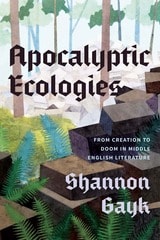
Apocalyptic Ecologies
From Creation to Doom in Middle English LiteratureShannon Gayk
University of Chicago Press, 2024
When a series of ecological disasters swept medieval England, writers turned to religious storytelling for precedents. Their depictions of biblical floods, fires, storms, droughts, and plagues reveal an unsettled relationship to the natural world, at once unchanging and bafflingly unpredictable. In Apocalyptic Ecologies, Shannon Gayk traces representations of environmental calamities through medieval plays, sermons, and poetry such as Cleanness and Piers Plowman. In premodern disaster writing, she recovers a vision of environmental flourishing that could inspire new forms of ecological care today: a truly apocalyptic sensibility capable of seeing in every ending, every emergency a new beginning waiting to emerge.
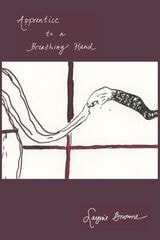
Apprentice to a Breathing Hand
Laynie Browne
Omnidawn, 2025
The poetry of Laynie Browne’s Apprentice to a Breathing Hand explores alchemy, connectivity, and perception. Throughout the collection, Browne considers the formation and limits of personhood, the experience of a body moving through time, and the imperative to continually learn and unlearn. Browne looks to alchemy as a practice for cultivating the impossible, positioning it as a fitting model for our current moment. In the material of language, meaning must be unmade and remade endlessly, and in this continual regeneration, Browne considers the alchemy of how a poem can in turn transform the poet. Moving through methods of making and unmaking, the collection centers on the figure of an apprentice working in a space of indeterminacy, lack, breath, and constant shifting.
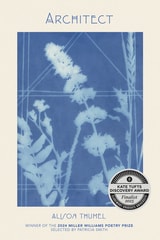
Architect
Alison Thumel
University of Arkansas Press, 2024
Finalist, 2025 Kate Tufts Discovery Award
“When he died, my brother became the architect of the rest of my life,” writes Alison Thumel in Architect, which interweaves poems, lyric essays, and visual art to great emotional effect. In this debut collection, the buildings of Frank Lloyd Wright become a blueprint for elegy, as Thumel overlays the language of architecture with the language of grief to raze and reconstruct memories, metaphors, and myths. With obsessive and exacting focus, the poet leads us through room after room in a search to answer whether it is possible to rebuild in the wake of loss. Meanwhile, the midwestern landscape beyond these rooms—the same landscape that infuses the low, horizontal forms of Wright’s Prairie Style buildings—shapes the figures in Architect as well as their fates: “For years after my brother’s death, I collected news articles on people who died young and tragically in landlocked states. Prairie Style deaths—boys sucked down into grain silos or swept up by tornadoes or fallen through a frozen pond. The boys I didn’t know, but the landscape I did. The dread of it. How many miles you can look ahead. For how long you see what is coming.”
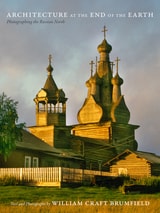
Architecture at the End of the Earth
Photographing the Russian NorthWilliam Craft Brumfield
Duke University Press, 2015
The architectural masterpieces Brumfield photographed are diverse: they range from humble chapels to grand cathedrals, buildings that are either dilapidated or well cared for, and structures repurposed during the Soviet era. Included are onion-domed wooden churches such as the Church of the Dormition, built in 1674 in Varzuga; the massive walled Transfiguration Monastery on Great Solovetsky Island, which dates to the mid-1550s; the Ferapontov-Nativity Monastery's frescoes, painted in 1502 by Dionisy, one of Russia's greatest medieval painters; nineteenth-century log houses, both rustic and ornate; and the Cathedral of St. Sophia in Vologda, which was commissioned by Ivan the Terrible in the 1560s. The text that introduces the photographs outlines the region's significance to Russian history and culture.
Brumfield is challenged by the immense difficulty of accessing the Russian North, and recounts traversing sketchy roads, crossing silt-clogged rivers on barges and ferries, improvising travel arrangements, being delayed by severe snowstorms, and seeing the region from the air aboard the small planes he needs to reach remote areas.
The buildings Brumfield photographed, some of which lie in near ruin, are at constant risk due to local indifference and vandalism, a lack of maintenance funds, clumsy restorations, or changes in local and national priorities. Brumfield is concerned with their futures and hopes that the region's beautiful and vulnerable achievements of master Russian carpenters will be preserved. Architecture at the End of the Earth is at once an art book, a travel guide, and a personal document about the discovery of this bleak but beautiful region of Russia that most readers will see here for the first time.
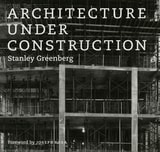
Architecture under Construction
Stanley Greenberg
University of Chicago Press, 2010
Mies van der Rohe once commented, “Only skyscrapers under construction reveal their bold constructive thoughts, and then the impression made by their soaring skeletal frames is overwhelming.” Never has this statement resonated more than in recent years, when architectural design has undergone a radical transformation, and when powerful computers allow architects and engineers to design and construct buildings that were impossible just a few years ago. At the same time, what lies underneath these surfaces is more mysterious than ever before.
In Architecture under Construction, photographer Stanley Greenberg explores the anatomy and engineering of some of our most unusual new buildings, helping us to understand our own fascination with what makes buildings stand up, and what makes them fall down. As designs for new constructions are revealed and the public watches closely as architects and engineers challenge each other with provocative new forms and equally audacious ideas, Greenberg captures penetrating images that reveal the complex mystery—and beauty—found in the transitory moments before the skin of a building covers up the structures that hold it together.
Framed by a historical and critical essay by Joseph Rosa and including an afterword by the author, the eighty captivating and thought-provoking images collected here—which focus on some of the most high-profile design projects of the past decade, including buildings designed by Norman Foster, Frank Gehry, Steven Holl, Daniel Libeskind, Thom Mayne, and Renzo Piano, among others —are not to be missed by anyone with an eye for the almost invisible mechanisms that continue to define our relationship with the built world.
Arcticologies
Early Modern Actions for Our Warmer WorldLowell Duckert
University of Minnesota Press, 2025
Exploring the frozen past to rethink our warming future
Do we really know what cold is? In Arcticologies, Lowell Duckert delves into early modern European texts to trace how representations of frigidity from the sixteenth and seventeenth centuries have contributed to historical understandings of climate and contemporary debates on climate change. Arguing that human culture and science are, in fact, indebted to the cold, Duckert suggests that these early depictions offer critical terms for advancing the aims of climate-change activism and assisting in counterapocalyptic thinking.
An imaginative and intellectual journey, Arcticologies reveals the enduring role of cold in wide-ranging storytelling traditions. It draws on Shakespeare’s Hamlet and Othello and the works of Thomas Dekker, René Descartes, and Thomas Hobbes and is informed throughout by contemporary Indigenous writing, including that of Sheila Watt-Cloutier and Leanne Betasamosake Simpson. In reflecting on these assorted accounts, Duckert sees cold as not only an environmental hardship but a source of cultural creativity and resilience, highlighting moments of collaboration between humans and the icy world, from arctic exploration to urban fairs on frozen rivers.
Cold, Duckert makes clear, is more than the absence of warmth. Situating our contemporary obsession with impending planetary meltdown within the mazelike arcticologies of the past, Duckert shows how early modern cold brought about forms of curiosity, vocabulary, and interspecies relationality that can serve us today. In doing so, he asks us to identify what has been lost and who is at risk in today’s thinning cold—while also urging us to imagine alternative futures focused not on inevitable and total collapse but on adaptation and preserving what remains.
Armor & Ornament
Christopher Lee Miles
University of Alaska Press, 2019
As a military veteran, Miles also centers his poetry amongst war. Through tone and voice, warfare permeates these poems, providing poetry that relies less on the traditional, Christian tension of doubt and shaken faith than on the inherent tension of a broken world. This resonant new collection melds deep-rooted spirituality with contemporary tensions, offering modern psalms for a tumultuous and uncertain age.
Art, Theory, Revolution
The Turn to Generality in Contemporary LiteratureMitchum Huehls
The Ohio State University Press, 2022
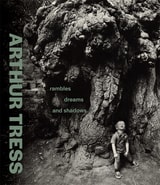
Arthur Tress
Rambles, Dreams, and ShadowsJames A. Ganz
J. Paul Getty Trust, The, 2023
Arthur Tress (b. 1940) is a singular figure in the landscape of postwar American photography. His seminal series, The Dream Collector, depicts Tress’s interests in dreams, nightmares, fantasies, and the unconscious and established him as one of the foremost proponents of magical realism at a time when few others were doing staged photography.
This volume presents the first critical look at Tress’s early career, contextualizing the highly imaginative, fantastic work he became known for while also examining his other interrelated series: Appalachia: People and Places; Open Space in the Inner City; Shadow; and Theater of the Mind. James A. Ganz, Mazie M. Harris, and Paul Martineau plumb Tress’s work and archives, studying ephemera, personal correspondence, unpublished notes, diaries, contact sheets, and more to uncover how he went from earning his living as a social documentarian in Appalachia to producing surreal work of “imaginative fiction.” This abundantly illustrated volume imparts a fuller understanding of Tress’s career and the New York photographic scene of the 1960s and 1970s.
This volume is published to accompany an exhibition on view at the J. Paul Getty Museum at the Getty Center from October 31, 2023, to February 18, 2024.
Ará’lúèbó
The Immigrant MonologuesKÁNYIN Olorunnisola
Acre Books, 2026
The Yoruba word Ará’lúèbó (/ah-rah-loo-ay-bow/), as the book tells us, means “an endearing term for a native who has gone abroad, and/or is returning” or “a person who becomes a foreigner everywhere they go.”
In his debut poetry collection, KÁNYIN Olorunnisola showcases the expansiveness of the immigrant experience through the form of the choreopoem, a non-Western style of poetry that incorporates elements of music and theater. The collection tells a multitude of stories through five people (Odunsi, beja, Levi, Sekina, and Ismaila), who, though fictional, represent the emotional truths of the lived experience of an African residing in the United States. As Ismaila says early on, “we r five fly kids hyphenated by time & / geography.”
Mixing Yoruba, Nigerian Pidgin, and English, Ará’lúèbó: The Immigrant Monologues is a blend of linguistic influences, with debts to visual art and rap music. At the center of its expression is formal experimentation; poems are structured like movie screenplays, diary entries, flowcharts, pie charts, and dictionary entries. The book encompasses a broad span of American, African, and other world history, even as it is strongly rooted in the contemporary, with references to Lauryn Hill, Kendrick Lamar, and other Black creatives. Ultimately, the book asks who is allowed to belong and paints a portrait of what it means to be American and from elsewhere.
As Long As Trees Take Root in the Earth
and Other PoemsAlain Mabanckou
Seagull Books, 2025
These compelling poems by novelist and essayist Alain Mabanckou conjure nostalgia for an African childhood where the fauna, flora, sounds, and smells evoke snapshots of a life forever gone. Mabanckou’s poetry is frank and forthright, urging his compatriots to no longer be held hostage by the civil wars and political upheavals that have ravaged their country and to embrace a new era of self-determination where the village roosters can sing again.
These music-infused texts, beautifully translated by Nancy Naomi Carlson and supported by a grant from the National Endowment for the Arts, appear together in English for the first time. In these pages, Mabanckou pays tribute to his beloved mother, as well as to the regenerative power of nature, especially of trees, whose roots are a metaphor for the poet’s roots, anchored in the red earth of his birthplace. Mabanckou’s yearning for the land of his ancestors is even more poignant because he has been declared persona non grata in his homeland, now called Congo-Brazzaville, due to his biting criticism of the country’s regime. Despite these barriers, his poetry exudes hope that nature’s resilience will lead humankind on the path to redemption and reconciliation.
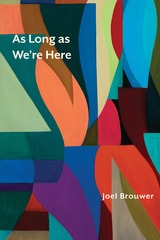
As Long as We're Here
Joel Brouwer
Four Way Books, 2026
As Long as We’re Here is an off-key anthem, a funhouse mirror held up to our dumpster fire era. Chronically online, distracted and distracting, with too many browser tabs open at once, attentive to everything and focused on nothing, Brouwer delights in the late capitalist absurdities of sleeping apps and internet dance crazes, and riffs on the argot of the group chat and the team meeting. These slippery poems both suffer from and revel in their ADD. Their shifts are as fleet as our news feeds, their serpentine sentences leap from barroom jests to high modernist splendor and back. But the book is not all fun and games. Dreamy tales of edgelords and loyalty oaths often arrive at places of surprising pathos and beauty. Mortality gnaws at the narrators of these poems, and political unrest lurks in the background. Still, a sense of solidarity—that we of the title, a recurring pronoun throughout—keeps despair at bay. Indeed, As Long as We’re Here is a book of intimacy, of the coterie. Friends and lovers people its lyrics, which often feel like late-night hang sessions with eccentric, wise-cracking pals. Full of wry wisdom and lush music, As Long as We’re Here knows what to do with a diminished thing: make it sing.
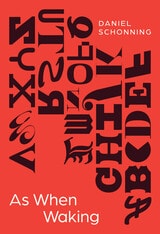
As When Waking
Daniel Schonning
University of Chicago Press, 2025
The poems of Daniel Schonning’s debut collection range from personal examinations of childhood suffering and loss of faith to deep observations of images and objects to the foreclosure of a family home, a father estranged by addiction, mallards on a frozen pond, flowering bindweed, and a door to the underworld. With all its component pieces, As When Waking aims to apprentice itself to the medium of letters, inviting readers to listen and learn from the systems and symmetries of alphabets.
Schonning employs structural paradigms to explore themes of poetic lineage. Twenty-six of the poems in this collection are abecedarians, a form where the opening letter of each line advances through the alphabet, with the lines of the first poem proceeding alphabetically from A–Z, while those of the second poem move from B–A, and then C–B, all the way to Z–A. This structure is tied to Jewish mystic texts such as the Sefer Yetzirah, which probes the relationship between the letters of the Hebrew alphabet and the world they inhabit.
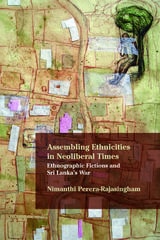
Assembling Ethnicities in Neoliberal Times
Ethnographic Fictions and Sri Lanka’s WarNimanthi Perera-Rajasingham
Northwestern University Press, 2019
Assembling Ethnicities in Neoliberal Times: Ethnographic Fictions and Sri Lanka’s War argues that the bloody war fought between the Sri Lankan state and the separatist Tamil Tigers from 1983 to 2009 should be understood as structured and animated by the forces of global capitalism. Using Aihwa Ong’s theorization of neoliberalism as a mobile technology and assemblage, this book explores how contemporary globalization has exacerbated forces of nationalism and racism.
Nimanthi Perera-Rajasingham finds that ethnographic fictions have both internalized certain colonial Orientalist impulses and critically engaged with categories of objective gazing, empiricism, and temporal distancing. She demonstrates that such fictions take seriously the task of bearing witness and documenting the complex productions of ethnic identities and the devastations wrought by warfare. To this end, Assembling Ethnicities
explores colonial-era travel writing by Robert Knox (1681) and Leonard Woolf (1913); contemporary works by Michael Ondaatje, Romesh Gunesekera, Shobasakthi, Dharmasiri Bandaranayake, and Thamotharampillai Shanaathanan; and cultural festivals and theater, including vernacular performances of Euripides’s The Trojan Women and women workers’ theater.
The book interprets contemporary fictions to unpack neoliberalism’s entanglements with nationalism and racism, engaging current issues such as human rights, the pastoral, Tamil militancy, immigrant lives, feminism and nationalism, and postwar developmentalism.
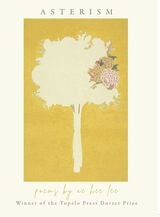
Asterism
Ae Hee Lee
Tupelo Press, 2024
At times personal, at others political, slipping back and forth between lyric and narrative and drawing on various languages and geographies, Asterism is a collection of grace and grit, the work of a mind at work—in, and on, a world that is simultaneously expanding and contracting. Both accessible and legitimately experimental, these poems invite and challenge the reader, moving between registers and modes with ease.
At Home with the Holocaust
Postmemory, Domestic Space, and Second-Generation Holocaust NarrativesLucas F. W. Wilson
Rutgers University Press, 2025

At The Drive-In Volcano
Aimee Nezhukumatathil
Tupelo Press, 2007
At the Park on the Edge of the Country
PoemsAustin Araujo
The Ohio State University Press, 2025
At the VA
Poemsbarnes
University of Nevada Press, 2027
At the VA offers an unflinching and deeply humane portrait of combat veterans—primarily from the Vietnam era—as they seek care within Veterans Affairs hospitals. These imagistic, lyrical pieces focus not on the battlefield but on its aftermath.
Author H. Lee Barnes, a veteran himself, addresses familiar wounds such as PTSD, moral injury, and survivor’s guilt while also bringing attention to underexamined experiences, including those of women veterans who have survived sexual assault. The collection honors sacrifice without sentimentality and resilience without oversimplifying the challenges veterans face.
At its center is a quiet irony: the VA can be frustrating and imperfect, yet to be there at all is to have survived. In that tension, Barnes finds a measured sense of hope that will resonate with readers who understand any type of trauma and recovery. Thoughtful and timely, At the VA asks what we owe our veterans long after their service ends.
Aunt Bird
Yerra Sugarman
Four Way Books, 2022
Aunt Bird is an astonishing, hybrid poetry of witness that observes and testifies to social, political, and historical realities through the recovery of one life silenced by the past. Within these pages, poet Yerra Sugarman confronts the Holocaust as it was experienced by a young Jewish woman: the author’s twenty-three-year-old aunt, Feiga Maler, whom Sugarman never knew, and who died in the Kraków Ghetto in German-occupied Poland in 1942. In lyric poems, prose poems, and lyric essays, Aunt Bird combines documentary poetics with surrealism: sourcing from the testimonials of her kin who survived, as well as official Nazi documents about Feiga Maler, these poems imagine Sugarman’s relationship with her deceased aunt and thus recreate her life. Braiding speculation, primary sources, and the cultural knowledge-base of postmemory, Aunt Bird seeks what Eavan Boland calls “a habitable grief,” elegizing the particular loss of one woman while honoring who Feiga was, or might have been, and recognizing the time we have now.
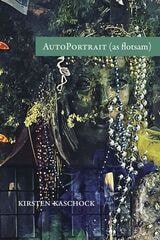
AutoPortrait (as flotsam)
Kirsten Kaschock
Tupelo Press, 2026
An investigation of identity as prompted by art and artists.
In AutoPortrait (as flotsam), Kirsten Kaschock uses the words, lives, and images of other artists as springboards into the self. Arranged almost as a gallery walk, AutoPortrait alternates between masque-like encounters with art and reflective passages engaging memory and desire. Influenced by photographers Francesca Woodman and Cindy Sherman, Kaschock walks a tightrope between vulnerability and artifice—using lines and shapes provided by the many artists referenced here (painters, musicians, and poets) to sketch an impression of a woman artist.
The struggle she chronicles is familiar to any storyteller: an effort to piece together minor episodes to create some semblance of a whole. The question is whether such a project can ever be accomplished. Can the fragments gathered on the shore of memory be tied together, brought to life? Other artists, perhaps especially the abstract expressionists, serve her as both guide and glue. The result is an intimate travelogue—the poet’s own narrow road to an interior where she finds a meditative balance between rage and regret, sorrow and joy.
and when the light comes it will be so fantastic
poemsKristin Berget and Kathleen Maris Paltrineri
Northwestern University Press, 2025
Norwegian poet Kristin Berget’s 2017 Brage Prize–nominated poetry collection and when the light comes it will be so fantastic weaves together themes of ecological and linguistic loss, memory and deep time, and motherhood and grief. Berget’s poetics point to landscapes used as sites of extraction, where exhausted phosphorus, starving clay layers, and forest machines are encountered. The poems in this collection traverse forests, deserts, and seas—their poetic matter separated by fields of caesuras, visual absences suggestive of Earth’s ongoing extinctions. As jurors of the Brage Prize commented, within these pages is a universe where humans can seldom be separated from one another or from the nature they live in and among. Berget’s first book translated into English is an innovative exploration of the climate crises we are living with today and the complex emotions that ebb and flow along with it.